Federal Constitutional Court/ Supreme Court / High Courts of Pakistan, News

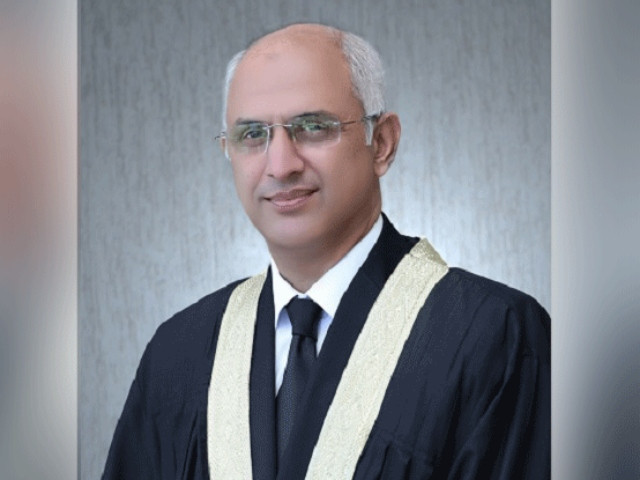
Judiciary passing through one of its weakest moments in our history: Justice Mansoor Ali Shah


Umer Mehtab
December 13, 2024

The Supreme Court’s senior puisne judge Justice Mansoor Ali Shah has expressed concern that the country’s judiciary is undergoing “one of its weakest moments in our history” and thus risking executive overreach in its affairs, it emerged on Friday.

The remarks come in the backdrop of the 26th Constitutional Amendment which was criticised for the haste with which it was passed. The International Court of Jurists derided the “blow to judicial independence” when the 26th Amendment was signed into law.

Some of the major changes made to the Constitution included changing the process of the chief justice of Pakistan’s appointment, taking away the high courts’ suo motu powers, formation of constitutional benches, and performance evaluations of high court judges.

The Judicial Commission of Pakistan (JCP) had last week approved the formation of a committee led by Justice Jamal Khan Mandokhail to constitute rules and criteria for appointing judges by December 15.
 

Year in review: a look at some of the most important court rulings


Aisha Mahmood
December 31, 2024

3114235592c70ea.gif


The year 2024 saw significant judicial rulings and overturning of decisions in Pakistan.

Here is a look at some of the most defining judgments of this year:

Military court sentences 85 civilians

In December, the Inter-Services Public Relations (ISPR) announced that Field General Court Martial (FGCM) concluded the trials of individuals involved in the May 9 riots and sentenced 85 civilians.

The sentences ranged from two to ten years of rigorous imprisonment, following comprehensive legal proceedings.

The decision by the military came after the Supreme Court’s constitutional bench conditionally allowed military courts to pronounce the verdicts of 85 under-custody civilians in cases pertaining to the May 9 riots.

26th Constitutional Amendment

The 26th Constitutional Amendment Bill, 2024 was passed by the National Assembly with a two-thirds majority on October 21 and later President Asif Ali Zardari gave his assent to the bill.

Some key points of 26th Amendment Bill, 2024:

  • The term for the Chief Justice of Pakistan (CJP) was set at three years.
  • A 12-member parliamentary committee will select the new CJP from a panel of the three most senior judges.
  • The parliamentary committee, consisting of eight members from the NA and four from the Senate, will propose the name to the prime minister, who will then forward it to the president for final approval.
  • A Judicial Commission of Pakistan (JCP), led by the CJP and including three senior judges, two members each from the NA and Senate, the federal minister for law and justice, the attorney general, and a legal expert with at least 15 years of Supreme Court experience, will oversee judicial appointments.
 
Following the passage of the bill, Justice Yahya Afridi became the 30th chief justice of Pakistan (CJP) on October 26, for a fixed three-year term because for the first time in Pakistan, the top judge was selected based on the recommendation of a Special Parliamentary Committee.

Pakistan Tehreek-e-Insaf (PTI), Jamaat-e-Islami, and others challenged the amendment as well as some individuals and lawyers also challenged the piece of legislation.

NAB amendments case

Last year, a bench headed by then-Chief Justice of Pakistan (CJP) Umar Ata Bandial struck down some amendments made to the National Accountability Ordinance (NAO), 1999 by the then-Pakistan Democratic Movement-led (PDM) government in 2022.

This year in September, the SC bench overturned the previous majority verdict.

The amendments included:

  • Reducing the term of the NAB chairman and prosecutor general to three years
  • Limiting NAB’s jurisdiction to cases involving over Rs500 million, and
  • Transferring all pending inquiries, investigations and trials to the relevant authorities
 
PTI given back reserved seats

In July, SC declared Pakistan Tehreek-e-Insaf (PTI) eligible for seats reserved for women and minorities, making Imran Khan’s party the single largest in both houses of parliament.

Though this decision was a victory for PTI, the party’s strength remains lower as the ruling coalition continues to hold a simple majority of 209 members.

PTI stripped off election symbol

In January, the SC deprived PTI from the “cricket bat” symbol in general elections held on February 8, 2024. The court ruled that the party could not demonstrate that it had held internal party elections, much less transparent ones.

The verdict meant the PTI’s ticket holders would have to contest the elections as independent candidates. Following the decision, the PTI-backed members joined Sunni Ittehad Council (SIC) to contest elections.
 

CJP Afridi explains trichotomy of powers to civil service delegation


The Newspaper's Staff Reporter
January 8, 2025

Chief Justice Yahya Afridi.

Chief Justice Yahya Afridi.


ISLAMABAD: Chief Justice of Pakistan Yahya Afridi during a meeting with the visiting delegation of Civil Services Academy (CSA), Lahore, provided them an insightful introduction to Pakistan’s constitutional history, tracing its evolution from the country’s independence in 1947 to the 2024 promulgation of the 26th Amendment.

The delegation of probationary officers undergoing training at the CSA, Lahore, accompanied by the director of the academy, visited the Supreme Court on Tuesday as part of their study tour.

CJP Afridi, who congratulated them on their success in joining the civil services through a competitive examination, emphasised the sig-nificance of the Constitution as the fundamental docu-ment that governs the state’s functions and highlighted the concept of the trichotomy of power enshrined in the Constitution.

He also explained the distinct yet interdependent roles of the three pillars of the state: the legislature, tasked with making and amending laws; the executive, responsible for implementing laws; and the judiciary, charged with interpreting laws and ensuring justice.

The CJP addressed the pressing issue of case pendency in the country’s judicial system and elaborated on the hierarchical structure of the judiciary, comprising the Supreme Court, high courts, and district courts.

He highlighted the critical role of district courts as the primary interface for litigants and the starting point of the litigation process. Stressing the importance of timely justice, he mentioned the role of National Judicial Policy Making Committee as a policy-making forum to address the backlog of cases. He underlined the judiciary’s commitment to reducing delays and providing relief to litigants, thereby fostering trust in judicial institutions.

Sharing his experiences from visits to remote districts across the provinces, the CJP underscored the need for patient hearings and empathetic engagement with litigants.

He advised probationers to uphold the principles of justice, fairness, and respect in their interactions with the public and to resolve issues strictly within the ambit of the law.

SC registrar Salim Khan provided a comprehensive briefing on the CJP’s reformative agenda.
 

SC asks why May 9 accused ‘specifically’ tried in military courts against precedent


Umer Mehtab
January 9, 2025

A Supreme Court constitutional bench on Thursday questioned why the civilians involved in the riots on May 9 were “specifically” tried under the military courts contrary to precedent.

On December 13, the SC’s constitutional bench conditionally allowed military courts to pronounce reserved verdicts of 85 civilians who were still in custody for their alleged involvement in the May 9 riots in 2023.

On Dec 21, military courts sentenced 25 civilians to prison terms ranging from two to 10 years for their involvement in violent attacks on military installations during the May 9 riots. A week later, another 60 civilians were handed jail terms ranging from two to 10 years for their involvement in the nationwide riots.

On January 2, the mercy petitions of 19 convicts involved in the May 9 cases were accepted on humanitarian grounds.

While hearing the appeals against the decision to try civilians in military courts on Tuesday, Justice Jamal Khan Mandokhail said it was not the prerogative of executives to “play the role of the judiciary”.

Today, a seven-member constitutional bench headed by Justice Aminuddin Khan resumed the hearing of the intracourt appeal against the decision to try civilians in military court.

At the beginning of the hearing, Justice Syed Hasan Azhar Rizvi said that the country had faced terrorist attacks in the past, however, terrorists involved were tried in ordinary courts.

“Tell us, where [were the hearings for the] attacks held?” he asked, adding that if the terrorists in those attacks were tried in ordinary courts, “what did the people [involved in] May 9 have to go to military courts?”

Justice Mandokhail, while referring to the difference in decisions between the military and antiterrorism courts, asked whether “special evidence” was being presented in the military trials.

During the hearing, Advocate Khawaja Haris, who appeared as the defence ministry’s lawyer, read out the five-member SC decision declaring military trials of civilians null and void.

He posited that, according to the order, all were fundamental rights which were explained.

The constitutional bench questioned the military trial of the “specific” people accused of May 9.

“Where the decision was taken as to who would be tried in the military courts and who would not?” asked Justice Mussarat Hilali.

Justice Muhammad Ali Mazhar remarked that since the first information report (FIR) filed against the May 9 culprits was bundled together, “where did the distinction come from for some to be tried in the ATC while others to be tried in the military courts?”

On the other hand, Justice Naeem Akhtar Afghan asked the defence ministry’s lawyer how many people were accused in the May 9 events. He also inquired whether any ATC order was issued against people tried by the military courts.

Justice Mandokhail questioned the defence ministry’s lawyers regarding who initiated the process of taking someone under military custody. Meanwhile, Justice Hilali asked for an example where the military trial of a civilian was held without suspending the constitution.

“There were terrorist attacks on various installations including General Headquarters, and Karachi base, tell us where the (hearing of these) attacks were held?” Justice Rizvi asked.

“There was a case of conspiracy to hijack an army chief’s plane, and that case was tried in an ordinary court, and you were the lawyer of one of the parties,” he said.

“If that trial was carried out in the normal courts then what did the May 9 people do?”

Meanwhile, Justice Mazhar asked for an FIR in each one of the cases.

“The accused is being acquitted by the anti-terrorism court and then is being sentenced by the military court. Is any specific evidence being provided to the military courts?” Justice Mandokhail asked.

“Why are anti-terrorism courts not being strengthened?” he asked. “The courts have to decide after looking at the evidence.”

Justice Rizvi remarked, “Is the May 9 incident more serious than terrorism that the trials of the accused were carried out in military courts?”

During the hearing, Advocate General of Punjab (AGP) Ahmad Awais posited that criminals in solitary confinement were released outside after breakfast at 7:30am and stayed outside until 5pm.

“Which lawn is it? It’s not the lawn with the death cell?” Justice Mandokhail asked.

“No sir, this is not the lawn that you have seen […] there is a tuckshop and you can also drink coffee,” he said.

Advocate Faisal Siddiqui asked the AAG, “You mean there is a home-like environment in jail.”
 

Judge slams lack of gender equality​


Justice Kayani says Judicial Commission formed after 26th Amendment includes only one woman

Our CorrespondentJanuary 16, 2025

islamabad high court ihc judge justice mohsin akhtar kayani photo file

Islamabad High Court (IHC) judge Justice Mohsin Akhtar Kayani. PHOTO: FILE


ISLAMABAD: Islamabad High Court's Justice Mohsin Akhtar Kayani has criticised both Parliament and the judiciary for insufficient efforts toward achieving gender equality.

Speaking at a seminar on gender equality, he highlighted the lack of representation for women, particularly in the Judicial Commission formed after the 26th Amendment, which includes only one woman. He questioned why women are not given equal representation in such crucial bodies.

Justice Kayani expressed his happiness at seeing uniformed women at the event and remarked that as Pakistanis, we have not understood gender equality, and this concept has not been integrated into our attitudes. He said, "If you live a day without your mother, wife, daughter, or sister, you will realise that a home cannot function without them." He also noted that structural reforms for gender equality have not been made.

He further explained that after the 26th Constitutional Amendment, which led to various legal changes, there are currently 3,300 judges and 40,000 staff members in the country. Justice Kayani again raised the issue with the Judicial Commission, stating that it includes only one woman, even though there were 40 nominations, and only two female lawyers were nominated.

During his speech, he criticised Parliament for recently making the 26th Amendment to the Constitution, which led to the formation of the Judicial Commission, but with just one woman. He mentioned that the Speaker had nominated one woman in the amendment to address the judicial sector issue. He questioned why women were not given equal representation in the Judicial Commission and why women were not nominated on equal terms for the appointment of new judges.

Justice Kayani expressed his frustration with both Parliament and the judiciary for not doing enough to promote gender equality. He emphasised that without women involved in policy-making, the discussion of gender equality would be meaningless. He also stressed that it is essential to ensure that women have the facility to take care of their children during work.

Reflecting on his own experience, he said he had never brought his children to the office and therefore could not fully understand the challenges. He concluded by suggesting that working women should be provided with special allowances.
 

Supreme Court defers jurisdiction issue till 20th

Nasir Iqbal
January 17, 2025

ISLAMABAD: The Supreme Court has deferred until Monday deliberations on the issue of whether regular benches can determine the constitutionality of Article 191A, which had established the constitutional bench through the 26th amendment.

A three-member bench, headed by the senior puisne judge of Supreme Court, Justice Syed Mansoor Ali Shah, decided to deliberate on the matter on Jan 20 following a change in the bench’s composition, with Justice Aqeel Ahmed Abbasi replacing Justice Irfan Saadat Khan as its third member, who was previously part of the court when the issue initially cropped up.

In a brief order on Thursday, Justice Shah directed that the matter be placed before the same bench consisting of himself, Justice Ayesha A. Malik and Justice Irfan Saadat Khan — the bench that had heard the case earlier.

Justice Shah dictated that the case was heard by a different bench when it was posted for Thursday. But the bench stands reconstituted, therefore the case will again be taken up on Monday by the same previous bench at 11:30am since the matter was partly heard.

Besides, Justice Abbasi had already heard the main petition when he was a member of the Sindh High Court (SHC), the order said.

Justice Abbasi is a member of the original bench, but since he was on leave for a few days, Justice Khan had replaced him. Now Justice Khan will be part of the bench when the matter will be taken up on Monday.

When, during the hearing, Additional Attorney General Chaudhry Aamir Rehman requested for more time for preparation, Justice Malik wondered if the federation was not well prepared.

Senior counsel Salahuddin Ahmed, who represents the respondents, however, said that he was prepared and can argue.

The issue arose on Jan 13 when the bench had taken up the federal government’s petition against the SHC decision of striking down Section 221-A(2) of the Customs Act, 1969.

Then the matter cropped up whether Article 191A infringes upon the salient features of the constitution, including the independence of judiciary and separation of powers among the three organs of the state and whether a regular bench can decide the question of the constitutional validity of Article 191A when an objection to its jurisdiction was raised on the basis of the article.

Last Monday, the petitioners drew the court’s attention that the regular Supreme Court bench cannot hear such cases, as they involve challenges to the constitutionality of laws, specifically Section 221-A(2) of the Customs Act.

At this, Justice Shah had stressed the need for resolving the controversy over the question of constitutional interpretation by the judges.

In response to the petitioners’ objection regarding the present bench’s lack of jurisdiction, advocate Salahuddin Ahmed argued that Article 191A — the basis of the jurisdictional objection — was constitutionally invalid as it violated the salient features of the Constitution, including judicial independence and separation of powers among the three organs of the state.
 

Justice Shah asks deputy registrar why case of SC jurisdiction not fixed for hearing


Umer Mehtab
January 20, 2025

Justice Syed Mansoor Ali Shah. — SC website/File

Justice Syed Mansoor Ali Shah. — SC website/File
https://whatsapp.com/channel/0029VaMc238IiRov8okfYy3n
Justice Syed Mansoor Ali Shah on Monday asked the Supreme Court deputy registrar why the case related to the court’s jurisdiction was not fixed for hearing yet.

Last week, the SC was supposed to deliberate on a recurring question about whether regular benches could hear matters involving the constitutionality of laws, following the establishment of the Constitutional Bench under the 26th Amendment.

However, at a January 16 hearing, the SC deferred the deliberations until Jan 20 (today).

Headed by senior puisne judge Justice Shah, a three-judge SC bench earlier noted that it had become necessary to resolve the controversy in light of objections raised during proceedings and the reply provided by one of the lawyers.

The deliberation was pushed to Jan 20 following a change in the bench’s composition, with Justice Aqeel Ahmed Abbasi replacing Justice Irfan Saadat Khan as its third member, who was previously part of the court when the issue initially cropped up.

The bench was hearing an appeal filed by the federal government through the revenue division against the Sindh High Court’s decision to strike down Section 221-A(2) of the Customs Act, 1969.

At the outset of today’s hearing, Justice Shah summoned additional registrar Nazr Abbasi.

Advocate Salahuddin Ahmed, representing the respondents, also appeared in court. He noted that he had travelled from Karachi just for this case but the cause list had not been issued. “The court had ordered to schedule the case for today”.

“We were not informed about anything in this regard,” Justice Shah said, following which he summoned the additional registrar to inquire why the case had not been scheduled.

However, deputy registrar Zulfiqar Ahmed appeared in court, stating that the additional registrar was unwell and on leave.

When asked, the deputy registrar responded by saying: “The judges’ committee decided that the case related to the 26th Amendment will be heard by the Constitutional Bench on Jan 27.”

“I myself am part of this committee and I am not aware of this,” Justice Shah said.

“How can the administrative committee ignore the judicial order?” Justice Ayesha Malik asked.

Justice Abbasi asked the deputy registrar if the court order was placed before the committee, which the latter affirmed.

“Why was the whole week’s cause list changed?” Justice Malik asked. “We had scheduled tax cases which were changed.”

The deputy registrar said no written order was received from the judges’ committee.

“If the committee order was not received then why was the case not scheduled?” Justice Shah wondered.
 

SC larger bench to hear official’s plea against contempt case


Nasir Iqbal
January 25, 2025


• Constitutional bench will take up original challenge that caused jurisdiction row on Monday
• Additional registrar believes he has been made ‘scapegoat’

ISLAMABAD: As a smaller bench of the Supreme Court refrained from proceeding further in the contempt case the previous day over non-compliance with a judicial order, a six-judge bench is set to take up on Monday the request by Additional Registrar (Judicial) Nazar Abbas to quash proceedings against him.

Headed by Justice Jamal Khan Mandokhail, the six-judge bench will take up Mr Abbas’s application, who has also urged the court to stay and summon the record of the contempt proceedings.

The bench includes Justice Muhammad Ali Mazhar, Justice Athar Minallah, Justice Syed Hasan Azhar Rizvi, Justice Shahid Waheed and Justice Musarrat Hilali.

The additional registrar — who was removed from office for withdrawing the challenge to the Customs Act from the two-judge bench headed by senior puisne judge Syed Mansoor Ali Shah — will be represented by Advocate Muhammad Shahid Kamal Khan.

This is not all, because Monday will also see the constitutional bench headed by Justice Amin-ud-Din Khan take up the original challenge to Section 221(1)(A) of the Customs Act 1969.

The issue arose upon the perceived mismanagement of the case being fixed before a regular bench headed by Justice Shah, when it should have been placed before the constitutional bench as it relates to challenges to the vires of Customs Act.

The additional registrar has also requested the court to set aside the show cause notice under contempt charges as well as declare as illegal Registrar Muhammad Saleem Khan’s Jan 21 direction to remove the petitioner from his post.
 
‘Serious nature of lapse’

The jurisdiction of the bench was contested and subsequently the cases were adjourned to Jan 16, but realising the serious lapse on its part, the judicial branch approached the regular committee under Section 2(1) of the SC (Practice and Procedure) Act, (PPA) 2023.

Keeping in view the nature of the lapse, the committee convened on Jan 17 under Chief Justice of Pakistan (CJP) Yahya Afridi and noted that Article 191A(3) of the Constitution, read with Article 191A (5), expressly vests such jurisdiction only in the constitutional bench.

Thus the committee withdrew the cases from the regular bench and directed that the same be placed before the constitutional bench’s committee, formed under Article 191A, for re-fixation.

Meanwhile, the smaller bench of Justice Shah initiated contempt proceedings by framing questions: whether the two committees under PPA and Article 191A have the authority to withdraw a case from the regular bench hearing serious questions of constitutional law relating to its jurisdiction and whether these committees can, by an administrative order, undo the effect of a judicial order, whereby next date of hearing of a specific case had been fixed before a regular bench.
 
The petition contended that the act of the office was neither deliberate nor wilful, rather in pursuance of the decisions taken by the regular committee and the constitutional committee.

It explained that the appellant had initiated an office note to comply with the Jan 16 order of the smaller bench in letter and spirit by constitution of the requisite special bench and having no intention to withhold or disobey the SC’s order.

Therefore, it argued, the show cause notice is misconceived and has been issued on presumption that the appellant had any role in non-fixation of the cases, which is factually incorrect.

The petitioner alleged that he had been made a scapegoat by removing him from his post and making him OSD without even an iota of malfunctioning on his part.

The appellant has been vilified in the press and his reputation tarnished without any fault on his part, the petition said. It regretted that grave miscarriage of justice had been caused to the appellant. Besides the court should not be “unduly touchy or over astute in discovering new varieties of contempt”, the appeal highlighted.

Published in Dawn, January 25th, 2025
 

Users who are viewing this thread

Back
Top