Fatman17
Moderator

- Thread starter
- #46
1994 roared into life with MicroProse’s 1942: The Pacific Air War (PAW), the best World War Two simulation at the time. Flight models and the AI held great challenges, which was almost too much as the AI pilots pulled superhuman manoeuvres. Graphic resolution was limited to 320x200. I spent many hours in PAW, which was an atmospheric simulation. The manual was a spiral-bound collection of history and anecdotes, including colour plates for each of the key aircraft in the conflict.
In the same year, Domark released Flying Nightmares, an AV-8B Harrier simulation. Origin released Pacific Strike in 1994 and EA released US Navy Fighters (USNF). Meanwhile, Empire released Rowan Software’s Dawn Patrol.
These last two titles both pushed the envelope for raw beauty, with USNF allowing up to 1024x768 resolution. USNF was great fun and combat action was intense, with powerful wingman control and good voice interaction. Meanwhile, Dawn Patrol set a new standard for flight modelling. Sometimes challenging to configure, it came to life on the new Pentium 90 systems introduced in the latter part of the year and modelled a large variety of World War One aircraft.
Thrustmaster’s F-16 TQS appeared early in 1994, the first separate throttle controller that accurately represented the throttle in the F-16. With the combination of the F-16 FLCS and TQS, Thrustmaster took the lead with the most flexible, most programmable and heaviest flight combat hardware ever seen by flight simmers.
On the downside, using the DOS utility to access the logical programming features to achieve the results desired could be a challenge. Calana software addressed that need with its CS Commander software in 1994. 16-bit sound cards were also making their debut in 1994, with companies including Creative Labs and Media Vision pushing the hardware boundaries.
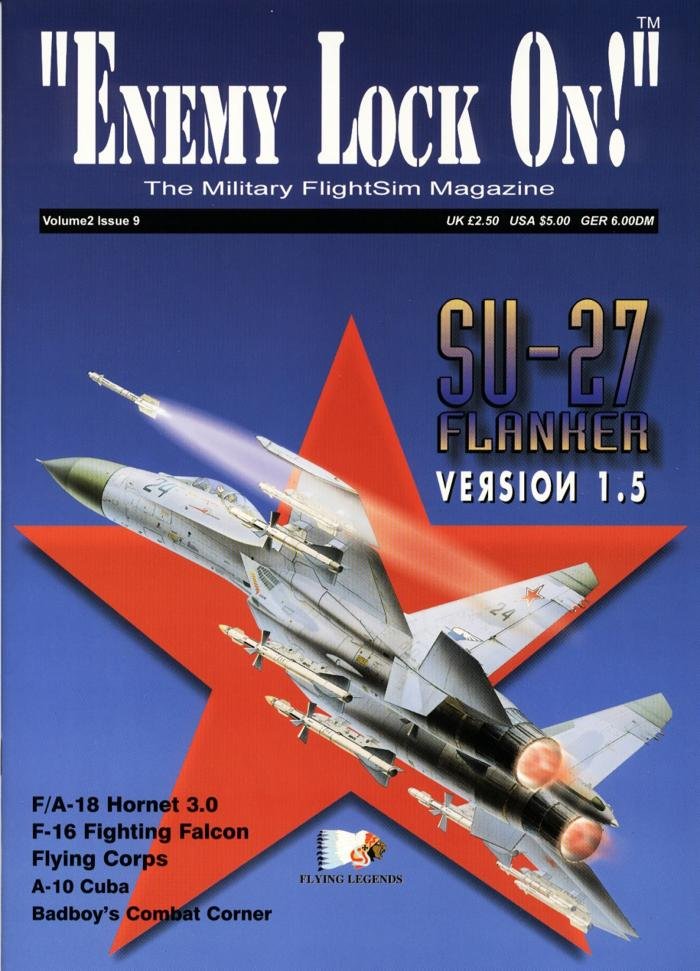 The front cover of Enemy Lock magazine from 1996. Leonard ‘Flightdoc’ Hjalmarson
1995 saw the release of Activision’s A-10 Cuba, Eric ‘Hellcats’ Parker’s excellent production. A-10 employed dated 256 colour graphics but had excellent flight, damage and physics modelling. The cockpit was the most detailed yet seen, with working instruments and clickable controls. This was probably the first clickable cockpit to appear on the PC.
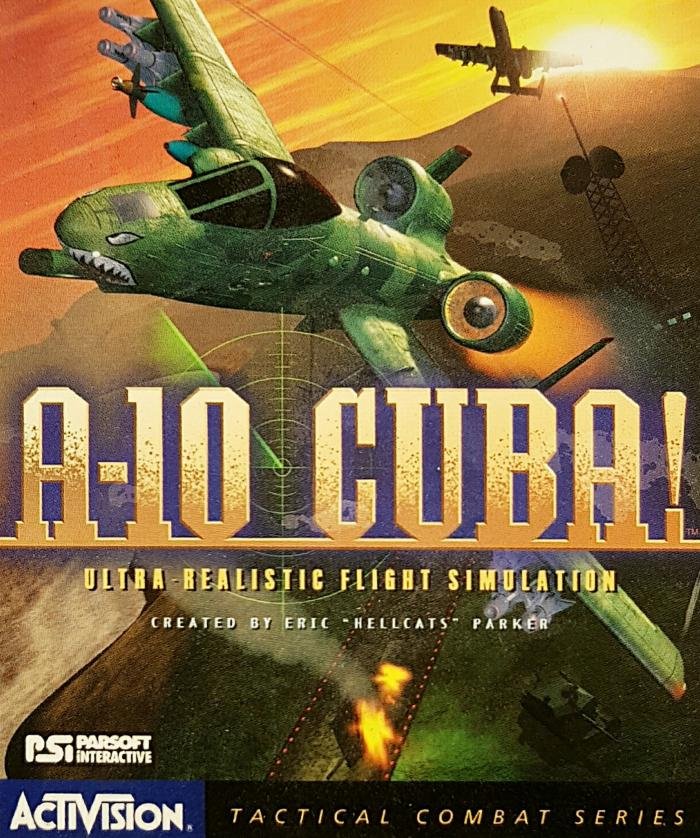 1995 saw the release of Activision’s A-10 Cuba. Leonard ‘Flightdoc’ Hjalmarson
A-10 set the standard for physics for the next few years and I still remember the first time I landed an ailing Warthog on a single engine and single-gear strut and pirouetted down the landing strip.
EA (Electronic Arts) released Marine Fighters, based on the USNF engine. Origin jumped back in with a World War One title, Wings of Glory. The show was stolen, however, by DiD’s EF2000 and SSI’s Su-27 Flanker - the latter being the first native Windows 95 simulation.
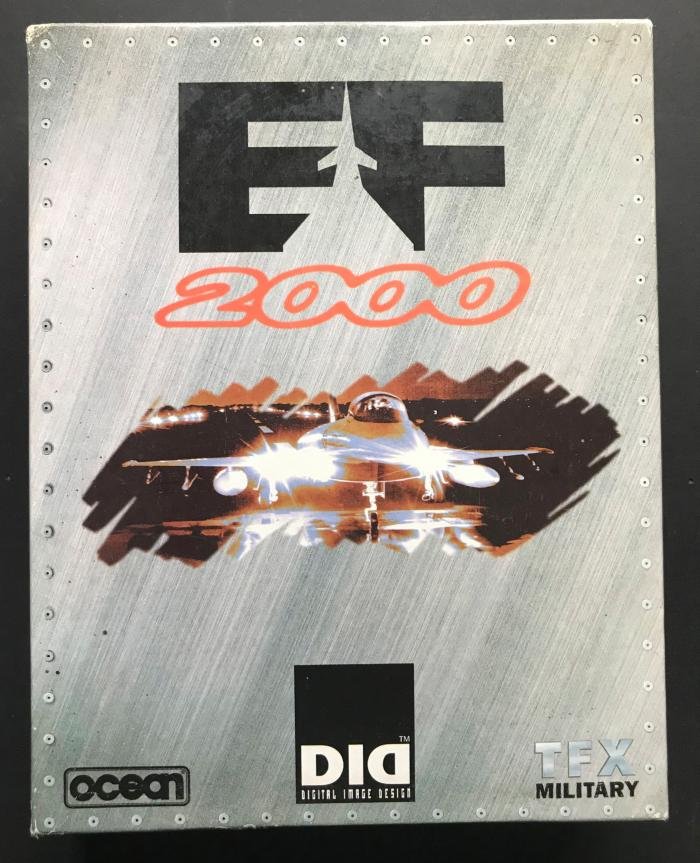 DiD’s EF2000 also set a new milestone in simulation design in 1996 Leonard ‘Flightdoc’ Hjalmarson
Su-27 was designed by a Russian team and modelled systems and aerodynamics in great detail. Although it came with 256 colour graphics, which was becoming dated, no one seemed to care.
Su-27 developed something approaching a cult following and its multiplayer LAN features made it a popular simulation with online pilots. Virtual squadrons quickly formed around Su-27.
During the summer of 1996, Braveheart was released, a role that would vault Mel Gibson to legendary status. This story of leadership and courage in the face of oppression, told with bold strokes and in exquisite detail, dominated the movie scene that year.
DiD’s EF2000 also set a new milestone in simulation design in 1996. I penned these words for a review in a Danish gaming magazine back then:
“EF2000 is the best all-around modern military jet sim ever and will probably age very well. Sure, ‘Su-27’ has a fabulous flight model and ‘Back to Baghdad’ has some awesome avionics but who else puts it together with a dynamic campaign, a decent wingman command structure for good tactical play and incredible graphics? And the avionics in EF2000 can stand on their own, requiring dedication to learning the systems.”
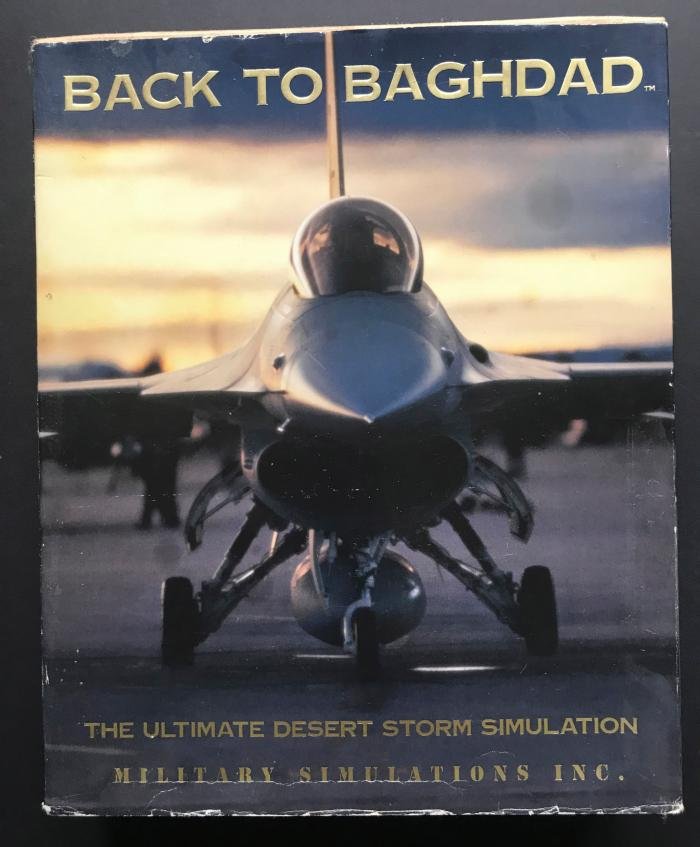 In 1996, MSI released Back to Baghdad - an F-16 simulation based on Desert Storm. Leonard ‘Flightdoc’ Hjalmarson
The campaign mode was incredible and multiplayer co-op single missions were supported. EF2000 defined ‘immersion’ and the ‘willing suspension of disbelief.’ It was the first simulation with a fully believable environment and won great critical acclaim.
EF2000 cheated somewhat on campaign dynamics but it was atmospheric and challenging. Like Su-27, it sported great LAN code and became an online favourite, causing some to remove the ageing Falcon 3.0 from their hard drives. Virtual squadrons sprang up worldwide devoted to multiplayer gaming with EF2000.
The minimum system requirements as specified on the original EF2000 box called for a 486 DX2/66 with 8MB of system memory. In order to run it with all graphics options at high resolution (640x480) and a good frame rate, a Pentium 90 with 32MB was the better option.
Around 1995 Electronic Arts struck a deal with Jane’s, of civil intelligence fame, to use their name on a new line of serious military simulations. Jane’s Combat Simulations was born, with Paul Grace and Andy Hollis (who produced Strike Eagle II and III) the primary personalities involved. And in 1995 Suncom released its lovely F-15 stick.
In January 1996 the first issue of PC ACE magazine appeared on newsstands and Thrustmaster released the F-22 Pro. Jane’s/EA released ATF, built on the USNF engine but proving more popular than USNF. MSI released Back to Baghdad, an F-16 simulation based on Desert Storm. Novalogic’s F-22 Lightning II hit the tarmac and Philips Media released Fighter Duel. Fighter Duel, a prop simulation, was specifically designed for multiplayer mayhem and was a landmark work graphically.
1996 saw the release of Andy Hollis’ first Jane’s title, Longbow. Dynamix released Silent Thunder (a flight simulation based around the A-10 Thunderbolt II), and Graphic Simulations released Hornet 3.0. Of these, the classic titles were Longbow and Hornet 3.0.
Longbow should fairly be identified as the first of the modern systems simulations (sometimes called ‘study’ sims). Longbow came with a thick manual covering the use of the various radar modes and weapon systems of the AH-64D helicopter. It required dedication to learn the systems, particularly when the battle got hot, not to mention making best use of your wingman for joint tactics.
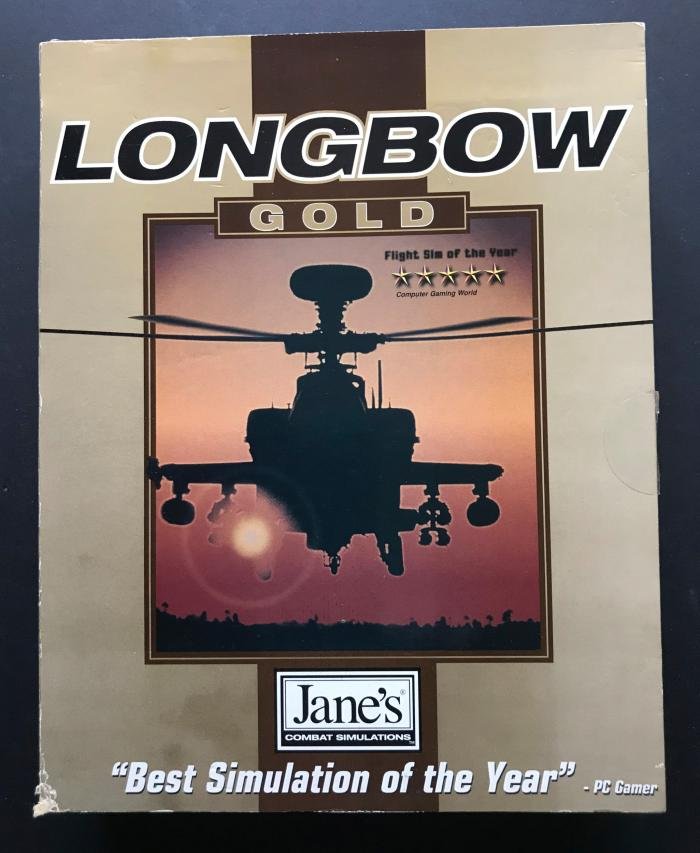 1996 saw the release of Andy Hollis’ first Jane’s title, Longbow; here we see the Gold version. Leonard ‘Flightdoc’ Hjalmarson
The steep learning curve was made easier by the first-ever virtual instructor. A voice narration led the player step by step through the systems in a series of training missions. The instruction required a response from the player, so it was only possible to move through the missions by actually responding to the instructor. Longbow featured a semi-dynamic campaign system that was immersive and convincing.
Hornet 3.0 was almost as challenging but was limited to 256 colours and so it didn’t look as good. Nevertheless, Hornet 3.0 was a realistic simulation of the weapons and targeting systems of the F/A-18 Hornet. The manual was written by an ex-naval aviator and the set of training missions were extremely well done. Unfortunately, the campaign was a series of individual missions and was not very immersive. Hornet 3.0 was released for both the Mac and the PC.
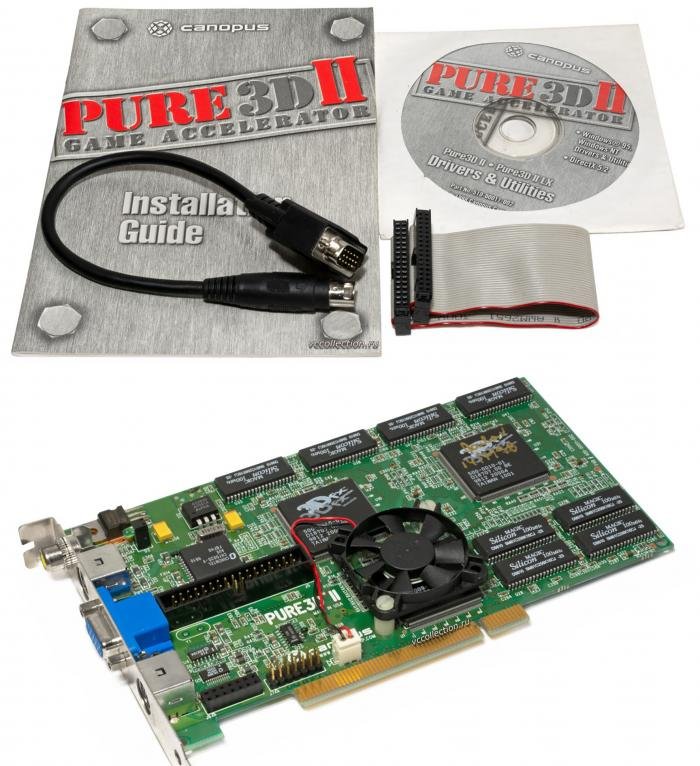 With the release of 3dfx - a dedicated 3D accelerator graphics card, in 1996, the graphical complexity of games leapt forward a generation. Here we see one example Pure 3D II. Leonard ‘Flightdoc’ Hjalmarson
In 1996 3dfx released a dedicated 3D accelerator graphics card and suddenly the graphical complexity of games leapt forward a generation. Up to this point, memory on video cards was strictly framebuffer memory, with VGA boards sporting 512K of memory. There was no acceleration of texture rendering in 3D games, with the host central processing unit (CPU) doing all the work.
3dfx released its first ‘Voodoo’ board with 2MB of framebuffer memory and 2MB of texture memory. The additional framebuffer memory paved the way for higher colour depths at higher resolutions and the texture memory stored the surface images that are applied to the polygons that make up objects in games.
16-bit colour and 3D acceleration had arrived for the PC. Not long afterwards, EF2000 v.2 was released with 3dfx support. The difference was stunning and there was no going back.
By Leonard ‘Flightdoc’ Hjalmarson
In the same year, Domark released Flying Nightmares, an AV-8B Harrier simulation. Origin released Pacific Strike in 1994 and EA released US Navy Fighters (USNF). Meanwhile, Empire released Rowan Software’s Dawn Patrol.
These last two titles both pushed the envelope for raw beauty, with USNF allowing up to 1024x768 resolution. USNF was great fun and combat action was intense, with powerful wingman control and good voice interaction. Meanwhile, Dawn Patrol set a new standard for flight modelling. Sometimes challenging to configure, it came to life on the new Pentium 90 systems introduced in the latter part of the year and modelled a large variety of World War One aircraft.
Thrustmaster’s F-16 TQS appeared early in 1994, the first separate throttle controller that accurately represented the throttle in the F-16. With the combination of the F-16 FLCS and TQS, Thrustmaster took the lead with the most flexible, most programmable and heaviest flight combat hardware ever seen by flight simmers.
On the downside, using the DOS utility to access the logical programming features to achieve the results desired could be a challenge. Calana software addressed that need with its CS Commander software in 1994. 16-bit sound cards were also making their debut in 1994, with companies including Creative Labs and Media Vision pushing the hardware boundaries.
1995-1996
In January 1995, the first issue of Enemy Lock On (ELO) was printed, a British magazine dedicated to military flight simulations. ELO sold by subscription-only and when it finally ended publication around 1998 the subscriber base exceeded 15,000.1995 saw the release of Activision’s A-10 Cuba, Eric ‘Hellcats’ Parker’s excellent production. A-10 employed dated 256 colour graphics but had excellent flight, damage and physics modelling. The cockpit was the most detailed yet seen, with working instruments and clickable controls. This was probably the first clickable cockpit to appear on the PC.
A-10 set the standard for physics for the next few years and I still remember the first time I landed an ailing Warthog on a single engine and single-gear strut and pirouetted down the landing strip.
EA (Electronic Arts) released Marine Fighters, based on the USNF engine. Origin jumped back in with a World War One title, Wings of Glory. The show was stolen, however, by DiD’s EF2000 and SSI’s Su-27 Flanker - the latter being the first native Windows 95 simulation.
Su-27 was designed by a Russian team and modelled systems and aerodynamics in great detail. Although it came with 256 colour graphics, which was becoming dated, no one seemed to care.
Su-27 developed something approaching a cult following and its multiplayer LAN features made it a popular simulation with online pilots. Virtual squadrons quickly formed around Su-27.
During the summer of 1996, Braveheart was released, a role that would vault Mel Gibson to legendary status. This story of leadership and courage in the face of oppression, told with bold strokes and in exquisite detail, dominated the movie scene that year.
DiD’s EF2000 also set a new milestone in simulation design in 1996. I penned these words for a review in a Danish gaming magazine back then:
“EF2000 is the best all-around modern military jet sim ever and will probably age very well. Sure, ‘Su-27’ has a fabulous flight model and ‘Back to Baghdad’ has some awesome avionics but who else puts it together with a dynamic campaign, a decent wingman command structure for good tactical play and incredible graphics? And the avionics in EF2000 can stand on their own, requiring dedication to learning the systems.”
The campaign mode was incredible and multiplayer co-op single missions were supported. EF2000 defined ‘immersion’ and the ‘willing suspension of disbelief.’ It was the first simulation with a fully believable environment and won great critical acclaim.
EF2000 cheated somewhat on campaign dynamics but it was atmospheric and challenging. Like Su-27, it sported great LAN code and became an online favourite, causing some to remove the ageing Falcon 3.0 from their hard drives. Virtual squadrons sprang up worldwide devoted to multiplayer gaming with EF2000.
The minimum system requirements as specified on the original EF2000 box called for a 486 DX2/66 with 8MB of system memory. In order to run it with all graphics options at high resolution (640x480) and a good frame rate, a Pentium 90 with 32MB was the better option.
Around 1995 Electronic Arts struck a deal with Jane’s, of civil intelligence fame, to use their name on a new line of serious military simulations. Jane’s Combat Simulations was born, with Paul Grace and Andy Hollis (who produced Strike Eagle II and III) the primary personalities involved. And in 1995 Suncom released its lovely F-15 stick.
In January 1996 the first issue of PC ACE magazine appeared on newsstands and Thrustmaster released the F-22 Pro. Jane’s/EA released ATF, built on the USNF engine but proving more popular than USNF. MSI released Back to Baghdad, an F-16 simulation based on Desert Storm. Novalogic’s F-22 Lightning II hit the tarmac and Philips Media released Fighter Duel. Fighter Duel, a prop simulation, was specifically designed for multiplayer mayhem and was a landmark work graphically.
1996 saw the release of Andy Hollis’ first Jane’s title, Longbow. Dynamix released Silent Thunder (a flight simulation based around the A-10 Thunderbolt II), and Graphic Simulations released Hornet 3.0. Of these, the classic titles were Longbow and Hornet 3.0.
Longbow should fairly be identified as the first of the modern systems simulations (sometimes called ‘study’ sims). Longbow came with a thick manual covering the use of the various radar modes and weapon systems of the AH-64D helicopter. It required dedication to learn the systems, particularly when the battle got hot, not to mention making best use of your wingman for joint tactics.
The steep learning curve was made easier by the first-ever virtual instructor. A voice narration led the player step by step through the systems in a series of training missions. The instruction required a response from the player, so it was only possible to move through the missions by actually responding to the instructor. Longbow featured a semi-dynamic campaign system that was immersive and convincing.
Hornet 3.0 was almost as challenging but was limited to 256 colours and so it didn’t look as good. Nevertheless, Hornet 3.0 was a realistic simulation of the weapons and targeting systems of the F/A-18 Hornet. The manual was written by an ex-naval aviator and the set of training missions were extremely well done. Unfortunately, the campaign was a series of individual missions and was not very immersive. Hornet 3.0 was released for both the Mac and the PC.
In 1996 3dfx released a dedicated 3D accelerator graphics card and suddenly the graphical complexity of games leapt forward a generation. Up to this point, memory on video cards was strictly framebuffer memory, with VGA boards sporting 512K of memory. There was no acceleration of texture rendering in 3D games, with the host central processing unit (CPU) doing all the work.
3dfx released its first ‘Voodoo’ board with 2MB of framebuffer memory and 2MB of texture memory. The additional framebuffer memory paved the way for higher colour depths at higher resolutions and the texture memory stored the surface images that are applied to the polygons that make up objects in games.
16-bit colour and 3D acceleration had arrived for the PC. Not long afterwards, EF2000 v.2 was released with 3dfx support. The difference was stunning and there was no going back.
By Leonard ‘Flightdoc’ Hjalmarson