French Study Highlights Rafale Fighter’s Growing Struggles Against Fifth Generation Aviation

Beijingwalker

VIP Member
Joined
Nov 4, 2011
Messages
93,700
Reaction score
113,992
Reputation
1,983.1
Country of Origin
Country of Residence

French Study Highlights Rafale Fighter’s Growing Struggles Against Fifth Generation Aviation​

September-2nd-2026

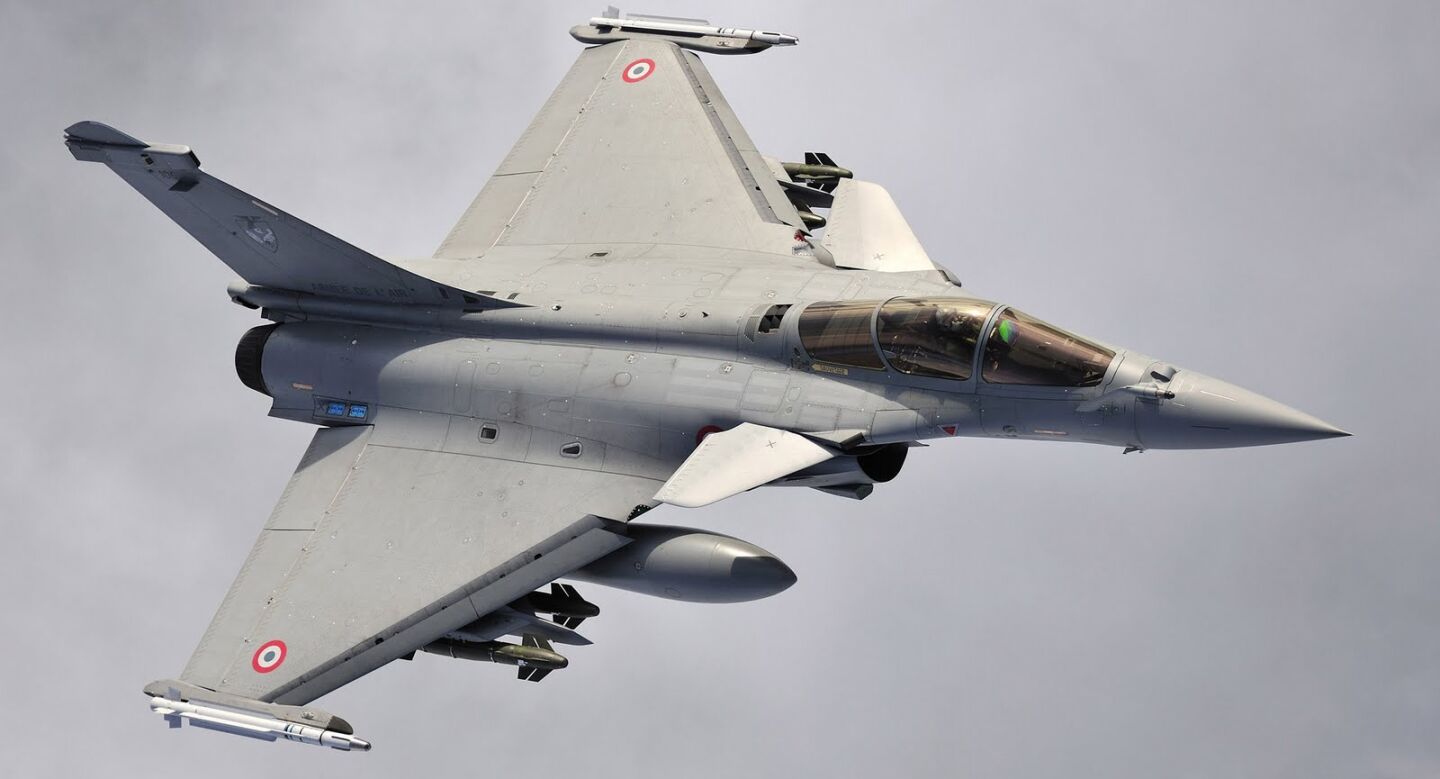
French assessment has highlighted the significant struggles faced by Rafale lightweight fourth generation fighters in an era where aerial warfare is increasingly dominated by fifth generation capabilities, reflecting on feedback from pilots at a time when the future of France’s air power is increasingly uncertain. The Future of Air Superiority: Mastering the Sky in High-Intensity Warfare was unusually candid about the limitations of current European fourth generation fighters. The authors discuss the difficulty of operating against modern fifth generation fighters, and the main advantages that stealth aircraft benefit from.
rafel-hero.jpg

Rafale Fighter

The paper stresses that while stealth alone doesn’t guarantee air superiority, it provides an extremely important advantage in the most demanding scenarios. The technological asymmetry is increasingly clear, with French pilots regularly facing fifth generation fighters in joint exercises observing: “The combat mission against stealth fighters on the Rafale is impossible to win with the sensors in their current state.” This is despite the Rafale having been two decades ahead of all other European fighter types in integrating phased array radars, and a decade ahead in integrating an active electronically scanned array radar.
6702936-6434087-image-a-16_1543331002012-hero.jpg
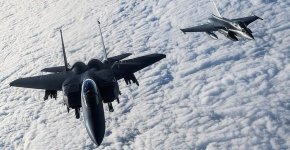
Heavyweight F-15 (left) and Lightweight Rafale

A primary shortcoming of the Rafale and other European fighter types is not only that their radars are generally less advanced than those developed in China and the United States, but also that they are relatively lightweight aircraft that can only integrate relatively small radars. The U.S. F-15EX integrates a radar that is both more sophisticated and close to twice the size as that of the Rafale, making it much more viable even against advanced stealth targets, whit his applying moreso to the Chinese J-16 which integrates a radar over three times as large. European fighters are thus not only more than a generation behind in both aircraft design and sensor sophistication, but also suffer for their lightweight designs.
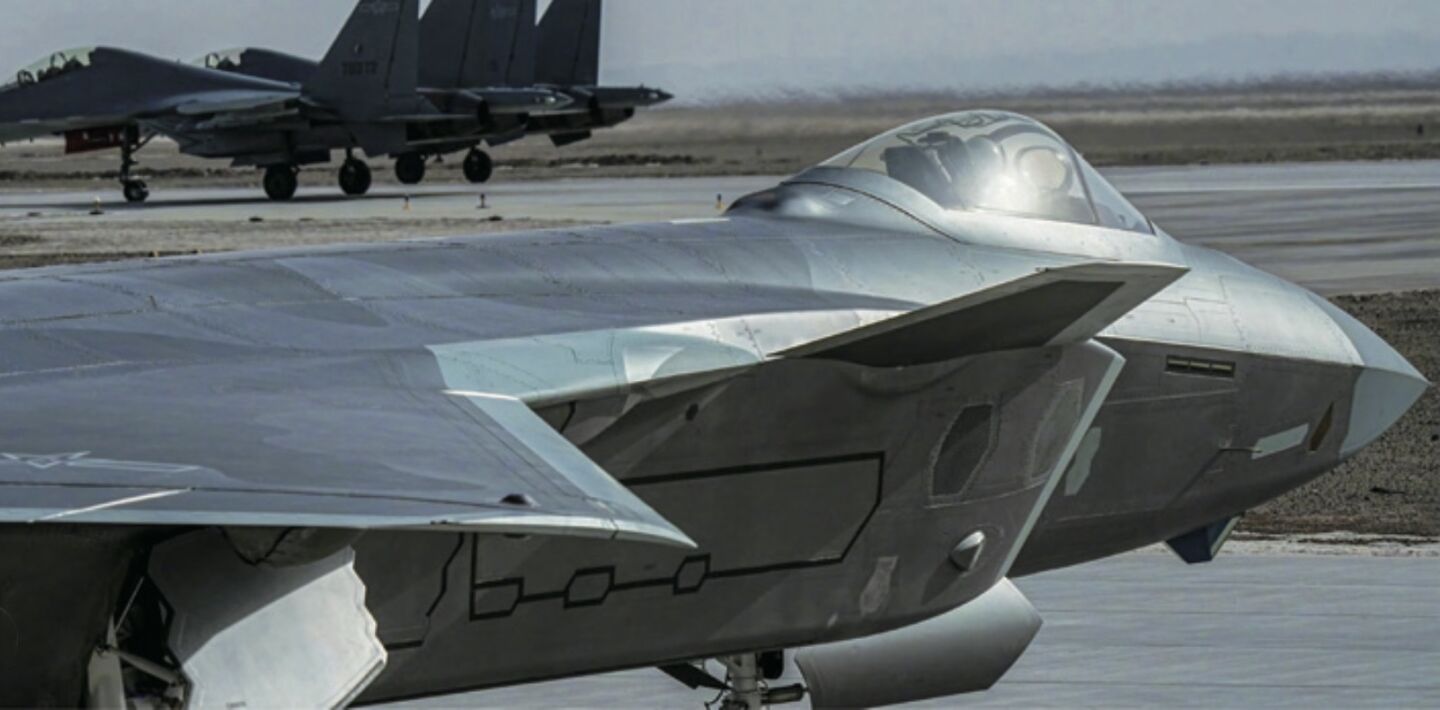
J-20 Fighter with J-16s in the Background

The French Air Force began defining requirements for the Rafale in 1983, although major development delays meant that it would be 18 years before the aircraft could be belatedly brought into service in 2001. The Rafale program was from its outset very far from cutting edge, and by the time it first flew both the United States and the Soviet Union had already moved decisively into the fifth generation of air combat technology development. While being a full generation ahead of the Rafale technologically, the U.S. YF-22 and YF-23 fifth generation technology demonstrators first flew just four years after the Rafale’s own first demonstrator, while the rival Soviet MiG 1.42 was scheduled to make its first flight two-to-three years after them, although the USSR’s disintegration ended the program and set Russian fighter development back by decades.

The introduction into service of the Chinese J-20A, and the projected introduction of the F-35 Block 4 in the early 2030s, will further widen the discrepancy in performance, with the Rafale’s modernisation potential remaining far more limited. Russia, meanwhile, which has lagged far behind the U.S. and China in fighter development, has significantly enhanced its Su-57 fifth generation fighter, which while less sophisticated than the J-20 or F-35, still has far higher combat or modernisation potentials than any European fighter type. The Rafale itself has seen its export prospects seriously constrained by its inability to compete on the same level with advanced fifth generation fighters, with the aircraft losing every tender in which it has competed against the F-35.
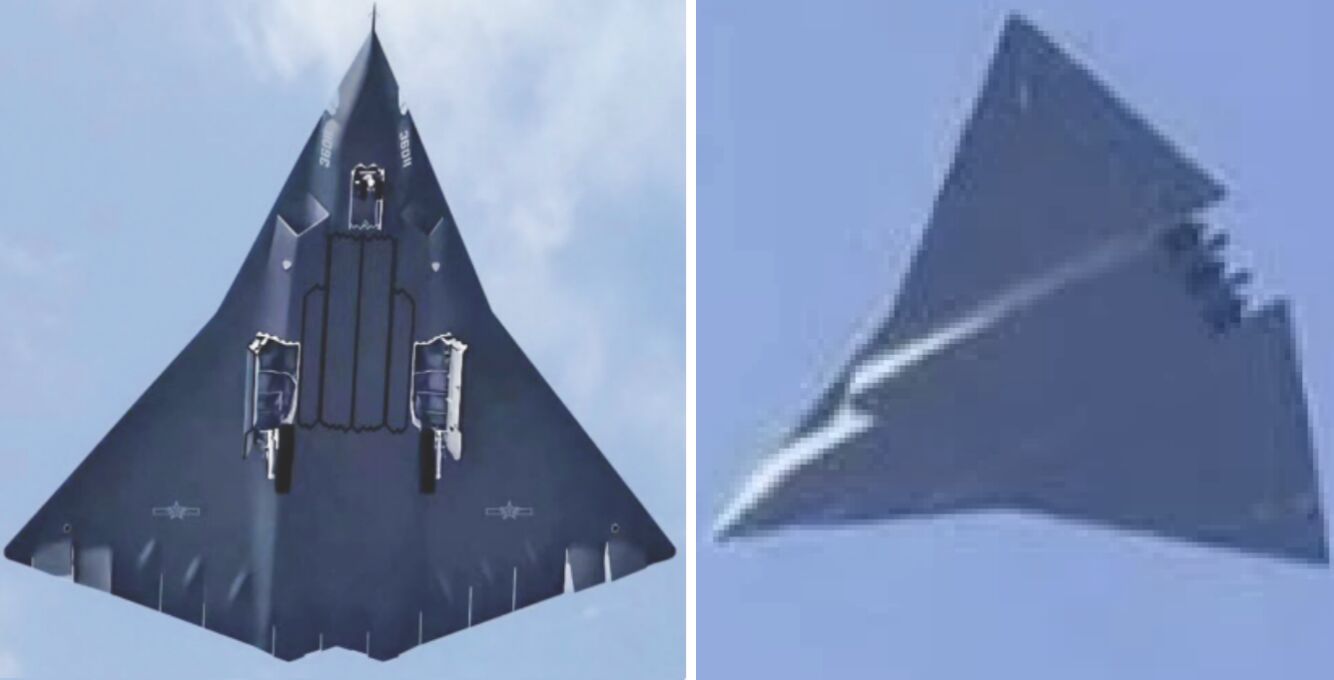
First and Fifth Prototypes of Chinese Ultra-Heavyweight Sixth Generation Fighter

The Rafale saw its first high intensity combat test in May 2025, during which between one and four of the aircraft flown by the Indian Air Force were neutralised during engagements with Pakistan Air Force’s Chinese-supplied J-10C ‘4+ generation’ fighters. Its capabilities are projected to increasingly fall behind, with China scheduled to bring sixth generation fighters into service in the early 2030s, close to a decade before the United States, while no third countries are expected to produce similarly capable fighters until the late 2040s. The French Armed Forces will continue to rely on the Rafale as their most capable fighter until at least the late 2030s, and likely significantly longer, with European fighter programs considered unlikely to produce a fighter on par with the F-35 Block 4 or J-20A for the foreseeable future, let alone a sixth generation fighter.
 

French Pilots: Rafale Jets “Struggle” Against Stealth Fighters as India Builds World’s 2nd-Largest Fleet​

September 2, 2026

With the Indian Air Force’s (IAF) fighter squadron strength at its lowest in six decades, New Delhi is looking to boost its combat power, with French Rafale fighter jets at the forefront.

The IAF now fields only about 29 fighter squadrons against a sanctioned strength of 42, its lowest level since the 1960s, triggering a sharp debate in New Delhi over how to close the gap.

After years of debate, tests, negotiations, and hard bargaining, India has zeroed in on the French Rafale. India ordered 36 Rafale in 2016 and followed up with a follow-on order for 26 Rafale M (the Naval version) in 2025.

India is also negotiating a deal with France for 114 new Rafales. If finalized, India will have a fleet of 176 Rafales, making it the second-largest operator after France.

Simultaneously, India is developing its own fifth-generation fighter jet, the AMCA. According to the official timeline, which almost all analysts agree is overly ambitious, AMCA will enter serial production around 2035.

Defense Industry

This means India will have a serious capability gap relative to China and possibly even Pakistan.

China has nearly 300 J-20 stealth fighter jets in its arsenal, and by 2035, this number could swell up to 1,000.

Pakistan, meanwhile, could reportedly acquire 40 J-35A fifth-generation fighter jets from China, and some reports say Pakistani pilots have already started training on these aircraft.

Rafale Jets: Can They Counter Stealth Fighters?​

Amid this debate, a research paper by the French Institute of International Relations (IFRI) highlights that French pilots themselves are skeptical of the Rafale’s capabilities against stealth fighter jets.

While the paper suggests that this capability gap will be somewhat bridged with the arrival of Rafale F5, this version of the jet will be operational only around 2033-2035. This means India will have a serious capability gap vis-à-vis both China and Pakistan (if it indeed buys the J-35A) for the next decade.

The paper suggests that French Air Force pilots think the Rafale is not good enough against stealth aircraft.

“In the realm of air-to-air combat, the French Air and Space Force is well equipped and proficient when facing adversaries operating non-stealth fighter aircraft,” the paper said.

“However, the current operational shortfall in VLO (very low observable – another term for stealth fighter jets) technology could make France reliant on partner air forces equipped with VLO platforms and effectively limit it to a supporting role in allied operations for the period 2025–2035,” it added.

In a high-intensity combat with Western allies, the French fighter force “could be confined to the role of ‘auxiliaries’ to the 5th generation fighters, in a two-speed air coalition.”

Essentially, the paper acknowledges that while Rafale stands out for its air-to-air combat prowess, the stealth capability gap means France will rely on partner countries that operate stealth jets and will effectively play supporting roles in NATO operations during the period 2025 to 2035.

It further added that “combat missions against stealth fighters on Rafale are very difficult to win in the current state of sensors.”

A critical weakness highlighted by the paper is its limited efficiency in SEAD (suppression of enemy air defenses) missions.

Stealth fighters are better at SEAD (suppression of enemy air defenses) mainly because they can get close to radar and SAM sites, forcing conventional fighters to stay farther away.

A conventional fighter is typically detected by search radars at long range, which then share the data with SAM launchers, allowing them to track the target and shoot it down.

Stealth fighter jets, however, due to their very low radar-cross-section (RCS), are not easily detectable, especially in the X-band frequencies most SAM fire-control radars use.

Essentially, a radar that would be able to detect Su-30, Rafale, or F-15 at a distance of over 100 miles might not be able to detect a stealth jet, such as the F-22 Raptor or the F-35, until it’s already very close.

The stealth jets can therefore penetrate contested airspace unchallenged and perform SEAD missions effectively. We saw an iteration of this in 2025 and 2026, when on two occasions Israeli stealth fighter jets were able to penetrate Iranian airspace and perform SEAD missions before fourth-generation fighter jets entered the picture for heavy bombing missions.

France, however, “will not have a proper SEAD capability before Rafale F5,” it said.

AASM/Hammer gives Rafales only limited DEAD (Destruction of Enemy Air Defenses) against short-range fixed SAM sites and still needs external sensors France does not have.

Another disadvantage is that the SCALP-EG range is only just sufficient against modern standoff SAMs and cannot be retargeted in flight, unlike the Tomahawk Block IV/V.

Rafale, therefore, while a very capable multirole fighter jet known for its air-to-air combat prowess, can not effectively perform SEAD/DEAD missions in contested airspace, which severely limits its operational freedom against a peer enemy.

Why France Ignored Stealth​

Several reasons explain France’s reluctance to invest in VLO technology.

In the 1990s, both France’s armed forces and its national defense industry were caught off guard by the rapid emergence of American VLO capabilities.

“Having already committed to the Rafale program, French defense stakeholders downplayed the significance of VLO technology in the context of the peace dividend and the limited scope of military operations at the time,” the paper said.

The rise of VLO (stealth) platforms presented a commercial risk for the Rafale, with no alternative stealth design that could be rapidly developed in France.

Another reason France ignored stealth was the nature of conflicts from 1995 to 2022 in which France participated, where the Rafale’s capabilities consistently exceeded the operational demands of theaters in Afghanistan, Libya, and the Sahel.

However, against a near-peer enemy such as Russia or China, which have advanced integrated air defense systems (IADS), the Rafale’s ability to penetrate contested airspace remains debatable.

The technological asymmetry is now clear. “French pilots, who regularly participate in joint exercises against fifth-generation fighters, acknowledge that ‘combat missions against stealth aircraft in the Rafale are very difficult to win with the current state of sensors.’

Besides 114 Rafales, India is in talks with France over the 6th-gen FCAS aircraft program. However, if the deal materialized, FCAS jets are not expected to enter service anytime before 2040.

 
Didn't the Indians and maybe some French say Rafales are stealthy fighters that are superior to Chinese J-20 ?
 
Last edited:
Rafael was struggling to find buyers for more than two decades , it got lucky when the French government went all out to find the buyers , lots of haggling , but kissing and kickbacks resulted in hallelujah....we got the suckers .
 
J-16 dusted the Rafale in air exercises.

The Shenyang J-16's nose cone houses a vastly larger Active Electronically Scanned Array (AESA) radar antenna with roughly double the physical aperture and transmit/receive module (TRM) count compared to the compact Dassault Rafale's Thales RBE2 AESA radar. [1]

Size and Aperture Comparison
    • J-16 (Flanker Derivative): Features a heavy-weight, wide-diameter nose cone tailored for a massive AESA antenna. It accommodates an estimated 1,760 to 2,000 Gallium Arsenide (GaAs) or Gallium Nitride (GaN) transmit/receive modules. [1, 2]
    • Rafale (Medium-Weight Multirole): Employs the Thales RBE2 array with an antenna diameter restricted to roughly 600mm and constrained by a compact, low-drag aerodynamic radome holding approximately 838 to 1,000 transmit/receive modules. [1, 2]

Operational Implications
    • Detection & Power: The J-16's larger physical aperture provides greater raw radar power, allowing it to project stronger electromagnetic energy and support very long-range engagement pairings like the PL-15 missile. [1]
    • Agility & Signature: The Rafale's smaller nose cone limits total radar power and detection range relative to heavy-weight counterparts, but complements a lower overall radar cross-section (RCS) and advanced sensor fusion mechanics. [1, 2, 3]
 
Saudi and Turkish F-35s will now mean rest of much of the world will want 5th Gen and very quickly.

UAE and India left holding the can when it comes to Rafale as rest of the world moves on
 
Saudi and Turkish F-35s will now mean rest of much of the world will want 5th Gen and very quickly.

UAE and India left holding the can when it comes to Rafale as rest of the world moves on
Bro , in coming decades china and America will completely dominate the aircraft industry, be it military or civilian ...few lucky countries in rest of the world will be thrown the bones to manufacture few parts or licence to assemble under strict conditions.
 
However a source said the People’s Liberation Army’s tracking efforts – which involved jets and Type 055 destroyers – failed.

“The PLA deployed some electronic warfare aircraft such as the J-16D and warships to try to locate Pelosi’s aircraft, but were not successful,” the source said.

“Almost all the PLA electronic warfare equipment couldn’t work properly because they were all jammed by electronic interference by the American aircraft strike group sent by the Pentagon to escort her.”
 
However a source said the People’s Liberation Army’s tracking efforts – which involved jets and Type 055 destroyers – failed.

“The PLA deployed some electronic warfare aircraft such as the J-16D and warships to try to locate Pelosi’s aircraft, but were not successful,” the source said.

“Almost all the PLA electronic warfare equipment couldn’t work properly because they were all jammed by electronic interference by the American aircraft strike group sent by the Pentagon to escort her.”
What does this has to do with Rafakes ? Only Indians and Yanks believe this kind stories.
 
Bro , in coming decades china and America will completely dominate the aircraft industry, be it military or civilian ...few lucky countries in rest of the world will be thrown the bones to manufacture few parts or licence to assemble under strict conditions.

100%, you are in with US or China or you are f**ked.

Europe may come up with something, but will be small in numbers, expensive and not the cutting edge on US and China are capable of

My guess is we will see China adds to the J-35 client list with countries pushed out of F-35.

Possibly likes of Thailand, Egypt, Indonesia and South Africa
 

French Study Highlights Rafale Fighter’s Growing Struggles Against Fifth Generation Aviation​

September-2nd-2026

French assessment has highlighted the significant struggles faced by Rafale lightweight fourth generation fighters in an era where aerial warfare is increasingly dominated by fifth generation capabilities, reflecting on feedback from pilots at a time when the future of France’s air power is increasingly uncertain. The Future of Air Superiority: Mastering the Sky in High-Intensity Warfare was unusually candid about the limitations of current European fourth generation fighters. The authors discuss the difficulty of operating against modern fifth generation fighters, and the main advantages that stealth aircraft benefit from.

rafel-hero.jpg

Rafale Fighter

The paper stresses that while stealth alone doesn’t guarantee air superiority, it provides an extremely important advantage in the most demanding scenarios. The technological asymmetry is increasingly clear, with French pilots regularly facing fifth generation fighters in joint exercises observing: “The combat mission against stealth fighters on the Rafale is impossible to win with the sensors in their current state.” This is despite the Rafale having been two decades ahead of all other European fighter types in integrating phased array radars, and a decade ahead in integrating an active electronically scanned array radar.

View attachment 217165
Heavyweight F-15 (left) and Lightweight Rafale

A primary shortcoming of the Rafale and other European fighter types is not only that their radars are generally less advanced than those developed in China and the United States, but also that they are relatively lightweight aircraft that can only integrate relatively small radars. The U.S. F-15EX integrates a radar that is both more sophisticated and close to twice the size as that of the Rafale, making it much more viable even against advanced stealth targets, whit his applying moreso to the Chinese J-16 which integrates a radar over three times as large. European fighters are thus not only more than a generation behind in both aircraft design and sensor sophistication, but also suffer for their lightweight designs.

J-20 Fighter with J-16s in the Background

The French Air Force began defining requirements for the Rafale in 1983, although major development delays meant that it would be 18 years before the aircraft could be belatedly brought into service in 2001. The Rafale program was from its outset very far from cutting edge, and by the time it first flew both the United States and the Soviet Union had already moved decisively into the fifth generation of air combat technology development. While being a full generation ahead of the Rafale technologically, the U.S. YF-22 and YF-23 fifth generation technology demonstrators first flew just four years after the Rafale’s own first demonstrator, while the rival Soviet MiG 1.42 was scheduled to make its first flight two-to-three years after them, although the USSR’s disintegration ended the program and set Russian fighter development back by decades.

The introduction into service of the Chinese J-20A, and the projected introduction of the F-35 Block 4 in the early 2030s, will further widen the discrepancy in performance, with the Rafale’s modernisation potential remaining far more limited. Russia, meanwhile, which has lagged far behind the U.S. and China in fighter development, has significantly enhanced its Su-57 fifth generation fighter, which while less sophisticated than the J-20 or F-35, still has far higher combat or modernisation potentials than any European fighter type. The Rafale itself has seen its export prospects seriously constrained by its inability to compete on the same level with advanced fifth generation fighters, with the aircraft losing every tender in which it has competed against the F-35.

First and Fifth Prototypes of Chinese Ultra-Heavyweight Sixth Generation Fighter

The Rafale saw its first high intensity combat test in May 2025, during which between one and four of the aircraft flown by the Indian Air Force were neutralised during engagements with Pakistan Air Force’s Chinese-supplied J-10C ‘4+ generation’ fighters. Its capabilities are projected to increasingly fall behind, with China scheduled to bring sixth generation fighters into service in the early 2030s, close to a decade before the United States, while no third countries are expected to produce similarly capable fighters until the late 2040s. The French Armed Forces will continue to rely on the Rafale as their most capable fighter until at least the late 2030s, and likely significantly longer, with European fighter programs considered unlikely to produce a fighter on par with the F-35 Block 4 or J-20A for the foreseeable future, let alone a sixth generation fighter.
What the French should be ‘studying’ is how PAF J-10’s beat the living snot out of IAF’s Ra-fails. They can worry about 5th generation opponents after that study is published. Brushing that particular humiliation under the carpet and debating comparisons with 5th generation is dubious at best if not outright dishonest.
 

Users who are viewing this thread

Country Watch Latest

Latest Posts

Back
Top