
The SC
INT'L MOD

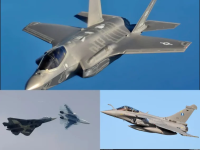
SIPRI Report 2025: The Arab arms race is accelerating with qualitative deals that are redrawing the balance of power.
The report’s data shows that the Middle East and North Africa region is still one of the most active regions in the world in arms imports, with a clear diversity in arms sources between the United States, France, Italy, South Korea, Turkey, China, and Russia, in addition to the expansion of local manufacturing programs in a number of countries.
The Kingdom of Saudi Arabia has begun a new phase of modernizing its armed forces by receiving the first THAAD air defense systems, in addition to continuing the production of Patriot missiles locally, and continuing the development of F-15S fighters to the F-15SA standard, with the receipt of batches of AIM-120D, SLAM-ER, Harpoon, and Sniper ATP missiles. Riyadh also continued to receive Emirati JAIS armored vehicles and French patrol boats, and launched a program to enhance its anti-submarine capabilities via C-27J MPA aircraft equipped with MU-90 torpedoes.
As for the United Arab Emirates, it began receiving French Rafale F4 fighters, completed delivery of Patriot PAC-3 MSE missiles, and continued receiving AH-64E Apache helicopters and Korean Cheongung-II air defense systems. The year also witnessed progress in the program to manufacture the MANSUP naval missile locally, the production of Al Tariq bombs, in addition to the start of delivery of “Falaj 3” corvettes equipped with Kronos radars, VL-MICA systems, and Exocet missiles, in addition to the receipt of A330 MRTT refueling aircraft.
In Qatar, the delivery of the F-15QA and Eurofighter Typhoon fighter fleet has been completed, with the continued arrival of Meteor, Brimstone and AGM-88F missiles, in addition to the contracting of MQ-9 Reaper aircraft and FS-LIDS anti-drone systems, and the continued receipt of NASAMS-2 and Patriot systems, in addition to NH-90 helicopters, midget submarines and M-346 training aircraft.
Kuwait witnessed the continuation of the delivery of Eurofighter Typhoon fighters, the completion of the receipt of Turkish Bayraktar TB2 aircraft, and the contracting of eight “Falaj 3” corvettes equipped with advanced weapon systems including VL-MICA and Kronos radars.
As for Bahrain, it completed receiving AIM-120D missiles, JDAM bombs, and reconnaissance pods for F-16 Block 70 fighters, while it continued to receive AGM-88F anti-radar missiles.
In the Sultanate of Oman, activity was limited to contracting Spanish Lanza-LRR remote warning radars to enhance air surveillance capabilities.
In Egypt, the implementation of the deal for 30 Rafale fighters continued with the arrival of new batches of aircraft, MICA missiles, and AASM Hammer bombs, in addition to the start of delivery of Ground Master 400 radars. The Egyptian Navy also received RAM Block 2B missiles, and continued to receive Swiftships, while the Korean K9 Thunder gun program entered the implementation phase with the start of delivery of the guns and supply vehicles, in parallel with the transfer of technology and local production.
In Syria, the report indicated that Turkish Cobra and Ejder armored vehicles had begun arriving as part of military support programs.
As for Iraq, it began receiving Airbus H225M Caracal tactical transport helicopters, and completed receiving Bell 505 training helicopters.
In Lebanon, the report recorded the receipt of M113 armored vehicles as aid from Greece.
In eastern Libya, the report monitored the receipt of Tor-M1 air defense systems and missiles, in addition to Smerch launchers and BMP-2M, BTR-82A, Spartak, and Tiger armored vehicles, as part of enhancing ground and defense capabilities.
Tunisia witnessed the contracting of Bell 412EPX helicopters and Javelin anti-armor missiles, in addition to the receipt of two Island-class patrol boats as part of American aid.
In Algeria, deliveries of Russian Su-35S fighters have begun, coinciding with the continued production and assembly of German Fuchs 2 armored vehicles locally.
As for Morocco, it has entered the stage of receiving fully-armed AH-64E Apache helicopters, including Longbow radars, Hellfire, Stinger, and APKWS missiles. It has also begun receiving M1117 armored vehicles and Indian WhAP armored vehicles manufactured locally under license. It has completed receiving the Israeli Barak MX and Barak-LRAD air defense systems in a deal worth $500 million. It has also contracted for H225M Caracal helicopters. Receiving Turkish Akıncı drones, in addition to contracting for ATMOS 2000 self-propelled guns.
In Sudan, the report recorded the receipt of an IL-76M transport aircraft and a number of Turkish Akıncı heavy drones, while Somalia received Italian Puma armored vehicles as part of military support programs.
The SIPRI 2025 report reflects the accelerating pace of modernization of Arab armies, with a clear shift from simply purchasing weapons to focusing on local manufacturing and technology transfer, especially in Saudi Arabia, the Emirates, Egypt, Morocco and Algeria. It also confirms the continued interest in strengthening air defenses, developing air and naval forces, and increasing capabilities to confront drones and modern threats, in light of a regional security environment that is witnessing rapid changes.
Source:
Stockholm International Peace Research Institute (SIPRI) 2025
Stockholm International Peace Research Institute (SIPRI) 2025


