hydrabadi_arab
Trusted Member

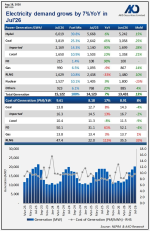
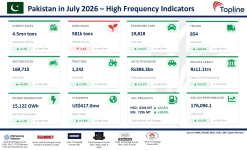
Including solar overall >>22,000/GWh
Pakistan electricity from solar generation ~70 twh in FY2025-26 ending june 26. Combined with grid 130 TWh, overall it passed 200 TWh mark.
Last edited:
Follow along with the video below to see how to install our site as a web app on your home screen.
Note: This feature may not be available in some browsers.
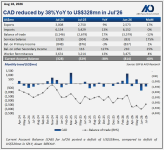


Then came the hangover months from July 2022 to June 2023. Growth in the preceding two years had burned away the reserves and the fiscal buffers of the state, and a sharp contraction was now necessary as well as an emergency return to the IMF. From July 2022 the economy was hit by a wave of debt-related outflows since creditors, many of them short-term, refused to roll over their commitments. Debt repayments and related outflows had totalled $10.8bn in the first year of the growth boom. They rose to $14bn in the second year. By the time the hangover came, they leapt up to cross $18bn. Some of this was short-term money they had borrowed to keep financing the drains from the growth phase, and seeing the reserves dwindle and a severe power struggle grip the country, paralysing its decision-making, creditors bolted for the exit. Over this period, official FX reserves fell from $9.8bn to $4.4bn, not even enough for one month of import cover.Burning your buffers to fuel growth is a little like burning your furniture to heat your house.
Of course, they can always augment these resources with more externally arranged inflows to extend the burn. That is what they always do. But this augmentation rarely buys more than a 12-month extension. But the larger point here is that burning your buffers to fuel growth is a little like burning your furniture to heat your house. The temptation to pump growth, to spend the buffers built with such sacrifice, is great. But the costs, when they inevitably arrive, are always greater still.
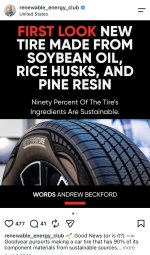
These unconventional processes may not be cost competitive with established mainstream processes. When recycled inputs have been used to substitute virgin raw materials, many times they need government subsidy to make them cost competitive.Goodyear states there are “17 sustainable ingredients, including recycled polyester and plant-based components like soybean oil, rice husk waste, and “bio-renewable” pine resin. It also uses steel with "high recycled content" and "ISCC-certified mass balance polymers from bio- and bio-circular feedstock."
Why can’t Pakistan think of out of box solution and develop its agricultural products?
Making leather products from cactus plant which Pakistan can easily grow in Sindh and Blochistan.
These unconventional processes may not be cost competitive with established mainstream processes. When recycled inputs have been used to substitute virgin raw materials, many times they need government subsidy to make them cost competitive.
What is the market opportunity for chilies, garlic, ginger, and mushrooms that can be targeted by Pakistan? Fresh foods need refrigerated transportation or air delivery that will be challenge for Pakistan. It may be better to target products that don't need refrigerated or air transport.Pakistan doesn’t need to reinvent its entire agricultural system to start earning serious revenue, it simply needs to strategically grow a handful of high‑value crops. Even focusing on chilies, garlic, ginger, and mushrooms could dramatically cut import bills and open the door to multi‑billion‑dollar export markets. These are crops with strong global demand, relatively low water requirements, and excellent profit margins for small farmers. In other words, they’re exactly the kind of products that can help Pakistan shift from chronic agricultural dependency to sustainable economic growth.
But none of this can happen without confronting a deeper structural issue: land ownership.
For decades, Pakistan’s rural economy has been shaped by an entrenched feudal system. According to agricultural census data and analyses by organizations such as PILER and the World Bank, roughly 4–5% of rural elites control nearly 45–50% of all cultivated land. This isn’t just an economic imbalance, it’s a political one. Large landholdings often translate directly into influence over local administration, access to political office, and informal immunity within judicial and market systems.
Land ceiling law exist but it’s not implemented by Federal Government.
This concentration of power creates a cycle where small farmers remain dependent, innovation stalls, and agricultural productivity never reaches its true potential. Land reform, therefore, isn’t just a policy idea, it’s a prerequisite for unlocking Pakistan’s agricultural future. A more equitable distribution of land would empower farmers, encourage modern cultivation practices, and allow high‑value crops like chilies, garlic, ginger, and mushrooms to become engines of national growth rather than niche commodities.
If Pakistan wants to reduce imports, boost exports, and build a resilient rural economy, it must tackle both sides of the equation: strategic crop selection and structural land reform.
Under the 34 EZ model, every farmer, whether small, medium, or large, would be required to file taxes, with a dedicated category created specifically for agricultural income. The idea is simple: bring farmers into the formal economy without drowning them in bureaucracy. A streamlined filing system would help document real production levels, reduce tax evasion, and ensure that agricultural revenue becomes part of the national financial picture.
This approach also aims to break a long‑standing pattern where only certain segments of the rural elite participate in formal taxation while the majority of farmers remain outside the system. By giving agriculture its own tax category, the government can tailor incentives, offer rebates for modern equipment, and track crop output more accurately. In theory, it creates a fairer, more transparent structure where everyone contributes according to their scale and everyone benefits from being recognized as part of the formal economy.
If implemented well, the 34 EZ model could help Pakistan move toward a more accountable agricultural sector, reduce loopholes, and encourage investment in modern farming practices.
In my opinion 50% of tax collected from agriculture should go to economic zones.