General Economic Updates

What is the market opportunity for chilies, garlic, ginger, and mushrooms that can be targeted by Pakistan? Fresh foods need refrigerated transportation or air delivery that will be challenge for Pakistan. It may be better to target products that don't need refrigerated or air transport.

under 34‑Zone Economic Governance Model replaces provinces with autonomous economic zones, creating a single national system for land, agriculture, and commodity regulation. This removes provincial political interference, breaks cartel power, digitizes crop movement, and shifts farmers into contract‑based, export‑oriented production.

Core Idea: A Province‑Free, National Agro‑Governance System

The model abolishes provincial boundaries and replaces them with 34 Autonomous Economic Zones (EZAs) governed directly under a uniform national economic charter. All land, crop, storage, and trading rules become federal and identical across zones.

How the New System Fixes Old Failures

• Uniform Federal Codes: One commercial and agro‑industrial law applies nationwide, removing provincial veto points.
• Merit‑Based Zone Governance: Professional boards replace feudal provincial politics.
• Real‑Time Commodity Tracking: All harvests enter a national SEZ‑MIS system; unregistered storage becomes an automatic infraction.
• Contract Farming Without Land Seizure: Farmers keep land titles but sign standardized EZA leases with guaranteed buyback prices.
• Warehouse Receipt Financing:
Farmers store crops in certified hubs, receive instant bank credit, and sell directly to processors.

Action Plan Across the 34 Zones

• National Agro‑Industrial Charter: Standard rules for leases, traceability, logistics.
• Fast‑Track Arbitral Courts: 14‑day dispute resolution.
• Solar Cold‑Storage Hubs: Climate‑controlled aggregation near farms.
• Zone‑Linked Liquidity: Direct financing and inputs, bypassing middlemen.
• Export‑Oriented Crop Clusters: Zones specialize in crops suited to their geography.
• Digital QR Manifests: All inter‑zone crop transport becomes traceable.

Implementation Timeline

Phase 1 (Year 1): Enact charter, deploy warehouse‑receipt financing.
Phase 2 (Years 2–3): Build cold‑chain and SPS labs; activate arbitral courts.
Phase 3 (Years 4–5): Digitize national crop trading; scale processed exports.

Risk Mitigation

• Cartel retaliation countered by zero‑tariff EZA import of seeds/fertilizers.
• Bureaucratic resistance solved by absorbing staff into performance‑based EZA roles.
• Cold‑chain capital needs met via EZA Infrastructure Bonds + PPPs.

Long‑Term Impact (50–200 Years)

• Permanent end to hoarding due to unified digital oversight.
• $12B–$18B annual agro‑export surplus through processed goods.
• 35% reduction in national water use via rational crop zoning.
• Stable food security through traceable, climate‑efficient production.
 
What is the market opportunity for chilies, garlic, ginger, and mushrooms that can be targeted by Pakistan? Fresh foods need refrigerated transportation or air delivery that will be challenge for Pakistan. It may be better to target products that don't need refrigerated or air transport.

Do know Pakistan imports large quantities of ginger and garlic, mainly from China, Indonesia, Vietnam, Myanmar, and Thailand?
Pakistan grows chilies domestically in Sindh, but imports occur when local production drops or prices rise.
 
@hydrabadi_arab

Hydra bro,

The PMLN govt can turn up the volumes somewhere in late 2027 so that they can show high GDP growth without exhausting the buffers by election day 2029?

Regards

Pakistan boom and bust cycles follow oil/commodity/energy shocks. Pakistan get comfortable for few years and doesn't build buffers. This is the best I've seen Pakistan cope with international crisis. Though it was helped with solarization. So there is good chance Pakistan can permanently get out of boom bust cycles if it can become less dependent on energy imports.

Energy CommodityKey Products / DescriptionImport Value (USD)Approx. Share
Petroleum CrudeUnrefined crude oil for domestic refineries$7,165,937,00040.3%
Refined Petroleum ProductsPetrol (Motor Spirit), High-Speed Diesel, Furnace Oil$6,386,458,00036.0%
Liquefied Natural Gas (LNG)Regasified LNG for power generation and industry$2,221,183,00012.5%
Liquefied Petroleum Gas (LPG)Cylinder gas for domestic and commercial heating/cooking$1,088,778,0006.1%
CoalThermal bituminous and sub-bituminous coal$900,000,0005.1%
Total Energy Import Bill$17,762,742,000100%

Going forward coal imports will be eliminated with Thar coal replacement in few years once railway track complete. LNG imports also no longer needed by 2030.

Refinery upgrades will save $2-3bn in imports.

The exports of goods will not increase much because of electricity prices that are double that of India so no one will bother to invest much in manufacturing. Grid electricity prices will start to come down starting in 2032.
 

Peak power is getting pricier


Pakistan’s power demand is back. The problem is that the cost of serving it has changed dramatically.

National grid generation reached 14.5 billion units in July, up 6 percent year on year. On a rolling 12-month basis, however, growth remains modest at 2.8 percent. The stronger monthly number therefore reflects a meaningful pickup in demand rather than a broad-based acceleration in electricity consumption.

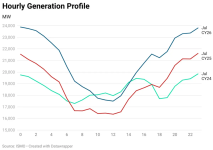
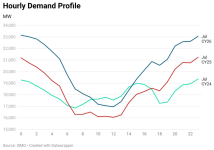
The shift is most visible in the hourly demand profile. July’s grid demand is now materially above both 2025 and 2024 through much of the day. More importantly, the evening peak has moved sharply higher. The demand curve from two years ago now looks almost like a different system.


The return of industrial consumers from captive generation is a major part of this story. With captive power increasingly priced out of the equation, industrial demand has returned to the grid. At the same time, solar has continued to eat into daytime grid demand. This has created a more pronounced duck curve. Grid demand falls sharply during sunny hours, then rises rapidly once the sun goes down.

1787914879860.png
That evening ramp is now becoming the real test for the power system.

July generation was broadly in line with reference levels, a welcome improvement from the shortfalls seen during the worst of the RLNG disruption. But the fuel mix shows how much the system had to stretch to meet the changing demand profile.

Hydel was the clear star. Generation reached nearly 6 billion units, accounting for around 40 percent of total generation. This was the highest monthly hydel generation on record by a considerable margin. Output was also around 8 percent above reference, providing the system with a large block of low-cost electricity at the start of the peak demand season.

RLNG also continued its recovery. Its share stood at around 11 percent, with actual generation about 12 percent below reference. That gap has narrowed considerably from the early months of the conflict, as Pakistan managed to secure LNG cargoes despite the disruption in global gas markets. Yet July still marked the fifth consecutive month in which RLNG generation remained below reference.

The missing RLNG was not the only issue. Imported coal became the bigger story.

Imported coal generation was a staggering 144 percent above reference, with its share reaching around 11 percent. The system generated more than 1.2 billion additional units from imported coal than envisaged. July also recorded the highest monthly imported coal-based generation on record.

This is not simply a story about insufficient generation. It is a story about timing.

The system has plenty of electricity during the middle of the day. Solar has changed that equation permanently. But once the sun sets, the system needs large volumes of conventional generation to come online quickly. With RLNG still below reference and the evening ramp getting steeper, the burden has increasingly fallen on thermal units, including imported coal.

And that comes at a price.

1787914953248.png

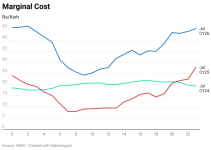
The marginal cost of generation during peak demand reached as high as Rs46 per unit in July. That is dramatically higher than the corresponding levels seen in the previous two years. RLNG was particularly expensive, with generation cost averaging around Rs47 per unit, an all-time high. The use of spot LNG cargoes at elevated import prices is now feeding directly into the cost of meeting peak demand.

This is the uncomfortable side of the demand recovery. Higher electricity consumption is good for the grid. It improves utilization, brings industrial consumers back and spreads fixed costs over a larger number of units. But if the incremental units are being supplied through expensive thermal generation during the evening peak, the recovery also comes with a sizeable fuel cost.

The July fuel cost adjustment is therefore expected to be north of Rs2 per unit. That would add another layer of pressure for consumers, particularly after several months of moderate adjustments.

The problem may not ease immediately. August and September typically bring the year’s highest electricity demand.

At the same time, there is no clear end to the geopolitical disruption affecting LNG supplies and prices. If RLNG remains constrained or expensive, the system will continue to rely more heavily on alternative thermal sources during the evening ramp.

1787914983507.png

Meanwhile, the solar story has not stopped. More rooftop and behind-the-meter solar continues to suppress daytime grid demand, while batteries are beginning to add another dimension to the equation. Storage can potentially smooth some of the evening ramp, but it also means the traditional demand profile is becoming harder to predict.

Pakistan’s power sector is therefore entering a rather unusual phase. Demand is recovering, but the shape of that demand is changing faster than the generation system.

Hydel can provide cheap energy when available. Solar can take the load off the grid during the day. But after sunset, the system still needs flexible thermal generation, and that flexibility is increasingly expensive.

The issue is no longer whether Pakistan has enough electricity. It is how much it costs to produce it at the hour when the country needs it most.


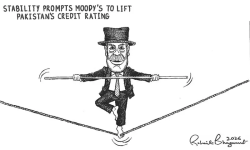
Pakistan last had B1 rating in 2006.

Set 2030 target for B1!
Thanks to
Saudi Arabia
Hefty Petrolum lavy

Rest nothing has changed people's lives have been turned into hell

The big belly landlords, might industrialist, deep pocket hoarders n corrupt burucracates all are roaming free and enjoying this protective system.

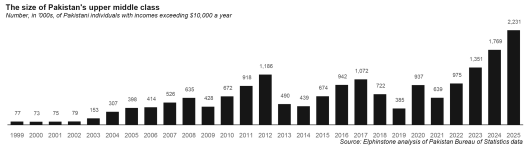
Wasn't AH right about 2% ruling class? Though he was my most hated politician but the point that I had convergent views with him
 

Power Division apologises for night load-shedding amid RLNG shortage​

RLNG shortfall of 3,600MW, Mangla generation drop of 195MW push furnace oil plants into use

ISLAMABAD: The Power Division has apologised to electricity consumers for 1.5 to 3 hours of temporary load management during nighttime peak hours due to RLNG non-availability, delayed LNG cargo and a 195-megawatt reduction in Mangla generation.

According to a spokesperson for the Power Division, the non-availability of RLNG and the failure of an LNG cargo to arrive on time resulted in a shortfall of around 3,600 megawatts in power generation.

Generation from Mangla also declined by 195 megawatts, adding to pressure on the electricity supply system during nighttime peak hours.


The combined impact of reduced generation and RLNG non-availability forced the power sector to undertake temporary load management ranging from 1.5 to 3 hours during the night peak period.

The spokesperson said furnace oil-based power plants were also brought into operation during peak hours to help meet electricity demand at night.

The Power Division said the temporary load management would be reduced as soon as the RLNG cargoes arrive and fuel availability improves.

The spokesperson urged electricity consumers to exercise restraint in power consumption during nighttime peak hours, saying moderation in electricity use during this period would help minimise load management.

The Power Division clarified that there is no load management during daytime hours.

However, load management is being carried out in areas where high distribution losses necessitate it, with electricity supplied according to the prescribed schedule.

The Power Division expressed regret to consumers over the temporary nighttime load management caused by RLNG non-availability and said the situation would improve after the arrival of the delayed RLNG cargoes.
 

Retailers on tax net jump 31%​

Tax payments rise 16% to Rs132b but doctors resist integration


The FBR’s data revealed that people actually paid Rs85.4 billion, suggesting that they were ready to bear the extra cost but not to come into the tax net. PHOTO: FILE


ISLAMABAD:
After a lull, the government's drive to integrate large retailers with the tax system picked up momentum in the last fiscal year and the figure jumped to over 17,300 businesses – an increase of nearly one-third, amid concerns to retain the growing base due to the introduction of a new small trader scheme.

According to figures compiled by the Federal Board of Revenue (FBR), about 17,337 large retailers integrated with the Point of Sale (POS) network in the fiscal year 2025-26. There was an increase of 4,124 businesses or 31% in the base within one year.

The scheme had been launched in December 2019 but it largely remained dormant due to multiple issues impacting its integration with the tax system. The FBR also earns Rs1 on every shopping receipt generated through the POS and the money is used for the welfare of the tax officials.

In the last fiscal year, the FBR earned Rs871 million, which was about 17% higher than the preceding year, according to official details.

Under the POS system, a bill is generated electronically and a copy reaches FBR at that moment. The shop cannot later report a smaller figure, because the record already exists.

However, the introduction of the new small trader scheme could dent the drive to digitise the sale record of the retailers, as at least two conditions that make it binding for the retailers to register under the POS have been compromised.

The traders using the debt and credit card machines and having annual sales of over Rs80 million are required to be integrated with the FBR system. Now, the government has offered the retailers to avail the new scheme if their annual sales are up to Rs200 million. The small trader having up to Rs200 million annual sales would also be exempted from installing digital payment processing machines.

The government would charge only 1% tax from small traders on their annual sales compared to almost 35% being charged from the salaried class.

Due to one-third increase in the number of integrated retailers, the tax authorities said that the revenues collected from them also surged by 16% to Rs132 billion in the last fiscal year.

Tier-1 retailers are required to integrate all their branches, point of sale terminals with the FBR's computerised system aimed at digitising their economic transactions to collect due sales tax and income tax from them.

Over the past seven years, the FBR made multiple changes in the rules governing the POS framework in the hope to further broaden the base.

The establishment of a new threshold of withholding tax payments under section 236G and 236H also helped expand the network, said the officials. Retailers whose deductible withholding tax exceeds Rs100,000 or in certain cases Rs500,000 are required to integrate their businesses.

The FBR's focus largely remains on restaurants, textile, garments shops but the network of service providers remains large and majority of it is still outside the net. The tax authorities said that the professional services like doctors are not willing to disclose their real transactions and were resisting the integration of clinics and hospitals.

The FBR officials said that in late July, the Pakistan Medical Association refused to accept the same electronic billing requirement for private clinics, calling it bureaucratic overreach and warning that doctors may shut down health facilities across the country rather than comply. Its argument is that healthcare is a professional service, not a shop, and that treating a clinic like a retail outlet is legally wrong.

The FBR officials said that the rule was a common standard for everyone and was not aimed at any one profession. The shopkeepers and restaurateurs, who had the least organised lobby and the strongest practical case for objecting, have been inside the system for years, and their tax payments rose 78% once they joined it. The professions are still arguing about whether it was meant for them, they added.

According to the rules business such as restaurants, hotels, motels, guest houses, marriage halls, marquees, clubs, inter-city travel by road, courier services, cargo service, beauty parlours, clinics and slimming clinics, massage centres, pedicure centres, all medical service providers including dentists, hair implant surgeons, and pathological laboratories, medical diagnostic laboratories are required to integrate.

Nearly 13,000 shops and restaurants have been connected to the FBR's electronic billing system since 2019. Comparing what each of them paid in the three months before it was connected with the three months after, sales tax payments rose from Rs5.8 billion to Rs10.4 billion, said the official while underscoring the benefits of integration.

The 78% increase in tax payments was without raising rates and without raiding their shops, said the tax authorities.

The sharpest change came from restaurants. Across 698 of them, sales tax payments rose from Rs183.8 million in the quarters before joining to Rs729.4 million in the quarters after, an increase of almost 300%, they added.

One of the reasons for this increase was that people preferred paying through credit cards due to the 5% sales tax rate compared to the 18% rate for cash-payments.

Each of these restaurants was paying an average of about Rs263,000 in sales tax over three months before it joined. Afterwards the average was over Rs1 million. These are not small roadside establishments. They are large enough that the law already required them to be in the system, the tax authorities added.

As of July 2026, a total of 46,813 branches of these 17,300 businesses were on the digital invoicing system.

Behind these numbers sits a wider shift. FBR is moving the country to a system where sales are reported as they happen rather than reconciled months later, and where income tax and sales tax draw on the same live record. It is among the most ambitious documentation exercises attempted in Pakistan, and seven years of accumulated evidence now suggest it is working.

Tax authorities in other documented economies have reported gains from similar reforms, though measured differently. What distinguishes the Pakistani result is its consistency: whichever year a business joined, and whatever it sold, its declared tax went up once the record started existing with the FBR.
 

Users who are viewing this thread

Back
Top