Pakistan could regain B+ rating by end of FY27 if macro stability, reforms hold, says finance minister
Muhammad Aurangzeb says it is premature to call current $7bn EFF Pakistan’s last IMF programme; expects 4% growth and current account deficit within 0-1% of GDP in FY27
Finance Minister Muhammad Aurangzeb said on Thursday that Pakistan could secure a B+ sovereign credit rating by the end of FY27 or the first quarter of FY28 if macroeconomic stability and structural reforms remained on track, while cautioning that it was premature to describe the ongoing $7 billion IMF programme as the country’s last.
Speaking during engagements at the Overseas Investors Chamber of Commerce and Industry (OICCI) and Pakistan Stock Exchange (PSX) in Karachi, Aurangzeb projected economic growth of 4% in FY27, up from 3.7% in FY26, and expected the current account deficit to remain within the initial target of 0-1% of GDP despite international oil prices rising above $100 per barrel amid the ongoing Middle East geopolitical crisis.
Pakistan has been rated B with a stable outlook by S&P Global Ratings since July 2026, while Moody’s upgraded the country to B3 from Caa1 with a stable outlook in August.
Aurangzeb said he was hopeful Pakistan could reach B+ by the end of the current fiscal year or the first quarter of FY28 if it maintained its trajectory of macroeconomic stability backed by structural reforms.
He recalled that global rating agencies had upgraded Pakistan three times since April 2025 and said B+ represented the highest sovereign rating achieved by the country over the past four decades.
The government, however, has ambitions beyond returning to that level, with Aurangzeb saying Pakistan ultimately wanted to break into the BB rating category.
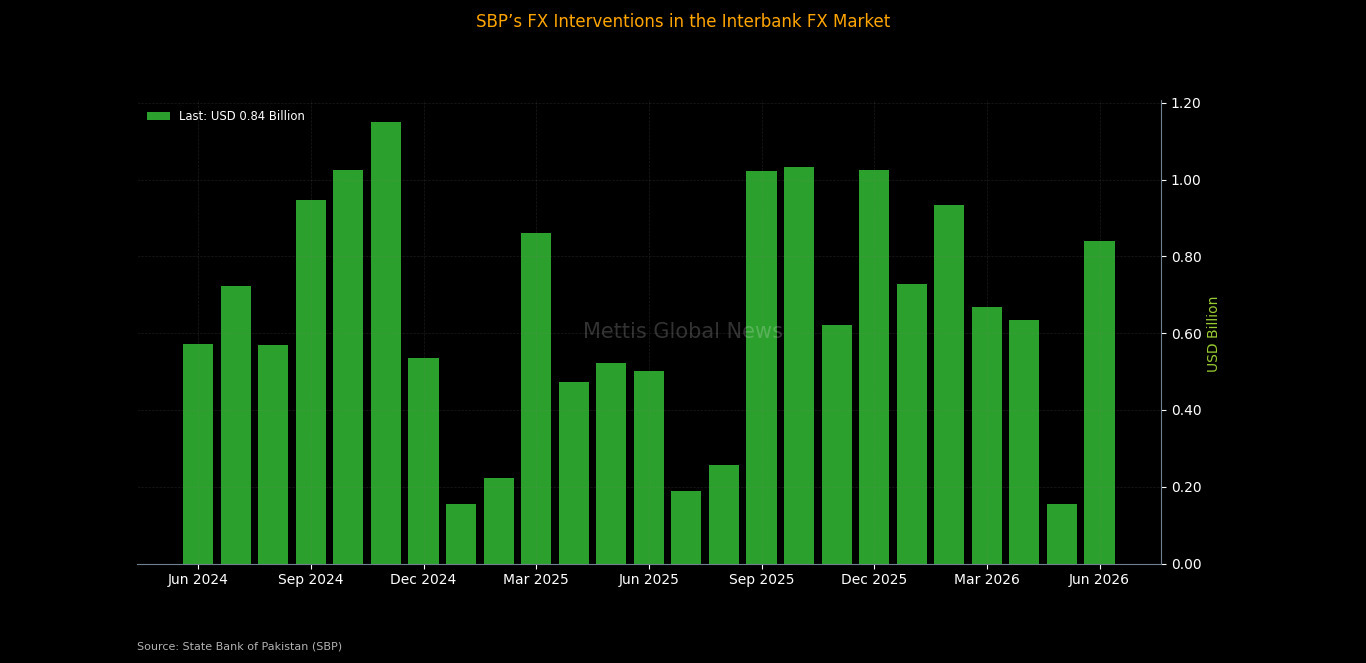
He linked the recent upgrades to an improvement in the external economy, including record remittance inflows and foreign exchange reserves held by the State Bank of Pakistan (SBP).
SBP-held foreign exchange reserves reached a record $21.44 billion in September 2026, raising import cover to around three months and bringing it in line with the international benchmark.
Aurangzeb said macroeconomic stability, credit-rating upgrades and the privatisation of Pakistan International Airlines (PIA) should help encourage greater investment from both domestic and foreign investors.
IMF reliance and external financing
Responding to a question on whether the ongoing $7 billion Extended Fund Facility (EFF) would be Pakistan’s last IMF programme, Aurangzeb said it was premature to reach that conclusion.
He said a decision on the matter would be taken during FY27 as Pakistan worked to gradually reduce its reliance on external financing.
The country still needed to address short-term rollover and balance-of-payments requirements, he said.
Aurangzeb described the successful issuance of the $3 billion Eurobond as an important step towards gradually reducing Pakistan’s dependence on foreign support, including the IMF.
He stressed that Pakistan needed to make its recent economic gains permanent rather than returning to the boom-and-bust cycle that has repeatedly followed periods of stabilisation.
Growth, he said, needed to come increasingly from productivity, investment, exports and employment instead of temporary injections of liquidity and consumption-led expansion.
The government’s six economic priorities included making macroeconomic stability permanent, achieving sustainable and inclusive growth, continuing structural reforms, shifting economic relationships from aid towards trade and investment, expanding access to finance and positioning Pakistan for the new economy.
PSX investor base more than doubles
Aurangzeb also pointed to a sharp expansion in participation at the Pakistan Stock Exchange, where the investor base has more than doubled to 656,218 from 321,144 in March 2024.
A record 25,281 new investors were added during September 2026, the highest number ever recorded in a single month.
The KSE-100 Index, meanwhile, has climbed from around 67,000 points in March 2024 to around 170,000 points.
The finance minister said 11 companies had come to the market during FY26, the highest number in more than two decades, while another five IPOs had already been completed during the first quarter of FY27.
He stressed, however, that the objective extended beyond gains in the benchmark index. Market confidence needed to translate into capital formation for businesses, infrastructure, housing, innovation and employment.
Speaking at the PSX gong ceremony marking the listing of Naya Nazimabad Apartments REIT, Aurangzeb said the offering had attracted around eight times subscription during book-building and 4.3 times subscription in the general public offering.
He highlighted REITs as an important mechanism for mobilising investment into housing and real estate.
Rs400bn housing financing pipeline
Under the Prime Minister’s Apna Ghar Programme, around Rs60 billion has already been financed, while banks have approved an additional financing pipeline of approximately Rs340 billion that is awaiting disbursement.
Aurangzeb said the banking sector had taken the lead in providing financing and the challenge was now increasingly on the supply side, where housing development needed to accelerate.
He emphasised the role of private developers, including the Association of Builders and Developers of Pakistan (ABAD), in converting available financing into construction, investment and employment.
The finance minister also called for greater access to finance for SMEs, agriculture, housing and other underserved segments.
Private sector to lead investment
Aurangzeb reiterated that the government’s role was to create the policy and regulatory environment necessary for businesses to operate, while the private sector would have to lead investment and economic growth.
He pointed to the participation of major Pakistani business groups in the consortium for the PIA transaction, involving Arif Habib and Mr Tabba, representing close to $1.2 billion in collective investment.
The transaction, he said, demonstrated the ability of domestic businesses to collaborate, create scale and pursue larger investment opportunities.
International investor interest was also increasing. Aurangzeb highlighted Turkish interest in the privatisation of electricity distribution companies as well as interest from US, Saudi and other international investors across mining and minerals, technology, agriculture, oil and gas and refinery upgrades.
He cautioned that foreign investment takes time to materialise and requires policy continuity, effective facilitation and a conducive investment ecosystem.
The government would continue supporting that ecosystem through engagement with the US EXIM Bank, other export credit agencies and international partners, alongside tariff discussions and negotiations.
Reforms move into execution
Aurangzeb said structural reforms had moved beyond the design phase and into execution, covering taxation, energy, state-owned enterprises, privatisation and public finance.
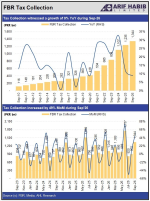
The number of tax filers has crossed 5.7 million, compared with around 3.9 million last year and approximately 1.8-1.9 million in 2022.
He said revenue mobilisation would continue alongside taxpayer facilitation, with greater use of data and digitalisation to strengthen tax administration.
The finance minister also emphasised the need to deepen capital markets so that domestic savings could be directed towards productive investment in infrastructure, housing, privatisation and private-sector expansion.
Pakistan would simultaneously seek to shift its bilateral economic relationships from aid towards trade and investment while pursuing opportunities in digitalisation, blockchain, Web 3.0 and other emerging technologies.
Aurangzeb said Pakistan’s economic trajectory would increasingly depend on the private sector’s ability to invest, innovate, create employment and expand productive capacity, while the government focused on policy continuity, facilitation and sound economic governance.