Navigation
Install the app
How to install the app on iOS
Follow along with the video below to see how to install our site as a web app on your home screen.
Note: This feature may not be available in some browsers.
More options
Style variation
You are using an out of date browser. It may not display this or other websites correctly.
You should upgrade or use an alternative browser.
You should upgrade or use an alternative browser.
Gunman opens fire at crowded Australia beach, people rush for shelter
- Thread starter lightoftruth
- Start date
More options
Who Replied?


Solomon2
Elite Member

I dunno about the "cancelled" part.The moment you criticise Israel you are cancelled and labeled an antisemite.
IMO, if criticism of Israel includes the negation, erasure, or redefinition of Jewishness (as a people, an ethnic group, a nation, a covenant, or a moral tradition) and isn't factually consistent then yes, that criticism is antisemitic.
(Note that "fact" means you don't get to insist that something is "true" just because you or your group want it to be true: if a hundred nations are standing on falsity to attack Israel, that doesn't make their assertions any more "true" than if only one person does. )
Under this definition one doesn't have to guess at mind or motive to point to someone who is an antisemite. Not even open hostility is required. So:
- A judge who includes facts that implicate Israel while omitting the exculpatory facts is an antisemite.
- A protester who stands on a unique definition and inconsistent facts to condemn Israel is an antisemite.
- A preacher who invents or misconstrues aspects of Judaism to attack Israel or Jews is an antisemite.
- a person who physically attacks Jews because they are Jews is an antisemite.
- a person who physically attacks Israel because it is the nation of the Jews is an antisemite.
I'm sure you can think of more examples.

Hakwa Nadro
Trusted Member

While not directly related to the current events the below article summarizes a failed israeli false flag operation in Egypt and parallels can be drawn, food for thought.
@Musings @Fatman17 @RescueRanger @Waz @Blain2 @Starlord @Liquidator @PK781 @Hakikat ve Hikmet @Oldenwisdom...قول بزرگ @Al-Zakir @El Sidd @Falcon29 @hussain0216 @Yasser76 @Goenitz @Persian Gulf @KingQamaR @maxpane @Maarkhoor @313Ghazi @SiliconBit (silicon0000)
 إقرأ باللغة العربية:
جواسيس على ضفاف النيل... عن "فضيحة لافون" أولى عمليات الموساد في مصر
The scorching sun in the summer of 1954 was emblematic of the highly tense Egyptian political scene. Negotiations over the departure of the British from Egypt were underway, whereas General Mohamed Nagiub and leader Gamal Abdel-Nasser were at loggerheads with each other. Hot kisses between big screen stars Faten Hamama and Omar Sharif in their blockbuster "The Blazing Sun" only did little to alleviate such thorny issues. By January, the Operation Susannah case was finally over after 13 Jews stood trial for espionage charges at the Cairo-based High Court House.
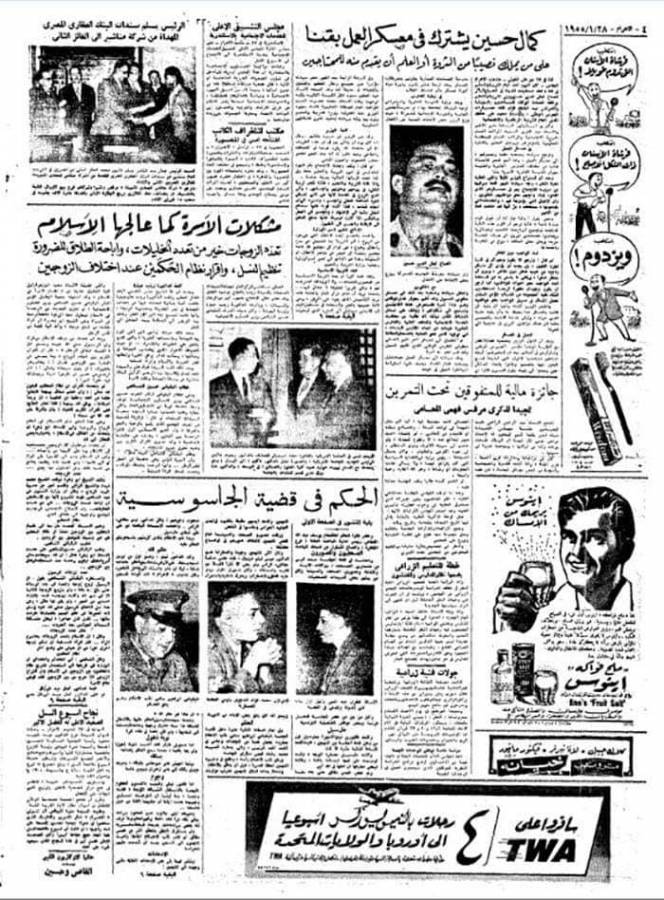
Al-Ahram’s story about the verdict can be seen in the bottom half.
According to Al-Ahram newspaper, the defendants looked terrified during the session in which the verdict was to be returned. Maurice looked pale, a completely silent Moshe Marzouk maintained a long face and could not hold his head up, and Shmuel Azar was praying. On 27 January 1995, Marzouk and Azar were slapped the death penalty, other defendants were sentenced to prison and hard labor while a third group was exonerated. The ruling did not mention Avraham Dar and Paul Frank -- the only two agents who escaped -- or Meir Max Bineth who committed suicide while in detention ahead of the court session.
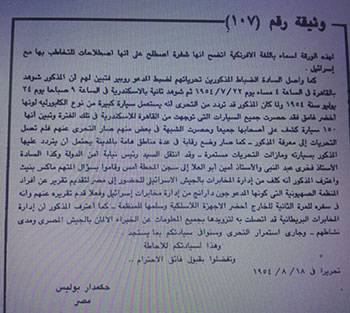
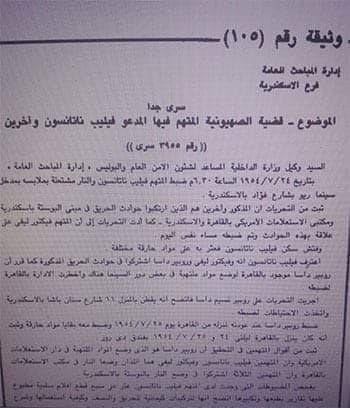
Meir Max Bineth after he committed suicide
In early 1954, Israel was fearful of how its future would unfold, particularly as then US president Dwight D. Eisenhower was not much of a staunch ally of Israel. As a matter of fact, he was eyeing thawing ties with Abdel-Nasser as the British were set to withdraw their forces from the Suez Canal, according to Yossi Melman's book "The Spies". Israeli PM David Ben-Gurion and chief of staff Moshe Dayan believed the Arab nations were seriously contemplating avenging their 1948 humiliating defeat at the hands of the nascent Jewish state, said Mohamed Hassanein Heikal in his book "Suez Files". Under the circumstances, the Israeli military intelligence drew out a plan for a preemptive strike against Egypt. It consisted of several steps, including recruiting young men to carry out attacks on theaters, state institutions, cultural centers, diplomatic cars and British citizens. The purpose was to shake the international community's faith in the Egyptian regime and consequently the west would withhold Egypt-bound military aids, according to a study titled "Israel's Sacred Terrorism" and conducted by researcher Livia Rokach. Before the execution of the plan, Ben-Gurion stepped down as Prime Minister over political disagreements and moved to a settlement in Negev. However, his allies forged the signature of the new Minister of Defense Pinhas Lavon, who was part of Moshe Sharett's cabinet, on official documents to activate the mission, according to Rokach.
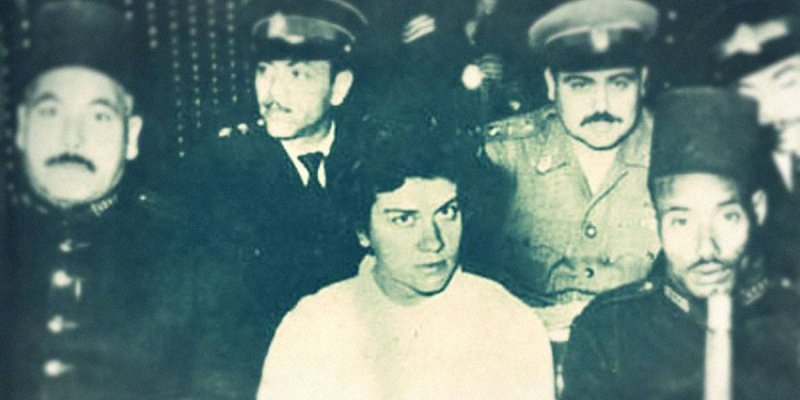
 raseef22.net
@Musings @Fatman17 @RescueRanger @Waz @Blain2 @Starlord @Liquidator @PK781 @Hakikat ve Hikmet @Oldenwisdom...قول بزرگ @Al-Zakir @El Sidd @Falcon29 @hussain0216 @Yasser76 @Goenitz @Persian Gulf @KingQamaR @maxpane @Maarkhoor @313Ghazi @SiliconBit (silicon0000)
The Lavon Affair, Mossad's First Operation in Egypt (Operation Susannah)
Ibrahim Eid
إقرأ باللغة العربية:جواسيس على ضفاف النيل... عن "فضيحة لافون" أولى عمليات الموساد في مصر
The scorching sun in the summer of 1954 was emblematic of the highly tense Egyptian political scene. Negotiations over the departure of the British from Egypt were underway, whereas General Mohamed Nagiub and leader Gamal Abdel-Nasser were at loggerheads with each other. Hot kisses between big screen stars Faten Hamama and Omar Sharif in their blockbuster "The Blazing Sun" only did little to alleviate such thorny issues. By January, the Operation Susannah case was finally over after 13 Jews stood trial for espionage charges at the Cairo-based High Court House.
Al-Ahram’s story about the verdict can be seen in the bottom half.
According to Al-Ahram newspaper, the defendants looked terrified during the session in which the verdict was to be returned. Maurice looked pale, a completely silent Moshe Marzouk maintained a long face and could not hold his head up, and Shmuel Azar was praying. On 27 January 1995, Marzouk and Azar were slapped the death penalty, other defendants were sentenced to prison and hard labor while a third group was exonerated. The ruling did not mention Avraham Dar and Paul Frank -- the only two agents who escaped -- or Meir Max Bineth who committed suicide while in detention ahead of the court session.
Build-Up to a Scandal
Meir Max Bineth after he committed suicide
In early 1954, Israel was fearful of how its future would unfold, particularly as then US president Dwight D. Eisenhower was not much of a staunch ally of Israel. As a matter of fact, he was eyeing thawing ties with Abdel-Nasser as the British were set to withdraw their forces from the Suez Canal, according to Yossi Melman's book "The Spies". Israeli PM David Ben-Gurion and chief of staff Moshe Dayan believed the Arab nations were seriously contemplating avenging their 1948 humiliating defeat at the hands of the nascent Jewish state, said Mohamed Hassanein Heikal in his book "Suez Files". Under the circumstances, the Israeli military intelligence drew out a plan for a preemptive strike against Egypt. It consisted of several steps, including recruiting young men to carry out attacks on theaters, state institutions, cultural centers, diplomatic cars and British citizens. The purpose was to shake the international community's faith in the Egyptian regime and consequently the west would withhold Egypt-bound military aids, according to a study titled "Israel's Sacred Terrorism" and conducted by researcher Livia Rokach. Before the execution of the plan, Ben-Gurion stepped down as Prime Minister over political disagreements and moved to a settlement in Negev. However, his allies forged the signature of the new Minister of Defense Pinhas Lavon, who was part of Moshe Sharett's cabinet, on official documents to activate the mission, according to Rokach.
Zero Hour
It is 7pm on 16 June, 1954. "The Housewives" program is underway on Radio Israel, explaining how to make an English cake. This means it is zero hour; the program is sending coded messages to the cell tasked with acts of sabotage to start their mission. Evry Gilad was an Israeli army leader who was relieved of his duties in 1951 after being charged with stealing a fridge. He later joined Unit 131 that is specialized in sabotaging operations and black propaganda behind enemy lines, according to The Spies. Based on intelligence directives, Gilad arrived in Alexandria in 1954 and held a franchise of a German electronics company in Egypt. He impersonated Major Paul Frank, who went AWOL after German intelligence had sent him to Palestine. Also, Lieutenant Colonel Mordechai Ben-Tsur, the man in charge of Unit 131, recruited Major Avraham Dar who is renowned for encouraging Jewish emigration from Europe to Israel. Ben-Tsur entered Egypt with a British passport under the name John Darling, before establishing the espionage unit that operated in Cairo and Alexandria. It is almost 11am on 2 July 1954. In Alexandria, Philip Natanson confidently approaches a mailbox into which he slides a small wrap. He tries to maintain his composure by chewing a gum. Simultaneously, Victor Levy and Robert Dassa put similar wraps in other mailboxes. The US mail office in Alexandria was burned and people died as a result. When Egyptian investigative officer Mamdouh Salem went to the scene, he found bits of red phosphorus inside a glass case, which meant it was an arson attack caused by a chemical reaction. Nevertheless, the press did not pay attention to these details, said Adel Hamouda in his book "Operation Susannah". On 14 July, Dassa walked into the American Cultural Association in Alexandria along with a young hot girl; he left a glass case behind. The American libraries in Cairo and Alexandria were set ablaze, which saw some of the workers and customers injured. The press referred to the incidents as electric fires.Caught by Chance
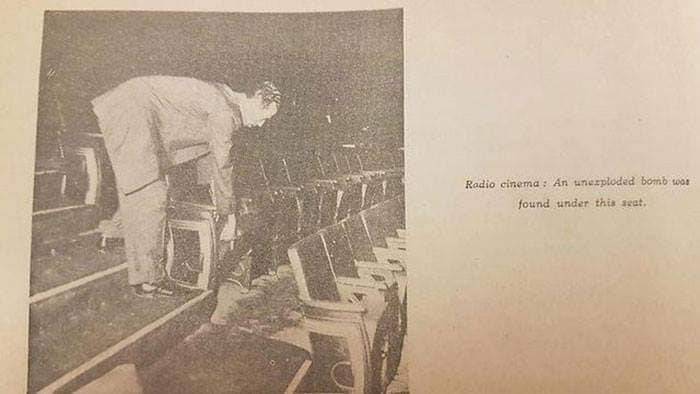
On the evening of 23 July 1954, Police Captain Hassan Al-Manawi happened to be passing through Fouad Street in Alexandria when he suddenly heard calls for help. Natanson was storming out of Rio Cinema as his trousers caught fire. The officer threw him on the ground and rolled him over repeatedly until the flames were put out. While the young man was later removing dirt off his trousers as he held a glass case, a bit of black powder was scattered on the ground, hence one of the cell members was arrested. While being interrogated inside Al-Attarin Police Station, Natanson told the police about Levy, admitting to being a member of an Israeli cell, Ahmed Adel, head of the studies unite of Group 73 Historians told Raseef22. It was planned that day to plant explosive devices at a train station and Rivoli Theater in Cairo as well as Metro and Rio cinemas in Alexandria. Security forces raided Natanson's house where they found a photo with a sentence written on its back: "Victor, Robert and Philip: friends forever". There were also videotapes explaining how to make bombs and use walkie-talkie codes. Arrest warrants were issued against the other two agents. No sooner had Robert Dassa entered his house than a firearm was pointed at him. He had put a fire bomb in a bag placed inside the storehouse of the Cairo Railways. According to Adel, the three friends insisted during interrogations that they had embarked onto a sabotage spree to force the Brits to leave Egypt. The forensic report proved that the glass cases were filled with potassium chlorate, zinc, iron oxide and aluminum powder. An investigative officer escorted Victor Levy to the cell's headquarters in Alexandria to look for the walkie-talkie the agents were using but they could not find it. Levy pointed the finger at Shmuel Azar and accused him of stealing the radio equipment. Security forces waited at the headquarters until they arrested him on 27 July, according to "Operation Susannah". Azar led the police to the fifth agent when he confessed that the cell's funds were at Meir Meyuhas' disposal. The latter purchased EGP 500 worth of materials to make Molotov cocktails. Thanks to Meyuhas' confessions, Egyptian security arrested Moshe Marzouk, who founded the cell's Cairo branch. Most agents started falling one after another: Marcelle Nino, Max Bineth, Eli Jacob, Meir Za'afran and Youssef Cohen. Nonetheless, the most dangerous two members of the network -- John Darling and Evry Gilad -- managed to run away. Young woman Marcelle was the link between the group in Egypt and the high command in Paris. The payments she received amounted for EGP 1000. Before the trial, guard Ahmed Zaher opened the door of Max Bineth's cell after he heard low moans of pain. He found the defendant bleeding after cutting his wrist. Bineth visited Egypt three times, the last of which was in 1953. He bolstered his ties with Egyptian military leaders on the pretext of importing prosthetics from Germany for soldiers who lost limbs in action, said Richard Deacon in his book "The Israeli Secret Service".Swap Deal
In his diary, Moshe Sharett downplays widely propagated claims that the arrested spies were tortured. "We cannot deny that our imprisoned citizens received humane treatment," he said. According to British writer David Hirst's book, "The Gun and the Olive Branch", the members of the secret cell -- excluding Marzouk and Azar who had been executed in Egypt -- were given heroes' reception in Israel after they were freed in a prisoner-exchange deal between both countries. In Marcelle's wedding, Moshe Dayan told her, "The six-day war has achieved enough success to release you". In 1955, Gilad was urgently summoned to testify in the case. He blamed the failed operations on the cell's members in Egypt. But in his diary, titled "The Decadence of Honor", he puts his false testimony down to Dayan's orders that aimed at protecting Israel's image. Gilad also claimed that Mossad had sought to expose the Egypt-based agents to shame the military intelligence and cause it to lose its dominance, citing an internal power struggle. Ben-Gurion's Military Secretary Nehemiah Argov wrote in a confidential document that was recently revealed, "We have established a sabotage unit that works as a commandos unit behind enemy lines". He said Lavon had instructed the unit to target Brits in order to leave an impression that Egyptian Islamists were the culprits, which would abysmally affect Egypt's relations with the UK. The Israeli press delved into this case after many years, stressing that the operation was executed because the signature of Lavon had been forged. In the late 1970s, Marcelle, Meir Za'afran and Dassa lambasted their country on TV, saying it did not exert enough efforts to instigate their release, according to Ahmed Adel of Group 73 Historians. Moshe Sharett in his diary mentions struggles between Israel military leaders. "I have never imagined that we would reach such a horrific status," he said. In Egypt, the Lavon Affair accelerated the establishment of the Egyptian General Intelligence Directorate in 1955 under the supervision of Zakaria Mohieddin.
The Lavon Affair, Mossad's First Operation in Egypt - رصيف22
The scorching sun in the summer of 1954 was emblematic of the highly tense Egyptian political scene. Negotiations over the departure of the British from...

Hakikat ve Hikmet
VIP Member

They're born on falsehood, they live on falsehood, and they die on falsehood.....While not directly related to the current events the below article summarizes a failed israeli false flag operation in Egypt and parallels can be drawn, food for thought.
@Musings @Fatman17 @RescueRanger @Waz @Blain2 @Starlord @Liquidator @PK781 @Hakikat ve Hikmet @Oldenwisdom...قول بزرگ @Al-Zakir @El Sidd @Falcon29 @hussain0216 @Yasser76 @Goenitz @Persian Gulf @KingQamaR @maxpane @Maarkhoor @313Ghazi @SiliconBit (silicon0000)
The Lavon Affair, Mossad's First Operation in Egypt (Operation Susannah)
Ibrahim Eid
جواسيس على ضفاف النيل... عن "فضيحة لافون" أولى عمليات الموساد في مصر
The scorching sun in the summer of 1954 was emblematic of the highly tense Egyptian political scene. Negotiations over the departure of the British from Egypt were underway, whereas General Mohamed Nagiub and leader Gamal Abdel-Nasser were at loggerheads with each other. Hot kisses between big screen stars Faten Hamama and Omar Sharif in their blockbuster "The Blazing Sun" only did little to alleviate such thorny issues. By January, the Operation Susannah case was finally over after 13 Jews stood trial for espionage charges at the Cairo-based High Court House.
Al-Ahram’s story about the verdict can be seen in the bottom half.
According to Al-Ahram newspaper, the defendants looked terrified during the session in which the verdict was to be returned. Maurice looked pale, a completely silent Moshe Marzouk maintained a long face and could not hold his head up, and Shmuel Azar was praying. On 27 January 1995, Marzouk and Azar were slapped the death penalty, other defendants were sentenced to prison and hard labor while a third group was exonerated. The ruling did not mention Avraham Dar and Paul Frank -- the only two agents who escaped -- or Meir Max Bineth who committed suicide while in detention ahead of the court session.
Build-Up to a Scandal
Meir Max Bineth after he committed suicide
In early 1954, Israel was fearful of how its future would unfold, particularly as then US president Dwight D. Eisenhower was not much of a staunch ally of Israel. As a matter of fact, he was eyeing thawing ties with Abdel-Nasser as the British were set to withdraw their forces from the Suez Canal, according to Yossi Melman's book "The Spies". Israeli PM David Ben-Gurion and chief of staff Moshe Dayan believed the Arab nations were seriously contemplating avenging their 1948 humiliating defeat at the hands of the nascent Jewish state, said Mohamed Hassanein Heikal in his book "Suez Files". Under the circumstances, the Israeli military intelligence drew out a plan for a preemptive strike against Egypt. It consisted of several steps, including recruiting young men to carry out attacks on theaters, state institutions, cultural centers, diplomatic cars and British citizens. The purpose was to shake the international community's faith in the Egyptian regime and consequently the west would withhold Egypt-bound military aids, according to a study titled "Israel's Sacred Terrorism" and conducted by researcher Livia Rokach. Before the execution of the plan, Ben-Gurion stepped down as Prime Minister over political disagreements and moved to a settlement in Negev. However, his allies forged the signature of the new Minister of Defense Pinhas Lavon, who was part of Moshe Sharett's cabinet, on official documents to activate the mission, according to Rokach.
Zero Hour
It is 7pm on 16 June, 1954. "The Housewives" program is underway on Radio Israel, explaining how to make an English cake. This means it is zero hour; the program is sending coded messages to the cell tasked with acts of sabotage to start their mission. Evry Gilad was an Israeli army leader who was relieved of his duties in 1951 after being charged with stealing a fridge. He later joined Unit 131 that is specialized in sabotaging operations and black propaganda behind enemy lines, according to The Spies. Based on intelligence directives, Gilad arrived in Alexandria in 1954 and held a franchise of a German electronics company in Egypt. He impersonated Major Paul Frank, who went AWOL after German intelligence had sent him to Palestine. Also, Lieutenant Colonel Mordechai Ben-Tsur, the man in charge of Unit 131, recruited Major Avraham Dar who is renowned for encouraging Jewish emigration from Europe to Israel. Ben-Tsur entered Egypt with a British passport under the name John Darling, before establishing the espionage unit that operated in Cairo and Alexandria. It is almost 11am on 2 July 1954. In Alexandria, Philip Natanson confidently approaches a mailbox into which he slides a small wrap. He tries to maintain his composure by chewing a gum. Simultaneously, Victor Levy and Robert Dassa put similar wraps in other mailboxes. The US mail office in Alexandria was burned and people died as a result. When Egyptian investigative officer Mamdouh Salem went to the scene, he found bits of red phosphorus inside a glass case, which meant it was an arson attack caused by a chemical reaction. Nevertheless, the press did not pay attention to these details, said Adel Hamouda in his book "Operation Susannah". On 14 July, Dassa walked into the American Cultural Association in Alexandria along with a young hot girl; he left a glass case behind. The American libraries in Cairo and Alexandria were set ablaze, which saw some of the workers and customers injured. The press referred to the incidents as electric fires.
Caught by Chance
On the evening of 23 July 1954, Police Captain Hassan Al-Manawi happened to be passing through Fouad Street in Alexandria when he suddenly heard calls for help. Natanson was storming out of Rio Cinema as his trousers caught fire. The officer threw him on the ground and rolled him over repeatedly until the flames were put out. While the young man was later removing dirt off his trousers as he held a glass case, a bit of black powder was scattered on the ground, hence one of the cell members was arrested. While being interrogated inside Al-Attarin Police Station, Natanson told the police about Levy, admitting to being a member of an Israeli cell, Ahmed Adel, head of the studies unite of Group 73 Historians told Raseef22. It was planned that day to plant explosive devices at a train station and Rivoli Theater in Cairo as well as Metro and Rio cinemas in Alexandria. Security forces raided Natanson's house where they found a photo with a sentence written on its back: "Victor, Robert and Philip: friends forever". There were also videotapes explaining how to make bombs and use walkie-talkie codes. Arrest warrants were issued against the other two agents. No sooner had Robert Dassa entered his house than a firearm was pointed at him. He had put a fire bomb in a bag placed inside the storehouse of the Cairo Railways. According to Adel, the three friends insisted during interrogations that they had embarked onto a sabotage spree to force the Brits to leave Egypt. The forensic report proved that the glass cases were filled with potassium chlorate, zinc, iron oxide and aluminum powder. An investigative officer escorted Victor Levy to the cell's headquarters in Alexandria to look for the walkie-talkie the agents were using but they could not find it. Levy pointed the finger at Shmuel Azar and accused him of stealing the radio equipment. Security forces waited at the headquarters until they arrested him on 27 July, according to "Operation Susannah". Azar led the police to the fifth agent when he confessed that the cell's funds were at Meir Meyuhas' disposal. The latter purchased EGP 500 worth of materials to make Molotov cocktails. Thanks to Meyuhas' confessions, Egyptian security arrested Moshe Marzouk, who founded the cell's Cairo branch. Most agents started falling one after another: Marcelle Nino, Max Bineth, Eli Jacob, Meir Za'afran and Youssef Cohen. Nonetheless, the most dangerous two members of the network -- John Darling and Evry Gilad -- managed to run away. Young woman Marcelle was the link between the group in Egypt and the high command in Paris. The payments she received amounted for EGP 1000. Before the trial, guard Ahmed Zaher opened the door of Max Bineth's cell after he heard low moans of pain. He found the defendant bleeding after cutting his wrist. Bineth visited Egypt three times, the last of which was in 1953. He bolstered his ties with Egyptian military leaders on the pretext of importing prosthetics from Germany for soldiers who lost limbs in action, said Richard Deacon in his book "The Israeli Secret Service".
Swap Deal
In his diary, Moshe Sharett downplays widely propagated claims that the arrested spies were tortured. "We cannot deny that our imprisoned citizens received humane treatment," he said. According to British writer David Hirst's book, "The Gun and the Olive Branch", the members of the secret cell -- excluding Marzouk and Azar who had been executed in Egypt -- were given heroes' reception in Israel after they were freed in a prisoner-exchange deal between both countries. In Marcelle's wedding, Moshe Dayan told her, "The six-day war has achieved enough success to release you". In 1955, Gilad was urgently summoned to testify in the case. He blamed the failed operations on the cell's members in Egypt. But in his diary, titled "The Decadence of Honor", he puts his false testimony down to Dayan's orders that aimed at protecting Israel's image. Gilad also claimed that Mossad had sought to expose the Egypt-based agents to shame the military intelligence and cause it to lose its dominance, citing an internal power struggle. Ben-Gurion's Military Secretary Nehemiah Argov wrote in a confidential document that was recently revealed, "We have established a sabotage unit that works as a commandos unit behind enemy lines". He said Lavon had instructed the unit to target Brits in order to leave an impression that Egyptian Islamists were the culprits, which would abysmally affect Egypt's relations with the UK. The Israeli press delved into this case after many years, stressing that the operation was executed because the signature of Lavon had been forged. In the late 1970s, Marcelle, Meir Za'afran and Dassa lambasted their country on TV, saying it did not exert enough efforts to instigate their release, according to Ahmed Adel of Group 73 Historians. Moshe Sharett in his diary mentions struggles between Israel military leaders. "I have never imagined that we would reach such a horrific status," he said. In Egypt, the Lavon Affair accelerated the establishment of the Egyptian General Intelligence Directorate in 1955 under the supervision of Zakaria Mohieddin.
The Lavon Affair, Mossad's First Operation in Egypt - رصيف22
The scorching sun in the summer of 1954 was emblematic of the highly tense Egyptian political scene. Negotiations over the departure of the British from...
They face the TRUTH only when they die....
KingQamaR
Elite Member

While not directly related to the current events the below article summarizes a failed israeli false flag operation in Egypt and parallels can be drawn, food for thought.
@Musings @Fatman17 @RescueRanger @Waz @Blain2 @Starlord @Liquidator @PK781 @Hakikat ve Hikmet @Oldenwisdom...قول بزرگ @Al-Zakir @El Sidd @Falcon29 @hussain0216 @Yasser76 @Goenitz @Persian Gulf @KingQamaR @maxpane @Maarkhoor @313Ghazi @SiliconBit (silicon0000)
The Lavon Affair, Mossad's First Operation in Egypt (Operation Susannah)
Ibrahim Eid
جواسيس على ضفاف النيل... عن "فضيحة لافون" أولى عمليات الموساد في مصر
The scorching sun in the summer of 1954 was emblematic of the highly tense Egyptian political scene. Negotiations over the departure of the British from Egypt were underway, whereas General Mohamed Nagiub and leader Gamal Abdel-Nasser were at loggerheads with each other. Hot kisses between big screen stars Faten Hamama and Omar Sharif in their blockbuster "The Blazing Sun" only did little to alleviate such thorny issues. By January, the Operation Susannah case was finally over after 13 Jews stood trial for espionage charges at the Cairo-based High Court House.
Al-Ahram’s story about the verdict can be seen in the bottom half.
According to Al-Ahram newspaper, the defendants looked terrified during the session in which the verdict was to be returned. Maurice looked pale, a completely silent Moshe Marzouk maintained a long face and could not hold his head up, and Shmuel Azar was praying. On 27 January 1995, Marzouk and Azar were slapped the death penalty, other defendants were sentenced to prison and hard labor while a third group was exonerated. The ruling did not mention Avraham Dar and Paul Frank -- the only two agents who escaped -- or Meir Max Bineth who committed suicide while in detention ahead of the court session.
Build-Up to a Scandal
Meir Max Bineth after he committed suicide
In early 1954, Israel was fearful of how its future would unfold, particularly as then US president Dwight D. Eisenhower was not much of a staunch ally of Israel. As a matter of fact, he was eyeing thawing ties with Abdel-Nasser as the British were set to withdraw their forces from the Suez Canal, according to Yossi Melman's book "The Spies". Israeli PM David Ben-Gurion and chief of staff Moshe Dayan believed the Arab nations were seriously contemplating avenging their 1948 humiliating defeat at the hands of the nascent Jewish state, said Mohamed Hassanein Heikal in his book "Suez Files". Under the circumstances, the Israeli military intelligence drew out a plan for a preemptive strike against Egypt. It consisted of several steps, including recruiting young men to carry out attacks on theaters, state institutions, cultural centers, diplomatic cars and British citizens. The purpose was to shake the international community's faith in the Egyptian regime and consequently the west would withhold Egypt-bound military aids, according to a study titled "Israel's Sacred Terrorism" and conducted by researcher Livia Rokach. Before the execution of the plan, Ben-Gurion stepped down as Prime Minister over political disagreements and moved to a settlement in Negev. However, his allies forged the signature of the new Minister of Defense Pinhas Lavon, who was part of Moshe Sharett's cabinet, on official documents to activate the mission, according to Rokach.
Zero Hour
It is 7pm on 16 June, 1954. "The Housewives" program is underway on Radio Israel, explaining how to make an English cake. This means it is zero hour; the program is sending coded messages to the cell tasked with acts of sabotage to start their mission. Evry Gilad was an Israeli army leader who was relieved of his duties in 1951 after being charged with stealing a fridge. He later joined Unit 131 that is specialized in sabotaging operations and black propaganda behind enemy lines, according to The Spies. Based on intelligence directives, Gilad arrived in Alexandria in 1954 and held a franchise of a German electronics company in Egypt. He impersonated Major Paul Frank, who went AWOL after German intelligence had sent him to Palestine. Also, Lieutenant Colonel Mordechai Ben-Tsur, the man in charge of Unit 131, recruited Major Avraham Dar who is renowned for encouraging Jewish emigration from Europe to Israel. Ben-Tsur entered Egypt with a British passport under the name John Darling, before establishing the espionage unit that operated in Cairo and Alexandria. It is almost 11am on 2 July 1954. In Alexandria, Philip Natanson confidently approaches a mailbox into which he slides a small wrap. He tries to maintain his composure by chewing a gum. Simultaneously, Victor Levy and Robert Dassa put similar wraps in other mailboxes. The US mail office in Alexandria was burned and people died as a result. When Egyptian investigative officer Mamdouh Salem went to the scene, he found bits of red phosphorus inside a glass case, which meant it was an arson attack caused by a chemical reaction. Nevertheless, the press did not pay attention to these details, said Adel Hamouda in his book "Operation Susannah". On 14 July, Dassa walked into the American Cultural Association in Alexandria along with a young hot girl; he left a glass case behind. The American libraries in Cairo and Alexandria were set ablaze, which saw some of the workers and customers injured. The press referred to the incidents as electric fires.
Caught by Chance
On the evening of 23 July 1954, Police Captain Hassan Al-Manawi happened to be passing through Fouad Street in Alexandria when he suddenly heard calls for help. Natanson was storming out of Rio Cinema as his trousers caught fire. The officer threw him on the ground and rolled him over repeatedly until the flames were put out. While the young man was later removing dirt off his trousers as he held a glass case, a bit of black powder was scattered on the ground, hence one of the cell members was arrested. While being interrogated inside Al-Attarin Police Station, Natanson told the police about Levy, admitting to being a member of an Israeli cell, Ahmed Adel, head of the studies unite of Group 73 Historians told Raseef22. It was planned that day to plant explosive devices at a train station and Rivoli Theater in Cairo as well as Metro and Rio cinemas in Alexandria. Security forces raided Natanson's house where they found a photo with a sentence written on its back: "Victor, Robert and Philip: friends forever". There were also videotapes explaining how to make bombs and use walkie-talkie codes. Arrest warrants were issued against the other two agents. No sooner had Robert Dassa entered his house than a firearm was pointed at him. He had put a fire bomb in a bag placed inside the storehouse of the Cairo Railways. According to Adel, the three friends insisted during interrogations that they had embarked onto a sabotage spree to force the Brits to leave Egypt. The forensic report proved that the glass cases were filled with potassium chlorate, zinc, iron oxide and aluminum powder. An investigative officer escorted Victor Levy to the cell's headquarters in Alexandria to look for the walkie-talkie the agents were using but they could not find it. Levy pointed the finger at Shmuel Azar and accused him of stealing the radio equipment. Security forces waited at the headquarters until they arrested him on 27 July, according to "Operation Susannah". Azar led the police to the fifth agent when he confessed that the cell's funds were at Meir Meyuhas' disposal. The latter purchased EGP 500 worth of materials to make Molotov cocktails. Thanks to Meyuhas' confessions, Egyptian security arrested Moshe Marzouk, who founded the cell's Cairo branch. Most agents started falling one after another: Marcelle Nino, Max Bineth, Eli Jacob, Meir Za'afran and Youssef Cohen. Nonetheless, the most dangerous two members of the network -- John Darling and Evry Gilad -- managed to run away. Young woman Marcelle was the link between the group in Egypt and the high command in Paris. The payments she received amounted for EGP 1000. Before the trial, guard Ahmed Zaher opened the door of Max Bineth's cell after he heard low moans of pain. He found the defendant bleeding after cutting his wrist. Bineth visited Egypt three times, the last of which was in 1953. He bolstered his ties with Egyptian military leaders on the pretext of importing prosthetics from Germany for soldiers who lost limbs in action, said Richard Deacon in his book "The Israeli Secret Service".
Swap Deal
In his diary, Moshe Sharett downplays widely propagated claims that the arrested spies were tortured. "We cannot deny that our imprisoned citizens received humane treatment," he said. According to British writer David Hirst's book, "The Gun and the Olive Branch", the members of the secret cell -- excluding Marzouk and Azar who had been executed in Egypt -- were given heroes' reception in Israel after they were freed in a prisoner-exchange deal between both countries. In Marcelle's wedding, Moshe Dayan told her, "The six-day war has achieved enough success to release you". In 1955, Gilad was urgently summoned to testify in the case. He blamed the failed operations on the cell's members in Egypt. But in his diary, titled "The Decadence of Honor", he puts his false testimony down to Dayan's orders that aimed at protecting Israel's image. Gilad also claimed that Mossad had sought to expose the Egypt-based agents to shame the military intelligence and cause it to lose its dominance, citing an internal power struggle. Ben-Gurion's Military Secretary Nehemiah Argov wrote in a confidential document that was recently revealed, "We have established a sabotage unit that works as a commandos unit behind enemy lines". He said Lavon had instructed the unit to target Brits in order to leave an impression that Egyptian Islamists were the culprits, which would abysmally affect Egypt's relations with the UK. The Israeli press delved into this case after many years, stressing that the operation was executed because the signature of Lavon had been forged. In the late 1970s, Marcelle, Meir Za'afran and Dassa lambasted their country on TV, saying it did not exert enough efforts to instigate their release, according to Ahmed Adel of Group 73 Historians. Moshe Sharett in his diary mentions struggles between Israel military leaders. "I have never imagined that we would reach such a horrific status," he said. In Egypt, the Lavon Affair accelerated the establishment of the Egyptian General Intelligence Directorate in 1955 under the supervision of Zakaria Mohieddin.
The Lavon Affair, Mossad's First Operation in Egypt - رصيف22
The scorching sun in the summer of 1954 was emblematic of the highly tense Egyptian political scene. Negotiations over the departure of the British from...
Some years ago here in U.K brother, Jewish schools were also targeted with violent threats. Zionist lobby were calling it anti Semitism is a real problem in U.K. . Later we found out that the threats came from a f**king young Zionist man on stolen land called Israel. These psychopaths weaving a web of f**king evil make propaganda using lies. We need to stand up to this now!
Hakwa Nadro
Trusted Member
Yes we have to grow a pair and stand up now bro and every little effort counts.Some years ago here in U.K brother, Jewish schools were also targeted with violent threats. Zionist lobby were calling it anti Semitism is a real problem in U.K. . Later we found out that the threats came from a f**king young Zionist man on stolen land called Israel. These psychopaths weaving a web of f**king evil make propaganda using lies. We need to stand up to this now!
SpadeOfAces
Registered Member
Doubt you can even draw faint parallels, these men were dedicated to their cause and managed to pull this attack off. Nothing about this attack even comes close to an Israeli false flag op.While not directly related to the current events the below article summarizes a failed israeli false flag operation in Egypt and parallels can be drawn, food for thought.

Solomon2
Elite Member
...if it turns out that some of the Jewish victims at Bondi supported Israel, were Zionist, what then? Do they become less mournable? Less human? Do the Point 1 Point 2 crowd shrug and go, “Well… complicated”?He was a genocidal filthy rabbi.
If your compassion requires the victim to pass your political purity test, then you don’t have compassion. You have a transaction.
In an ideal world, we’d frame this as: Australians attacked Australians, and were stopped by Australians. And there’s truth in that.
But we don’t live in the ideal world. We live in the real one. In the real world, Muslim extremist ideology targeted Jews. A Muslim man helped stop it. And the left—my side—needs to learn how to say “Jews were targeted” without immediately reaching for a conversational fire extinguisher labelled “Gaza.”
We’re fixing the how of the attack with gun laws and policing.
Now we need to face the why—without turning Jewish grief into a footnote.
I keep thinking about growing up Shia in Pakistan, where attacks like this weren’t shocking outliers but a recurring dread. Shia Mosques shot up. Imambargahs bombed. Muharram Processions targeted. So the community adapted, not by disappearing but by organising. Young boys and men became volunteers, informal security, first responders, water carriers, people whose whole job was to watch the crowd and know where the exits were if everything went wrong.
After every massacre there was the same conversation in every family. Do we go again? Do we risk it? And every single time the answer was yes. We buried our dead, argued about safety, cried, prayed, and then gathered again.
Because faith, at its core, is belief in hope.
- Sami Shah

Liquidator
Trusted Member
? Do they become less mournable? Less human?
They do not consider others human to begin with
Save the crap
The world has moved on now and they are now enjoying the everlasting torment.


moonaman.varavayi
Registered Member

Really? Are you pretending not to know? All right, I'll bite.Be very clear why in your answer to me.
The perpetrators were not Michaels or Johns or Smiths or Sharmas or Agarwals or Premkumars or Gyaltsens or Tampas or Rigzins or Jains or Singhs.
They belonged to the expected religious persuasion.

Oscar
Moderator
That's cause for you to celebrate?Really? Are you pretending not to know? All right, I'll bite.
The perpetrators were not Michaels or Johns or Smiths or Sharmas or Agarwals or Premkumars or Gyaltsens or Tampas or Rigzins or Jains or Singhs.
They belonged to the expected religious persuasion.
moonaman.varavayi
Registered Member
No. No celebrations, just stating a fact.That's cause for you to celebrate?
Solomon2
Elite Member
Exclusive
World
Updated on: December 29, 2025 / 9:48 AM EST / CBS News
Add CBS News on Google
Sydney — When Bondi Beach hero Ahmed al Ahmed ran straight toward one of the gunmen during the attack on a Jewish community gathering to mark the first day of Hanukkah, he wasn't thinking about the risk to his own life. The Syrian-born Muslim, who gained his Australian citizenship just five years ago, told CBS News in an exclusive interview that his only objective was to save innocent lives.
Al Ahmed's remarkable bravery — charging at one of the two attackers during the Dec. 14 mass shooting and wrestling a gun from him — quickly earned him praise as a hero. But it also landed him in a Sydney hospital with multiple gunshot wounds.
Not long after he was finally released from the hospital, he told CBS News why he, like several others who took action on the day, some of whom were killed doing so, felt as though he simply had no other option.
"I couldn't handle it, to hear kids, and the women, and oldest, and men, screaming and asking for help," he said.
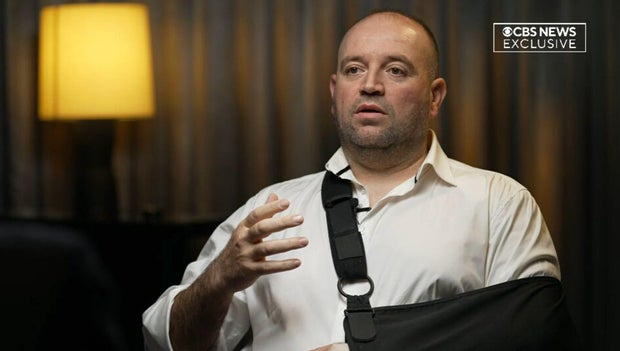 Ahmed al Ahmed was hailed as a hero after tackling one of the gunmen during the terror attack on Australia's Bondi Beach.
CBS News
He didn't see anyone else trying to stop the massacre — which left 15 innocent people dead in what Australia's prime minister called an act of antisemitic terror — so he looked for an opportunity, crouching behind parked cars before tackling the gunman from behind.
"My soul and all my everything in my organ, in my body, in my brain, asked me to go, and to defend and to save innocent life," the convenience store owner told CBS News. "I didn't think about it."
As dozens of people gathered for the Hanukkah event, and others on the famous Australian beach, hit the ground to take cover, the gunmen continued taking aim at them. Al Ahmed said the shooter, just a few yards from where he was crouched behind a car, kept shooting indiscriminately at anyone he saw.
"Straight away I jumped on his back, hit him," he said.
Al Ahmed said he shouted at the attacker to drop his weapon, to "stop doing what you're doing."
"I don't want to see people killed in front of me. I don't want to see blood. I don't want to hear his gun, I don't want to see people screaming and begging, asking for help, and that's [why] my soul asking me to do that," he said.
After a brief tussle, he managed to pull the gun from the other man's hands.
"Everything in my heart, in my brain, everything — it's worked, just to manage and to save the people's life."
Asked if, after seizing the loaded weapon, he considered shooting the now-disarmed attacker, al Ahmed said it didn't occur to him.
"I didn't think to shoot, and I don't want to put my hand in blood. I don't think I'm the one who can take life of people."
He also didn't stop to think about the other gunman, who was still on the attack from his vantage point on a nearby footbridge.
"I didn't worry about anything. I was just, my target was just to take the gun from him and to stop him from killing a human being."
Al Ahmed was shot five times as he intervened.
"The one I felt it first was the arm. But after, when we went to the hospital, they told me three in the chest, in the shoulder and two here in the arm."
Doctors have told al Ahmed he may never recover fully from his injuries. There are still two bullets lodged in his shoulder, and he's suffered nerve damage to his left hand that could be permanent. A GoFundMe page set up for him has already raised almost $2 million — funds that will no doubt help with his recovery.
Al Ahmed said he was glad that his quick thinking saved lives, "but I feel sorry still for the lost," and he has no regrets about his snap decision to intervene.
"No, I am proud that I did — I saved innocent people's life. Because if I didn't run and take the gun from the terrorists, it will be disaster, and will be more victims."
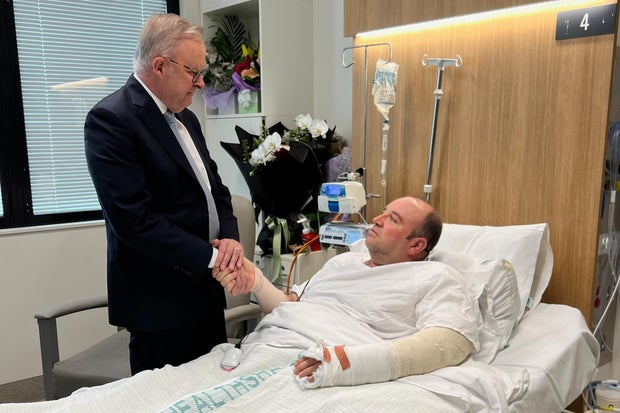 Australian Prime Minister Anthony Albanese meets Ahmed al Ahmed, who was injured while disarming one of the Bondi Beach attackers, at St George Hospital in Sydney on Dec. 16, 2025.
Australian Prime Minister's Office/AP
As for the praise he's received, including from leaders in Australia, the United States and Israel, for risking his own life to save complete strangers, al Ahmed said to him, there are no strangers.
"I risked my life for innocent human beings," he said. "I can't call them strangers, because they are a human being, like me, like you."
It's a simple message he wants to convey far and wide.
"What I want to say, for everyone around the whole world, not only in Australia, I want to say please stop the terrorism and stop the hate," he said. "Feel in love with all humanity, whatever religion. We are a human being."
The full magnitude of his actions, and the overwhelming global response they have elicited, may not have fully sunken in. Al Ahmed told CBS News it was still "like I'm in a dream."
He said he feels pride not only in himself, but for his newly adopted homeland.
"I feel warm in my country, here in Australia, with all nationality, with all multiculturalism. This is my life here," he said. "Australia is my country, and I'm happy to give my blood for Australia, and to defend and to save people's lives anywhere."
Asked if he would do it all over again, al Ahmed didn't hesitate:
"Of course, anytime," he said, adding quickly that he hopes it won't be necessary, in Australia, or anywhere else.
Tucker Reals contributed to this report.
World
Bondi Beach hero Ahmed al Ahmed tells CBS News what went through his mind as he tackled a gunman
By Anna CorenUpdated on: December 29, 2025 / 9:48 AM EST / CBS News
Add CBS News on Google
Sydney — When Bondi Beach hero Ahmed al Ahmed ran straight toward one of the gunmen during the attack on a Jewish community gathering to mark the first day of Hanukkah, he wasn't thinking about the risk to his own life. The Syrian-born Muslim, who gained his Australian citizenship just five years ago, told CBS News in an exclusive interview that his only objective was to save innocent lives.
Al Ahmed's remarkable bravery — charging at one of the two attackers during the Dec. 14 mass shooting and wrestling a gun from him — quickly earned him praise as a hero. But it also landed him in a Sydney hospital with multiple gunshot wounds.
Not long after he was finally released from the hospital, he told CBS News why he, like several others who took action on the day, some of whom were killed doing so, felt as though he simply had no other option.
"I couldn't handle it, to hear kids, and the women, and oldest, and men, screaming and asking for help," he said.
CBS News
He didn't see anyone else trying to stop the massacre — which left 15 innocent people dead in what Australia's prime minister called an act of antisemitic terror — so he looked for an opportunity, crouching behind parked cars before tackling the gunman from behind.
"My soul and all my everything in my organ, in my body, in my brain, asked me to go, and to defend and to save innocent life," the convenience store owner told CBS News. "I didn't think about it."
As dozens of people gathered for the Hanukkah event, and others on the famous Australian beach, hit the ground to take cover, the gunmen continued taking aim at them. Al Ahmed said the shooter, just a few yards from where he was crouched behind a car, kept shooting indiscriminately at anyone he saw.
"Straight away I jumped on his back, hit him," he said.
Al Ahmed said he shouted at the attacker to drop his weapon, to "stop doing what you're doing."
"I don't want to see people killed in front of me. I don't want to see blood. I don't want to hear his gun, I don't want to see people screaming and begging, asking for help, and that's [why] my soul asking me to do that," he said.
After a brief tussle, he managed to pull the gun from the other man's hands.
"Everything in my heart, in my brain, everything — it's worked, just to manage and to save the people's life."
Asked if, after seizing the loaded weapon, he considered shooting the now-disarmed attacker, al Ahmed said it didn't occur to him.
"I didn't think to shoot, and I don't want to put my hand in blood. I don't think I'm the one who can take life of people."
He also didn't stop to think about the other gunman, who was still on the attack from his vantage point on a nearby footbridge.
"I didn't worry about anything. I was just, my target was just to take the gun from him and to stop him from killing a human being."
Al Ahmed was shot five times as he intervened.
"The one I felt it first was the arm. But after, when we went to the hospital, they told me three in the chest, in the shoulder and two here in the arm."
Doctors have told al Ahmed he may never recover fully from his injuries. There are still two bullets lodged in his shoulder, and he's suffered nerve damage to his left hand that could be permanent. A GoFundMe page set up for him has already raised almost $2 million — funds that will no doubt help with his recovery.
Al Ahmed said he was glad that his quick thinking saved lives, "but I feel sorry still for the lost," and he has no regrets about his snap decision to intervene.
"No, I am proud that I did — I saved innocent people's life. Because if I didn't run and take the gun from the terrorists, it will be disaster, and will be more victims."
Australian Prime Minister's Office/AP
As for the praise he's received, including from leaders in Australia, the United States and Israel, for risking his own life to save complete strangers, al Ahmed said to him, there are no strangers.
"I risked my life for innocent human beings," he said. "I can't call them strangers, because they are a human being, like me, like you."
It's a simple message he wants to convey far and wide.
"What I want to say, for everyone around the whole world, not only in Australia, I want to say please stop the terrorism and stop the hate," he said. "Feel in love with all humanity, whatever religion. We are a human being."
The full magnitude of his actions, and the overwhelming global response they have elicited, may not have fully sunken in. Al Ahmed told CBS News it was still "like I'm in a dream."
He said he feels pride not only in himself, but for his newly adopted homeland.
"I feel warm in my country, here in Australia, with all nationality, with all multiculturalism. This is my life here," he said. "Australia is my country, and I'm happy to give my blood for Australia, and to defend and to save people's lives anywhere."
Asked if he would do it all over again, al Ahmed didn't hesitate:
"Of course, anytime," he said, adding quickly that he hopes it won't be necessary, in Australia, or anywhere else.
Tucker Reals contributed to this report.
Users who are viewing this thread
Total: 2 (members: 0, guests: 2)


