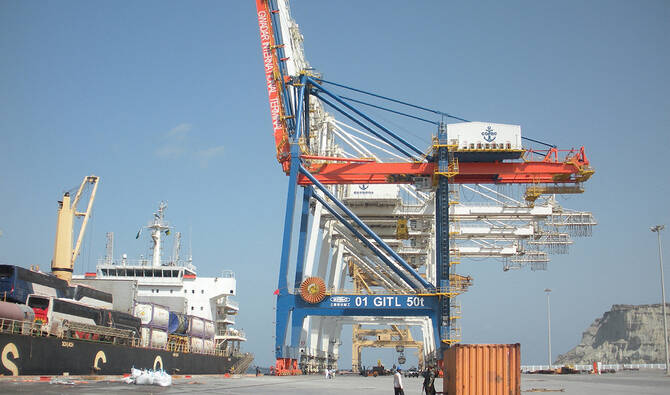
Gwadar Seaport and News Updates

Only if now Baloch people completely stop supporting BLA/BRA types, this can change Baluchistan forever, even with corruption (which won't end in Pakistan) Baloch people can benefit from peace, lots of hotels, restaurants, resorts, schools, factories, and other investments will come, all they have to do is if they see any suspicious activities relate it to Army or Police or FC. Inshallah one day the entire Coast of Baluchistan will see massive investments and locals will see some prosperity.
Maybe if they get proper elections? A coherent and capable government? Actually get to choose who leads them, and not a puppet? Maybe blaming 14 million people is the problem?
 
What a development! All the Satanic plans and deeds of the Jahiliat Emirat of Fasadi Dubai and Ram Rajya of Hindutva Bharat are going down the sewage carrying all the scums and maggots along with them....

Looks like the Pak merchant ships will sail freely in the Persian Gulf....

The mother vasaals will dump and collect their shipment at and from Gawadar, while the feeder ships carrying Pak flag would do the rest....
 
Last edited:
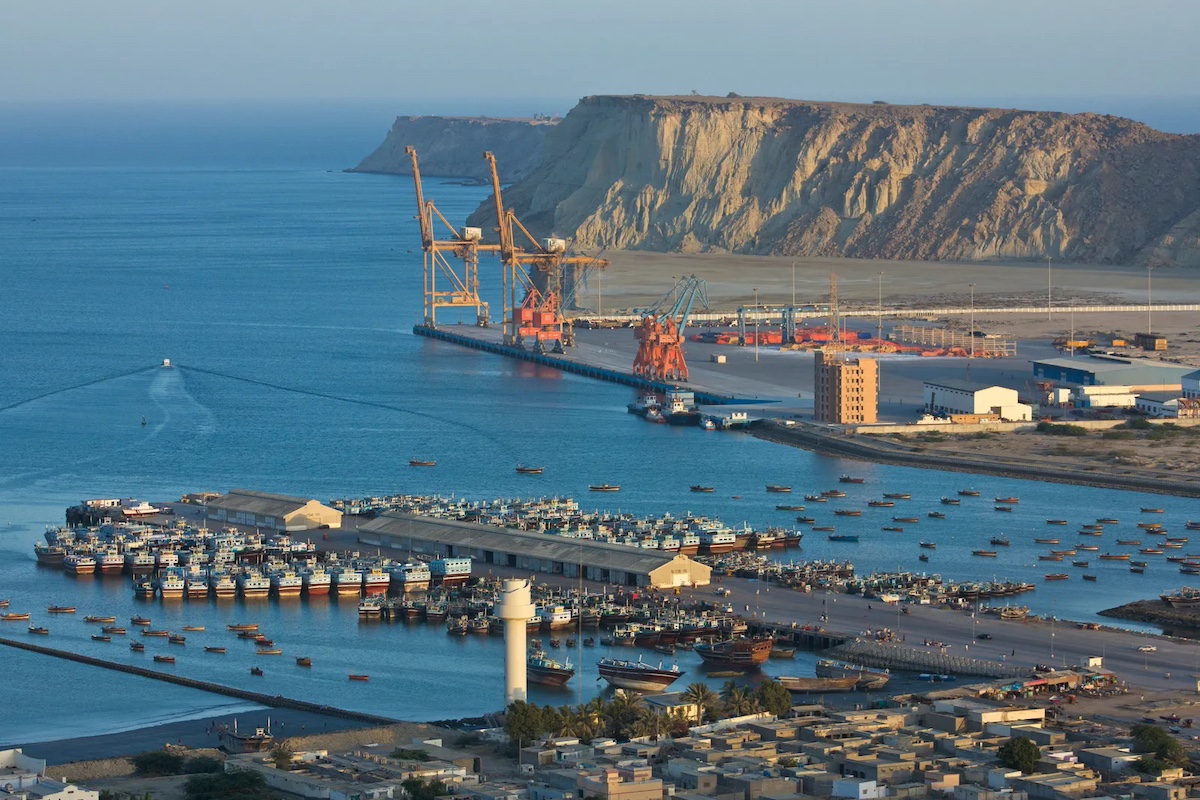
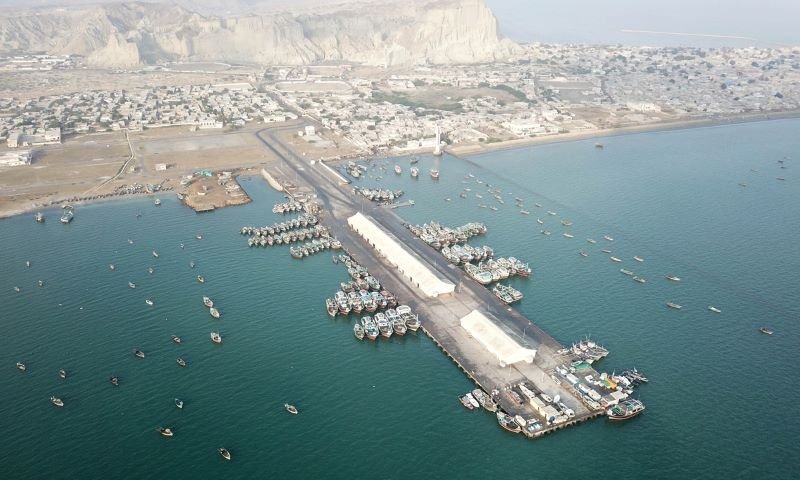
Gwadar’s moment has finally arrived for Pakistan

Iran war and Hormuz blockade breathing life into China-invested Pakistan port infrastructure that until now was mainly dormant

On May 13, according to Reuters, against the backdrop of disrupted shipping in the Strait of Hormuz, Iraq and Pakistan have reached agreements with Iran, allowing oil tankers to pass safely through the Strait of Hormuz.

Iraq has arranged for the passage of two large oil tankers, which can transport about 2 million barrels of Iraqi crude oil. Pakistan has arranged for the passage of its two oil tankers, carrying Qatari liquefied natural gas whose supply had previously been interrupted due to the conflict.

Iraq emphasized that oil revenue accounts for 95% of its national budget, and if its own economy deteriorates, it would also harm Iran's own interests. Under the framework of the relevant agreements, the aforementioned countries did not make any direct monetary payments to Iran or the Iranian Revolutionary Guard.

This is a good start. In the future, more ships may pass through Gwadar Port to transfer goods.
 
Iranian Delegation Visits Gwadar to Explore Investment, Trade Cooperation

A high-level Iranian trade delegation led by Muhammad Saeed Arbabi arrived in Gwadar in a move being viewed as an important development in economic and trade relations between Pakistan and Iran.

The delegation, representing the Chabahar Free Zone Organization, crossed into Pakistan through the Gabd-Rimdan Border Crossing and was received by Jehand Hut, according to The Express Tribune.

The visiting delegation includes Iranian investors, logistics specialists and representatives linked to international trade and port operations.

According to officials, the delegation was invited by the Gwadar Chamber of Commerce and Industry to explore investment prospects and strengthen bilateral commercial cooperation.

 
Successful berthing of special vessel MV HM Leader at #GwadarPort, where it is efficiently handling 35 units of transshipment cargo.

1779133523000.png
 
To view this content we will need your consent to set third party cookies.
For more detailed information, see our cookies page.
 

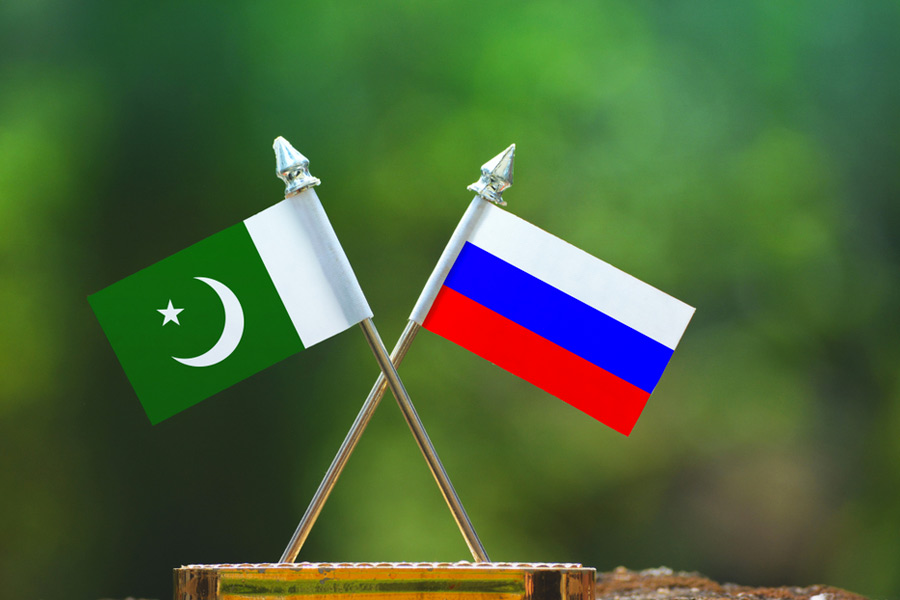
Pakistan eyes INSTC membership as Russia backs Gwadar link under new 2030 cooperation plan​

Pakistan plans to join the INSTC as Russia backs a Gwadar Port connection. Islamabad and Moscow also plan to sign an economic cooperation program through 2030 to boost trade and resolve payment issues.

Pakistan is preparing to join the International North-South Transport Corridor (INSTC), while Russia has expressed support for integrating the trade route with Gwadar Port as the two countries work toward expanding economic and strategic cooperation under a framework extending to 2030.

The development was highlighted by Federal Minister for Energy Sardar Awais Ahmed Khan Leghari during a webinar titled “Pakistan-Russia Bilateral Relationship at the Cusp of Shifting Global Order,” where he outlined the growing momentum in ties between Islamabad and Moscow.

Leghari said both countries have agreed to sign the Program of Economic Cooperation between the Russian Federation and Pakistan for the Period until 2030, aimed at boosting trade and addressing longstanding challenges, including payment and settlement mechanisms.


A major theme of the discussion was regional connectivity. The minister confirmed Pakistan’s intention to become part of the INSTC, a 7,200-kilometre multimodal transport network that combines maritime, rail and road links connecting India, Iran, Azerbaijan, Russia, Central Asia and Northern Europe.

He welcomed recent remarks by Russian Deputy Prime Minister Alexey Overchuk supporting a connection between the corridor and Pakistan’s Gwadar Port, describing the proposal as a strategic link that could strengthen regional transport integration and complement broader Eurasian connectivity initiatives.

According to Leghari, bilateral relations have undergone a significant transformation over the past two decades, with historical mistrust dating back to the Soviet era largely replaced by cooperation in trade, energy, defence and technology.

He noted that the relationship has received sustained backing from both countries’ leadership, pointing to four recent meetings between Prime Minister Shehbaz Sharif and Russian President Vladimir Putin.


As co-chairman of the Pakistan-Russia Intergovernmental Commission (IGC), Leghari said regular engagement with Russian Energy Minister Sergey Tsivilev has helped expand cooperation across multiple sectors. He described the IGC as the principal platform driving bilateral collaboration.

The minister said both countries are also maintaining structured dialogue on security, strategic stability and counter-terrorism, while coordinating positions at forums such as the United Nations and the Shanghai Cooperation Organisation (SCO) in support of a more inclusive multipolar global order.

He added that Russian officials have acknowledged Pakistan’s diplomatic efforts in easing tensions between Iran and the United States, with President Putin previously recognising Pakistan as an important stakeholder in international affairs.

Leghari further highlighted the recent signing of the Russia-Pakistan Readmission Agreement in Bishkek, saying the accord is expected to simplify visa procedures and encourage greater business interaction and people-to-people exchanges.


He concluded that strengthening Pakistan-Russia ties would contribute not only to bilateral economic growth but also to wider Eurasian integration and regional stability.


GPA issues guidelines for Iran transit trade​

Yasir Habib Khan | Gwadar Pro
Jun 28, 2026

GWADAR, The Gwadar Port Authority (GPA) has issued an informational guideline under CGO 05/2026 for transit trade with Iran on June 27, outlining the procedures and facilities for the transportation of cargo from Gwadar Port to Iran via the Gabd–Rimdan border crossing under a legal and customs-supervised framework.

According to the guideline, the distance between Gwadar Port and the Gabd border is approximately 87 kilometers, making it the shortest overland route for cargo transportation to Iran. Transit trade along this corridor will be conducted in accordance with all applicable legal, documentary, and customs regulations.

Chairman of Gwadar Port, Noor-ul-Haq Baloch, stated that multiple customs facilitation options will be available for cargo movement, including TIR Carnet, Transit Goods Declaration (GD) with Security, and Cross-Stuff procedures.

The initiative is expected to provide new business opportunities for traders, importers, transporters, customs clearing agents, as well as businesses involved in warehousing and logistics services.

Chairman Noor-ul-Haq Baloch said the primary objective of the initiative is to enhance commercial activity at Gwadar Port, strengthen trade connectivity between Pakistan and Iran, and further establish Gwadar as a key regional transit and logistics hub.
 

Gwadar Port carries out first successful commercial bunkering operation

Behram Baloch Published July 11, 2026 Updated about 2 hours ago

https://www.google.com/preferences/source?q=dawn.com
GWADAR: Gwadar Port has conducted its first commercial bunkering (ship refuelling) operation as part of efforts to expand its maritime operations.

The operation was conducted between July 9 and 11 through a collaborative effort involving the Gwadar Port Authority (GPA), National Logistics Cell (NLC), Gwadar International Terminals Limited (GITL) and global energy giant Vitol Asia.

During the operation, the LNG carrier Enugu — jointly owned by world-renowned companies QatarEnergy, Abu Dhabi National Oil Company and Vitol — was supplied with 2,500 metric tonnes of very low sulphur fuel oil (VLSFO) at Gwadar Port.


The refuelling of the 285.4-metre-long vessel was carried out by the bunker barge Marine Ista.


Pakistan Customs, port authorities, and local shipping agent Pak Traders Gwadar were involved in ensuring the safe and efficient completion of the operation.

The operation expands the range of services available at Gwadar Port, which can now provide bunkering and other marine services to international vessels in addition to cargo handling.

According to experts, the development could create new opportunities for foreign exchange earnings and revenue generation. They said it could also enhance Gwadar Port’s ability to attract international shipping services.

This achievement directly aligns with the China-Pakistan Economic Corridor (CPEC) vision to transform Gwadar into a key regional trade and energy hub.

Port authorities stated that this marks the formal launch of commercial bunkering services in Gwadar. In the future, more international vessels are expected to refuel at the port, which is anticipated to significantly boost Pakistan’s blue economy, logistics, marine services, and local employment opportunities.
 

Dutch energy giant secures bunker fuel deals as Gwadar emerges as alternative to Gulf ports​

4731637-1135384186.jpg

In this photograph taken on October 4, 2017, a Pakistani naval personnel stands guard near a ship carrying containers at Gwadar Port. (AFP)

  • Vitol Bunkers begins marine fuel supplies after clients seek alternatives amid Strait of Hormuz tensions
  • Up to 30 bunker deliveries planned in coming weeks as shipping lines turn to Pakistan’s deep-sea port
KARACHI: Pakistan’s Gwadar Port is poised to emerge as an alternative refueling hub for commercial ships after Dutch energy trader Vitol began supplying marine fuel at the deep-sea port, with up to 30 bunker deliveries to international shipping lines expected in the coming weeks, people familiar with the matter told Arab News on Wednesday.

Bunkering, the business of supplying fuel to commercial vessels, has long been dominated in the region by ports such as Fujairah and Khor Fakkan in the United Arab Emirates.


Vitol Bunkers (S) Pte. Ltd., the marine fuels arm of Netherlands-based Vitol Group, launched operations at Gwadar this week after clients sought alternative fuel supply locations amid renewed tensions around the Strait of Hormuz, raising prospects that Pakistan could establish Gwadar as a regional bunkering hub.

“The customers, after all the Middle Eastern crisis and everything, they are looking for options,” industry sources, speaking on condition of anonymity, said.

“They are not getting credible options at the moment,” they added.

Fresh US strikes on Iranian military targets and Tehran’s threats to disrupt regional energy exports have heightened risks for commercial shipping, prompting some shipowners and charterers to reassess routes, delay voyages and seek alternative bunkering hubs outside the Gulf.

According to Ammar Hussaini, Vitol’s global strategic business manager, Gwadar Port has “benefited from significant investment.”

“We look forward to building our offering in this location and serving customers across the region,” he said, according to a statement published on the company’s website a day earlier.

Hussaini was not available for comment. However, the people familiar with the matter said the company was seeking to position Gwadar as an alternative to existing regional bunkering ports.

“What we are trying to do is to basically present Gwadar as a credible option to the customers,” they said. “If there is an attack in Fujairah, then the customer needs bunkers.”

Pakistan’s maritime affairs ministry spokesperson Muhammad Arshad and Gwadar Port Authority Chairman Noor-ul-Haq Baloch did not respond to requests for comment.

Sources said Vitol Bunkers launched its Gwadar service by supplying 2,500 tons of Very Low Sulphur Fuel Oil (VLSFO) to a liquefied natural gas (LNG) vessel on July 14.

They noted that Vitol has already “locked the future deals” with its clients for supplies at Gwadar.

“In the first 45-50 days, we expect 20-30 deliveries,” they said, adding that shipping traffic at Gwadar would increase in the “coming weeks and months.”

Vitol has multibillion-dollar annual contracts with shipping firms including Mediterranean Shipping Company (MSC), QatarEnergy LNG and Compagnie Maritime d’Affrètement Compagnie Générale Maritime (CMA CGM).

The company plans to supply different varieties of fuel to customers in Pakistan using feedstock from local refineries. It currently operates two barges — or floating vessels used to supply fuel to ships — and has the capacity to supply up to 50,000 tons of bunker fuel per month.

“We expect Gwadar to become active in the bunkering space in the coming weeks and months,” said people familiar with the matter, adding that the company would initially load fuel in Karachi and deliver it to Gwadar until permanent storage facilities were built at the port.

Pakistan Ship’s Agents Association Chairman Muhammad A. Rajpar described the development as a “groundbreaking achievement.”

“This crisis around the Strait of Hormuz has delivered an opportunity,” he told Arab News.

Rajpar said Gwadar would compete with established bunkering ports including Singapore, Fujairah, Colombo and the Indian ports of Deendayal and Mundra.

“Our main competitor will be Fujairah,” he said, adding that Gwadar’s location and lower port charges would make it a more economical option.

“We will have to build storage facilities to make it a bunkering port,” he said.

Former Gwadar Port Authority Chairman Dostain Jamaldini said the port’s location at the mouth of the Strait of Hormuz gave it a natural advantage over existing Pakistani ports.

“Gwadar Port would be highly convenient for vessels, as they can take on bunker fuel without entering the Strait of Hormuz while en route to the Pacific Ocean or China,” he told Arab News.

He added that Gwadar was also closer to the Strait of Hormuz than Port Qasim and Karachi Port for vessels sailing from the Red Sea toward the Indian Ocean, suggesting that Pakistan could also cooperate with Iran to expand the business.

“Since we have a sister-port agreement with Chabahar in Iran, we can also integrate this bunkering business with the Iranian port and can jointly make a lot of earnings,” he added.
 

Users who are viewing this thread

Country Watch Latest

Latest Posts

Back
Top