

There is no doubt Chinese universities are improving, but it is difficult to take this ranking seriously if Tshinghua or Peking are not the top ranked among the Chinese universities.Harvard Drops from 1st to 3rd: American Universities Falter as China Claims 7 of Top 10 Spots
Pubilshed 16 Jan.2026 13:47(KST)
The status of American universities is faltering. In the global university rankings based on academic publications, Harvard University has dropped from first to third place, while Zhejiang University in China has risen to first, with Chinese universities occupying seven out of the top ten spots. In particular, there are concerns that the pressure policies initiated by President Donald Trump since last year could accelerate the weakening competitiveness of American universities.
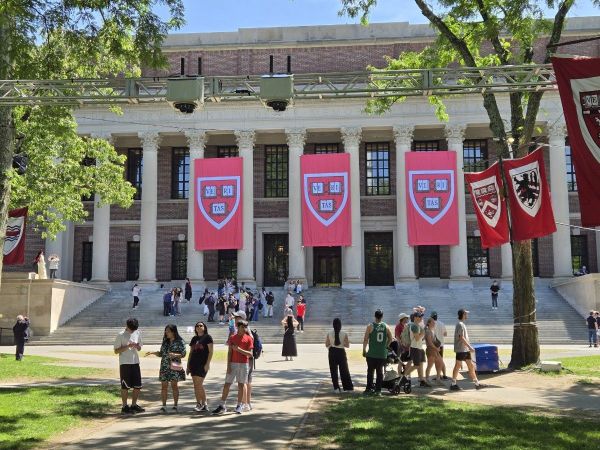
According to the New York Times on January 15 (local time), Harvard University fell from first to third place in the "Leiden Ranking (2025)," which is based on the volume of published academic papers. In the global rankings, Harvard had maintained the top position for 13 consecutive years since rankings began in 2012. Notably, Harvard is producing far more research output than it did 20 years ago, yet its ranking has slipped. However, it still holds the top spot in the science paper category, a metric that reflects citation impact. The Leiden Ranking, published by the Centre for Science and Technology Studies (CWTS) at Leiden University in the Netherlands, evaluates universities' research performance primarily based on publication volume and also indicates research impact through citation metrics.
Currently, Harvard is the only American university remaining in the top ranks of this list. In the early 2000s, seven out of the top ten universities in the world by academic publication volume were American institutions. Major universities such as Harvard, the University of Michigan, the University of California Los Angeles (UCLA), Johns Hopkins University, the University of Washington Seattle, the University of Pennsylvania, and Stanford University were all included among the top ranks. At that time, Zhejiang University was the only Chinese institution within the top 25. However, Zhejiang University now holds the number one spot in the Leiden Ranking. In addition, seven Chinese universities are now included in the top ten.
The rise of Chinese universities is also prominent in other university rankings that emphasize scientific research performance. In the University Ranking by Academic Performance (URAP), compiled by the Informatics Institute of Middle East Technical University in Ankara, Turkey, Harvard University ranked first globally, but Stanford University was the only other American university in the top ten. In contrast, four Chinese universities made the list. Phil Baty, Chief Global Affairs Officer at Times Higher Education, a UK-based university evaluation agency, commented, "A new world order is forming around global leadership in higher education and research."
This relative decline in the status of American universities is also linked to the policy direction of the Trump administration. Since taking office, the Trump administration has implemented federal research funding cuts, travel restrictions, and stricter anti-immigration enforcement. As a result, the number of international students entering the United States in August last year decreased by 19% compared to the previous year. The New York Times noted that while President Trump's policies have not directly triggered the relative decline of American universities, they may accelerate this trend.
Navigation
Install the app
How to install the app on iOS
Follow along with the video below to see how to install our site as a web app on your home screen.
Note: This feature may not be available in some browsers.
More options
Style variation
You are using an out of date browser. It may not display this or other websites correctly.
You should upgrade or use an alternative browser.
You should upgrade or use an alternative browser.
Harvard Drops from 1st to 3rd: American Universities Falter as China Claims 7 of Top 10 Spots
- Thread starter Beijingwalker
- Start date
More options
Who Replied?lightning f57
Trusted Member

Fair to say China is catching up regardless of the ranking their methodology and who's doing it.

Beijingwalker
VIP Member

- Thread starter
- #48
I agree, it's just a recent new report, it doesn't decide the general high education situation in the world and I never claim so.One source doesn't prove anything.
Chinese universities are top in infrastruction and teaching facilities just like the infrastructure in all other things, but they still need to work on soft power to get more global recognition, this will take time and could be for decades. Another disadvantage is language, foreign students have to learn Chinese to attend Chinese schools, this is quite a challenge for every non Chinese student.
Beijingwalker
VIP Member
- Thread starter
- #49
Chinese Universities Surpass Harvard Despite Glaring Lack of Racial Diversity
New world rankings undermine Ivy League's claim that diversity is 'essential to academic excellence'
Andrew Stiles
January 16, 2026
Harvard is no longer the most productive research university in the world, according to a respected global ranking that assesses schools on academic publication. The Ivy League darling dropped to number three in 2025, surpassed by two Chinese universities that managed to excel despite an alarming lack of racial diversity.
The outcome was humiliating for American universities. Red China, one of the most ethnically homogenous countries on Earth, dominated the rankings, which were compiled by the Centre for Science and Technology Studies at Leiden University in the Netherlands. Of the top 25 schools for research output, 19 were Chinese and just 3 were American. Yale University ranked 64th, behind the University of Minnesota and just ahead of King Saud University in Riyadh.
It was especially humiliating for Harvard, which has long prided itself on being the global leader in academic research. Its leaders have repeatedly argued that "diversity and difference are essential to academic excellence"—a view shared by officials at other elite universities. Lee Bollinger, the former president of Columbia University, once said that American higher education was "the envy of the world not in spite of, but because of, its unrivaled commitment to diversity." Columbia ranked 54th in research output behind the University of Florida, Ohio State University, and the University of British Columbia in Canada.
The top-rated school for research productivity—Zhejiang University in Hangzhou, China—does not appear to share the Ivy League's rigorous commitment to diversity. Chinese universities do not publish race-based demographic breakdowns of their faculties and student bodies, but Zhejiang University's own figures suggest that roughly 90 percent of its students are Chinese nationals.
China all but prohibits foreigners from becoming citizens, which means that even if every single one of Zhejiang's international students were people of color, the university's BIPOC representation would top out at around 10 percent. Most Ivy League schools, by contrast, boast that roughly 50 percent of their students identify as people of color.

The actual BIPOC representation at Zhejiang is undoubtedly much lower than 10 percent. A Washington Free Beacon analysis estimates that Black, Latino, and Native American students comprise less than 1 percent of the student body. Certain subgroups that help form the "diverse tapestry of excellence" at Ivy League universities—Russian oil scions, Qatari royalty, transgender Palestinians—are unlikely to be represented at all. The same is true at Shanghai Jiao Tong University—the other Chinese school that ranked ahead of Harvard.
Harvard fell in the rankings despite publishing more research now than it did two decades ago, when it was the undisputed global leader in the category. Some would likely argue that the decline was a direct result of the U.S. Supreme Court's ruling striking down race-conscious admissions in 2023. Harvard's top brass lamented the ruling and reiterated their view that "deep and transformative teaching, learning, and research depend upon a community comprising people of many backgrounds, perspectives, and lived experiences."
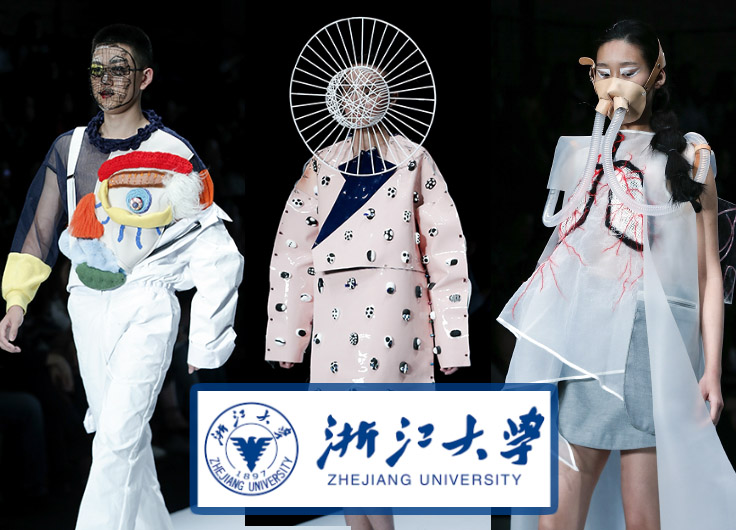
The success of China's higher education system is clear evidence to the contrary. A further Free Beacon analysis found that China's lack of diversity was no obstacle in other categories long dominated by American universities, including the production of weird nonsense masquerading as art. Photos from China Graduate Fashion Week at Zhejiang University in 2016 suggest Chinese "art" students are just as "capable" as their American counterparts.
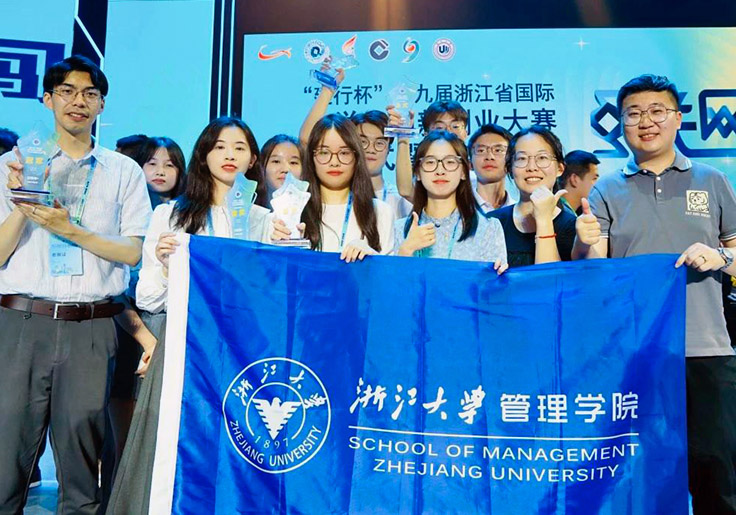
Chinese Universities Surpass Harvard Despite Glaring Lack of Racial Diversity
Harvard is no longer the most productive research university in the world, according to a respected global ranking that assesses schools on academic publication. The Ivy League darling dropped to No. 3 in 2025, surpassed by two Chinese universities that managed to excel despite an alarming lack...
 freebeacon.com

onlinpunit
Trusted Member

It's my dream to study at Zhejiang University!
-- said no one ever !
-- said no one ever !
Beijingwalker
VIP Member
- Thread starter
- #51
Many in China and China produces many world top talents now.It's my dream to study at Zhejiang University!
-- said no one ever !

Respect4Respect
Trusted Member

Rankings aside, China is now at a point where it can genuinely say its education system rivals or even surpasses many Western institutions. What about India and Pakistan though....other than the usual draamabazi and chest thumping?It's my dream to study at Zhejiang University!
-- said no one ever !


VCheng
THINK TANK: CONSULTANT

It's my dream to study at Zhejiang University!
-- said no one ever !
There is always Tsinghua University.
onlinpunit
Trusted Member
Things you learn on PDF !There is always Tsinghua University.

Beijingwalker
VIP Member
- Thread starter
- #56
You Indians don't seem to read much, Tsinghua's success has been around across global media for at least a decade alreadyThings you learn on PDF !
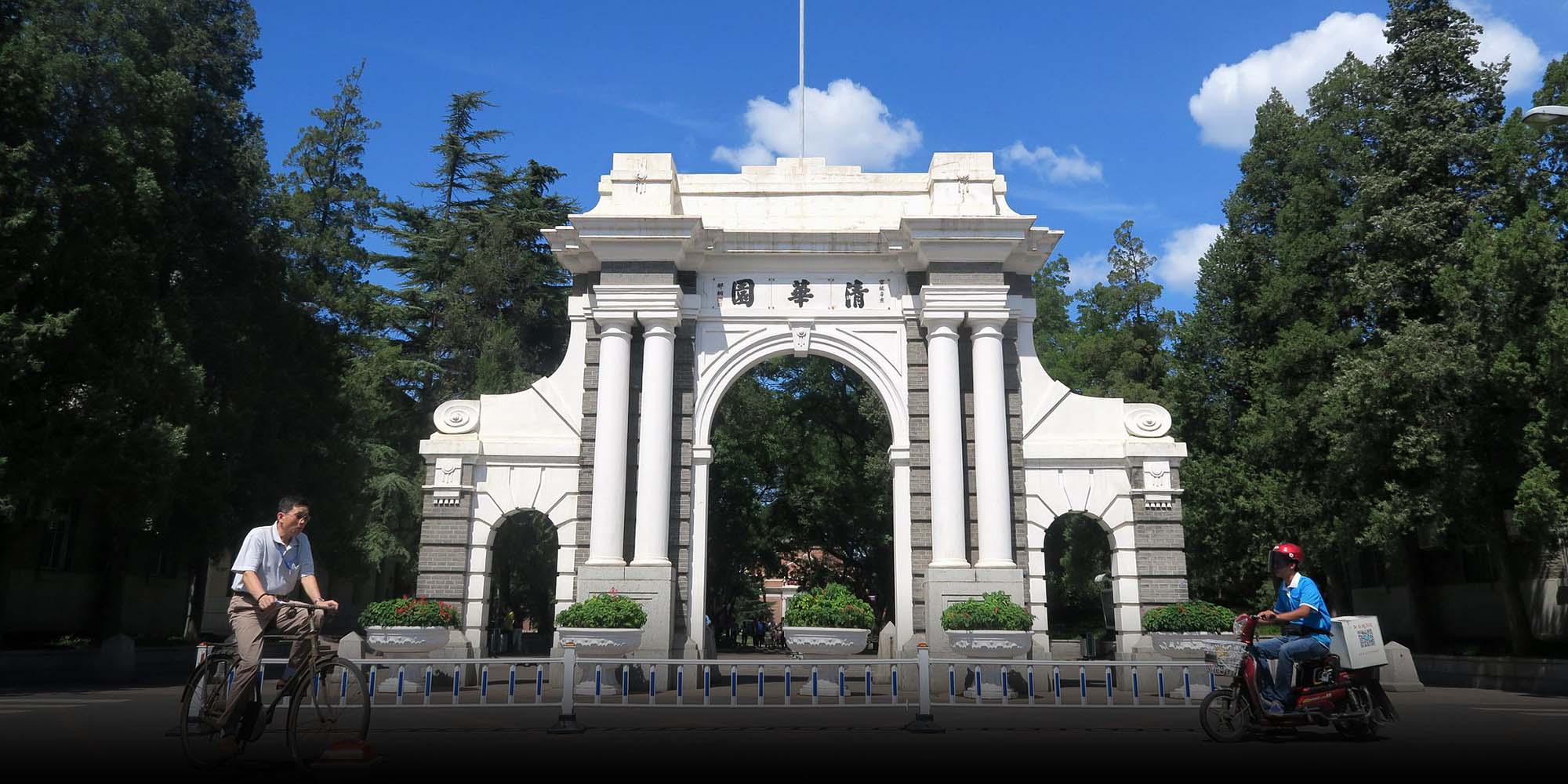
Tsinghua Named World’s Best Engineering, Computer Science School
Beijing university overtakes MIT in two US News & World Report subject rankings.

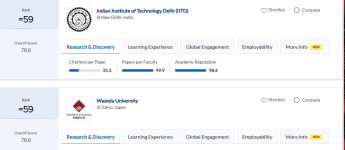
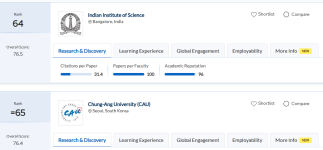
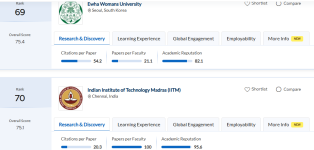
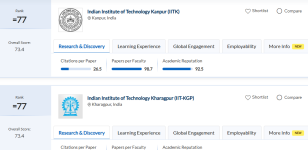
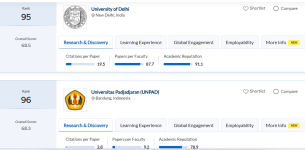
Its good to see Delhi University at place 95 in Asia


QS Asia University Rankings 2026 - Overall
Study at one of the best universities in Asia. Explore our ranking of Asian universities and choose the one that matches your career goals.
Last edited:
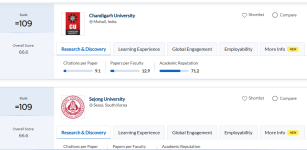
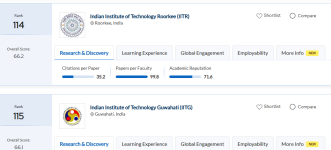
its good to see UP's IIT-R, and IIT-G at place 114 & 115 respectively
@Persian Gulf
@muhammed45
@Fatman17
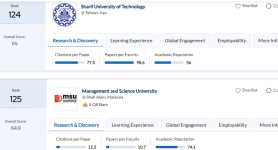
its good to see a place for an Iranian and Malaysian University at place 124 & 125.
@Muji.Iqbal
here, how many University from Muslim World in top 100 & 200 of Asia

QS Asia University Rankings 2026 - Overall
Study at one of the best universities in Asia. Explore our ranking of Asian universities and choose the one that matches your career goals.
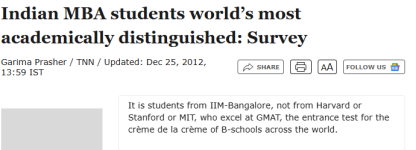
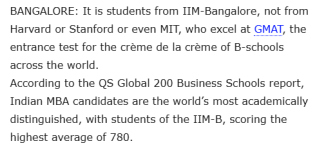
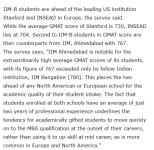

Indian MBA students world’s most academically distinguished: Survey - Times of India
News News: It is students from IIM-Bangalore, not from Harvard or Stanford or MIT, who excel at GMAT, the entrance test for the crème de la crème of B-schools ac
 timesofindia.indiatimes.com
.
=>
@Muji.Iqbal
@Persian Gulf
@Fatman17
@Beijingwalker
good day Gentlemen, as in last posts 57# & #58, we find the GMAT & GRE scores of Indian Institutes show a Generation Gap with their competitive Western - Asian Institutes-Universities. we dont see the competitive exam and the exam score card are even close match to Indian examinees in these International exams like GMAT - GRE

@Viet
@Hamartia Antidote
as in above post of TOI, the speaker newspaper of India, we find even scores of INSEAD and MIT type institutes are because of Asian students-examinees in their entrance examinations.
how the Western student place themselves while sitting with these Asian students in these entrance exams like GRE-GMAT of Top Universities of West-Asia
For the leadership development programme, four colleges from India feature among top 50 universities. They are: IIM-A, IIM-B, IIM-C and Indian School of Business (ISB).
Highlights of the survey
• Schools ranked for employer reputation in 10 subject specializations. Harvard tops the table in three subjects, ahead of Stanford and MIT with two apiece. Wharton is number one for finance
• Three Asian schools make the Elite global category: INSEAD Singapore, IIM-A and NUS Business School, National University of Singapore
• No Elite Global schools in either Africa and Middle East, or Latin America
timesofindia.indiatimes.com
.
@Muji.Iqbal
@Hamartia Antidote
as in above article of prime newspaper TOI, the speaker of India, its claimed that no Institutes-universities of Middle East- Africa including SA - and Latin America deserve a place in Top Universities by reputed ranking of QS Global. and why?
there is a lie of their education -educational institutes by all the nations of world.
a lie TOI publish and its same for almost all countries. but why the above '3' certain regions dont get a place in these lies?
Highlights of the survey
• Schools ranked for employer reputation in 10 subject specializations. Harvard tops the table in three subjects, ahead of Stanford and MIT with two apiece. Wharton is number one for finance
• Three Asian schools make the Elite global category: INSEAD Singapore, IIM-A and NUS Business School, National University of Singapore
• No Elite Global schools in either Africa and Middle East, or Latin America
Indian MBA students world’s most academically distinguished: Survey - Times of India
News News: It is students from IIM-Bangalore, not from Harvard or Stanford or MIT, who excel at GMAT, the entrance test for the crème de la crème of B-schools ac
timesofindia.indiatimes.com
.
@Muji.Iqbal
@Hamartia Antidote
as in above article of prime newspaper TOI, the speaker of India, its claimed that no Institutes-universities of Middle East- Africa including SA - and Latin America deserve a place in Top Universities by reputed ranking of QS Global. and why?
there is a lie of their education -educational institutes by all the nations of world.
a lie TOI publish and its same for almost all countries. but why the above '3' certain regions dont get a place in these lies?
Last edited:
Pakistan Defence Latest
-

-
For Muslims, Hindus, Christians Tarique Rahman's Bangladesh Unity Appeal (11 Viewers)
- Latest: baldfish
-
-
-

Country Watch Latest


Latest Posts
-

-
Joint Defense Agreement: Turkey, Saudi Arabia, and Pakistan, news & updates (45 Viewers)
- Latest: mythbuster
-
-

-
