Harvard Drops from 1st to 3rd: American Universities Falter as China Claims 7 of Top 10 Spots

Harvard Drops from 1st to 3rd: American Universities Falter as China Claims 7 of Top 10 Spots​


Pubilshed 16 Jan.2026 13:47(KST)

The status of American universities is faltering. In the global university rankings based on academic publications, Harvard University has dropped from first to third place, while Zhejiang University in China has risen to first, with Chinese universities occupying seven out of the top ten spots. In particular, there are concerns that the pressure policies initiated by President Donald Trump since last year could accelerate the weakening competitiveness of American universities.
Harvard Drops from 1st to 3rd: American Universities Falter as China Claims 7 of Top 10 Spots

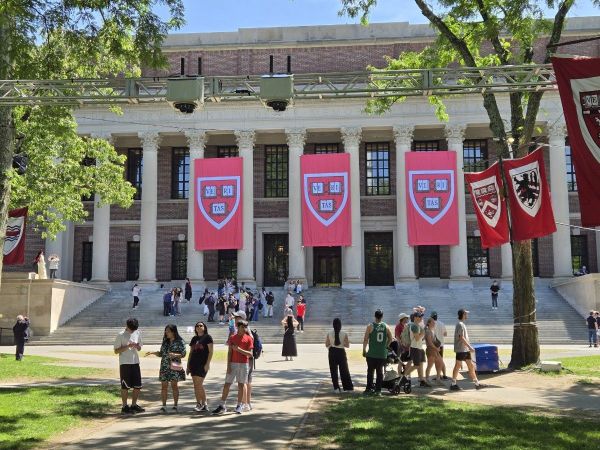
According to the New York Times on January 15 (local time), Harvard University fell from first to third place in the "Leiden Ranking (2025)," which is based on the volume of published academic papers. In the global rankings, Harvard had maintained the top position for 13 consecutive years since rankings began in 2012. Notably, Harvard is producing far more research output than it did 20 years ago, yet its ranking has slipped. However, it still holds the top spot in the science paper category, a metric that reflects citation impact. The Leiden Ranking, published by the Centre for Science and Technology Studies (CWTS) at Leiden University in the Netherlands, evaluates universities' research performance primarily based on publication volume and also indicates research impact through citation metrics.

Currently, Harvard is the only American university remaining in the top ranks of this list. In the early 2000s, seven out of the top ten universities in the world by academic publication volume were American institutions. Major universities such as Harvard, the University of Michigan, the University of California Los Angeles (UCLA), Johns Hopkins University, the University of Washington Seattle, the University of Pennsylvania, and Stanford University were all included among the top ranks. At that time, Zhejiang University was the only Chinese institution within the top 25. However, Zhejiang University now holds the number one spot in the Leiden Ranking. In addition, seven Chinese universities are now included in the top ten.

The rise of Chinese universities is also prominent in other university rankings that emphasize scientific research performance. In the University Ranking by Academic Performance (URAP), compiled by the Informatics Institute of Middle East Technical University in Ankara, Turkey, Harvard University ranked first globally, but Stanford University was the only other American university in the top ten. In contrast, four Chinese universities made the list. Phil Baty, Chief Global Affairs Officer at Times Higher Education, a UK-based university evaluation agency, commented, "A new world order is forming around global leadership in higher education and research."

This relative decline in the status of American universities is also linked to the policy direction of the Trump administration. Since taking office, the Trump administration has implemented federal research funding cuts, travel restrictions, and stricter anti-immigration enforcement. As a result, the number of international students entering the United States in August last year decreased by 19% compared to the previous year. The New York Times noted that while President Trump's policies have not directly triggered the relative decline of American universities, they may accelerate this trend.

good day gentlemen

im a honored member of Australian Defense Shops, I mainly used to visit there for Alcoholic Drinks. and Im missing the "grade" of the Military Bars of Australia in Kashmir, its poor here ....... 👎
I'm told, the grade of Srinagar's Bar is too below to that of my membership of Australian Military Alcoholic Shops, i can visit in most of them. I'm told, my one family friend, the actress 'Puja Batra' too won't like to visit so poor grade Bars of Kashmir ....... its good in Bombay 👍

My documents for a position for Australian Military Cap moved forward also, im told to be awarded a medal below to a Maharashtrian Indian Hindu also.....
Screenshot 2026-01-19 111650.png
 
Last edited:

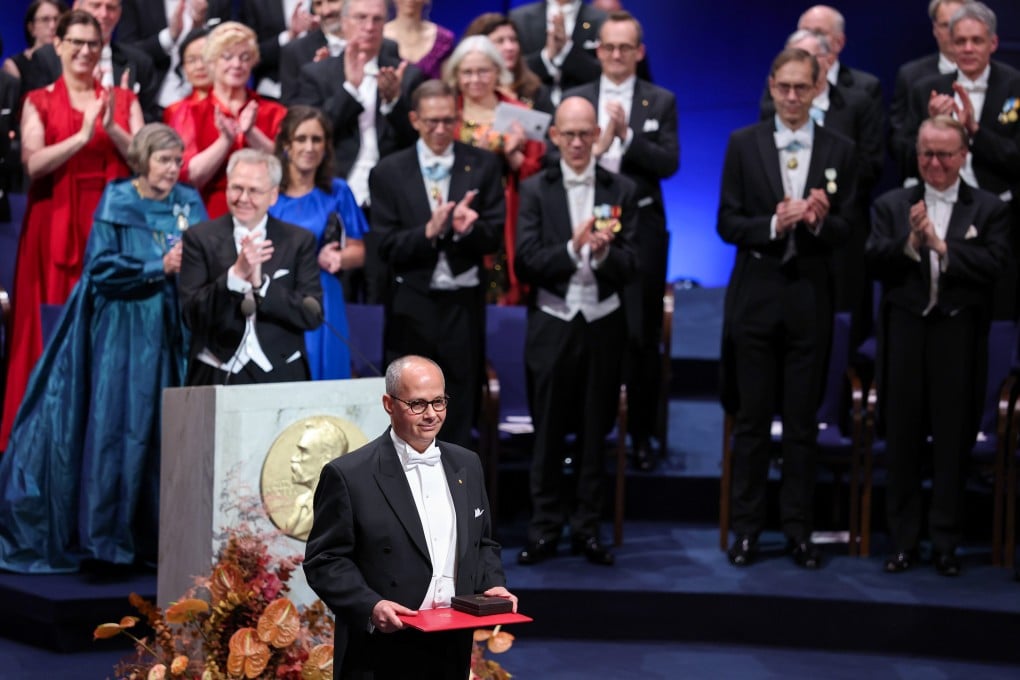
Nobel-winning materials scientist Omar Yaghi joins China’s Tsinghua University from the US​

Yaghi hopes to lead team using AI to create materials to tackle global challenges such as carbon neutrality and water shortages​


Omar Yaghi receives the Nobel Prize in Stockholm in December. Photo: Getty Images


Published: 9:00pm, 4 Jul 2026

Omar Yaghi, the winner of last year’s Nobel Prize for chemistry, has left the United States to lead a new AI-driven research centre at China’s Tsinghua University.

The 61-year-old materials scientist will head a team working on ways artificial intelligence (AI) can transform the design and synthesis of new materials and shorten their development cycle “by orders of magnitude”, Tsinghua said on Friday.

Speaking at his appointment ceremony, Yaghi said he hoped to develop materials to tackle major environmental challenges such as water shortages, carbon neutrality and sustainable development.

He added that he also wanted to help train young scientists in AI-driven chemistry.

Yaghi was previously the James and Neeltje Tretter professor of chemistry at the University of California, Berkeley. He shared the 2025 Nobel Prize with Richard Robson and Susumu Kitagawa for their work on metal-organic frameworks, which are ultra-porous, spongelike materials created by linking metal ions with carbon-based molecules.

These and other related materials have the highest surface areas known to date, allowing them to capture and convert carbon, harvest water from desert air and absorb hydrogen to produce clean energy.

Zhou Zihui, a postdoctoral researcher at UC Berkeley, said Yaghi had trained about 200 researchers, nearly half of whom were Chinese.

 
To view this content we will need your consent to set third party cookies.
For more detailed information, see our cookies page.
 
Good to hear. But how many international students do Chinese universities have. I think that matters a lot.
 
Good to hear. But how many international students do Chinese universities have. I think that matters a lot.
China prioritizes rigorous academic research and welcomes international students with genuine expertise.
It does not enroll overseas students merely to boost institutional prestige, and those who idle away their time on campus are not welcome.
 

Forget DeepSeek. China’s real ‘Sputnik moment’ is happening on campus as American universities lose their advantage​

By Mia Osmonbekov
August 10, 2026, 2:00 AM ET

When DeepSeek unveiled an AI model last year that rivaled America’s best at a fraction of the cost, or when a Chinese hypersonic missile test caught U.S. intelligence off guard to the point where a top U.S. general called it “very close” to a “Sputnik moment”, the reaction each time was the same: that a handful of Chinese firms had suddenly pulled ahead.

But a sweeping new National Bureau of Economic Research study of nearly 14 million Chinese patents suggests that framing misses the real story—and it’s a more unsettling one for the United States.

Harvard Business School’s Josh Lerner and his co-authors dug into who is actually filing the patents behind the 14 technology areas the Pentagon deems critical—advanced computing, space technology, AI, hypersonics and biotech. The answer: Chinese universities account for more than a quarter of the country’s inventions in those fields, 8x the U.S. rate at 3.3%, with state-owned enterprises and the government accounting for just 4%. Fewer than one in 10 Chinese critical technology patents involve an inventor with U.S. work experience, undercutting the assumption that Beijing relies on returning U.S. talent for innovation.

Lerner told Fortune his team was “programmed” to expect a few large corporations like Huawei and Tencent to lead the charge on Chinese innovation through patents similarly to IBM and Samsung in the U.S. Instead, they found Chinese innovation in critical technologies “much more diverse—spread out across the parties,” with universities “more represented” there than anywhere else in the country’s patent system. That’s a reversal of the U.S. pattern, where academic patenting is “more of a sideshow.”

“We’ve clearly seen this dramatic boom in terms of research funding and patenting in China,” Lerner said, “and the natural question being is this bearing fruit? In the software side, Deepseek was certainly something that was really not anticipated, and clearly these open-source Chinese models are getting an enormous amount of traction.”

The findings arrive as the quality gap many assumed would protect American tech leadership seems to be closing, with DeepSeek, Moonshot and Z.AI going toe-to-toe with U.S. frontier labs and beating them on cost.

Using four text-based measures of patent novelty and scientific relevance, the authors found no evidence China’s patent boom came at the cost of quality—Chinese patents have converged with, and in some technologies overtaken, their U.S. counterparts. The share of Chinese critical-technology patents containing “disruptive” technical language jumped from under 2% in the early 1990s to 16% by 2022, closing in on the American share of roughly 20%.

There’s also a seeming difference in dynamics between China and the U.S. with their respective universities, especially as the Trump administration’s international student crackdown strained campuses and raised questions about the future of STEM talent.

The paper describes Beijing’s role as “coordinative rather than directly productive”—steering research through funding and priorities rather than owning the institutions that produce it. Lerner drew a contrast with his own university Harvard’s public standoff with Washington over research funding.

“When you think about the dynamics between our university and the administration, which has been a lot of back and forth in the courts,” he said, “one doesn’t suspect the same kind of interactions would characterize those between a major Chinese university and the state.”

The U.S. has scaled back its federal research grant pipeline. Last year, the Trump administration moved to cut $4 billion from NIH’s reimbursement of universities’ research overhead costs, capping a rate that had typically run 50-60% at just 15%. By April, the administration had formally terminated 1,392 NIH grants worth $539 million in unspent obligations, while the National Science Foundation had cancelled or suspended nearly 2,000 awards of its own: the Brennan Center for Justice puts total NIH and NSF cuts and freezes at more than $3 billion since 2025, with roughly $1.4 billion still frozen or unresolved. Some of the terminations have been reversed by courts, but the fights continue on a grant-by-grant basis.

The potential lag in innovation might not be seen immediately, but it could have a sizable effect on competition with China as the Trump administration has proposed steep cuts to federal science funding and a rewrite of federal grant rules that critics — including groups well outside academia, from farm cooperatives to bankers—warn would let agencies cancel research awards midstream.

“You don’t really see the consequences until perhaps years or even decades afterwards, just given the very long‑run nature of this process,” Lerner told Fortune.

While Lerner’s paper highlights the asymmetry in critical technology patent production between the U.S. and China, Dan Wang, a China analyst at Eurasia Group, is skeptical of how far the patent numbers should be trusted: commercialization rates for Chinese university patents remain low, Wang told Fortune over email, and few are filed overseas, while companies like Nvidia and Google drive “exceptionally strong” R&D in the United States.

The rankings are catching up to the money. In June, Harvard lost the top spot in the Nature Index Research Leaders—a closely watched measure of high-quality research output—for the first time since the index began tracking universities in 2015. Among academic institutions, Zhejiang University (the alma mater of DeepSeek founder Liang Wenfeng), moved into first place, with Harvard falling to second. Including the Chinese Academy of Sciences, a government research body rather than a university, Harvard falls to third place. Nine of the top 10 academic institutions globally are now Chinese; five years ago, eight of the top 10 were American.

“China is likely to narrow the gap in patent-related indicators, but not in overall technological leadership,” Wang said. “The university innovation system is heavily influenced by administrative process and political mandate, and thus does not leave enough room for self driven research.”

But Wang cautioned that Washington’s fixation on sanctioning a handful of “national champions” in China like Huawei and Tencent overlooks “the real base for China’s technological upgrading”—decentralized networks of universities, suppliers and state-owned enterprises. Wang estimates there are 18,000 state-designated “little giant” firms working on components and materials alone.

“Sanctioning a few major firms alone is unlikely to halt the broader ecosystem,” Wang added.

China surpassed the U.S. in total R&D spending for the first time in 2024, investing $1.03 trillion to America’s $1.01 trillion, and has reached via R&D growth topping 14% annually since 2004, more than double the U.S. pace.


China's Tsinghua University named world's best for engineering

By Phong Ngo August 9, 2026 | 07:24 pm PT

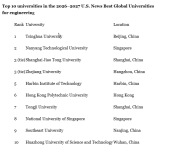
Tsinghua University has been ranked the world's best university for engineering in the latest U.S. News Best Global Universities subject rankings.

1123-1786329455-2133-1786329492.png

Engineering students at Tsinghua University, China. Photo courtesy of the school

The Beijing-based university earned a perfect overall engineering score of 100. It ranked first in six of the subject's performance indicators, including publications, conference papers, total citations, and the number of highly cited papers.

No universities outside Asia appeared in the top 10.

Mainland China dominated the top 10 with seven universities.

Singapore's Nanyang Technological University and National University of Singapore placed second and eighth, while Hong Kong Polytechnic University ranked sixth.

Chinese universities also remained dominant in the 11th-to-20th range, with five institutions.

The highest-ranked non-Asian institutions were the U.S.'s Massachusetts Institute of Technology at 12th place.

搜狗截图20260811003918.png
Engineering was the largest of the 51 subject rankings published by U.S. News in June, covering 1,614 universities worldwide.

The rankings evaluated research performance based on publications from 2020 to 2024 and citations through Nov. 25, 2025. Universities were assessed across 12 indicators and were required to publish at least 250 engineering papers during the five-year period to qualify.

Beyond engineering, Tsinghua ranked first globally in 9 subjects, including artificial intelligence, computer science, chemistry, materials science and environmental engineering. It also placed second in four disciplines and ranked among the world's top 10 in eight others.

In the overall Best Global Universities rankings, Tsinghua placed first in Asia, first in China and sixth worldwide.

 
9 of the 10 most productive scientific institutions in the world are now Chinese according to Nauture’s ranking.

1786356110020


Users who are viewing this thread

Pakistan Defence Latest

Country Watch Latest

Latest Posts

Back
Top