Navigation
Install the app
How to install the app on iOS
Follow along with the video below to see how to install our site as a web app on your home screen.
Note: This feature may not be available in some browsers.
More options
Style variation
You are using an out of date browser. It may not display this or other websites correctly.
You should upgrade or use an alternative browser.
You should upgrade or use an alternative browser.
History of Pakistan Army
- Thread starter ghazi52
- Start date
More options
Who Replied?


ghazi52
THINK TANK: CONSULTANT
- Thread starter
- #32
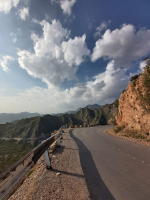
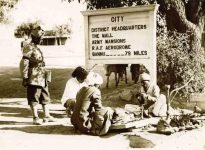
One Of The Earliest Photographs Of Cricket In British India.
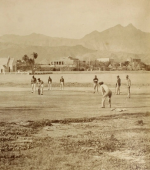
19th Century Cricket at Kohat, a photograph by Major Charles Patton Keyes of the 1st Punjab Infantry, between 1862-1865 (c).
Many of the first cricket matches played in northern British India during the 19th Century were instigated by the British Army who were stationed there.
Kohat is described by Edward Emmerson in his book 'Across the Border' published in 1890, as a 'picturesque town'. He noted that Kohat boasted a church, an assembly room, a library, racket courts, a cricket ground, polo field and racecourse all within a ring fence "so that society can take its exercise, or afternoon tea, without going beyond the range of the mess; that Garrison mess whose doors are open to every one, whom duty or pleasure carries in its direction".
The British introduced cricket to India in the 18th century. Initially, Indians were only spectators to contests played between Army and Navy units, but by the late 19th century the game had acquired popular appeal. Both Hindu and Muslim native soldiers took up cricket with enthusiasum. For the British, cricket was part of their colonising mission.
The cricketing historian Cecil Headlam, travelling in India during the 1903 Delhi Durbar, reflected on its place in the imperial scheme: 'First the hunter, the missionary, and the merchant, next the soldier and the politician, and then the cricketer - that is the history of British colonisation. And of these civilizing influences the last may, perhaps, be said to do least harm. The hunter may exterminate deserving species, the missionary may cause quarrels, the soldier may hector, the politician blunder - but cricket unites, as in India, the rulers and the ruled. It also provides a moral training, an education in pluck, nerve and self-restraint valuable to the character of the ordinary native'.
Like their British counterparts, Indian Army regiments took part in competitions against both Indian and British units stationed on the sub-continent. Today, Pakistan and India are both cricket-mad nations.
19th Century Cricket at Kohat, a photograph by Major Charles Patton Keyes of the 1st Punjab Infantry, between 1862-1865 (c).
Many of the first cricket matches played in northern British India during the 19th Century were instigated by the British Army who were stationed there.
Kohat is described by Edward Emmerson in his book 'Across the Border' published in 1890, as a 'picturesque town'. He noted that Kohat boasted a church, an assembly room, a library, racket courts, a cricket ground, polo field and racecourse all within a ring fence "so that society can take its exercise, or afternoon tea, without going beyond the range of the mess; that Garrison mess whose doors are open to every one, whom duty or pleasure carries in its direction".
The British introduced cricket to India in the 18th century. Initially, Indians were only spectators to contests played between Army and Navy units, but by the late 19th century the game had acquired popular appeal. Both Hindu and Muslim native soldiers took up cricket with enthusiasum. For the British, cricket was part of their colonising mission.
The cricketing historian Cecil Headlam, travelling in India during the 1903 Delhi Durbar, reflected on its place in the imperial scheme: 'First the hunter, the missionary, and the merchant, next the soldier and the politician, and then the cricketer - that is the history of British colonisation. And of these civilizing influences the last may, perhaps, be said to do least harm. The hunter may exterminate deserving species, the missionary may cause quarrels, the soldier may hector, the politician blunder - but cricket unites, as in India, the rulers and the ruled. It also provides a moral training, an education in pluck, nerve and self-restraint valuable to the character of the ordinary native'.
Like their British counterparts, Indian Army regiments took part in competitions against both Indian and British units stationed on the sub-continent. Today, Pakistan and India are both cricket-mad nations.
ghazi52
THINK TANK: CONSULTANT
- Thread starter
- #35
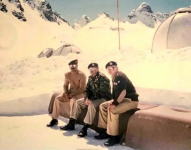
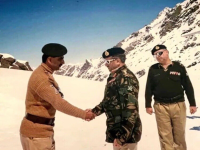
In the east of Korakoram range of Himalaya, to the North East of NJ 9842, lies the coldest hell on earth. A 76 Kilometers long mass of rock solid snow, having the minimum altitude of 20,000 feet or 6,000 meters; this area has the coldest and most fearsome climate on earth. It is called the third pole on earth or in the words of native language of the area, it is referred as the Black Rose or Siachen.
Bordering the area of Pakistan and India in the sector, this is a bone of contention of between two countries. Unlike the beautiful landscape and winsome northern areas of the country, even the name of this sector gives chills in the spine; what to say of its horrific landscape.
This area has the most brutal and harsh weather of the region. In winter, the temperature drops up to -50 degrees.
The wind speed is around 160 KMPH, which creates wind chill factor, dropping temperature even lower. In the hottest months of June and July, the temperature is around -2 degrees. Crevices, steep slopes, and the cracks covered by a thin layer of snow which can not support the weight of an average person, collapse all of sudden, taking the person stepping to its depth. Not only causing mortality or severe injuries that is even worse than death in such a climate. The avalanche is the most horrific nightmare of the person present here. Verily major part of Siachen hasn't been treadled by any human, since the creation of the world.
Seeing through military point of view, this area is the toughest position ever for a soldier. Here the lowest post has to be established on the minimum altitude of 21,000 feet or 7,000 meters. The highest post in this sector is about 22,000 feet high. This difference of 1,000 feet has a saga of labour and bravery in it to cover. On such a height, a human requires surely to be a superhuman.
Although a soldier to be posted here must go through a training of a short period a Gilgit in order to be deployed here, but this sudden change of altitude has sudden impact of a human.
Acute depression, diminished appetite, sleep disorder, memory loss, hallucination, frost bite, hypoxia and white-out after seeing the white colour of snow for several days are enemies of a soldier. Above all this, high altitude sickness, pulmonary or cerebral edema are common as well.
Frost bite is the worst a soldier can expect. A little bit of sweetening or moisture can cause a frost bite. Any limb hit by frost bite has to be amputated on immediate basis, or it is the cause of death for the affected.
In such a thin air, the intensity of the most vital factor oxygen is decreased; handicapping a person to do even the most common chores of life. In a post established in a fiber glass igloo 6 to 7 Jawans are kept, including ORs and an officer. Here the tin food is the source of nutrition for the soldiers. Having a cook among is the biggest blessing for them.
However, cooking is also a challenging task here. Freezing cold in addition to the lack of oxygen makes cooking difficult. Eating the food is another difficulty here because not only the diminished appetite but also the deficiency of oxygen. It is difficult to walk a few paces in a cold atmosphere, as it is a laborious job to do in such a climate.
Even drinking water is not so easy here. A person has to constantly man the stove, where the snow is being melted, in order to make water. However, drinking water may shed body temperature, so the drinking amount is kept to minimum. It results in the thickening of blood. So, Dispirine is consumed like sweets here, just to keep the blood thin.
Otherwise, it may result into any severe medical condition. Ironically, the soldiers on the Siachen are sitting on one of the largest water reserves on earth.
In case of any casualty or injury, waiting for the helicopter is the most important activity to be done here. However it also depends on the situation and clarity of weather to make the trip, otherwise it is delayed for an undefined period. An officer serving in Siachen told that one of his Jawans passed away because of weather.
Due to the limited area available around the igloo he could not be buried nearby and it was not considered suitable to bury the body far away from the post as being spotted in the area could alert the Indians and locating the post would not have been difficult. Although the body could be shifted easily by the helicopter but the thick blanket of clouds on the sky was intimating that its impossible. Keeping the body outside the igloo was not only a disrespect for the martyred comrade but also being lost if there was any snow storm in the area. It was expected to have a storm in a couple of hours. So, the body was kept inside the igloo and the officer insisted the body to be kept alongside his bedding.
The storm broke out and kept the area surrounded for 2 weeks. All these days, the fallen comrade was kept inside the igloo with his fellows. However, the deficiency of oxygen which causes neural functions of the body to work inefficiently, made soldiers believe that their fellow is alive and present with them, having a chit chat as well. However, this ended when after a period of 2 weeks, the storm ended and the casualty was taken by the helicopter.
Sun which is a sign of life for earth isn’t very gentle here as well. Although the altitude brings the temperature to a minimum level but rays of sun directly hit the objects present here, including humans. Intensity of sun rays is very low here but even the minimum amount of sunshine is dangerous. Without the anti glare glasses, it is very difficult to see here even causing to damage the eye sight partially. If faced for a long time, it might be fully. Because when the sun rays hit the snow, the snow particles act as tiny mirrors, reflecting the sunlight to one another, increasing the sun light to a very high and unbearable level.
The effect can be seen by facing the sun burnt skin or the uniform of the soldiers. When posted to Siachen, the colour of uniform is as white as snow, but after spending time here is starts taking shades of grey every day. Darker the grey is, longer the stay of the soldier on Siachen is indicated.
The handling of weapon is a challenge for the soldier. Unlike the plains or lower mountains where one just grabs a firearm and starts shooting is not a luxury which can be enjoyed in siachen. If touched with the bare hand, even the slightest moisture in the air causes the hand to cling to the metal and cause the skin to peel off.
Supplies play a vital role to keep the soldiers alive an equipped. A place where Aspirine and kerosene oil are needed every minute and required to stay alive, supplies must reach timely, otherwise a delay of minutes can cost years.
The speediest way is to drop supplies by helicopter or the airdrop by C-130 to some specific drop zones, near the posts. From where it is carried by the soldiers to the relevant point. But this is not such a simple task to be done. Drop zones are mostly on the lower ground while the posts are on the higher level.
Carrying the weight in such a climatic condition even to a minimum level is such an uphill task. Most of the time when porters reach the post, their blood is also seen on the canvas belts carrying the burden. Moreover, if the drop zones are marked by the enemy OP, the artillery fire not only destroys the supplies but also causes casualties by the enemy fire. Finding a safe drop zone or the route is another challenging task.
Sicahen is verily the god forsaken place, where the well-equipped well prepared enemy looks like a midget who can miss its shot. While the gigantic enemy is nature which never misses its shot. Every day, every minute, even every new second is a new challenge.

 www.facebook.com
Bordering the area of Pakistan and India in the sector, this is a bone of contention of between two countries. Unlike the beautiful landscape and winsome northern areas of the country, even the name of this sector gives chills in the spine; what to say of its horrific landscape.
This area has the most brutal and harsh weather of the region. In winter, the temperature drops up to -50 degrees.
The wind speed is around 160 KMPH, which creates wind chill factor, dropping temperature even lower. In the hottest months of June and July, the temperature is around -2 degrees. Crevices, steep slopes, and the cracks covered by a thin layer of snow which can not support the weight of an average person, collapse all of sudden, taking the person stepping to its depth. Not only causing mortality or severe injuries that is even worse than death in such a climate. The avalanche is the most horrific nightmare of the person present here. Verily major part of Siachen hasn't been treadled by any human, since the creation of the world.
Seeing through military point of view, this area is the toughest position ever for a soldier. Here the lowest post has to be established on the minimum altitude of 21,000 feet or 7,000 meters. The highest post in this sector is about 22,000 feet high. This difference of 1,000 feet has a saga of labour and bravery in it to cover. On such a height, a human requires surely to be a superhuman.
Although a soldier to be posted here must go through a training of a short period a Gilgit in order to be deployed here, but this sudden change of altitude has sudden impact of a human.
Acute depression, diminished appetite, sleep disorder, memory loss, hallucination, frost bite, hypoxia and white-out after seeing the white colour of snow for several days are enemies of a soldier. Above all this, high altitude sickness, pulmonary or cerebral edema are common as well.
Frost bite is the worst a soldier can expect. A little bit of sweetening or moisture can cause a frost bite. Any limb hit by frost bite has to be amputated on immediate basis, or it is the cause of death for the affected.
In such a thin air, the intensity of the most vital factor oxygen is decreased; handicapping a person to do even the most common chores of life. In a post established in a fiber glass igloo 6 to 7 Jawans are kept, including ORs and an officer. Here the tin food is the source of nutrition for the soldiers. Having a cook among is the biggest blessing for them.
However, cooking is also a challenging task here. Freezing cold in addition to the lack of oxygen makes cooking difficult. Eating the food is another difficulty here because not only the diminished appetite but also the deficiency of oxygen. It is difficult to walk a few paces in a cold atmosphere, as it is a laborious job to do in such a climate.
Even drinking water is not so easy here. A person has to constantly man the stove, where the snow is being melted, in order to make water. However, drinking water may shed body temperature, so the drinking amount is kept to minimum. It results in the thickening of blood. So, Dispirine is consumed like sweets here, just to keep the blood thin.
Otherwise, it may result into any severe medical condition. Ironically, the soldiers on the Siachen are sitting on one of the largest water reserves on earth.
In case of any casualty or injury, waiting for the helicopter is the most important activity to be done here. However it also depends on the situation and clarity of weather to make the trip, otherwise it is delayed for an undefined period. An officer serving in Siachen told that one of his Jawans passed away because of weather.
Due to the limited area available around the igloo he could not be buried nearby and it was not considered suitable to bury the body far away from the post as being spotted in the area could alert the Indians and locating the post would not have been difficult. Although the body could be shifted easily by the helicopter but the thick blanket of clouds on the sky was intimating that its impossible. Keeping the body outside the igloo was not only a disrespect for the martyred comrade but also being lost if there was any snow storm in the area. It was expected to have a storm in a couple of hours. So, the body was kept inside the igloo and the officer insisted the body to be kept alongside his bedding.
The storm broke out and kept the area surrounded for 2 weeks. All these days, the fallen comrade was kept inside the igloo with his fellows. However, the deficiency of oxygen which causes neural functions of the body to work inefficiently, made soldiers believe that their fellow is alive and present with them, having a chit chat as well. However, this ended when after a period of 2 weeks, the storm ended and the casualty was taken by the helicopter.
Sun which is a sign of life for earth isn’t very gentle here as well. Although the altitude brings the temperature to a minimum level but rays of sun directly hit the objects present here, including humans. Intensity of sun rays is very low here but even the minimum amount of sunshine is dangerous. Without the anti glare glasses, it is very difficult to see here even causing to damage the eye sight partially. If faced for a long time, it might be fully. Because when the sun rays hit the snow, the snow particles act as tiny mirrors, reflecting the sunlight to one another, increasing the sun light to a very high and unbearable level.
The effect can be seen by facing the sun burnt skin or the uniform of the soldiers. When posted to Siachen, the colour of uniform is as white as snow, but after spending time here is starts taking shades of grey every day. Darker the grey is, longer the stay of the soldier on Siachen is indicated.
The handling of weapon is a challenge for the soldier. Unlike the plains or lower mountains where one just grabs a firearm and starts shooting is not a luxury which can be enjoyed in siachen. If touched with the bare hand, even the slightest moisture in the air causes the hand to cling to the metal and cause the skin to peel off.
Supplies play a vital role to keep the soldiers alive an equipped. A place where Aspirine and kerosene oil are needed every minute and required to stay alive, supplies must reach timely, otherwise a delay of minutes can cost years.
The speediest way is to drop supplies by helicopter or the airdrop by C-130 to some specific drop zones, near the posts. From where it is carried by the soldiers to the relevant point. But this is not such a simple task to be done. Drop zones are mostly on the lower ground while the posts are on the higher level.
Carrying the weight in such a climatic condition even to a minimum level is such an uphill task. Most of the time when porters reach the post, their blood is also seen on the canvas belts carrying the burden. Moreover, if the drop zones are marked by the enemy OP, the artillery fire not only destroys the supplies but also causes casualties by the enemy fire. Finding a safe drop zone or the route is another challenging task.
Sicahen is verily the god forsaken place, where the well-equipped well prepared enemy looks like a midget who can miss its shot. While the gigantic enemy is nature which never misses its shot. Every day, every minute, even every new second is a new challenge.
Our Heroes need their identity back
Our Heroes need their identity back. 30,643 likes · 159 talking about this. کبھی جو تمہیں میری ماں ملے تو اْس سے کہنا وہ اب بھی ہنستی رہا کرے کہ شہیدوں کی مائیں رویا نہیں کر
www.facebook.com
ghazi52
THINK TANK: CONSULTANT
- Thread starter
- #37
The Evolution of The Pakistan Army

By Brig. (Ret.) Noor A. Husain
The story of the evolution of the Pakistan Army is the story of the birth of Pakistan itself against heavy odds. It is a story of unflinching determination of the Founding Fathers led by the Quaid-e-Azam Muhammad Ali Jinnah, and of officers and men to create a nation and its armed forces.
On 3 June 1947, the British Government announced the plan for the partition of the sub-continent between India and Pakistan, and for the transfer of power to the two new states on 15 August 1947. On 30 June 1947, the procedure for the division of the armed forces was agreed upon by the Partition Council, chaired by the Viceroy of India Lord Mountbatten and consisting of the top leaders of the Muslim League and the Indian Congress. Field Marshal Auchinleck, then C-in-C India, was appointed Supreme Commander under Mountbatten to ensure smooth division of units, stores and so on. It was announced on 1 July 1947, that both countries would have operational control of their respective armed forces by 15 August 1947.
The Early Years
Under the Partition Council a Joint Defence Council was formed with Viceroy Mountbatten as chairman, under which was an Armed Forces Reconstitution Committee under FM Auchinleck, consisting of representatives of the future Indian and Pakistani armies. Between 1939-195, the strength of the Indian Army grew to a maximum of 2,018,196 personnel.
On the eve of Partition in 1947, the figure had come down to about 11,800 officers, 450,000 other ranks plus about 50,000 of Indian Princely State Forces. It is noteworthy that at that time (as per policy of the British Raj since 1857) there were only two completely Muslim combat units (1/15 Punjab Regiment and 3/16 Punjab Regiment), although there were several completely Hindu and Sikh units and regiments of the combat arms.
The original agreement called for the armed forces and other assets to be divided to the ration of 64% for India and 36% for Pakistan, but Pakistan was later forced to accept an 1/3 share of assets. Of the total 46 training establishments; only nine were located in Pakistan; all of the 17 Ordnance Depots were located in India, as were most of the Ordnance Depots and Engineer Store Depots. In addition to Pakistan receiving far less stores than originally stipulated, most of the stores received were of general nature, perishable, unwanted and obsolete.
The move of 150,000 Pakistani personnel as well 508 units and sub units of various sizes was to be carried out by rail through Indian Punjab and Sikh Princely States. After 53 trains carrying personnel and their families were attacked, detailed and massacred by armed bands of Sikhs and Hindus in connivance with the railway authorities, the sea route from Bombay to Karachi was adopted. The Punjab Boundary Force consisting of five brigades under MajGen Rees was created by FM Auchinleck's Supreme HQ in August 1947 to escort refugees from border districts of the two Punjabs across the international borders. Its area of responsibility covered 37,500 square miles and a population of 14,5 million. It was a gigantic task for a limited force manned largely by neutral British officers. About seven million Muslims migrated to Pakistan, and five million Sikhs and Hindus to India; a million perished.
Against an estimated requirement for about 4,000 officers, Pakistan had initially only about 2,300 - the gap being filled up on Quaid-e-Azam's appeal, to some extent, by 484 experienced and qualified British officers, who volunteered to stay and help Pakistan and the Pakistan Army in difficult times. Many Polish and Hungarian officers also volunteered for the medical corps. Prior to August 1947, the most senior Pakistani (and Indian) officers were in ranks of brigadiers; after independence, the command of Army units had to be given to officers in their early 30s with eighteen years service, many of whom had combat experience and had won battlefield awards in Word War II. Similarly, brigade commanders had 13-15 years service and division commanders 19-20 years. Out of the Northern Command HQ nucleus, the GHQ was organised at its present location. LtGen Messervy, the then GOC-in-C Northern Command, was promoted and appointed Commander-in-Chief (C-in-C) Pakistan Army. The GHQ started functioning on 15 August 1947 without adequate staff or records, these held back in New Delhi.
By August 1947, the 7th Division (located in Rawalpindi with two brigades) was the Pakistan Army's only division. There also were static HQ designated "Areas" and "Sub-areas", having brigades and battalions at more than 50% below strength. In the following months, as Pakistani personnel kept arriving from all over India, Middle East and South East Asia by rail and sea, the 8th Division was organised out of the Sind-Balochistan Area, and the 9th (F) Division was created out of brigades of the Peshawar and Wazirstan Areas.
Similarly, the Lahore Area was re-organised as 10th Division, and the 12th Division was raised in November 1948. The forces in East Pakistan (now Bangladesh) were designated as East Pakistan Army, then a Sub-area and finally in December 1948 as HQ 14th Division, initially with only two battalions that eventually were built up to brigade strength. By October 1947, guarding 5,000 miles of West and East Pakistan's frontiers were about ten infantry brigades at less then 50% strength, and an armoured brigade with only 13 running STUART tanks.
The Army has ammunition reserves for less than one week. In a Joint Defence Council Meeting, both Mountbatten and Supreme Commander Auchinleck had made it clear to Pakistan that in case of war with India, no other member of the Commonwealth would come to Pakistan's help. Field Marshal Ayub Khan, the first Pakistani C-in-C, was to recall in later years: "It would always be a matter of pride and glory for this army when history will recall how heavy a burden was placed on its young shoulders and how creditably it always rose to the occasion".
After the fraudulent accession of Kashmir by the Maharaja on 27 October, Mountbatten and Nehru air-launched the Indian Army into the Srinagar Valley. The India Army's offensive was halted at the Ceasefire Line (now Line of Control) initially by Azad Kashmir Forces, and from April 1948 with support of the ill-organised Pakistan Army without adequate logistic support.
At midnight on 30 December, GHQ India asked for a ceasefire to become effective on 1 January 1949. Pakistan accepted, as the fate of Jammu and Kashmir had been taken over by the UNO. Thus ended the six-month war in Kashmir. By the end of 1948 five infantry divisions had been organised, but these were still lacking their full complement of supporting arms and services. The few artillery regiments received at partition were grouped into three Artillery Groups under independent headquarters to ensure maximum flexibility.
By early 1949, the Pakistan Army had completed its formative stage and had been bloodied in battle experience, and continued its re-organisation. On integration of Bahawalpur State in January 1949, the 6th (B) Division was created, but this was disbanded in 1956 on the re-organisation of the army.
Under the Partition Council a Joint Defence Council was formed with Viceroy Mountbatten as chairman, under which was an Armed Forces Reconstitution Committee under FM Auchinleck, consisting of representatives of the future Indian and Pakistani armies. Between 1939-195, the strength of the Indian Army grew to a maximum of 2,018,196 personnel.
On the eve of Partition in 1947, the figure had come down to about 11,800 officers, 450,000 other ranks plus about 50,000 of Indian Princely State Forces. It is noteworthy that at that time (as per policy of the British Raj since 1857) there were only two completely Muslim combat units (1/15 Punjab Regiment and 3/16 Punjab Regiment), although there were several completely Hindu and Sikh units and regiments of the combat arms.
The original agreement called for the armed forces and other assets to be divided to the ration of 64% for India and 36% for Pakistan, but Pakistan was later forced to accept an 1/3 share of assets. Of the total 46 training establishments; only nine were located in Pakistan; all of the 17 Ordnance Depots were located in India, as were most of the Ordnance Depots and Engineer Store Depots. In addition to Pakistan receiving far less stores than originally stipulated, most of the stores received were of general nature, perishable, unwanted and obsolete.
The move of 150,000 Pakistani personnel as well 508 units and sub units of various sizes was to be carried out by rail through Indian Punjab and Sikh Princely States. After 53 trains carrying personnel and their families were attacked, detailed and massacred by armed bands of Sikhs and Hindus in connivance with the railway authorities, the sea route from Bombay to Karachi was adopted. The Punjab Boundary Force consisting of five brigades under MajGen Rees was created by FM Auchinleck's Supreme HQ in August 1947 to escort refugees from border districts of the two Punjabs across the international borders. Its area of responsibility covered 37,500 square miles and a population of 14,5 million. It was a gigantic task for a limited force manned largely by neutral British officers. About seven million Muslims migrated to Pakistan, and five million Sikhs and Hindus to India; a million perished.
Against an estimated requirement for about 4,000 officers, Pakistan had initially only about 2,300 - the gap being filled up on Quaid-e-Azam's appeal, to some extent, by 484 experienced and qualified British officers, who volunteered to stay and help Pakistan and the Pakistan Army in difficult times. Many Polish and Hungarian officers also volunteered for the medical corps. Prior to August 1947, the most senior Pakistani (and Indian) officers were in ranks of brigadiers; after independence, the command of Army units had to be given to officers in their early 30s with eighteen years service, many of whom had combat experience and had won battlefield awards in Word War II. Similarly, brigade commanders had 13-15 years service and division commanders 19-20 years. Out of the Northern Command HQ nucleus, the GHQ was organised at its present location. LtGen Messervy, the then GOC-in-C Northern Command, was promoted and appointed Commander-in-Chief (C-in-C) Pakistan Army. The GHQ started functioning on 15 August 1947 without adequate staff or records, these held back in New Delhi.
By August 1947, the 7th Division (located in Rawalpindi with two brigades) was the Pakistan Army's only division. There also were static HQ designated "Areas" and "Sub-areas", having brigades and battalions at more than 50% below strength. In the following months, as Pakistani personnel kept arriving from all over India, Middle East and South East Asia by rail and sea, the 8th Division was organised out of the Sind-Balochistan Area, and the 9th (F) Division was created out of brigades of the Peshawar and Wazirstan Areas.
Similarly, the Lahore Area was re-organised as 10th Division, and the 12th Division was raised in November 1948. The forces in East Pakistan (now Bangladesh) were designated as East Pakistan Army, then a Sub-area and finally in December 1948 as HQ 14th Division, initially with only two battalions that eventually were built up to brigade strength. By October 1947, guarding 5,000 miles of West and East Pakistan's frontiers were about ten infantry brigades at less then 50% strength, and an armoured brigade with only 13 running STUART tanks.
The Army has ammunition reserves for less than one week. In a Joint Defence Council Meeting, both Mountbatten and Supreme Commander Auchinleck had made it clear to Pakistan that in case of war with India, no other member of the Commonwealth would come to Pakistan's help. Field Marshal Ayub Khan, the first Pakistani C-in-C, was to recall in later years: "It would always be a matter of pride and glory for this army when history will recall how heavy a burden was placed on its young shoulders and how creditably it always rose to the occasion".
After the fraudulent accession of Kashmir by the Maharaja on 27 October, Mountbatten and Nehru air-launched the Indian Army into the Srinagar Valley. The India Army's offensive was halted at the Ceasefire Line (now Line of Control) initially by Azad Kashmir Forces, and from April 1948 with support of the ill-organised Pakistan Army without adequate logistic support.
At midnight on 30 December, GHQ India asked for a ceasefire to become effective on 1 January 1949. Pakistan accepted, as the fate of Jammu and Kashmir had been taken over by the UNO. Thus ended the six-month war in Kashmir. By the end of 1948 five infantry divisions had been organised, but these were still lacking their full complement of supporting arms and services. The few artillery regiments received at partition were grouped into three Artillery Groups under independent headquarters to ensure maximum flexibility.
By early 1949, the Pakistan Army had completed its formative stage and had been bloodied in battle experience, and continued its re-organisation. On integration of Bahawalpur State in January 1949, the 6th (B) Division was created, but this was disbanded in 1956 on the re-organisation of the army.
Evolution And Conflicts
Back in August 1947, Quaid-e-Azam Muhammad Ali Jinnah, foreseeing the financial and military difficulties ahead, asked for US economic and military aid. Incidentally, the same request had also been submitted by New Delhi and Kabul. After an evaluation of Pakistan's strategic location at the crossroads of South-, Central-and West Asia in proximity to both China and the Soviet Union, the USA acceded to Pakistan's request under the American Mutual Security Legislation. In early 1954, Pakistan and the USA signed a Mutual Defence Assistance Agreement.
Between 1954-1965, Pakistan received US$650 million in military grants, US$619 million in defence support assistance, and US$55 million in cash or commercial purchases. This aid enhanced Pakistani defence capability by increasing the firepower and mobility, and improving C3I facilities of five and a half divisions. The armed forces were modernised in keeping with the world trends; two Corps HQ were also catered for. Many senior and junior officers went for training and orientation to USA; new cantonments were built, and existing ones were expanded and modernised.
The Ran of Kutch Conflict (April 1965)
India and Pakistan became engaged in a short but sharp conflict into Pakistani claimed-area in the Ran of Kutch in April 1965. Both armies had fully mobilised. Pakistan eventually proposed a ceasefire, which India accepted; an agreement was signed, and the forces disengaged. The Award by the Arbitration Tribunal vindicated Pakistan's position. India then shifted the centre of gravity of operations to the Northern Areas.
The Kashmir War (September 1965)
After several ceasefire violations, India attacked across the international border from Sialkot to Sind sectors. The attacks were halted on all fronts, and in a series of counter-attacks the Pakistan Army penetrated six-eight miles inside Indian territory capturing more territory than the Indian Army. The biggest tank battle since World War II was fought at Chawinda, inflicting heavy casualties. India eventually asked for a ceasefire, arranged by the UN on 23 September 1965.
The Third Evolution Phase (1966 - 1970)
In 1966, commenced the third phase of the evolution of the Pakistan Army, which was able to at least partially enhance its defence capability over these five years. The US embargo on military aid to Pakistan, and the continued Soviet heavy build-up of Indian forces, forced Pakistan to turn China, North Korea, Germany, Italy and France for its defence procurement programmes. China, a time-tested friend and neighbour, enabled Pakistan to raise three fully equipped infantry divisions with gun and vehicles, 900 Chinese tanks, and MiG-19F aircraft for the air force. France supplied MIRAGE aircraft and submarines. In 1968, the Soviet Union offered US$30 million worth of aid to Pakistan and supplied 100 T-55 tanks, Mi-8 helicopters, guns and vehicles; in 1969, however, Soviet support was abruptly stopped under Indian pressure.
The 1971 War
1971 was the most tragic year in Pakistan's history, a year of political crises and conflict. Unable to resolve a political problem by political means, the then Martial Law regime resorted to Military action in East Pakistan on the night on 25/26 March. Widespread insurgency broke out, covertly aided by Indian trained infiltrators and India's Border Security Forces. In the first week of April, personnel of two infantry divisions and civil armed forces were airlifted in Pakistan International Airlines (PIA) planes with a 6,000-mile non-stop route via Sri Lanka - the longest operational air move by the army. Quick reaction by the Pakistani authorities restored 80% normalcy in the eastern wing of the country.
Covert operations having failed, India concentrated about 400,000 regular army personnel in 12 divisions supported by five tank regiments, seven air force squadrons and Indian Navy. These forces, further strengthened by about 100,000 guerrilla (Mukti Bahini) attacked from all directions on 20 fronts across the international border on 21 November, without a formal declaration of war. Intense fighting raged till 16 December in both Pakistan's wings; no town or battalion position could be overrun, till a ceasefire accepted by Pakistan was perfidiously changed into surrender by Indian-Soviet machinations.
1979 To Present
In December 1979, the Soviet Union invaded Afghanistan. The US offered US$400 million worth of military aid, which was however spurned by Pakistan as inadequate for a "frontline state". Apprehensive of the two front threats to Pakistan, in 1981 the US again offered a package of US$1.5 billion worth of military aid.
This was accepted and in five years provided 40 F-16 fighters, 100 M-48 tanks, 64 M-109 155mm SP howitzers, 40 M-110 203mm SP howitzers, 75 towed howitzers, and 1,005 TOW anti-tank missile system, considerably enhancing Pakistan's defence capability. In 1984, Indian forces, violating the 1949 Ceasefire Agreement and the 1972 Simla Accord, launched a military aggression into the Siachen Glacier. Pakistan's fast counter-move against their aggression blocked a threat from developing to Pakistan's strategically vital Northern Areas and the Karakoram Highway. India and Pakistan are now engaged into a military conflict on the world's highest battlefield.
By 1989, the Soviet Union - having suffered heavy losses in men and material, and unable to withstand the Jehad - commenced withdrawing its forces from Afghanistan. Under the Pressler Amendment, the US again imposed an embargo on all economical and military aid to Pakistan, which continued for five years.
In 1995, the Brown Amendment authorised a one-time delivery of US military equipment, contracted for prior to October 1990, worth US$368 million. However, the additional 28 F-16 aircraft costing US$658 million and already paid for by Pakistan were not delivered.
Concluding Remarks
The Pakistan Army, like Pakistan, started virtually from a scratch on 14 August 1947, in the face of heavy odds. During these 50 years, the army, like the navy and air force, has evolved into a highly motivated and modern force defending the ideological and geographical frontiers of Pakistan.
Today, almost 66 infantry brigades, 15 armoured brigades, 30 artillery brigades, eight air defence brigades, 17 army aviation squadrons, all equipped with state-of-the-art weapon systems, organised under about 19 division HQs and 9 Corps HQs, stand alert and ready as to Warden of the Marches.
Between 1954-1965, Pakistan received US$650 million in military grants, US$619 million in defence support assistance, and US$55 million in cash or commercial purchases. This aid enhanced Pakistani defence capability by increasing the firepower and mobility, and improving C3I facilities of five and a half divisions. The armed forces were modernised in keeping with the world trends; two Corps HQ were also catered for. Many senior and junior officers went for training and orientation to USA; new cantonments were built, and existing ones were expanded and modernised.
The Ran of Kutch Conflict (April 1965)
India and Pakistan became engaged in a short but sharp conflict into Pakistani claimed-area in the Ran of Kutch in April 1965. Both armies had fully mobilised. Pakistan eventually proposed a ceasefire, which India accepted; an agreement was signed, and the forces disengaged. The Award by the Arbitration Tribunal vindicated Pakistan's position. India then shifted the centre of gravity of operations to the Northern Areas.
The Kashmir War (September 1965)
After several ceasefire violations, India attacked across the international border from Sialkot to Sind sectors. The attacks were halted on all fronts, and in a series of counter-attacks the Pakistan Army penetrated six-eight miles inside Indian territory capturing more territory than the Indian Army. The biggest tank battle since World War II was fought at Chawinda, inflicting heavy casualties. India eventually asked for a ceasefire, arranged by the UN on 23 September 1965.
The Third Evolution Phase (1966 - 1970)
In 1966, commenced the third phase of the evolution of the Pakistan Army, which was able to at least partially enhance its defence capability over these five years. The US embargo on military aid to Pakistan, and the continued Soviet heavy build-up of Indian forces, forced Pakistan to turn China, North Korea, Germany, Italy and France for its defence procurement programmes. China, a time-tested friend and neighbour, enabled Pakistan to raise three fully equipped infantry divisions with gun and vehicles, 900 Chinese tanks, and MiG-19F aircraft for the air force. France supplied MIRAGE aircraft and submarines. In 1968, the Soviet Union offered US$30 million worth of aid to Pakistan and supplied 100 T-55 tanks, Mi-8 helicopters, guns and vehicles; in 1969, however, Soviet support was abruptly stopped under Indian pressure.
The 1971 War
1971 was the most tragic year in Pakistan's history, a year of political crises and conflict. Unable to resolve a political problem by political means, the then Martial Law regime resorted to Military action in East Pakistan on the night on 25/26 March. Widespread insurgency broke out, covertly aided by Indian trained infiltrators and India's Border Security Forces. In the first week of April, personnel of two infantry divisions and civil armed forces were airlifted in Pakistan International Airlines (PIA) planes with a 6,000-mile non-stop route via Sri Lanka - the longest operational air move by the army. Quick reaction by the Pakistani authorities restored 80% normalcy in the eastern wing of the country.
Covert operations having failed, India concentrated about 400,000 regular army personnel in 12 divisions supported by five tank regiments, seven air force squadrons and Indian Navy. These forces, further strengthened by about 100,000 guerrilla (Mukti Bahini) attacked from all directions on 20 fronts across the international border on 21 November, without a formal declaration of war. Intense fighting raged till 16 December in both Pakistan's wings; no town or battalion position could be overrun, till a ceasefire accepted by Pakistan was perfidiously changed into surrender by Indian-Soviet machinations.
1979 To Present
In December 1979, the Soviet Union invaded Afghanistan. The US offered US$400 million worth of military aid, which was however spurned by Pakistan as inadequate for a "frontline state". Apprehensive of the two front threats to Pakistan, in 1981 the US again offered a package of US$1.5 billion worth of military aid.
This was accepted and in five years provided 40 F-16 fighters, 100 M-48 tanks, 64 M-109 155mm SP howitzers, 40 M-110 203mm SP howitzers, 75 towed howitzers, and 1,005 TOW anti-tank missile system, considerably enhancing Pakistan's defence capability. In 1984, Indian forces, violating the 1949 Ceasefire Agreement and the 1972 Simla Accord, launched a military aggression into the Siachen Glacier. Pakistan's fast counter-move against their aggression blocked a threat from developing to Pakistan's strategically vital Northern Areas and the Karakoram Highway. India and Pakistan are now engaged into a military conflict on the world's highest battlefield.
By 1989, the Soviet Union - having suffered heavy losses in men and material, and unable to withstand the Jehad - commenced withdrawing its forces from Afghanistan. Under the Pressler Amendment, the US again imposed an embargo on all economical and military aid to Pakistan, which continued for five years.
In 1995, the Brown Amendment authorised a one-time delivery of US military equipment, contracted for prior to October 1990, worth US$368 million. However, the additional 28 F-16 aircraft costing US$658 million and already paid for by Pakistan were not delivered.
Concluding Remarks
The Pakistan Army, like Pakistan, started virtually from a scratch on 14 August 1947, in the face of heavy odds. During these 50 years, the army, like the navy and air force, has evolved into a highly motivated and modern force defending the ideological and geographical frontiers of Pakistan.
Today, almost 66 infantry brigades, 15 armoured brigades, 30 artillery brigades, eight air defence brigades, 17 army aviation squadrons, all equipped with state-of-the-art weapon systems, organised under about 19 division HQs and 9 Corps HQs, stand alert and ready as to Warden of the Marches.
ghazi52
THINK TANK: CONSULTANT
- Thread starter
- #38
Organisation of GHQ Signals Regiment in 1949
| a. | Regimental HQ. |
| b. | Company HQ (No. 1,2). |
| c. | 23,24,25 Operations Sections. |
| d. | 10,11,12 Signal Development Organisation Sections. |
| e. | 7 Line Section. |
| f. | 4 Stores Section. |
| g. | 15,16,17,18 Cipher Sections. |
| h. | 9 SBO Section. |
| j. | 6 Terminal Equipment Section. |
| k. | 8 TM Section. |
| l. | 21,22,23,25,26,26 Medium Wireless Sections. |
| m. | 10,11, DR Sections. |
| n. | Radio Teleprinter Section. |
| o. | 8 Telephone Operating Section. |
ghazi52
THINK TANK: CONSULTANT
- Thread starter
- #39
Share of Pakistan Army Corp of Signals (1947)
| Total Units | Total Manpower | |
| Divisional Signal Regiment | 1 | 643 |
| Para Brigade Signal Company | 1 | 76 |
| Armoured Brigade Signal Company | 1 | 99 |
| Independent Brigade Group Signal Company | 1 | 92 |
| Air Formation Signal Regiment | 1 | 190 |
| Air Support Signal Unit | 1 | 46 |
| Medium Armoured Regiment Signal Sections | 3 | 30 |
| Light Armoured Regiment Signal Sections | 3 | 48 |
| Field Regiment (SP) Signal Section | 1 | 43 |
| Field Regiment Signal Sections | 2 | 84 |
| Mountain Regiment Signal Section | 1 | 42 |
| Heavy AA Regiment Signal Section | 1 | 7 |
| LAA Regiment Signal Section | 1 | 7 |
| Anti Tank Regiment Signal Section | 1 | 7 |
| Medium Regiment Signal Section | 1 | 42 |
| Waziristan Signal Regiment | 1 | 252 |
| Peshawar Signal Regiment | 1 | 68 |
| Frontier Brigade Signal Companies | 7 | 1225 |
| Frequency Monitoring Station | 1 | 35 |
| Signal Equipment Section | 1 | 17 |
| Army Signal Regiment | 1 | 844 |
| Static Eelement 8 Division (Sind Area Signals) | 1 | 171 |
| Signal Corps Centre | 1 | 702 |
| Signal Corps School | 1 | 218 |
| Records | 1 | 195 |
| Recruits | - | 854 |
| East Pakistan Signal Company | 1 | 171 |
Total Manpower Establishment: | 6361 |
 Casspir mine resistant ambush protected (MRAP) vehicle in Pakistani military service.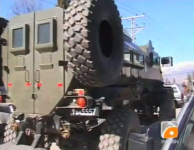
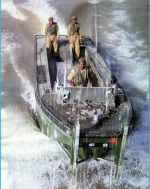

RescueRanger
Meme Lord
Sticky.
ghazi52
THINK TANK: CONSULTANT
- Thread starter
- #43
The 35th anniversary of Operation Chumik is observed today, marking a significant event in Pakistan's military history, particularly in the challenging terrain of the Siachen Glacier. The operation, a testament to the courage and resilience of the Pakistani armed forces, was initiated by Lieutenant Naveedur Rahman on April 30, 1989, to secure the Chumik Sector against potential infiltration by enemy forces. Intercepted intelligence prompted prompt action by the Pakistani Army, led by Major (Retd) Naveedur Rehman, resulting in the establishment of the world's highest post at an altitude of 21,400 feet.
Despite adverse conditions and enemy shelling, Major (Retd) Rahman and his comrades displayed extraordinary valor and fortitude, successfully defending Pakistani territory. Lance Naik Nazir, who sacrificed his life during the operation, exemplifies the selfless devotion of Pakistan's defenders. Lieutenant Naveedur Rahman was honored with the Sitara-i-Jurat for his bravery, and the post he established was named "Naveed Top."
Today, this site symbolizes Pakistan's unwavering commitment to safeguarding its borders. As the nation commemorates the bravery and sacrifices of its heroes, the legacy of Operation Chumik continues to inspire future generations, underscoring the valor and sacrifice embodied in Pakistan's flag.

9:31 AM · Apr 30, 2024
Despite adverse conditions and enemy shelling, Major (Retd) Rahman and his comrades displayed extraordinary valor and fortitude, successfully defending Pakistani territory. Lance Naik Nazir, who sacrificed his life during the operation, exemplifies the selfless devotion of Pakistan's defenders. Lieutenant Naveedur Rahman was honored with the Sitara-i-Jurat for his bravery, and the post he established was named "Naveed Top."
Today, this site symbolizes Pakistan's unwavering commitment to safeguarding its borders. As the nation commemorates the bravery and sacrifices of its heroes, the legacy of Operation Chumik continues to inspire future generations, underscoring the valor and sacrifice embodied in Pakistan's flag.
9:31 AM · Apr 30, 2024
ghazi52
THINK TANK: CONSULTANT
- Thread starter
- #44
Pakistan Army Chiefs
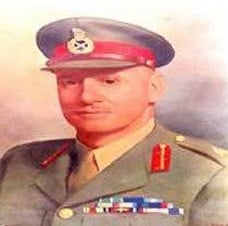
General Sir Frank Walter Messervy
KCIE, CB, CBE, DSO, MC KCB
August 1947 - Feburary 1948
General Sir Frank Walter Messervy was born in 1893. He was commissioned in Indian Army during 1913 and joined 9 Hudson’s Horse, in 1914. When Pakistan came into being, he had a unique honour to serve as a First Commander-in-Chief of Pakistan Army from 15 August 1947 to 10 February 1948.
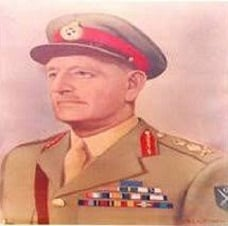
IA-38 General Douglas David Gracey D
(KCB, KCIE, CB, CBE, MC)
February 1948 - April 1951
General Sir Frank Walter Messervy was born on 3 September 1894. He was commissioned in British Army and served in both, First and Second World Wars. He remained second Chief of Army Staff of Pakistan Army from 11 February 1948 to 16 January 1951.
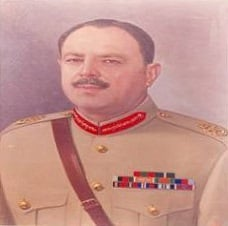
PA-10 Field Marshal Muhammad Ayub Khan
HJ, NPk, HPk (C-in-C)
17 January 1951 - 26 October 1958
Field Marshal General Muhammad Ayub Khan was born on 14 May 1907. He was selected for Royal Military Academy SandHurst in 1922 and got commission on 2 Feb 1928. He joined 1st Battalion of the 14 Punjab Regiment (Sherdil), later known as 5 Punjab Regiment. He was made Commander-in-Chief of Pakistan Army on 17 January 1951, succeeding General Sir Douglas Gracey, thus becoming the first native Pakistani General to hold this prestigious position.
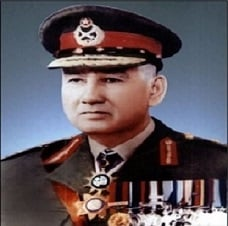
PA-28 General Muhammad Musa
HJ, HPk, HQA, MBE, (C-in-C)
27 October 1958 - 17 September 1966
General Muhammad Musa was born on 20 November 1908. He got commission from Indian Military Academy, Dehradun on 1 February 1935. He was posted to 6th Royal Battalion, the 13th Frontier Force Rifles as a Platoon Commander in 1936. He served with distinction in Pakistan Army and rose to the rank of Commander-in-Chief of Pakistan Armed Forces from 1 April 1957 to 17 September 1966.
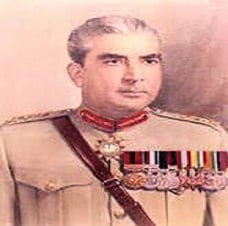
PA-98 General Agha Muhammad Yahya Khan
HPk, HJ, SPk
18 September 1966 - 20 December 1971
General Agha Muhammad Yahya Khan was born on 4 February 1917. He got commission in British Army on 15 July 1939. He remained Chief of Army Staff from 18 September 1966 to 20 December 1971.
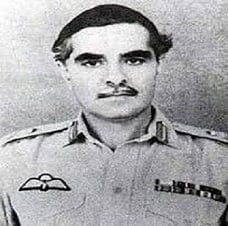
PA-457 General Gul Hassan
SQA, SPk
Acting C-in-C
20 December 1971- 21 January 1972
C-in-C
22 January 1972 - 2 March 1972
General Gul Hassan was born on 9 June 1921. He got Commission on 22 February 1942. He commanded 1 Armed Division and remained Chief of General Staff before he was appointed acting Commander-in-Chief on 20 December 1971. He was appointed Commander-in-Chief on 22 January 1972 till his retirement on 3 March 1972.
General Sir Frank Walter Messervy
KCIE, CB, CBE, DSO, MC KCB
August 1947 - Feburary 1948
General Sir Frank Walter Messervy was born in 1893. He was commissioned in Indian Army during 1913 and joined 9 Hudson’s Horse, in 1914. When Pakistan came into being, he had a unique honour to serve as a First Commander-in-Chief of Pakistan Army from 15 August 1947 to 10 February 1948.
IA-38 General Douglas David Gracey D
(KCB, KCIE, CB, CBE, MC)
February 1948 - April 1951
General Sir Frank Walter Messervy was born on 3 September 1894. He was commissioned in British Army and served in both, First and Second World Wars. He remained second Chief of Army Staff of Pakistan Army from 11 February 1948 to 16 January 1951.
PA-10 Field Marshal Muhammad Ayub Khan
HJ, NPk, HPk (C-in-C)
17 January 1951 - 26 October 1958
Field Marshal General Muhammad Ayub Khan was born on 14 May 1907. He was selected for Royal Military Academy SandHurst in 1922 and got commission on 2 Feb 1928. He joined 1st Battalion of the 14 Punjab Regiment (Sherdil), later known as 5 Punjab Regiment. He was made Commander-in-Chief of Pakistan Army on 17 January 1951, succeeding General Sir Douglas Gracey, thus becoming the first native Pakistani General to hold this prestigious position.
PA-28 General Muhammad Musa
HJ, HPk, HQA, MBE, (C-in-C)
27 October 1958 - 17 September 1966
General Muhammad Musa was born on 20 November 1908. He got commission from Indian Military Academy, Dehradun on 1 February 1935. He was posted to 6th Royal Battalion, the 13th Frontier Force Rifles as a Platoon Commander in 1936. He served with distinction in Pakistan Army and rose to the rank of Commander-in-Chief of Pakistan Armed Forces from 1 April 1957 to 17 September 1966.
PA-98 General Agha Muhammad Yahya Khan
HPk, HJ, SPk
18 September 1966 - 20 December 1971
General Agha Muhammad Yahya Khan was born on 4 February 1917. He got commission in British Army on 15 July 1939. He remained Chief of Army Staff from 18 September 1966 to 20 December 1971.
PA-457 General Gul Hassan
SQA, SPk
Acting C-in-C
20 December 1971- 21 January 1972
C-in-C
22 January 1972 - 2 March 1972
General Gul Hassan was born on 9 June 1921. He got Commission on 22 February 1942. He commanded 1 Armed Division and remained Chief of General Staff before he was appointed acting Commander-in-Chief on 20 December 1971. He was appointed Commander-in-Chief on 22 January 1972 till his retirement on 3 March 1972.
ghazi52
THINK TANK: CONSULTANT
- Thread starter
- #45
PA-124 General Tikka Khan
HJ, HQA, SPk
3 March 1972 - 1 March 1976
General Tikka Khan was born on 7 July 1915. He was a graduate of Indian Military Academy at Dehradun from where he was commissioned on 22 December 1940. General Tikka Khan remained Chief of Army Staff from 3 March 1972 to 1 March 1976.
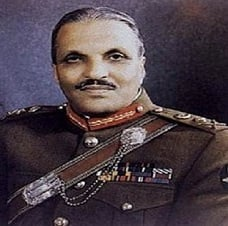
PA- 1810 General Muhammad Zia-ul-Haq
1 March 1976 - 17 August 1988
General Zia-ul-Haq was born in Jalandhar (India) on 12 September 1924. He was commissioned in the British Army on 12 May 1943. At Pakistan's independence, he joined Pakistan Army as a Major. He got trained in the United States 1962 to 1964 at the U.S. Army Command and General Staff College Fort Leavenworth, Kansas. On 1 March 1976, he was appointed Chief of Army Staff and remained in the office till 17 August 1988 .
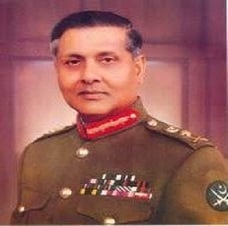
PA-4064 General Mirza Aslam Beg
NI (M), S Bt
17 August 1988 - 16 August 1991
General Mirza Aslam Beg was born in Azam Garh, British India on 2 August 1931 and got commission in Pakistan Army on 23 August 1952. He was appointed Chief of Army Staff on 17 August 1988 and remained in the office till 16 August 1992.
HJ, HQA, SPk
3 March 1972 - 1 March 1976
General Tikka Khan was born on 7 July 1915. He was a graduate of Indian Military Academy at Dehradun from where he was commissioned on 22 December 1940. General Tikka Khan remained Chief of Army Staff from 3 March 1972 to 1 March 1976.
PA- 1810 General Muhammad Zia-ul-Haq
1 March 1976 - 17 August 1988
General Zia-ul-Haq was born in Jalandhar (India) on 12 September 1924. He was commissioned in the British Army on 12 May 1943. At Pakistan's independence, he joined Pakistan Army as a Major. He got trained in the United States 1962 to 1964 at the U.S. Army Command and General Staff College Fort Leavenworth, Kansas. On 1 March 1976, he was appointed Chief of Army Staff and remained in the office till 17 August 1988 .
PA-4064 General Mirza Aslam Beg
NI (M), S Bt
17 August 1988 - 16 August 1991
General Mirza Aslam Beg was born in Azam Garh, British India on 2 August 1931 and got commission in Pakistan Army on 23 August 1952. He was appointed Chief of Army Staff on 17 August 1988 and remained in the office till 16 August 1992.
Users who are viewing this thread
Total: 2 (members: 0, guests: 2)
Pakistan Defence Latest


Country Watch Latest
-

-
Iran - Israel/US War: Israel-US declare war on Iran, Iran responds (128 Viewers)
- Latest: BigMela2onin
-

-
-
Latest Posts
-
-
-
BREAKING : Cargo plane overshoots runway at Miami International Airport (9 Viewers)
- Latest: KingQamaR
-
Iran - Israel/US War: Israel-US declare war on Iran, Iran responds (128 Viewers)
- Latest: BigMela2onin
-
 We've Been Lied to about America....[World Cup] Foreigners 1st Time to USA (9 Viewers)
- Latest: Hamartia Antidote