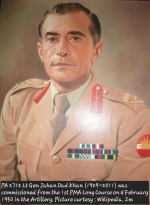
*Tribute to Leiutnent General Jehandad Khan by Ambassador Nasir Ali Khan ( Retired)*
I admired his humility, his modesty, and his quiet tenacity, despite the extraordinary achievements of his life. Alongside a distinguished career and immense philanthropic impact, he remained deeply simple in how he lived. He gave away most of what he owned, including his house and his car, to the trust. He was loved and cherished across the country, not for his titles, but for the man he was.
His three years as Governor of Sindh earned him lasting respect and admiration. People who he met and those that worked with him remembered him for decades, stayed connected, and remained involved in his mission.
While prominent philanthropists such as Seth Ahmed Dawood and Sadruddin Hashwani were major contributors, General Jehandad Khan, despite his humble beginnings and modest personal savings, stood alongside the largest donors in spirit, commitment, and sacrifice.
When he travelled the world to raise funds for hospitals, he flew economy class and stayed with friends, benefactors, or in the simplest hotels. He was deeply conscious of how contributions were used, ensuring that less went toward administration and more reached those who truly needed help. His integrity in stewardship was as powerful as his generosity.
His tenacity was extraordinary. I recall a time when he was travelling to Jalalabad during one of the most dangerous periods in Afghanistan. He was supporting eye clinics and medical camps in war-torn regions, helping refurbish the Noor Hospital in Kabul, and arranging for Afghan staff to be trained at Al Shifa Hospital in Rawalpindi so they could return and serve their own communities.
On that journey, he suffered a serious accident near Hasan Abdal and broke his leg. The trip had to be cancelled, and he was admitted to the Combined Military Hospital in Rawalpindi.
I remember how deeply frustrated he was by being forced into inactivity. Eventually, against medical advice, he discharged himself and returned to work. For weeks, he hobbled around the hospital in a plaster cast, even inspecting washrooms personally to ensure cleanliness and standards. That was who he was.
It was not only a pleasure, but a profound honour to have known him. He was both my mentor and my benefactor. He gave me more love and respect than I ever deserved.
I served on both the Board of Governors and the Board of Trustees for three years, and he frequently sought and valued my advice. I will forever be grateful to have been part of his life.
Zahid Mumtaz





 India Eyes Retired French Mirage 2000 Jets as Two-Front Fighter Crisis Deepens (17 Viewers)
