Navigation
Install the app
How to install the app on iOS
Follow along with the video below to see how to install our site as a web app on your home screen.
Note: This feature may not be available in some browsers.
More options
Style variation
You are using an out of date browser. It may not display this or other websites correctly.
You should upgrade or use an alternative browser.
You should upgrade or use an alternative browser.
History of Pakistan Army
- Thread starter ghazi52
- Start date
More options
Who Replied?


ghazi52
THINK TANK: CONSULTANT
- Thread starter
- #467
Raising of beloved 1st armoured division,exactly 70 years ago in march 1956,
Some first among d first names n facts from those days by Zuha Saeed..
here r some relics from our beautiful khaki history..
1st armoured division was raised on 1st march 1956 at Rawalpindi..
first raising GOC of d armoured division was maj gen haq nawaz khan, an infantry officer..
His headquarters was initially housed in calcutta building, present MOD in Pindi..
first G-1 (operations) who did d running arnd n putting this mega task together was lt col gustasab beg,6 lancers..
AQ was lt col rao liaqat,11 cavalry PAVO,
G-2 (ops) maj mazhar ud din,14 Punjab regt,
G-2 (intelligence) maj later lt gen ejaz azim,15 lancers,
maj yaqoob,11 cavalry was OC headquarter squadron,
2ic headquarter squadron was capt noor ud din,6 lancers,
maj maqbool,15 punjab was DAAG,
maj mohd ali malik,15 lancers was DQ,
capt kirmani,5 horse was d G3(ops)
capt qaiser pervaiz,13 lancers was G3(int),
capt aslam hayat,11 cavalry was staff captain,
ADC to GOC initially was lt ayub,guides cavalry,
later lt ghulam jillani..
gen haq nawaz was given an already mature n existing 3rd armoured brigade,located in pindi under brig sarfraz,MC..
his brigade major (BM) was none less maj later gen n army chief zia ul haq..
gen zia was later replaced by maj fazal e haq,guides cavalry he remained CM n governor NWFP,later KP..
DQ was maj later brig amir gulistan janjua,guides cavalry..later governor NWFP,now KP..
G3 was capt later col abdul malik,6 DCO lancers..
their 3 units were,
1. 19 lancers,
2. guides cavalry,
3. 5 FF regt..
his second brigade,to be raised concurrently along d armoured division was 4 armoured brigade..
it was raised at manser camp,on d premises where present Azad Kashmir regimental center sits..
this was a makeshift arrangement,mostly tented accommodation for troops n tanks parked in d open..
acting brigade commander,4 armoured brigade was lt col later brig riaz ul karim,15 lancers..
in september 1956,few months after raising, brig sahibzada yaqoob ,later lt gen ,took over d brigade..
brigade staff included,
BM was maj fazal ur rehman,13 lancers,
capt ishtiaq,5 horse,G-3,
capt shams,5 horse,staff capt,
OC headquarters squadron,maj majeed ahmed,19 lancers,
staff capt (ordnance) capt afzal beg,ord..
d first units to be part of this new brigade wer,
1. 13 lancers,manser camp,
2. 5 probyn’s horse,manser camp,
3. 1 FF regt,located at campbellpur present attock..
his divisional artillery commander was brig later lt gen kh wasi ud din,
n units that comprised div arty were,
1. 3 (SP) field regt,
2. 15 (SP) field regt,
3. 16 (SP) field regt,
4. 9 medium regt..
div troops included,
1. 47 field ambulance,
2. 652 tank transporter coy,
3. 72 eme workshop,
4. 74 eme workshop,
5. 76 eme workshop,
6. 92 composite pl..
This was d beginning of d mailed fist division in fewest possible words for our newer generations to read..

PS:first recorded death in 1st armoured division was that of lieut mohd sharif,19 lancers..he died in a road accident on 18th dec 1956,during ex-agility..
GOC, gen haq nawaz called d entire regiment back from exercise n ordered them to attend d janaza at Pindi..from their senior most officer right to d junior most sowar, all attended ,hence setting d tradition of one for all, all for one in his newly raised division..
Some first among d first names n facts from those days by Zuha Saeed..
here r some relics from our beautiful khaki history..
1st armoured division was raised on 1st march 1956 at Rawalpindi..
first raising GOC of d armoured division was maj gen haq nawaz khan, an infantry officer..
His headquarters was initially housed in calcutta building, present MOD in Pindi..
first G-1 (operations) who did d running arnd n putting this mega task together was lt col gustasab beg,6 lancers..
AQ was lt col rao liaqat,11 cavalry PAVO,
G-2 (ops) maj mazhar ud din,14 Punjab regt,
G-2 (intelligence) maj later lt gen ejaz azim,15 lancers,
maj yaqoob,11 cavalry was OC headquarter squadron,
2ic headquarter squadron was capt noor ud din,6 lancers,
maj maqbool,15 punjab was DAAG,
maj mohd ali malik,15 lancers was DQ,
capt kirmani,5 horse was d G3(ops)
capt qaiser pervaiz,13 lancers was G3(int),
capt aslam hayat,11 cavalry was staff captain,
ADC to GOC initially was lt ayub,guides cavalry,
later lt ghulam jillani..
gen haq nawaz was given an already mature n existing 3rd armoured brigade,located in pindi under brig sarfraz,MC..
his brigade major (BM) was none less maj later gen n army chief zia ul haq..
gen zia was later replaced by maj fazal e haq,guides cavalry he remained CM n governor NWFP,later KP..
DQ was maj later brig amir gulistan janjua,guides cavalry..later governor NWFP,now KP..
G3 was capt later col abdul malik,6 DCO lancers..
their 3 units were,
1. 19 lancers,
2. guides cavalry,
3. 5 FF regt..
his second brigade,to be raised concurrently along d armoured division was 4 armoured brigade..
it was raised at manser camp,on d premises where present Azad Kashmir regimental center sits..
this was a makeshift arrangement,mostly tented accommodation for troops n tanks parked in d open..
acting brigade commander,4 armoured brigade was lt col later brig riaz ul karim,15 lancers..
in september 1956,few months after raising, brig sahibzada yaqoob ,later lt gen ,took over d brigade..
brigade staff included,
BM was maj fazal ur rehman,13 lancers,
capt ishtiaq,5 horse,G-3,
capt shams,5 horse,staff capt,
OC headquarters squadron,maj majeed ahmed,19 lancers,
staff capt (ordnance) capt afzal beg,ord..
d first units to be part of this new brigade wer,
1. 13 lancers,manser camp,
2. 5 probyn’s horse,manser camp,
3. 1 FF regt,located at campbellpur present attock..
his divisional artillery commander was brig later lt gen kh wasi ud din,
n units that comprised div arty were,
1. 3 (SP) field regt,
2. 15 (SP) field regt,
3. 16 (SP) field regt,
4. 9 medium regt..
div troops included,
1. 47 field ambulance,
2. 652 tank transporter coy,
3. 72 eme workshop,
4. 74 eme workshop,
5. 76 eme workshop,
6. 92 composite pl..
This was d beginning of d mailed fist division in fewest possible words for our newer generations to read..
PS:first recorded death in 1st armoured division was that of lieut mohd sharif,19 lancers..he died in a road accident on 18th dec 1956,during ex-agility..
GOC, gen haq nawaz called d entire regiment back from exercise n ordered them to attend d janaza at Pindi..from their senior most officer right to d junior most sowar, all attended ,hence setting d tradition of one for all, all for one in his newly raised division..
ghazi52
THINK TANK: CONSULTANT
- Thread starter
- #469
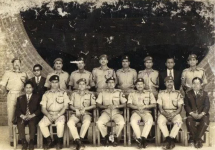
“””16th Punjab Regiment Mess Dress..
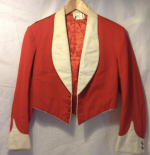
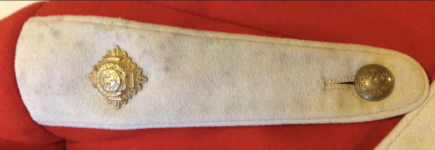
Like their counterparts in British Regiments, officers in the Imperial Indian Army were required to own mess dress for formal occasions and regimental dinners.Each different regiment had a different design of mess dress, but most were designed along similar lines, with just minor changes of cut, facings and colour. I have recently picked up my first mess dress jacket and happily for me, liking all things Indian as I do, this example was made for a British 2nd Lieutenant serving with the 16th Punjab regiment:image
The following description of the mess dress for the 16th Punjabis comes from the 1932 Dress Regulations for India..
The 16th Punjab Regiment was formed in 1922 by amalgamation of the 30th, 31st, 33rd and 46th Punjabis, and 9th Bhopal Infantry.
The class composition of the new regiment was Punjabi Muslims, Sikhs and Dogras.
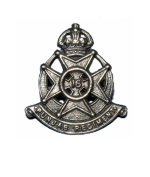
The new regimental badge consisted of a Maltese cross with a Muslim crescent and a Sikh quoit, surmounted by a Tudor crown with a scroll below.”””
credits: text and photographs copied from net/virtual walls pl..
ghazi52
THINK TANK: CONSULTANT
- Thread starter
- #471
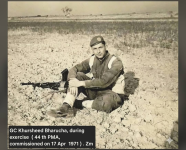
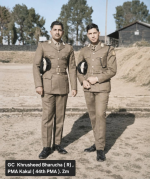
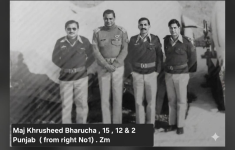
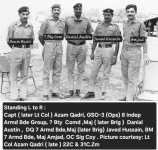
*Parsi Officer : PA 12744 Maj Khursheed Bharucha ( 3 Apr 1948 - 22 Oct 2016 ) , 15 Punjab , 12 Punjab & 2 Punjab , 44th PMA*
*Parsi Officer : PA 12744 Maj Khursheed Bharucha ( 3 Apr 1948 - 22 Oct 2016 ) , 15 Punjab , 12 Punjab & 2 Punjab , 44th PMA*PA 12744 Maj Khursheed Bharucha, a Parsi officer, was born on April 3, 1948, in Dufferin Hospital, Quetta, to Minocher Bharucha, and Manijeh Bharucha. He began his educational journey at St Frances Grammar School, Quetta, and later attended Science College, Quetta, where he completed his FSc.
Bharucha's military career commenced when he joined the 44th PMA Long Course and was commissioned in 15 Punjab on April 17, 1971. He also served in 12 Punjab and 2 Punjab. Unfortunately, his military career was cut short due to medical reasons, and he retired in 1986. After his retirement, Bharucha worked as an administrator for USAID. His hobbies were music , singing and repairy old cars . He enjoyed cooking .
Unfortunately, Maj Bhurucha passed away on October 22, 2016, due to a sudden heart attack in Quetta , leaving behind his wife, Roshan Khursheed Bharucha, and their three children : son, Kaiwan is a vice chairman in a landmark oil company in the USA; daughters, Sharaine and Thrity are married and settled in America.
ghazi52
THINK TANK: CONSULTANT
- Thread starter
- #473
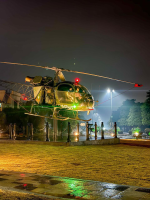
696 - A historical helicopter
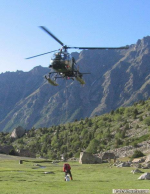
For many of you in Pindi and specially living in or around Askari 14, you might have seen a helicopter perched on one of the chowks. However hardly some of you (less the keen aviators) would know that this particular helicopter SA-315 LAMA tail no 696 was involved in one of the most audacious high attitude rescues of all time. Below is the story (added with some masla naturally):In the world of military aviation, there are missions that test your training, and then there are missions that rewrite history. On August 10, 2005, two Pakistani military pilots defied the laws of aerodynamics, physics, and nature itself to execute what remains one of the most daring high-altitude helicopter rescue in mountaineering history.
Renowned Slovenian alpinist Tomaž Humar whilst climbing got trapped and was left stranded alone on a sheer, frozen ledge 6,000 meters (nearly 20,000 feet) up the terrifying Rupal Face of Nanga Parbat, rightfully nicknamed the "Killer Mountain". He was out of food, suffering from frostbite, and facing certain death after six days of relentless avalanches and blinding snowstorms.
The President of Pakistan ordered the rescue of ye stranded climber and the task fell upon the 8 Squadron of Pakistan Army Aviation, which remains one of the most decorated outfits of the Pakistan Army and considered an expert in high altitude flying.
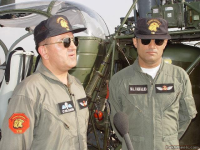
The pilots selected for this missions were Lieutenant Colonel Rashid Ullah Beg (72 L/C) and Major Khalid Amir Rana. With the rotors screaming in the thin air and the engines pushed past their absolute limits, they had zero margin for error.
One wrong move, one minor miscalculation, and the blades would strike the mountain, sending them all into the void. However these pilots skillfully managed to reach their desired altitude and got in position.
Hovering at a breath-taking distance of less than one meter from the lethal ice wall, the pilots battled surface avalanches and deafening noise. In a masterclass of precision flying, they managed to swing a weighted rescue rope toward the freezing climber.
As Humar desperately hooked himself onto the line, a terrifying complication arose: he was still anchored to the ice wall. Had the anchor held, the tension would have dragged the helicopter down into the mountain face.
In a split-second stroke of luck and legendary piloting, the rope snapped free from the ice, catapulting Humar through the air right alongside the cockpit.
Minutes later, the three men touched down safely at base camp. Humar touched the ground and started weeping profusely. He couldn't have believed his luck!
For their unmatched valor, Lt Col Rashid Ullah Beg and Major Khalid Amir Rana were awarded the Tamgha e Shujat by the Government of Pakistan and The Republic of Slovenia honored both Pakistani pilots with the Golden Order for Services, one of the nation's highest state decorations.
So next time you pass by this particular helicopter, don't just give it a glance. Give it a proper look and feel the pride that this helicopter has been the center piece of one of the most daring rescues in modern aviation history!
ghazi52
THINK TANK: CONSULTANT
- Thread starter
- #474
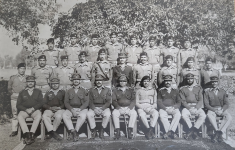
Brig A Q Anjum Commandant Baluch Regiment Center visited 41 Baluch Regiment at Lahore, on 3 Jan 1975.
Sitting left to Right:
CAPT AR Abbasi, Capt Amin Ud Din, Maj Iftikhar Ud Din Ahmed, Maj Muhammad Yaqub, Brig AQ Anjum, Sub Maj Muhammad Razaq, Maj Jamil Qadir Khan, Capt Nazeer Ahmed, Lt Zulfiqar Khalid.
Officer standing in middle of first Row 2/Lt Muhammad Abdul Basit.
ghazi52
THINK TANK: CONSULTANT
- Thread starter
- #476
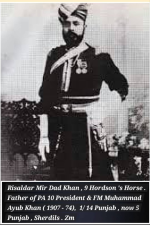
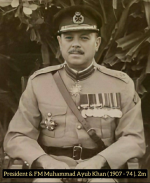
*President cum Field Marshal Muhammad Ayub Khan ( 1907 - 74). Commissioned from Sandhurst 2 Feb 1928 , 1/14 Punjab (now 5 Punjab, Sherdils)*
PA 10 General Muhammad Ayub Khan, Commander-in-Chief (C-in-C), later President of Pakistan and Field Marshal, was born on 14 May 1907 in Rehana, NWFP (now Khyber Pakhtunkhwa). His father, Mir Dad Khan Tareen, served as a Risaldar in 9 Hodson’s Horse, a cavalry regiment in the pre-independence Indian Army.
Ayub Khan received his early education in a village school at Sarai Saleh, about four miles from his hometown, commuting on mule-back. He later shifted to Haripur, residing with his grandmother, and eventually proceeded to Aligarh Muslim University. On the recommendation of General Andrew Skeen, he was accepted into the Royal Military College, Sandhurst, joining in July 1926.
He was commissioned as a Second Lieutenant on 2 February 1928, after attachment with the Royal Fusiliers, a British infantry regiment. Among his batchmates was General Joyanto Nath Chaudhuri, later Chief of Army Staff, Indian Army (1962–1966).
After the standard probation with a British regiment, he joined 1/14 Punjab Regiment (now 5 Punjab, Sherdils) on 10 April 1929. He was promoted Lieutenant on 2 May 1929, Captain on 2 February 1937, and Major (permanent commission) on 2 February 1945. That same year, he was appointed a temporary Lieutenant Colonel, commanding his regiment during Phase 2 of the Burma Campaign in World War II.
In 1946, he returned to British India and was posted in NWFP. By 1947, he had been promoted Brigadier, commanding a brigade in South Waziristan. In early 1948, he was given command of the 14th Infantry Division in Dacca, East Pakistan (now Bangladesh). In 1949, he was recalled to GHQ Rawalpindi, where he was appointed Adjutant General in November 1949, and briefly held the position of Deputy Commander - in - Chief.
When General Sir Douglas Gracey, the British C-in-C, relinquished command in January 1951, Gen Ayub Khan was appointed the first native Commander-in-Chief of the Pakistan Army by Prime Minister Liaquat Ali Khan.
He served as C-in-C from 17 January 1951 to 26 October 1958. Following a coup in October 1958, he assumed the presidency after removing Iskander Mirza, becoming Pakistan’s second president.
As president, he appointed PA 28 General Muhammad Musa Khan, ex-4th Hazara Pioneers, and 6/13 F.F. Rifles (now 1 FF), as the new C-in-C. Ayub Khan was elevated to Field Marshal on 27 October 1959 .
He was re-elected President in January 1965 but resigned on 26 March 1969 amid widespread civil unrest and protests, especially in East Pakistan.
Field Marshal Ayub Khan passed away on 19 April 1974, in Islamabad, aged 67.
Zahid Mumtaz
ghazi52
THINK TANK: CONSULTANT
- Thread starter
- #477
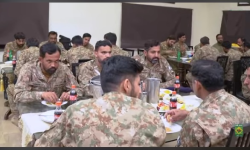
L A N G A R :
Refers to the military mess hall, communal kitchen, or camp dining area.
G U P :
Means gossip, chatter, or idle talk.
In the Pakistan Army, the term "Langar" typically refers to the unit's kitchen, dining facility, or the food itself. It is the military equivalent of a mess or canteen, primarily used by Junior Commissioned Officers (JCOs), non-commissioned officers (NCOs), and soldiers.........In the Pakistan Army (and broader South Asian military culture), "L A N G A R G U P " refers to casual, unofficial gossip, rumors, or informal chatter among military personnel..
A Langar Khana (لنگر خانہ) is a community kitchen that provides free, hot meals to anyone in need, regardless of their background, caste, or religion. Deeply rooted in Sufism and Sikh traditions, these kitchens operate globally to feed the hungry and promote equality.
Total Inclusivity: Anyone can sit on the floor (pangat) and eat together as equals.Volunteer-Driven: Food is prepared and served completely by volunteers (sevadaars).Funded by Donations:
ghazi52
THINK TANK: CONSULTANT
- Thread starter
- #478
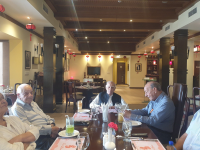
Kemal Abdullah
Yesterday...Wonderful to see three Army Aviation pioneers.
L to R ... Brig. Mian Muhammad Mehmud 1st PMA, Col. Zafar Khan 1st PMA and Lt. Gen. Saeed Qadir IMA/PMA Today at lunch at Islamabad club.
ghazi52
THINK TANK: CONSULTANT
- Thread starter
- #479
*DESTINATION RISALPUR CANTONMENT, NWFP (Now KP)*
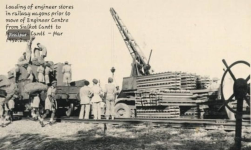
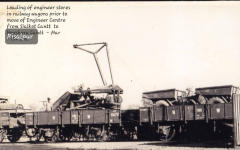
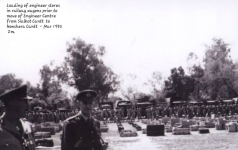
In 1947, the Royal Engineer Centre was moved from Roorkee Cantonment, district Saharanpur, UP to Sialkot Cantonment. In March 1952, it was relocated from Sialkot to Risalpur Cantonment.
A few pictures of the loading of engineer stores in railway wagons before proceeding from Sialkot to Risalpur are shared. Rookee, Engineers, and Railways had intimate relations in the 19th century. A few mentioned below in the notes.
Notes:
1 . Rookee was developed at the banks of the Ganges Canal. Digging work on the Upper Ganges Canal formally began in April 1842, under the aegis of Proby Cautley, a British officer. The local works were designed and overseen by the engineer Thomas Login.
The canal was formally opened on 8 April 1854. To look after the maintenance of the canal, the Canal Workshop and Iron Foundry were established in 1843. It was followed by the establishment of a Civil Engineering School; classes started in 1845 to train local youth to assist in the civil engineering work of the Upper Ganges Canal.
Through a proposal by Sir James Thomason, Lt Governor of North-Western Province (1843- 47), it became the first engineering college in British India on 25 November 1847.
After the death of Thomson, the college was named Thomason College of Civil Engineering. In 1949, the college was upgraded to the University of Roorkee. On 21 September 2001, it was made one of the Indian Institutes of Technology, IIT Roorkee. In 1853, Bengal Sappers and Miners were stationed in Roorkee. Today, Roorkee Cantonment has a large army base.
The Bengal Engineering Group and Engineer Centre are still there. The municipality of Rookee was established in 1868. In 1886, it was placed on the railway map of India. In 1920, it had Hydroelectricity. Rookee is now in the district of Haridwar, Uttarakhand.
2 . India’s first aqueduct was constructed over the Sonali River, near Roorkee, part of the Ganges Canal project, which itself was India’s first irrigation work in North India, started by the British. I was operated by the Bengal Sappers. A steam engine, Jenny Lind (specially shipped from England moved on rails to India) pulling a freight train ran in Rookee on 22 December 1851, between Rookee and Piran Kaliyar, a distance of 10 km. It was two years before the first passenger train started between Bombay and Thana in 1953. A replica of what the locomotive is thought to have looked like is exhibited at Rookee Railway Station.
3 . All engineer officers of the Pakistan Army before independence were graduates from Thomson College of Civil Engineering, Roorkee. PA 48 Maj Gen Muhammad Anwar Khan graduated from this college in 1934.
Anwar achieved the honour of being the first Muslim engineer officer of the Indian Army. He was also the first Muslim Engineer - in - Chief of the Pakistan Army (30 Apr 1957 - 29 Apr1965). (For more information about Maj Gen Anwar, read the article about him, if interested, can be shared)
4 . From 1942-1945, officers of the Indian Railway were recruited into the Indian Corps of Engineers to participate in Britain's Burma. One such officer I knew was PA 1203 Maj Gen Saad Tarique (late).
Born on 8 Jun 1923 and commissioned on 30 May 1943. Before joining the Royal Indian Engineers (RIE), he was in the Indian Railway. There were railway operating companies/ groups from the Army Engineers. These were disbanded after the partition in 1947.
Reference: Wikepedia.
Pictures courtesy : Brig Muhammad Mumtaz Khalid ( Retd) , Engineers .
Zahid Mumtaz.
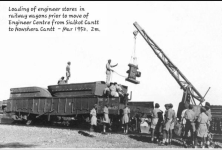
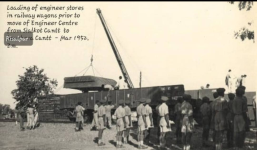
In 1947, the Royal Engineer Centre was moved from Roorkee Cantonment, district Saharanpur, UP to Sialkot Cantonment. In March 1952, it was relocated from Sialkot to Risalpur Cantonment.
A few pictures of the loading of engineer stores in railway wagons before proceeding from Sialkot to Risalpur are shared. Rookee, Engineers, and Railways had intimate relations in the 19th century. A few mentioned below in the notes.
Notes:
1 . Rookee was developed at the banks of the Ganges Canal. Digging work on the Upper Ganges Canal formally began in April 1842, under the aegis of Proby Cautley, a British officer. The local works were designed and overseen by the engineer Thomas Login.
The canal was formally opened on 8 April 1854. To look after the maintenance of the canal, the Canal Workshop and Iron Foundry were established in 1843. It was followed by the establishment of a Civil Engineering School; classes started in 1845 to train local youth to assist in the civil engineering work of the Upper Ganges Canal.
Through a proposal by Sir James Thomason, Lt Governor of North-Western Province (1843- 47), it became the first engineering college in British India on 25 November 1847.
After the death of Thomson, the college was named Thomason College of Civil Engineering. In 1949, the college was upgraded to the University of Roorkee. On 21 September 2001, it was made one of the Indian Institutes of Technology, IIT Roorkee. In 1853, Bengal Sappers and Miners were stationed in Roorkee. Today, Roorkee Cantonment has a large army base.
The Bengal Engineering Group and Engineer Centre are still there. The municipality of Rookee was established in 1868. In 1886, it was placed on the railway map of India. In 1920, it had Hydroelectricity. Rookee is now in the district of Haridwar, Uttarakhand.
2 . India’s first aqueduct was constructed over the Sonali River, near Roorkee, part of the Ganges Canal project, which itself was India’s first irrigation work in North India, started by the British. I was operated by the Bengal Sappers. A steam engine, Jenny Lind (specially shipped from England moved on rails to India) pulling a freight train ran in Rookee on 22 December 1851, between Rookee and Piran Kaliyar, a distance of 10 km. It was two years before the first passenger train started between Bombay and Thana in 1953. A replica of what the locomotive is thought to have looked like is exhibited at Rookee Railway Station.
3 . All engineer officers of the Pakistan Army before independence were graduates from Thomson College of Civil Engineering, Roorkee. PA 48 Maj Gen Muhammad Anwar Khan graduated from this college in 1934.
Anwar achieved the honour of being the first Muslim engineer officer of the Indian Army. He was also the first Muslim Engineer - in - Chief of the Pakistan Army (30 Apr 1957 - 29 Apr1965). (For more information about Maj Gen Anwar, read the article about him, if interested, can be shared)
4 . From 1942-1945, officers of the Indian Railway were recruited into the Indian Corps of Engineers to participate in Britain's Burma. One such officer I knew was PA 1203 Maj Gen Saad Tarique (late).
Born on 8 Jun 1923 and commissioned on 30 May 1943. Before joining the Royal Indian Engineers (RIE), he was in the Indian Railway. There were railway operating companies/ groups from the Army Engineers. These were disbanded after the partition in 1947.
Reference: Wikepedia.
Pictures courtesy : Brig Muhammad Mumtaz Khalid ( Retd) , Engineers .
Zahid Mumtaz.
Users who are viewing this thread
Total: 1 (members: 0, guests: 1)
Pakistan Defence Latest


Country Watch Latest
-
 Iran - Israel/US War: Israel-US declare war on Iran, Iran responds (464 Viewers)
- Latest: AZ_HighCountry
-
Bangladesh Keen To Join Saudi-Pak-Turkey Defence Alliance, Says PM's Top Aide (15 Viewers)
- Latest: Owaiz
-

-

-


