How China blew up its own future

That is merely an assumption at this point.

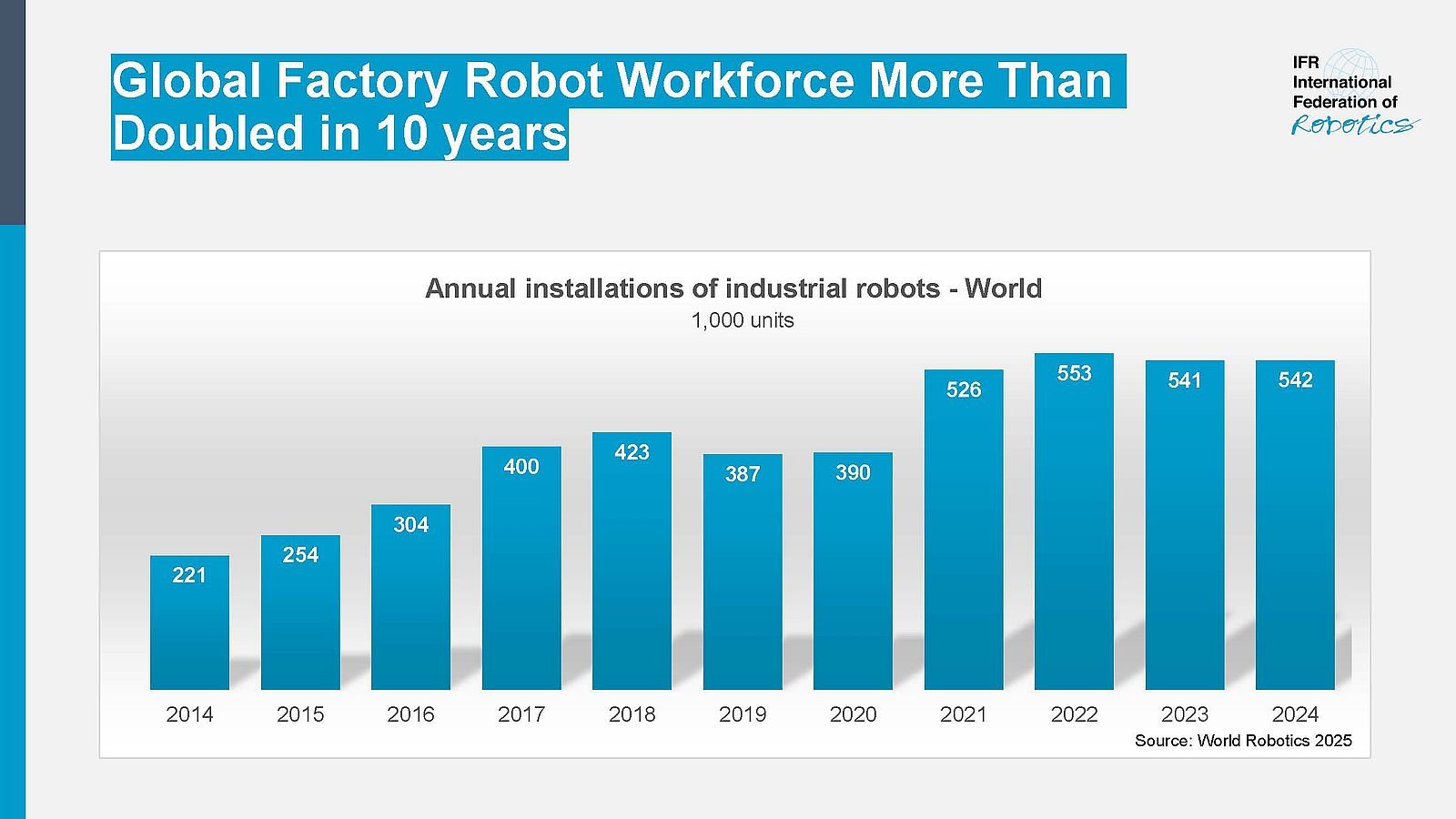
295000 factory robots installed in China alone in 2024. 54% of total global deployment that year.


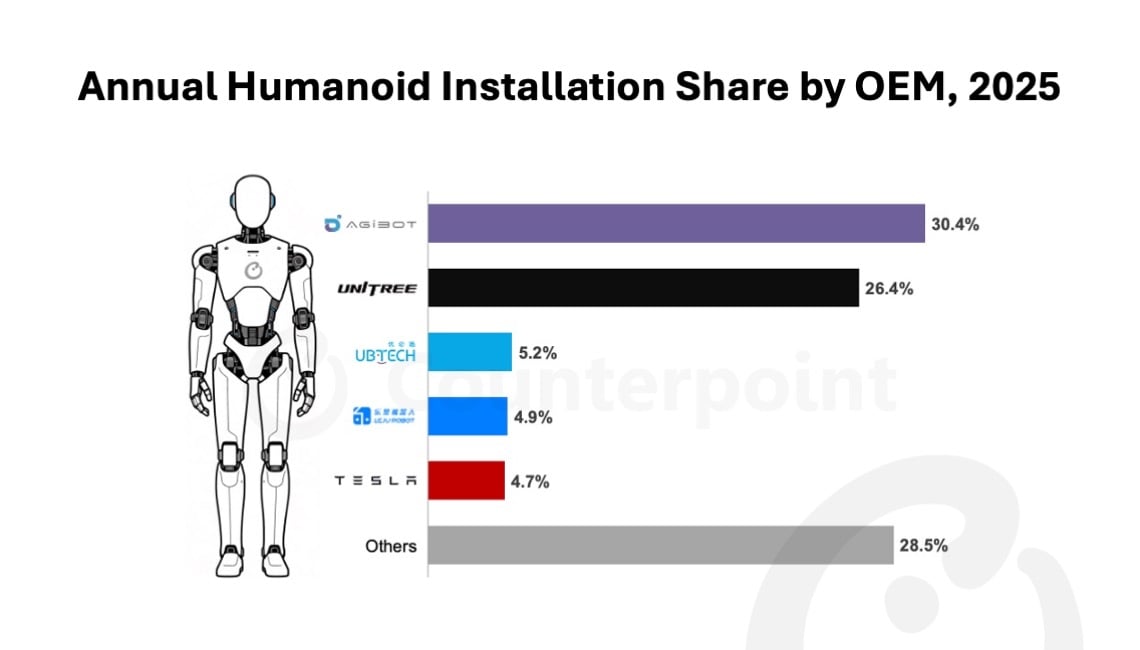
In 2925, China accounted for 80% of global humanoid robots installations.


Now lets read a little bit about trend of "dark factories" of today.. not tomorrow..

Just one company replacing 60,000 workers with robots and AI and automation i.e Dark Factory.


295000 factory robots installed in China alone in 2024. 54% of total global deployment that year.

Okay. How does that help with the demographic ratios and trends? And who will maintain all these robots? There are many studies that show that increasing such deployments do not deliver the results that were initially expected.
 
Last edited:
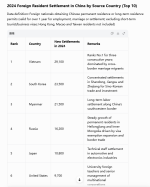
Between 2022 and 2024, the number of foreign nationals settling in China rose by 33% to 708,000, predominantly originating from the Asia-Pacific region, Russia, and Europe and the United States.
 

Attachments

  • mmexport1780598253059.png
    mmexport1780598253059.png
    48.5 KB · Views: 4
I'm laughing my head off at the triumphalist comments here.

It's worth highlighting precisely here that one of the central elements of the contemporary geopolitical transition emerges. Emerging powers negotiate patiently; declining hegemonies react with anxiety.

The current international scenario no longer reflects the old "unipolar moment" of the post-Cold War period. On the contrary, it demonstrates the progressive exhaustion of Western unilateralism and the advance of an increasingly multipolar, competitive, and unstable international system.

For decades, the United States attempted to consolidate a global order based on: financial supremacy, maritime dominance, technological superiority, expeditionary military capacity, and political control of international institutions.

The fall of the Soviet Union led some intellectuals, such as Francis Fukuyama, to proclaim the "end of history," that is, the definitive victory of the Western liberal model as the inevitable destiny of humanity.

Meanwhile, think tanks like the Project for the New American Century developed doctrines aimed at indefinitely preserving the global hegemony of the US that emerged after 1989. Preemptive wars, color revolutions, NATO expansion, and successive military interventions largely served this strategic objective.

However, historical reality followed a different path.

China not only resisted Western containment but also achieved systemic parity with the United States in multiple dimensions: industrial, technological, commercial, and geopolitical. The Washington Post itself recently acknowledged that the Trump-Xi summit symbolized something Washington had tried to avoid for decades: the recognition of China as a power equivalent to the United States. Julian Gewirtz, former advisor on China at the National Security Council during the Biden administration, even stated that “there is no turning back.” This recognition constitutes a historical event of enormous magnitude.

Because the real strategic problem for Washington is not just the economic rise of China. What is truly at stake is the end of the United States' ability to act as the absolute arbiter of the international system.

And therein lies the deeper issue: unilateralism can no longer be materially sustained. This is not merely an ideological or diplomatic crisis. It is a structural transformation of the global balance of power.

China has reached critical mass in industry and technology. Russia maintains strategic depth, energy resources, and military capabilities. The BRICS are progressively expanding their influence. Eurasia is strengthening its economic integration. And the West is slowly losing the financial and productive monopoly that has sustained its global dominance for decades. In this context, the partnership between Moscow and Beijing assumes decisive importance.

Classical geopolitics reappears here with perfect clarity.

From Halford Mackinder to Zbigniew Brzezinski, the great historical concern of the Anglo-Saxon maritime powers has always been to prevent the strategic integration of Eurasia. The convergence of Russia's territorial extent, China's industrial capacity, and continental energy connectivity profoundly alters this historical balance.

This is why the energy issue has acquired fundamental centrality. While the United States attempts to preserve its thalassocratic hegemony by controlling maritime control points – the Straits of Hormuz, Malacca, Suez, and Bab el-Mandeb – China and Russia are advancing with alternative mechanisms of continental integration less vulnerable to a Western naval blockade. Energy is, therefore, once again becoming one of the true strategic centers of gravity of the contemporary international system.

In this sense, the reflections of Professor John Mearsheimer are particularly relevant. The leading proponent of offensive realism has argued for years that the “unipolar moment” is over and that the international system has returned to being structured around competition between great powers.

Mearsheimer warned early on that Western expansion after the Cold War – especially the expansion of NATO – would inevitably generate tensions with Russia and accelerate the return of a balance of power logic.

But perhaps his most important observation is another: the very process of globalization driven by the West ended up strengthening precisely the United States' main systemic competitor. Global economic integration did not contain China: it industrialized, financed, and strengthened it.

This is the best writing ever!!!

Excellent explaination! Well done! 👍🏻👍🏻👍🏻
 
Okay. How does help with the demographic ratios and trends? And who will maintain all these robots? There are many studies that show that increasing such deployments do not deliver the results that were initially expected.
Based on what we were seeing just prior to my retirement, I can agree. We knew what the limitations of robotics was at that time (and likely still is). The best we could do was offset the labor. 100% replacement was out of the question.
 
Based on what we were seeing just prior to my retirement, I can agree. We knew what the limitations of robotics was at that time (and likely still is). The best we could do was offset the labor. 100% replacement was out of the question.

AI, at best, can only be regarded that something that is potentially useful, but not as fully known as many expect, pretend, or plan as a panacea for severe demographic issues as those being faced by many countries, as pointed out in the video I initially posted as a separate thread.

But here it is merged into the claimed 20 year leap of bravado that is being peddled by known culprits. Oh well, it is only to ne expected given the enforced tilt on PDF. No worries. Reality rules. :D
 
Allot of people seem to have got hold of a crystal ball lately, can someone lend me one, maybe I will try a punt at the next Euro millions lotto.
 
AI, at best, can only be regarded that something that is potentially useful, but not as fully known as many expect, pretend, or plan as a panacea for severe demographic issues as those being faced by many countries, as pointed out in the video I initially posted as a separate thread.

But here it is merged into the claimed 20 year leap of bravado that is being peddled by known culprits. Oh well, it is only to ne expected given the enforced tilt on PDF. No worries. Reality rules. :D
AI is simply the next evolution of GIGO. There are many tasks that will still require human intervention or oversight. I am absolutely not going to trust AI at this time to produce the structural engineering calculations for things like skyscrapers or aircraft.
 
Okay. How does help with the demographic ratios and trends? And who will maintain all these robots? There are many studies that show that increasing such deployments do not deliver the results that were initially expected.

What ??

I am sorry but we are still far away from a time where Android robots will be giving birth to new human kids from embryos.

2. Focus on technology, AI, and robotics. You can have care centres for elders all operated by robots. Funded by government. It mean china will need much less people for fully functioning economy. So economy vise it will be okay

Like , say technological advancememt, robots, AI , and dark factories reduces need for human workers by alot.


Regarding your second question that who will maintain those factories. Tell me this. Are Chinese about to go extinct ? I am sorry but are you an idiot ? Even if the current downward trends continues, China will still have 600-700 million by 2100. I am sure China will be able to manage finding someone from those 600-700 million to look over those dark factories. I am sure china will be fine to manage it's economy and society with help of some 10-15 million factory robots and some 50-100 million human workers (currently they have 770 million workers/labors). Dont worry Chinese are not going to extinct and they will manage finding 50-100 million workers.

And robots cant do shit in isolation. Its robots + AI + automation through digitalization
 
Last edited:
Even if the current downward trends continues, China will still have 600-700 million by 2100. I am sure China will be able to manage finding someone from those 600-700 million to look over those dark factories.

Do you even grasp the concept of the dependency ratio that would exist within that reduced population, and its effects?

I am sure china will be fine to manage it's economy and society with help of some 10-15 million factory robots and some 50-100 million human workers (currently they have 770 million workers/labors).

Of course they can manage it, but the size and productivity therein will be greatly reduced from its peak that exists today.

Dont worry Chinese are not going to extinct and they will manage finding 50-100 million workers.

Right. Neither will the Japanese go extinct. But both with be only a shadow of their former selves.

Just from demographics changes alone, China is not a long term contender at all. That conclusion is inescapable, unless changes it very nature that has remained proudly unchanged for 5,000 years. It is unlikely to do so now, too.
 
AI is simply the next evolution of GIGO. There are many tasks that will still require human intervention or oversight. I am absolutely not going to trust AI at this time to produce the structural engineering calculations for things like skyscrapers or aircraft.

Let us call it Smart GIGO then. :D
 
Last edited:
Do you even grasp the concept of the dependency ratio that would exist within that reduced population, and its effects?


Of course they can manage it, but the size and productivity therein will be greatly reduced from its peak that exists today.


Right. Neither will the Japanese go extinct. But both with be only a shadow of their former selves.

Just from demographics changes alone, China is not a long term contender at all. That conclusion is inescapable, unless changes it very nature that has remained proudly unchanged for 5,000 years. It is unlikely to do so now, too.


Let's just agree to disagree
 

Users who are viewing this thread

Pakistan Defence Latest

Country Watch Latest

Back
Top