I'm laughing my head off at the triumphalist comments here.
It's worth highlighting precisely here that one of the central elements of the contemporary geopolitical transition emerges. Emerging powers negotiate patiently; declining hegemonies react with anxiety.
The current international scenario no longer reflects the old "unipolar moment" of the post-Cold War period. On the contrary, it demonstrates the progressive exhaustion of Western unilateralism and the advance of an increasingly multipolar, competitive, and unstable international system.
For decades, the United States attempted to consolidate a global order based on: financial supremacy, maritime dominance, technological superiority, expeditionary military capacity, and political control of international institutions.
The fall of the Soviet Union led some intellectuals, such as Francis Fukuyama, to proclaim the "end of history," that is, the definitive victory of the Western liberal model as the inevitable destiny of humanity.
Meanwhile, think tanks like the Project for the New American Century developed doctrines aimed at indefinitely preserving the global hegemony of the US that emerged after 1989. Preemptive wars, color revolutions, NATO expansion, and successive military interventions largely served this strategic objective.
However, historical reality followed a different path.
China not only resisted Western containment but also achieved systemic parity with the United States in multiple dimensions: industrial, technological, commercial, and geopolitical. The Washington Post itself recently acknowledged that the Trump-Xi summit symbolized something Washington had tried to avoid for decades: the recognition of China as a power equivalent to the United States. Julian Gewirtz, former advisor on China at the National Security Council during the Biden administration, even stated that “there is no turning back.” This recognition constitutes a historical event of enormous magnitude.
Because the real strategic problem for Washington is not just the economic rise of China. What is truly at stake is the end of the United States' ability to act as the absolute arbiter of the international system.
And therein lies the deeper issue: unilateralism can no longer be materially sustained. This is not merely an ideological or diplomatic crisis. It is a structural transformation of the global balance of power.
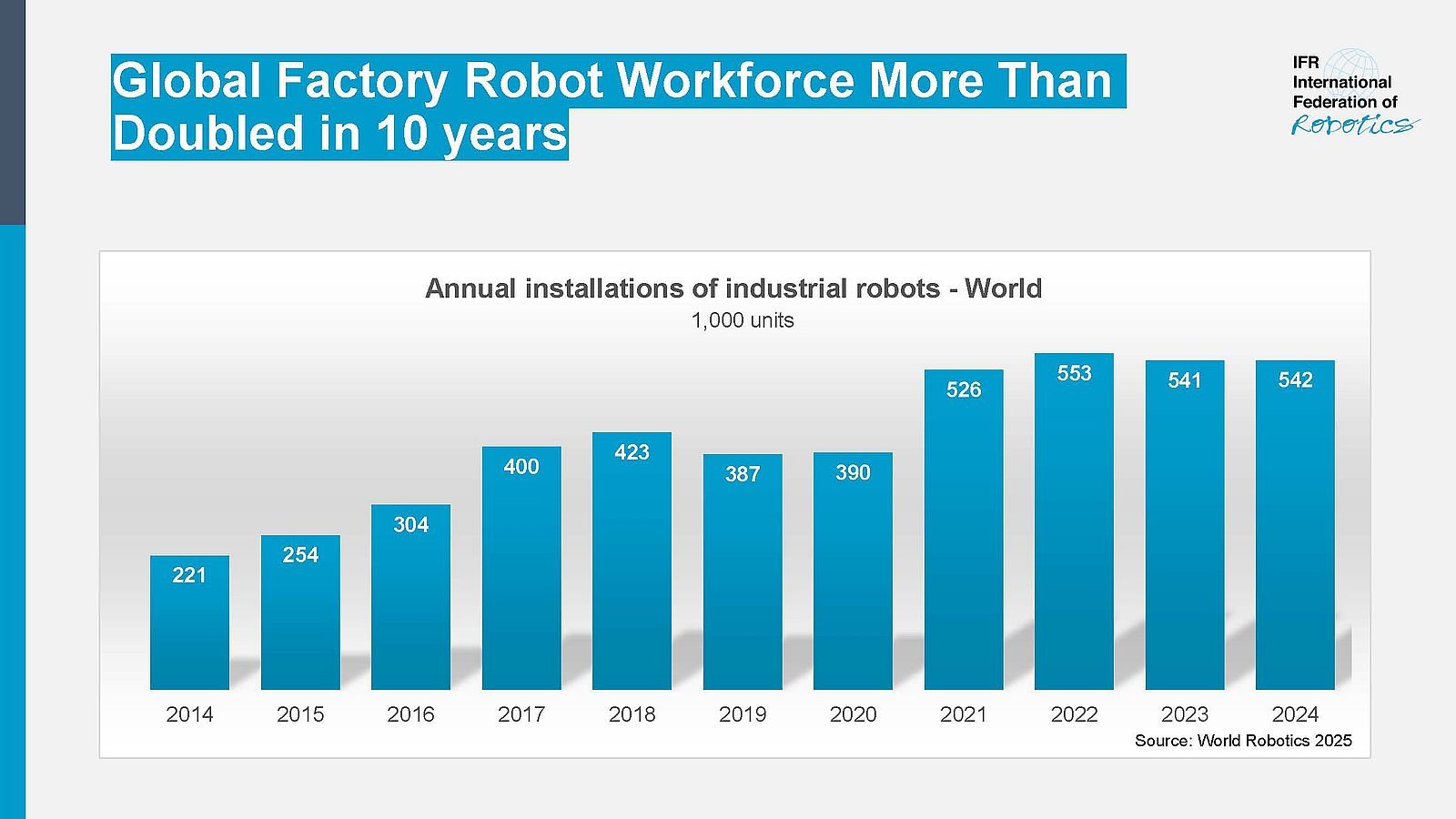
China has reached critical mass in industry and technology. Russia maintains strategic depth, energy resources, and military capabilities. The BRICS are progressively expanding their influence. Eurasia is strengthening its economic integration. And the West is slowly losing the financial and productive monopoly that has sustained its global dominance for decades. In this context, the partnership between Moscow and Beijing assumes decisive importance.
Classical geopolitics reappears here with perfect clarity.
From Halford Mackinder to Zbigniew Brzezinski, the great historical concern of the Anglo-Saxon maritime powers has always been to prevent the strategic integration of Eurasia. The convergence of Russia's territorial extent, China's industrial capacity, and continental energy connectivity profoundly alters this historical balance.
This is why the energy issue has acquired fundamental centrality. While the United States attempts to preserve its thalassocratic hegemony by controlling maritime control points – the Straits of Hormuz, Malacca, Suez, and Bab el-Mandeb – China and Russia are advancing with alternative mechanisms of continental integration less vulnerable to a Western naval blockade. Energy is, therefore, once again becoming one of the true strategic centers of gravity of the contemporary international system.
In this sense, the reflections of Professor John Mearsheimer are particularly relevant. The leading proponent of offensive realism has argued for years that the “unipolar moment” is over and that the international system has returned to being structured around competition between great powers.
Mearsheimer warned early on that Western expansion after the Cold War – especially the expansion of NATO – would inevitably generate tensions with Russia and accelerate the return of a balance of power logic.
But perhaps his most important observation is another: the very process of globalization driven by the West ended up strengthening precisely the United States' main systemic competitor. Global economic integration did not contain China: it industrialized, financed, and strengthened it.

 counterpointresearch.com