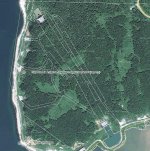
How India’s New Nuclear Submarine Base Challenges China’s Naval Plans | WSJ

FuturePAF

THINK TANK: CONSULTANT
Joined
Dec 17, 2014
Messages
16,607
Reaction score
18,186
Reputation
3,306.6
Country of Origin
Country of Residence
Satellite imagery shows a new nuclear submarine base on India’s eastern coast.

To view this content we will need your consent to set third party cookies.
For more detailed information, see our cookies page.

It has underground docks, which I had been hoping Pakistan would built at Ormara and Hub. Large enough for subs and at least the patrol crafts if not some of the principal warships.

Not sure if it’s a dock similar to the one in Norway; Montenegro and Croatia:

Croatia:
To view this content we will need your consent to set third party cookies.
For more detailed information, see our cookies page.


Or a tunnel like the one’s the Russians build:
To view this content we will need your consent to set third party cookies.
For more detailed information, see our cookies page.


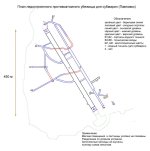
It seems closest to the Soviet sub base in the pacific. Look at the scale of the human in this picture to the sub pen. 450 meters long and 19 meters wide.
nintchdbpict000310664459.jpg


This is the map of the Soviet pacific sub base. Doubt the Indian base is this large, but India will probably build multiple bases.
1732681084743.jpeg
1732681124958.jpeg
 
Last edited:
To view this content we will need your consent to set third party cookies.
For more detailed information, see our cookies page.


India is building a new base for nuclear-armed submarines in the Bay of Bengal called INS Varsha in a bid to curb China’s naval footprint growing in India’s backyard. The Bay of Bengal is a critical shipping lane and some China experts believe the waterway could play a key role in any conflict over Taiwan or the South China Sea. WSJ examined satellite images to see how INS Varsha has expanded and explores how this project is forming the backbone of New Delhi’s plans to keep Beijing’s ambitions in the region in check
 
please merge

 
The PN needs a similar base (or 2) to house not just subs but smaller surface warships, and complicate any potential hostile moves against the fleet.

Tied up in Karachi or Ormara, the fleet is vulnerable to air, surface or even submarine attack.

To view this content we will need your consent to set third party cookies.
For more detailed information, see our cookies page.
 
Good move by Indian Navy in all honesty, this gives at least some element of protection from surprise missile attack
 
This has less to do with protection & more to do with hiding & concealing movement


Base is much larger than this Soviet base.
The Soviet base was a reference of what the Indian base might look like, just scaled up or it just shows what a base like this looks like in general.

Sometimes concealment is the only protection you need; the “shell game”.
 
Yall know right that the chinese have been building these bases for a long ass time?
They more then 6 of these bases...
 
Yall know right that the chinese have been building these bases for a long ass time?
They more then 6 of these bases...
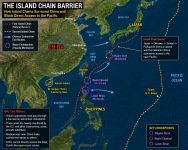
China’s submarine problem is that its navy is operating from a semi-closed maritime cage.
Look at the map carefully: China’s coast is surrounded by chains of islands stretching from Japan → Okinawa → Taiwan → Philippines. These islands act like giant natural barriers between China and the open Pacific. On top of that, India is now supplying anti-ship/land attack BrahMos batteries to the Philippines, Vietnam and other like minded countries.
1000043265.png
So when a Chinese SSBN or attack subs leaves base, it cannot simply disappear into the deep ocean like US subs can from Hawaii or Indian subs can from the Bay of Bengal. It has to squeeze through a few narrow underwater gates.

And the dangerous part is: everyone knows where those gates are. That means in wartime, the US and allies don’t need to search the whole Pacific. They can heavily monitor only a handful of exits: Miyako Strait, Bashi Channel & Luzon Strait.

This actually compresses China’s submarine maneuver space massively. Now combine that with another issue: most waters near eastern China are shallow continental shelf waters.

So before Chinese submarines even reach deep Pacific waters, they already pass through crowded surveillance zones, chokepoints, shallow acoustic environments.

That is a nightmare combination for SSBN survivability. This is why Hainan became so important for China. It gives faster access to the deeper SCS. But even Hainan does not fully solve the problem because SCS itself is not truly open ocean freedom.

It is more like a large underwater bowl surrounded by surveillance opportunities. To escape into the wider Pacific from there, subs still usually move through routes near:Taiwan, Philippines. Again creating predictable breakout corridors.

So strategically, China’s nuclear subs are powerful no doubt but geographically trapped.
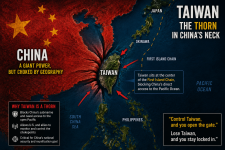
This is also why Taiwan has such enormous military importance for China beyond politics. Taiwan sits near one of the main underwater doors leading into the Pacific.
 
China’s submarine problem is that its navy is operating from a semi-closed maritime cage.
Look at the map carefully: China’s coast is surrounded by chains of islands stretching from Japan → Okinawa → Taiwan → Philippines. These islands act like giant natural barriers between China and the open Pacific.
View attachment 200143
So when a Chinese SSBN or attack submarine leaves base, it cannot simply disappear into the deep ocean like US subs can from Hawaii or Indian subs can from the Bay of Bengal. It has to squeeze through a few narrow underwater gates.

And the dangerous part is: everyone knows where those gates are.
That means in wartime, the US and allies don’t need to search the whole Pacific. They can heavily monitor only a handful of exits: Miyako Strait, Bashi Channel &
Luzon Strait.

This actually compresses China’s submarine maneuver space massively. Now combine that with another issue: most waters near eastern China are shallow continental shelf waters.

So before Chinese submarines even reach deep Pacific waters, they already pass through crowded surveillance zones, chokepoints,
shallow acoustic environments.

That is a nightmare combination for SSBN survivability. This is why Hainan became so important for China. It gives faster access to the deeper SCS. But even Hainan does not fully solve the problem because SCS itself is not truly open ocean freedom.

It is more like a large underwater bowl surrounded by surveillance opportunities. To escape into the wider Pacific from there, subs still usually move through routes near:
Taiwan, Philippines. Again creating predictable breakout corridors.
So strategically, China’s nuclear subs are powerful no doubt but geographically trapped.
This is also why Taiwan has such enormous military importance for China beyond politics. Taiwan sits near one of the main underwater doors leading into the Pacific.
This is the reason I keep calling China a semi landlocked country or a country who is the prisoner of her geography.... but fanboys never listen....
 
5th nuke sub is supposed to be bigger and an arctic launcher i believe? If they start touchjng 8 or 10k tons they apprkzch the size of the us nuke subs i think?
 
Bro even Taiwan capture won't solve the problem fully.... there will be still other issue in case of tension with Philippines, Malaysia or Indonesia and in case of high tensions with India then they will see India waiting for them near malacca or sunda.... so you see geography is the main enemy of China.... there's a reason they're spending billions on CPEC or OBOR....
 
Last edited:
Bro even Taiwan capture won't solve the problem fully.... there will be still other issue in case of tension with Philippines, Malaysia or Indonesia and in case of high tensions with India then they will see India waiting for them near malacca or sunda.... so you see geography is main enemy of China.... there's a reason they're spending billions on CPEC or OBOR....
Taiwan is the immediate thorn in China’s neck. The one issue China is most desperate to resolve because it sees it as unfinished civil war history and a core sovereignty question. Everything else in China’s external security environment is secondary compared to Taiwan but cumulatively those issues steadily increase China’s strategic burden over time.

If you look strictly at the maritime domain, China’s geography is less favorable compared to countries like Japan and India. Japan is naturally shielded by an island chain that stretches across the Pacific forming a layered maritime buffer. India OTOH projects deep into the Indian Ocean with a peninsular shape that gives it natural maritime access and fewer immediate chokepoints on its western and southern flanks.

China’s coastline is exposed and hemmed in by nearby island chains and chokepoints like the First Island Chain (Japan–Taiwan–Philippines arc). This actually limits their easy access to the open Pacific and creates a semi-enclosed maritime environment in its near seas.

To compensate for those shortcomings, it has built artificial islands by filling shallow reefs and turning them into military bases. But this also has a downside. Instead of making things easier for China, it has actually brought more foreign navies into the area especially the US and its allies.
 

Users who are viewing this thread

Pakistan Defence Latest

Country Watch Latest

Back
Top