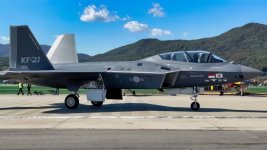
South Korea’s KF-21EX Boramae Warplane Just Stunned the World
August 8, 2025
By:
Brandon J. Weichert
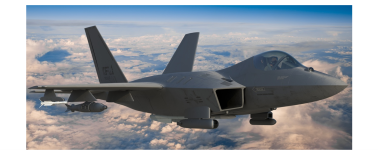
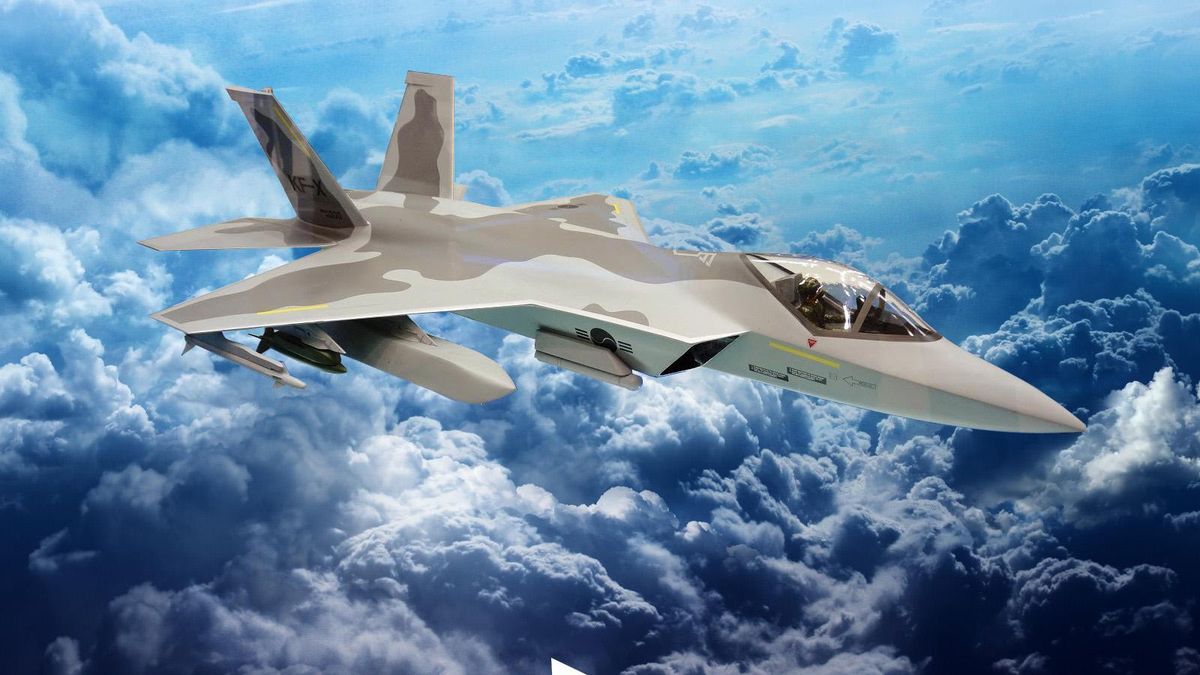
South Korea’s ambition to lead in aerospace innovation by blending stealth, AI, and unmanned integration to meet contemporary threats all define the KF-21EX Boramae.
South Korea’s military continues its mad dash to be as self-reliant as possible. This time, Korea Aerospace Industries (KAI) has confirmed that their indigenously designed and soon-to-be-produced
KF-21EX Boramae stealth warplane will match the performance and capabilities of America’s fifth-generation F-35 Lightning II stealth multirole warplane.
KAI is even taking the KF-21EX a step further. The Korean aerospace firm is
incorporating artificial intelligence (AI) as well as manned-unmanned teaming (MUM-T) systems to stay ahead of the competition.
What to Know About the KF-21
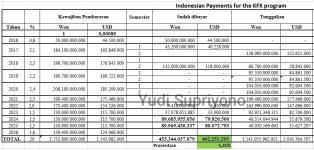
Feasibility studies on the KF-21 began back in 2008, with momentum building for an indigenously produced South Korean warplane after North Korea’s provocations in 2010. Indonesia, too,
joined the KF-21 program in 2010—initially committing to a 20 percent stake, though this was ultimately reduced to 7.5 percent in August of last year due to funding disputes.
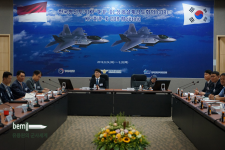
There was even an investigation into alleged technology theft by Indonesian engineers, which concluded without charges in June of this year. Perhaps not coincidentally, in June 2025, both Indonesia and South Korea signed a new agreement at
IndoDefense 2025 for 48 KF-21 jets and an additional $439 million investment from Indonesia.
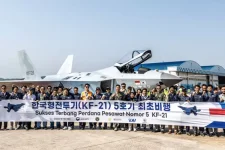
Serial production of the baseline KF-21 Block I started in July 2024, with 40 units planned by 2028 and a total of 120 by 2032. The
KF-21EX, part of Block III, was unveiled in 2025 alongside variants like the KF-21EA (electronic attack) and KF-21SA (export-oriented)—representing a shift toward enhanced stealth and autonomy. International interest persists, with potential buyers including India, Malaysia, Peru, the Philippines, Poland, Saudi Arabia, and the United Arab Emirates (UAE).
The KF-21 Boramae’s Specifications
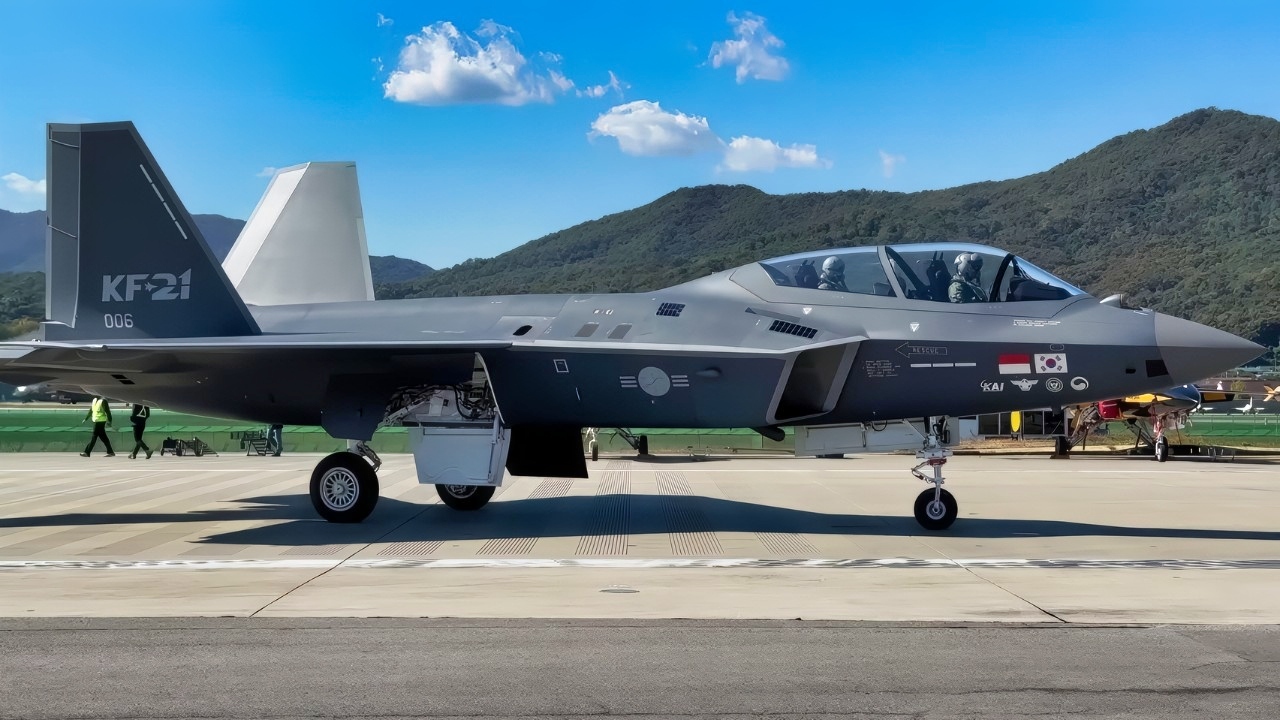
- Year Introduced: 2022 (prototypes only)
- Number Built: 6 (prototypes only)
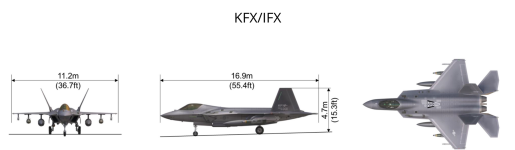
- Length: 16.9 m (55 ft 4 in)
- Height: 4.7 m (15 ft 4 in)
- Wingspan: 11.2 m (36 ft 7 in)
- Weight:
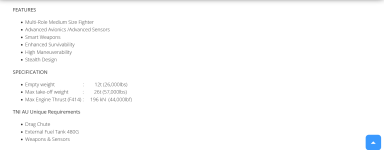
- 11,800 kg (26,015 lb) empty
- 17,200 kg (37,920 lb) standard conditions
- 25,600 kg (56,400 lb) maximum takeoff weight
- Engines: 2 x General Electric F414-GE-400k turbofan
- Top Speed: Approx. Mach 1.8 (1,330 mph)
- Range: Approx. 1,000 km (620 mi)
- Service Ceiling:
- Loadout: 1 x 20mm M61A2 Vulcan autocannon; 10 hardpoints, 7,700 kg (17,000 lb) total payload
- Aircrew: 1-2
How the KF-21EX Fighter Builds on the KF-21
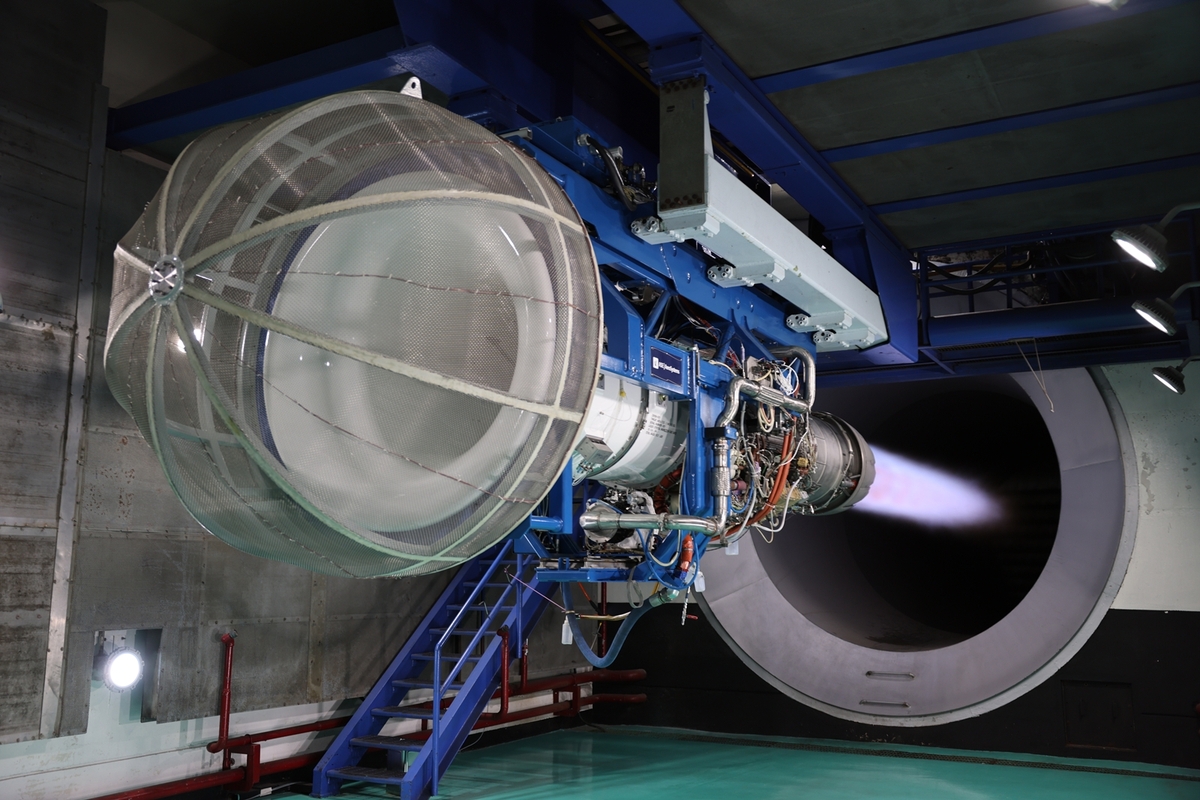
Building upon the core KF-21 design, the KF-21EX is a twin-engine fighter that is powered by two
General Electric F414-GE-400K turbofans. It achieves a maximum speed of Mach 1.81 combat range of 621 miles and a ferry range of 1,802 miles.
The key modifications for the KF-21EX include twin internal weapons bay in a deeper and broader center fuselage, capable of housing up to four
MBDA Meteor air-to-air missiles, eight smaller air-to-ground munitions, or pairs of 2,000-pound-class bombs like the
GBU-31 JDAM,
GBU-39 Small Diameter Bomb, or
bunker-busting BLU-109.
These new internal bays enable penetration of contested airspace by minimizing radar signature. It allows for the KF-21EX to carry heavy munitions for strikes on hardened targets, like North Korean facilities. This upgrade boosts speed, range, fuel efficiency, and maneuverability compared to other variants that have only external carriages.
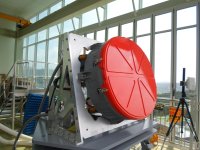
Avionics upgrades feature an Active Electronically Scanned Array (AESA) radar with automatic target recognition, an Electro-Optical Targeting System (EOTS) akin to the F-35’s, and an Electro-Optical Distributed Aperture System (EODAS) for 360-degree awareness. Additional enhancements include a reprofiled canopy, low-RCS radome, conformal antennas, and stealth-optimized features to reduce radar cross-section.
The AI-enabled mission computer fusing data from sensors, datalinks, and satellites for threat prioritization, targeting, and path optimization is a big deal for the South Korean bird.
As is the inclusion of the aforementioned MUM-T, which positions the KF-21EX as the manned core of
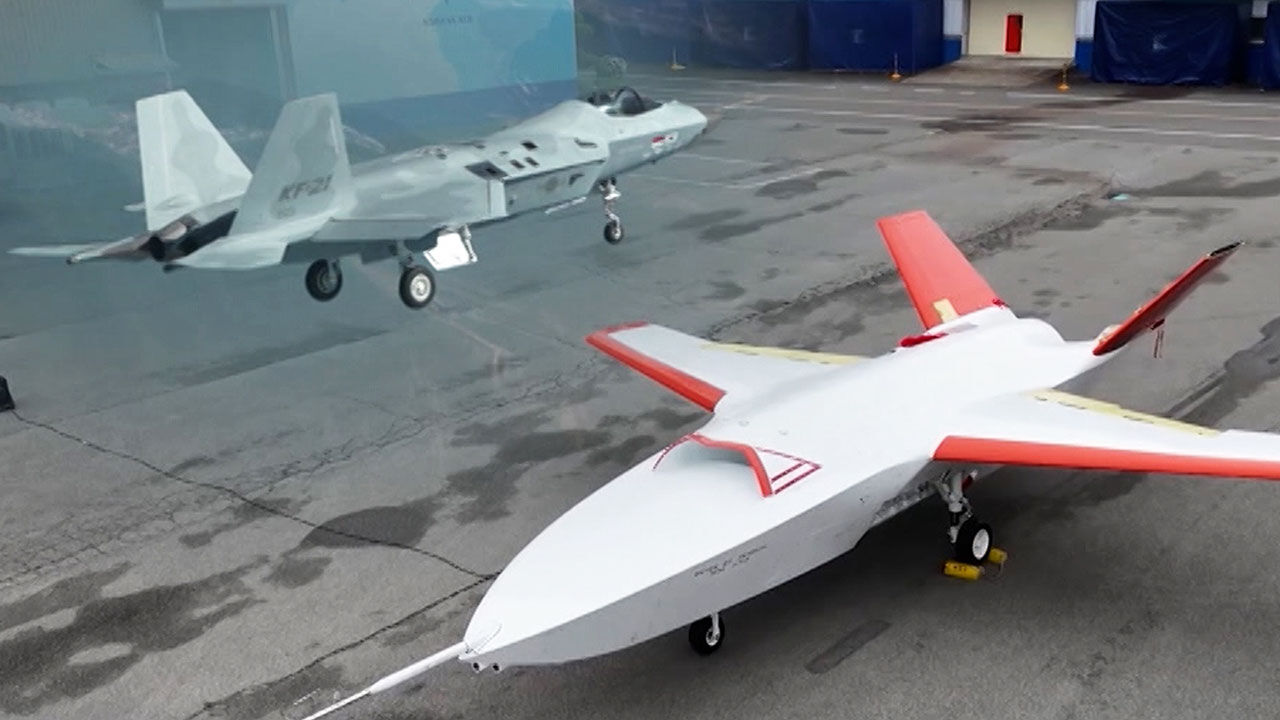
South Korea’s Next Air Combat System (NACS), coordinating with “loyal wingman” drones like the Low Observable Unmanned Wingman System (LOWUS) for swarm operations, sensor sharing, and suppression of enemy air defenses (SEAD).
Future concepts include
AI pilots, laser weapons, and tailless designs by the 2040s. All these features would be among the most advanced in the world…and the KF-21EX would still be cheaper than the American sixth-generation planes that Washington is obsessed with building.
South Korea Is Becoming an Elite Aviation Power
South Korea’s ambition to lead in aerospace innovation by blending stealth, AI, and unmanned integration to meet contemporary threats all define the KF-21EX Boramae. From its roots in national security needs to its real potential as a major global export for South Korea, the variant not only bolsters South Korea’s air force but reshapes modern air combat entirely.
Under current conditions, the KF-21EX is slated for deployment around 2039. If all goes to plan with its release, the KF-21EX, along with the other KF-21 variants, could cement South Korea’s status among elite aviation nations, proving that strategic vision and technological tenacity yield formidable results.
About the Author: Brandon J. Weichert
Brandon J. Weichert, a Senior National Security Editor at The National Interest as well as a contributor at Popular Mechanics, who consults regularly with various government institutions and private organizations on geopolitical issues. Weichert’s writings have appeared in multiple publications, including the Washington Times, National Review, The American Spectator, MSN, the Asia Times, and countless others. His books include Winning Space: How America Remains a Superpower, Biohacked: China’s Race to Control Life, and The Shadow War: Iran’s Quest for Supremacy. His newest book, A Disaster of Our Own Making: How the West Lost Ukraine is available for purchase wherever books are sold. He can be followed via Twitter @WeTheBrandon.
South Korea’s ambition to lead in aerospace innovation by blending stealth, AI, and unmanned integration to meet contemporary threats all define the KF-21EX Boramae.

nationalinterest.org


 news.sbs.co.kr












![[Photo4] AESA radar mounted on a platform simulator for ground-based functional and performance testing before flight trials](https://d3lcr32v2pp4l1.cloudfront.net/Pictures/100x67/8/6/0/111860_photo4aesaradarmountedonaplatformsimulatorforgroundbasedfunctionalandperformancetestingbeforeflighttrials_783684.jpg "[Photo4] AESA radar mounted on a platform simulator for ground-based functional and performance testing before flight trials")