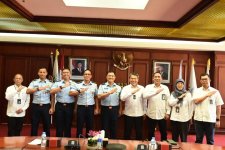
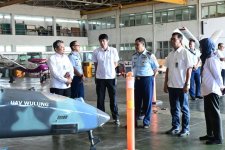
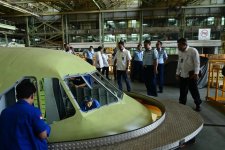
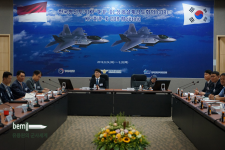
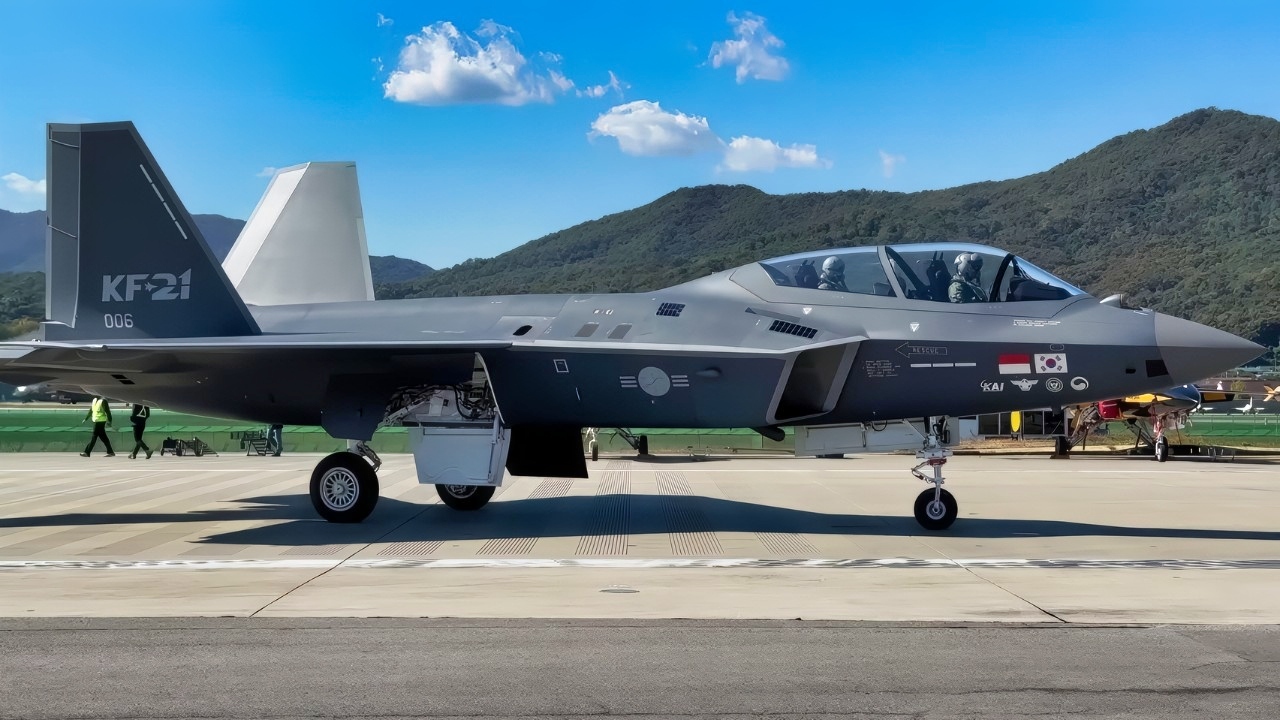
IFX Indonesian Fighter Experiment (KF21/IFX program)

To view this content we will need your consent to set third party cookies.
For more detailed information, see our cookies page.


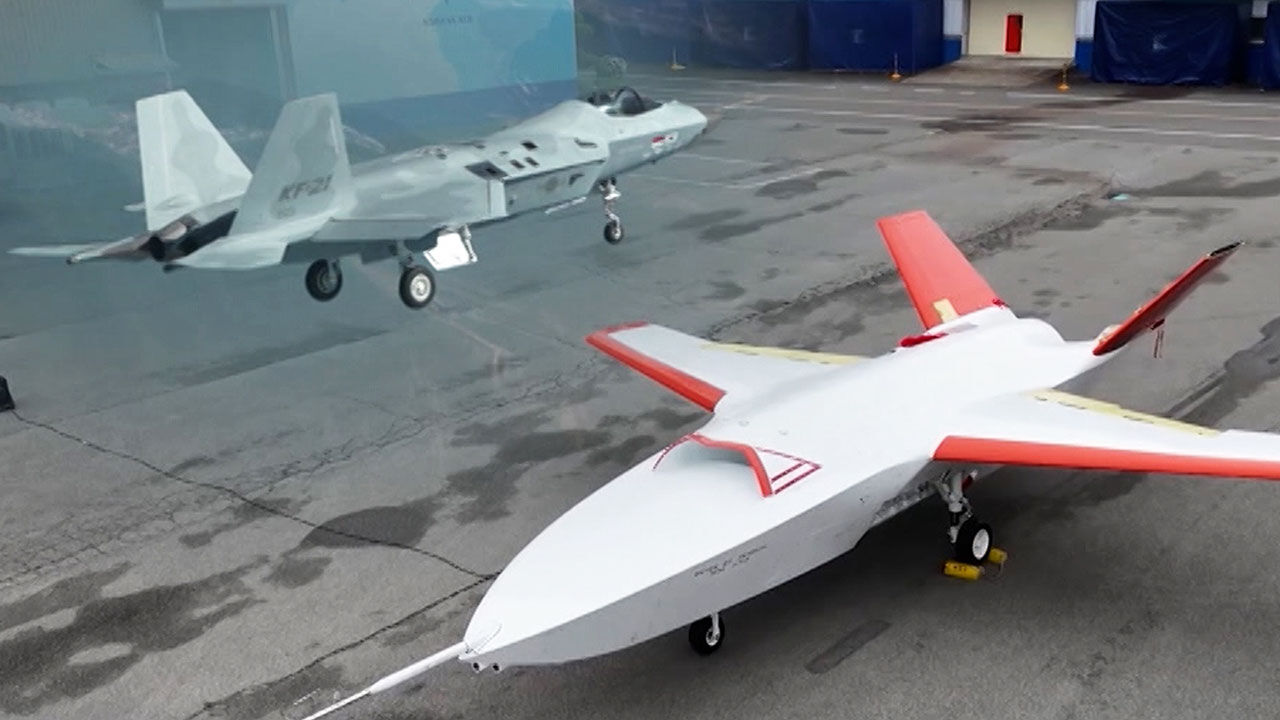
KF-21 'Escort Drone' Unveiled…First Flight Planned Within This Year
Source: SBS News

A "stealth drone" designed to escort the Korean supersonic fighter jet KF-21 and perform bombing and reconnaissance missions is currently under development, with its first test flight scheduled for this year. The Defense Acquisition Program Administration has unveiled the development site.


Reporter: Kim Tae-hoon, Defense Correspondent


This is an aerial combat animation by Korea Aerospace Industries (KAI).


A formation of four drones is deployed from an Air Force transport aircraft.


They fly at high speed, escorting the Korean supersonic fighter jet KF-21 from all directions.


["Target identified. Drones are approaching the target. Over!"]


Upon receiving the strike order, the drones fly ahead.


When the KF-21 pilot manipulates the front monitor, the drones destroy the enemy's air defense network.


["Target eliminated!"]


With the enemy air defense neutralized by the drones, the KF-21 conducts an indiscriminate bombing of the enemy airbase.


The drones operating with the KF-21 are stealth drone wingmen, whose development began in 2021.


They are called "stealth drone wingmen" because their stealth shape minimizes detection by enemy radar, and several of them form a formation to operate in tandem with the KF-21.


This white drone, with red on its main and tail wings, is a technology demonstrator for the stealth drone wingman.


Currently, the team is testing the flight functions by moving the control surfaces of the wings on the demonstrator, and is strengthening ground-based development of optical/infrared (EO/IR) surveillance equipment and stealth performance.


The first test flight is scheduled for later this year, and as early as next year, joint test flights with the KF-21 may begin.


[Lee Myung-seop / Lead Researcher, Agency for Defense Development]:
"When manned and unmanned aircraft cooperate, we believe the survivability of manned aircraft will be greatly increased. By applying AI and network technologies to drones, we expect they will be able to respond much more flexibly to real missions."


The development of the stealth drone wingman is expected to be completed by 2027, and by around 2030, it is projected to be fully operational together with the KF-21.


If this is achieved, not only will the combat power of the KF-21 be doubled, but the export competitiveness of both the KF-21 and the stealth drone wingman is expected to increase.


(Video editing: Kim Jong-tae, Video provided by: Defense Acquisition Program Administration·KAI)


South Korea to develop new engine for next-gen fighter jets​


NewsAviation
By Gu Min Chul

Mar 5, 2025

1753324682413.jpeg

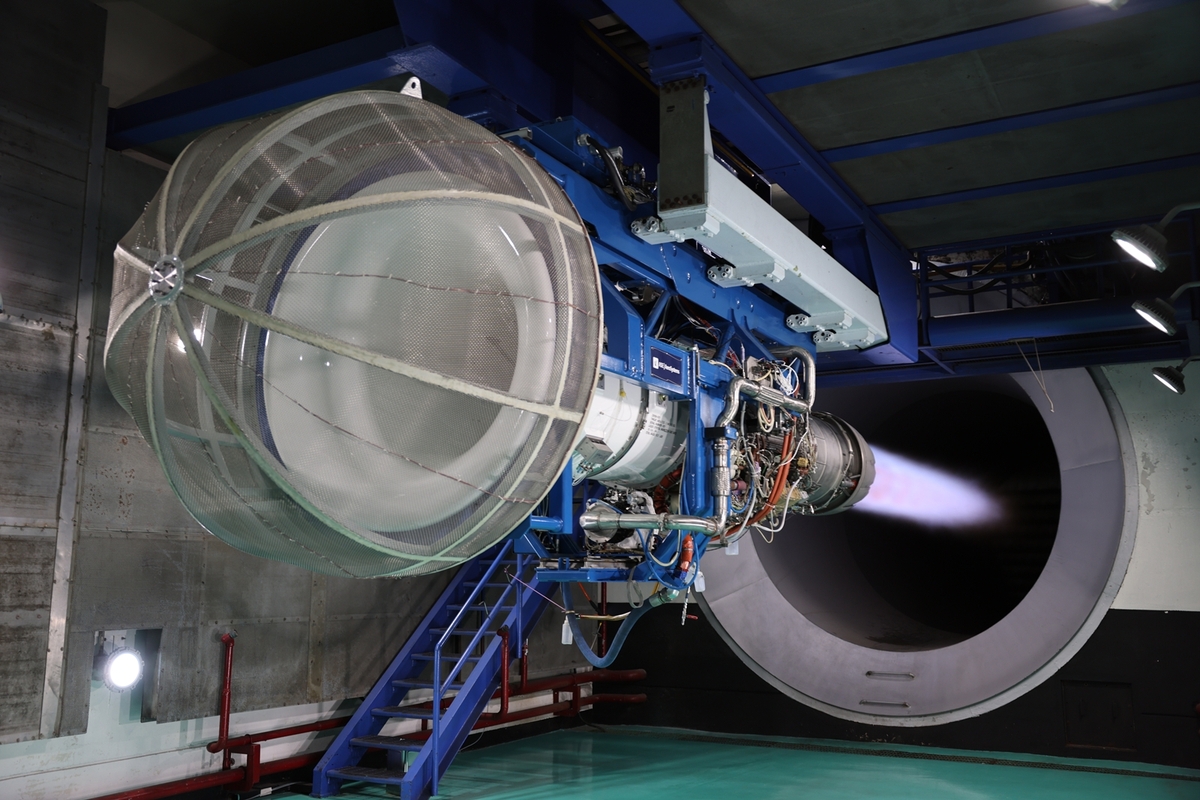
South Korea’s Ministry of Trade, Industry and Energy is partnering with the Defense Acquisition Program Administration (DAPA) to develop advanced engines for next-generation fighter jets and unmanned aerial vehicles (UAVs).

The collaboration aims to secure key engine technologies essential for homegrown military aircraft, reflecting the country’s efforts to strengthen its defense capabilities and reduce reliance on foreign technology.

The ministry and DAPA held a task force meeting on Wednesday, bringing together key officials and representatives from major aerospace firms, including Hanwha Aerospace and Doosan Enerbility. The discussions focused on laying the groundwork for the ambitious development project and ensuring that South Korea remains at the forefront of aerospace advancements.

DAPA recently confirmed plans to invest 3.35 trillion won ($2.3 billion) into the development of a 16,000-pound-force aircraft engine. This investment underscores the country’s long-term vision of creating a domestically produced powerplant capable of supporting next-generation fighter jets and advanced UAVs.

“Advanced aircraft engines are an integration of sophisticated technologies and a core technology for the defense industry,” an industry ministry official stated. The ministry plans to expedite a preliminary feasibility study to accelerate the project and drive innovation within the defense sector.

South Korea’s move to develop indigenous fighter jet engines aligns with broader defense modernization efforts, particularly as the country continues work on the KF-21 Boramae fighter jet program. The push for domestic production is also intended to enhance the country’s strategic autonomy, reducing dependency on foreign suppliers and strengthening its aerospace sector.

Industry experts see the initiative as a crucial step toward South Korea achieving self-sufficiency in high-performance military aviation technology.


Hanwha Aerospace inks 623.2 bln-won deal to supply engines for KF-21 fighter jets​


Preparation for local development of IFX in Indonesian Aerospace is underway, source from Indonesian Air Force is to follow
 
Preparation for local development of IFX in Indonesian Aerospace is underway, source from Indonesian Air Force is to follow

July 23, 2025
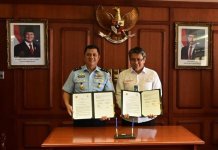
Indonesian Air Force and PTDI Sign Agreement on the Use of Aircrew


To view this content we will need your consent to set third party cookies.
For more detailed information, see our cookies page.


The Indonesian National Air Force (TNI AU) and PT Dirgantara Indonesia (PTDI) have signed a Cooperation Agreement (PKS) regarding the use of TNI AU aircrew to support PTDI’s operational activities. The signing took place at the PTDI Paripurna Building in Bandung, on Monday (July 21, 2025), as an effort to strengthen synergy between the Air Force and the national defense industry.


Representing the Air Force Chief of Staff, Air Chief Marshal M. Tonny Harjono, S.E., M.M., the Air Force Operations Assistant (Asops Kasau) Air Vice Marshal Suliono, S.Sos., stated that this collaboration is part of the Indonesian Air Force’s responsibility to support the independence of the national aerospace industry. He emphasized that the Air Force’s involvement in operating PTDI products such as the CN-235, NC-212, NAS-332, as well as the development of the N-219, KFX-IFX, and MALE UAV, is a tangible contribution to strengthening the strategic industry.

1753332167830.jpeg

This agreement provides a legal framework for the use of Indonesian Air Force personnel—including pilots, technicians, and air mechanics (JMU)—in supporting various stages of aircraft production, maintenance, and flight testing, whether for fixed-wing, rotary-wing, or unmanned aircraft.

1753332193118.jpeg

PTDI’s Director of Production, Dena Hendriana, expressed appreciation for the support of the Indonesian Air Force, which has been an important partner in ensuring the smooth production and testing of aircraft. The Air Force Operations Assistant (Asops Kasau) hopes that this cooperation will help achieve the strategic targets of the defense industry in the future.

1753332291603.jpeg
1753332334234.jpeg

Through this cooperation, the Indonesian Air Force and PTDI affirm their joint commitment to strengthening a national defense ecosystem that is independent, adaptive, and innovative, while also enhancing the competitiveness of Indonesia’s aerospace industry on the global stage.


--------------

Indonesian Air Force techniciants has more experience in fighter like when they do upgrade and refurbishment of F16A/B with Falcon Star Program. Of course there are Indonesian Aerospace (PTDI) as well involve in Falcon Star Program as we can see on the video.

To view this content we will need your consent to set third party cookies.
For more detailed information, see our cookies page.
 

South Korea’s next-gen jet marks progress in testing​


Gu Min Chul

View attachment 134821

South Korea’s KF-21 Boramae program took another major step toward operational readiness as its sixth prototype aircraft completed a series of high-stakes test flights, including air-to-air gunnery and weapons separation trials, program officials confirmed this week.


The advanced 4.5-generation fighter, developed by Korea Aerospace Industries (KAI), is on track to conclude its Block 1 development phase by early next year, with Block 2 enhancements set to follow immediately.

To view this content we will need your consent to set third party cookies.
For more detailed information, see our cookies page.


Speaking after the latest test campaign, KAI’s chief test pilot, Cha Myung-soo, described the intense pace of trials designed to refine the aircraft’s flight control systems and ensure combat readiness.

“Today’s sortie focused on compensating for potential attitude changes when the onboard gun is fired,” Cha said. “We verified that the flight control system can stabilize the aircraft effectively, even during rapid-fire conditions.”

The KF-21 prototype No. 6 has been central to testing advanced electronic warfare systems, while other airframes in the six-aircraft fleet have been designated for distinct mission profiles, including high angle-of-attack recovery and radar integration.


“This is a highly modular test program. Each prototype specializes in validating different capabilities to accelerate overall development,” Cha explained.


KAI confirmed that the program has already logged more than 1,300 sorties—roughly 70% of Block 1’s planned flight tests. Recent milestones include successful air-to-air missile firings of the Meteor and AIM-2000, even under supersonic conditions and external fuel tank configurations.


“From initial glide tests to complex combat scenarios, the KF-21 has demonstrated steady progress,” a KAI program engineer noted. “This puts us on schedule for the Republic of Korea Air Force’s operational evaluation early next year.”


Beyond Block 1, Block 2 upgrades will introduce precision air-to-ground capabilities, further cementing the KF-21’s role as South Korea’s next frontline fighter. Future variants are also expected to incorporate fully internal weapons bays for enhanced stealth.


The Boramae, meaning “young hawk” in Korean, is designed to replace aging F-4 and F-5 fighters in South Korea’s inventory, while serving as a potential export platform for allied nations.


Cha emphasized safety as a top priority during testing. “Every sortie is conducted with meticulous preparation and redundancy because the success of this program carries national importance,” he said.


With Block 1 deliveries on the horizon and Block 2 development in sight, South Korea’s ambitious fighter jet program is positioning itself as a cornerstone of the nation’s defense modernization efforts.


Very impressive.
They choose the right approach : step by step.
Turkish KAAN, far too complex at the beginning, will face far more hurdles.
 
Now for production of IFX in Indonesia inshaAllah, this guy will be the most responsible

-------------

Dena Hendriana Appointed as Production Director of PT Dirgantara Indonesia: Here’s His Profile


To view this content we will need your consent to set third party cookies.
For more detailed information, see our cookies page.


JAKARTA – PT Dirgantara Indonesia has appointed Dena Hendriana as its Production Director. Dena Hendriana, who is the Head of the Master of Mechatronics Study Program at Swiss German University, has over two decades of work and research experience in mechatronics, aerodynamics, and manufacturing technology to support the transformation of Indonesia’s aerospace industry.


A graduate with a bachelor’s degree from Northeastern University and master’s and doctoral degrees from the Massachusetts Institute of Technology (MIT), he began his career with education and research at MIT, where he developed numerical methods for efficient fluid flow simulation. This research provided a strong foundation for his career at international companies such as General Motors, Chrysler, EXA Corporation, and Ford Motor Company in the United States.


At Ford, he developed innovative aerodynamic devices such as spoilers and diffusers that improved fuel efficiency and vehicle performance. This experience connected advanced technology with real-world applications, making his an expert in aerodynamics and systems design.


Upon returning to Indonesia, Dena Hendriana served as a lecturer, researcher, and Director of the Center for Computational Fluid Dynamics at Surya University in Serpong, leading research on technology applications for sustainability, including renewable energy and agricultural automation. His research supported efficiency and innovation in the energy and agriculture sectors.


Since 2015, at Swiss German University (SGU), Dena Hendriana has led the Master of Mechatronics Study Program. His leadership has made the program a leader in meeting the challenges of the Industrial Revolution 4.0, with a practice-based curriculum integrating technologies such as robotics and intelligent control systems.


He also teaches Thermodynamics, Fluid Mechanics, and Research Methodology, enhancing student competencies and instilling the values of innovation and collaboration. Dena Hendriana’s research in energy efficiency, industrial automation, and sustainability solutions forms the foundation for strategic projects in Indonesia and globally.


His expertise in bridging industry needs with relevant academic research has inspired many. For Dena Hendriana, collaboration between education and industry is key to driving sustainable innovation.
This appointment is recognition of his competence and motivation for the academic community and students.


“The appointment of Dena Hendriana demonstrates the importance of collaboration between education and industry. We support this step and believe that this synergy can drive innovation and collective progress,” said SGU Rector Dr. Dipl-Ing. Samuel P. Kusumocahyo in his statement, Friday (December 20, 2024).


Dena is optimistic that his cross-sector experience can motivate the younger generation to explore their potential and contribute to the nation’s progress. Through a synergistic approach, he hopes to bring innovation and real contributions to Indonesia.


Throw back of old 2016 news

Who is Anne Kusmayanti ? She is a hijabi woman at the Chairmant desk (Next to a Korean Guy who is also Chairmant at the meeting) during Critical Design Review Meeting in September 2019 when the detail design is approved to pass through manufacturing a real prototype

1753838935877.png

---------------------

What is Inlet design ? Here is Inlet of KF21 that very critical to the plane flying performance and also related to its propulsion performance

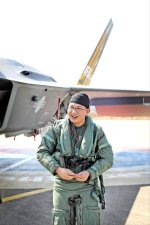
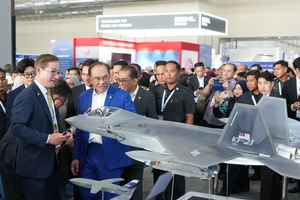
Picture of Colonel Ferrel Rigonald, Indonesian Air Force Test Pilot and KF21 inlet

1753838782104.jpeg

2 Inlet shown at front of KF21, it is the component that suck the air to the propulsion.

1753841072592.jpeg

------------------

In the development of the multirole fighter jet prototype, according to Anne Kusmayati, Head of the Research and Development Agency at the Ministry of Defense, PTDI (Indonesian Aerospace) will manufacture the wings, wing underside reinforcements, and tail section.


Later, for each K-FX/I-FX fighter jet produced, PTDI will continue to manufacture those components. That’s why, to support the development process, PTDI is building a composing hangar.


To realize the dream fighter jet of the two countries, Indonesia contributes 20 percent of the funding, while the remaining 80 percent comes from South Korea. This international joint development format was chosen to reduce financial and project development risks.


The KF-X/IF-X fighter jet production will be centered in Sacheon, South Gyeongsang Province, South Korea – the city where the headquarters and main factory of Korea Aerospace Industries is located.


A total of 200 Indonesian engineers will be gradually sent to Sacheon over the next one to two years. Initially, they will be involved in designing the aircraft. These engineers will also help design all of the aircraft components.


Of the total workers from both countries involved in the development of the KF-X/IF-X, over 30 percent are from Indonesia, with the majority coming from South Korea. This is also the reason why the manufacturing is centered in Sacheon, not in Indonesia.


The proportion of Indonesian engineers involved, originally at 20 percent, has grown to over 30 percent. This increase occurred as the project progressed.


“This shows that Indonesian engineers are valued by Korea. In fact, there’s a specific work package involving a technology only mastered by an Indonesian. He is a Ph.D. graduate from ITB (Bandung Institute of Technology), and the only one with the capability in inlight design (Journalist Typo, it should have inlet design). So Korea doesn’t take Indonesia lightly,” said Anne.

 
To view this content we will need your consent to set third party cookies.
For more detailed information, see our cookies page.


----------------

Indonesia will develop KF21 into IFX and produced in Indonesia inshaAllah.

Dont need to talk about procurement at this time, rather we should wait KF21 5th prototype landed first in Indonesia for IFX development in Indonesian Aerospace inshaAllah.

What we should wait now is the completion of IFX production facility in Indonesian Aerospace.
 
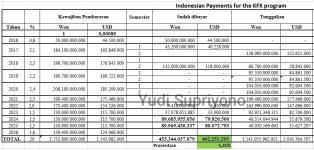
I think he makes mistake, it is likely Indonesia has given 1.1 trillion KRW = 792 million USD that will be for 450 million USD for cost share completion and 342 million is additional installment for 5th KF21 prototype + infrastructure/spare parts + data

Indonesia has given around 250 million USD until 2024 for cost share (TD phase cost share is not included). 2025 cost share payment is the one he shared on his tweet

1754387707177.jpeg

Despite speculation that Indonesia may be preparing to withdraw from the KF-21 program, Kang said he does not believe that to be the case.

Indonesia still owes about 200 billion won ($145.8 million) in development costs — 100 billion won for this year and another 100 billion for next year — and according to Kang, the Indonesian government has already budgeted the 2024 payment (2025 is the correct one-Indos)

"That’s not a signal of withdrawal," he said, adding that Indonesia is closely monitoring the KF-21's progress and is unlikely to walk away easily.


2025 budget for KF21 cost share installment
1754387892057.jpeg
 

Korea shortens KF-21 ground attack capability timeline to early 2027​

Korea expedites KF-21 ground attack capabilities with new plan approval


By
Kim Ji-hwan
Published 2025.08.08. 18:17


Military authorities have decided to shorten the schedule for securing the ground attack capability of the next-generation Korean fighter KF-21 by more than one and a half years compared to the original plan.

The Defense Acquisition Program Administration (DAPA) announced on the 8th that the 170th Defense Acquisition Committee, held at the Ministry of National Defense headquarters in Yongsan, approved a revised basic plan for the KF-21 system development. The revision outlines additional weapon tests to secure ground attack capabilities, reflected in the existing system development basic plan.

The development of the Korean fighter jet system is a project aimed at securing a fighter capable of compensating for the obsolescence of aging fighter jets such as the F4 and preparing for future battlefields. The project period extends to 2028, with a budget of 8.8142 trillion won. The original plan projected the application of ground attack missiles by the end of 2028, but with the approval of the revision, DAPA explained that early acquisition of ground attack missiles could begin in the first half of 2027.

 
Alhamdulillah. The program is getting cheaper and faster than initial plan.

1754716977148.webp

Look like block 1 development is extended to block 2 development. I mean the block 2 development is now under block 1 development. This will speed up IFX development inshaAllah as Indonesian Air Force requirement is to have multi role IFX and now multirole development is already underway.

Still IFX needs to be developed with less US cricitical component, stronger wings so that IFX can have more range with bigger fueltank and some change in the tail so that it can operate in shorter runway

1754716930112.png
1754716946315.png
 

South Korea’s KF-21EX Boramae Warplane Just Stunned the World​


August 8, 2025
By: Brandon J. Weichert
1754714468960.png

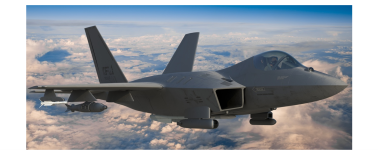
South Korea’s ambition to lead in aerospace innovation by blending stealth, AI, and unmanned integration to meet contemporary threats all define the KF-21EX Boramae.


South Korea’s military continues its mad dash to be as self-reliant as possible. This time, Korea Aerospace Industries (KAI) has confirmed that their indigenously designed and soon-to-be-produced KF-21EX Boramae stealth warplane will match the performance and capabilities of America’s fifth-generation F-35 Lightning II stealth multirole warplane.


KAI is even taking the KF-21EX a step further. The Korean aerospace firm is incorporating artificial intelligence (AI) as well as manned-unmanned teaming (MUM-T) systems to stay ahead of the competition.


What to Know About the KF-21


Feasibility studies on the KF-21 began back in 2008, with momentum building for an indigenously produced South Korean warplane after North Korea’s provocations in 2010. Indonesia, too, joined the KF-21 program in 2010—initially committing to a 20 percent stake, though this was ultimately reduced to 7.5 percent in August of last year due to funding disputes.


There was even an investigation into alleged technology theft by Indonesian engineers, which concluded without charges in June of this year. Perhaps not coincidentally, in June 2025, both Indonesia and South Korea signed a new agreement at IndoDefense 2025 for 48 KF-21 jets and an additional $439 million investment from Indonesia.


Serial production of the baseline KF-21 Block I started in July 2024, with 40 units planned by 2028 and a total of 120 by 2032. The KF-21EX, part of Block III, was unveiled in 2025 alongside variants like the KF-21EA (electronic attack) and KF-21SA (export-oriented)—representing a shift toward enhanced stealth and autonomy. International interest persists, with potential buyers including India, Malaysia, Peru, the Philippines, Poland, Saudi Arabia, and the United Arab Emirates (UAE).


The KF-21 Boramae’s Specifications


  • Year Introduced: 2022 (prototypes only)
  • Number Built: 6 (prototypes only)
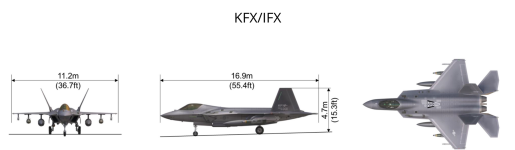
  • Length: 16.9 m (55 ft 4 in)
  • Height: 4.7 m (15 ft 4 in)
  • Wingspan: 11.2 m (36 ft 7 in)
  • Weight:
    • 11,800 kg (26,015 lb) empty
    • 17,200 kg (37,920 lb) standard conditions
    • 25,600 kg (56,400 lb) maximum takeoff weight
  • Engines: 2 x General Electric F414-GE-400k turbofan
  • Top Speed: Approx. Mach 1.8 (1,330 mph)
  • Range: Approx. 1,000 km (620 mi)
  • Service Ceiling:
  • Loadout: 1 x 20mm M61A2 Vulcan autocannon; 10 hardpoints, 7,700 kg (17,000 lb) total payload
  • Aircrew: 1-2

How the KF-21EX Fighter Builds on the KF-21


Building upon the core KF-21 design, the KF-21EX is a twin-engine fighter that is powered by two General Electric F414-GE-400K turbofans. It achieves a maximum speed of Mach 1.81 combat range of 621 miles and a ferry range of 1,802 miles.


The key modifications for the KF-21EX include twin internal weapons bay in a deeper and broader center fuselage, capable of housing up to four MBDA Meteor air-to-air missiles, eight smaller air-to-ground munitions, or pairs of 2,000-pound-class bombs like the GBU-31 JDAM, GBU-39 Small Diameter Bomb, or bunker-busting BLU-109.


These new internal bays enable penetration of contested airspace by minimizing radar signature. It allows for the KF-21EX to carry heavy munitions for strikes on hardened targets, like North Korean facilities. This upgrade boosts speed, range, fuel efficiency, and maneuverability compared to other variants that have only external carriages.


Avionics upgrades feature an Active Electronically Scanned Array (AESA) radar with automatic target recognition, an Electro-Optical Targeting System (EOTS) akin to the F-35’s, and an Electro-Optical Distributed Aperture System (EODAS) for 360-degree awareness. Additional enhancements include a reprofiled canopy, low-RCS radome, conformal antennas, and stealth-optimized features to reduce radar cross-section.


The AI-enabled mission computer fusing data from sensors, datalinks, and satellites for threat prioritization, targeting, and path optimization is a big deal for the South Korean bird.


As is the inclusion of the aforementioned MUM-T, which positions the KF-21EX as the manned core of South Korea’s Next Air Combat System (NACS), coordinating with “loyal wingman” drones like the Low Observable Unmanned Wingman System (LOWUS) for swarm operations, sensor sharing, and suppression of enemy air defenses (SEAD).


Future concepts include AI pilots, laser weapons, and tailless designs by the 2040s. All these features would be among the most advanced in the world…and the KF-21EX would still be cheaper than the American sixth-generation planes that Washington is obsessed with building.


South Korea Is Becoming an Elite Aviation Power


South Korea’s ambition to lead in aerospace innovation by blending stealth, AI, and unmanned integration to meet contemporary threats all define the KF-21EX Boramae. From its roots in national security needs to its real potential as a major global export for South Korea, the variant not only bolsters South Korea’s air force but reshapes modern air combat entirely.

Under current conditions, the KF-21EX is slated for deployment around 2039. If all goes to plan with its release, the KF-21EX, along with the other KF-21 variants, could cement South Korea’s status among elite aviation nations, proving that strategic vision and technological tenacity yield formidable results.


About the Author: Brandon J. Weichert


Brandon J. Weichert, a Senior National Security Editor at The National Interest as well as a contributor at Popular Mechanics, who consults regularly with various government institutions and private organizations on geopolitical issues. Weichert’s writings have appeared in multiple publications, including the Washington Times, National Review, The American Spectator, MSN, the Asia Times, and countless others. His books include Winning Space: How America Remains a Superpower, Biohacked: China’s Race to Control Life, and The Shadow War: Iran’s Quest for Supremacy. His newest book, A Disaster of Our Own Making: How the West Lost Ukraine is available for purchase wherever books are sold. He can be followed via Twitter @WeTheBrandon.


Hanwha Systems rolls out first production KF-21 AESA radar​


By Greg Waldron

6 August 2025


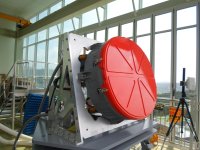
[Photo4] AESA radar mounted on a platform simulator for ground-based functional and performance testing before flight trials

Source: Hanwha Systems

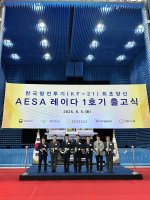
Initial production unit marks milestone in indigenous radar development for Korea’s next-generation fighter.


1754716327457.jpeg
1754716357676.jpeg
 

KF-21EX: South Korea Wants a ‘Mini’ F-35 Stealth Fighter​


By Jack Buckby

Published 21 hours ago

1754736215985.jpeg

PUBLISHED on August 8, 2025, 09:56 AM EDT – Key Points and Summary – New concept renderings from Korea Aerospace Industries (KAI) have revealed major planned upgrades for South Korea’s KF-21 fighter, known as the KF-21EX.

-The images show significant stealth enhancements, including the addition of internal weapons bays, a redesigned canopy, and a new F-35-like electro-optical targeting system.

-These upgrades, which aim to push the 4.5-generation jet into a true fifth-generation classification, are being unveiled even before the base model of the domestically developed fighter enters service in 2026.

-This signals South Korea’s ambition to counter growing regional threats.


Renderings Reveal New Tech Coming to South Korea’s KF-21EX


New concept artwork released by Korea Aerospace Industries (KAI) reveals more details about a planned upgraded version of the KF-21 Boromae fighter, the KF-21EX.

The new images, a series of digital renderings, offer insight into plans to make the Block 1 South Korean Boromae multirole fighter more survivable amid rapidly advancing air defense systems.

What the New Images Show


The new images confirm a wide range of new technologies and features in the works for the KF-21EX, ranging from sensor and avionic upgrades to stealth and survivability enhancements.

New electronic and situational awareness systems are also anticipated for the jet, along with multiple physical and structural changes.

The renders depict twin internal weapons bays – a feature not currently present on the Block 1 design. The proposed aircraft is depicted carrying what appear to be two 2,000-pound-class guided bombs.

A new sensor is also fitted below the nose, which is expected to function in a similar manner to the Electro-Optical-Targeting System (EOTS), a system already found on the American F-35 that is designed to track and locate targets during aerial warfare.

In terms of stealth, a reprofiled canopy and redesigned radome are designed to reduce radar cross-section and improve the overall stealth profile of the aircraft. The aforementioned internal weapons carriage seen in the renderings would also serve to improve stealth. KAI also hinted, as part of the release, at additional experimental systems being considered to enhance survivability.

Upgrades Emerge Before Block 1 Production


The KF-21 Boromae is South Korea’s first domestically-developed advanced multirole fighter, designed to reduce dependence on foreign platforms and improve South Korea’s defense capabilities as the country faces growing threats from North Korea, uncertainty around long-term U.S. security guarantees, and rapid Chinese aerospace advancements.

Developed by Korea Aerospace Industries with support from Indonesia, the aircraft is a 4.5-generation fighter that may soon – thanks to planned upgrades – finally be reclassified as the fifth-generation fighter it was initially envisioned to be. Some have even called it a ‘Mini’ F-35 stealth fighter.

Notably, the KF-21 is not yet in operational service. The aircraft’s first flight took place in July 2022, and the Block 1 variant is expected to be formally introduced in 2026. The KF-21 will be capable of speeds up to 2,200 kilometers per hour, with a range of 2,900 kilometers.

With over 1,000 test sorties logged so far, the program is moving steadily toward production – and as geopolitical tensions rise across Northeast Asia, fueled in part by North Korean drone, missile, and tactical nuclear weapons development, the KF-21 and its upgraded EX variant could give South Korea a cost-effective solution designed entirely with its own needs in mind.

About the Author:


Jack Buckby is a British author, counter-extremism researcher, and journalist based in New York. Reporting on the U.K., Europe, and the U.S., he works to analyze and understand left-wing and right-wing radicalization, and reports on Western governments’ approaches to the pressing issues of today. His books and research papers explore these themes and propose pragmatic solutions to our increasingly polarized society. His latest book is The Truth Teller: RFK Jr. and the Case for a Post-Partisan Presidency.

 
KF21 5th prototype is reported to be sent to Indonesia in June 2026 for development in Indonesian Aerospace inshaAllah

Source: Credible Source/Indonesian former Jane Defense representative/deep connection with Indonesian Minister of Defense
 

Users who are viewing this thread

Pakistan Defence Latest

Country Watch Latest

Latest Posts

Back
Top