IFX Indonesian Fighter Experiment (KF21/IFX program)

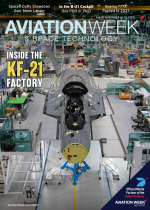
South Korea Breaks Cover On KF-21 Production​

Steve Trimble
November 03, 2025


To view this content we will need your consent to set third party cookies.
For more detailed information, see our cookies page.

The fourth KF-21 prototype, still showing the original design for the inboard tail boom, is among six development test aircraft that have completed nearly 1,500 flights collectively through late October.


Credit: KAI

A single-seat KF-21 Boramae, engine shrieking, inched forward out of the Korea Aerospace Industries’ flight-line hangar on a late October afternoon. A spin-recovery system sat high on top of the airframe between the fighter’s canted tails, suggesting that sortie’s test card would be full of induced stalls and other departures from controlled flight.

A second single-seater quickly emerged from the hangar onto the flight line, but with no spin chute assembly on the tail. Its sortie would be focused on validating an undisclosed performance metric somewhere within the required capabilities of the exclusive air-to-air mission for the initial version of the KF-21 for the Republic of Korea Air Force (ROKAF).

Meanwhile, a third KF-21 prototype sat motionless in the hangar next door. A team of Korea Aerospace Industries (KAI) engineers surrounded the aircraft, performing early system checks on the software for the Boramae’s promised air-to-ground capabilities, which remain in development.

This vignette from an exclusive tour of KAI’s flight line in Sacheon, South Korea, came within two months of the 10th anniversary of the contract award that launched the KF-21 development program.


A decade after kicking off the engineering and manufacturing development (EMD) phase, South Korea’s homegrown combat aircraft program can make a rare boast. The 11-year EMD phase continues right on schedule, having weathered industrywide supply chain disruptions after the COVID-19 pandemic, a fraction of the promised financial support from co-development partner Indonesia and recent uncertainty about the future of the company’s leadership.

To view this content we will need your consent to set third party cookies.
For more detailed information, see our cookies page.


The original completion date for the initial version of the KF-21, which comes armed with MBDA Meteor and Diehl IRIS-T air-to-air missiles, is still on track for mid-2026. A three-year gauntlet of flight tests is scheduled to wrap up by the end of this year, a program that dates back to the first flight on July 19, 2022. About 200 more sorties by the KF-21 prototypes remain scheduled, flights that will validate the operational readiness of the air-to-air configuration, KAI officials say.

Meanwhile, the first eight production models of the KF-21 are lined up on KAI’s cavernous final assembly line, including the first seven two-seat versions of the Boramae.

Three years after flight testing began, only one design change is observable between the six flight-test prototypes and the first eight KF-21 production models now in various stages of final assembly.

The sharp, angular sides of the inboard tail booms on either side of the two GE Aerospace F414 engine nozzles are now flattened. The tweak corrects a minor vibration detected by test pilots operating the prototype aircraft in certain areas of the flight envelope. Otherwise, the design of South Korea’s first twin-engine fighter, which KAI finalized with its critical design review on Sept. 24, 2019, remains unchanged.
1762618492839.png

Ilwoo Lee, the KF-21’s chief designer, offers a quick answer when asked to comment on the program’s scheduling success in an industry known for costly setbacks and delays during development.

KAI used “only proven technology” in the KF-21 design, said Lee, who retired in late 2021 but returned to KAI shortly afterward as a senior advisor.

That simple response covers a multitude of discrete decisions since 2015, in which South Korean military and industry officials sacrificed desired capabilities due to pragmatic realities.

Knowing that South Korea’s stealth technology was not yet mature, the program’s decision-makers—including KAI executives, Defense Acquisition Program Administration (DAPA) officials and ROKAF leaders—lowered the threshold requirement to a reduced-observable signature from low-observable and very-low-observable.

When the U.S. government delayed export approval for Raytheon AIM-120 Amraam and AIM-9X Sidewinder air-to-air missiles, the KF-21 program switched to European-made alternatives. The swift pivot to new sources of armaments for ROKAF was possible only because of a close collaborative relationship forged between KAI and DAPA, Lee said.

The KF-21 also built on South Korea’s hard-won experience as a combat aircraft developer. The government launched the KF-21 program in 2015 on the heels of the F/A-50 light attack fighter’s service entry. The F/A-50 itself is derived from the T-50 Golden Eagle advanced jet trainer, which celebrated the 20th anniversary of its service entry on Oct. 19. KAI has delivered 240 aircraft combined, with 72 orders still in backlog and several international sales campaigns ongoing.

KAI also received crucial technical support on the KF-21 program from Lockheed Martin. The U.S. manufacturer faced the prospect of helping KAI launch a direct competitor to the F-16, which remains in production, but South Korea had mandated a Lockheed role in KF-21 development as part of a 2014 acquisition of 40 F-35As. Still, Lockheed limited its participation in the Boramae program. After leading the design of the T-50 in collaboration with KAI in the 1990s, Lockheed owns no design rights to the KF-21, but the company did offer KAI’s engineers guidance through development and testing.

South Korea also faced other new technology challenges with the KF-21 program. The U.S. government denied a request from Seoul in 2015 to transfer four key technologies, forcing KAI to seek indigenous alternatives to U.S.-made active, electronically scanned array (AESA) radars; infrared search and track systems; electro-optical targeting systems; and self-protection jammers. South Korea’s defense supply chain stepped in to fill the gap. Hanwha Aerospace, South Korea’s largest defense company, created a family of AESA-based fire control radars featuring gallium-nitride components. LIG Nex1, a maker of missiles, avionics and sensors, produced a jammer for the KF-21.

That entire package has come together on the production aircraft in final assembly, but it is only a first step.

The completion of the EMD phase ushers the KF-21 program into the follow-on development stage. KAI engineers now turn their focus to certifying new air-to-ground capabilities, which include new munitions, sensor fusion modes and, possibly, the introduction of a new class of Korean-made collaborative combat aircraft (CCA).

To view this content we will need your consent to set third party cookies.
For more detailed information, see our cookies page.


South Korea’s defense industry put the upgrade options on full display Oct. 20-24 during the Seoul International Aerospace and Defense Industry Exhibition 2025.

LIG Nex1 and Hanwha unveiled concepts for six new missiles for future KF-21 fighters, building on the previously approved homegrown Korean Air-Launched Cruise Missile that is slated to enter development in 2028.

  • The hypersonic air-to-ground missile (HAGM), with its prototype produced by Hanwha, is a derivative of Hanwha’s existing ground-launched Korean tactical surface-to-surface missile. Hanwha confirmed to Aviation Week that the HAGM’s specifications remain classified.
  • The supersonic air-to-surface missile (SASM) flies at Mach 2.5 or higher using ducted rocket propulsion. The SASM is equipped with an inertial navigation system, GPS, a radar and an infrared seeker, and it boasts a range exceeding 300 km (186 mi.).
  • The short-range air-to-air missile, led by the Agency for Defense Development with LIG Nex1 performing system integration, is similar in length and weight to the Diehl IRIS-T but features a different canard design.
  • The long-range air-to-air missile is scheduled for completion by 2033, with LIG Nex1 handling system integration. It has ducted rockets similar to the MBDA Meteor missile but features two additional wings near the air intakes.
  • Unlike the state-led programs, the 250-lb. Modular Smart Missile and the 1,000-lb. Multi-Purpose Cruise Missile are to be developed by LIG Nex1 by 2030 using internal funding.
The full package of new armaments is expected to arrive in the early 2030s, rounding out the air-to-air and air-to-ground capabilities of the initial configuration for the KF-21.

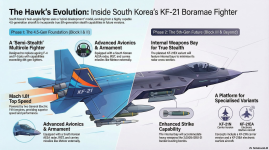
Meanwhile, the outlook remains uncertain for a stealth technology makeover of the KF-21. KAI’s original concept called for a “Block 3” configuration, featuring an internal weapon bay, stealth enhancements and upgraded sensors and onboard computer processors, with a notional fielding timeline in the late 2030s or early 2040s.

South Korean President Lee Jae Myung, who took office on June 4, promised during his campaign to support the stealthy KF-21 upgrade program. So far, no action has been taken, and the abrupt governmental transition—triggered by the removal of former President Yoon Suk Yeol following his declaration of martial law last December—has put KAI in an awkward position. Former KAI CEO Kang Goo-young, a Yeol appointee, resigned on the same day that Jae Myung took office. The company, which is treated as a publicly owned enterprise by the state, still awaits the appointment of a new CEO, which has created a six-month leadership vacuum at a critical time.

—With Minseok Kim in Seoul

Trimble_Steve_sized_0.jpg

Steve Trimble
Steve covers military aviation, missiles and space for the Aviation Week Network, based in Washington, DC.

 
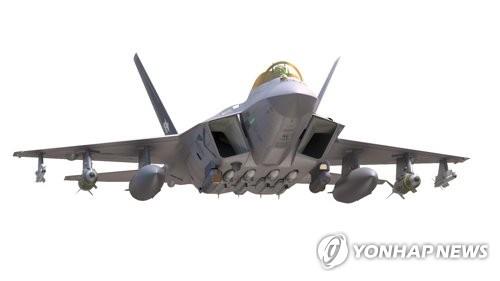
The Philippines could be the first country to operate the KF-21 Boramae.

Indonesia was very successful in this project, not only by participating in the development but also by acquiring technologies to develop its own variant.

When this happens, the entire technological industry of the country receives a boost, from radars to engines and space programs, all of it gains new momentum.

To view this content we will need your consent to set third party cookies.
For more detailed information, see our cookies page.


I want to back what she said with credible sources :

Development Phase


Indonesian IF21 version


1763522464446.jpeg

"The C103 is a Eurofighter-like 4.5th-generation plane that can easily be upgraded to a fifth-generation fighter, while the C501 is a fourth-generation one," said a local aviation analyst on condition of anonymity.

The ADD has reserved space for a conformable weapons bay in its C103 design, which would give it the makings of a low-observable fighter.

The analyst said that if Korea opts for the twin-engine aircraft in the KF-X, the combat plane will eventually be able to replace the Air Force’s F-16s and F-15s in the future.

“Otherwise, the KF-X will only end up as replacement for F-4s and F-5s,” he said.

Thus far, the Korean Air Force has only used the American airplanes, so it has been troubled by U.S. interference in international sales and upgrades.

The Air Force says the clean-sheet, brand-new aircraft will be free from that hindrance. The KAI FA-50 is based on the T-50 supersonic trainer, co-developed with Lockheed Martin.

“The biggest advantage is that Korea will be able to export it without an export license (from the United States),” said Yang Uk, a senior research fellow at the Korea Defense and Security Forum.

 
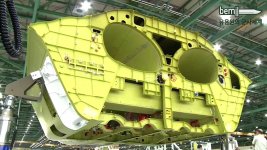
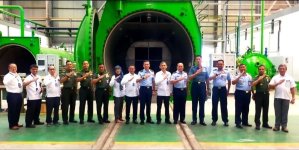
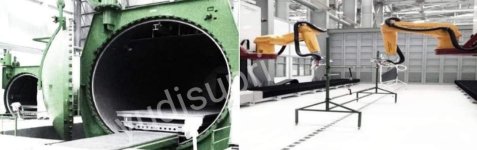
For Indonesian IFX manufacturing line, this pictures are already some years old, I will update if the new photo released


------------------

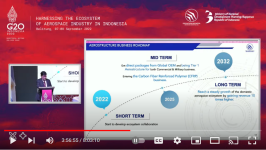
IFX Production Hangars (Assembling + Composite Manufacturing). Metal parts will use current production facility. For composite hangar and assembly facility still need more investment.

1763522804402.jpeg
1763522819760.jpeg

For metal part uses existing facility

1763522858032.png

CFRP manufacturing line is already in pipeline, with Indonesian Aerospace now under Danantara, I think this will likely be completed soon

1763522955253.png
 
To view this content we will need your consent to set third party cookies.
For more detailed information, see our cookies page.


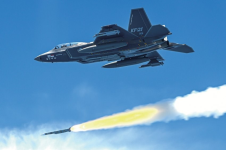
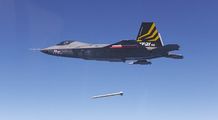
Meteor BVR launched

1765527036454.png
 

PTDI to Build Additional Facilities at Kertajati Airport​


To view this content we will need your consent to set third party cookies.
For more detailed information, see our cookies page.

Kertajati Airport


PT Dirgantara Indonesia (PTDI)
has dismissed reports suggesting that it plans to relocate its hangars and main production facilities to Kertajati Airport in Majalengka, West Java. Instead, the state-owned aerospace company emphasized that its current plan focuses on expanding operations by adding new facilities, while maintaining its existing infrastructure.

PTDI’s Director of Commerce, Technology, and Development, Mohammad Arif Faisal, explained that there is no intention to move PTDI’s primary facilities.
“There is actually no plan for relocation, only expansion. The facilities here will continue to be maintained. Meanwhile, there are indeed plans for us to build additional facilities there (at BIJB),” Faisal said in Bandung on Wednesday, November 26, 2025.

According to Faisal, the additional facilities to be developed at West Java International Airport (BIJB)—also known as Kertajati Airport—will focus on maintenance, repair, and overhaul (MRO) activities for combat aircraft, including PTDI’s Elang Hitam unmanned aerial vehicle (UAV). The Elang Hitam is a medium-altitude, long-endurance (MALE) UAV designed for extended operational missions.

“We have held discussions with the Ministry of Defense regarding facilities for combat aircraft at BIJB, as well as for large UAVs such as the MALE class. So this is not a relocation, but an addition of facilities,” Faisal said.

Regarding land availability, Faisal clarified that PTDI is not purchasing land in the Kertajati Airport area. Instead, the project will be carried out through a collaborative arrangement involving PTDI, the Ministry of Defense, and the National Development Planning Agency (Bappenas). A 13-hectare site has already been allocated for the construction of PTDI’s additional facilities at BIJB.

The planned MRO complex will also include final assembly lines (FAL) for various PTDI-produced aircraft. However, Faisal noted that the timeline for the project has not yet been finalized.

“This is still in process. We still need to conduct business feasibility studies and other assessments, but it is clear that we are moving in that direction,” he said.


Seoul allocates $3.4 billion for development of indigenous fighter engine​


By Greg Waldron
25 December 2025

South Korea has laid out the funding and timeline for the development of a new indigenous fighter engine.


Seoul’s “Advanced Aviation Engine Development Project” will see an investment of W3.4 trillion ($3.4 billion) and run from 2027-2040, according to the Defense Acquisition Program Administration.

The programme will result in an engine with military thrust of 16,000lb (71kN), and thrust of 24,000lb with afterburners. Previously, Seoul has indicated that the engine’s military thrust would be 15,000lb.


“This project will involve the development and production of a prototype of an advanced aircraft engine, conducting development and certification testing, and completing preparations for system-mounted flight tests,” says the DAPA.


“This will enable future flight tests on domestically produced fighter jets.”


Seoul has long promoted its intention to develop an indigenous fighter engine. Hanwha Aerospace, which produces foreign fighter engines under licence, will play a key role in the engine, which will power the future Block 3 variant of the Korea Aerospace Industries KF-21 fighter.


South Korea recently established an inter-ministerial body to coordinate the engine’s development, and to ensure that efforts are not unnecessarily replicated across the government and industry.


The Block 1 and Block 2 variants of the KF-21 will be powered by the GE Aerospace F414, which is produced locally by Hanwha.

 
To view this content we will need your consent to set third party cookies.
For more detailed information, see our cookies page.


To view this content we will need your consent to set third party cookies.
For more detailed information, see our cookies page.


S. Korea to develop its own short-range air-to-air missile by 2032​

 
To view this content we will need your consent to set third party cookies.
For more detailed information, see our cookies page.


To view this content we will need your consent to set third party cookies.
For more detailed information, see our cookies page.
 

Indonesia looks to revive KF-21 contract with Block 2 acquisition​


By Ridzwan Rahmat |
08 January 2026

To view this content we will need your consent to set third party cookies.
For more detailed information, see our cookies page.


Indonesia's involvement in South Korea's KF-21 Boramae fighter programme looks set to deepen, with fresh indications that Jakarta may procure 16 Block 2 variants of the aircraft as part of a package to revive a long-stalled contract.


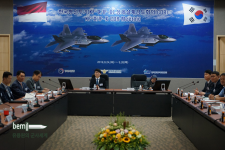
This development emerged from a closed-door meeting at the Indonesian Ministry of Defence (MoD) in Jakarta on 7 January, which was held following a proposal broached by Indonesian President Prabowo Subianto to his South Korean counterpart Lee Jae-myung during a private meeting at the Asia-Pacific Economic Cooperation (APEC) Summit in October 2025.


According to documents provided to Janes, the 7 January meeting was led by the head of Programme and Evaluation at the MoD's Defence Logistics Agency, Air Commodore Jon Ginting.


Also in attendance at the meeting were representatives from Korea Aerospace Industries (KAI) and Indonesia's state-owned aerospace company PT Dirgantara Indonesia (PTDI).


My analysis

1767946480725.png
Picture during Indodefense in June 2025

According to me, KF21 block 2 acquisition is something that is very rational to happen due to:

1. Block 2 development is still on going, so when it is completed, the KF21/IFX production line in Indonesian Aerospace is also expected to be completed, so whole order will likely be signed by Indonesian Aerospace and produced in Bandung Indonesia.

2. Block 2 is something that meet Indonesian Air Force requirement

KF21 block 3 Upgrade Facility

KF21 MRO that will likely also be the place for Block 2 - Block 3 upgrade is planned to set at Kertajati, West Java so it will not disturb KF21/IFX production line in Indonesian Aerospace main complex in Bandung, West Java

Why Indonesia only buy 16 KF21/IFX ?

Because it is initial order, as Indonesia has KF21 production site in Indonesian Aerospace (for both components (fuselage) and assembly facility), so it is expected that Indonesia will likely buy more KF21, it could even possibly exceeds 100 planes being ordered (Block 2, Block 3, and other possible Blocks)
 
KF-21: Not a Single Accident — Why It Flew 1,600 Times Over 42 Months

JoongAng Ilbo (U.S. Edition)


To view this content we will need your consent to set third party cookies.
For more detailed information, see our cookies page.


January 12, 2026 | 17:41 (updated 21:01)

South Korea’s Defense Acquisition Program Administration (DAPA) announced on the 13th that it has successfully completed the development flight tests of the Korean fighter jet KF-21 (Boramae). This milestone comes four years and nine months after the rollout of the first prototype in April 2021.

According to DAPA, the KF-21 conducted its final test flight on January 12 over the southern sea near Sacheon, South Gyeongsang Province, with the completion of flight-performance verification for the fourth prototype. Over the past 42 months, the aircraft completed approximately 1,600 test flights without a single accident, successfully meeting more than 13,000 test conditions, DAPA explained.

Photo: KF-21 weapons flight test. Yonhap News

The KF-21 also successfully carried out air-to-air weapon launch tests and demonstrated its ability to recover control during extreme-attitude flight, proving its capability to perform real combat missions. Notably, DAPA said it introduced in-flight refueling tests for the first time in a domestic fighter development program, improving testing efficiency and shortening the overall development flight-test schedule by two months compared to the original plan.

The KF-21 system development program is a key national defense project aimed at replacing the Air Force’s aging F-4 and F-5 fighter jets with a 4.5-generation fighter developed using indigenous technology and designed to meet future battlefield operational concepts. Once deployed, the KF-21 is expected to significantly strengthen airspace defense and enhance preparedness for future air combat. On January 7, Prime Minister Kim Min-seok visited the production line in Sacheon to inspect the aircraft’s performance and operational status.

Photo: Prime Minister Kim Min-seok gives a thumbs-up while sitting in the cockpit of the KF-21 Boramae during a visit to Korea Aerospace Industries (KAI) in Sacheon, South Gyeongsang Province, on January 7. Yonhap News

DAPA plans to complete system development in the first half of this year and begin delivering mass-produced aircraft to the Air Force in the second half. The goal is to achieve initial operational capability with the first aircraft by September. The air-to-air-focused KF-21 Block-1 variant will be produced first, with 20 aircraft by 2027 and another 20 by 2028, for a total of 40 units. The Block-2 version, which will include air-to-ground and air-to-ship capabilities, is being considered for purchase by Indonesia, a joint production partner, which is reviewing the acquisition of 16 aircraft.

The KF-21 development program, originally valued at 8.1 trillion won, was launched as a joint project with Indonesia. However, tensions arose after Indonesia failed to pay its pledged contributions on time, and after an attempt by a dispatched Indonesian researcher to leak technical data was uncovered. In June last year, the two countries reached an agreement to reduce Indonesia’s contribution from 1.6 trillion won to 600 billion won, allowing the project to overcome a major hurdle.

Indonesia has paid 500 billion won to date and is scheduled to pay the remaining 100 billion won this year. As a result of the reduced contribution, the South Korean government has decided not to transfer the fifth prototype to Indonesia, which had originally been planned.

Noh Ji-man, head of DAPA’s KF-21 Program Office, said,

“The KF-21 is the culmination of South Korea’s aviation technology,”
adding,
“We will do our utmost to ensure that additional weapons testing, mass production, and operational deployment proceed smoothly.”
By Yoon Ji-won ([email protected])


1768304278119.png

Based on Korean source, Indonesia needs to pay more to get the prototype that is intended for development purposes by Indonesian Aerospace.

The source


Now with Indonesia try to get block 2, then I think the cooperation is continuing into the block 2. In this case, no need for Indonesia to develop its own block 2 variant.

So not getting a prototype is actually something that pretty fine. Indonesia is not yet able to develop its own variant at the moment. Just continue doing it together with South Korea as junior partner is the best idea.

1768427660431.png

Then I hope Indonesia involve in block 3 development, then it is the time where Indonesia should get its own prototype. In essence, South Korea is already accepting the condition where Indonesian Aerospace has the right to develop its own variant as the main hurdle to get the prototype for block 1 is only additional money from Indonesian side.
 

Users who are viewing this thread

Pakistan Defence Latest

Back
Top