South Korea Opens Up About Delays in Joint KF-21 Fighter Jet Project with Indonesia
CNN Indonesia
Wednesday, 26 August 2026, 21:00 WIB
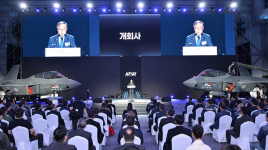
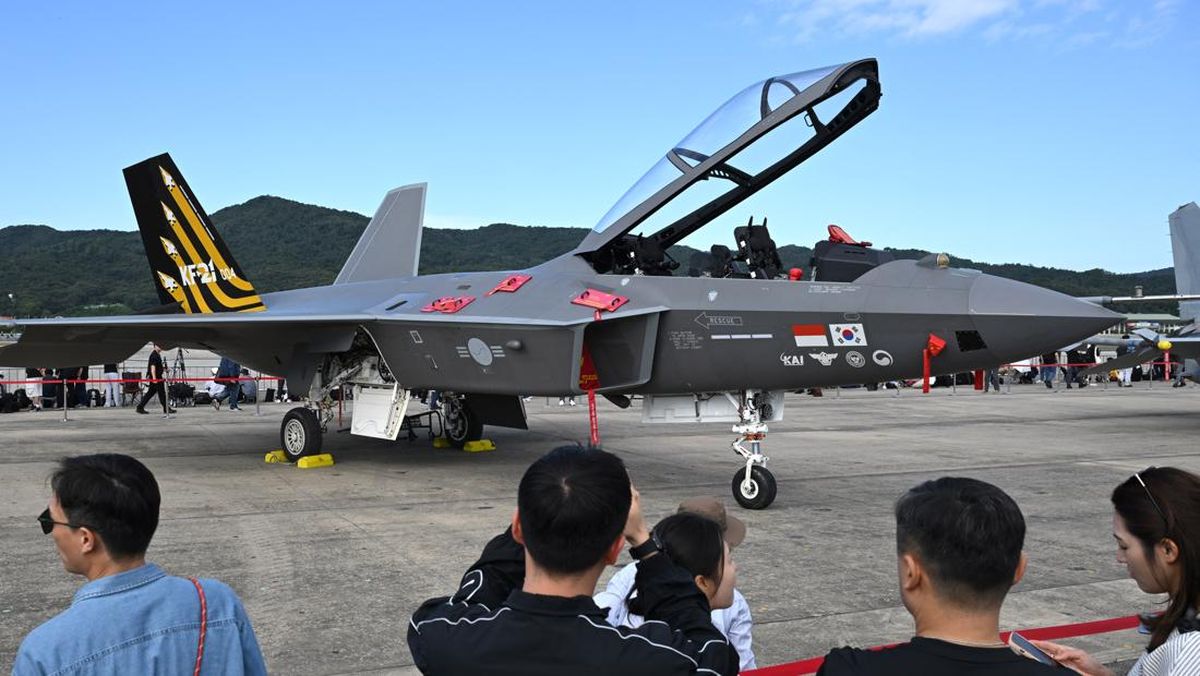
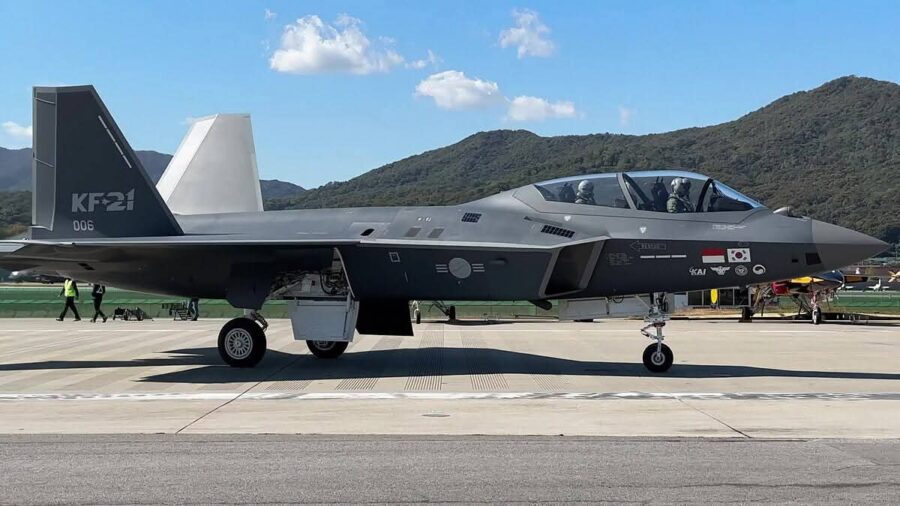
The Boramae fighter jet jointly produced by South Korea and Indonesia. (Photo: AFP/JUNG YEON-JE)
Jakarta, CNN Indonesia – South Korea has affirmed that changes to the cooperation arrangement for the KF-21/IF-X fighter aircraft program have not discouraged the country from continuing defense cooperation with Indonesia.
Uhm Taeho, Political Section Chief at the South Korean Embassy, said the two countries had indeed encountered several obstacles during the joint development of the KF-21. However, according to him, Indonesia and South Korea were able to resolve those issues through mutual agreement.
“If you ask me whether that will hinder Korea’s cooperation with Indonesia going forward, I would say no. In fact, quite the opposite,” Uhm said during an Indonesian Next Generation Journalist Network on Korea (IKJN) workshop in Central Jakarta on Wednesday (26 August).
Uhm said the various problems that emerged during the KF-21 project instead provided valuable experience for both countries in building a relationship founded on trust.
The KF-21 Boramae project is a 4.5-generation fighter jet program involving South Korea and Indonesia, originally based on a financing contribution scheme of 80% from Seoul and 20% from Jakarta.
The joint project, which Indonesia agreed to participate in beginning in 2010, experienced delays, particularly over financing issues as well as several incidents. The project, initially valued at
8.1 trillion won, or around Rp100 trillion, was originally targeted for completion this year.
“We have gone through various difficulties in this project. This is a very valuable asset for us because we went through all of those challenges and were able to emerge from them in a partnership based on mutual trust. I think that is a very good example. And we are pleased with the outcome of this joint development project,” he said.
According to Uhm, the KF-21 cooperation represents South Korea’s first joint development project. Indonesia was also the first country to become South Korea’s partner in the joint development of a weapons system.
“Indonesia truly is an important partner in creating and developing Korea’s defense industry. The history of defense cooperation between the two countries is remarkable. The KT-1 and everything else represented firsts for Korea,” Uhm said.
“This is not just about Indonesia buying Korean weapons, but also about Korea accepting Indonesia as its partner. Indonesia is the first country to undertake joint development with us,” he added.
Current Status of the KF-21 Fighter Jet Project
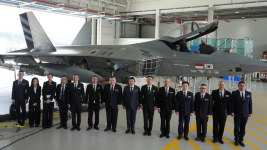
Uhm said the KF-21/IF-X cooperation has reached the conclusion of its joint development phase. He noted that the aircraft even bears two national flags as a symbol of the involvement of both countries.
“If you look at the KF-21, the aircraft has two national flags. There is no other weapons system in Korea that has two national flags on a weapon,” he said.
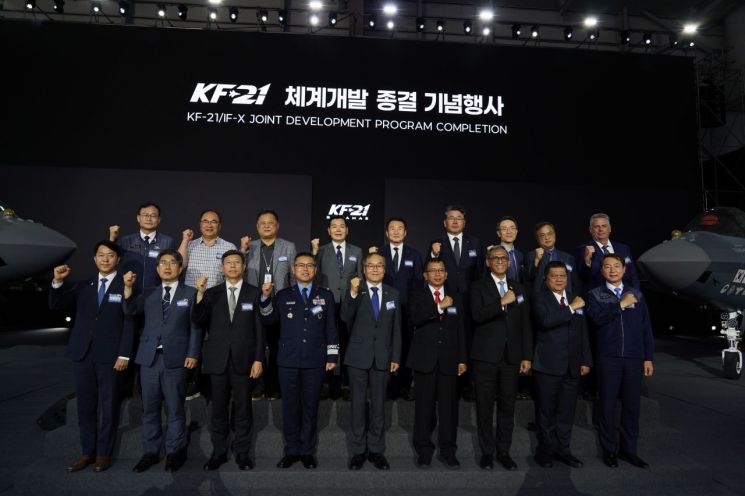
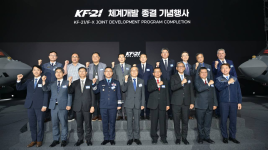
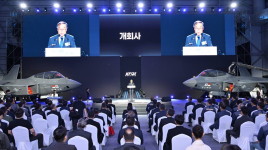
Uhm said the joint development phase of the project was successfully completed in the previous month. South Korea and Indonesia also held a ceremony with officials from Indonesia’s Ministry of Defense to mark the completion of the phase.
However, he said the form of the next stage of defense cooperation has yet to be determined. The two countries are still holding discussions involving their respective defense and foreign ministries.
“This represents a major commitment by Indonesia and Korea to jointly develop a next-generation fighter aircraft system.
When we talk about the next step, if we are satisfied with the results of Indonesia’s investment, Korea’s investment, and the partnership that we have, I think we will move into the next stage,” Uhm said.
“However, we are still in the process of discussing the specific form of the next stage of cooperation,” he added.
Uhm said it was too early to disclose the concrete form that future cooperation would take. According to him, defense projects are large in scale, meaning that their methods, structure, and implementation timeline must take into account domestic and international economic conditions.
“It is a little too early to discuss the specifics, but I can assure you that there are very substantive discussions taking place between the two countries. I hope we can share more details with you going forward,” he said.
KF-21 Cooperation Scheme Changed
Uhm made the remarks in response to a question about changes to the KF-21/IF-X cooperation scheme. Indonesia was previously involved under a joint development and production arrangement, but the government subsequently opted for a direct procurement scheme.
Indonesia’s Ministry of Defense previously said the change was the result of an internal government evaluation.
The government said the revised KF-21 arrangement resulted from an assessment aimed at ensuring that the cooperation delivers optimal benefits for Indonesia, particularly in terms of technology transfer and strengthening the national defense industry. The decision was said to be unrelated to other issues circulating publicly.
Responding to the change, Uhm acknowledged that the KF-21 project had encountered several difficulties that affected relations between the two countries.
“We did experience several difficulties; we all know that. It was one of the factors that really dragged down our relationship for a time,” Uhm said.
However, he said the two countries subsequently resolved the issues through mutual agreement and adjusted the terms of the project.
“We were able to overcome all of that. And we did it through mutual agreement, with mutual consent. We were able to adjust the terms and reach an agreement on how we would continue the KF-21/IF-X joint development project,” he said.
Indonesia’s Position
From the Indonesian side, Vahd Nabyl Achmad Mulachela, Head of the Center for Policy Strategy for Asia-Pacific and African Affairs at Indonesia’s Ministry of Foreign Affairs, said defense industrial cooperation is an important component of Indonesia-South Korea bilateral relations.
He said the cooperation encompasses not only the KF-21/IF-X but also submarine cooperation and regular meetings involving defense industry players from both countries, including state-owned and private companies.
“The third area is defense industry partnership. We are aware of the KF-21/IF-X fighter aircraft development program, and there are also several areas of cooperation involving submarines.
Indonesia and Korea also hold annual meetings involving a number of defense industry players in Indonesia, not only state-owned companies but also private companies operating in the defense industry,” Nabyl said.
Regarding changes to the KF-21 project, Nabyl said priorities in both Indonesia and South Korea had shifted over the course of the cooperation.
“After the agreement to undertake this joint cooperation was signed, a number of developments emerged in both Indonesia and South Korea, meaning that the order of priorities of the two countries could change over time,” he said.
Nevertheless, Nabyl said the two countries ultimately succeeded in achieving the final objective of the KF-21 development project.
“However, the main point, as Mr. Uhm mentioned, is that we ultimately achieved the final objective. This year, we completed our cooperation in this sector for the joint development of the KF-21,” Vahd said.
KF-21 Becomes a Pillar of Defense Relations
Mina Ryu, Director of the Southeast Asia Division 1 at South Korea’s Ministry of Foreign Affairs, said Indonesia-South Korea defense cooperation has developed as the two countries expanded their strategic relationship.
According to Mina, Indonesia purchased South Korea’s KT-1 basic trainer aircraft in 2001 and became South Korea’s first defense export partner.
“Following the end of the Cold War, bilateral cooperation expanded into broader strategic dimensions. In 2001, Indonesia purchased Korea’s KT-1 basic trainer aircraft and became Korea’s first defense export partner,” Mina said.
She said defense industrial cooperation subsequently became one of the pillars of relations between the two countries. The KF-21/IF-X is one of the leading examples of that cooperation.
“Since then, defense industrial cooperation has become one of the important pillars of our bilateral relationship. The KF-21/IF-X fighter aircraft joint development project is a prime example,” she said.
Mina explained that the KF-21 development agreement was reached in 2010 and the project began in 2016. The 10-year project was completed in
June 2026.
On
29 July 2026, South Korea’s Defense Acquisition Program Administration (DAPA) and Indonesia’s Ministry of Defense also held a joint event to celebrate the completion of the joint development project.
“Indonesia’s participation was an important part of making the KF-21 what it is today. The project represents an achievement of bilateral collaboration,” Mina said.
Korsel memastikan perubahan skema kerja sama pesawat tempur KF-21/IF-X tidak membuat Negeri Ginseng kapok melanjutkan kerja sama pertahanan dengan Indonesia.

www.cnnindonesia.com
-------------
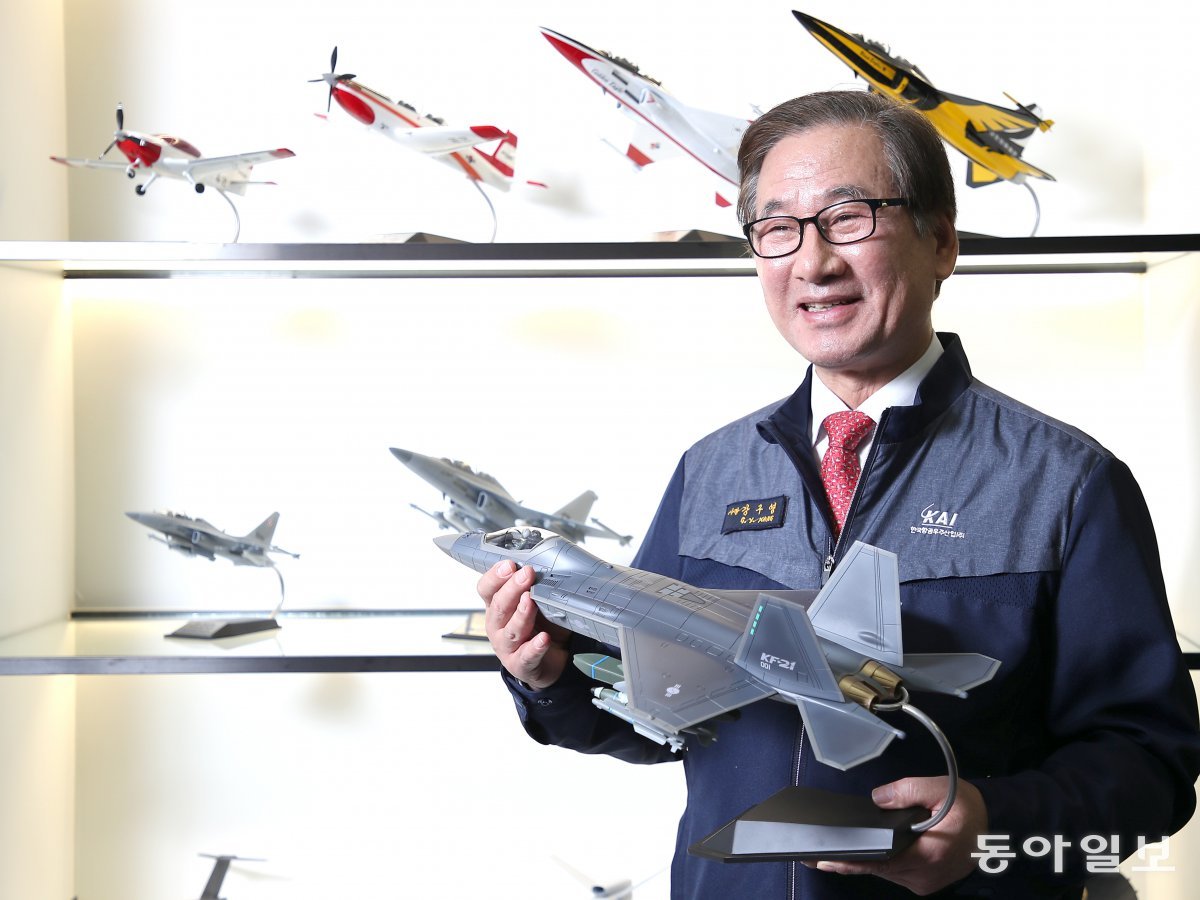
Former Korean Aerospace CEO
The development of the KF-21 could have been stalled if Indonesia had not participated. Indonesia has made a significant contribution to the development of Korea's aerospace industry.
“KF-21을 4.5세대 전투기라고 하는데, 과소평가라고 생각합니다. 4.5세대 프랑스 라팔, 유럽 유로파이터 타이푼 등과 비교하면 성능이 뛰어나거든요. 그래서 저는 5세대(완전한 스텔스 기능을 갖춘 전투기)에 가까운 4.9세대 전투기라고 부릅니다. 게다가 가격까지 …
www.donga.com


![[CAPTIONS]Kim Jong-ho, head of Hanwha Aerospace's Advanced Engine Business Team, explains the development status and future plans for domestically produced aircraft engines at the Changwon No. 1 plant in South Gyeongsang Province on the 6th. /Hanwha Aerospace - Seoul Economic Daily Finance News from South Korea](https://wimg.sedaily.com/news/cms/2026/07/07/news-p.v1.20260707.469884037dbe43758381c98d64d47d88_P1.jpg "[CAPTIONS]Kim Jong-ho, head of Hanwha Aerospace's Advanced Engine Business Team, explains the development status and future plans for domestically produced aircraft engines at the Changwon No. 1 plant in South Gyeongsang Province on the 6th. /Hanwha Aerospace - Seoul Economic Daily Finance News from South Korea")

 www.airspace-review.com
 www.isds.co.id