IMF - International Monetary Fund Program Updates

Critical for Foreign Direct Investment (FDI) is the country perception. The prevailing political and institutional tensions within the country are undermining the country’s perception as an attractive destination for investment.

The IMF report has underlined the importance of political stability to achieve fiscal discipline and stability. The Asian Development Bank warned that the rising political and institutional tensions may make it difficult to implement the reforms that Pakistan has committed to deliver to the IMF. The ADB said these reforms were crucial to ensuring that external lenders keep lending to Pakistan.

The cherished goal to make the current 25th IMF debt programme as the last one sounds great. The least make-believe assurance the nation needs in this regard is a roadmap with defined milestones for the next 37 months, when the current programme will run out and the nation will be on its own.
 
Pakistan is reported to have committed to the IMF that it would refrain from repaying the USD 12.7 billion debt to Saudi Arabia, China, the UAE, and Kuwait during the programme period.
Do you have any credible source to back this? This sounds strange and I am not aware of any such conditionality before (with other borrowers). What would IMF gain by forcing a default (that is what it would be if those countries don't agree to non-payment).
 

IMF spells out threats to reform momentum

  • Says political economy considerations and pressures from vested interests could delay or weaken the reform momentum and put at risk still-brittle stability
Tahir Amin
October 12, 2024

6709aebbaac39.jpg


ISLAMABAD: Political economy considerations and pressures from vested interests could delay or weaken the reform momentum and put at risk still-brittle stability, says the International Monetary Fund (IMF).

The Fund in its latest report stated resurgence in political or social tensions could weigh on policy and reform implementation. Political economy considerations and pressures from vested interests could delay or weaken the reform momentum and put at risk still-brittle stability.

The external environment remains challenging as well, with still tight global financing conditions, volatile commodity prices, and elevated geopolitical tensions.

Notwithstanding the new government’s intent to deepen reforms under a new Fund-supported program, political uncertainty remains significant, and pressures for easing policies and providing tax concessions and subsidies are strong.

Policy slippages, including particularly on needed revenue measures, together with lower external financing, could undermine the narrow path to debt sustainability, given the high level of gross financing needs, and place pressure on the exchange rate and on banks to finance the government (further exacerbating crowding out of the private sector, which could entrench a low-growth—low-financial-development equilibrium).

Geopolitically driven higher commodity prices or tighter global financial conditions could also adversely affect external stability.

The report also noted that the Fund faces many major enterprise risks associated with a new program. Notably, business risks are elevated due to the potential for the program to go off-track, as well as, Pakistan’s challenging security situation, which could adversely impact FDI, among others.

Reputational risks would arise if the Fund were perceived as treating Pakistan differently from other members that ostensibly enjoy less support. Alternatively, not proceeding with a new program also raises reputational risks as the new authorities, or other members, may accuse the Fund of not being even-handed, especially following the successful SBA.

Although near-term financial risks have declined since SBA approval, they remain very elevated and are to be mitigated through phased access, burden sharing, and adequate financing assurances.

Operational risks concerning staff’s in-country activities persist, although Fund activities are closely coordinated in line with policies and supported by the United Nations Department of Safety and Security (UNDSS)

The report also noted that notwithstanding recent progress, deep structural challenges continue to weigh on Pakistan’s economic prospects.

Pakistani living standards have declined relative to peers in South and South East Asia over the past decades, reflecting weak policies, inadequate investment in human and physical capital, and distortions from an outsized role of the state.

At the same time, structural fiscal policy weaknesses and repeated boom-bust cycles have increased external financing needs and depleted buffers, leaving a narrow path to fiscal and external sustainability. To build on the hard-won transient stability created over the past year, sound policies and reforms need to be strengthened and sustained.

Copyright Business Recorder, 2024
 
Indian Hindutvatis and their concern for Pakistan is always laughable. An army of Hindutva trolls advising Pakistan against Chinese investment.

Can I as a Pakistani give some advice to Indian Hindutvatis? Don't befriend the Americans. They are exploiting you guys and making you suicidal against China and Pakistan. In exchange for preferential treatment the Americans expect you Indians to contain China which you never can. Bad deal.
that's funny !! Specially coming from a handle who goes by the name " Dalit" !! Zero obsession indeed !!
 

Fund sets 22 structural benchmarks and conditionalities

Tahir Amin
October 12, 2024

6709b0a97bddb.jpg


ISLAMABAD: The International Monetary Fund (IMF) has set 22 structural benchmarks (SBs) and conditionalities for the new $7 billion Extended Fund Facility (EFF) program, including not granting tax amnesties, not issuing any new preferential tax treatment (including exemptions, zero rating, tax credits, accelerated depreciation allowances, or special rates), as well as average premium between the interbank and open market rate to be no more than 1.25 percent during any consecutive 5 business days.

The Fund in its latest report “2024 Article IV Consultation and request for an Extended Arrangement under The Extended Fund Facility” noted that 22 SBs have been set.

The SBs on fiscal side include;

(i) do not grant tax amnesties, and do not issue any new preferential tax treatment (including exemptions, zero rating, tax credits, accelerated depreciation allowances, or special rates) with the rational to protect tax revenue (continuous),

(ii) seek ex-ante parliamentary approval for any expenditures that are non-budgeted or that exceed the budgetary appropriation with the rational of improved parliamentary oversight of budget execution (continuous),

(iii) approve a National Fiscal Pact devolving some spending functions to the provinces aimed at addressing the mismatch of federal and provincial revenues and expenditures (end-September 2024),

(iv) share with the IMF staff a report detailing actions to reduce the federal government’s footprint aimed at reducing the footprint of the state (end-September 2024),

(v) each province amends their Agriculture Income Tax legislation and regime to fully align it with the federal personal income tax regime for small farmers and the federal corporate income tax regime for commercial agriculture, so that taxation can commence from January 1, 2025 to protect tax revenue (end-October 2024),

(vi) fully implement compliance risk management measures in Large Taxpayer Units in large markets in Islamabad, Karachi, and Lahore Regional Offices to improve tax compliance (end-December 2024),

(vii) develop and publish on the Ministry of Planning website: (i) the criteria for project selection, including a scorecard, detailing the weight assigned to each criterion and the methodology for calculating the score; and (ii) the annual limit on the total size of new projects entering the PSDP portfolio for better public investment management (end-January 2025), and

(viii) introduce a 5 percent FED on fertilizer and pesticide to protect tax revenue (end-June 2025).

On the governance, two SBs have been set which include;

(i) amend the Civil Servants Act to ensure that asset declarations of high-level public officials (including assets beneficially owned by them and a member of their family) are digitally filed and publicly accessible (with sufficient protection over private information) through the FBR, with a robust framework for risk-based verification by a single authority.

The rationale is to enhance the effectiveness of the anti-corruption framework (end-February 2025) and

(ii) publish the full Governance and Corruption Diagnostic Assessment report to publicly identify critical governance vulnerabilities (end-July 2025).

One SB is set on social sector which is annual inflation adjustment of the unconditional cash transfer (Kafaalat) to maintain purchasing power in real terms (end-January 2025).

Five SBs have been set on monetary and financial sector including;

(i) average premium between the interbank and open market rate will be no more than 1.25 percent during any consecutive 5 business day period to maintain FX market functioning (continuous),

(ii) parliamentary approval of amendments to the bank resolution and deposit insurance legislation, in a manner that preserves the integrity of the draft legal amendments to strengthen crisis management toolkit (end-October 2024),

(iii) place undercapitalized private banks under resolution unless (i) these banks are fully recapitalized by end-October 2024; or (ii) a legally binding agreement is in place by end-October 2024 towards a merger with other banks or with a new sponsor that would achieve full recapitalization by April 2025 to enforce regulatory standards (end-November 2024),

(iv) in consultation with Fund staff, revise regulations and underlying methodologies on risk mitigating measures, including enhanced collateral policy and by requiring counterparties to be financially sound to improve safeguards in monetary policy operations (end-December 2024), and

(v) implement revised regulations on risk mitigating measures to improve safeguards in monetary policy operations (end-September 2025).

Copyright Business Recorder, 2024
 
This looks like micromanagement. But, in the absence of meaningful policy making knowhow and apparatus, this is probably the only thing left. It will be interesting to see how any of these recommendations may be implemented without slaughtering some sacred cows.


IMF advises Pakistan to break from its economic practices of past 75 years

Report recommends end to preferential treatment, tax exemptions and other protections for choice sectors.

“Democracy and competitive capitalism make a difficult, but precious, marriage of complimentary opposites,” writes Martin Wolf, associate editor and chief economic commentator of the Financial Times London, in his book on ‘The Crisis of Democratic Capitalism’.

In turn, he argues that competitive democracy induces politicians to offer policies that would improve the performance of the economy and the welfare of the people. The first concern of democratic states is (and should be) the welfare of its citizens. The alternative, he says, is an unaccountable rule or the iron cage of custom — both are recipes of stagnation and repression.

Owing to the critical global importance of the issue, the 2024 Nobel Economic Prize went to three researchers to explore why global inequality exists today, especially in countries dogged by corruption and dictatorship. Simon Johnson, James Robinson, and Turkish-American Daron Acemoglu were commended for their work on how “institutions are formed and affect prosperity”.

Mr Acemoglu thinks the social, cultural and political influence of the super-rich has reached a dangerous level. He explains why the West’s top-down approach to enabling the state institutions (for nation-building in Afghanistan) was bound to fail in tears. He and Mr Johnson worry that technology will be deployed to replace rather than empower humans.

IMF advises Pakistan to end preferential treatment, tax exemptions and other protections for choice sectors


“When citizens feel seen and heard, their trust in the system is reinforced,” says analyst Farrukh Khan Pitafi. As per Mr Wolf, politics must be susceptible to the influence of all citizens, not just the wealthiest. It should seek to create and sustain a vigorous middle class while ensuring a safety net for everybody.

According to a Pakistani political scientist, a nation’s people are entitled to rule through their genuine representatives who are elected in free and fair elections and committed to implementing programmes and policies for public welfare approved by the voters.

The International Monetary Fund (IMF) staff report on the $7 billion bailout has advised Pakistan to break from its economic practices of the past 75 years to escape its recurrent boom-bust cycles. The report has asked Pakistan to swiftly end preferential treatment, tax exemptions and other protections for the agriculture and textile sectors, which it says have stifled the country’s growth potential for decades. As of May 2024, 70 per cent of the outstanding concessional central bank loans were tied to the textile sector.

“Pakistan’s economy has stabilised, and the macroeconomic situation has improved, but current recovery is neither sustainable nor sufficient,” said Mukhtar ul Hasan, the World Bank economist and author of the Pakistan Development Update (PDU) at its recent launch. Mr Hasan said IMF’s standby arrangement unlocked external flows but “negatively impacted growth and investment in the country”. The World Bank officials see high vulnerability risks lingering despite some nascent recovery.

With the poverty rate rising 0.3 per cent within one year to 40.5pc in FY24, the PDU has warned that the 2.8pc and 3.6pc economic growth rate it projected for the current and next years was insufficient to dent poverty levels and improve living standards of the majority of Pakistan.

The PDU notes that the output growth would remain below potential over the medium term as tight macroeconomic policy, elevated inflation, and policy uncertainty continue to weigh on economic activity. Cuts in public investment or social spending tend to have a much larger negative impact on growth than more poorly targeted subsidies such as for fuel, says Era Dabla-Norris, the IMF’s deputy fiscal affairs director.

Pakistan’s banking sector, the IMF notes ‘holds the world’s largest proportion of government securities relative to its total assets. The Fund has cautioned that the entrenched nexus between the government, the central bank and the banking sector is detrimental to the country’s economy and financial sector.
 

Pakistan delegation briefs IMF on tax, energy sector reforms

Dawn.com
October 22, 2024

Pakistani delegation in a meeting with IMF’s Deputy Managing Director Kenji Okamura on Tuesday — finance ministry in a post on X


Pakistani delegation in a meeting with IMF’s Deputy Managing Director Kenji Okamura on Tuesday — finance ministry in a post on X

A Pakistani delegation on Tuesday briefed the International Monetary Fund (IMF) on steps taken to expand fiscal space through tax and energy sector reforms.

In a notification, the finance ministry confirmed that the delegation met IMF’s Deputy Managing Director Kenji Okamura in Washington and “highlighted measures to expand fiscal space through broadening the tax base, re-aligning provincial AIT [Agriculture Income Tax] regime with federal income tax regime, rationalising subsidies rightsizing the government, and reducing energy sector costs”
 

Inconsistencies and disconnects

Nadeem ul Haque | Shahid Kardar
October 24, 2024
https://whatsapp.com/channel/0029VaMc238IiRov8okfYy3n
THERE are contradictions in the policies being pushed by the IMF in the latest programme.

While it played a crucial role in liberalising the economies of the communist bloc, it now appears to support heavy-handed regulation and price controls in a developing country like Pakistan. Such inconsistencies raise questions about the adaptability and relevance of IMF programmes in different contexts.

In our case, the domestic market continues to influence the pace, pattern and level of growth. Policies are focused on protecting an industrial structure that produces low productivity/ low value-added goods. The growth of one industry has created a market for another — flourishing with varying degrees of inefficiencies. The result is that all such markets have grown together.
 

Why IMF’s latest programme has inconsistencies and disconnects

The IMF’s recommendations often seem aligned with abstract economic models.

The outcome is a formal private sector whose habits and investments have not changed over time. Exporting a similar range of goods (with modest upgrading to higher value-added goods) depends on subsidies and concessions.

We believe Pakistan needs a comprehensive policy overhaul, moving away from excessive regulation and a tax-first approach towards a strategy that promotes market development, innovation, and economic productivity.

For this transformation to take place, greater engagement with local research and institutions is necessary. The findings of the Pakistan Institute of Development Economics (PIDE) suggest that Pakistan’s economy is being held back by structural flaws, not simply low tax revenues or energy pricing issues.

Decentralising governance, reforming tax policy, and removing barriers to trade and investment are key to a more vibrant, competitive economy. International partners, including the IMF, must recognise these local realities and align their strategies accordingly.

The IMF’s recommendations often seem aligned with abstract economic models.

Energy losses have brought the economy to its knees with the IMF’s only proposal being to increase prices to cover losses and hide inefficiencies. Not once has the IMF accepted that the need of the hour, as shown by local research, is to activate the market system, which has been on the anvil for almost 20 years.

The energy sector remains highly centralised; it is a one-buyer one-seller (government) model, with an outdated uniform pricing system that relies on cross-subsidies and prevents the development of competitive markets.

Perhaps the most central issue is the extreme centralisation of power within government and bureaucracy. A few civil servants wield disproportionate control, undermining the growth of key sectors like education, energy, and infrastructure. Energy losses can only be eliminated if the system is configured as independent units operating in a market. The IMF, however, has set up impossible goals such as privatising huge energy monopolies without an adequate regulatory framework and capability and allowing market forces to operate.

In 2024, the government is still trying to control prices through the bureaucracy. The IMF is silent on this key issue. With the fall of the Soviet bloc, we thought this issue had been dealt with and that the world had learnt price controls don’t work. Should the IMF not settle this issue of price controls in a programme?

As argued earlier, the governance system itself incentivises rent-seeking and political loyalty over merit and efficiency. Public resources are misallocated, and government officials benefit from a system that rewards perks like subsidised housing and overseas assignments instead of transparent cash salaries.

PIDE suggests that a simple reform — monetising these perks into one transparent salary structure — could potentially unlock billions of dollars in investment by freeing up valuable real estate currently occupied as housing by government officials. In Islamabad alone, this reform could attract an estimated $55bn in investment, with similar potential in the other major cities.
 
The IMF and international partners have insisted on energy price hikes for over two decades, largely ignoring the fact that the problem is more about underlying issues of poor governance and mismanagement than inadequate pricing.

Despite repeated calls for reforms that allow the market to work and take the centralised bureaucracy out of the power sector, no significant changes in management practices were implemented.

Similarly, in the tax system, the focus has been on extracting more revenue, without addressing the convolutions of an inherently unstable tax structure and a rapacious regulatory environment or exploiting the opportunities for leveraging digital tools to facilitate compliance.

This disconnect between the IMF’s policies and realities on the ground has been exacerbated by a lack of engagement with local research. The IMF’s recommendations often seem more aligned with abstract economic models than, as argued in an earlier piece, with the economy’s on-the-ground complexities.

For example, the IMF has continued to overlook local arguments that underline the absence of decent public services — even something as basic as security of life and property — and the unfair, unwieldy tax structure implemented by a predatory administrative machinery as key reasons for widespread tax evasion.

Fund programmes appear to be designed with no attention to investment. Through most programmes, the investment rate has been very low — an average of less than 15 per cent of GDP, while other growing economies average over 25pc of GDP. Why is our investment so low? The most important factors have been listed above and mentioned earlier.

If only the IMF had considered the trade-off between austerity measures and the sacrifice it demands from growth, confronted by a situation of high rate of unemployment with all its social implications, they would have arrived at the need to deregulate the economy, decentralise governance, get the government out of the habit of fixing prices and develop markets without bureaucratic interference. Additionally, it would try to seek open economy policies with a stable market-based undervalued, not overvalued, exchange rate.

A little humility is needed in the IMF and increased engagement with local research. Currently, it is captured by forces that want centralisation and a rent-seeking, controlled, non-market economy.

Rather than chasing taxes with fickle and extractive policies like the Sheriff of Nottingham (and hope, in vain, that improved governance follows), perhaps the IMF could join those forces that are demanding serious reform for investment and growth. That is our only way out.

Nadeem-ul-Haque is former VC PIDE and deputy chair of the Planning Commission.

Shahid Kardar is a former governor of the State Bank of Pakistan.
 

IMF warns world to avoid global trade war​


Faisal Islam
BBC Economics editor

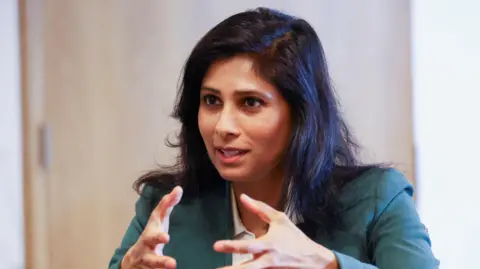
Reuters Gita Gopinath, First Deputy Managing Director of the International Monetary Fund.


Reuters

The world economy could contract by the size of the combined French and German economies, if there is a broad-based trade war between the world’s major economies, the International Monetary Fund (IMF) has told the BBC.

It comes as concerns are heightened ahead of the possible re-election of Donald Trump.

Trump says he plans to introduce a universal tax or tariff of up to 20% on all imports into the US, while the European Union is already planning retaliation if Washington goes ahead with the new levy.

Last week, Trump said “tariff is the most beautiful word in the dictionary”, and global markets and finance ministers are now beginning to take seriously the prospect of him enacting the ideas.

IMF first deputy managing director Gita Gopinath said the Fund could not yet assess the specifics of Trump's trade plans, but thinks that “if you have some very serious decoupling and broad scale use of tariffs, you could end up with a loss to world GDP of close to 7%".

"These are very large numbers, 7% is basically losing the French and German economies. That's the size of the loss that would be," she continued.

Ms Gopinath also said tariffs worth hundreds of billions of dollars “is very different from the world we’ve lived in over the past two of three decades”.

The IMF’s deputy chief said another of the Fund’s main messages at its Annual Meetings was to warn on ballooning levels of global government debt.

She said the current period of steady economic growth was a “moment to rebuild your fiscal buffers” as “this will not be the last crisis. There will be additional shocks. You will need the fiscal space to respond. And now is the time to do it”.

Ms Gopinath said it was also necessary to “look at the bright side” with a resilient world economy after “some very tough knocks”.

She suggested the world economy had seen a soft landing from the multiple crises.

“Past experiences with bringing down inflation have not been with a soft landing. It was a big, big increases in unemployment. So that was a big hit, and it has turned out to be much better than many feared”, she said.

Ms Gopinath added that it was a “good win” for central banks everywhere that inflation has come down without high unemployment. But that now was the time to rebuild resilience in a fragile world.
 

Pakistan seeks $1b from IMF to tackle external economic challenges​

IMF has already approved $7b bailout, but has further funding available via its Resilience and Sustainability Trust

Reuters
October 24, 2024

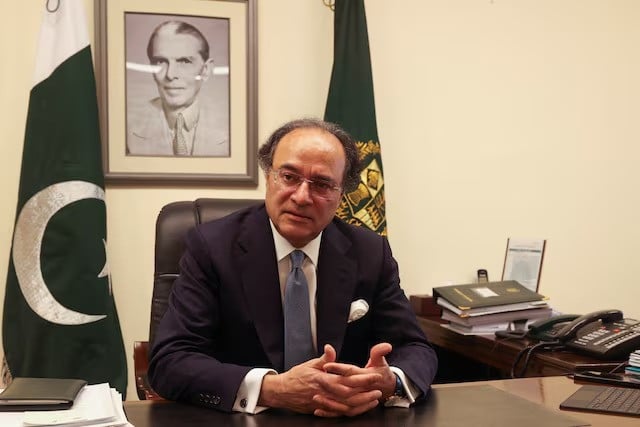
finance minister muhammad aurangzeb speaks during an interview with reuters at his office in islamabad on july 19 2024 photo reuters


Finance Minister Muhammad Aurangzeb speaks during an interview with Reuters at his office in Islamabad on July 19, 2024. PHOTO: REUTERS

Pakistan is targeting around $1 billion in a formal request for funding from the International Monetary Fund (IMF) facility that helps low and middle income countries manage external shocks, Finance Minister Muhammad Aurangzeb told Reuters.

“We have formally requested to be considered for this facility,” Aurangzeb said in an interview on the sidelines of the IMF/World Bank autumn meetings in Washington.

The IMF had already agreed a $7 billion bailout for Pakistan, but has further funding available via its Resilience and Sustainability Trust (RST).

The RST, created in 2022, provides long-term concessional cash for climate related spending, such as adaptation and transitioning to cleaner energy.

The South Asian nation is one of the most vulnerable countries to climate change according to the Global Climate Risk Index.

Floods in 2022, which scientists said was aggravated by global warming, affected at least 33 million people and killed more than 1,700. The country’s economic struggles and high debt burden impinged its ability to respond to the disaster.

Pakistan is also in talks with the Asian Infrastructure Investment Bank for a credit enhancement for a planned Panda bond, with an initial issue of $200 250 million, Aurangzeb said.

A Panda bond issuance would be Pakistan’s first foray into China’s capital markets. Aurangzeb said they were talking to “a few other institutions” in addition to the AIIB for a credit enhancement.

Issuing in the world’s “second largest and the second deepest” capital market, Aurangzeb said, was the key aim, rather than a particular issuance size.

“From our perspective it is diversification of the funding base,” Aurangzeb. “Even if the inaugural issue is not significant in size, for us it is important that we print that and of course then we can keep it on tap.”
 

Projected growth rate by IMF

October 24, 2024

241032104664871.gif


EDITORIAL: The International Monetary Fund (IMF) has projected a growth rate for Pakistan of 3.2 percent identical to Fitch rating agency’s projection in July 2024 (budgeted at 3.6 percent with recent government projections downgrading it to 3 to 3.5 percent) and inflation at 9.5 percent (against the budgeted target of 12 percent) for the current year.

The growth rate was projected on the back of higher farm output (3.6 percent growth against over 6 percent last year) with the Finance Division in its monthly updates focusing on two elements as indicative of target achievement: (i) imports of agricultural machinery and implements increased by over 100 percent this fiscal year against last year that it was argued would help raise yield, and (ii) agriculture credit disbursement rose by over 24 percent. Understated were two factors that may herald the target not being achieved; notably, a decline in urea off-take by 13.6 percent and DAP by 21.9 percent while cotton output, a major crop with positive fallout on textile value-added exports, registered a decline from the target.

The industrial sector continues to operate under extremely difficult economic conditions that include a constant increase in electricity and fuel charges, as per the agreed IMF conditions, and the discount rate, though reduced in recent months, is a high of 17.5 percent which accounts for a sustained decline in the demand for credit by large-scale manufacturing (LSM) sector.

However, sales have picked up but these sales are largely attributable to inventories and not to a higher output than before, even though the LSM growth is now in the positive territory against last year’s negative base – 2.4 percent against negative 5.4 percent in July.

The main driver of growth remains the government expenditure which remains elevated with current expenditure budgeted to rise by 21 percent in 2024-25 as opposed to last year though with this is on the back of domestic and foreign borrowing.

In terms of revenue sources the government budgeted to continue to burden existing taxpayers this year, which is pushing many lower- to middle-income earners to the ranks of the poor and vulnerable who currently are assessed at 41 percent of the population; and appears to be struggling to reach an agreement with the traders as its most proactive drive to widen the tax net in spite of the fact that the actual revenue target from this source is a mere 50 billion rupees for the current fiscal year.

In addition, the Public Sector Development Programme, a pro-growth expenditure item with the in-built propensity to raise employment opportunities, is being severely curtailed as in previous years to enable the government to meet the budget deficit target agreed with the Fund.

Fitch projected inflation will be at 6.2 percent by December this year, the Monetary Policy Committee in its statement dated 13 September 2024 presented the reasons behind this decline as “the impact of contained demand, reinforced by improved supplies of major food items, favourable global commodity prices and delay in upward adjustments in administered energy prices”, and added that “consumers’ inflation expectations increased further in the latest survey”, which appear legitimate as “there is uncertainty stemming from the timing and magnitude of adjustments in administered energy prices, future course of global commodity prices, and any additional taxation measures to meet the shortfall in revenue collection.”

Inflation data is subject to considerable scepticism as it is routinely understated by including prices set by the government in Utility Stores, where many of the essential subsidised items are not available or of a quality that is in demand, there is no rationalisation in some subsectors; for example, a decline in cement prices is not synchronised with construction costs, and last but not least, the ever-rising borrowing of the government for current expenditure, a highly inflationary policy, is never taken into account.

The GDP growth and declining inflation are not a source of the general public’s feel-good factor and this should be a source of serious concern to the economic team leaders who have agreed to conditions set by the IMF to be able to access borrowing from friendly countries.

It is feared that a further rise in energy prices or the implementation of contingency tax measures agreed with the IMF in the event of a shortfall (and a shortfall has been announced for the first quarter) may bring public discontent to the surface with serious politico-economic outcome. It is hoped that the government is cognizant of this simmering public discontent that may not be contained through a crackdown or indeed a lockdown.

Copyright Business Recorder, 2024
 

Users who are viewing this thread

Back
Top