IMF - International Monetary Fund Program Updates

IMF asks Pakistan to remove fuel price distortions amid subsidy pressures

Khaleeq Kiani
April 6, 2026

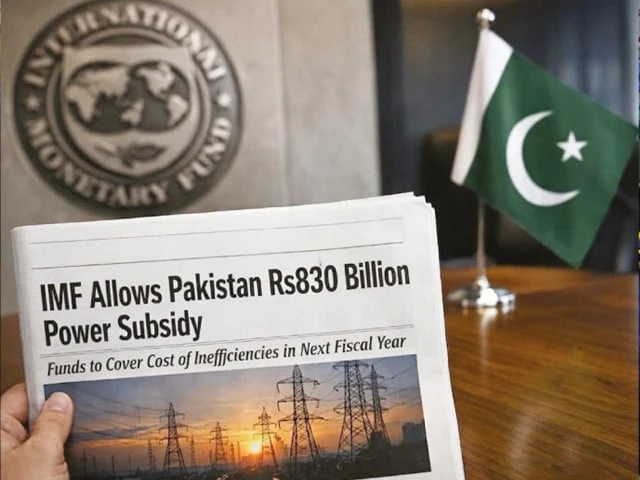
ISLAMABAD: The International Monetary Fund (IMF) has asked Pakistan to eliminate distortions in petroleum pricing at the earliest, even though it had tacitly accepted the Rs152 billion subsidy cap extended by the federal government to consumers amid a historic global price surge following the US-Israel attacks on Iran and the closure of the Strait of Hormuz.

Senior officials told Dawn that the staff-level agreement (SLA) announced by the IMF on March 29 remains intact, and that the Rs152 billion federal petroleum subsidy had been introduced with the Fund’s prior knowledge.

Sources said Finance Minister Muhammad Aurangzeb and his team will update IMF management on provincial contributions to the petroleum subsidy during the upcoming spring meetings of the IMF and the World Bank next week. However, the IMF continues to oppose across-the-board subsidies on major petroleum products.
 
Initially, the government attempted to balance finances by adjusting the petroleum development levy (PDL) between petrol and diesel. It later moved toward targeted subsidies, now being financed by provinces through the rationalisation of their respective budgets.

A senior government official confirmed that the IMF remains concerned about existing distortions, particularly in diesel pricing, and is pushing for their early removal.

The loss in PDL on diesel, currently zero compared to the Rs80 per litre envisaged in the budget, is being offset by higher rates on petrol. However, this cushion has diminished after the prime minister reduced petrol prices by Rs80 per litre on Friday, and the situation will need to be reassessed in the coming days.

Higher petrol consumption has partially offset the erosion in diesel PDL. Petrol consumption currently averages around 660,000 tonnes per month, compared to about 600,000 tonnes for diesel. However, diesel demand is expected to rise during the ongoing harvest season.
 
Officials noted that economic indicators for the current fiscal year are broadly aligned with programme targets. However, significant adjustments will be required in next year’s macroeconomic framework, to be finalised in consultation with the IMF ahead of the federal budget for 2026–27.

They added that petroleum differential claims of the oil industry had already exceeded Rs129bn but have now ceased following recent price increases that fully passed on import costs. Payments to oil companies and refineries are being made with a 10pc retention, pending audit verification.
 

IMF sets NAB chief terms​

Govt commits to publishing asset declarations of top civil servants by Dec

Shahbaz Rana
April 07, 2026

ISLAMABAD: The International Monetary Fund (IMF) has imposed a new condition to ensure integrity and transparency in the appointment of the chairman of the National Accountability Bureau (NAB), making it binding to appoint the head by a commission that must have representation of opposition parties.

Government sources told The Express Tribune that Pakistan has assured the IMF it would ensure NAB's autonomy and transparency through a robust selection process for senior management and the publication of operating rules and statistics.

The deadline to complete the task is January next year, as changes to the appointment process would also require amendments to the National Accountability Ordinance, said the sources.
 
The lender imposed the condition as part of strengthening the anti-corruption legal and regulatory framework and improving the nation's poor governance. The appointment process of the NAB chairman has always remained controversial. The government recently made amendments to the NAB law to give an extension to the incumbent chairman.

Pakistan's president appoints the NAB chairman on the advice of the federal government, which is based on consultation between the leader of the opposition and the prime minister.

The sources said the IMF believes that NAB's institutional independence plays a key role in building public trust and institutional credibility. In this context, the IMF has asked Pakistan to ensure autonomy for the body and make the appointment process transparent.
 
The government has accepted the IMF's stance that amendments to the NAB Ordinance adopt a predetermined qualification criteria, which must include years of experience and integrity standards, said the sources.

The government has also committed to establishing a merit-based, open and competitive selection process and appointing a multi-sectoral stakeholder commission with representation from the government, opposition, judiciary, civil service, academia and civil society.

The commission would be responsible for conducting an open, rules-based, rigorous and transparent recruitment process.

The government would also publish NAB's annual statistics regarding the investigation, prosecution and conviction of corruption offences on NAB's website.
 

Say "No" to IMF. Laughing 😃
 
To view this content we will need your consent to set third party cookies.
For more detailed information, see our cookies page.
 

FinMin to attend World Bank-IMF meetings​


Will also meet policymakers, Pakistani diaspora to highlight reform progress, growth prospects

Our Correspondent
April 12, 2026

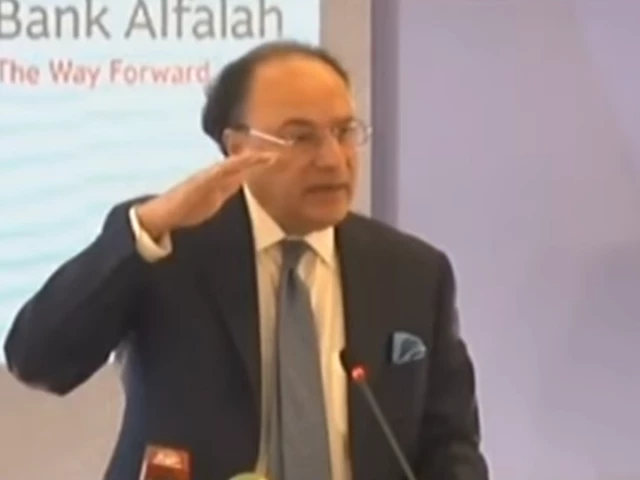
finance minister muhammad aurangzeb speaking at the pakistan policy dialogue in islamabad photo screengrab


Finance Minister Muhammad Aurangzeb speaking at the Pakistan Policy Dialogue in Islamabad Photo: Screengrab

ISLAMABAD: Federal Minister for Finance Muhammad Aurangzeb has departed for the United States to participate in the World Bank Group-IMF Spring Meetings 2026, scheduled to be held in Washington DC from April 13 to 18.

According to a statement released by the finance ministry on Saturday, prior to the spring meetings, the finance minister will visit Boston to attend the Pakistan Conference at Harvard University, where he will engage with leading academics, policymakers and members of the Pakistani diaspora, and share Pakistan's economic outlook, reform trajectory and growth prospects.
 
Pakistan’s economy isn’t ‘struggling’, it’s being managed like a hostage. For 15 years, the establishment has kept the country on economic life support the same way a landlord keeps a tenant behind on rent: just weak enough to control, just desperate enough to obey.

Reforms? Please. Real reforms would mean losing the ability to pull political strings, manufacture crises, and rotate governments like seasonal inventory. Why would anyone give up that kind of power just so the economy can breathe?

Every time Pakistan inches toward stability, someone yanks the cord. Not by accident by habit. A functioning economy would reduce their leverage. A predictable system would reduce their relevance. And a confident public would reduce their control.

So the ventilator stays on. Not because Pakistan can’t breathe, but because a gasping country is easier to manage. A bankrupt state is easier to manipulate. And a population stuck in survival mode is too exhausted to ask why the same hands keep tightening the oxygen valve.

This isn’t mismanagement. It’s maintenance. The system works exactly as intended, just not for the people living in it.
 

IMF managing director meets Aurangzeb, hails Pakistan’s reform progress, macroeconomic stability

News Desk
April 16, 2026

1776341987599.png


Finance Minister Muhammad Aurangzeb interacts with IMF Managing Director Kristalina Georgieva on the sidelines of the IMF–World Bank Spring Meetings 2026 in Washington, on April 15, 2026. — X/KGeorgieva

International Monetary Fund (IMF) Managing Director Kristalina Georgieva has commended Pakistan’s “continued progress on economic reforms” under the Fund’s programme and the resulting macroeconomic stability.

She met with Finance Minister Muhammad Aurangzeb on the sidelines of the IMF–World Bank Spring Meetings 2026 in Washington, where the finance czar had arrived on Monday. During his visit, Aurangzeb was expected to participate in over 50 high-level engagements from April 13 to 18.

“Great to see Aurangzeb at the IMF Meetings!” Georgieva said on X early on Thursday.

“Strong programme implementation has helped Pakistan maintain macroeconomic stability and build confidence,” the IMF official said.

She emphasised that “sound policies and deeper structural reforms remain key to sustaining growth and raising welfare for all Pakistanis”.
 

Users who are viewing this thread

Pakistan Defence Latest

Back
Top