IMF - International Monetary Fund Program Updates

IMF projections of the two key macroeconomic variables of GDP growth rate and rate of inflation appear be unduly optimistic, as highlighted below in the Table 1.
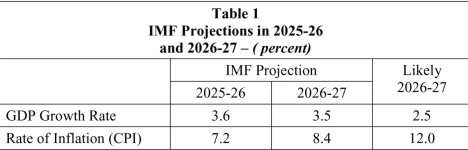
1779312484379.png

The implication is that there is a need to look at the other projections by the IMF for 2025-26 and 2026-27, related to the balance of payments and the public finances of Pakistan.
 
So they(govt) imported 3 billio$ worth of luxury vehicles yet have to ask 1 billion for loan?
Makes no sense

How about the fake elites and fake govt office holders just stop their corruption and security protocols?
That alone will be enough!
 

What does IMF want from Pakistan's upcoming budget?


June 1, 2026
BR Web Desk

Pakistan’s ongoing engagement with the International Monetary Fund (IMF) is shaping many of the economic policies expected to feature in the upcoming federal budget and broader reform agenda.

Discussions between Pakistani authorities and the IMF have focused on fiscal consolidation, tax reforms, energy-sector restructuring, governance measures, and steps aimed at maintaining macroeconomic stability.

One of the IMF’s primary objectives is fiscal consolidation. Under the current programme, Pakistan has committed to maintaining a primary budget surplus, which measures government revenues against expenditures excluding interest payments on debt.The purpose of this target is to improve public finances and support debt sustainability.

A key component of this effort is increasing tax revenue. The IMF has urged Pakistan to strengthen revenue collection through a combination of administrative reforms and tax-policy measures.

Discussions have focused on broadening the tax base, reducing revenue leakages, improving compliance, and bringing more economic activity into the documented economy. The Federal Board of Revenue (FBR) has been working on measures aimed at increasing collections and improving enforcement mechanisms.
 
The IMF has also emphasised the need to reduce tax exemptions and preferential treatments that narrow the revenue base. Various reviews have examined concessions available to certain sectors and industries, with the objective of increasing revenue efficiency and simplifying the tax system.

The issue is expected to remain part of ongoing discussions between the government and the Fund.

Another major area of focus is the energy sector. The IMF has repeatedly highlighted concerns regarding Pakistan’s circular debt problem, particularly in the power sector. Circular debt refers to the accumulation of unpaid obligations across the energy supply chain.

To address this issue, discussions have included measures related to electricity tariffs, energy pricing mechanisms, loss reduction, and improvements in operational efficiency.

Linked to energy reform is the issue of subsidies. The IMF has generally encouraged the government to limit untargeted subsidies that create fiscal pressures while protecting social spending for lower-income households.

Policymakers have therefore been examining ways to better target assistance programmes while maintaining budgetary discipline.
 
To view this content we will need your consent to set third party cookies.
For more detailed information, see our cookies page.
 

Users who are viewing this thread

Country Watch Latest

Back
Top