IMF - International Monetary Fund Program Updates

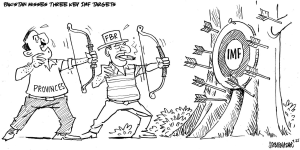
Despite bound by IMF’s conditions, govt seems desperate to provide tax relief to salaried people

No final agreement reached with IMF due to differences mainly on proposed increase in defence expenditure and tax cuts.

The cost of relief

Editorial
June 2, 2025

ALTHOUGH bound by the IMF’s stern conditions, the federal government appears desperate to provide tax relief to middle-class salaried individuals as well as businesses, especially the real estate lobby, in the upcoming budget.

This desire seems to have grown stronger in the aftermath of Pakistan’s recent tactical military win against India as the ruling party hopes to turn the ‘feel-good factor’ in the country into wider political support for itself. The question, however, remains: can the government secure ‘concessions’ from the multilateral lender to implement its ‘relief plans’ to win over middle-class voters?

What we have seen is that the government was compelled to delay the announcement of its budget by more than a week to June 10 when the IMF mission left the country after inconclusive policy discussions on Islamabad’s budget proposals last month.

No final agreement was reached due to differences mainly on the proposed increase in defence expenditure and tax cuts for individuals and businesses.

The Fund later said in a statement that the discussions would continue virtually regarding the budget “over the coming days”, revealing some disagreement. The Fund added that the talks “focused on actions to enhance revenue — including by bolstering compliance and expanding the tax base — and prioritise expenditure”.

The outcome of the ongoing virtual budget talks remains inconclusive — otherwise we would have heard from the Fund or the government that the differences had been sorted out.

The IMF feels that the government’s expenditure and tax relief proposals will hit the overarching target of the primary budget surplus — whose size determines the reduction or increase in public debt in a given fiscal year — of 1.6pc of GDP agreed upon by the two sides in policy discussions.

The lender wants the authorities to come up with credible proposals, identifying alternative sources of revenue to offset the impact of the increase in defence and other expenditures and the cuts in taxes.

The lender has valid reason to be concerned. The widening shortfall of more than Rs1tr in tax collection in the first 11 months of the current fiscal year, despite the imposition of record new taxes and the blocking of tax refunds, justifies the IMF’s apprehensions.

The massive shortfall in tax recovery makes it clear that the FBR may not be able to meet even the revised collection target. The IMF had recently agreed to slash the tax collection target of nearly Rs13tr by Rs640bn for the full fiscal year.

With the Fund insisting on fortifying the primary budget surplus target against any additional expenditures and potential revenue slippages, the nation’s fiscal authorities have a formidable challenge ahead of them as they try to balance the IMF’s programme goals with the government’s growing desire to deepen the feel-good factor through some fiscal extravagance.

Published in Dawn, June 2nd, 2025
 

IMF wants ‘strict compliance’ as budget enters final stages


Khaleeq Kiani
June 5, 2025

• Lender wants agri tax enforced, takes exception to plan to sell surplus power at cheaper rates
• Fund calls for strategy to stop tax evasion, financial leakage; opposes provincial energy subsidises


ISLAMABAD: Amid final consultations on the budget, the International Monetary Fund (IMF) wants strict compliance with programme requirements, including the coverage of agriculture income tax in provincial budgets to ensure effective collection starting no later than September 2025.

The Fund also does not agree with a plan for incentivising enhanced power consumption desired by the federal government to absorb surplus capacity. Informed sources said the IMF wanted a strong commitment from the provinces for expenditure control, notwithstanding expansionary development plans presented by the provinces and approved by the National Economic Council (NEC). The four provinces have already exceeded their development allocations for next year by almost Rs850 billion than the IMF’s estimates.
 

Pakistan likely to meet all IMF performance criteria in upcoming review: Topline


Successful completion of review will pave the way for IMF Board’s approval of $1 billion tranche

BR Web Desk
September 20, 2025

An International Monetary Fund (IMF) team is set to visit Pakistan on September 25, 2025, for the second semi-annual review of the $7-billion Extended Fund Facility (EFF), with the country expected to meet all seven Quantitative Performance Criteria (QPC) for the March and June 2025 quarters, including net international reserves and SWAP positions, said Topline Securities in its report on Saturday.

The upcoming review will assess Pakistan’s economic performance for the March and June 2025 quarters.

Successful completion of the review will pave the way for the IMF Board’s approval of a $1 billion tranche, under which Pakistan has already received over $2 billion in two instalments.

“Based on our working, Pakistan is expected to meet all QPC, including Net International Reserve and SWAP positions,” said the brokerage house.

According to Topline Securities, the primary balance numbers for FY25 are already in line with IMF targets, although data on government guarantees have not been made public.

In its latest briefing, the State Bank of Pakistan (SBP) Governor said that the central bank is “ready to present its performance to IMF for the outgoing quarters”, but did not confirm whether all SBP-related targets had been achieved.

“We believe this review will also have extensive discussions over the rest of FY26 targets, keeping in view the recent flood situation,” said Topline.

The flash floods have killed 972 people so far, according to Pakistan’s National Disaster Management Authority.

The floods have destroyed crops, livestock, and homes across Punjab province and are now pushing into Sindh, threatening fresh food inflation and creating deeper hardship in the cash-strapped South Asian nation.

The brokerage house, citing reports, noted that the government is considering revising key economic projections: GDP growth is likely to be revised down to 3% from 4%, inflation raised to 8%, and Federal Board of Revenue (FBR) tax targets adjusted to Rs13.7–13.9 trillion from the earlier Rs14.13 trillion.

IMF’s Resident Representative to Pakistan noted the review would be “critical in assessing the country’s financial capacity to respond to the disaster.”

Topline Securities emphasised that the upcoming review is significant given the floods’ wide-ranging social and economic impact.
 

IMF review begins amid revenue gaps, reform delays


Khaleeq Kiani
September 30, 2025

1759231412694.png

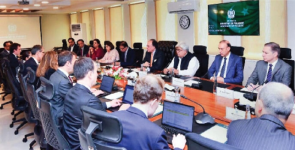
Finance Minister Muhammad Aurangzeb chairs a meeting with the visiting IMF review mission at the Finance Division.—APP


ISLAMABAD: An International Monetary Fund (IMF) mission led by Iva Petrova held a formal kick-off meeting with Pakistan’s economic team, headed by Finance Minister Muhammad Aurangzeb, to review the implementation of the $7bn Extended Financing Facility (EFF) and the $1.1bn Resilience & Sustainability Facility (RSF).

The programme’s performance as of end-June 2025 — the period under review — has been mixed. The start of the next review period, ending December this year, has also been off the mark, particularly in revenue collection. The two sides now have to agree on corrective measures during their dialogue to meet the next biannual targets.

The opening session was attended by key economic stakeholders, including the State Bank of Pakistan governor, finance secretary and chairman of the Federal Board of Revenue (FBR).

While power sector benchmarks for the end-June 2025 period were comfortably met, revenue collection fell short by about Rs1.2 trillion — almost 1pc of GDP — in the last fiscal year, and the first two months of the current fiscal year have shown similar shortfalls.

The mission will remain in Pakistan for almost two weeks and will also hold forward-looking discussions with the authorities to push for faster implementation of the end-December 2025 targets.

Pakistan is also raising with the IMF a long-delayed implementation of the brownfield petroleum refinery policy, which has stalled about $6bn in fresh investment for refinery upgrades.

Officials argue that this demand aligns with the RSF’s objectives because the upgrade would help produce petroleum products meeting European standards with minimal carbon and sulphur emissions.
 
The policy was announced about two years ago in consultation with the industry, which was in the process of signing binding contracts.

However, under the IMF programme, the authorities committed not to grant any tax exemptions that had already been promised to refineries.

As a result, although petroleum products are exempt from sales tax, the required equipment, materials and supplies are subject to sales tax and other duties without input-output adjustments, creating serious cash flow problems for the refineries.
 
The Petroleum Division has argued that existing refineries produce environmentally harmful by-products both during refining and consumption, posing health risks and worsening climate conditions.

Officials said that while the government has been seeking RSF funding for various projects, it has been losing out domestically due to obsolete refining technology because of what they termed a “technical misunderstanding” between the IMF, the Ministry of Finance and the FBR. “This is a simple distortion that can be addressed through reasonable dialogue,” one official said.
 
the government has asked the IMF to consider flood losses when assessing programme performance, sources said the review is based on pre-flood targets. Therefore, the authorities remain accountable for the end-June 2025 performance, although relaxations could be considered later based on verifiable estimates of flood damage.

FBR officials believe that their first-quarter revenue shortfall could be offset by higher inflation in the second quarter and improved recoveries from litigation cases that are in their final stages.

The government reportedly utilised one-third of the Rs390bn budget allocation for natural disasters and emergencies in 2025-26 to clear Rs130bn in past dues owed to commercial banks for incentives and fees paid for attracting remittances through banking channels.

The authorities will now have to justify these payments from the emergency fund as they seek relaxations from the IMF over flood-related expenses. Moreover, the government has not allocated any funds in the current year’s budget for such incentives, despite estimating that about Rs100bn will be required for this purpose.
 
The sources said the authorities want the IMF to relax conditions for the primary budget surplus and fiscal deficit to create space for flood-related spending without imposing new taxes or cutting development expenditures.

The authorities have missed FBR revenue targets, as well as taxation targets for the retail sector and provincial cash surpluses for the end-June 2025 period, and could face a tough time during negotiations.

The government has also failed to publish the governance and corruption diagnostic report, which remains pending review and publication. As a result, the associated governance action plan is stalled. Similarly, the state-owned enterprises (SOE) governance-related law has not progressed in line with commitments made to the IMF.

Although the authorities successfully enacted agricultural income tax laws across all provinces on time, their implementation and collection — expected to begin in Sept-Oct — remain uncertain, particularly due to the ongoing floods in Punjab and Sindh. Consequently, the authorities are still unclear about the scale of required support for flood-affected populations, sectors and facilities.

On the positive side, Pakistan has met almost all quantitative performance criteria for end-June 2025. However, it is lagging behind in indicative targets and structural benchmarks, which could affect future programme implementation. Given the biannual reviews of the $7bn EFF and the $1.1bn RSF, the two sides will have to agree on past performance as well as forward-looking implementation plans.

Upon the successful completion of the review, Pakistan will be eligible for the disbursement of about $1bn (760 million Special Drawing Rights) by the end of next month.

Published in Dawn, September 30th, 2025
 

IMF tells Pakistan to cut spending to absorb Rs500bn flood impact​


Pakistan seeks relief in revenue targets to meet emergent expenditure on flood rehabilitation

Shahbaz Rana
October 04, 2025


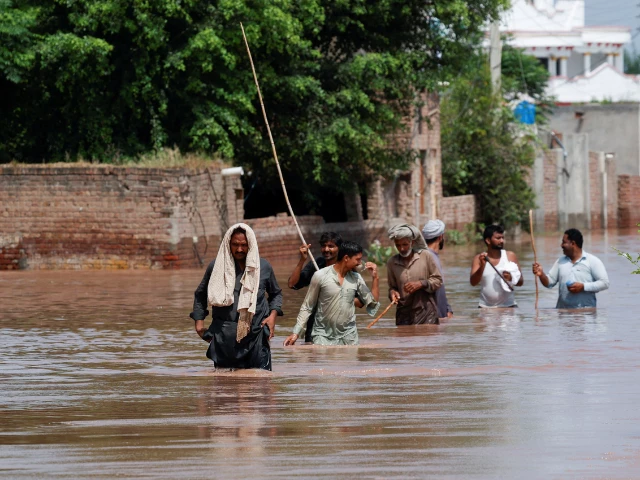
residents wade through a flooded road following monsoon rains and rising water levels in qadirabad village near the chenab river in punjab province pakistan august 28 2025 photo reuters


Residents wade through a flooded road, following monsoon rains and rising water levels in Qadirabad village near the Chenab River in Punjab province, Pakistan August 28, 2025. Photo: Reuters

ISLAMABAD: The International Monetary Fund is ready to allow roughly Rs500 billion adjustments within the budgets to offset the impact of floods but without compromising on the overarching goal of maintaining fiscal discipline.

But Pakistani authorities are insisting upon getting relaxation by the same amount against the primary budget surplus annual target, according to the federal and the provincial authorities engaged in these negotiations.

Punjab, which is the worst-affected province, also conditionally remains committed to deliver the Rs740 billion cash surplus, provided the Federal Board of Revenue meets its Rs14.1 trillion target. The provincial government is still looking for fiscal space to meet the expenditure on the rehabilitation of the people affected by the floods.

The Pakistani authorities had formally sought relief in the targets of primary budget surplus and the cash surplus from the IMF to meet the emergent expenditure on the rehabilitation of the flood-affected people, the sources added.

The government sources said that the IMF has not yet agreed to lower these targets but is willing to make within budget adjustments.
 

IMF seeks briefing on $7.7bn Reko Diq project as Pakistan nears financial close: report​


Move marks an expansion of the Fund’s oversight from balance-of-payments support to major national projects; briefing, initially scheduled for this week, has been shifted to next week

Monitoring Desk

reko-dik-gold-project1.jpg


The International Monetary Fund (IMF) has brought Pakistan’s multibillion-dollar Reko Diq mining project under its review, requesting a detailed briefing on its status. The move marks an expansion of the Fund’s oversight from balance-of-payments support to major national projects, The Express Tribune reported.

Sources said the briefing, initially scheduled for this week, has been shifted to next week.

The Reko Diq project is operated by the Reko Diq Mining Company (RDMC), with Canada’s Barrick Gold holding a 50% stake, while the federal and Balochistan governments share the remaining half equally.

According to Tribune’s report, officials confirmed the IMF sought the briefing as the project approaches financial close, supported by around $3.5 billion in loans from international lenders, including a $700 million–$1.2 billion commitment from the US Exim Bank.

Finance Ministry spokesman Qumar Abbasi said talks with the IMF cover all areas affecting Pakistan’s economy, and sharing details on projects of this scale is important for development partners’ assessments.

“The Reko Diq project is expected to make significant contributions not only to the mineral sector but also to the economy at large,” Abbasi added.

The project represents the largest foreign direct investment (FDI) in a single initiative in Pakistan, attracting global investor confidence. It is also expected to positively impact socio-economic development in Balochistan and strengthen the country’s foreign exchange reserves.

The RDMC is finalising financial close, with a major announcement anticipated soon. Last month, the federal cabinet approved raising the total cost of Phase-I to $7.72 billion, including $5.8 billion in capital expenditure—up from an initial $4.3 billion estimate two-and-a-half years ago.
 

IMF seeks clarity on $11b trade data gap​

PRAL, PSW import figures raises questions over credibility of data; ministries worry against making revisions public

ISLAMABAD:
The International Monetary Fund (IMF) has asked Pakistan to publicly disclose $11 billion worth of discrepancies in trade data reported by two government entities over the last two fiscal years, raising questions about the credibility of the country's external sector indicators.

Government sources told The Express Tribune that imports reported by Pakistan Revenue Automation Limited (PRAL) were $5.1 billion lower than those reported by Pakistan Single Window (PSW) for fiscal year 2023-24. The difference widened further to $5.7 billion in the following fiscal year, they added. PSW's import figures, which are considered more comprehensive and include all import entries, were also higher than the State Bank of Pakistan (SBP)'s freight-on-board (FoB) based import data, said the sources. The current account surplus for the last fiscal year was calculated using the central bank's data.

The Pakistani authorities briefed the IMF this week after the global lender approached the Pakistan Bureau of Statistics (PBS) before the start of review talks, according to the sources. The issue was later discussed in sessions with PBS and the Ministry of Planning and Development.

During the discussions, the IMF recommended that Pakistan adopt a clear communication policy to explain the discrepancies in trade data and the changes in methodology to avoid mistrust between the government and data users.

Pakistan reportedly admitted to the IMF that the trade data, submitted to the Geneva-based International Trade Center (ITC) by PBS, was not comprehensive and that some import figures were missing from its reporting. However, officials maintained that the underreporting was not due to any malafide intent but rather stemmed from the transition of the trade data source from PRAL to PSW.

PRAL operates under the Federal Board of Revenue (FBR), while PSW is an independent legal entity, although most of its officers come from the Customs Department.

The sources said the PSW data is more comprehensive and covers all import entries, particularly those related to trade facilitation schemes. In contrast, PRAL's data underreported imports, especially of raw materials. The IMF was informed that discrepancies in data grew significantly during fiscal years 2023-24 and 2024-25, and the trend has continued during the first two months (JulyAugust) of the current fiscal year.

According to the sources, the IMF has asked Pakistani authorities to correct and update past trade data and share it with both the IMF and all domestic stakeholders, including the media. The IMF further advised Pakistan to ensure a clear communication policy, stressing that a lack of communication regarding data revisions and discrepancies in data creates doubts about the accuracy of official statistics.

Source of discrepancy

Sources have said the underreporting surfaced during an exercise aimed at identifying the reasons behind a large discrepancy between trade data reported by Pakistani importers and Chinese exporters. Prime Minister Shehbaz Sharif had formed a committee to investigate the issue. A joint team comprising officials from the FBR, PBS, PRAL, and PSW analysed five years of trade data. It emerged that PBS's trade data was retrieved using a programmed query that had not been updated since 2017, leading to consistent underreporting of imports, which increased substantially in recent years.

The PSW's database was based on 15 types of goods declarations, offering comprehensive coverage compared to PRAL's data, which was limited to seven.

This difference resulted in a $5.1 billion underreporting of imports in fiscal year 2023-24 and $5.7 billion in the previous year, primarily due to trade facilitation scheme-related goods declarations being excluded from PRAL's dataset. In one internal meeting, sources said, the FBR informed stakeholders that Pakistan Customs had created a separate goods declaration category for trade facilitation schemes. However, this classification was not integrated into PBS's data collection system under PRAL, resulting in missing figures.

The most significant discrepancy was in the textile sector, where nearly $3 billion worth of imports were underreported. Imports in the metal group were also understated by about $1 billion in fiscal year 2023-24. Despite the IMF's recommendation for transparency, sources said the PBS was reluctant to make the revisions to the previous years' data public.

Officials in the Ministry of Finance were also concerned that publicising the revised figures could affect net export calculations, which might, in turn, influence economic growth estimates.


@PakFactor it’s data fudging Ishaq Dar all over again! 🙄
 

Users who are viewing this thread

Latest Posts

Back
Top