India Blocks Turkey’s BRICS Bid Over Pakistan Ties

Air passenger traffic in India is also 24 times higher than Pakistan’s, yet Pakistanis insist that Pakistan’s GDP isn’t inflated and is only 12 times smaller than India’s. I find this hard to understand.

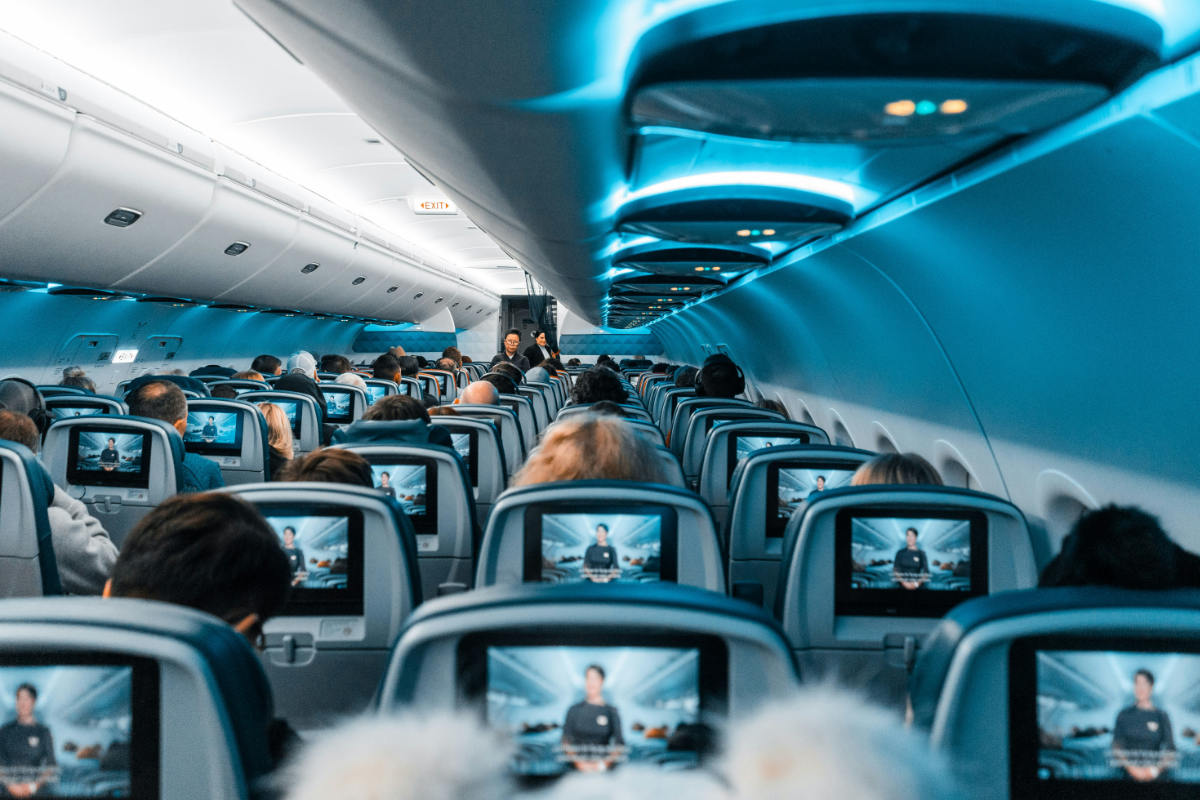
Women-only airline seats won’t solve problem of male misbehaviour

Even air travel is not safe for women in india
 
If Pakistanis don't define themselves by talking about what India is and what it is doing, how else will they define themselves. It's an identity defined by opposition to something/someone.
Rich coming from a guy living on a Pakistani forum. I’ve never met a Pakistani that defines himself by talking about India. Now go forth and prosper elsewhere on a different thread
 
Financial figures aren’t the only things Pakistan has manipulated—history and national identity have been altered as well. It’s rare to find a Pakistani with a truly local name; most names are derived from Arab, Persian, or Turkic origins. When a nation’s foundation involves such identity shifts, it raises questions about the authenticity of other indicators, including financial ones.
quit regurgitating bhakt propaganda
 
If Pakistanis don't define themselves by talking about what India is and what it is doing, how else will they define themselves. It's an identity defined by opposition to something/someone.
If what you say is true, than why are there so many Indians in PDF and almost no Pakistani or Chinese in Bharat Rakshit? The reality is that India view Pakistan as the rival because India historically had Constantly been spanked by Pakistan militarily even though Pakistan is much smaller in size, population and economy. So India is obsessive about Pakistan and China, another country that had constantly been beating up India in recent history.

Nowadays, India has found a new obsession in Canada. A country that had just diplomatically embarrassed India.
 
India rejected Turkey's bid for BRICS membership, citing Turkey's close ties with Pakistan.

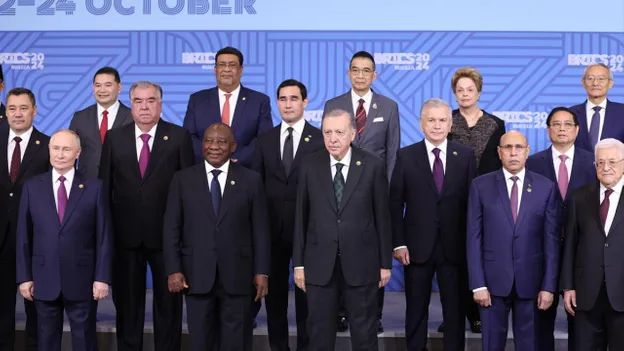
Ahead of the 16th BRICS summit, Turkish President Recep Tayyip Erdoğan submitted a request for Turkey’s associate membership in the group. However, by the end of the summit, no statements were made regarding the issue.

To view this content we will need your consent to set third party cookies.
For more detailed information, see our cookies page.


Sinan Ülgen, a Turkish foreign policy expert at the U.S.-based Carnegie Endowment for International Peace, claimed there was no formal vote on the matter. Ülgen, a former Turkish diplomat, suggested that Turkey’s entry into BRICS is being blocked by India due to Ankara’s strong relations with Pakistan, a country with longstanding tensions with New Delhi.

Ülgen noted that Erdoğan has multiple reasons for pursuing BRICS membership, mainly to bolster Turkey’s ‘strategic autonomy’ through this alliance. Additionally, Turkey might be signaling frustration with the European Union over delays in its EU membership bid and the modernization of the EU-Turkey customs union.

Political prestige is also a factor, according to the expert, as Erdoğan seeks to show he can engage with both NATO and BRICS. However, critics argue that these moves are isolating Turkey on the global stage, despite Erdoğan’s efforts to portray himself as an ‘international mediator.’ Turkey’s application has also raised concerns among its Western allies, particularly within NATO.

Ülgen mentioned that further BRICS expansion is unlikely in the near future, as several countries oppose adding new members. Recently, BRICS accepted new members, including Iran, Egypt, Ethiopia, the UAE, and Saudi Arabia, while official membership applications have also been submitted by Turkey, Azerbaijan, and Malaysia.


Looks like Indian jokers have shown their true colours.
Turkey should also veto India on world forums as well.
 
@Cryptonian , you can laugh all you want mate.

Pakistan and Turkey will block India's membership in OIC. ;)

Despite the fact that Muslims make 15% of India's population.
India has 210 million Muslims, out of 1.42 billion people.
 
Turkey has veto power in OIC like Pakistan.

Pakistan and Turkey should both veto India on OIC.
Double veto! Does it close the doors of OIC permanently for the applicant country?
@Cryptonian , you can laugh all you want mate.

Pakistan and Turkey will block India's membership in OIC. ;)

Despite the fact that Muslims make 15% of India's population.
India has 210 million Muslims, out of 1.42 billion people.

Shouldn't the unification of the Muslims all over the world be the goal of OIC?

In that case, you are scoring own goal by denying 210 million muslims entry into OIC.
 
Double veto! Does it close the doors of OIC permanently for the applicant country?


Shouldn't the unification of the Muslims all over the world be the goal of OIC?

In that case, you are scoring own goal by denying 210 million muslims entry into OIC.
Don't be naive, Indian muslims are not Arab muslims and they are considered a different category
 
Turkey has veto power in OIC like Pakistan.

Pakistan and Turkey should both veto India on OIC.
If Pakistan already has a veto, Turkey's veto does not add anything to it. One veto or two veto does not change the result.
 

Angered over BRICS veto, Venezuela recalls ambassador to Brazil​

Venezuela has pulled its ambassador from Brazil in a spat over Caracas’s failed recent bid to join the BRICS alliance of major developing nations.

Venezuela’s Foreign Ministry announced the diplomatic punch on Wednesday, slamming Brazil’s officials for “blocking” its BRICS membership and making “interventionist, rude statements”.

The ministry also summoned Brazil’s business envoy for talks, reported Reuters.

The move heightens tensions between the neighbouring South American states, which have soured since Venezuelan President Nicolas Maduro declared himself re-elected in July despite major irregularities in the tabulation of votes.

Brazil’s President Luiz Inacio Lula da Silva, a close socialist ally of Maduro’s predecessor Hugo Chavez, has not recognised Maduro as the legitimate winner of the July 28 vote, calling on Venezuelan electoral authorities to first publish official tallies.

Brazil’s move to scupper Venezuela’s longtime BRICS ambitions at the group’s recent summit in Kazan, Russia added fuel to the fire.

“The Venezuelan people feel indignation and shame at this inexplicable and immoral aggression,” said Venezuela’s Foreign Ministry after the vote.

BRICS is currently comprised of original member nations Brazil, Russia, India, China, and South Africa along with newcomers Iran, Egypt, Ethiopia and the United Arab Emirates, which all joined the bloc in January 2024.

‘Messenger for imperialism’​

In its latest statement, Venezuela’s Foreign Ministry lashed out at Brazil’s top foreign policy adviser, Celso Amorim, who said Brazil had vetoed the BRICS application because Caracas “breached the trust” of its partners.

Amorim, Venezuela’s ministry said, was “acting more like a messenger for North American imperialism” and was “impertinently dedicated to issuing value judgments on processes that only correspond to Venezuelans and their democratic institutions.”

Electoral officials aligned with Maduro declared him the winner of the election, but did not release detailed results to back up the claim.

The opposition, meanwhile, claimed that its candidate Edmundo Gonzalez won by a landslide, publishing detailed polling station results.

Several Latin American countries and the United States have recognised Gonzalez, who was charged with incitement to sedition, as the victor.

Gonzalez has fled the country and sought political asylum in Spain.

Venezuela’s security forces waged a fierce crackdown on demonstrators who took to the streets after the election, killing at least 23 people, according to a Human Rights Watch report.

A Venezuelan opposition leader was found dead last week after being taken into state custody, according to his political party.
 

Why Turkey’s joining BRICS should be welcomed​


It came as no surprise when Turkish President Recep Tayyip Erdogan showed interest in joining the BRICS at the Johannesburg Summit recently on 27 July, where he was invited by the South African President Ramaphosa. BRICS would become BRICST if Turkey is allowed into the grouping. :coffee:

Loosely interpreted as a grouping comprising Emerging Market Economies that are trying to seek an alternative to the current international economic order, the BRICS represent some of the most populous and economically important countries of the global South. It now comprises Brazil, Russia, India, China and South Africa. There are no rules of entry to the BRICS. Turkey is a large middle income country, a member of NATO, an Islamic nation and currently bearing a grouse against the EU and the US. It has challenged in the past the hegemony of the western countries in the world economic order and their dominance and control over the international financial institutions, the IMF and the World Bank. It has also challenged the supremacy of the dollar in the world financial system.


The BRICS summit in Johannesburg marked a decade of its existence. Even though nothing dramatic seems to be happening in BRICS summit meetings except reiteration of their pledges made in the past, they are an important marker of the challenges that the five are throwing at the workings of the current global order year after year. Throughout the year, about 100 meetings related to the BRICS are held in the country hosting the summit. There are leaders’ meetings and ministerial meetings along with their relevant working groups on diverse subjects from economy to climate change and culture. The meetings stress on democracy and pursue equality of voting rights in their working. Compared to the US dominated G7, BRICS functioning mechanism is more equal.

The rising protectionism in the western countries is hurting many of the BRICS members directly and indirectly. Thus it is not surprising that the BRICS members resolved to adapt the global order for a more Asia centric world at the Johannesburg meeting. Turkey obviously shares the BRICS declaration projecting stability and predictability of a rule based order threatened by US President Trump. China’s predicament is the worst in Trump’s recent moves towards his protectionist stance because its manufacturing capacity is the largest in the world in steel, machinery, chemicals, high-speed rail and aerospace. Its exports to the US ($505.6 billion last year) will be curtailed but so also its imports ($130.4 billion) comprising mainly of agricultural products. The BRICS members can benefit from the increase in imports from them instead of the US in the future. Brazil has benefited from China’s increase in imports of soyabeans and frozen pork after US imposed high tariffs on Chinese goods.


The members of the BRICS in Johannesburg also recommitted support for multilateralism and called upon all member countries of WTO to abide by its rules. They emphasised the central role of the UN in international affairs. They called upon all countries to fully implement the Paris Agreement. The grouping has tried hard again to reduce mutual ignorance among the member countries and has tried to increase and strengthen intra BRICS ties because even though all have strong economic ties with China, there are fewer ties among each other. Overcoming intra-BRICS obstacles of various kinds, especially in tourism, was also discussed in Johannesburg.

An important area where the BRICS members have pledged to cooperate is the Fourth Industrial Revolution. Challenges will emerge in the future in all BRICS members in the area of robotics, AI, block chains, nanotechnology, quantum computing and biotechnology, 3D printing, the Internet of Things and driverless vehicles. China has taken the global lead in many of these areas and collaborative research will be beneficial for all the members. Russia too has abundant expertise in military industry, higher education in science and technology and has excellent research institutions.

Turkey hopes to gain from the technology cooperation with the BRICS in the future. It has been trying to get a missile defence system with potential Chinese and Russian suppliers and also a third nuclear plant with Chinese technology. The Turkish economy is going through a rough patch currently because its exports are not doing well due to the instabilities in its neighborhood and contraction in demand for its products globally, especially after the failed coup attempt in July 2016. Its imports, especially from the BRICS members, have been rising and its current account deficit with them is the highest — mainly with China. A big support for Turkey’s membership to the BRICS has come from China. Turkey can hope to increase exports to BRICS members after joining the grouping. It can also access infrastructural development loans from the AIIB and the NDB, the two newly established BRICS banks.


The group has been viewed as not being cohesive because India and China have had geopolitical confrontation along the borders in the recent past but it has now been overtaken by the declaration of mutual interests, strategic cooperation and collaboration in the last two BRICS summits.

On the whole, the dynamism displayed by BRICS members in the economic front cannot be denied. Russia was facing economic hardships in the past due to the steep fall in oil and gas prices, but it is on the path of recovery and growing at around 1.4 percent. The fundamentals of the BRICS are strong and stable, even though they are all facing domestic problems and challenges. They are all unique in being resource rich and have enormous potential for development.

The BRICS economic growth rate in 2016 was at 5 percent, higher than developing countries by 0.9 percent and higher than developed countries by 3.3 percentage points. They account for more than 30 percent of the global economy in overall size and their contribution to global growth reached 60 percent, far surpassing that of G7 economies. While the G7 is 40 years old, the BRICS is only a decade old. It will expand in the future and become stronger and have a voice in global governance and the international financial system. Turkey will add to its becoming more diverse, and due to its strategic location, an important addition.


as per the above article, we welcome Turkey and Pakistan in BRICS :coffee:

=> https://www.orfonline.org/expert-speak/43270-why-turkeys-joining-brics-should-be-welcomed
 
Rich coming from a guy living on a Pakistani forum. I’ve never met a Pakistani that defines himself by talking about India. Now go forth and prosper elsewhere on a different thread
O U C H !
 

Users who are viewing this thread

Country Watch Latest

Back
Top