What is missing in both countries is the organized capacity of the majority to force redistribution onto the political agenda.
By
Asif Ullah Khan
January 21, 2026
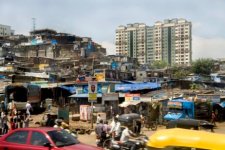
India and Pakistan are often described as economic opposites — one rising, the other perennially in crisis. Yet when viewed through the prism of power and wealth, the distinction collapses.
What exists on both sides of the border is not simply inequality, but elite rule: a “
Billionaire Raj” in India and a “Consolidated Elite” in
Pakistan. Different names, different textures, but the same underlying logic, an economic order designed to accumulate wealth upward and insulate it from democratic pressure.
Perhaps the most catastrophic finding of recent inequality research is not statistical but political: the near-disappearance of a credible Left across the subcontinent. In Pakistan, power rotates through what can only be described as an elite carousel, where governments change, but priorities remain static. In India, the narrative of a “National Champion” economy masks a deeper failure. While China used growth to move vast numbers into the middle class, almost all of India’s population remains trapped within the global bottom 50 percent. Growth occurred, but redistribution did not.
The difference between India and Pakistan is structural, rather than moral or ideological. India’s defenders often point to headline growth figures and poverty reduction. And by narrow metrics — particularly those used by institutions such as the World Bank — India appears relatively egalitarian. Consumption-based Gini indices, which measure how unevenly people spend rather than how unevenly they earn or own, place inequality at modest levels.
According to the World Inequality Report 2026, produced by the World Inequality Lab,
India’s top 1 percent now controls over 40 percent of national wealth. The top 10 percent own nearly two-thirds. The bottom half, by contrast, owns almost nothing.
This outcome is not accidental. India’s post-pandemic recovery has been decisively K-shaped. Financial assets, real estate, and corporate profits surged, while real wages stagnated. The number of billionaires more than doubled within a decade, even as millions are pushed into poverty each year by healthcare costs alone. Growth has continued, but it has become asset-led, exclusionary, and increasingly dynastic.
The modern Indian state has not merely tolerated this trajectory. It has actively facilitated it through tax concessions, privatization, weak labor protections, and chronic underinvestment in public health and education. Political power increasingly orbits capital rather than citizens.
Pakistan’s elite structure looks different, but it operates no less efficiently. There has been no comparable explosion of billionaires. Instead, Pakistan exhibits something more entrenched: elite consolidation.
The
richest 10 percent capture over 40 percent of national income and nearly 60 percent of total wealth. The bottom half survives on less than one-fifth. Unlike India, these ratios barely change over time. Crisis does not disrupt the hierarchy; it reinforces it.
Here, inflation erodes food security rather than comfort. A health emergency does not interrupt life; it locks families into intergenerational debt. Yet the burden of adjustment — through indirect taxes, subsidy cuts, and austerity — falls consistently on those least able to bear it.
Pakistan’s elite is not merely wealthy; it is
politically embedded. Land, capital, contracts, and exemptions circulate through closed networks that survive regime change and economic collapse alike. Parties rotate. Power does not.
India’s Billionaire Raj thrives on
growth; Pakistan’s Consolidated Elite thrives on stagnation. But both systems share four defining features. Wealth is rewarded over work. Survival is privatized. Taxation is regressive, leaning heavily on consumption while treating wealth gently. And politics is closed –unions weakened, student movements crushed, the language of class replaced by charity.
Inequality in both countries persists not because it is inevitable, but because it is politically protected.
Neither India nor Pakistan lacks policy blueprints. Progressive taxation, universal healthcare, public education, and social protection are well understood. What is missing is the organized capacity of the majority to force redistribution onto the political agenda.
In both countries, the poor appear in speeches and surveys, but not at negotiating tables. Without collective mobilization — through labor, students, farmers, and unions — elite rule remains stable regardless of who governs.
The Billionaire Raj in India and the Consolidated Elite in Pakistan are not anomalies. They are the natural outcomes of economic systems that reward accumulation while suppressing redistribution. One system wears the gloss of growth; the other bears the scars of crisis. Both produce the same result: wealth without accountability, poverty without voice.
Whether it is the Billionaire Raj in India or the Consolidated Elite in Pakistan, the outcome is identical. Prosperity does not trickle down, it accumulates upward, protected by power and policy.


