Navigation
Install the app
How to install the app on iOS
Follow along with the video below to see how to install our site as a web app on your home screen.
Note: This feature may not be available in some browsers.
More options
Style variation
You are using an out of date browser. It may not display this or other websites correctly.
You should upgrade or use an alternative browser.
You should upgrade or use an alternative browser.
India - US Tariff and Relations | News + Updates
- Thread starter lightoftruth
- Start date
More options
Who Replied?


Watandar
Elite Member


We don't. Please enlighten us.The Orange sultan reminds me of Sultan Muhammad bin Tughluq, the second ruler of the Tughluq dynasty, if you know what I mean.

hembo
Trusted Member
We don't. Please enlighten us.
Whimsical & self-destructive decisions, U-turns etc. Labelled as the wise fool!!

Distant_Observer
Trusted Member

I think after sindoor, both China and US know india is at best the "Italians on our side", so they change their policy accordingly.
And india media and modi's stupid propaganda make the situation even worse.
It seems that indians never learn that what you cannot be won on the battlefield can never be won at the negotiation table/propaganda machine.

hydrabadi_arab
Trusted Member
Trump isnt stopping at 50% tariff.
ChineseTiger1986
Trusted Member


What do you expect him to say as the Chinese ambassador to India?
However, over 90% of Chinese don't want to ally with India, and you are better off as the ally of the US.
Just don't turn to China because the US has slapped you in the face.
Last edited:

Yasser76
Elite Member
Every day more bad news for India. Trump extending truce with China for 90 days but going ahead against India....
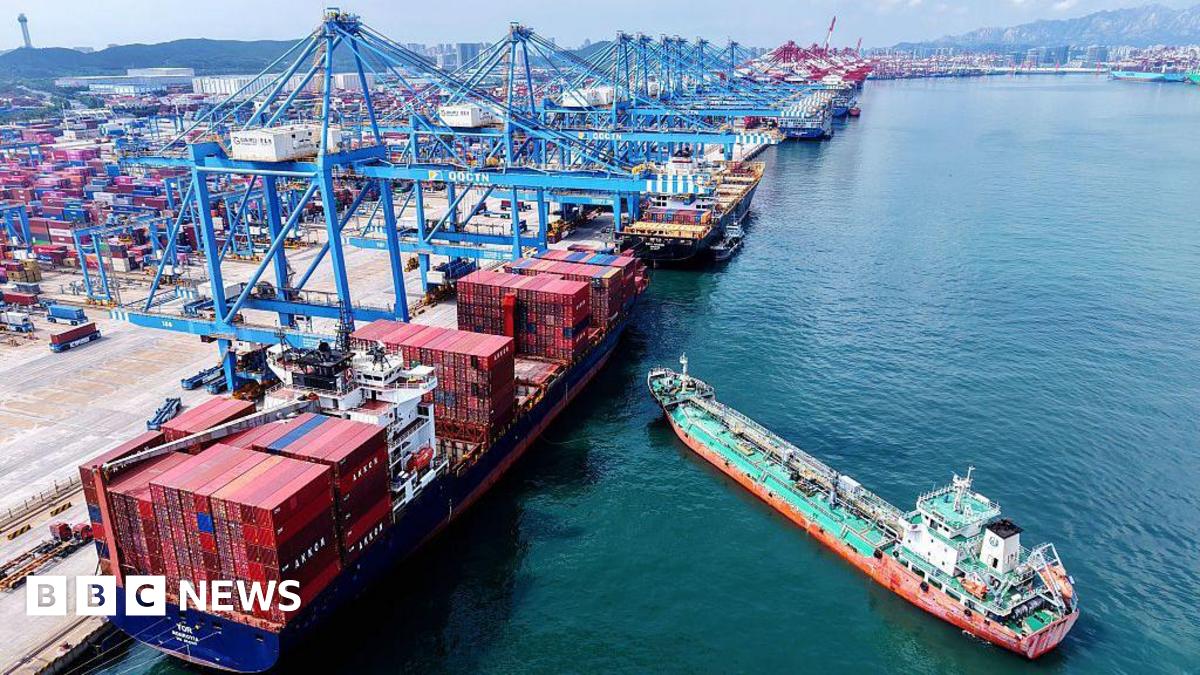
Tariffs: US and China extend trade truce deadline for another 90 days
The US will hold its levy on Chinese imports at 30%, while China will keep a 10% tariff on American goods.
 www.bbc.co.uk
Tariffs: US and China extend trade truce deadline for another 90 days
The US will hold its levy on Chinese imports at 30%, while China will keep a 10% tariff on American goods.
www.bbc.co.uk
Yasser76
Elite Member

Michael
VIP Member
LOL.Every day more bad news for India. Trump extending truce with China for 90 days but going ahead against India....
Tariffs: US and China extend trade truce deadline for another 90 days
The US will hold its levy on Chinese imports at 30%, while China will keep a 10% tariff on American goods.
Putting aside other issues, on the issue of tariff war, China fully supports India in confronting the United States.
If India confronts the US with words, China will support India with words.
If India confronts the US with actions, China will support India with actions.
Yasser76
Elite Member
LOL.
Putting aside other issues, on the issue of tariff war, China fully supports India in confronting the United States.
If India confronts the US with words, China will support India with words.
If India confronts the US with actions, China will support India with actions.
China would risk it's deal with the US over India?
Michael
VIP Member
The tariff war between China and the United States is expected to continue as it currently is (constantly extended). ------ It will be difficult (almost impossible) for both sides to reach a formal agreement, but it will also be difficult to completely halt trade between the two sides. Neither side can afford to admit defeat.China would risk it's deal with the US over India?
As for the China-India relationship, the struggle on the political and military levels will continue, but the economic cooperation will also continue.
The Indian government has been creating numerous obstacles for Chinese companies in recent years. However, this hasn't stopped Chinese products from entering India.
For example, the Indian smartphone market remains dominated by Chinese companies.
In the sales rankings from January to June 2025, Vivo ranked first for six consecutive quarters. Samsung ranked second. The third to fifth places were all Chinese brands (OPPO, RealMe, and Xiaomi).
If the Indian government can relax some restrictions, Chinese companies will further devour India's market share. If India allows Huawei phones to enter the Indian market, then India's high-end smartphone market will be largely devoured by Huawei, and Samsung and Apple's market share will be severely reduced.
Last edited:
Yasser76
Elite Member
What falling out with the US means for India
Please use the sharing tools found via the share button at the top or side of articles. Copying articles to share with others is a breach ofFT.com T&Cs and Copyright Policy. Email [email protected] to buy additional rights. Subscribers may share up to 10 or 20 articles per month using the gift article service. More information can be found here.
https://www.ft.com/content/33d832a5-87d0-4ce3-9905-1a0997e9ac18
The writer is a lecturer in south Asian studies at Yale University.In February, Indian Prime Minister Narendra Modi stood beside US President Donald Trump at the White House, projecting optimism as they pledged to lift bilateral trade to $500bn by 2030 and hinted at a new comprehensive trade agreement. In a display of bonhomie emblematic of deepening strategic co-operation, Modi invited the US president to India for the planned Quad leaders’ summit later this year. Echoing Trump’s “Make America Great Again” slogan, Modi declared he was working to “Make India Great Again”, adding that “Maga plus Miga becomes a mega partnership for prosperity.”Within just a few months, this mega-partnership has given way to mutual recriminations and punitive action. Trump announced tariffs of 25 per cent on Indian imports, accusing New Delhi of erecting “strenuous and obnoxious” trade barriers, then promptly doubled them to a draconian 50 per cent with threats of further increases. The reason: India’s continued purchases of Russian oil, which Washington contends are undermining its sanctions regime on Moscow. Trump has ruled out further negotiations until these disputes are resolved.Efforts to finalise an interim trade deal fell apart abruptly after five rounds of talks, despite India’s willingness to increase US energy and defence imports and to lower tariffs on American industrial goods. The collapse, due to political miscalculations and hardened positions on agricultural norms and quotas, has left $190bn of annual trade in limbo and a $46bn deficit unaddressed.Trump’s actions have triggered a wide-ranging fallout. The decision to subject India to the highest tariff rates of any Asian partner sharply undermines New Delhi’s ambitions in the Indo-Pacific. Although the foreign ministers of Australia, Japan, US and India recently met in Washington, the much anticipated Quad leaders’ summit now seems unlikely this year. Instead, by coercively leveraging its economic might, the US risks driving India closer to Russia, and potentially even to China, which Modi is planning to visit later this month.Rather than buttressing India as a counterweight to Chinese assertiveness — the premise that had tied India and the US for the past 25 years — Trump seems to be abandoning New Delhi. Meanwhile, he has courted Pakistan with preferable tariff rates and an oil exploration pact just months after India and Pakistan teetered on the edge of war, spotlighting Kashmir and treating the two nations as equals — moves that India abhors. The sense of grievance was aggravated when Trump hosted Pakistan’s army chief for lunch at the White House in June.If Trump follows through, the economic impact on India will be severe. The doubling of tariffs threatens India’s $87bn export engine to the US — 18 per cent of its total exports and more than 2 per cent of GDP. Industry experts warn of a 40-50 per cent reduction in shipments, especially for labour-intensive sectors such as textiles, jewellery and automobiles. Small and medium-sized industries face a crisis in competitiveness, while GDP growth forecasts have been revised down by as much as 1 per cent. The immediate market impact is acute: a weaker rupee, risk of imported inflation, an exodus of foreign portfolio investors, and rising borrowing costs for foreign currency debtors.These developments also risk upending India’s domestic politics. Modi, whose exaggerated claims of foreign policy achievements and strongman image — anchored in his supposed personal rapport with leaders like Trump — have been integral to his political standing among India’s middle-class, now faces withering domestic criticism. The opposition Indian National Congress party labelled him “Narendra Surrender” for yielding to pressure from Trump. US-backed Hindu nationalist groups, politically vital for Modi, feel jettisoned by Trump’s attacks on India.Modi’s Bharatiya Janata party lost its parliamentary majority in the last election, and the current spat reopens questions about his economic stewardship and diplomatic choices. His weakness in tackling China, accentuated as he is spurned by Trump, could become another domestic vulnerability. It is Modi’s lowest American moment since he was denied a visa in 2005 due to his role as Gujurat’s chief minister during a wave of anti-Muslim violence in 2002.At risk is three decades of India’s economic ascent and its careful positioning as an emerging power, shaped in the shadow of US strategic backing. Trump has shredded India’s road map; it could be replaced by strategic drift, realignment or eventual rapprochement.In 2020, Modi hosted Trump at a rally of 100,000 people in Ahmedabad. As they shook hands a final time, the Rolling Stones song filled the stadium: “You can’t always get what you want”. It turns out that, with Trump, Modi can’t get what he wants — or what India needs.

What falling out with the US means for India
Trump’s move threatens the country’s economy and Modi’s dominance of domestic politics — and could lead to realignment
 www.ft.com
hydrabadi_arab
Trusted Member
In February 2018 the Trump White House drew up the “US strategic framework for the Indo-Pacific”. This paper, declassified in January 2021, says America’s intent was “to maintain US strategic primacy … while preventing China from establishing new, illiberal spheres of influence”. It says China’s rise will change the region and challenge US influence globally, and concludes that “a strong India, in cooperation with like-minded countries, would act as a counterbalance to China”. To this end, the “desired end state” the US sought was to be “India’s preferred partner on security issues”, and “the two cooperate to preserve maritime security and counter China’s influence”.
America’s objective was the creation of a Quadrilateral (Quad) framework that would pull in the navies of India, Japan, Australia and the US as the “principal hubs” ranged against China. This plan would make India a “major defence partner” and “a strong Indian military (would) effectively collaborate with the United States” and “prevent China’s acquisition of military and strategic capabilities”.
Why was India signing up for this? It is not clear. With no discussion in parliament, with no interviews to the media and no press conferences, with no reference to this in his manifestos, Narendra Modi began drifting India into this strategic partnership and military alliance with the United States.
In February 2020, during Trump’s visit to India and months before the Ladakh crisis began, Modi committed India to the agreement against China. On October 27, 2020, during the visit of US secretary of state Mike Pompeo, India signed the Basic Exchange and Cooperation Agreement (BECA). This would help India access American intelligence to improve the accuracy of the Indian Army’s missiles and armed drones. This portended Air Force-to-Air Force cooperation. The second agreement signed was the Logistics Exchange Memorandum of Agreement (LEMOA). It allows the two nations’ militaries to replenish from each other’s bases, and access supplies, spare parts and services from each other’s land facilities, air bases and ports, which could then be reimbursed. LEMOA is for India-US Navy-to-Navy cooperation.
Signing the BECA pact in Delhi, Pompeo attacked China directly: “I am glad to say that the United States and India are taking steps to strengthen cooperation against all manner of threats and not just those posed by the Chinese Communist Party.”
US defence secretary Mark Esper added: “We stand shoulder to shoulder, in support of a free and open Indo-Pacific for all, particularly in light of increasing aggression and destabilising activities by China.”
S. Jaishankar and Rajnath Singh, who were standing next to Pompeo and Esper, did not name China. Rajnath Singh’s prepared remarks contained this line, later deleted: “Excellencies, in the area of defence, we are challenged by reckless aggression on our northern borders.” This deletion was not given to the Indian translator in English, who read out the original text and the Americans released it.
When the paper was declassified, China said “the US side is obsessed with ganging up, forming small cliques and resorting to despicable means such as wedge-driving, which fully exposed its true face as a trouble-maker undermining regional peace, stability, solidarity and cooperation”.
India did not publicly react to the release of the US document. A third pact, signed six months after the US drew up its strategy, was the Communications Compatibility and Security Agreement (COMCASA). It allows India access to encrypted communications equipment and systems so that Indian and US military commanders, and the aircraft and ships of the two countries, can communicate through secure networks. BECA, LEMOA and COMCASA completed a troika of “foundational pacts” for deep military cooperation between the two countries. COMCASA was signed in September 2018, five months after Modi travelled to Wuhan to meet Chinese President Xi Jinping. The Wuhan spirit in the agreement between Modi and Xi, signed on April 28, 2018, specifies that India and China would not be rivals but would cooperate with each other. They would also “push forward bilateral trade and investment”.
The problem, obvious to anyone, was that, whether he fully understood it or not, Modi was hunting with the hounds and running with the hares. At the same time as he was holding hands with Xi, he was also winking at Trump’s Indo-Pacific strategy. China’s response was to activate the Ladakh border so that India’s military focus and resources would remain on land and not the sea. Former national security adviser M.K. Narayanan, writing the same day as the casualties in Ladakh were revealed, cautioned Modi, saying: “This is not the time for India to be seen as the front end of a belligerent coalition seeking to put China in its place” and that “almost all India-China border agreements are premised on the presumed neutrality of both countries”.
Narayanan wrote that “as the special representative for border talks with China (2005-2010), this sentiment was an ever-present reality during all border discussions.
Why is your columnist raising issues so many years in the past? Because, as the events of this month show, they are not only relevant, they are crucial in understanding why India finds itself in the position it is in today: confused and friendless.
Essentially, India’s actions under this government have been to undo the agreements of 1993 and later, giving China space and options. And there does not seem to be much understanding about the sanctity and significance of treaties, formal and informal, that this government has signed India up for.
Aakar Patel is the chair of Amnesty International India. He posts on X @aakar_patel.
America’s objective was the creation of a Quadrilateral (Quad) framework that would pull in the navies of India, Japan, Australia and the US as the “principal hubs” ranged against China. This plan would make India a “major defence partner” and “a strong Indian military (would) effectively collaborate with the United States” and “prevent China’s acquisition of military and strategic capabilities”.
Why was India signing up for this? It is not clear. With no discussion in parliament, with no interviews to the media and no press conferences, with no reference to this in his manifestos, Narendra Modi began drifting India into this strategic partnership and military alliance with the United States.
In February 2020, during Trump’s visit to India and months before the Ladakh crisis began, Modi committed India to the agreement against China. On October 27, 2020, during the visit of US secretary of state Mike Pompeo, India signed the Basic Exchange and Cooperation Agreement (BECA). This would help India access American intelligence to improve the accuracy of the Indian Army’s missiles and armed drones. This portended Air Force-to-Air Force cooperation. The second agreement signed was the Logistics Exchange Memorandum of Agreement (LEMOA). It allows the two nations’ militaries to replenish from each other’s bases, and access supplies, spare parts and services from each other’s land facilities, air bases and ports, which could then be reimbursed. LEMOA is for India-US Navy-to-Navy cooperation.
Signing the BECA pact in Delhi, Pompeo attacked China directly: “I am glad to say that the United States and India are taking steps to strengthen cooperation against all manner of threats and not just those posed by the Chinese Communist Party.”
US defence secretary Mark Esper added: “We stand shoulder to shoulder, in support of a free and open Indo-Pacific for all, particularly in light of increasing aggression and destabilising activities by China.”
S. Jaishankar and Rajnath Singh, who were standing next to Pompeo and Esper, did not name China. Rajnath Singh’s prepared remarks contained this line, later deleted: “Excellencies, in the area of defence, we are challenged by reckless aggression on our northern borders.” This deletion was not given to the Indian translator in English, who read out the original text and the Americans released it.
When the paper was declassified, China said “the US side is obsessed with ganging up, forming small cliques and resorting to despicable means such as wedge-driving, which fully exposed its true face as a trouble-maker undermining regional peace, stability, solidarity and cooperation”.
India did not publicly react to the release of the US document. A third pact, signed six months after the US drew up its strategy, was the Communications Compatibility and Security Agreement (COMCASA). It allows India access to encrypted communications equipment and systems so that Indian and US military commanders, and the aircraft and ships of the two countries, can communicate through secure networks. BECA, LEMOA and COMCASA completed a troika of “foundational pacts” for deep military cooperation between the two countries. COMCASA was signed in September 2018, five months after Modi travelled to Wuhan to meet Chinese President Xi Jinping. The Wuhan spirit in the agreement between Modi and Xi, signed on April 28, 2018, specifies that India and China would not be rivals but would cooperate with each other. They would also “push forward bilateral trade and investment”.
The problem, obvious to anyone, was that, whether he fully understood it or not, Modi was hunting with the hounds and running with the hares. At the same time as he was holding hands with Xi, he was also winking at Trump’s Indo-Pacific strategy. China’s response was to activate the Ladakh border so that India’s military focus and resources would remain on land and not the sea. Former national security adviser M.K. Narayanan, writing the same day as the casualties in Ladakh were revealed, cautioned Modi, saying: “This is not the time for India to be seen as the front end of a belligerent coalition seeking to put China in its place” and that “almost all India-China border agreements are premised on the presumed neutrality of both countries”.
Narayanan wrote that “as the special representative for border talks with China (2005-2010), this sentiment was an ever-present reality during all border discussions.
Why is your columnist raising issues so many years in the past? Because, as the events of this month show, they are not only relevant, they are crucial in understanding why India finds itself in the position it is in today: confused and friendless.
Essentially, India’s actions under this government have been to undo the agreements of 1993 and later, giving China space and options. And there does not seem to be much understanding about the sanctity and significance of treaties, formal and informal, that this government has signed India up for.
Aakar Patel is the chair of Amnesty International India. He posts on X @aakar_patel.
Raj-Hindustani
Banned
Users who are viewing this thread
Total: 1 (members: 0, guests: 1)


