Indian Air Force News and Discussions ll

The question you raised is not the main point, nor does any issue exist in this regard.

The real issue lies in the terms of negotiation set by the various parties involved.

How much funding is India willing to contribute? And what share of the ultimate benefits does it expect to receive?

If India is willing to join GCAP or FCAS in the same manner it originally participated in the "PAK FA (T-50/Su-57)" project, I imagine all parties would be more than happy to welcome its participation. After all, who wouldn't want a client that contributes nothing but cash while demanding absolutely no technical deliverables in return?
The Su-57/FGFA example actually contradicts your point.

India didn’t walk away because it was happy to just fund and buy. It walked away because it wasn’t getting sufficient workshare, design visibility and access to core technologies.
This was widely reported at the time.

The Indian Air Force raised concerns over lack of access to source codes, limited role in design, and dissatisfaction with the level of technology transfer being offered. There were also concerns around engine and stealth performance.

That’s not the behavior of a passive “cash-only” partner. It’s the opposite. India exited because it wasn’t getting enough participation.

So using FGFA as an example of India being a passive funding partner is quite a creative interpretation of how that program actually unfolded.

Do the European fighter consortium will accept India ?

It is just India side intention. India need to get acceptance first to join the program

You’re describing the negotiation process correctly, but the framing is off.

Yes, these programs involve long negotiations around cost share, workshare, technology access and procurement. That applies to any partner, not just India. That’s how these programs are structured.

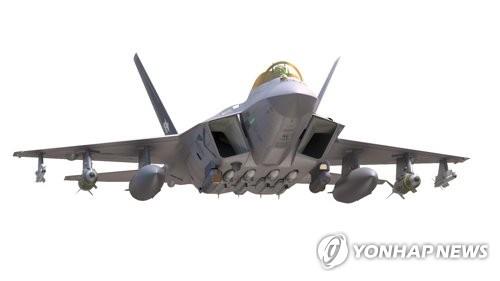
The KF-21 comparison doesn’t really hold. That was a South Korea–led program where Indonesia joined as a junior funding partner, with limited workshare and no real design authority. South Korea retained program control, and even Indonesia’s participation was constrained by funding delays and restrictions on technology access. That’s a very different setup from multiple advanced partners negotiating entry on comparable footing.

GCAP and FCAS are structured differently. GCAP itself was formed by merging the UK–Italy Tempest program with Japan’s F-X program, so Japan didn’t join as a passive partner but came in with its own program, funding and industrial base, which required the structure to be reworked. Even within FCAS, roles and workshare are still being negotiated between France, Germany and Spain. These programs aren’t fixed or invite-only, the structure evolves based on what each partner brings.

And that’s really the point. A country doesn’t need to be “invited” in the way you’re suggesting. It needs to bring enough to make restructuring worthwhile. In India’s case that would be funding, a large procurement base, and a growing industrial ecosystem. Not parity with existing partners, but enough to justify a negotiated role.

So framing this as a simple “India needs to be accepted first” issue doesn’t really hold up when you look at how these programs actually evolve
 
The Su-57/FGFA example actually contradicts your point.

India didn’t walk away because it was happy to just fund and buy. It walked away because it wasn’t getting sufficient workshare, design visibility and access to core technologies.
This was widely reported at the time.

The Indian Air Force raised concerns over lack of access to source codes, limited role in design, and dissatisfaction with the level of technology transfer being offered. There were also concerns around engine and stealth performance.

That’s not the behavior of a passive “cash-only” partner. It’s the opposite. India exited because it wasn’t getting enough participation.

So using FGFA as an example of India being a passive funding partner is quite a creative interpretation of how that program actually unfolded.


You’re describing the negotiation process correctly, but the framing is off.

Yes, these programs involve long negotiations around cost share, workshare, technology access and procurement. That applies to any partner, not just India. That’s how these programs are structured.

The KF-21 comparison doesn’t really hold. That was a South Korea–led program where Indonesia joined as a junior funding partner, with limited workshare and no real design authority. South Korea retained program control, and even Indonesia’s participation was constrained by funding delays and restrictions on technology access. That’s a very different setup from multiple advanced partners negotiating entry on comparable footing.

GCAP and FCAS are structured differently. GCAP itself was formed by merging the UK–Italy Tempest program with Japan’s F-X program, so Japan didn’t join as a passive partner but came in with its own program, funding and industrial base, which required the structure to be reworked. Even within FCAS, roles and workshare are still being negotiated between France, Germany and Spain. These programs aren’t fixed or invite-only, the structure evolves based on what each partner brings.

And that’s really the point. A country doesn’t need to be “invited” in the way you’re suggesting. It needs to bring enough to make restructuring worthwhile. In India’s case that would be funding, a large procurement base, and a growing industrial ecosystem. Not parity with existing partners, but enough to justify a negotiated role.

So framing this as a simple “India needs to be accepted first” issue doesn’t really hold up when you look at how these programs actually evolve

(Beside due to Allah will and help), senior and junior developer that makes the program can run successfully. There is ego playing here and India will not likely to accept Junior level participants. Just like when you run a business, there should be one party that lead the business or it could possibly lead to long delayed due to many disagreement that would likely rise

Despite that Indonesia has the right to develop its own variant inshaAllah and this is why we will likely get a prototype as test bed plane based on latest update.
 
Last edited:
The KF-21 comparison doesn’t really hold. That was a South Korea–led program where Indonesia joined as a junior funding partner, with limited workshare and no real design authority. South Korea retained program control, and even Indonesia’s participation was constrained by funding delays and restrictions on technology access. That’s a very different setup from multiple advanced partners negotiating entry on comparable footing.

Indonesian Aerospace only has 200 design engineers and half of them are working for KF21 program in one time, while we are also having other programs like N219 and MALE UCAV. So being a junior partner is something that pretty optimum that we can do

---------------

11:49 October 07, 2019

"Despite such a delay in payment, the Indonesian side has continued to send its researchers to South Korea to take part in the development process," Rep. Kim Joong-ro of the minor opposition Bareunmirae Party said during a parliamentary audit into the administration, voicing concern about technology leaks.

As of July, 114 Indonesian engineers were sent to South Korea to work with Korea Aerospace Industries Co. (KAI), the country's sole aircraft manufacturer, to design and make a prototype of the fighter, according to a DAPA official.

Last month, DAPA confirmed that the design for the combat jet met all military requirements, allowing the project to go on to the next phase of constructing a prototype.


The prototype will be ready in the first half of 2021, and the agency is eyeing 2026 for the completion of development, which began in 2016, according to DAPA.

 
Indonesian Aerospace only has 200 design engineers and half of them are working for KF21 program in one time, while we are also having other programs like N219 and MALE UCAV. So being a junior partner is something that pretty optimum that we can do

---------------

11:49 October 07, 2019

"Despite such a delay in payment, the Indonesian side has continued to send its researchers to South Korea to take part in the development process," Rep. Kim Joong-ro of the minor opposition Bareunmirae Party said during a parliamentary audit into the administration, voicing concern about technology leaks.

As of July, 114 Indonesian engineers were sent to South Korea to work with Korea Aerospace Industries Co. (KAI), the country's sole aircraft manufacturer, to design and make a prototype of the fighter, according to a DAPA official.

Last month, DAPA confirmed that the design for the combat jet met all military requirements, allowing the project to go on to the next phase of constructing a prototype.


The prototype will be ready in the first half of 2021, and the agency is eyeing 2026 for the completion of development, which began in 2016, according to DAPA.

I think there’s a bit of a misunderstanding here, I’m not using “junior/senior” in a status sense, and this isn’t about Indonesia specifically.

What you’re describing actually supports the broader point. Indonesia’s role in KF-21 was shaped by its level of funding, industrial participation and the structure set by the lead developer, and the outcome reflected that.

My point was about how these programs are structured. KF-21 follows a lead-nation model with defined roles, whereas programs like GCAP or FCAS involve multiple partners negotiating funding, workshare and control among themselves.

So the question isn’t really about “acceptance” in the way you’re framing it. It’s about what a country brings to the table and how that translates into its role within the program.

That’s why reducing it to “India needs to be accepted first” doesn’t quite capture how these programs tend to evolve.
 
We are more reliable.....

I suggest that India join China's sixth-generation aircraft project. We will specially manufacture an aircraft suitable for India according to India's situation, and then provide Pakistan with another aircraft suitable for Pakistan.
we can also provide you direct access to Arabian sea ports at much cheaper cost than CPEC ! Will you accept ?
 
The boy just wants all the new fancy toys out there, but at least let the European sorted out their own problems first.
 
Do the European fighter consortium will accept India ?

It is just India side intention. India need to get acceptance first to join the program

India seeking to join European sixth-generation fighter program: Reports​


One defense analyst said that at this stage, it may be difficult for either the GCAP or FCAS teams to take on new development partners.


By Mike Yeo on March 20, 2026 9:52 am

1774428529363.png

MELBOURNE — India has expressed an interest in joining one of the two ongoing European sixth-generation fighter programs, according to local media reports.


The reports, which cite a document submitted to the Indian parliament’s Standing Committee on Defence, say the country’s Ministry of Defence told lawmakers that it would “try to join forces with one of (two) consortia and begin considering a sixth-generation fighter right away with a view to ensure they do not lag behind in achieving the target for advanced aircraft.”


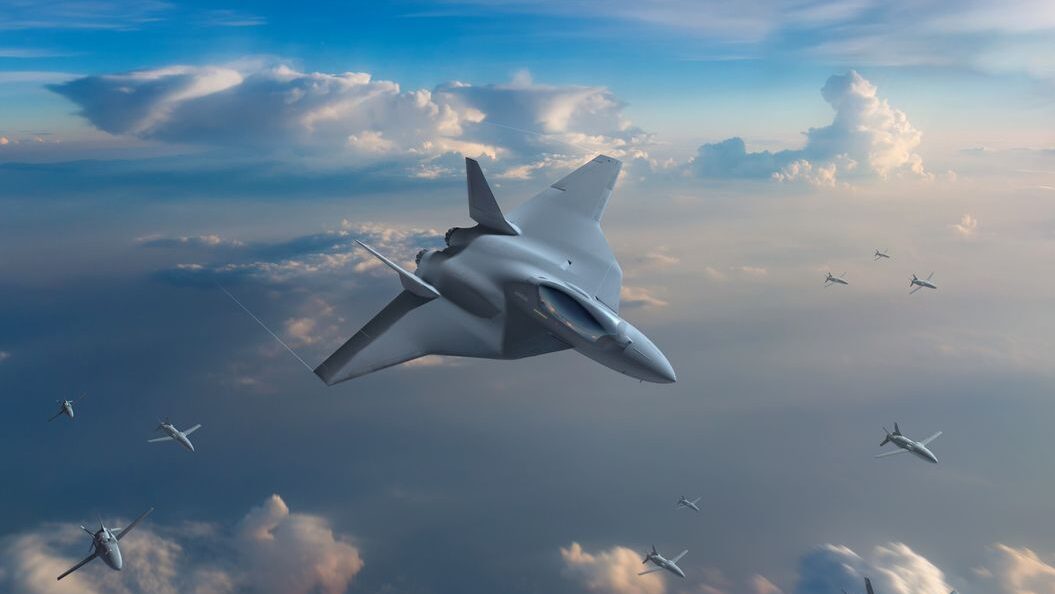
The two consortia are the Global Combat Air Programme (GCAP) by Italy, Japan and the United Kingdom, which aims to develop the Tempest fighter jet and related systems, and the troubled Future Combat Air System (FCAS) effort by France, Germany and Spain.


The standing committee reportedly added that it had recommended the Ministry to develop a trajectory for the planning process in the development and acquisition of such an aircraft “which would eventually enhance India’s air domain capabilities in today’s highly air-centric modern warfare.”


However, defense analyst Dan Darling told Breaking Defense that the existing partners of both programs were unlikely to allow India to join to development program, although they would welcome India buying their respective aircraft.


It had previously been reported that Japan was reluctant to allow an earlier attempt by Saudi Arabia to join GCAP due to concerns about potential slippage in the already tight timelines for the program, with Japan seeking for its first aircraft to enter service in the early 2030s to replace its Mitsubishi F-2 fighters.


RELATED: GCAP 6th-gen fighter project names sensor group, exec doubts changes to ‘core team’


India has struggled in recent years to modernize its air combat capabilities despite the ongoing purchase of Dassault Rafale fighter jets from France, as its indigenous Tejas program has dogged by development and maturity issues.


It has also plans to develop a fifth-generation Advanced Medium Combat Aircraft, although that program is still a long way from taking shape, with a Request for Proposals yet to be issued and the first prototype only expected to rollout in 2031.


India seeking to join European sixth-generation fighter program: Reports​


One defense analyst said that at this stage, it may be difficult for either the GCAP or FCAS teams to take on new development partners.


By Mike Yeo on March 20, 2026 9:52 am

View attachment 188090

MELBOURNE — India has expressed an interest in joining one of the two ongoing European sixth-generation fighter programs, according to local media reports.


The reports, which cite a document submitted to the Indian parliament’s Standing Committee on Defence, say the country’s Ministry of Defence told lawmakers that it would “try to join forces with one of (two) consortia and begin considering a sixth-generation fighter right away with a view to ensure they do not lag behind in achieving the target for advanced aircraft.”


The two consortia are the Global Combat Air Programme (GCAP) by Italy, Japan and the United Kingdom, which aims to develop the Tempest fighter jet and related systems, and the troubled Future Combat Air System (FCAS) effort by France, Germany and Spain.


The standing committee reportedly added that it had recommended the Ministry to develop a trajectory for the planning process in the development and acquisition of such an aircraft “which would eventually enhance India’s air domain capabilities in today’s highly air-centric modern warfare.”


However, defense analyst Dan Darling told Breaking Defense that the existing partners of both programs were unlikely to allow India to join to development program, although they would welcome India buying their respective aircraft.


It had previously been reported that Japan was reluctant to allow an earlier attempt by Saudi Arabia to join GCAP due to concerns about potential slippage in the already tight timelines for the program, with Japan seeking for its first aircraft to enter service in the early 2030s to replace its Mitsubishi F-2 fighters.


RELATED: GCAP 6th-gen fighter project names sensor group, exec doubts changes to ‘core team’


India has struggled in recent years to modernize its air combat capabilities despite the ongoing purchase of Dassault Rafale fighter jets from France, as its indigenous Tejas program has dogged by development and maturity issues.


It has also plans to develop a fifth-generation Advanced Medium Combat Aircraft, although that program is still a long way from taking shape, with a Request for Proposals yet to be issued and the first prototype only expected to rollout in 2031.

That’s fair, late entry would be difficult.

But the question isn’t just difficulty, it’s whether there’s enough upside to justify bringing in a new partner.

In India’s case, a large procurement base, additional funding and a growing industrial ecosystem all add real value. We’ve already seen with GCAP that the structure can change when that value is strong enough, Japan effectively reshaped the program by joining.

So while it’s difficult, it’s not unrealistic. It comes down to whether the benefits of including India outweigh the cost of integrating a new partner at this stage.
 

India seeking to join European sixth-generation fighter program: Reports​


One defense analyst said that at this stage, it may be difficult for either the GCAP or FCAS teams to take on new development partners.


By Mike Yeo on March 20, 2026 9:52 am

View attachment 188090

MELBOURNE — India has expressed an interest in joining one of the two ongoing European sixth-generation fighter programs, according to local media reports.


The reports, which cite a document submitted to the Indian parliament’s Standing Committee on Defence, say the country’s Ministry of Defence told lawmakers that it would “try to join forces with one of (two) consortia and begin considering a sixth-generation fighter right away with a view to ensure they do not lag behind in achieving the target for advanced aircraft.”


The two consortia are the Global Combat Air Programme (GCAP) by Italy, Japan and the United Kingdom, which aims to develop the Tempest fighter jet and related systems, and the troubled Future Combat Air System (FCAS) effort by France, Germany and Spain.


The standing committee reportedly added that it had recommended the Ministry to develop a trajectory for the planning process in the development and acquisition of such an aircraft “which would eventually enhance India’s air domain capabilities in today’s highly air-centric modern warfare.”


However, defense analyst Dan Darling told Breaking Defense that the existing partners of both programs were unlikely to allow India to join to development program, although they would welcome India buying their respective aircraft.


It had previously been reported that Japan was reluctant to allow an earlier attempt by Saudi Arabia to join GCAP due to concerns about potential slippage in the already tight timelines for the program, with Japan seeking for its first aircraft to enter service in the early 2030s to replace its Mitsubishi F-2 fighters.


RELATED: GCAP 6th-gen fighter project names sensor group, exec doubts changes to ‘core team’


India has struggled in recent years to modernize its air combat capabilities despite the ongoing purchase of Dassault Rafale fighter jets from France, as its indigenous Tejas program has dogged by development and maturity issues.


It has also plans to develop a fifth-generation Advanced Medium Combat Aircraft, although that program is still a long way from taking shape, with a Request for Proposals yet to be issued and the first prototype only expected to rollout in 2031.


India can only at this stage join as an off the shelf customer with some limited local manufacturing, regardless of what India wants.

The projects are very advanced into their development cycles, and no one will want to re-open any of that with the associated delays, and cost runs that will incur.

The Saudi's wanted to join the programme, and they are an even bigger spender than India and they were turned down as a development partner, and the Saudi's would have been less troublesome to have as a partner than India would be..

This programme is far too important to Japan to incur any delays in the schedule. Japan wants to speed it up due to China, and that itself is a source of concern in the programme, so they will not be receptive to delays, regardless of the economics of new partners and the politics for workshare that come with it.
 
Last edited:
That’s fair, late entry would be difficult.

But the question isn’t just difficulty, it’s whether there’s enough upside to justify bringing in a new partner.

In India’s case, a large procurement base, additional funding and a growing industrial ecosystem all add real value. We’ve already seen with GCAP that the structure can change when that value is strong enough, Japan effectively reshaped the program by joining.

Japan was a founding member of the GCAP programme, not a late addition.
 
India can only at this stage join as an off the shelf customer with some limited local manufacturing, regardless of what India wants.

The projects are very advanced into their development cycles, and no one will want to re-open any of that with the associated delays, and cost runs that will incur.

This programme is far too important to Japan to incur any delays in the schedule. Japan wants to speed it up due to China, and that itself is a source of concern in the programme, so they will not be receptive to delays, regardless of the economics of new partners and the politics for workshare that come with it.

Yea, in principle, any nation is unlikely to add member of their sensitive aerospace program (jet fighter) unless it is very necessary. With equal partners like within European projects, they are likely to remain with current partners.

Any way it has so many sensitive technologies and all of them are basically real ally to each other with similar capabilities in tech and funding, unlike India with its bestie from Russia (basically the enemy of those program developers)
 
we can also provide you direct access to Arabian sea ports at much cheaper cost than CPEC ! Will you accept ?
Our plans are all made in advance, and we will strictly follow the plans to carry out the construction of the projects. We communicated with the Indian government in the early stages, but the Indian government is not interested in the Belt and Road Initiative projects.

India is a member of the BRICS countries and the Shanghai Cooperation Organization. If India wishes to cooperate, it can join the projects before they start.

My suggestion is serious. The two sixth-generation aircraft currently undergoing test flights are products of Chengdu Aircraft Industry and Shenyang Aircraft Industry, respectively. Other aircraft companies also hope to participate in the competition for sixth-generation aircraft, but they lack funds. Europe no longer has advanced technology, and the promises of European politicians are also unreliable.
 

Users who are viewing this thread

Country Watch Latest

Back
Top