Indian Air Force News and Discussions ll

Our plans are all made in advance, and we will strictly follow the plans to carry out the construction of the projects. We communicated with the Indian government in the early stages, but the Indian government is not interested in the Belt and Road Initiative projects.

India is a member of the BRICS countries and the Shanghai Cooperation Organization. If India wishes to cooperate, it can join the projects before they start.

My suggestion is serious. The two sixth-generation aircraft currently undergoing test flights are products of Chengdu Aircraft Industry and Shenyang Aircraft Industry, respectively. Other aircraft companies also hope to participate in the competition for sixth-generation aircraft, but they lack funds. Europe no longer has advanced technology, and the promises of European politicians are also unreliable.
Your Belt and road is doing less than stellar..So I have an alternate plan..
We have excellent connectivity from J& K to Mumbai / gujrat ports. All you need to do is to make road till the indo china border area. A few hundred million dollars should be sufficient for that.
 
Do the European fighter consortium will accept India ?

It is just India side intention. India need to get acceptance first to join the program
It was already offered to india before by Japan.

If USA is not involved, india might no issue to join
 
Your Belt and road is doing less than stellar..So I have an alternate plan..
We have excellent connectivity from J& K to Mumbai / gujrat ports. All you need to do is to make road till the indo china border area. A few hundred million dollars should be sufficient for that.
We have been building roads in the border areas, and also, we have built hydroelectric power stations.
 
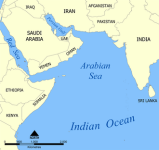
we can also provide you direct access to Arabian sea ports at much cheaper cost than CPEC ! Will you accept ?
India's only direct access to the Arabian sea is the Chabahar Port which it abandoned after threat of US sanction (otherwise Indian coastline do not border the Arabian Sea). If China wanted to access Chabahar it needs to negotiate with Iran not India these days.
 
India's only direct access to the Arabian sea is the Chabahar Port which it abandoned after threat of US sanction (otherwise Indian coastline do not border the Arabian Sea). If China wanted to access Chabahar it needs to negotiate with Iran not India these days.
Really !
Arabian_Sea_map.png
 
Japan was a founding member of the GCAP programme, not a late addition.
You’re right, Japan is a founding member, my earlier phrasing could've been better to convey the broader point im making

The point I was making is that GCAP itself was formed by merging the UK–Italy Tempest program with Japan’s F-X program, so the structure was negotiated and reworked between partners rather than fixed from the outset.

That’s how these programs operate. Participation is determined by alignment on funding, industrial contribution and timelines.

At this stage, bringing in a new partner would be difficult because those elements are already agreed. So the question isn’t whether India can join in theory, it’s whether it brings enough value to justify changing the structure this late.
 

India to Join Global Sixth-Generation Fighter Project: CDS General Chauhan​

NC Bipindra
44 minutes ago

India is likely to join one of the two global sixth-generation fighter jet projects, while no decision has been taken yet on the manufacturing of indigenous fifth-generation combat aircraft.

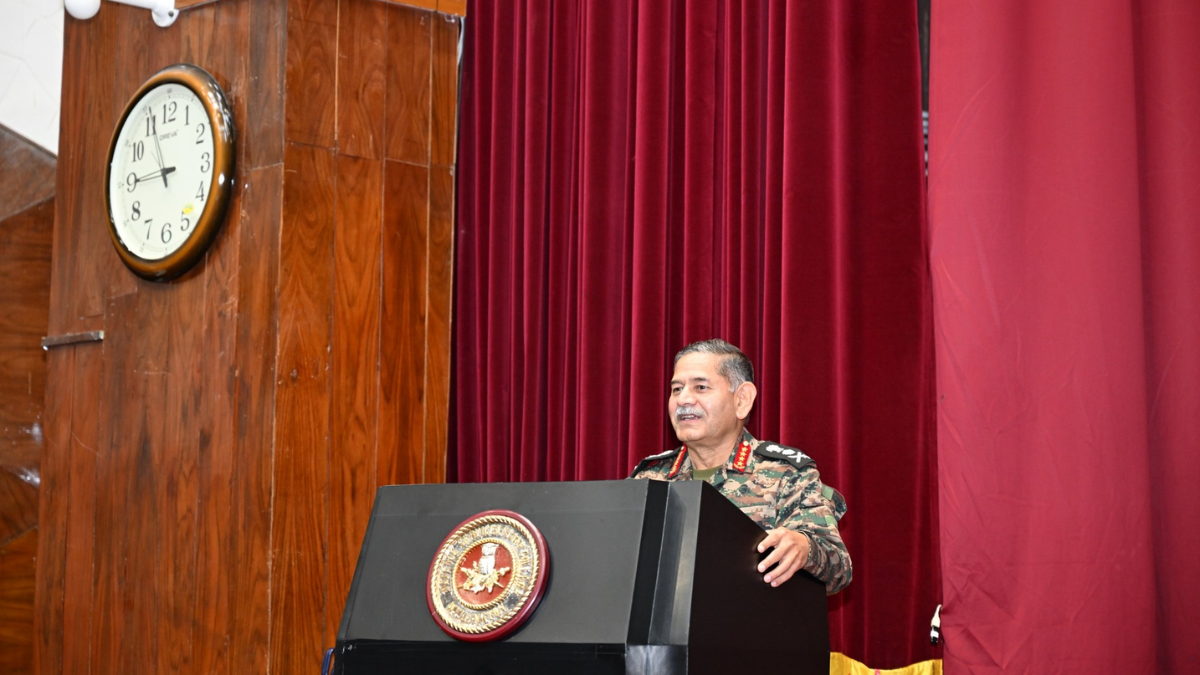
India’s Chief of Defence Staff General Anil Chauhan informed a Parliamentary Committee on Defence that the nation was considering becoming a part of either of the two consortia building the sixth-generation fighters.

“We should not be left behind in such matters. Efforts are on to ensure that we become a part of one of the consortia and start thinking about sixth-generation fighters from now on,” General Chauhan said.

While one of the consortia has the United Kingdom, Italy, and Japan as members, the other project has France and Germany.

The Parliamentary Standing Committee on Defence report with the details of General Chauhan’s comments was tabled in parliament on Wednesday (March 18, 2026).

Sixth-generation fighter jets are at the moment in a conception stage, with their features including advanced stealth, Artificial Intelligence, and the ability to seamlessly work with unmanned aerial vehicles.

The sixth-generation fighters are to replace the currently operational fifth-generation combat jets, such as the American F-35, Russian Su-57, and Chinese J-20 jets.

Regarding the Indian fifth-generation combat jet under the Advanced Medium Combat Aircraft (AMCA) programme, General Chauhan told the parliamentary panel that the design and development of the fighter plane were ready, and discussions on the manufacturing of the AMCA were being considered for a final decision.

The Indian Air Force (IAF) is planning to induct six squadrons of AMCA from 2035. The IAF is at present down from its sanctioned 42.5 fighter squadrons to less than 30 squadrons following the retirement of the Soviet-era and Russian-origin MiG jets.

While the procurement programme for 114 Rafale fighters to meet the 4.5-generation aircraft requirements, IAF is also considering buying a few squadrons of the fifth-generation fighters, with two options in the American F-35 and Russian Su-57 on the table.

Meanwhile, the Indian Army informed the parliamentary panel that it was fully prepared to address the evolving character of hybrid warfare, encompassing both kinetic and conventional war fighting, and non-kinetic warfare that included cyber, electronic, information, and space.

The Indian Army said on the kinetic warfare front, the force maintained a high state of operational readiness along the borders through sustained training, realistic field exercises, infrastructure development, and capability enhancement.

It said modernisation efforts included the induction of advanced weapon systems, precision-strike munitions, networked communications, surveillance platforms, and improved mobility.

Sustained force modernisation and restructuring initiatives led to new organisational structures and validation of concepts under theatre-level exercises through enhanced rapid mobilisation and combined arms synergy, the parliamentary committee report said.

On the non-kinetic warfare front, the Indian Army recognised the growing salience of hybrid threats and strengthened capabilities in cyber and electronic warfare, spectrum management, counter-drone systems, and information warfare.


Geez, why not join the 100th Gen fighter jet project? lol
 
India can only at this stage join as an off the shelf customer with some limited local manufacturing, regardless of what India wants.

The projects are very advanced into their development cycles, and no one will want to re-open any of that with the associated delays, and cost runs that will incur.

The Saudi's wanted to join the programme, and they are an even bigger spender than India and they were turned down as a development partner, and the Saudi's would have been less troublesome to have as a partner than India would be..

This programme is far too important to Japan to incur any delays in the schedule. Japan wants to speed it up due to China, and that itself is a source of concern in the programme, so they will not be receptive to delays, regardless of the economics of new partners and the politics for workshare that come with it.
That’s a fair read on the constraints.

At this stage, bringing in a new development partner would be disruptive. Timelines are tight, workshare is largely agreed, and Japan in particular has strong incentives to avoid delays. The Saudi case does suggest there’s limited appetite to expand the core team late in the cycle.

Where I think the comparison needs nuance is in treating Saudi and India as equivalent cases.

Saudi’s value proposition is primarily financial. India brings funding as well, but there are a few additional factors that make the equation different:

1. Industrial base
India has an existing aerospace ecosystem, HAL, DRDO, and a growing private sector, with experience across airframe integration, avionics and systems. It’s not at parity with GCAP partners, but it’s also not starting from zero.

2. Ongoing fighter program (AMCA)
India is already pursuing a fifth-generation platform. That means there is an existing design, engineering and program management pipeline that could, at least in part, interface with a sixth-gen effort. That’s closer to a program-level alignment than a pure buyer relationship.

3. Scale of procurement
India’s long-term requirement for next-generation fighters is substantial. That kind of volume directly affects program economics and per-unit cost for all partners.

4. Strategic alignment
For GCAP in particular, UK and Japan both have an Indo-Pacific focus. India sits directly in that theatre, which adds a longer-term strategic dimension beyond just funding.

None of this removes the core constraint you’re highlighting. Late entry is difficult, and a full development role at this stage looks difficult but not improbable.

Taken together, these factors make it more of a negotiated trade-off than a binary choice. The question becomes whether the value India brings is enough to justify integrating it in some capacity, rather than assuming the only outcome is an off-the-shelf purchase
 
Well and I am "seeking to buy either a Porsche or a Ferrari! Is this relevant when the conditions - aka money or here more likely competence - are not given?

yet we let BS threads like this continue and lock other threads with arguably more accurate reporting...
 
At this stage, bringing in a new partner would be difficult because those elements are already agreed. So the question isn’t whether India can join in theory, it’s whether it brings enough value to justify changing the structure this late.

Yes, and I think at this point, the programme is too far gone to justify any change now as that calculation cannot be made favorable now. I appreciate you are trying the thread-the-needle with your logic.

All of the founding members have been clear that they do not want to indulge in the horse trading of the Eurofighter that blighted the programme and caused the programme to cost between 2x-3x what was originally projected.

The GCAP leadership team has been clear that now that the technical details and their allocation have all been agreed and locked now, that they "want to be left alone to get it done to bring the project in on time and cost".

This is something that the Indian media don't understand in what passes for the echo chamber that is the Indian discourse of India is "joining".
 
That’s a fair read on the constraints.

At this stage, bringing in a new development partner would be disruptive. Timelines are tight, workshare is largely agreed, and Japan in particular has strong incentives to avoid delays. The Saudi case does suggest there’s limited appetite to expand the core team late in the cycle.

Where I think the comparison needs nuance is in treating Saudi and India as equivalent cases.

Saudi’s value proposition is primarily financial. India brings funding as well, but there are a few additional factors that make the equation different:

1. Industrial base
India has an existing aerospace ecosystem, HAL, DRDO, and a growing private sector, with experience across airframe integration, avionics and systems. It’s not at parity with GCAP partners, but it’s also not starting from zero.

Given the nature of GCAP, the entire tooling and manufacturing ecosystem will be new with an emphasis on automated manufacturing, additive manufacturing techniques amongst, augmented reality manufacturing techniques amongst many new concepts. India has nothing as of now that is relevent to the Tempest programme. It is not just the platform that is being developed, it is also the manufacturing ecosytem, the support ecosystem that is also being developed.

2. Ongoing fighter program (AMCA)
India is already pursuing a fifth-generation platform. That means there is an existing design, engineering and program management pipeline that could, at least in part, interface with a sixth-gen effort. That’s closer to a program-level alignment than a pure buyer relationship.

India has produced a mockup, yes, but the problem that India faces is that of credibility as a development partner on its CV history. India has struggled to not only get the Tejas "right", but every single aviation project is has attempted in the last 40 years from primary trainers, to jet trainers, etc. Given the generational gap between India's 4th generation projects, and 6th generational platform that is GCAP, there is nothing that India brings that will add value or be at "peer level". If anything, India will be a drag on resources, and cross-training requirements.

3. Scale of procurement
India’s long-term requirement for next-generation fighters is substantial. That kind of volume directly affects program economics and per-unit cost for all partners.

The programme at the outset had exports orders built in, but the programme business case is built on the solid foundation of the core funding and procurement programmes of the founding partners. That makes the project more secure and stable on that basis. Export orders are a bonus, and not required for the programme to proceed.

Saudi Arabia can, and will order more of GCAP than India will, on a quicker schedule with fewer theatrics on contract talks, and financing and procurement timelines.

4. Strategic alignment
For GCAP in particular, UK and Japan both have an Indo-Pacific focus. India sits directly in that theatre, which adds a longer-term strategic dimension beyond just funding.

Given which way the QUAD is going, and India's ongoing Russia relationship, I will be interested to see how they view "India" strategically, but that is not relevant to the GCAP programme.

None of this removes the core constraint you’re highlighting. Late entry is difficult, and a full development role at this stage looks difficult but not improbable.

Taken together, these factors make it more of a negotiated trade-off than a binary choice. The question becomes whether the value India brings is enough to justify integrating it in some capacity, rather than assuming the only outcome is an off-the-shelf purchase

Given the deterioration of the military relationship between the USA and UK(/Europe) and the concerns of Japan with China, no one is going to risk this project now, esp. given that with a high certainty, India will purchase with the GCAP or FCAS "regardless" as India has no other real choices. Watch this space, maybe something will happen, but having watched this project since inception and where it fits in, I don't see anyone derailing this programme for anything as mundane as a little more money given the geostrategic issues the platform is meant to address.
 
Yes, and I think at this point, the programme is too far gone to justify any change now as that calculation cannot be made favorable now. I appreciate you are trying the thread-the-needle with your logic.

All of the founding members have been clear that they do not want to indulge in the horse trading of the Eurofighter that blighted the programme and caused the programme to cost between 2x-3x what was originally projected.

The GCAP leadership team has been clear that now that the technical details and their allocation have all been agreed and locked now, that they "want to be left alone to get it done to bring the project in on time and cost".

This is something that the Indian media don't understand in what passes for the echo chamber that is the Indian discourse of India is "joining".
That’s a fair point on where the program stands.

At this stage, with workshare and technical responsibilities largely locked, reopening that would be disruptive. And the Eurofighter experience is a valid cautionary example, no one wants to repeat that level of delay and cost escalation.

And to be clear, I’m not suggesting India is likely to be brought in as a development partner at this stage. On the current trajectory, that does look unlikely.

The only distinction I was making is that outcomes in these programs aren’t always strictly binary. Even late in the cycle, there can be negotiated forms of participation if the value is high enough, though the bar for that is obviously very high.

In India’s case, that value would come from a combination of scale, funding, and an existing aerospace base tied to an ongoing fighter program. Not enough to reopen core design work, but potentially enough to justify some limited level of participation if it aligns without disrupting timelines.

So I’d agree with you on the direction of travel. Where I differ slightly is just in not treating it as completely closed to anything beyond a pure buyer role.
 
That’s a fair point on where the program stands.

At this stage, with workshare and technical responsibilities largely locked, reopening that would be disruptive. And the Eurofighter experience is a valid cautionary example, no one wants to repeat that level of delay and cost escalation.

And to be clear, I’m not suggesting India is likely to be brought in as a development partner at this stage. On the current trajectory, that does look unlikely.

The only distinction I was making is that outcomes in these programs aren’t always strictly binary. Even late in the cycle, there can be negotiated forms of participation if the value is high enough, though the bar for that is obviously very high.

In India’s case, that value would come from a combination of scale, funding, and an existing aerospace base tied to an ongoing fighter program. Not enough to reopen core design work, but potentially enough to justify some limited level of participation if it aligns without disrupting timelines.

So I’d agree with you on the direction of travel. Where I differ slightly is just in not treating it as completely closed to anything beyond a pure buyer role.

I have listed and iterated every pathway for the programme, and where it ends up with any change.

Time will tell.
 

Users who are viewing this thread

Country Watch Latest

Back
Top