Indian Navy News & Discussions

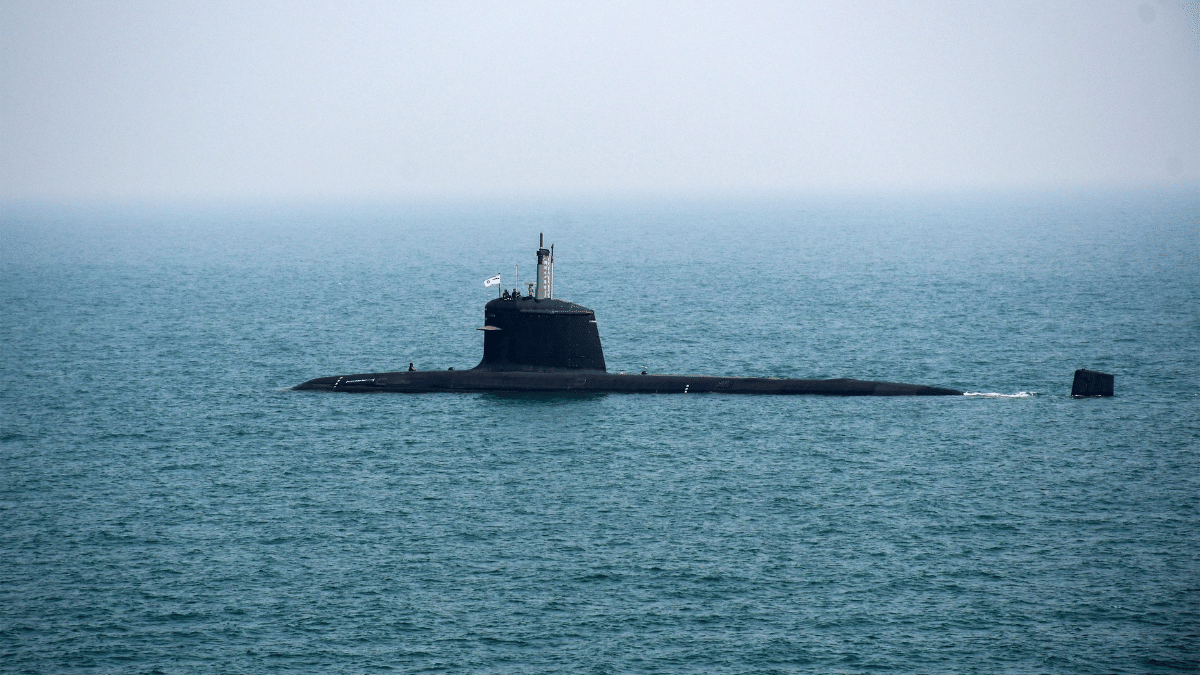
Nuclear attack submarines are must for a large country like India..... unfortunately our submarine strength is fast decreasing even with SSKs and SSN program is still on the paper only.... Kilos and Shishumars are on the verge of retirement, only 6 scorpeans are in service and no deal is yet signed for U214s.....

Good video below on American SSN capability..... though I don't support cowardly American attack on Iranian warship in Indian and SriLankan waters.....

To view this content we will need your consent to set third party cookies.
For more detailed information, see our cookies page.
 
Indian destroyers in the gulf of Iran to escort Indian tankers.....
To view this content we will need your consent to set third party cookies.
For more detailed information, see our cookies page.
 

Naval Ambition: India’s Indigenous 200-Ship Fleet Roadmap by 2035


The Indian Navy is executing a massive force-structure expansion, aiming for a 200-ship fleet by 2035. Following the recent commissioning of the ASW corvette INS Anjadip, CNS Admiral Dinesh Tripathi confirmed a "100% Indigenous" mandate for all future orders, leveraging India's maturing public and private shipbuilding sectors.

Key Force Multipliers in the Pipeline:

  • Carrier Strike Groups: Plans include a second Vikrant-class follow-on (45,000-ton) and a larger INS Vishal (70,000-ton) equipped with CATOBAR/EMALS.
  • Surface Combatants: Development of Project-18 Next-Gen Destroyers (13,000-ton), Project-17B Stealth Frigates, and Next-Gen Corvettes (Project-28A).
  • Undersea Dominance: A multi-tier program including 6 Project-75I (AIP), 12 indigenous Project-76 conventional submarines, 6 Project-77 SSNs, and the massive S5-class 17,000-ton SSBNs.
With a defense budget hitting $93.5 billion, the shift from "buying" to "building" is now a structural reality. This expansion aims to transform the Navy into a persistent, net-security provider across the Indo-Pacific, ensuring operational depth from the Malacca Strait to the Gulf of Aden.

Read the full article at source: Indian Navy Plans 200-Ship Fleet by 2035 with Complete Indigenous Construction
 

India’s S5 SSBN: A 17,000-Ton Leap in Nuclear Deterrence

India is scaling up its undersea nuclear triad with the S5-class SSBN, a massive successor to the Arihant-class. Displacing between 16,500 and 17,000 tonnes submerged, the S5 puts India in the elite league of the Ohio and Vanguard classes, specifically designed to counter peer-level threats in the Indo-Pacific.

Technical & Strategic Highlights:

  • VLS & Payload: The S5 features 16 vertical launch tubes designed for next-gen SLBMs. It will likely carry the K5 (6,500 km range) or the K6 (8,000+ km range), both equipped with MIRV warheads capable of reaching deep into the Chinese heartland from secure "bastions" in the Indian Ocean.
  • Power & Stealth: Driven by a new 190 MW pressurized water reactor, the S5 is expected to exceed 30 knots submerged. Advanced acoustic quieting, including pump-jet propulsion and high-end sonar suites, targets a 90–100 day submerged endurance.
  • Force Structure: Planners envision a fleet of four S5 boats alongside the Arihant class to maintain a continuous at-sea deterrent.
With over 90% indigenous content, the S5 represents the pinnacle of Aatmanirbhar Bharat in strategic military engineering.

Read the full article at source: MASSIVE: S5 SSBN expanding into a 17,000-ton beast to target China's heartland
 
Project-77: Indian Navy SSNs to Feature 2,500km Hypersonic SLCMs
India’s Project-77 nuclear-powered attack submarine (SSN) program is set to redefine Indo-Pacific maritime dynamics. Moving beyond traditional attack roles, these indigenous platforms are being designed to carry hypersonic Submarine-Launched Cruise Missiles (SLCMs) with a reported range of 2,500 km.

Technical & Tactical Breakthroughs:
  • The Hypersonic Edge: By integrating Mach 5+ maneuverable missiles, Project-77 can compress an adversary's reaction window to near zero, creating a "no-escape zone" for high-value naval and coastal assets.
  • 190MW Nuclear Power: A massive jump from the Arihant’s 83MW reactor, the new BARC-developed 190MW reactor will enable sustained underwater speeds exceeding 30 knots and provide the energy headroom for advanced sensors and pump-jet propulsion.
  • Acoustic Stealth: Anticipated use of pump-jet technology and refined hull shaping aims to give India an acoustic edge over regional peers, focusing on "Area Denial" at critical chokepoints like the Malacca Strait.
With an estimated cost of ₹1.2 lakh crore, Project-77 represents the pinnacle of Aatmanirbhar Bharat, shifting India from a regional navy to a true blue-water power.

Read the full article at source: Indian Navy Project-77 SSN to get 2,500 km range Hypersonic SLCM to expand its firepower
 
Last edited:
Indian Navy Vision 2047: The Rise of a "Trust in India" Blue-Water Power
The Indian Navy has unveiled its "Vision 2047" roadmap, shifting from "Make in India" to "Trust in India"—a philosophy targeting 100% component-level indigenization. By 2047, the IN aims to field a 300-ship fleet, positioning itself alongside the US and China as a top-tier Indo-Pacific maritime force.

Strategic Capability Matrix:
  • Surface Dominance: The 13,000-tonne Project-18 Destroyers will act as "Hypersonic Command Ships," featuring 144 VLS cells for BrahMos-II and advanced AESA radars with 500km tracking ranges.
  • Undersea Supremacy: The fleet will be anchored by the S5-class SSBN (17,000 tonnes / 200MW reactor) for strategic deterrence and the Project-77 SSN (10,000 tonnes) for carrier escort and hunter-killer roles.
  • Carrier Strike Power: A 3-carrier "2+1" doctrine is planned, transitionally supported by a Vikrant-class follow-on and culminating in the 80,000-tonne INS Vishal, a CATOBAR supercarrier with EMALS.
  • Expeditionary Reach: Four 30,000–40,000 tonne LPDs will provide massive troop lift and disaster-response capabilities across the region.
With a massive induction rate of one platform every 40 days, India is "weaponizing geography" to secure key chokepoints and provide net security across the Indian Ocean.

Read the full article at source: Indian Navy Vision 2047 : How India's growing economic and political clout will reflect on the maritime prowess of the country - Analysis
 

"Aspire to transform Indian Navy into most formidable force in the world by 2047:" Rajnath Singh at Veer Sainik Samman

ANI
02 Apr 2026, 13:34 GMT+
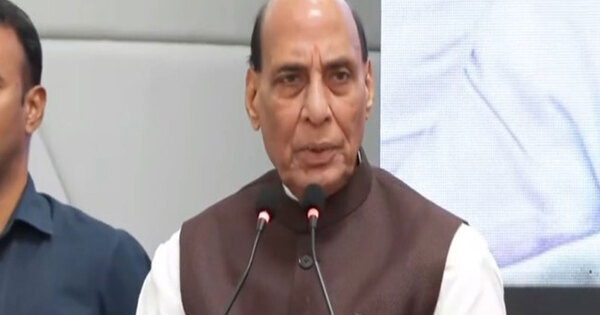
Thiruanathapuram (Keralam) [India], April 2 (ANI): Defence Minister Rajnath Singh on Thursday declared that the government of India aims to transform the Indian Navy into the world's most formidable force by 2047.

Addressing the Veer Sainik Samman in Thiruvananthapuram, a tribute dedicated to brave ex-servicemen, the Defence Minister declared that India is making significant strides in the global shipbuilding sector.

He highlighted that while the country is adopting modern shipbuilding methods, it is simultaneously utilising ancient Indian maritime techniques.

Emphasising this progress, he noted that the completion of an indigenously built aircraft carrier in Cochin places India among a select group of nations with such advanced capabilities.

'Ships from India, sailing via Kerala, once conducted trade spanning from the Roman Empire all the way to Cambodia and Indonesia.This exchange was not merely commercial; it was also a cultural exchange. Kerala has historically served as a major global hub for trade...While India is adopting modern shipbuilding methods, it is also simultaneously utilizing the techniques employed in the construction of ancient Indian vessels..India is making significant strides in the global shipbuilding sector...An indigenously built aircraft carrier has been completed in Cochin. Only a select few nations in the world possess such a capability...By 2047, we aspire to transform the Indian Navy into the most formidable naval force in the world,' said Singh.

In addition to the progress in shipbuilding, the Defence Minister noted a significant shift in India's defence strategy, stating that while the country previously relied on imports to meet its weaponry needs, it has now become a prominent exporter. He emphasised that defence exports have witnessed a steady increase compared to last year, with the total now standing at 38,500 crore.

'Until now, India used to rely on others for weapons and imported them. But now, we are exporting. Our exports have increased even compared to last year. Look at how low our defence exports were in 2014. In the year 2014, India's Defence Exports were approximately 600 crore rupees, But today, our exports stand at 38,500 crore,' said Singh.

He declared that he aims to meet a total defence export target of 3 lakh crore by the end of 2029.

'My goal is that, by the end of 2029, our export target will reach 3 lakh crore. And I assure you that this Defence Minister is always at your service to meet your needs,' added Singh.

Addressing the West Asia crisis, the Defence Minister stated that the government is fully prepared to manage the ongoing situation in the Middle East. He reassured the public that there is absolutely no shortage of petrol or diesel in the country and confirmed that the Indian Navy is actively engaged in monitoring the region and facilitating the safety of those present.

'We are fully prepared to handle the ongoing crisis in the Middle East. Some people are spreading lies and creating confusion. There is absolutely no shortage of petrol or diesel. Our Navy is actively engaged in evacuating those present in the region. PM Modi is safeguarding the interests of Indians there...The situation in West Asia is far from ordinary. A significant number of people from Kerala reside there, but the government is keeping a vigilant watch over the situation. We are fully prepared to tackle any eventuality,' added Singh. (ANI)

 
Defence

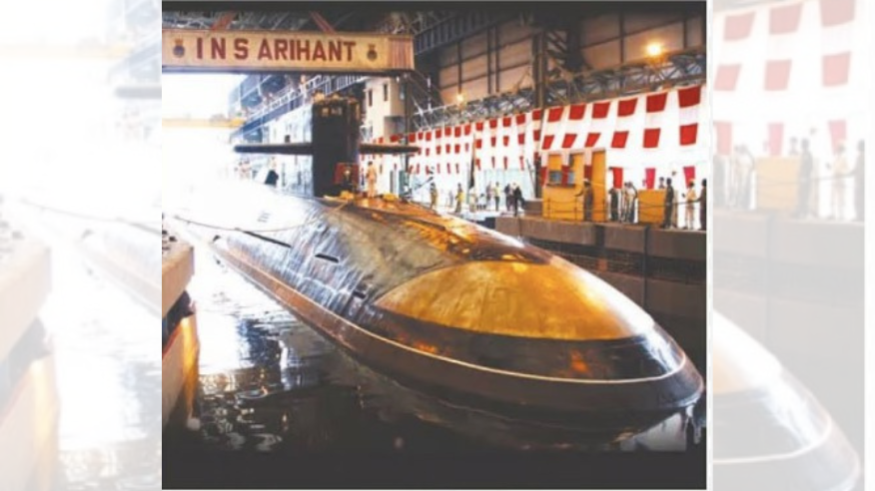
India commissions its third nuclear-powered ballistic missile submarine—INS Aridhaman​

INS Arihant was first vessel under SSBN project and was quietly commissioned in 2016. The second indigenous SSBN, INS Arighat, was commissioned in August 2024.​


So there's 5 of the Arihant class. And 4 of the S-5 class SSBN if I'm not wrong? Takes total to 9 by late 2030s. Along with 2 SSNs.
To view this content we will need your consent to set third party cookies.
For more detailed information, see our cookies page.


So there's 5 of the Arihant class. And 4 of the S-5 class SSBN if I'm not wrong? Takes total to 9 by late 2030s. Along with 2 SSNs.
To view this content we will need your consent to set third party cookies.
For more detailed information, see our cookies page.


So there's 5 of the Arihant class. And 4 of the S-5 class SSBN if I'm not wrong? Takes total to 9 by late 2030s. Along with 2 SSNs.
To view this content we will need your consent to set third party cookies.
For more detailed information, see our cookies page.


No, it's thrid if I am not wrong.

The fourth one is under trail and likely will be inducted by next year
 
No, it's thrid if I am not wrong.

The fourth one is under trail and likely will be inducted by next year
I said its confirm now that Arihant class was stretched to 5 boats from earlier 4 and S-5 expanded to 4 (some say 6, probably to replace oldest S-4 class) from 3 earlier planned.

Takes total to 9 SSBNs and 2 SSNs by end 2030s. But SSNs need to be prioritised now.
 
Along with these developments India needs to adopt MOSAIC DOCTRINE of Iran.... let's make a complete DECENTRALIZATION of nuclear assets...

Even if America in future war with India hits our top leadership and military leadership automatically MOSAIC DOCTRINE activates.... Rajasthan, maharashtra, Gujarat, Assam military units becomes like independent entities and start responding without waiting for orders....
 

Users who are viewing this thread

Pakistan Defence Latest

Back
Top