Indian Space Capabilities

PM Modi unveils Skyroot-built India's first private rocket Vikram-I in Hyderabad​


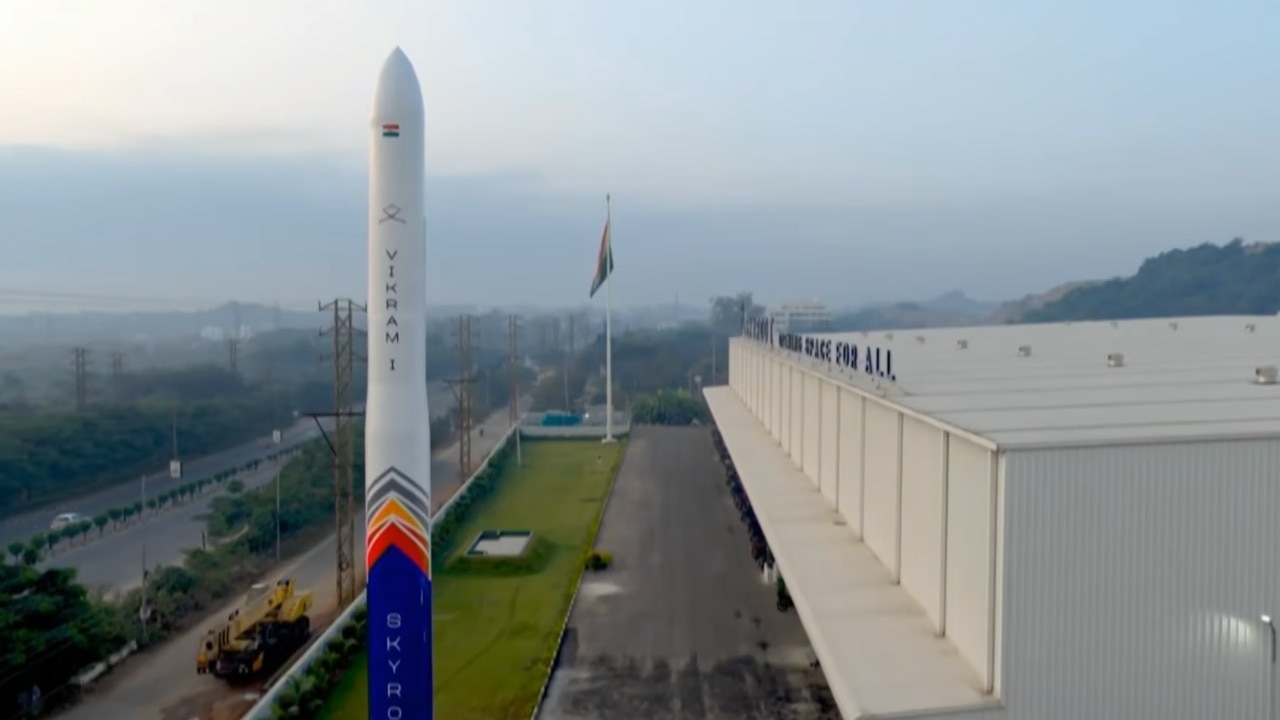
Prime Minister Narendra Modi on Thursday inaugurated Skyroot Aerospace's Infinity Campus in Hyderabad, unveiling Vikram-I, India's first privately developed orbital launch vehicle capable of placing satellites into orbit.

The state-of-the-art facility spans 200,000 square feet, designed for end-to-end development, integration, and testing of multiple launch vehicles, with a capacity to produce one orbital rocket monthly.

Addressing the event virtually, PM Modi praised ISRO for powering India's space journey over decades, crediting its credibility, capacity, and value for carving a distinct global identity. He highlighted the youth's innovation, risk-taking, and entrepreneurship reaching new heights, noting unprecedented opportunities in the space sector where the private sector is advancing rapidly.

WHAT IS VIKRAM-I?
Vikram-I is a technological marvel, designed to carry payloads of around 300 kg to Low Earth Orbit (LEO). It boasts an all-carbon-fiber body, a feature that sets it apart from other rockets in its class.

The Vikrams series is named for Dr. Vikram Sarabhai, founder of the Indian Space Program, and is in development to capture the multi-million-dollar small satellite launch market. The rockets are developed with the aim of providing multi-orbit insertion and interplanetary mission capability to not just India but also foreign customers.

One of the most notable features of Vikram-I is its ability to place multiple satellites into orbit simultaneously. This capability is a first for India's space sector and places the country among the global leaders in satellite deployment technology.

The company claims that it can be assembled and launched within 24 hours from any launch site.

Skyroot's Infinity Campus embodies India's new thinking and youth power, positioning the nation as a future leader in the global satellite launch ecosystem.

Founded by former ISRO scientists and IIT alumni Pawan Chandana and Bharath Dhaka, Skyroot made history in 2022 with Vikram-S, India's first private sub-orbital rocket launch.

The event highlighted policy reforms liberalising India's space sector since 2023, fostering startups across launch, satellite, and analytics chains. Vikram-I targets the small-satellite market, enhancing onshore launch capacity amid projections of a $77 billion opportunity by 2030.

Skyroot has raised over $95 million, partnering with entities like Axiom Space to expand low-Earth orbit access.


PM Modi unveils Skyroot-built India's first private rocket Vikram-I in Hyderabad​


Prime Minister Narendra Modi on Thursday inaugurated Skyroot Aerospace's Infinity Campus in Hyderabad, unveiling Vikram-I, India's first privately developed orbital launch vehicle capable of placing satellites into orbit.

The state-of-the-art facility spans 200,000 square feet, designed for end-to-end development, integration, and testing of multiple launch vehicles, with a capacity to produce one orbital rocket monthly.

Addressing the event virtually, PM Modi praised ISRO for powering India's space journey over decades, crediting its credibility, capacity, and value for carving a distinct global identity. He highlighted the youth's innovation, risk-taking, and entrepreneurship reaching new heights, noting unprecedented opportunities in the space sector where the private sector is advancing rapidly.

WHAT IS VIKRAM-I?
Vikram-I is a technological marvel, designed to carry payloads of around 300 kg to Low Earth Orbit (LEO). It boasts an all-carbon-fiber body, a feature that sets it apart from other rockets in its class.

The Vikrams series is named for Dr. Vikram Sarabhai, founder of the Indian Space Program, and is in development to capture the multi-million-dollar small satellite launch market. The rockets are developed with the aim of providing multi-orbit insertion and interplanetary mission capability to not just India but also foreign customers.

One of the most notable features of Vikram-I is its ability to place multiple satellites into orbit simultaneously. This capability is a first for India's space sector and places the country among the global leaders in satellite deployment technology.

The company claims that it can be assembled and launched within 24 hours from any launch site.

Skyroot's Infinity Campus embodies India's new thinking and youth power, positioning the nation as a future leader in the global satellite launch ecosystem.

Founded by former ISRO scientists and IIT alumni Pawan Chandana and Bharath Dhaka, Skyroot made history in 2022 with Vikram-S, India's first private sub-orbital rocket launch.

The event highlighted policy reforms liberalising India's space sector since 2023, fostering startups across launch, satellite, and analytics chains. Vikram-I targets the small-satellite market, enhancing onshore launch capacity amid projections of a $77 billion opportunity by 2030.

Skyroot has raised over $95 million, partnering with entities like Axiom Space to expand low-Earth orbit access.

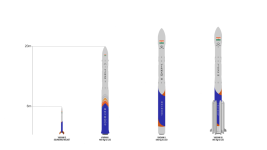
They are making good progress. Vikram_rocket_family.png
 

ISRO launches Mission MITRA in Ladakh for astronaut study: Inside the 3,500m experiment testing human survival in space-like conditions​


ISRO’s MITRA mission is a new project initiated by the Indian Space Research Organisation to investigate the behaviour, performance, and dynamics of the crew in an environment that simulates space flight. The MITRA mission will be carried out in Leh, Ladakh, and the participants are put in environments where the presence of thin air, cold, and isolation mirrors the experience of actual space flight. This is part of the plan to understand the dynamics of human teams working under stressful situations in order to prepare India for its human space flight program, Gaganyaan.

The study will concentrate on how the crew works together and communicates with the team on the ground. This is done in cooperation with space medical personnel and defence organisations.

Mission MITRA stands for Mapping of Interoperable Traits and Response Assessment, which is basically an exercise based on behavioral and operational study. It tests the response of humans and groups in situations resembling those experienced during space flights.

This choice of location is consistent with the international standards of conducting experiments in isolated or high-altitude locations in order to mimic space missions.

 
1777902523503.png
Mission Drishti, the world’s first OptoSAR satellite developed by Bengaluru based space startup GalaxEye has been successfully launched on Sunday (May 3, 2026).

Weighing 190 kilograms, Mission Drishti is India’s largest privately developed Earth observation satellite.

“It is the first satellite globally to integrate Electro-Optical (EO) and Synthetic Aperture Radar (SAR) sensors into a single operational platform, enabling all-weather, day-and-night imaging capabilities. This integrated approach addresses long-standing limitations of conventional systems and enables more reliable and consistent data acquisition across diverse environmental conditions,” GalaxEye said.

“Mission Drishti marks our first mission and the culmination of over five years of sustained R&D to develop this breakthrough technology. With the satellite now successfully in orbit, our immediate focus is on completing its commissioning. As we move through this phase, we are already witnessing strong global interest in the differentiated datasets enabled by our OptoSAR payload.” said Suyash Singh, Founder & CEO, GalaxEye.

Following its successful deployment and commissioning initial imagery is expected to be delivered to customers in the coming weeks.

GalaxEye said that the satellite has already generated significant interest from government and commercial stakeholders internationally, seeking access to high-quality, high-frequency Earth observation data.

On the successful launch, Dr. Pawan Goenka, Chairman, Indian National Space Promotion and Authorization Center (IN-SPACe) said that the sustained effort over the last five to six years on confidence-building, capacity-building and the commercialisation of India’s private space technology ecosystem is now showing tangible results.

“Mission Drishti by GalaxEye is a fine example of this - the world’s first OptoSAR satellite from an Indian private player. As more Indian space companies demonstrate their capabilities through real missions and engagement with global customers, confidence in India’s space ecosystem will continue to strengthen, creating greater demand both in India and overseas. I compliment the GalaxEye team on this important milestone and wish them continued success,” said Dr. Goenka.

Mission Drishti is a dual-use Earth observation Satellite, supporting use cases across defence, agriculture, disaster management, maritime monitoring, and infrastructure planning. The satellite is expected to complement India’s broader initiatives, including the active 29 Earth Observation satellites outlined in ISRO’s recent annual report.
 

Users who are viewing this thread

  • Country Watch Latest

    Back
    Top