Indonesia Agricultural Sector Development

Indonesia Certifies Over 80,000 Village Cooperatives Ahead of National Launch​


Djibril Muhammad
July 19, 2025 | 1

1752905902706.webp
Law Minister Supratman Andi Agtas announces the certification of over 80,000 Merah Putih village cooperatives across Indonesia in Jakarta on Friday, July 18, 2025. (Handout)

Jakarta. Indonesia has certified more than 80,000 village-based cooperatives under the Merah Putih Cooperative program, a major step toward strengthening the grassroots economy ahead of their official launch by President Prabowo Subianto next week.


Law and Human Rights Minister Supratman Andi Agtas announced the milestone on Friday, crediting the achievement to cross-agency collaboration led by the Coordinating Ministry for Food Affairs with support from the Home Affairs Ministry, the Cooperatives Ministry, police, military, and local governments.


“Heading into the official launch by the president, the Law and Human Rights Ministry, through the Directorate General of Legal Administrative Affairs (AHU), has certified 80,068 cooperatives. This is the result of joint efforts across ministries and agencies,” Supratman said.


He described the Merah Putih Cooperatives as a strategic pillar supporting President Prabowo’s Asta Cita program, particularly in promoting equitable and inclusive economic development across Indonesia. “These cooperatives will serve as a strong and sustainable foundation for the people’s economy,” Supratman added.

AHU Director General Widodo detailed that the certification process began on May 1 with the launch of a special registration service. Of the total cooperatives certified, 71,397 are new Village Merah Putih Cooperatives (KDMP), while 8,486 are new Urban Merah Putih Cooperatives (KKMP). Additionally, 141 existing cooperatives were revitalized into KDMP and 44 into KKMP structures.


“This transformation is clear evidence of our digitalization efforts in public services, accelerating the government’s strategic programs to drive economic growth down to the village level,” Widodo said. He noted that the digitized process has significantly sped up the certification and registration of cooperatives, supporting the government’s mission to achieve more equitable national economic distribution.


The Merah Putih Cooperatives are scheduled to be officially launched by President Prabowo on July 21 in Central Java. The government hopes the program will become a backbone for building an independent, sovereign, and inclusive village economy, creating opportunities for communities to take a more active role in the country’s economic transformation.


Prabowo's Merah Putih Cooperatives Aim to Cut Middlemen in Food Distribution​

March 10, 2025 | 9:18 am

1752906125347.webp
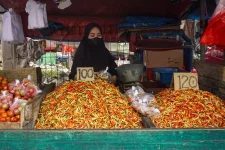
A woman sells red chili peppers in Balikpapan, East Kalimantan, on March 3, 2025. (Antara Photo/Aditya Nugroho)


Jakarta. President Prabowo Subianto's goal of setting up tens of thousands of village-level cooperatives aims to stabilize food prices by cutting the middlemen out in its distribution, according to Agriculture Minister Andi Amran Sulaiman.


Work is underway to set up the so-called Merah Putih or Red and White Village Cooperatives. Prabowo plans to establish these cooperatives in up to 80,000 villages in Indonesia. Approximately 64,000 farmer groups are also expected to transform into these cooperatives. Andi Amran revealed that this program would become Indonesia's long-term solution to reduce reliance on middlemen in the food supply chain. Taking out these intermediaries can lead to more affordable food commodities in the market.


"Food distribution used to involve eight components within the supply chain. We will slash it to just three components, namely producers [farmers], cooperatives, and consumers," Andi Amran said in Jakarta over the weekend.

To view this content we will need your consent to set third party cookies.
For more detailed information, see our cookies page.


The minister claimed that middlemen could earn Rp 313 trillion ($19.2 billion) by acting as intermediaries in the distribution of main food commodities including rice, corn, soybeans, chilies, shallots, and coffees.

Andi Amran said that these intermediaries not only caused food prices to soar among consumers but also lessened the farmers' profit. He revealed that the Merah Putih Village Cooperatives would slash the money circulating among these middlemen from Rp 313 trillion to Rp 50 trillion. This way, Rp 263 trillion would go to the farmers and consumers.

"So everyone can reap the benefits [of our food production]. This is a permanent solution for Indonesia's future," Andi Amran said, adding that the program could spur the village economy.


According to media reports, each cooperative will get between Rp 3 billion and Rp 5 billion in initial capital. They may use the money to purchase facilities to set up a warehouse and cold storage, among others. The initial funding will come from village funds, state and regional budgets, as well as loans from government-run banks.


Last edited:

Indonesia Eyes 33.8M Tons of Rice in 2025, Self-Sufficiency Within Reach​


Tri Listyarini

August 25, 2025 | 10:59 am

1756110349923.webp
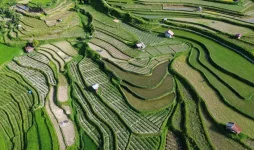
This aerial photo shows layers of paddy fields on the slope of Mount Marapi in Tanah Datar, West Sumatra, on Tuesday, Aug. 19, 2025. (Antara Photo/Iggoy el Fitra)


Jakarta. Indonesia’s rice production is projected to reach 33.8 million tons in 2025, with the potential to climb as high as 35.6 million tons, according to government estimates. If realized, the output would secure the country’s rice self-sufficiency target for the year and remove the need for imports.


The Agriculture Ministry cited projections by the Central Statistics Agency (BPS), which estimated rice production of 28.24 million tons for January–September 2025. Assuming harvests in October–December match last year’s 5.58 million tons, full-year production would total 33.82 million tons.


During a joint meeting with the House of Representatives’ Commission IV, the National Food Agency, and the State Logistic Agency (Bulog) on August 21, officials said paddy harvest area this year is expected to cover 11.06 million hectares, producing 58.69 million tons of unhusked rice -- equivalent to 33.82 million tons of milled rice. With domestic consumption estimated at 31.14 million tons, Indonesia would end the year with a surplus of 2.67 million tons.

By FAO standards, a country achieves self-sufficiency when it can meet at least 90% of domestic demand.


To view this content we will need your consent to set third party cookies.
For more detailed information, see our cookies page.

Payakumbuh, West Sumatra


Minister Confident Targets Will Be Exceeded
Agriculture Minister Andi Amran Sulaiman expressed confidence that 2025 production will surpass the official target of 32 million tons.


“We predict rice production this year will be 33–34 million tons. Domestic demand is 31 million tons, excluding hotels, restaurants, and catering. Production will exceed the 32-million-ton target,” Amran said.

He also stressed that no government rice imports have been made so far this year, and that imports are unlikely. Indonesia imported a total of 7 million tons of rice between 2023 and 2024, worth nearly Rp 100 trillion ($6 billion).

Current government rice reserves stand at 4.2 million tons, the highest in 57 years and far above the 1 million tons recorded a year earlier.


Experts Urge Selective Self-Sufficiency
Agricultural economist Bustanul Arifin, president of the Asian Society of Agricultural Economists (ASAE), said favorable weather in 2025 has supported higher yields, contrasting with last year’s harsher conditions.


However, he warned that food self-sufficiency cannot be achieved across all commodities.


“We cannot expect full food self-sufficiency at once -- it must be gradual. The President’s three-year target means rice self-sufficiency might be achieved by 2027,” he told BeritaSatu TV.


According to Bustanul, Indonesia should focus selectively on key staples such as rice and corn -- the latter being critical for animal feed to secure domestic meat and egg supplies. Full self-sufficiency across all food commodities, such as wheat, remains unrealistic given production constraints.


Fisheries Ministry Seeks $1.6 Billion from Danantara for Coastal Aquaculture Revitalization​


Muhammad Farhan

August 29, 2025 | 10:51 am


Jakarta. Indonesia’s Ministry of Marine Affairs and Fisheries has requested Rp 26 trillion ($1.6 billion) in funding from state wealth fund Danantara to support a large-scale aquaculture revitalization project along the northern coast of Java.


The initiative targets the rehabilitation of 78,550 hectares of shrimp and fish ponds, to be carried out in three phases.


Haeru Rahayu, the ministry’s Director General of Aquaculture, said the first phase will cover 20,000 hectares of state-owned land designated as a "Food Security Forest Area" under a Forestry Ministry permit.


“We have submitted a formal proposal to Danantara for around Rp 26 trillion to fund this project. We are now waiting for the opportunity to present the details,” Haeru said.

First Phase in West Java
The initial phase will focus on four regencies in West Java: Bekasi, Karawang, Subang, and Indramayu. Coordination is underway with local governments and West Java Governor Dedi Mulyadi.


Haeru stressed the project’s potential to generate employment, estimating that the first phase alone could create 40,000 jobs, assuming two workers are needed per hectare.


“Beyond direct employment, the project also offers upstream-to-downstream business opportunities -- from hatcheries and feed production to product processing and distribution,” he added.


Indonesia, with its 6.4 million square kilometers of territorial waters, is one of the world’s largest producers of capture fisheries. However, aquaculture has increasingly outpaced wild catch in recent years.


In 2023, total fisheries production reached 23.5 million tons, of which only 6.5 million tons came from capture fisheries, with the rest supplied by aquaculture. The sector contributed 2.7 percent to Indonesia’s GDP that year.

 
Indonesia's palm oil output on course to rise 10% in 2025, association says


By Bernadette Christina & Ananda Teresia / Reuters
28 Oct 2025, 04:55 pm


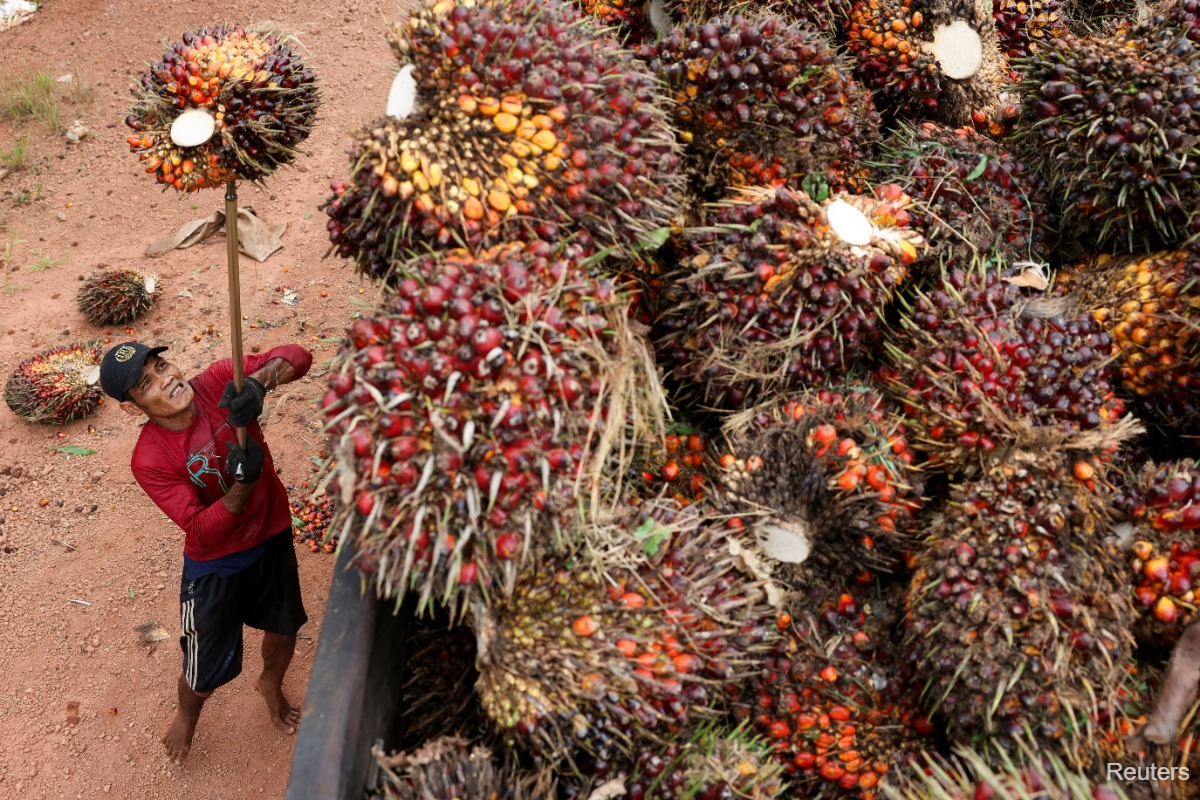
JAKARTA (Oct 28): Indonesia's palm oil output could rise up to 10% this year to around 56 million tonnes, higher than previous projections, with production supported by favourable weather and strong prices, Indonesia's palm oil association GAPKI said on Tuesday.

"Hopefully this year we can still grow compared to last year — our estimate is around 10%, to 56-57 million tonnes," GAPKI secretary general M Hadi Sugeng told reporters.

"The weather is favourable in 2024 and 2025, with no prolonged rainfall, and good prices last year have prompted our farmers to take better care of their plantations," Sugeng added.

GAPKI has revised its full-year forecast up from the previous 53.63 million tonnes. Output of 57 million tonnes would amount to an increase of 8% compared to 2024.

Indonesia's palm oil exports are likely to increase to around 30-31 million tonnes, compared to 29 million tonnes shipped out in 2024, Sugeng added, with the increase in production offsetting growing domestic demand driven by an expanded biodiesel mandate.

Earlier this year, Indonesia expanded its mandatory biodiesel blending rate to 40%, up from the previous 35%, a policy known as B40.
Indonesia's palm oil production could rise by another 5% in 2026, GAPKI forecasts show.

Palm oil stocks in Indonesia, the world's biggest palm oil producer, dropped slightly in August to 2.54 million tonnes, 1% down from a month earlier, according to GAPKI data.

In August, the country exported 3.47 million tonnes of palm oil products in August, a 1.8% decrease from the previous month, GAPKI said, adding that crude palm oil production stood at 5.06 million tonnes.

Next year, the association is planning to use insect pollinators to transfer pollen from male to female flowers and induce fruit formation, thereby boosting output in late 2026 or early 2027, it said.

Uploaded by Chng Shear Lane


Indonesia’s Palm Oil Export Revenue Surges 43% to $24.8 Billion by August​


Antara

October 28, 2025 | 10:10 pm

Jakarta. Indonesia’s palm oil export revenue rose sharply by 43 percent year on year to $24.79 billion in the January-August 2025 period, according to data from the Indonesian Palm Oil Association (Gapki). Export volume also increased by 15 percent to 22.69 million tons, up from 19.68 million tons a year earlier.


Gapki said the growth was supported by improved production and stronger global prices for crude palm oil (CPO). The average CPO price between January and August stood at $1,204 per ton, higher than the $1,009 per ton average recorded over the same period last year.


“Last year, CPO prices were already high, prompting some regions to switch to other vegetable oils. This year, our production has improved,” said Gapki Secretary-General Hadi Sugeng on Tuesday.


Higher exports were recorded across several major destination markets, including Malaysia, China, Africa, the European Union, Russia, and the United States.


Production Also on the Rise

Indonesia’s CPO production reached 35.65 million tons by August 2025, up 13 percent from the same period last year. When combined with palm kernel oil (PKO) output, total national palm oil production stood at 39.03 million tons, also a 13 percent increase year on year.

“We expect full-year output to continue growing compared with last year. Our estimate is a ten percent increase, reaching around 56 to 57 million tons,” Hadi said.


By comparison, total CPO and PKO production in 2024 reached 52.76 million tons, consisting of 48.16 million tons of CPO and 4.59 million tons of PKO.


Domestic palm oil consumption also rose 5 percent to 16.4 million tons through August 2025, driven primarily by biodiesel demand, which grew 12 percent and absorbed 8.3 million tons of CPO. Consumption for food products reached 6.57 million tons, while oleochemical use stood at 1.48 million tons.

 
Indonesia to Build 15 New Dams Under Prabowo Administration — Here’s the Full List and Locations


By Chandra Dwi Pranata | 4–6 minutes | CNBC Indonesia
27 October 2025 12:15


To view this content we will need your consent to set third party cookies.
For more detailed information, see our cookies page.

Newly built Karian Dam, Banten Province, Java Island


JAKARTA —
The Ministry of Public Works (PU) is completing the construction of 15 new dams to expand irrigation services by 184,515 hectares (ha) across the country.


These dams are designed to provide irrigation to agricultural areas located far from surface water sources (such as reservoirs, rivers, and lakes). Additionally, 1,805 groundwater irrigation networks (JIAT) are being developed to supply 18,424 ha of rain-fed rice fields.


Minister of Public Works Dody Hanggodo emphasized that dam construction must go hand in hand with the development and rehabilitation of irrigation systems.


“Dam construction must be accompanied by the building of connecting channels and irrigation networks. With a sustainable water supply, agricultural productivity can increase, and farmers’ welfare will improve,” said Dody in an official statement on Monday (October 27, 2025).

Once completed, the irrigation service area is projected to expand from 184,515 ha to 263,055 ha, while the total planted area will increase from 277,775 ha to 483,163 ha.


According to Dody, the 15 dams are targeted for completion before 2029, requiring a total budget of IDR 47.84 trillion (~USD 2.99 billion).


The availability of irrigation water from these dams is also expected to raise agricultural output from 1.4 million tons to 2.34 million tons per year. Furthermore, the cropping index (IP) is projected to increase from 150% to 262%, allowing farmers to cultivate crops two to three times per year instead of only once.


“The Ministry of Public Works ensures that the connection between water reservoirs and irrigation systems continues to be strengthened through primary, secondary, and tertiary irrigation channels that directly support farmlands,” Dody added.


To view this content we will need your consent to set third party cookies.
For more detailed information, see our cookies page.

Jatiluhur Dam, West Java. Together with Karian Dam, this dam is important to save Jakarta with its supply of water. Water treatment facility is under construction as well as water pipe within Jakarta

List of the 15 Dams Under Construction


  1. Tiga Dihaji Dam – Ogan Komering Ulu (OKU) Selatan, South Sumatra
  2. Cibeet Dam – Cariu-Jonggol, Bogor Regency, West Java
  3. Cijurey Dam – Jonggol, Bogor Regency, West Java
  4. Bener Dam – Purworejo Regency, Central Java
  5. Karangnongko Dam – Border of Blora (Central Java) and Bojonegoro (East Java)
  6. Jragung Dam – Semarang Regency, Central Java
  7. Cabean Dam – Blora Regency, Central Java
  8. Bagong Dam – Trenggalek Regency, East Java
  9. Manikin Dam – Kupang Regency, East Nusa Tenggara (NTT)
  10. Mbay Dam – Nagekeo Regency, East Nusa Tenggara (NTT)
  11. Jenelata Dam – Gowa Regency, South Sulawesi
  12. Way Apu Dam – Buru Regency, Maluku
  13. Budong-Budong Dam – Central Mamuju Regency, West Sulawesi
  14. Riam Kiwa Dam – Banjar Regency, South Kalimantan
  15. Bulango Ulu Dam – Bone Bolango Regency, Gorontalo


As of October 7, 2025, 10 out of 15 dams had achieved over 60% construction progress, with the Way Apu Dam in Buru, Maluku showing the highest progress at 94.59%.


The Way Apu Dam, built to support water and food security in Maluku Province, will have a storage capacity of 50.05 million cubic meters, an inundation area of 273.79 ha, and irrigation potential of 10,562 ha.


Between 2015 and 2025, the Ministry of Public Works completed 53 dams nationwide. This year, the ministry is focusing on supporting national food self-sufficiency by constructing 70 km of new irrigation networks to serve 13,000 ha of farmland.


Five irrigation areas — Tanju, Rukoh, Pidekso, Tugu, and Tukul — require new outlet channels to extend irrigation coverage. Additionally, the ministry has rehabilitated 1,353 km of existing irrigation networks, improving irrigation services for 203,000 ha of agricultural land.


(All USD conversions calculated at IDR 16,000 = USD 1.)
 

Indonesia to invest $22 billion in agricultural processing, minister says​


By Reuters
November 7, 20255:42 PM GMT+7
Updated November 7, 2025

To view this content we will need your consent to set third party cookies.
For more detailed information, see our cookies page.


JAKARTA, Nov 7 (Reuters) - Indonesia plans to invest 371 trillion rupiah ($22 billion) in agricultural processing for several commodities in a bid to create eight million jobs, agriculture minister Amran Sulaiman said on Friday.

Developing domestic processing is one of president Prabowo Subianto's top priorities in a drive to achieve 8% economic growth.

"The total plan of 371 trillion rupiah will be invested in the agriculture, food, livestock, horticulture, and plantation sectors,” said Amran in a statement.

Amran added that a big portion of the investment would be allocated for plantation commodities such as sugar cane, cocoa, and cashews.
"Processing of agricultural commodities has a much greater impact on job creation. Together, we want to accelerate this," said investment minister Rosan Roslani after a meeting with Amran.

In addition to the processing investment, the government is planning a 20 trillion rupiah investment to boost chicken and egg supplies for its free meals programme.

The programme, rolled out in January, was a major election campaign promise by Prabowo, expected to reach around 70 million recipients by the end of this year.

"We will supply, so that there will be no shortage of eggs and chicken in the future. We are preparing for it now," Amran said.

 
Last edited:
Government Prepares 920,000 Hectares of Land for Ethanol Plant Construction


By Elvi Robiatul — Wednesday, November 12, 2025 – 07:06 WIB

To view this content we will need your consent to set third party cookies.
For more detailed information, see our cookies page.

President Prabowo Subianto has approved the issuance of a regulation mandating a 10 percent ethanol blend in fuel (E10). Photo: Pertamina Public Relations Documentation


JAKARTA – Minister of Agrarian Affairs and Spatial Planning/Head of the National Land Agency (BPN), Nusron Wahid, stated that the government has prepared approximately 920,000 hectares of land to support the development of fuel blended with 10 percent ethanol (E10).


The government is currently developing ethanol feedstock such as cassava and sugarcane, which will be used for the E10 fuel mixture. It is estimated that around one million hectares of land will be needed to support ethanol production.


Nusron explained that the identified 920,000 hectares of land come from two sources:


  • 680,000 hectares of former cultivation rights (HGU) that were not renewed, and
  • 240,000 hectares of abandoned land designated by the government.

“We are still looking for the remaining 100,000 hectares,” Nusron said on Wednesday (November 12).

He added that the land data had been handed over to the Ministry of Agriculture for verification of its suitability.


According to Nusron, the land prepared for ethanol development is spread across 18 provinces, including Sumatra, Kalimantan, Sulawesi, West Java, East Java, and Papua.


Earlier, Coordinating Minister for Food Affairs Zulkifli Hasan said that Indonesia needs one million hectares of new sugarcane plantations to support the E10 program, in line with the government’s plan to end imports of diesel-type fuel by 2026.


Separately, Minister of Energy and Mineral Resources (ESDM) Bahlil Lahadalia announced that the government will require the use of fuel containing 10 percent ethanol starting in 2027. (antara/jpnn)
 

Indonesia Attracts $3.7 Billion Investment to Climb Up Palm Oil Value Chain​


Jayanty Nada Shofa
January 16, 2026 | 2:26 pm


To view this content we will need your consent to set third party cookies.
For more detailed information, see our cookies page.

Karian Dam in the mid of both forest and Palm oil land, Banten, Java Island.


Jakarta. Indonesia attracted Rp 62.8 trillion ($3.7 billion) worth of investments in the palm oil sector last year, with all the money meant to enable the country create higher-value products from this agricultural commodity.


Over the past years, the resource-rich Indonesia has been wanting to climb up the value chain. To this end, the country has been opening its doors for investors who wish to set up factories that can process its natural resources, such as palm oil, into more sophisticated goods. Investment Minister Rosan Roeslani revealed that investors had put tens of trillions of rupiahs into the Indonesian palm oil downstream industry throughout 2025.


“This downstream policy is about capturing more value out of our commodities at home because it has a multiplier economic impact and can create jobs,” Rosan told a press briefing in Jakarta on Thursday.


“Not only does it boost the economy, but having all the manufacturing in Indonesia allows us to improve our [human] capital by introducing them to new technologies. … And we will continue to encourage this in the palm oil industry,” Rosan said.

The minister did not go into details on whether it was mainly domestic or foreign investors who had been backingthe industrial value creation push in the palm oil industry. However, data showed that Indonesia amassed around Rp 6.6 trillion worth of investments in “other forestry sectors”, which included nutmegs, pine, coconut, cacao, and biofuel.


The downstream push is not only limited to the forestry sector, but also focuses on mining, fisheries, as well as oil and gas. Investors to this day remain largely concentrated on the minerals. As a case in point, Indonesia amassed Rp 185.2 trillion (nearly $11 billion) worth of investments in nickel industrial processing throughout 2025 — almost triple what the palm oil industry got. Indonesia has stopped exporting unprocessed nickel ores since 2020.


Indonesia is the world’s largest palm oil supplier, and is taking advantage of this abundant agricultural commodity to slash fuel imports. The country has what it calls the B40 policy, which mandates a 40% palm oil blend in its biofuel.


Energy Minister Bahlil Lahadalia has said that the government would raise the mandatory blend to 50% in the second half of this year — a move better known as the B50 — if the tests are a success. Senior minister Airlangga Hartarto recently revealed that the timeline of the B50 policy would still be subject to “continuous reviews”, citing the price dynamics in fuel oil and palm oil.


Read More:​

‘Huge Job Maker’: Danantara on $6 Billion State Textile Firm Plan


Pupuk Indonesia Assures Adequate Fertilizer Supply Amid Iran-Israel War​

Sabtu, 7 Maret 2026​


1773085970923.png

TEMPO.CO, Jakarta - State-owned fertilizer producer PT Pupuk Indonesia (Persero) has assured that Indonesia’s fertilizer supply remains secure despite escalating tensions between Iran and Israel.

Pupuk Indonesia Corporate Secretary Yehezkiel Adiperwira said the company has sufficient production capacity and raw material reserves to ensure a stable fertilizer supply for farmers.

“Amid ongoing geopolitical dynamics, we want to assure that the national fertilizer supply remains secure so farmers can continue planting without worrying about availability,” Yehezkiel said, as quoted by Antara on Saturday, March 7, 2026.

He said the Pupuk Indonesia Group currently has a production capacity of 14.5 million tons of fertilizer annually, covering various types of fertilizers. Its urea production capacity alone is sufficient to meet Indonesia’s entire domestic demand, he added.

Indonesia’s urea production also maintains a high level of self-sufficiency because its main raw material (natural gas) is supplied domestically, with both supply and prices regulated by the government.

As a result, Yehezkiel said, the escalation of tensions around the Strait of Hormuz has not directly affected the country’s urea fertilizer supply.

“Pupuk Indonesia is the largest urea producer across the Asia-Pacific, Middle East, and North Africa regions. With such strong production capacity, we are able to maintain an optimal fertilizer supply for Indonesian farmers,” he said.

Beyond production capacity, the company is also strengthening supply chain resilience by diversifying sources of strategic fertilizer raw materials, some of which are imported.

Certain key inputs are not naturally available in Indonesia, including phosphate (P) and potassium (K), which are essential components in NPK fertilizer production.

Yehezkiel said phosphate supplies are sourced from North African countries such as Morocco, Tunisia, and Algeria, while potassium is imported from Canada and Laos, locations outside the Middle East conflict zone and therefore less exposed to potential supply disruptions.

Other materials that could potentially be affected by the Iran–Israel conflict include sulfur (S), which Pupuk Indonesia currently imports from the United Arab Emirates, Qatar, and Kuwait. However, the company also sources sulfur from other countries, including Canada, to mitigate supply risks.

In addition to diversifying suppliers, Pupuk Indonesia said it is strengthening its raw material stock management, ensuring that reserves of phosphate, potassium, and sulfur remain at sufficient levels to support production.

The company said these measures are also intended to anticipate potential increases in logistics costs linked to rising global oil prices.

“With strong production capacity, diversified raw material sources, and reliable stock management, Pupuk Indonesia remains optimistic about maintaining the stability of the national fertilizer supply,” Yehezkiel said.

Read: Indonesia Clears First 2,280 Tons of Rice for Export to Saudi Arabia
 

Indonesia Sees Fertilizer Export Opportunity Amid Hormuz Tension​


Antara, Endang Mulyani
March 13, 2026 | 9:07 pm


Jakarta. Indonesia is seeing a surge in international demand for urea fertilizer after Iran’s closure of the Strait of Hormuz amid escalating tensions with the United States threatened global supply chains.


Deputy Agriculture Minister Sudaryono said several countries have approached Indonesia seeking large volumes of urea, showing how the geopolitical crisis could create unexpected export opportunities for Southeast Asia's largest economy.


“Because of this war, many countries are looking for urea. They want to import it from Indonesia and are asking us to export large quantities, regardless of the price,” Sudaryono said in Jakarta on Thursday.

The Strait of Hormuz is a crucial shipping route for agricultural inputs. Qatar, Saudi Arabia, Oman and Iran are among the world’s major suppliers of urea and phosphate fertilizers.

Any prolonged disruption could trigger a global shortage of nitrogen-based fertilizers widely used in agriculture.


State-owned fertilizer company Pupuk Indonesia said it has the capacity to maintain domestic supply while responding to rising international demand.


Corporate Secretary Yehezkiel Adiperwira said the Pupuk Indonesia Group currently has a total fertilizer production capacity of 14.5 million tons per year.


The company’s urea production capacity alone is sufficient to meet Indonesia’s domestic needs.


Sudaryono said the spike in demand could also temporarily extend the lifespan of several older fertilizer plants that were previously scheduled for gradual replacement due to inefficiency.


“This has become an opportunity. Plants that we initially planned to replace can temporarily continue operating because many countries are requesting urea. In the midst of this crisis, our fertilizer industry is gaining new momentum,” he said.


Pupuk Indonesia is currently the largest urea producer in the Asia-Pacific, Middle East and North Africa regions, positioning the state-owned firm to help stabilize domestic fertilizer supplies even as geopolitical tensions reshape global markets.


Indonesia Rents Extra Warehouses as Rice Stocks Hit Record Levels​


Erfan Maruf
April 5, 2026 | 4:59 pm

1775444576245.png
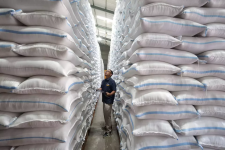
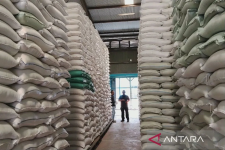
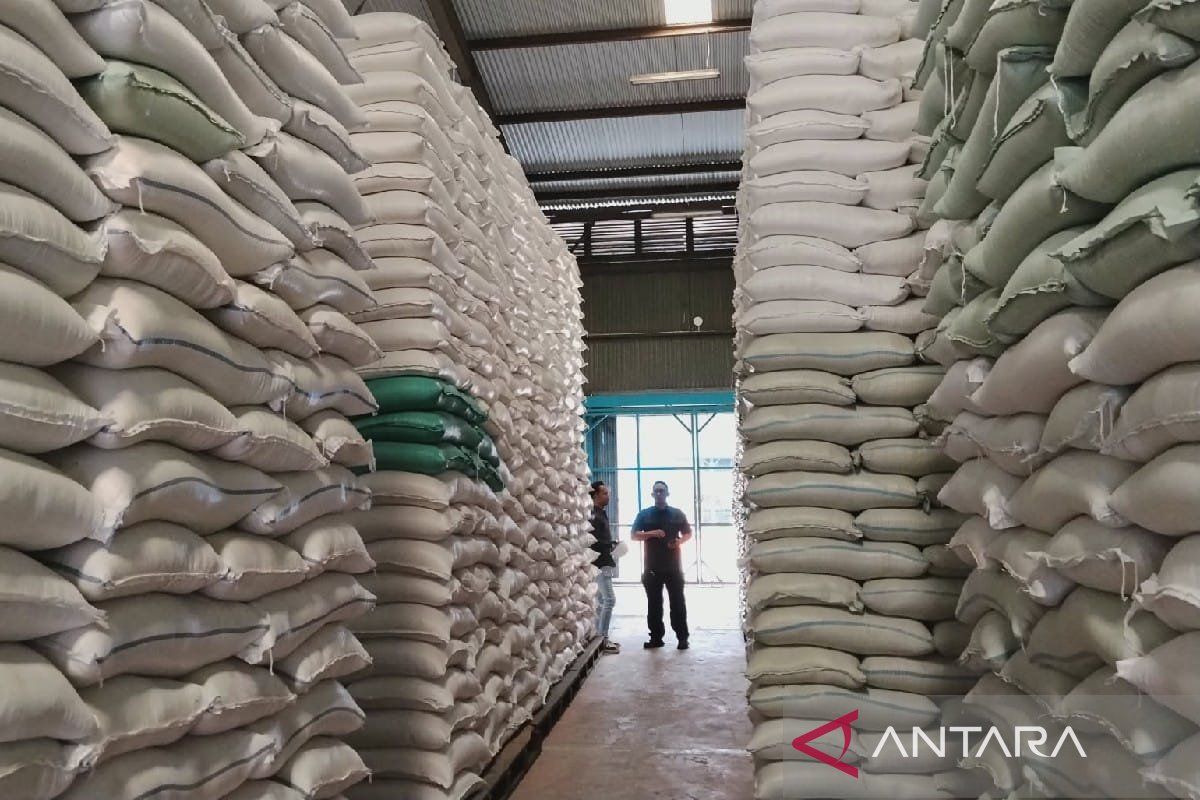
A State Logistics Agency (Bulog) employee inspects stacks of rice sacks inside a warehouse in Kediri, East Java, on Tuesday, March 17, 2026. (Antara Photo/Prasetia Fauzani)


Makassar. Indonesia has begun leasing additional warehouses to accommodate surging rice stockpiles, which are expected to approach 5 million tons this month, Agriculture Minister Andi Amran Sulaiman said on Sunday.


During an inspection of State Logistics Agency (Bulog) facilities in Makassar, South Sulawesi, Amran said national rice reserves have reached approximately 4.5 million tons, describing the figure as the highest level since Indonesia’s independence.


“Total warehouse capacity is only around 3 million tons, so we have leased additional facilities to accommodate another 2 million tons,” Amran said. Based on current trends, he added, national stockpiles could reach 6 million tons within the next two months.

By comparison, rice reserves during the same period last year stood at around 1.5 million tons.

“Previously, stocks at this time of year were at most 1.5 million tons. Now they have increased by 200%, and we are grateful,” he said.


In South Sulawesi alone, Bulog’s rice stocks have surpassed 761,000 tons — more than double the levels recorded a year earlier.


“In the past, when warehouses in South Sulawesi were full, they held a maximum of about 300,000 tons. Today, they have reached 761,000 tons across the province,” Amran said.


Despite ongoing global geopolitical tensions, Amran said Indonesia’s food security remains strong, citing robust domestic rice production.

He added that output has risen to the point where distribution now requires larger transport capacity, including the use of bigger trucks to move supplies.


Read More:​

Agriculture Minister: Rice in Japan Costs $6/kg, Just Under $1 in Indonesia


Revealed! Here's Why Prabowo Is Building a Giant Shrimp Farm in Waingapu

By Martyasari Rizky
1782524487458.png
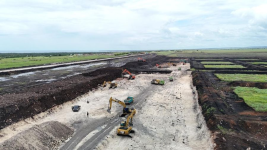
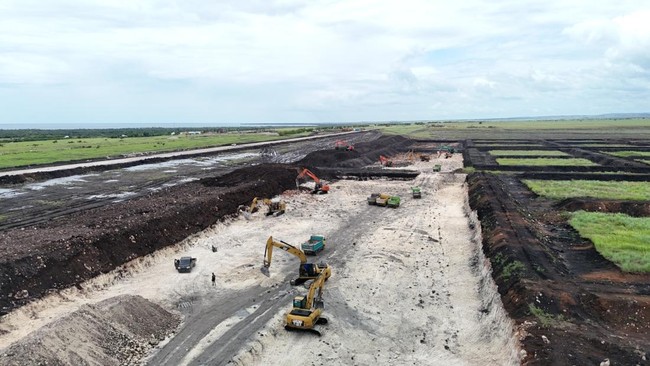
Photo: Construction of the Ministry of Marine Affairs and Fisheries' (KKP) Integrated Shrimp Farming Complex, covering 2,150 hectares in East Sumba, East Nusa Tenggara (NTT), is progressing steadily. The project is targeted for completion within two years and involves an investment of IDR 7.2 trillion. (Photo: KKP)

Jakarta, CNBC Indonesia
– The Indonesian government is preparing to develop a large-scale modern shrimp farming complex in Waingapu, East Nusa Tenggara (NTT) as part of its strategy to maintain the competitiveness of Indonesia's seafood exports.

The project, commissioned by President Prabowo Subianto, is aimed not only at increasing shrimp production but also at ensuring a stable national shrimp supply to meet global market demand.

Minister of Marine Affairs and Fisheries Sakti Wahyu Trenggono said the modern shrimp farm forms part of the government's effort to address the fundamental weaknesses of Indonesia's shrimp aquaculture sector.

To view this content we will need your consent to set third party cookies.
For more detailed information, see our cookies page.

Sumba Island, NTT Province

"We already know exactly where our weaknesses lie and what needs to be improved. One of those improvements is undertaking several major projects assigned by President Prabowo Subianto, because the President wants initiatives that are implemented on a large scale," Trenggono said during CNBC Indonesia's Economic Update 2026 on Thursday (June 25, 2026).
"One example is the construction of a large shrimp farming complex in Waingapu, in eastern Indonesia. Its purpose is to ensure that our shrimp supply to the global market remains stable."

Productivity Remains Low​

According to Trenggono, Indonesia has significant potential to become one of the world's leading shrimp producers.

Currently:

  • National shrimp production reaches approximately 400,000 tons per year.
  • Indonesia has around 247,800 hectares of shrimp ponds.
However, productivity remains low because most shrimp farms are still operated using traditional farming methods.

"We produce around 400,000 tons of shrimp annually. We have about 247,800 hectares of shrimp ponds, yet our productivity is only around 0.6 tons per hectare. Farming practices are still very traditional, including the way shrimp are managed and cultivated."

A Model for Modern Aquaculture​

To address these shortcomings, the Ministry of Marine Affairs and Fisheries (KKP) has begun constructing an Integrated Shrimp Farming Area in Waingapu, East Sumba Regency, East Nusa Tenggara.

According to Trenggono, the project will serve as a model for modern shrimp farming that can later be replicated by local shrimp farmers across Indonesia.

"We're first developing a model that is modern and follows proper aquaculture standards. In the next stage, we'll evaluate and select community-owned shrimp farms so they can also be upgraded using this model, allowing their productivity to become more stable."

Stability Is Essential for Export Markets​

Trenggono emphasized that consistent production is essential if Indonesia wants to become a reliable supplier to the global seafood industry.

According to him, international buyers require three things:

  • Consistent production volume
  • Standardized product quality
  • Reliable delivery schedules
"Industry needs three things: quantity must be consistent, quality must meet standards, and deliveries must arrive on time."
He added that Indonesia's shrimp output remains unstable because traditional farming methods often result in disease outbreaks and inconsistent production.

"Why hasn't the industry been stable? Production goes up and down because farming practices themselves are inconsistent. That leads to disease and other problems, causing unstable output. This is what we need to correct first," Trenggono concluded.


Users who are viewing this thread

Pakistan Defence Latest

Country Watch Latest

Latest Posts

Back
Top