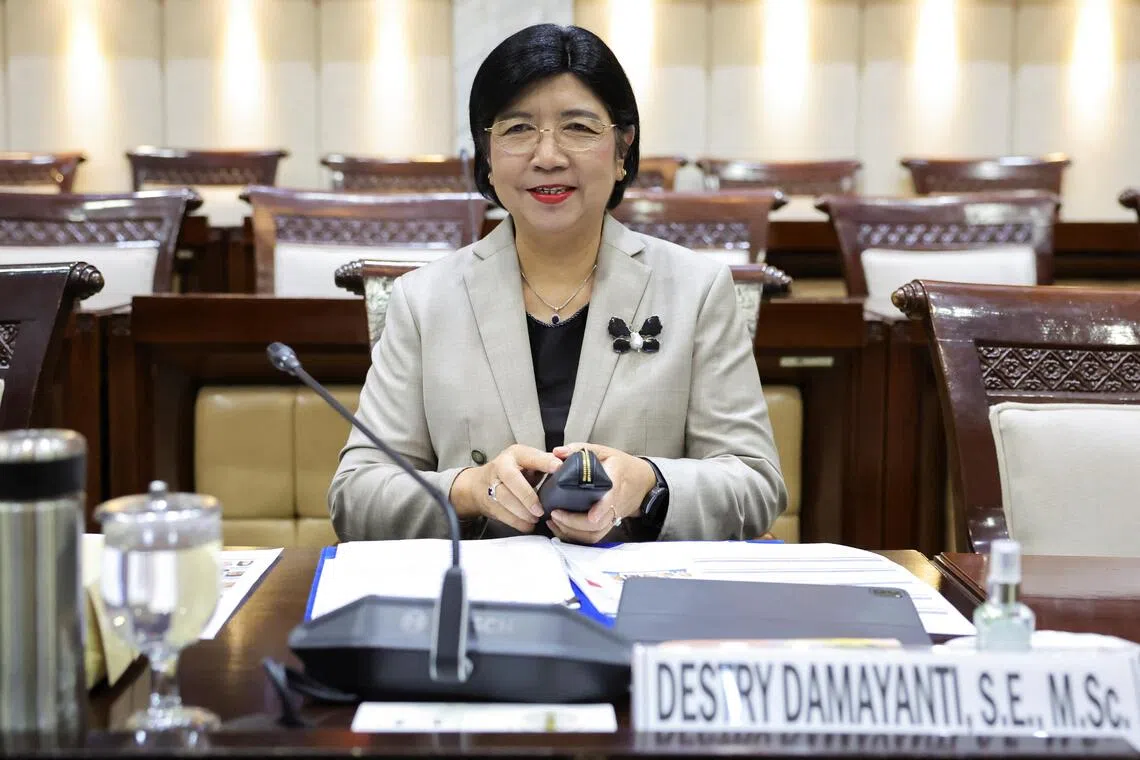
Destry: Inclusive and Sharia Finance Could Be a Game Changer Toward 8% Economic Growth
Arnoldus Kristianus
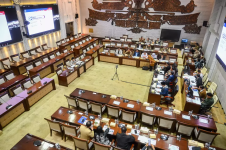
The atmosphere during the fit and proper test for the candidate for Governor of Bank Indonesia (BI) before Commission XI of the House of Representatives at the Parliamentary Complex, Senayan, Jakarta, Wednesday (26 August 2026). (ANTARA FOTO/Rivan Awal Lingga)
JAKARTA, investor.id – Bank Indonesia (BI) Governor candidate Destry Damayanti believes that strengthening inclusive, sustainable, and sharia finance could be a
game changer in driving Indonesia’s economic growth toward 8%.
“Inclusive and sharia finance are key
game changers for Indonesia in driving economic growth to 8%,” Destry said during a fit and proper test at the House of Representatives (DPR) building on Wednesday (26 August 2026).
According to Destry, policies supporting inclusive, sustainable, and sharia finance can support the real sector while also encouraging job creation. Therefore, various initiatives are also being directed toward contributing to the Asta Cita agenda.
However, the development of micro, small, and medium enterprises (MSMEs) and the sharia economy continues to face several challenges. One of these is the relatively stagnant share of sharia banking assets within the financial system.
As of May 2026, total loans and financing in the banking industry reached
Rp8.918 quadrillion (approximately US$504 billion). Of this amount, sharia banking financing accounted for
7.95%, with total financing disbursed reaching
Rp709 trillion (approximately US$40.1 billion).
“Going forward, we will strengthen inclusive financing through stronger macroprudential policies. BI’s sustainable finance policies will continue to be refined, particularly regarding the instruments and methodologies for calculating emissions and carbon currently used by companies and banks,” she said.
Destry said there are five policies that will be pursued to strengthen inclusive, sustainable, and sharia finance.
First, encouraging financing through
business and financing matching and expanding the integration of MSMEs into local and global value chains.
Second, providing assistance to MSMEs through cooperation with government training centers to support job creation and food security.
Third, strengthening the halal value-chain ecosystem while improving halal literacy, inclusion, and lifestyles.
Fourth, increasing financing and deepening the sharia money market, while promoting innovation and expanding the acceptance of sharia financial products.
Fifth, strengthening collaboration in building sustainable-finance ecosystems, standards, and data centers.
Destry added that BI would also provide greater support to the government in creating a conducive investment climate. These efforts are expected to promote real-sector growth and job creation. This can be achieved by maintaining price stability, strengthening both demand and supply, and ensuring adequate financing.
“This is our homework. Each institution has its own respective authority. For the real sector, we work together with the government, while the government itself already has its own plans. So, this is really about synergy,” Destry said.
------------
Indonesia’s Destry says she will back growth policies if confirmed as central bank chief
Destry Damayanti is the sole candidate nominated for Indonesia’s central bank governor. PHOTO: REUTERS
Published Aug 26, 2026, 01:55 PM
JAKARTA – Destry Damayanti, the sole candidate nominated for Indonesia’s central bank governor, on Aug 26 told a vetting panel she will look to support growth and job creation while ensuring financial stability if she becomes Bank Indonesia’s chief.
She also said synergy with other institutions would not reduce Bank Indonesia’s (BI) independence.
Destry, 62, currently interim governor, is undergoing a “fit and proper” hearing in Parliament for the role, which could see her become the first woman to take the top job. It comes at a tumultuous time in Indonesia, with unease among businesses and investors about fiscal management, central bank autonomy, equity market transparency and the stewardship of the US$1.4 trillion (S$1.8 trillion) G-20 economy.
“BI is not only tasked with maintaining the stability of the rupiah exchange rate, the stability of the payment system and the stability of the financial system, but also with implementing a policy mix that can create an economic environment conducive to real sector growth and job creation,” Destry told Parliament’s financial committee in her opening remarks.
With Parliament dominated by parties allied with President Prabowo Subianto, senior deputy governor Destry is widely expected to be confirmed by legislators, who have not rejected a sitting president’s nominee for the post since 2008.
Destry needs to pass a plenary vote before being appointed by the president. The committee’s decision on Destry is expected on Aug 27, with the interview process for the senior deputy chief slot expected later on Aug 26.
Reuters had reported Destry was the front runner for the job and the Aug 10 announcement of her candidacy gave a boost to the rupiah, which has plunged amid capital outflows triggered by anxiety and perceptions of policymaking uncertainty. The rupiah is among Asia’s worst performing currencies, down about 6 per cent against the US dollar, while Indonesian stocks have fallen more than 25% so far this year.
Exchange rate stabilisation to be strengthened
Former economist Destry said exchange-rate stabilisation efforts will continue to be strengthened through smart intervention, while pro-market monetary operations will be optimised to improve policy transmission and ensure adequate liquidity for money markets, the banking sector and the real economy.
Sentiment took a hit with the sudden resignation last month of central bank governor Perry Warjiyo midway through his second term, which followed the exit last year of long-time finance minister Sri Mulyani Indrawati, who was widely respected for her fiscal prudence.
It is not clear whether the new governor would be appointed for a full five-year term, or the remainder of Warjiyo’s tenure, which expires in 2028.
Economists have said the Cornell-educated Destry, a senior Bank Indonesia deputy governor since 2019, would bring continuity to central bank policy and would prioritise stability while maintaining a good working relationship with the Prabowo administration.
At her first meeting as interim governor last week, the central bank held rates steady, prioritising rupiah stability while pledging to deploy other tools to support growth. Analysts said the policy tone was unchanged from that of Warjiyo.
The central bank has raised interest rates by 100 basis points since May to support the rupiah, including its first off-cycle benchmark rate hike in eight years in June. REUTERS
She also said synergy with other institutions would not reduce Bank Indonesia’s independence. Read more at straitstimes.com. Read more at straitstimes.com.

www.straitstimes.com