Indonesia Consumer Behavior Thread (Consumption Side of GDP)

Here’s the latest overview of government (public) debt‑to‑GDP ratios for the ASEAN countries you requested—Malaysia, Indonesia, Singapore, Vietnam, Thailand, and the Philippines—with a ranking from highest to lowest.

ASEAN Government Debt-to-GDP: Latest Figures & Ranking (2024)​

RankCountryGovernment Debt-to-GDP (%)Year / Source
1Singapore173.1%IMF/Wikipedia data as of 31 Dec 2024 (Wikipedia, CEIC Data)
2Malaysia70.4%IMF/Wikipedia data as of 31 Dec 2024 (Wikipedia)
3Thailand63.7%IMF/Wikipedia data as of 31 Dec 2024 (Wikipedia)
4Philippines60.7%IMF/Wikipedia data as of 31 Dec 2024 (Wikipedia)
5Indonesia38.8%IMF/Wikipedia data as of 31 Dec 2024 (Wikipedia)
6Vietnam32.9%IMF/Wikipedia data as of 31 Dec 2024 (Wikipedia)

Additional Context & Insights​

Singapore (173.1%)

  • Singapore's gross government debt is exceptionally high, but this is partly due to its structure of issuing debt not for consumption but to invest in sovereign funds (e.g., GIC, Temasek) and to manage its reserves (Financial Times).
  • Economists often cite that Singapore’s net debt is effectively zero or even negative, thanks to these vast assets and strategic fiscal policies (Financial Times).

Malaysia (70.4%)

  • Public debt stands around 64.6% to 70.4% of GDP, depending on source:
    • CEIC and AMRO reports: 64.6% of GDP as of December 2024 (CEIC Data).
    • CountryEconomy data: around 70.4% of GDP for 2024 (countryeconomy.com).
    • Reuters commentary suggests fiscal concern, with the government aiming to maintain debt around the 64% level in 2025 (Reuters).

Thailand (63.7%)

  • Gross public debt approximately 63.7% of GDP as of end‑2024 (Wikipedia) (aligning with Reuters noting public debt at 63.28% in late 2024) (Reuters).

Philippines (60.7%)

  • Government debt stands around 60.7% of GDP as of end‑2024 (Wikipedia).
  • Additional breakdown: As of October 2024, total national debt was around 61.3% of GDP (Php16.02 trillion) (Wikipedia).

Indonesia (38.8%)

  • Gross public debt is relatively low in ASEAN context: about 38.8% of GDP at end‑2024 (Wikipedia).
  • Previous data from other sources notes 40.5% in 2024 (countryeconomy.com).

Vietnam (32.9%)

  • Government debt ranked lowest among the group at 32.9% of GDP as of 31 Dec 2024 (Cbonds).
  • Notably, Vietnam significantly reduced its debt ratio from 41.3% in 2020 to 33.8% in 2024, highlighting strong GDP growth and improved fiscal metrics (nationthailand.com, asianews.network).

Summary: Ranking by Government Debt Burden​

  1. Singapore – 173.1% (gross; net asset position offsets concerns)
  2. Malaysia – ~70%
  3. Thailand – ~63.7%
  4. Philippines – ~60.7%
  5. Indonesia – ~38.8%
  6. Vietnam – ~32.9%

Key Takeaways​

  • Singapore stands out with extremely high gross debt, but its unique fiscal model—with massive sovereign assets and restrictive borrowing rules—mitigates risk.
  • Malaysia, Thailand, and the Philippines face moderately high public debt levels but remain below thresholds often considered worrisome (~90%).
  • Indonesia and Vietnam maintain relatively low debt burdens, enjoying greater fiscal headroom and stability.
Let me know if you'd like deeper dives into net debt estimates, historical trends, or how these debts compare with metrics like debt servicing ratio or fiscal deficits!
 
Here’s a simplified and clear ranking for each ASEAN country—including public debt-to-GDP, household debt-to-GDP, and the fiscal deficit-to-GDP—based on the most recent available figures:

Summary Table & Rankings​

RankCountryPublic Debt-to-GDPHousehold Debt-to-GDPFiscal Deficit-to-GDP
1SingaporeVery high (~174 %)~52 %(Likely surplus or small deficit)*
2Malaysia~70 %~84.3 %~4.3 % → targeted 3.8 % (2025) (nationthailand, IMF, Reuters)
3Thailand~64 %~88–90 % (highest)(Data not found)
4Philippines~61 %~12 %(Data not found)
5Indonesia~39 %~10 %~2.29 % (2024), projected ~2.5 % (2025) (Reuters)
6Vietnam~33 %(Unavailable)(Data not found)
* Singapore often runs budget surpluses and its borrowing is structured around investment-oriented sovereign assets rather than consumption. This fiscal prudence suggests its fiscal balance is likely small deficit or even surplus, despite debt being high (Financial Times).

Highlights & Observations​

1. Singapore

  • Public debt: Very high (~174% of GDP) (nationthailand).
  • Household debt: Moderate (~52%).
  • Fiscal deficit: Likely low or even positive (surplus), as Singapore regularly maintains balanced budgets and uses debt to fund investments, not current spending (Financial Times).

2. Malaysia

  • Public debt: ~70% of GDP.
  • Household debt: Very high (~84.3%)
  • Fiscal deficit: Estimated at ~4.3%, with efforts to reduce to ~3.8% in 2025 via subsidy reform and revenue changes (apnews.com).

3. Thailand

  • Public debt: ~64% of GDP.
  • Household debt: Very high (~88–90%).
  • Fiscal deficit: Not located in recent sources.

4. Philippines

  • Public debt: ~61% of GDP.
  • Household debt: Low (~12%).
  • Fiscal deficit: Not located.

5. Indonesia

  • Public debt: ~39% of GDP.
  • Household debt: Low (~10%).
  • Fiscal deficit: ~2.29% in 2024; projected ~2.5% in 2025, staying below the 3% ceiling (Reuters).

6. Vietnam

  • Public debt: ~33% of GDP.
  • Household debt & fiscal deficit: Not available in the sources I could access.

Key Takeaways​

  • Singapore leads in public debt but mitigates risk via its unique fiscal model.
  • Thailand has the highest household debt, which may pose internal financial vulnerabilities.
  • Malaysia is actively working to reduce its fiscal deficit via reforms.
  • Indonesia maintains disciplined fiscal policy with moderate deficit levels.
  • Vietnam and the Philippines lack recent fiscal deficit and household debt data—perhaps due to limited public reporting.

Would you like me to dig deeper into Vietnam or the Philippines for more current fiscal balance or household debt info?
 

BI: Optimism Persists, But Job Outlook Weakens​


Akmalal Hamdhi

September 11, 2025 | 10:06 am


Jakarta. Bank Indonesia (BI) reported that consumer confidence in the economy remained upbeat in August despite a slight decline from the previous month. The Consumer Confidence Index (IKK) stood at 117.2, down from 118.1 in July, but still well above the optimistic threshold of 100.


BI Communication Department Head Ramdan Denny Prakoso said the stable outlook was supported by the Current Economic Condition Index (IKE) and the Consumer Expectation Index (IEK). The IEK came in at 129.2, nearly unchanged from 129.6 in July, while the IKE eased to 105.1 from 106.6.


“Consumer optimism in August 2025 was driven by confidence in both current and future economic conditions, which remain in the optimistic zone,” Ramdan said in a statement on Wednesday.

However, the survey revealed growing pessimism over job availability. The Job Availability Index (IKLK) dropped to 93.2 in August, slipping back into the pessimistic zone after briefly improving to 95.3 in July. The index has stayed below the neutral 100 mark since May. “Respondents’ perception of job availability is still in the pessimistic territory,” Ramdan added.


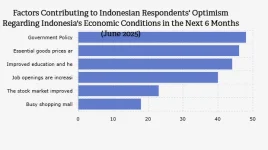
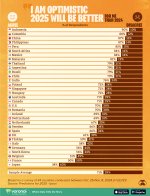
Indonesian citizens remain optimistic about the future economic conditions.​


24/09/2025 18:39


1759310050798.webp


Previous Survey by Ipsos

1759310249532.jpeg
 
Signs of Indonesia’s Economic Improvement Appear in MRT, KRL, and TransJakarta Use


By Zahwa Madjid
CNBC Indonesia
05 November 2025 09:35


To view this content we will need your consent to set third party cookies.
For more detailed information, see our cookies page.

Tanah Abang station, Greater Jakarta Commuter Line/KRL


Jakarta, CNBC Indonesia
— Indonesia’s household economy is expected to improve in early Q4 2025. One of the indicators is the rising mobility of people in major cities, including Jakarta.


This improvement in mobility is reflected in the increasing number of public transportation passengers in Jakarta at the start of the fourth quarter of 2025.


“Higher commuter mobility on weekdays is a signal of increased economic activity,”
stated the Mandiri Spending Index (MSI) report on Tuesday (Nov 4, 2025).

According to Mandiri Spending Index data, the use of MRT, KRL, and TransJakarta has shown an increase since September 2025. The data is collected from Bank Mandiri e-money transactions used for public transportation.


In October 2025:


  • MRT usage reached 111 (based on an index baseline of 100)
  • KRL (commuter line) usage reached 92
  • TransJakarta usage reached 89

The rise in weekday public transit use also aligns with improving labor market conditions in early Q4 2025. Data shows:


  • Layoffs in Q1 2025: 32,000 people
  • Layoffs in Q2 2025: down to 10,000
  • Layoffs in Q3 2025: further down to 3,000

Meanwhile, the Jabodetabek Commuter Line recorded 89,088,257 passengers in Q3 2025, up 4.7% from Q3 2024 (which was approximately 85 million passengers).


For MRT Jakarta, the average daily ridership in September 2025 reached 130,878 passengers, exceeding the DKI Jakarta Provincial Government's target of 117,000 passengers per day.


  • Weekday average: 149,459 passengers/day
  • Weekend average: 87,521 passengers/day
  • Total January–September 2025: 33,401,047 passengers

Even though it is not included in the Mandiri index, LRT Jabodebek also showed rising usage. From August 28, 2023 to October 8, 2025, 47.1 million passengers used the service.


In August 2025:


  • Average weekday ridership: 101,538 passengers/day
  • Up 33.5% compared to the same period in the previous year (76,044 passengers/day)

It is important to note that mobility and economic growth are closely linked. Increased mobility drives economic growth through higher consumption, while stable economic growth supports mobility by creating more job and income opportunities.


In essence, economic activity such as shopping and tourism is fundamentally driven by physical movement—people traveling to work, shop, socialize, or take holidays.


Protests, Sluggish Demand Dampen Indonesia’s Growth to 5%​


By Grace Sihombing and Norman Harsono
November 5, 2025 at 11:09 AM GMT+7
Updated on
November 5, 2025 at 12:23 PM GMT+7

To view this content we will need your consent to set third party cookies.
For more detailed information, see our cookies page.

Prabowo called several ministers after Q3 data come out

Takeaways by Bloomberg AI​

  • Indonesia’s economy decelerated slightly in the third quarter due to social unrest and global trade uncertainty.
  • Gross domestic product rose 5.04% in the July-September period from a year ago, with consumption growing 4.89% and private investment expanding by 5.04%.
  • The country has indicated it’s confident that its growth momentum could pick up in the final quarter of 2025, with the new Finance Minister expecting a pace of 5.5%.


Indonesia’s economy decelerated slightly in the third quarter as social unrest and global trade uncertainty took a toll on domestic consumption and investment.

Gross domestic product rose 5.04% in the July-September period from a year ago, official data showed on Wednesday. That compares with the 5% median estimate of analysts surveyed by Bloomberg and the 5.12% growth pace recorded in the second quarter.

The rupiah held its earlier loss of 0.1% to 16,720 against the dollar after the data. The benchmark stock index was up 0.3%.

The moderation reflects weaker household spending after late August saw the worst street protests in years, fueled by anger over youth unemployment and living costs. Consumption, which accounts for over half Indonesia’s GDP, grew 4.89% last quarter, its weakest print since late 2023.

Geopolitical tensions dampened private investment, which expanded by just 5.04% from 6.99% in the April-June period. Exports were a relatively bright spot for Indonesia. The sector still grew nearly 10% despite the onset of higher US tariffs in August, albeit at a slightly slower pace than the second quarter.

The latest data adds to evidence that Southeast Asian economies are proving resilient in the face of the global trade war, helped by a surge in services and electronics shipments. Vietnam is targeting over 8% GDP growth this year after factories went into overdrive to front-load goods to the US. Thailand raised its 2025 growth forecast to 2.4% from 2.2%, also due to the better-than-expected performance of its exports sector.
1762408080543.png
To view this content we will need your consent to set third party cookies.
For more detailed information, see our cookies page.


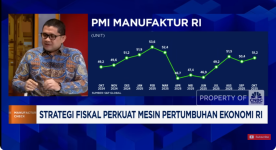
Manufacturing, agriculture and trade remained the biggest contributors to Indonesia’s economy, with education, business services and other services including tourism seeing the highest growth. On a non-seasonally adjusted basis, Indonesia’s third quarter GDP expanded 1.4% from the previous three months, in line with estimates.

Indonesia has indicated it’s confident that its growth momentum could pick up in the final quarter of 2025, with new Finance Minister Purbaya Yudhi Sadewa expecting a pace of 5.5%. He has rolled out cash aid and livelihood programs, and injected $12 billion in cash to state-owned banks to boost lending.

Still, risks remain. Trade wars and uncertainty over the monetary policies of major economies persist, warranting continued efforts to protect domestic consumption and investment — the country’s main drivers of growth.

The central bank left its key interest rate unchanged in October as it assesses the impact of 125 basis points in cuts this year. Governor Perry Warjiyo has said he still sees room to lower rates to support demand but the timing and magnitude would depend on rupiah stability and the effectiveness of policy transmission.

According to Capital Economics, its own tracker of economic activity shows that momentum is slowing down, citing sluggish vehicle sales and consumer confidence. “So long as inflation remains within target, as we expect, Bank Indonesia is likely to deliver a further 75 basis points of rate cuts to 4.00%, by early next year,” it said in a note.

To view this content we will need your consent to set third party cookies.
For more detailed information, see our cookies page.


PT Bank Danamon Indonesia economist Hosianna Evalita Situmorang was more optimistic, as the economy starts to feel the impact of stimulus measures, rate cuts and accelerated public spending.

“The base case is stronger, domestic-demand and capex-led growth in the fourth quarter of 2025, with momentum carrying into early 2026,” she said.


— With assistance from Miaojung Lin

 
Last edited:

Consumer Confidence Index rebounds after hitting 3-year low​


Zetta Hannany, Kholid Rafsanjani
November 10, 2025 11:48 AM

JAKARTA – Bank Indonesia (BI) reported that the Consumer Confidence Index (CCI) recovered in October 2025, after reaching its lowest level in three years the previous month.


Executive Director of BI’s Communications Department, Ramdan Denny Prakoso, said data from the October 2025 Bank Indonesia Consumer Survey (SRBI) showed an increase in CCI across all spending groups.


The index for households with monthly spending above IDR 5 million stood at 125.3, while for those spending between IDR 4.1 million and IDR 5 million it reached 120.4.


Overall, the CCI in October 2025 was recorded at 121.2.


“The increase in consumer confidence in October 2025 was supported by improvements in the Current Economic Condition Index (CECI) and the Consumer Expectation Index (CEI),” Ramdan said in an official statement on Monday (10/11).


The CECI climbed to 109.1 and the CEI to 133.4, compared with 102.7 and 127.2 respectively in the previous month.


As previously reported by IDNFinancials.com, the CCI stood at 115 in September 2025 — its lowest level since September 2022.


Minister of Finance, Purbaya Yudhi Sadewa, attributed the decline to a slowdown in economic activity that led to public demonstrations in several regions.


However, Purbaya — who was inaugurated on 8 September 2025 to replace Sri Mulyani — expressed optimism that Indonesia’s economy would post positive growth in the fourth quarter, supported by a series of stimulus packages funded through spending efficiencies within President Prabowo Subianto’s cabinet. (KR/ZH)


Indonesia Consumer Confidence Hits Six-Month High in October​


Akmalal Hamdhi

November 10, 2025 | 5:55 pm


To view this content we will need your consent to set third party cookies.
For more detailed information, see our cookies page.

Inside a mall in South Jakarta - during Covid period


Jakarta
. Indonesian consumer confidence climbed to its strongest level since April, with Bank Indonesia’s latest survey showing optimism about current and future economic conditions.


The central bank said Monday that the Consumer Confidence Index reached 121.2 in October, up from 115.0 in September, firmly above the 100 threshold that indicates optimism. BI said the improvement reflects stronger sentiment toward both the current economy and the outlook for the next six months.


Both key components of the index improved: the Current Economic Condition Index rose to 109.1 from 102.7, while the Consumer Expectation Index strengthened to 133.4 from 127.2.


Consumers across all spending groups reported higher optimism, with the strongest confidence found among respondents spending more than Rp5 million per month, where the index reached 125.3. The 20–30 year age group recorded the highest optimism across age segments, at 125.0.

Most surveyed cities --including Medan, Pontianak, and Padang-- also showed stronger sentiment.


The improved current-conditions index was supported by gains in all subcomponents: income conditions rose to 117.1, durable goods purchases to 107.5, and job availability to 102.6. Expectations for the next six months also strengthened, driven by rising expectations for income, job availability, and business activity.

 
New Finance Minister with different strategy than previous Finance Minister and his approach to be active with the media is the one that according to many as one of the significant factors behind improving sentiment of Indonesian in general about economy and future

New Finance Minister do sudden inspection to one of SOE banks

To view this content we will need your consent to set third party cookies.
For more detailed information, see our cookies page.
 
To view this content we will need your consent to set third party cookies.
For more detailed information, see our cookies page.


Domestic tourists increases at 19 % this year compared to last year
 
Indonesia’s Consumer Confidence Soars, Highest in 9 Months – Market

Hidayat Setiaji


09 December 2025​


To view this content we will need your consent to set third party cookies.
For more detailed information, see our cookies page.

Blok M, South Jakarta


Bloomberg Technoz, Jakarta
— Bank Indonesia (BI) has released the results of its Consumer Survey for November. The findings show that consumer confidence in the country has strengthened.


On Tuesday (December 9, 2025), BI announced that the Consumer Confidence Index (CCI) reached 124 for November, rising from 121.2 in October.


A CCI score above 100 indicates that consumers are optimistic about the current economic conditions and expect improvement over the next six months.

To view this content we will need your consent to set third party cookies.
For more detailed information, see our cookies page.

GBK at weekend, South Jakarta

The November score of 124 is also the highest since February, meaning consumer confidence has reached its strongest level in the past nine months.


"Improved consumer confidence in November 2025 was supported by an increase in both the Current Economic Condition Index (CECI) and the Consumer Expectation Index (CEI), which recorded scores of 111.5 and 136.6 respectively — higher than the previous month’s scores of 109.1 and 133.4," BI stated in the report.


Jakarta Stocks Jump 1.41% as Trump Signals Iran War Nearing End, Oil Drops Below $100​


Ria Fortuna Wijaya, Associated Press
March 10, 2026 | 4:20 pm

Domestically, Pilarmas highlighted Bank Indonesia data showing consumer confidence remains firmly in optimistic territory. The Consumer Confidence Index (CCI) stood at 125.2 in February 2026, indicating households remain upbeat about the domestic economy.


Bank Indonesia also reported that the Retail Sales Index (IPR) grew 5.7% year-on-year in January 2026. “This achievement reflects stronger consumer demand at the start of the year,” Pilarmas said.


Southeast Asia quarterly economic review: A strong year-end rebound​


March 27, 2026 | Article

Indonesia​


Indonesia closed 2025 on a strong note, with GDP growth accelerating to 5.39 percent in the fourth quarter, the fastest pace since the third quarter of 2022. Household consumption, which accounts for just over half of the country’s economic activity, increased at its quickest rate in over two years, and investments rebounded. However, production and exports continued to weigh on growth due to weaker external demand (Exhibit 3).


Tax Revenue Surges 20.7% in Q1 2026, VAT Leads Growth​


Mis Fransiska Dewi

06 April 2026​


1775490394772.png


Bloomberg Technoz, Jakarta — Finance Minister Purbaya Yudhi Sadewa reported that net tax revenue reached Rp394.8 trillion, growing 20.7% year-on-year (yoy).


VAT Becomes Main Growth Driver​

According to data from the Ministry of Finance, the main contributor to this growth came from:

  • Value Added Tax (VAT / PPN)
  • Luxury Goods Sales Tax (PPnBM)
These taxes recorded Rp155.6 trillion, surging 57.7%, in line with increased economic activity compared to the same period last year.


Income Tax Also Increases​

In addition:

  • Personal Income Tax (PPh)
  • Article 21 Income Tax (PPh 21)
reached Rp61.3 trillion, growing 15.8%.

This reflects:

  • Improved economic conditions among the public
  • Better tax administration performance

Indicator of Economic Recovery​

Purbaya stated that this upward trend indicates improving national economic activity.

The increase also reflects the growing effectiveness of the digital tax administration system, Coretax.

“This reflects an improvement in economic activity, as well as the increasing effectiveness of the Coretax implementation,” said Purbaya during a meeting with Commission XI of the Indonesian House of Representatives, Monday (April 6, 2026).


Consumer Confidence Slips to 120.9 in May, Central Bank Survey Shows​


Arnoldus Kristianus
June 10, 2026 | 2:57 pm


To view this content we will need your consent to set third party cookies.
For more detailed information, see our cookies page.


Jakarta. Consumer confidence in Indonesia eased in May, although households remained broadly optimistic about the economy, according to the latest survey released by Bank Indonesia.


The Consumer Confidence Index fell to 120.9 in May from 123.0 in April. Despite the decline, the index remained well above the 100-point threshold that separates optimism from pessimism.


“Bank Indonesia’s Consumer Survey for May 2026 indicates that consumer confidence in economic conditions remains strong. This is reflected in the Consumer Confidence Index, which remained in optimistic territory at 120.9,” Bank Indonesia Communications Department Head Ramdan Denny Prakoso said in a statement on Wednesday.

Across income groups, consumer sentiment remained positive, with the highest reading recorded among respondents earning more than Rp 5 million ($275) per month, whose index stood at 124.6.

By age group, confidence also remained firmly optimistic, led by respondents aged 20 to 30, whose index reached 129.1.

Regionally, the largest improvements in consumer confidence were recorded in Medan, Bandar Lampung, and Palembang, while declines were reported in Pontianak, Mataram, and Banjarmasin.


According to Ramdan, consumer optimism continued to be supported by favorable perceptions of current economic conditions as well as expectations for the future.


The Current Economic Conditions Index stood at 112.2, while the Consumer Expectations Index reached 129.7.


Several key components of the survey remained in positive territory despite moderating from the previous month. The Current Income Index stood at 123.2, the Job Availability Index at 105.0, and the Durable Goods Purchase Index at 108.3, compared with 128.1, 108.8, and 112.6, respectively, in April.


Meanwhile, consumers' outlook for the economy improved marginally. The Consumer Expectations Index rose to 129.7 in May from 129.6 a month earlier, indicating sustained confidence in future economic prospects.


The survey also showed household spending patterns remained relatively stable. The average propensity-to-consume ratio, which measures the share of income spent on consumption, stood at 72.3%, little changed from 72.1% in April.


However, the debt-installment-to-income ratio increased to 10.2% from 9.7%, suggesting households devoted a slightly larger portion of their income to debt repayments during the month.


Users who are viewing this thread

Country Watch Latest

Back
Top