Indonesian International Commercial Trade Thread

Toyota Accounts for Nearly 58% of Indonesia's Vehicle Exports​


Heru Andriyanto
July 27, 2026 | 11:42 pm

1785220667355.png
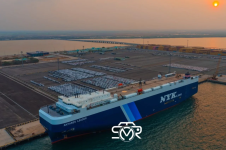
This undated photo from Toyota Motor Manufacturing Indonesia (TMMIN) shows a row of Toyota vehicles waiting to be loaded onto a vessel for shipment to export markets at Patimban Port, Subang Regency, West Java. (TMMI via JG)


Jakarta.
Toyota Indonesia exported 145,080 completely built-up (CBU) vehicles in the first half of 2026, a 10.7% increase from a year earlier that outpaced growth in Indonesia's overall vehicle exports.

Citing data from the Association of Indonesian Automotive Industries (Gaikindo), the company said on Monday that Toyota accounted for 57.6% of Indonesia's total vehicle exports of 251,705 units during the January-June period. National vehicle exports rose 7.7% year on year.

President Director of PT Toyota Motor Manufacturing Indonesia (TMMIN) Nandi Julyanto attributed the stronger export performance to sustained demand across overseas markets.

"Our consistent export performance reflects the hard work of Indonesia's workforce, collaboration with more than 760 local suppliers, including small and medium-sized enterprises, and support from the Indonesian government," Nandi said in a statement.

Asia remained Toyota Indonesia's largest export destination, accounting for 57.8% of shipments, followed by the Americas (29.5%) and the Middle East (12.0%).

1785220793110.png
This undated photo from Toyota Motor Manufacturing Indonesia (TMMI) shows a Toyota vehicle driving onto a vessel for shipment to export markets at Patimban Port, Subang Regency, West Java. (TMMI via JG)


Toyota said its export performance was also supported by shipments of completely knocked down (CKD) kits, vehicle components, fully assembled engines, engine parts and production equipment.

Among passenger vehicles, the Avanza and Veloz led exports with 32,571 units, followed by the Raize with 26,082 units and the Yaris Cross with 20,441 units during the first six months of the year.

The company said exports of its hybrid models -- the Innova Zenix Hybrid and Yaris Cross Hybrid -- rose 46.4% from a year earlier. Since production began in 2023, cumulative exports of the two models have exceeded 62,906 units.

Toyota has exported vehicles from Indonesia since 1987 and has shipped more than 3.3 million vehicles to over 100 countries across Asia, the Americas, Africa, the Middle East, Australia and Oceania.
 

Downstream Products Now Account for Over 80% of Indonesia's Palm Oil Exports​


Eva Fitriani
July 31, 2026 | 10:44 am

1785472457677.png
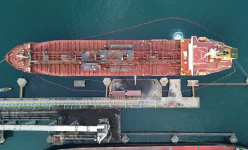
This aerial photo shows a tanker loading crude palm oil (CPO) at Teluk Bayur Port in Padang, West Sumatra, on Tuesday, April 28, 2026. (Antara Photo/Fitra Yogi)

Pangkalan Bun. More than 80% of Indonesia's palm oil exports now consist of value-added downstream products rather than crude palm oil, reflecting the growing impact of the government's industrialization strategy, an official said.

Zaid Burhan Ibrahim, finance director of the Palm Oil Plantation Fund Management Agency (BPDP), said palm oil remains one of Indonesia's leading export commodities, generating more than $20 billion in annual export revenue.

"More than 80% of Indonesia's palm oil exports are now in the form of downstream products. This shows that downstream industrialization is creating greater added value for the national economy," Zaid said during a press briefing in Pangkalan Bun, Central Kalimantan.

He said Indonesia's downstream palm oil industry has expanded through four major sectors.

The first is food and consumer products, which process crude palm oil (CPO) and crude palm kernel oil (CPKO) into products such as cooking oil, margarine, bakery ingredients, and vitamins A and E.

The second is the oleochemical industry, which supplies raw materials for products including soap, detergents, cosmetics, and skincare items.

The third is renewable energy, where palm oil is processed into biodiesel, sustainable aviation fuel, and blended gasoline.

The fourth utilizes palm biomass, including empty fruit bunches, fronds, trunks, and fibers, to produce products such as animal feed, handicrafts, and bioethanol.

According to Zaid, the expansion of these downstream industries has not only increased the value of Indonesia's exports but also broadened the economic benefits generated by the palm oil sector.

BPDP estimates that the industry currently supports around 16.5 million jobs, both directly and indirectly.

About 9.7 million people work directly in plantations, including 5.2 million employed by smallholders and 4.5 million by state-owned and private plantation companies. Another 8 million jobs are supported by related industries, including transportation, fertilizer production, plantation equipment, logistics, and other services.

"When we talk about palm oil, we are really talking about the livelihoods of millions of Indonesians," Zaid said.

He added that palm oil's contribution extends beyond export earnings. In 2025, the plantation sector accounted for 4.56% of Indonesia's gross domestic product, while independent smallholders managed about 41% of the country's oil palm plantations.

Those plantations produce more than 16 million tons of palm oil annually, with productivity continuing to improve.

"These figures show that smallholders are not merely supporting players in Indonesia's palm oil industry -- they are among the key actors in the national supply chain," Zaid said.


Bumi Resources Sets 84 Million-Ton Coal Sales Target After Profit Jumps 87%​


Erta Darwati
July 31, 2026 | 9:48 pm

1785566766280.png
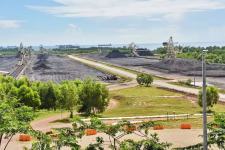
Coal stockpiles and loading facilities are seen at a Bumi Resources site near the coast, with cargo ships waiting offshore for coal deliveries in an undated photo. (Photo Courtesy of Bumi Resources/Mahmud Samuri)


Jakarta. Bumi Resources (IDX: BUMI), the Bakrie and Salim Group-backed coal producer, is targeting coal sales of as much as 84 million metric tons this year as stronger volumes, higher prices and improved mining efficiency lifted first-half profit.

The company expects to sell 82 million to 84 million tons of coal in 2026 at an average price of $60 to $62 a ton, while keeping production costs at about $42 to $44 a ton, according to a statement Friday.

Bumi Resources sold 38.8 million tons in the first half, roughly half its full-year target, putting the company on track to meet its guidance. Average free-on-board coal prices reached $62.90 a ton during the period, near the upper end of its annual forecast.

The Jakarta-listed miner plans to maintain its operational improvements while exercising capital discipline and advancing diversification, including the integration of recently acquired assets in Australia, management said.

Bumi’s revenue rose 27.9% to $866.8 million in the six months through June, while pretax profit more than doubled, climbing 102.5% to $104.3 million.

Net income increased 87.4% to $72.3 million, while profit attributable to shareholders of the parent company jumped 188.4% to $58.9 million. The stronger attributable earnings partly reflected contributions from the company’s Australian assets, which were not included in the year-earlier comparison.

Operating profit rose 50.3% to $83.1 million, outpacing revenue growth and pushing the operating margin to 9.6% from 8.2% a year earlier.

The improvement reflected higher production and sales as well as mining efficiencies. Coal production rose 7.1% to 38.5 million tons, while sales increased 11.7% to 38.8 million tons.

The company’s average free-on-board coal price also recovered 2.6% from a year earlier to $62.90 a ton.

Bumi said its strip ratio, a measure of the amount of overburden that must be removed to access coal, improved to 7.5 times from 8.1 times, while overburden removal remained relatively stable.

The improvement allowed the company to produce more coal without a significant increase in the amount of waste material removed, supporting stronger margins.

Inventory fell to 1.7 million tons from 2.7 million tons a year earlier as sales growth outpaced production, signaling continued strength in demand and shipments.

The company also said it would focus on sustaining its first-half operational gains while pursuing diversification to strengthen resilience against swings in the commodity cycle. Its Australian assets are expected to form part of that strategy as Bumi seeks to broaden its earnings base beyond its Indonesian coal operations.


Indonesia’s Top 10 Exports​


by Daniel Workman


To view this content we will need your consent to set third party cookies.
For more detailed information, see our cookies page.

Labuan Bajo, Eastern Indonesia


Located mostly in Southeast Asia but extending to some territories in the Oceania continent across from Australia, the Republic of Indonesia shipped US$282.9 billion worth of exported products around the world in 2025.

That dollar amount results from a 22.2% advance since five years earlier in 2021 when Indonesian exports totaled $231.6 billion.

Year over year, the overall value of Indonesian exports rose 6.9% compared to $264.7 billion in 2024.

Based on the average exchange rate for 2025, the Indonesian rupiah appreciated by 15.1% against the US dollar from 2024 to 2025. Indonesia’s stronger local currency made its exports paid for in weaker US dollars relatively more expensive for international buyers in 2025 starting with American currency.

Major Customers for Indonesian Exported Products​

The latest available country-specific data shows that 74.9% of products exported from Indonesia was bought by importers in: mainland China (23.7% of the Indonesian total), United States of America (11%), India (6.5%), Japan (6.2%), Singapore (4.8%), Malaysia (4.6%), Vietnam (3.8%), Philippines (3.61%), South Korea (3.59%), Thailand (3.1%), Netherlands (2.01%) and Taiwan (1.96%).

From a continental perspective, 70.9% of Indonesia’s exports by value was delivered to fellow Asian countries while 12.4% was sold to importers in North America. Indonesia shipped another 10% worth of goods to buyers in Europe.

Smaller percentages went to customers in Africa (3%), Latin America (1.85%) excluding Mexico but including the Caribbean, and Oceania (also 1.85%) led by Australia.

Indonesia’s Top 10 Exports​

The following export product groups represent the highest dollar value in Indonesian global shipments during 2025. Also shown is the percentage share each export category represents in terms of overall exports from Indonesia.

  1. Mineral fuels including oil: US$45.1 billion (15.9% of total exports)
  2. Animal/vegetable fats, oils, waxes: $34.4 billion (12.1%)
  3. Iron, steel: $28 billion (9.9%)
  4. Electrical machinery, equipment: $19.2 billion (6.8%)
  5. Vehicles: $12.2 billion (4.3%)
  6. Gems, precious metals: $11.7 billion (4.1%)
  7. Nickel: $9.7 billion (3.4%)
  8. Other chemical goods: $9.5 billion (3.4%)
  9. Machinery including computers: $8.2 billion (2.9%)
  10. Footwear: $8 billion (2.8%)
By value, Indonesia’s top 10 export product categories totaled nearly two-thirds (65.7%) of Indonesia’s total exports.

Miscellaneous chemical products was the fastest grower among the top 10 export categories, up by 45.7% from 2024 to 2025.

Products Generating Highest Trade Surpluses for Indonesia​

Overall, Indonesia generated a US$41.1 billion trade surplus for 2025, expanding by 32.2% from $31 billion in black ink one year earlier in 2024.

The following types of Indonesian product shipments represent positive net exports or a trade balance surplus. Investopedia defines net exports as the value of a country’s total exports minus the value of its total imports.

In a nutshell, net exports represent the amount by which foreign spending on a home country’s goods or services exceeds or lags the home country’s spending on foreign goods or services.

  1. Animal/vegetable fats, oils, waxes: US$34.1 billion (Up by 28.8% since 2024)
  2. Iron, steel: $18.4 billion (Up by 21.8%)
  3. Nickel: $9.6 billion (Up by 22.1%)
  4. Mineral fuels including oil: $8.3 billion (Down by -44.1%)
  5. Footwear: $6.7 billion (Up by 11.1%)
  6. Gems, precious metals: $6.5 billion (Up by 58.7%)
  7. Other chemical goods: $4.3 billion (Up by 53.2%)
  8. Knit or crochet clothing, accessories: $4.1 billion (Up by 9.0%)
  9. Clothing, accessories (not knit or crochet): $3.9 billion (Down by -1.8%)
  10. Fish: $3.8 billion (Up by 2.1%)
Indonesia has highly positive net exports in the international trade of animal or vegetable fats, oils and waxes. In turn, these cashflows indicate Indonesia’s strong competitive advantages under that product category.


Users who are viewing this thread

Pakistan Defence Latest

Back
Top