Indonesian International Commercial Trade Thread

Toyota Accounts for Nearly 58% of Indonesia's Vehicle Exports​


Heru Andriyanto
July 27, 2026 | 11:42 pm

1785220667355.png
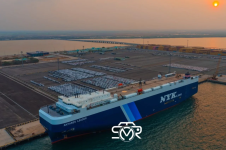
This undated photo from Toyota Motor Manufacturing Indonesia (TMMIN) shows a row of Toyota vehicles waiting to be loaded onto a vessel for shipment to export markets at Patimban Port, Subang Regency, West Java. (TMMI via JG)


Jakarta.
Toyota Indonesia exported 145,080 completely built-up (CBU) vehicles in the first half of 2026, a 10.7% increase from a year earlier that outpaced growth in Indonesia's overall vehicle exports.

Citing data from the Association of Indonesian Automotive Industries (Gaikindo), the company said on Monday that Toyota accounted for 57.6% of Indonesia's total vehicle exports of 251,705 units during the January-June period. National vehicle exports rose 7.7% year on year.

President Director of PT Toyota Motor Manufacturing Indonesia (TMMIN) Nandi Julyanto attributed the stronger export performance to sustained demand across overseas markets.

"Our consistent export performance reflects the hard work of Indonesia's workforce, collaboration with more than 760 local suppliers, including small and medium-sized enterprises, and support from the Indonesian government," Nandi said in a statement.

Asia remained Toyota Indonesia's largest export destination, accounting for 57.8% of shipments, followed by the Americas (29.5%) and the Middle East (12.0%).

1785220793110.png
This undated photo from Toyota Motor Manufacturing Indonesia (TMMI) shows a Toyota vehicle driving onto a vessel for shipment to export markets at Patimban Port, Subang Regency, West Java. (TMMI via JG)


Toyota said its export performance was also supported by shipments of completely knocked down (CKD) kits, vehicle components, fully assembled engines, engine parts and production equipment.

Among passenger vehicles, the Avanza and Veloz led exports with 32,571 units, followed by the Raize with 26,082 units and the Yaris Cross with 20,441 units during the first six months of the year.

The company said exports of its hybrid models -- the Innova Zenix Hybrid and Yaris Cross Hybrid -- rose 46.4% from a year earlier. Since production began in 2023, cumulative exports of the two models have exceeded 62,906 units.

Toyota has exported vehicles from Indonesia since 1987 and has shipped more than 3.3 million vehicles to over 100 countries across Asia, the Americas, Africa, the Middle East, Australia and Oceania.
 

Indonesia Posts US$5.8 Billion Trade Surplus with China in First Half of 2026, Kadin Chairman Says​


Emir Yanwardhana, CNBC Indonesia
23 July 2026 14:30


To view this content we will need your consent to set third party cookies.
For more detailed information, see our cookies page.

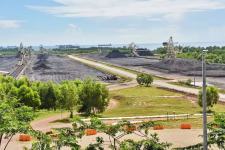
Batang Industrial Zone, Central Java


JAKARTA
– Indonesia recorded a trade surplus of US$5.8 billion (approximately IDR 103.9 trillion) with China during the first half of 2026, according to Anindya Novyan Bakrie, Chairman of the Indonesian Chamber of Commerce and Industry (Kadin).

Speaking at the Indonesia–China Partnership Forum in Jakarta on Thursday (July 23, 2026), Anindya said total bilateral trade between the two countries reached US$100 billion (approximately IDR 1.79 quadrillion) during the first six months of the year.

"This demonstrates that the two countries can continue to strengthen their cooperation. China is Indonesia's largest trading partner, and this year we have also recorded a trade surplus of around US$5.8 billion," Anindya told reporters.
According to Anindya, discussions at the forum focused on expanding cooperation in human resource development, partnerships between businesses and governments, and collaboration among educational institutions.

"This is particularly important because Indonesia has a large workforce and is benefiting from a demographic dividend. Hopefully, Indonesia and China can work together toward realizing Indonesia Emas 2045," he said.

In his remarks, Anindya Novyan Bakrie, who also serves as President Director and CEO of PT Bakrie & Brothers Tbk, highlighted the success of the Local Currency Transaction (LCT) framework between Bank Indonesia and the Bank of China.

He noted that transactions settled directly in Indonesian rupiah and Chinese yuan had increased by 300%, alongside the introduction of QRIS payment services in China.

"This is an extraordinary achievement," he said.
Anindya added that China and Hong Kong remain among Indonesia's largest sources of foreign investment.

He said Indonesia continues to offer substantial investment opportunities, particularly in advanced technologies and the green energy sector.

Indonesia also possesses significant reserves of critical minerals, including nickel, copper, and bauxite, and Anindya encouraged Chinese companies to expand investment in downstream processing and resource development.

"Indonesia has abundant critical minerals that can be developed together with our partners from China. We also see growing cooperation in education, with Indonesian students studying in China and vice versa," he said.
Anindya emphasized that Indonesia seeks not only to expand trade with China but also to increase technology transfer and create greater value-added industries.

He also highlighted investment opportunities in clean energy, including hydropower, geothermal, solar, and wind energy, saying these sectors offer significant potential for deeper Indonesia–China collaboration.


Downstream Products Now Account for Over 80% of Indonesia's Palm Oil Exports​


Eva Fitriani
July 31, 2026 | 10:44 am

1785472457677.png
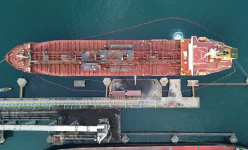
This aerial photo shows a tanker loading crude palm oil (CPO) at Teluk Bayur Port in Padang, West Sumatra, on Tuesday, April 28, 2026. (Antara Photo/Fitra Yogi)

Pangkalan Bun. More than 80% of Indonesia's palm oil exports now consist of value-added downstream products rather than crude palm oil, reflecting the growing impact of the government's industrialization strategy, an official said.

Zaid Burhan Ibrahim, finance director of the Palm Oil Plantation Fund Management Agency (BPDP), said palm oil remains one of Indonesia's leading export commodities, generating more than $20 billion in annual export revenue.

"More than 80% of Indonesia's palm oil exports are now in the form of downstream products. This shows that downstream industrialization is creating greater added value for the national economy," Zaid said during a press briefing in Pangkalan Bun, Central Kalimantan.

He said Indonesia's downstream palm oil industry has expanded through four major sectors.

The first is food and consumer products, which process crude palm oil (CPO) and crude palm kernel oil (CPKO) into products such as cooking oil, margarine, bakery ingredients, and vitamins A and E.

The second is the oleochemical industry, which supplies raw materials for products including soap, detergents, cosmetics, and skincare items.

The third is renewable energy, where palm oil is processed into biodiesel, sustainable aviation fuel, and blended gasoline.

The fourth utilizes palm biomass, including empty fruit bunches, fronds, trunks, and fibers, to produce products such as animal feed, handicrafts, and bioethanol.

According to Zaid, the expansion of these downstream industries has not only increased the value of Indonesia's exports but also broadened the economic benefits generated by the palm oil sector.

BPDP estimates that the industry currently supports around 16.5 million jobs, both directly and indirectly.

About 9.7 million people work directly in plantations, including 5.2 million employed by smallholders and 4.5 million by state-owned and private plantation companies. Another 8 million jobs are supported by related industries, including transportation, fertilizer production, plantation equipment, logistics, and other services.

"When we talk about palm oil, we are really talking about the livelihoods of millions of Indonesians," Zaid said.

He added that palm oil's contribution extends beyond export earnings. In 2025, the plantation sector accounted for 4.56% of Indonesia's gross domestic product, while independent smallholders managed about 41% of the country's oil palm plantations.

Those plantations produce more than 16 million tons of palm oil annually, with productivity continuing to improve.

"These figures show that smallholders are not merely supporting players in Indonesia's palm oil industry -- they are among the key actors in the national supply chain," Zaid said.


Users who are viewing this thread

Back
Top