Indonesia Digital Economy

Indonesia to Build 1 GW AI Factory, the Largest in Southeast Asia​


Agus Tri Haryanto - detikInet
Sabtu, 08 Agu 2026 11:00 WIB

1786183224745.png

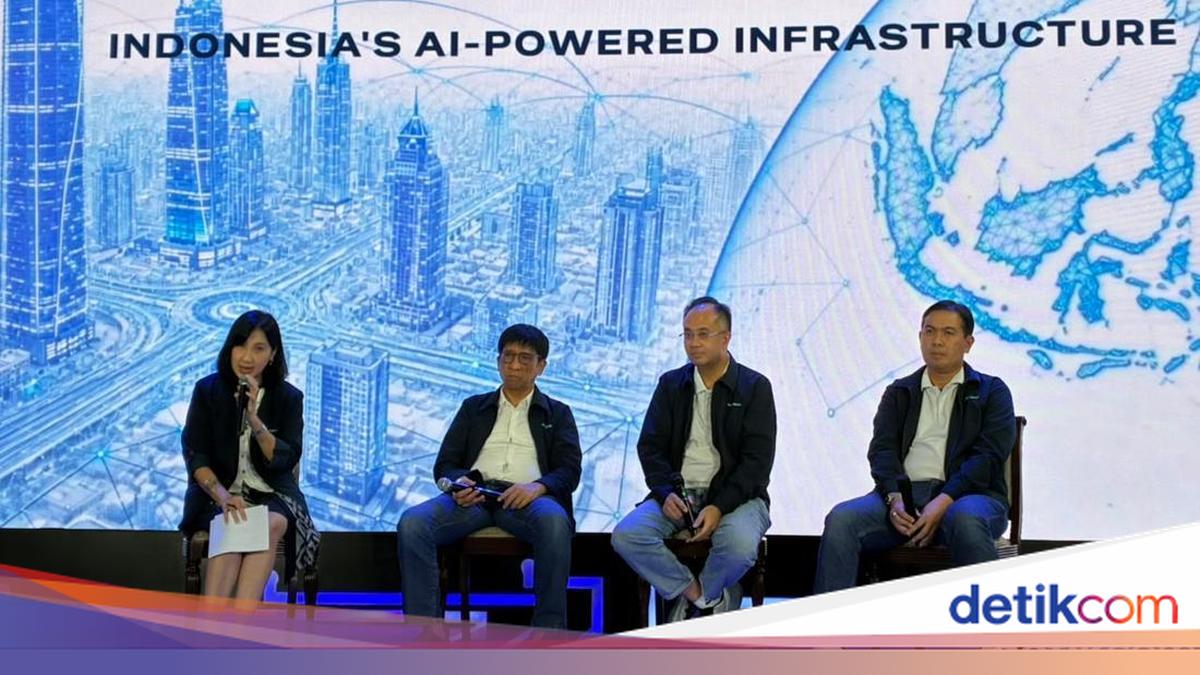
JAKARTA – Indonesia is preparing to develop an AI Factory with capacity of up to 1 gigawatt (GW), which is claimed to become the largest in Southeast Asia. Construction of the massive AI computing infrastructure is targeted to begin in 2027, forming a key part of Indonesia's ambition to become an artificial intelligence (AI) hub in Southeast Asia.

The project will be developed through the launch of Zankore by Indosat, a collaboration involving Indosat Ooredoo Hutchison, Ooredoo Group, Nokia, and NVIDIA. The AI Factory is targeted to reach 1 GW of capacity within three years.

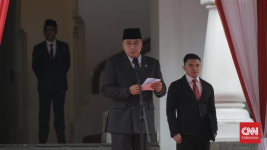
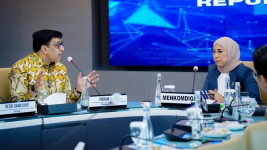
Minister of Communications and Digital Affairs Meutya Hafid said the investment reflects growing confidence among global technology companies in Indonesia's digital economy.

"The government welcomes the commitment of four global technology companies to build an AI Factory in Indonesia. This investment demonstrates growing global confidence in the future of Indonesia's digital economy, while strengthening Indonesia's position as a destination for high-value technology investment," Meutya said in a written statement received by detikINET on Saturday (August 8, 2026).
1786183279949.png

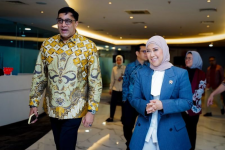
Minister of Communications and Digital Affairs Meutya Hafid and Vikram Sinha, President Director and Chief Executive Officer of Indosat Ooredoo Hutchison. (Photo: Komdigi)

What Is an AI Factory?​

Unlike a conventional data center, an AI Factory is computing infrastructure specifically designed to develop and operate artificial intelligence services at scale.

The facility integrates AI-ready data centers, high-performance GPUs, networking, data storage, GPU-as-a-Service, and AI workload management systems within a single ecosystem.

The government believes the facility will provide a foundation for developing a wide range of national AI services across government, industry, education, and micro, small and medium enterprises (MSMEs).

Building an AI Factory requires substantial investment. Various international studies estimate that end-to-end AI infrastructure investment can reach approximately US$50 million for every 1 MW of computing capacity.

With a targeted capacity of 1,000 MW, or 1 GW, the Indonesian project could become one of the largest AI infrastructure investments ever announced in Southeast Asia.
1786183398926.png

Construction in Batang to Begin in 2027​

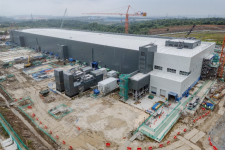
The first phase of the AI Factory is scheduled to begin construction in the first half of 2027 in Batang, Central Java.

The facility will initially have approximately 200 MW of capacity, which will subsequently be expanded in stages to 1 GW.


Meutya said plans for the AI Factory had been under preparation for several years and were now entering the implementation stage.

"This plan was initiated from the beginning and presented to President Prabowo Subianto two years ago. The entire process has now reached its final stage, allowing it to be announced to the public," she said.
Beyond providing computing capacity, the AI Factory will also host Sahabat-AI, Indonesia's open-source large language model (LLM) with 70 billion parameters. The model supports Indonesian and several regional languages, including Javanese, Sundanese, Balinese, and Batak.

The platform will also provide Token-as-a-Service, designed to make access to AI computing more affordable for businesses, application developers, government ministries and agencies, and MSMEs.

According to Meutya, the project is not merely about constructing a large data center but about establishing the foundation of an integrated national AI ecosystem.

"What is being built is not simply a data center or computing infrastructure. This is the foundation of a comprehensive national AI ecosystem, ranging from computing capacity and AI services to the development of Indonesian-language models that can be utilized across various sectors. The AI Factory will strengthen Indonesia's position as a regional AI hub because it will be capable of serving both domestic and regional demand," Meutya said.

Indonesia's First GPU Manufacturing Facility to Follow​

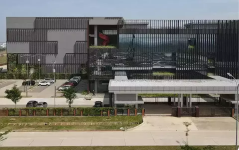
The government also said development of Indonesia's first GPU manufacturing facility in Cikarang remains underway and is targeted to begin operations in December 2026.

The facility is expected to complement Indonesia's domestic AI industry supply chain, extending from hardware manufacturing to the provision of AI computing capacity.

Meutya said Indonesia's combination of digital infrastructure, energy availability, a large domestic market, and supportive government policies provides a strong foundation for the country to emerge as a regional AI development hub.

"When infrastructure, markets, talent, and policies move together, Indonesia has a strong foundation to become one of the region's AI development centers. The government will continue to ensure a conducive investment climate so that AI innovation can grow while delivering tangible benefits to society," she said.

 
NVIDIA CEO in Indonesia


TLKM, ISAT, DSSA and DCII Compete for Indonesia’s Data Center Market​


23 Aug 2026

1787643692964.png
NeutraDC data center, a subsidiary of PT Telkom Indonesia Tbk (TLKM), in Cikarang. (Photo: NeutraDC)


Jakarta
— Indonesia’s data center industry is entering a major expansion phase, with PT Telkom Indonesia Tbk (TLKM), PT Indosat Tbk (ISAT), PT Dian Swastatika Sentosa Tbk (DSSA), and PT DCI Indonesia Tbk (DCII) seen as offering the most direct exposure to the sector’s growth.

According to research by BRI Danareksa Sekuritas analysts Kafi Ananta and Erindra Krisnawan, cited on Sunday (Aug. 23, 2026), Indonesia had around 580 megawatts (MW) of installed data center IT capacity in the first half of 2026.

That capacity is projected to surge to 3.5 gigawatts (GW) by 2030.

“This reflects a projected compound annual growth rate (CAGR) of 56.7% during the 2026–2030 period,” the analysts wrote.

The expansion is being driven primarily by growing demand for cloud services and artificial intelligence (AI) infrastructure, particularly systems requiring high-performance graphics processing units (GPUs).

Beyond the four major listed companies, PT NexAI Digital Infrastruktur Tbk (MGLV), PT Sinergi Inti Andalan Prima Tbk (INET), and PT Bakrie & Brothers Tbk (BNBR) remain at earlier stages of development. The analysts said the three companies are worth monitoring as they develop their respective data center assets.


Indonesia Could Capture Regional Data Center Expansion​

Kafi and Erindra see Indonesia as a potential next destination for regional data center expansion as Singapore limits additions of new capacity.

At the same time, Johor, Malaysia, which has already emerged as a major destination for demand spilling over from Singapore, is beginning to encounter constraints in electricity supply. The situation could create greater opportunities for Indonesia to capture additional regional capacity expansion.

Around 55% of Indonesia’s data center capacity is still located in Jakarta. However, the scale of planned developments in Jakarta and Batam indicates that the industry remains in the early stages of expansion.

Jakarta has around 1.7 GW of capacity in the development pipeline, compared with only 322 MW currently in operation. This puts its pipeline-to-operational-capacity ratio at 5.3 times.

Batam has an even larger 1.4 GW development pipeline, compared with just 126 MW of operating capacity.

The large gap between existing capacity and planned developments indicates substantial room for further expansion.

Batam Targets Regional Hyperscale Demand​

The characteristics of Batam’s data center market differ from those of Jakarta.

Batam is capturing more regional spillover demand, with the hyperscale segment — very large data centers serving global technology companies and cloud service providers — accounting for around 71% of capacity.

Data center development in Batam is also largely being driven by private companies and foreign investors.

Jakarta, by contrast, is more heavily supported by domestic demand.

Hyperscale facilities account for around 34% of Jakarta’s capacity, although their use is more heavily oriented toward cloud services rather than AI workloads.

Kafi and Erindra said the largest capacity commitments and projects currently under construction remain concentrated among private operators and foreign-backed companies.

Several of these projects involve significant planned capacity, including DAMAC Digital at 163 MW, Princeton Digital at 360 MW, ST Telemedia at 322 MW, GDC at 200 MW, DayOne at 450 MW, EdgeConneX at 200 MW, BW Digital at 120 MW, and Racks Central at 95 MW.


Telkom Accelerates Digital Infrastructure Development, Here Is Its Strategy​


Novina Putri Bestari

1787759181759.png
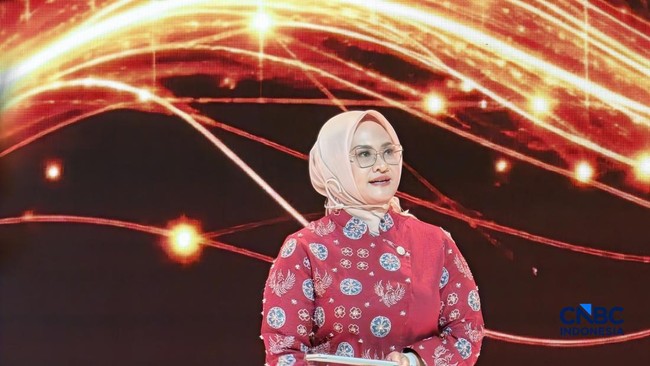
Telkom President Director, Dian Siswarini


NUSA DUA, CNBC Indonesia –
PT Telkom Indonesia (Persero) Tbk has confirmed that it will continue expanding its digital infrastructure. Telkom President Director Dian Siswarini said demand for digital connectivity is currently growing rapidly.

“We are continuing to build and expand our digital infrastructure. We know that demand is actually increasing now,” Dian said in her opening keynote address at the Bali Annual Telkom International Conference (BATIC) 2026 in Nusa Dua, Bali, on Wednesday (26 August 2026).


So far, Telkom has built 545,011 kilometers of fiber-optic networks, comprising 115,844 kilometers of domestic routes and 429,167 kilometers of international routes.

For international submarine cables, Telkom currently operates 34 submarine cable systems, consisting of 12 systems that it owns through consortium arrangements and 22 systems in which it utilizes its own capacity.

More than 98% of Indonesia’s population is also covered by Telkomsel’s BTS network. In addition, Telkom has 36 data centers, both domestically and internationally, and operates three satellites.

Dian said that operating and developing infrastructure is no longer simply about connecting one point to another. Instead, it is necessary to integrate the capabilities of each component of the digital infrastructure.

“So, it is about how we connect international corridors to domestic networks, networks to data centers and computing, and infrastructure to intelligent digital services and enterprise solutions,” Dian explained.

Telkom is currently developing a platform for digital growth aimed at connecting Indonesia with the rest of the world. The initiative is expected to bring various global digital opportunities into Indonesia.

The rapid development of artificial intelligence (AI) technology is also encouraging Telkom to align its infrastructure capacity with capabilities, talent, and innovation.

“So, what we are emphasizing here is that it is not enough simply to build this infrastructure to expand scale and capacity. We must also introduce intelligent capabilities, greater innovation, and more advanced technologies into this infrastructure,” she concluded.


Indonesia to Assemble GPUs Domestically, Targets Production in December​


Aisyah Kamaliah
Rabu, 26 Agu 2026


1787822769215.png

Jakarta
– PT Infra Fiber Teknologi (IFT) will establish a graphics processing unit (GPU) manufacturing and assembly operation as part of efforts to develop a digital infrastructure superhighway. The move is said to make the company a pioneer in Indonesia, following Malaysia, which already has semiconductor manufacturing operations.

Arsari Group Deputy CEO and COO Aryo Djojohadikusumo said IFT does not want to remain merely a fiber-optic cable company or a company focused solely on physical digital infrastructure.

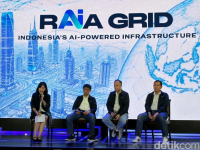
“It is time for us to enter manufacturing and assembly in Indonesia. Today, we are also announcing that by the end of this year, in December 2026, IFT will begin GPU manufacturing and assembly in Indonesia,” he said at the “RAIA Grid Press Conference” on Wednesday (26 August 2026).

“We are not just talking about potential; we are talking about action. We are not talking about the future; we are talking about today, because without today there is no future,” he added.

RAIA Grid Director of Finance Hendra Purnama said the company is currently searching for a suitable location or property. It is deliberately looking for a site with an existing building so that only renovation work will be required.

“With renovation, we may only need around two and a half months. Within two and a half to three months, the facility should be available and we can begin production. So, we expect the first production to begin in December,” he said.

1787822798231.png
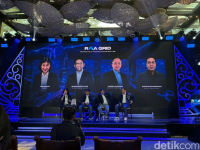
The atmosphere at the event. Photo: Aisyah Kamaliah

He said demand for their GPUs is high, particularly from data centers. Without GPUs, data centers were described as little more than “cold properties.”

“Globally, there is a shortage of GPUs themselves. Most will source them from places such as Penang, Malaysia, and possibly from the US. We expect to be able to begin production in December,” he emphasized.

Production is therefore expected to reach full capacity in January, at approximately 140 to 150 units per month. The company claims that many customers are already waiting for its locally produced GPUs.

“We already have contracts for the next five years to purchase every product that we produce,” Hendra concluded.

(ask/fyk)

 
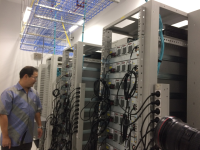
Indonesia Faces Data Center Shortage as Demand Surges: Danantara

August 27, 2026

1787849984240.png
FILE - A technician inspects server racks inside Graha Teknologi Nusantara's data center in Cikarang, West Java. (JG Photo)


Jakarta.
Demand for data center capacity in Indonesia is surging, with customers facing waiting periods of six months to a year to secure the capacity they need, an executive at state investment agency Danantara Indonesia said Thursday.

Danantara Chief Technology Officer Sigit Puji Santosa said demand is so strong that newly built data center capacity could be absorbed by the market almost immediately.

“If we build 100 megawatts or 200 megawatts of capacity, it will be taken up immediately,” Sigit said in Jakarta.

He said Indonesia is experiencing a shortage of data center capacity as demand for digital infrastructure continues to grow rapidly.

“Demand for data centers is extraordinarily high, creating a shortage. Customers have to wait six months, or even up to a year,” he said.


Indonesia currently has around 45 large-scale data centers, but existing capacity has yet to keep pace with the country’s growing digital infrastructure needs, according to Sigit.

Danantara is prepared to participate in expanding the sector, including by supporting the technology and other components required by the data center industry, he said.

Beyond data centers, Danantara is also focusing on semiconductor development, particularly artificial intelligence chips, as demand for advanced computing hardware accelerates globally.

Danantara has established a partnership with UK-based semiconductor company Arm to develop chip designs, with several Indonesian state-owned enterprises also involved in the initiative.

Sigit said global demand for AI chips is rising sharply, creating opportunities for Indonesia to develop a broader digital technology ecosystem.

Danantara plans to support the development of digital infrastructure across systems, subsystems, and components to capture opportunities arising from the industry’s growth, he said.

However, Indonesia still faces significant obstacles to expanding its digital infrastructure, including constraints on electricity supply as well as complex processes and regulations.

“The challenges are considerable, but so are the opportunities,” Sigit said.


Users who are viewing this thread

Pakistan Defence Latest

Back
Top