Vela Prima Nusantara Launches Full-Scale Prototype Alpha Aircraft
Khoirul Anam, CNBC Indonesia
25 August 2026, 14:20
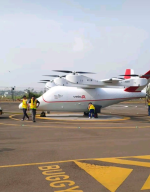
PT Vela Aero meluncurkan prototipe pesawat Alpha di HEXIA 2026, menandai kemajuan dalam Advanced Air Mobility. Target uji terbang dan sertifikasi pada 2026-2029

www.cnbcindonesia.com
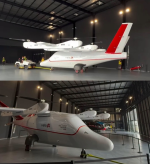
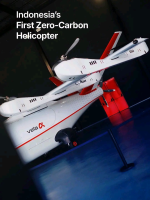
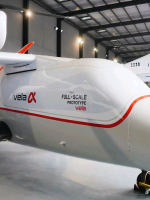
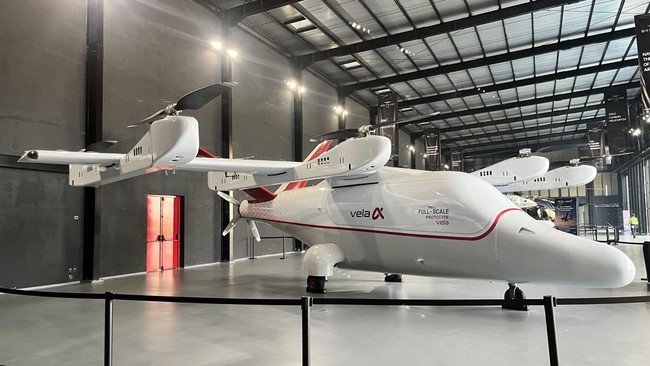
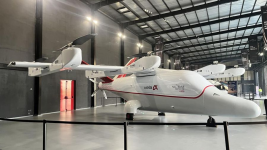
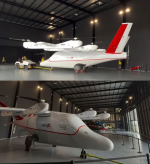
Jakarta, CNBC Indonesia – PT Vela Prima Nusantara (Vela Aero) has unveiled the first full-scale physical prototype of its Alpha aircraft at Heli Expo Asia (HEXIA) 2026, held at Cengkareng Heliport in Jakarta. The unveiling strengthens the position of Indonesia and Vela Aero as pioneers in Original Equipment Manufacturer (OEM) manufacturing in the Advanced Air Mobility (AAM) sector in Southeast Asia.
The unveiling of the full-scale physical prototype marks an important transition for Vela Alpha from the conceptual design phase toward an official flight-testing campaign and airworthiness certification. Vela Alpha was developed to address connectivity challenges across Indonesia’s more than 17,000 islands, reduce urban road congestion, and provide zero-emission air transportation.
The Alpha aircraft was designed not merely as a means of transporting goods or passengers, but as a solution for more flexible, affordable, and safe everyday mobility.
160 LOIs and Strategic Partnerships
The successful execution of physical manufacturing has been matched by strong commercial traction at both the regional and international levels. To date, Vela Aero has secured a total of 160 Letters of Intent (LOIs) for the procurement of Vela Alpha aircraft from domestic and international customers.
This figure does not include various strategic Memoranda of Understanding (MoUs) with industry stakeholders that do not explicitly specify the number of aircraft, as well as partnerships for the development of supporting infrastructure for AAM operations.
One of the major commercial agreements signed in conjunction with HEXIA 2026 was an MoU with leading aviation operator Whitesky Aviation concerning the planned procurement of 50 Vela Alpha aircraft to support airport feeder routes, urban air taxi services, high-yield tourism, and logistics for industrial areas.
Flight Testing and DOA Class D License
To ensure operational readiness toward its target Entry Into Service (EIS) in early 2029, Vela Aero announced two crucial regulatory and testing milestones targeted for completion by the end of 2026.
First, the maiden flight test (Live Demo Flight), which is scheduled to take place in the fourth quarter of 2026 in front of the public, regulators, partners, and prospective investors.
The company is also targeting the acquisition of a Design Organization Approval (DOA) Class D license from the Directorate of Airworthiness and Aircraft Operations (DKPPU) under the Ministry of Transportation by the end of 2026. This license will provide Vela Aero with the institutional legal authorization to design and manufacture nationally certified aircraft.
Following the achievement of these milestones by the end of 2026, Vela Aero will focus the 2027–2028 period on transitioning into the Alpha aircraft certification phase, converting LOIs into firm purchase orders, and integrating the vertiport, MRO, and aircraft leasing ecosystem, before obtaining full Type Certification (TC) by the end of 2028.
“The physical presence of the full-scale Vela Alpha prototype at Cengkareng Heliport today is tangible proof of our domestic engineering and manufacturing capabilities,” executives of PT Vela Prima Nusantara said, as quoted on Wednesday (25 August 2026).
“We are not merely building an aircraft, but orchestrating an integrated AAM ecosystem to make Indonesia a center of aviation innovation and a leading holder of aerospace technology intellectual property in Southeast Asia,” the executive added.
Summary of Alpha Aircraft Technical Specifications
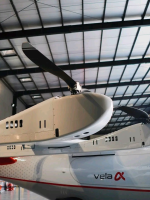
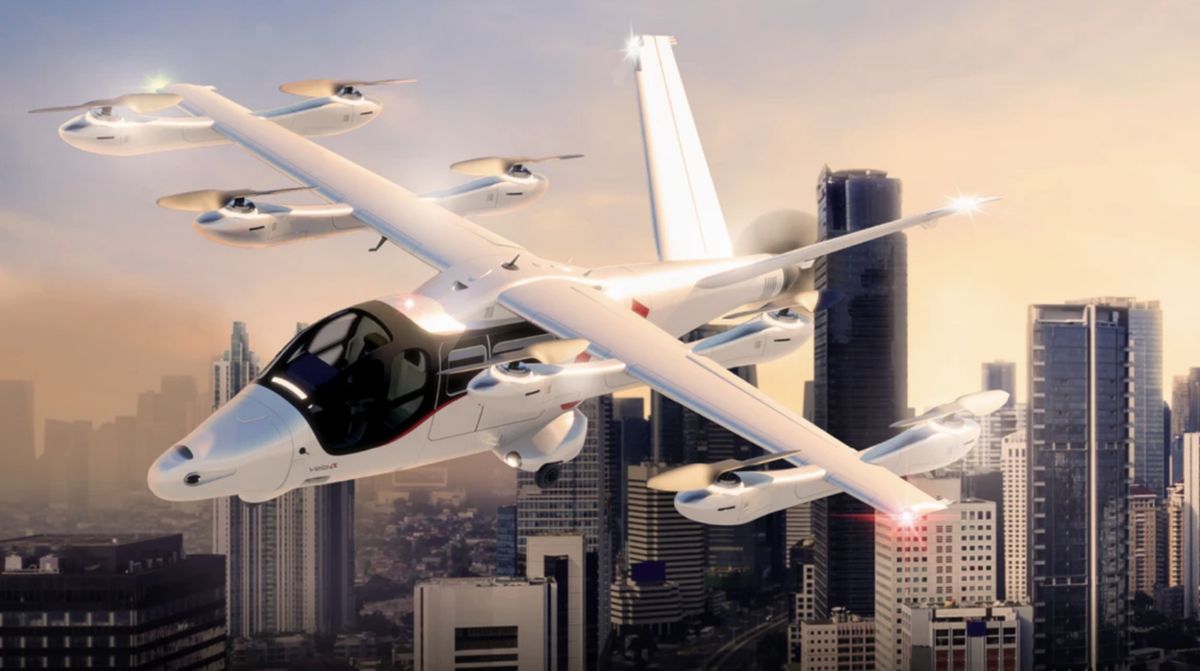
Vela Alpha uses a Lift-and-Cruise configuration powered by a Distributed Electric Propulsion (DEP) system consisting of nine electric motors. This configuration enables the aircraft to take off and land vertically before transitioning efficiently into wing-borne cruise flight.
Designed with a high degree of system redundancy, the aircraft retains the ability to fly safely even if one of its electric motors fails. In addition to a fully electric variant for urban routes, Vela Aero is also developing a hybrid-electric (hVTOL) variant for regional-scale missions (Regional Air Mobility) with a longer range.
Key Specifications of the Vela Alpha
| Parameter | Specification |
|---|
| Aircraft Configuration | Lift-and-Cruise with a Distributed Electric Propulsion (DEP) system powered by 9 independent electric motors. |
| Capacity / Crew | 1 pilot and up to 6 passengers (31-inch Economy / 38-inch Business configuration). |
| Dual-Propulsion Strategy | Fully Electric Variant (eVTOL): Range of up to 150 km for zero-emission Urban Air Mobility (UAM) routes. Hybrid-Electric Variant (hVTOL): Range of up to 500 km using a turbogenerator (Sustainable Aviation Fuel/SAF-ready) for longer-distance flights. |
| Cruising Speed | Up to 250 km/h. |
| Payload | 550 kg (including pilot). |
| Safety and Acoustics | Zero Single Point of Failure with integrated Fly-by-Wire controls; ultra-quiet hover noise level of approximately 65 dBA at a distance of 100 meters. |
| Modularity | Quick-Change system for rapid configuration between passenger transport, logistics cargo, and medical evacuation (air ambulance). |


 www.cnnindonesia.com