Indonesian Energy sector

Official! Rp 2.7 Trillion Pipeline Project Begins First Gas Flow​


18 March 2026


To view this content we will need your consent to set third party cookies.
For more detailed information, see our cookies page.

Batang Industrial Park, Central Java, one of industrial parks in Java that will get the gas supply from the project


Batang —
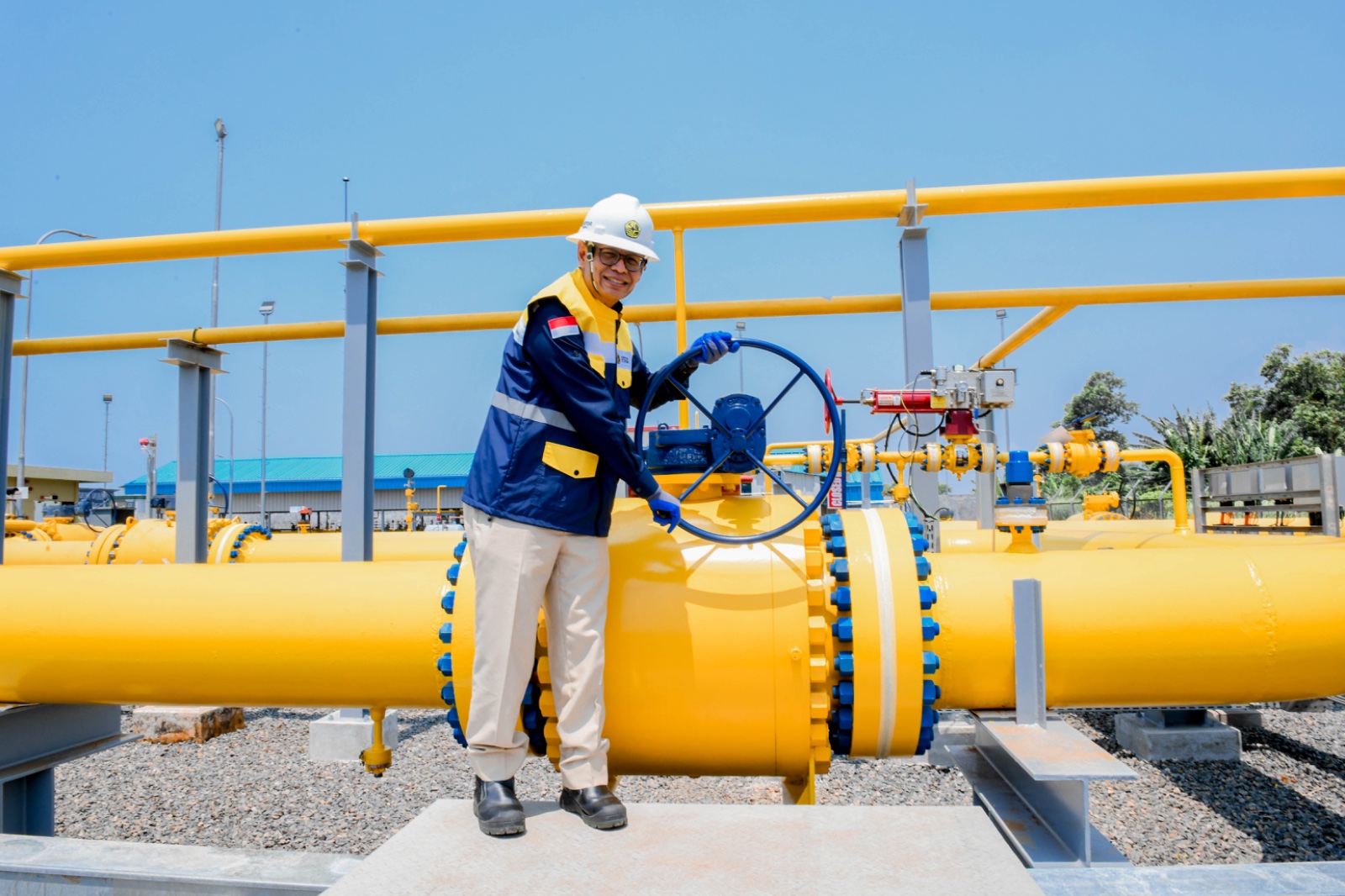
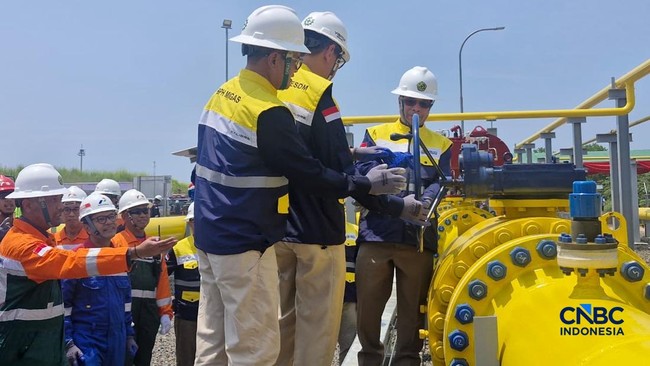
Indonesia’s Ministry of Energy and Mineral Resources (ESDM) has officially commenced first gas flow (gas-in) for the Cirebon–Semarang (Cisem) Phase II natural gas transmission pipeline project.

The project, valued at Rp 2.7 trillion, marks a significant step in strengthening national energy security while supporting industrial growth.

The inauguration was carried out by Deputy Minister of Energy and Mineral Resources Yuliot Tanjung on Wednesday (March 18, 2026), following the completion of all Engineering, Procurement, and Construction (EPC) works on March 5, 2026, as formalized through the signing of the project handover document (BAST-1).

Yuliot emphasized that the Cisem Phase II project is part of the government’s strategic agenda to achieve energy independence. He added that the infrastructure is expected to accelerate the development of industrial zones, commercial areas, and new economic growth centers across Java.

“The availability of energy will further accelerate growth in regions connected by this critical infrastructure,” Yuliot said during the event in Batang.

Lower Costs, Stronger Industrial Competitiveness​

Yuliot also highlighted that the project’s state budget (APBN)-based financing model plays a key role in maintaining industrial competitiveness. Direct government investment helps reduce gas transportation costs (toll fees), enabling more competitive gas prices for industrial users.


Operational Readiness Confirmed​

At the same event, Director General of Oil and Gas Laode Sulaiman confirmed that the pipeline is fully operational following a series of technical tests, including leak testing.

According to him, the results showed no leakage, indicating that the pipeline is ready to distribute gas to consumers, particularly in western Java.

“The tests confirmed there are no leaks, and the pipeline is ready to operate. We will soon begin supplying gas to consumers in western Java,” Laode stated.
He also noted that several users have already expressed initial commitments to utilize the pipeline, including:

  • Balongan Refinery
  • PT Cikarang Listrindo
  • Other industrial customers
“All technical aspects have been completed. The contractor and construction management teams have performed well,” he added.

Project Overview​

  • Length: ~242 kilometers
  • Status: National Strategic Project (PSN)
  • Construction period: August 6, 2024 – March 5, 2026
  • Total safe working hours: 4.65 million hours
  • Peak workforce: 1,981 workers
  • Local content (TKDN): 60.58%

To view this content we will need your consent to set third party cookies.
For more detailed information, see our cookies page.


Pertamina Jambaran Tiung Biru, East Java, the source of gas of the pipe lines

Future Operations​

The management of the Cisem Phase II pipeline has been assigned to LEMIGAS under Ministerial Decree No. 125.K/MG.01/MEM.M/2026. Going forward, LEMIGAS will collaborate with partners to optimize the utilization of the asset.

Gas supply for the pipeline will be sourced from the Jambaran Tiung Biru (JTB) gas field.


First Gas Achieved at Cilamaya LPG Plant, Producing 163 Tons per Day​


15 Maret 2026 by Sariyanti Wijaya

To view this content we will need your consent to set third party cookies.
For more detailed information, see our cookies page.

One of newly Industrial Parks in Karawang, West Java


Karawang — Indonesia has reached another milestone in optimizing its oil and gas resources with the achievement of first gas-in at the Cilamaya LPG Plant on March 15, 2026. The facility utilizes gas supply from the Offshore North West Java (ONWJ) block.

This milestone represents a strategic step to increase the value of national gas resources by processing them into liquefied petroleum gas (LPG).


Strategic Use of Domestic Gas Resources​

The achievement reflects strong collaboration between the government, regulators, and oil and gas industry players, supporting efforts to optimize national energy production and utilization.

Recognition was given to:

  • Ministry of Energy and Mineral Resources (ESDM)
  • SKK Migas
  • PT Pertamina Hulu Energi Offshore North West Java (ONWJ)
for their coordination and commitment in accelerating gas utilization from the ONWJ region.


Production Capacity and Output​

The Cilamaya LPG Plant is designed to maximize gas resources that were previously underutilized.

  • LPG production: ~163 tons per day
  • Condensate production: ~300 barrels per day
By converting natural gas into LPG, the facility creates significant added value for Indonesia’s upstream resources.


1773850869307.png

Project Development​

The development of the LPG plant is supported by PT Energi Nusantara Perkasa, which serves as the processing facility developer. The project enables more efficient utilization of ONWJ gas, contributing to higher value generation from domestic resources.

Deputy Director of Operations at PT Energi Nusantara Perkasa, Pribadi Wardojo, described the first gas milestone as a key step in optimizing domestic gas utilization.

“This facility is expected to deliver significant added value by converting gas into LPG while supporting the increase of national energy supply,” he said on Sunday (March 15, 2026).

Broader Impact​

Beyond increasing domestic LPG supply, the project is expected to:

  • Support national oil and gas lifting
  • Increase state revenue
  • Optimize domestic gas utilization
  • Reduce dependence on LPG imports
  • Strengthen national energy security

Conclusion​

The successful first gas-in at the Cilamaya LPG Plant demonstrates that close collaboration between government, regulators, and industry players can accelerate the optimization of Indonesia’s gas resources while creating sustainable value for the country.

“Going forward, this synergy is expected to further strengthen national oil and gas resource management to support energy security and maximize benefits for the country and its people,” he concluded.


Pertamina Runs Refineries at Maximum Capacity of 1.1 Million Barrels per Day Ahead of Eid​


Selasa, 17 Maret 2026

1773852193225.png
“An oil refinery operated by PT Kilang Pertamina Internasional (KPI) in Balikpapan. (Photo: Pertamina)”


Jakarta — PT Pertamina Patra Niaga announced that all of its oil refineries are operating at maximum capacity to meet the expected surge in fuel demand ahead of the Eid al-Fitr 2026 holiday travel season.

The company has shifted its operational focus from profitability to product availability, prioritizing supply security during the peak demand period.

President Director Mars Ega Legowo Putra stated that refinery operations have been set to their highest capacity levels to maximize output volume.

“Our refineries are currently operating at maximum production capacity. The focus is on quantity—maximizing output,” Mars Ega said in an official statement on Monday (March 16, 2026).

Shift from Profit to Availability​

According to Mars Ega, the strategy adjustment is necessary due to the inevitable increase in fuel demand during the holiday season. Rather than optimizing refinery margins, Pertamina is prioritizing:

  • Availability
  • Accessibility
  • Acceptability
  • Affordability
“Our responsibility is to ensure availability, accessibility, acceptability, and affordability. Therefore, we prioritize availability by operating refineries in maximum output mode. Current production is approximately 1.1 million barrels per day,” he explained.

Nationwide Refinery Operations​

All refineries across Indonesia are operating optimally to maintain supply chains and replenish ongoing fuel sales.

Key refinery locations operating at maximum capacity include:

  • Dumai
  • Plaju
  • Balongan
  • Cilacap
  • Balikpapan
  • Sorong
“We have set all refineries to maximum production mode to ensure stock availability remains at safe levels,” Mars Ega added.

Distribution and Logistics Preparedness​

In addition to boosting production, the company is closely monitoring fuel distribution to anticipate potential disruptions such as:

  • Traffic congestion
  • Adverse weather
  • Natural disasters
  • Infrastructure damage
To support nationwide distribution of fuel and LPG, Pertamina Patra Niaga has deployed a large-scale logistics fleet.

Director of Logistics Fleet Arif Yunianto emphasized that maritime transport plays a critical role in Indonesia’s energy security as an archipelagic nation.

“The downstream subholding currently operates no fewer than 345 vessels, and this number can increase as needed. These ships transport crude oil, fuel products, and LPG. Around 60% of LPG distribution in Central Java is supported by such vessels,” he said.


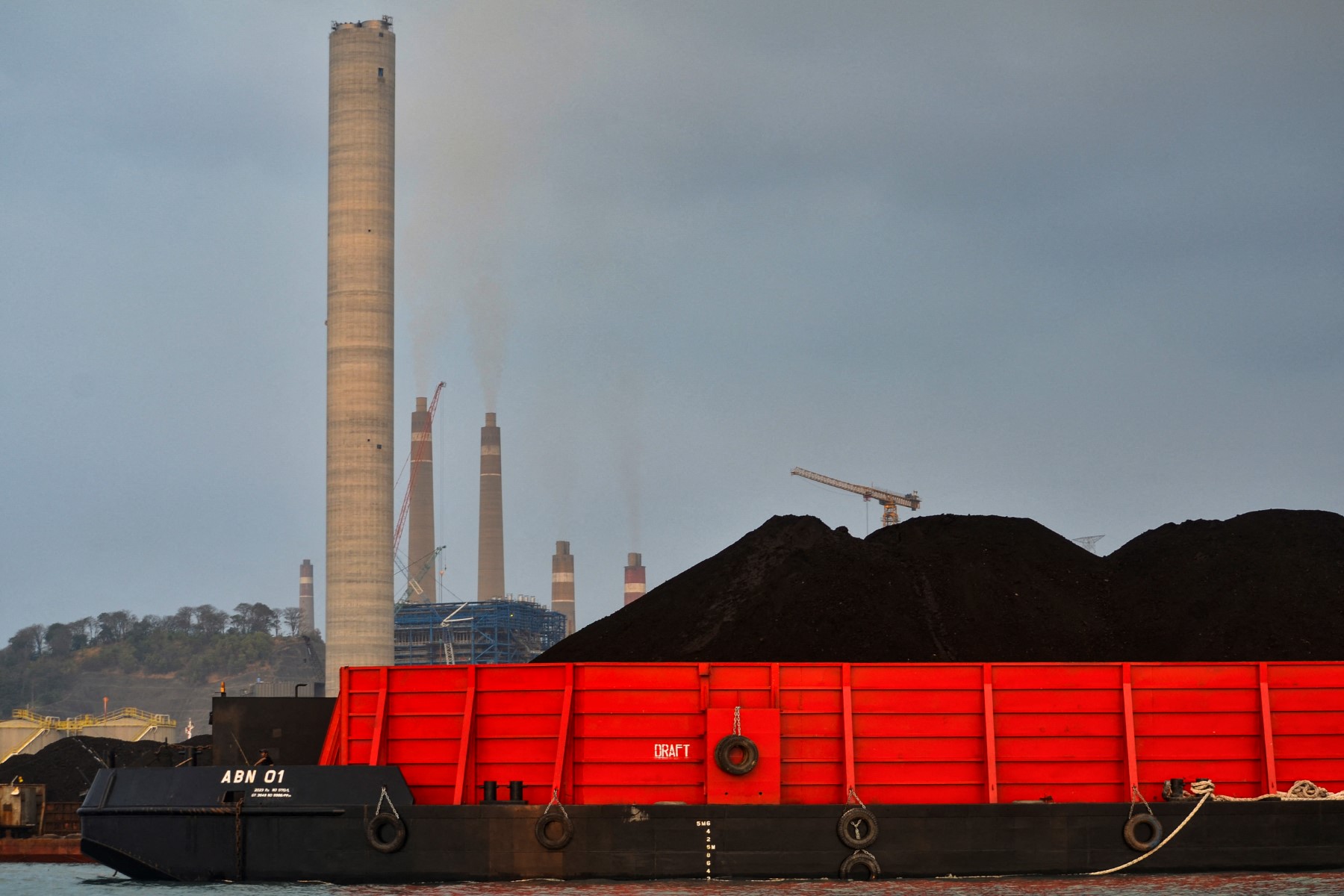
Asia Hikes Coal Use as Middle East War Chokes Gas Supply​


By Tsvetana Paraskova - Mar 18, 2026, 5:00 PM CDT

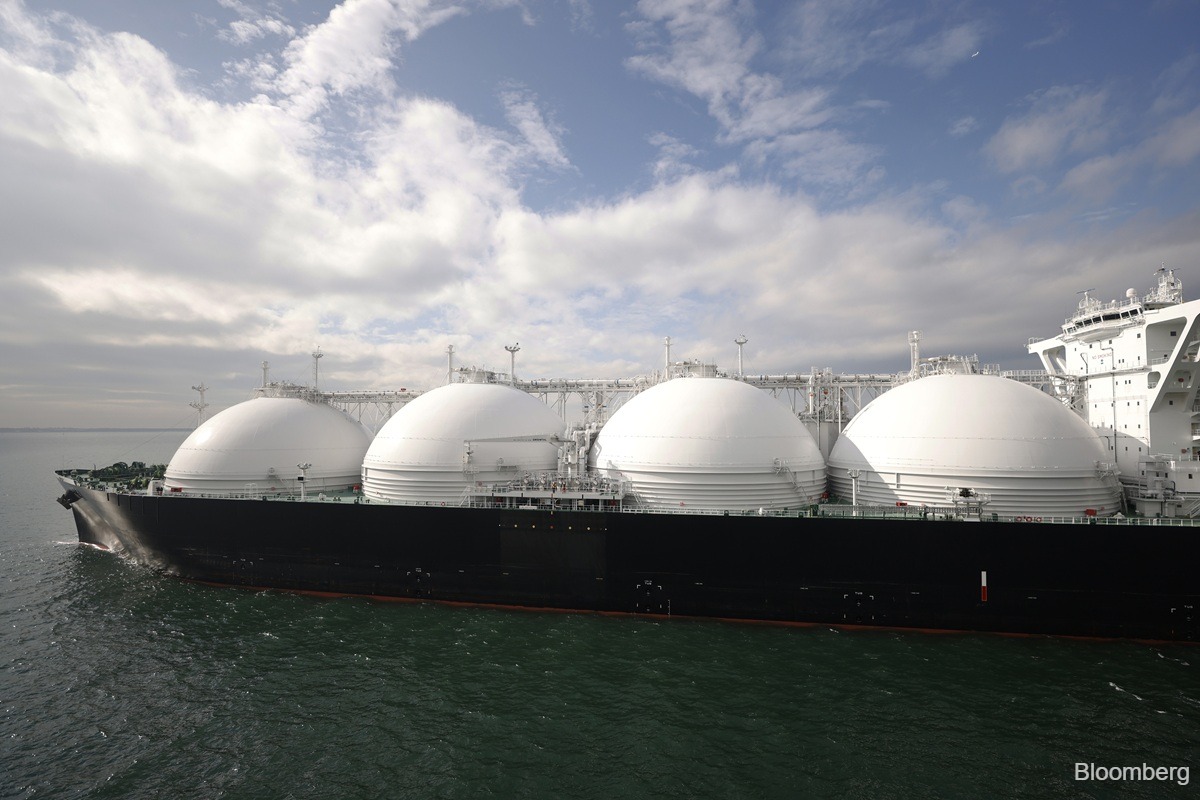
  • The Middle East conflict cut off ~20% of global LNG supply, sending Asian spot LNG prices up ~70% and exposing heavy reliance on Qatari exports.
  • Asian countries are relying on coal as a buffer, validating their focus on energy security over rapid decarbonization, as coal prices rose far less.
  • With limited alternatives, many countries face demand destruction, fuel switching, and reduced gas consumption—especially in South and Southeast Asia.

1773941069142.png

Asian countries have been criticized for years for not ditching coal fast enough. They were vindicated this month when the Middle East war cut off 20% of global LNG flows overnight after Qatar, Asia’s key term LNG supplier, shut in production and exports.

China, India, South Korea, Japan, and the whole of Southeast and South Asia are using the coal buffers they have created in recent years. Their insistence that diversification and energy security are more important than headline emission reductions is paying off as spot LNG prices in Asia surged by 70% to three-year highs that few countries in Asia Pacific can afford.

Coal cannot fully replace the lost gas supply, but it creates a welcome buffer to help Asia go through the biggest supply disruption in energy markets, ever.

In the early days of the war, Qatar announced it is halting LNG production at Ras Laffan, the world’s biggest liquefaction complex, and issued force majeure notices to customers, while the Strait of Hormuz remains inaccessible for tanker traffic.

As traffic via the Strait of Hormuz is effectively closed, the LNG supply shock to Asia is immediate, as it receives a total of 85% of Qatar’s LNG exports.

Related: Little-Known US Company Lands Important Pentagon Contract in Rare Earth Race

Asia is attracting most flexible-destination LNG cargoes away from Europe amid renewed competition for supply.

But prices are so high that many countries in the region are buying only if they have to avoid emergency situations.

“South Asia is the most exposed region to any Strait of Hormuz disruption, with Qatar and the UAE supplying around 53% of India’s LNG imports in 2025, 72% of Bangladesh’s, and 99% of Pakistan’s,” Kpler LNG & natural gas insight manager Laura Page wrote last week.

“If disruption persists, the adjustment is likely to come through demand destruction rather than replacement buying, as Pakistan and Bangladesh are unlikely to purchase spot LNG at current prices while India becomes increasingly price sensitive.”

Reduced gas consumption and fuel switching are part of the solution for Asia—to fall back on thermal coal power generation.

Coal prices have also increased since the war in the Middle East began, but by about 14%--a much smaller rise than the 70% jump in spot LNG supply.

Among Asian buyers, China and Japan, although they are the world’s two largest LNG importers, have a relatively limited exposure to Qatar’s LNG, at just 6% and 5% of their gas supply mix, respectively, Ken Lee, an LNG analyst at Vortexa, said last week.

The South Asian economies are most exposed to Qatari LNG, with the emirate accounting for 45-99% of their LNG imports and around 20% of their gas supply. But these are very price sensitive and unless they need very urgently to avert a crisis, they are likely to pull out of the spot market, according to Vortexa.

South Korea, Taiwan, and Singapore are most vulnerable to high spot LNG prices. If Qatar’s supply doesn’t return soon, their exposure to the spot LNG market “is likely to grow substantially because gas accounts for at least a quarter of the power mix in all three countries,” Lee said.

The capability to switch more power generation to coal from gas varies across Asia. China and India, the biggest buyers and users of coal, have “a meaningful substitution buffer that could reduce their exposure to oil and gas price spikes to some extent,” Deepali Bhargava, Regional Head of Research, Asia-Pacific at ING, reckons.

Amid the major LNG supply shock, both Northeast Asia and South Asia face gas demand destruction if flows from Qatar do not return soon, according to Wood Mackenzie.

“Despite efforts to source additional cargoes, alternative supply sources cannot fully replace Qatari volumes. As a result, demand destruction is likely, particularly through higher coal utilisation in power generation and reduced industrial consumption,” WoodMac’s analysts say, noting that Northeast Asia’s LNG demand could fall by 4-5 million tons through the third quarter of 2026 if supply disruptions last for two months.

Wood Mackenzie previously projected 2.2% growth in Northeast Asian LNG demand in 2026, but the supply shock is likely to halt that expansion.

“Higher spot prices will drive greater coal utilisation in the power sector and may hold back industrial gas consumption in some markets,” said Miaoru Huang, research director, Asia Pacific gas and LNG at Wood Mackenzie.

LNG demand in South Asia is expected to be 2–3 million tons lower through Q3 2026, compared to pre-crisis projections, WoodMac has estimated.

India faces curtailments in industrial gas use, Pakistan is deploying a mix of demand curtailment, fuel switching, and renewable generation expansion to rebalance the power system, while Bangladesh is already rationing gas supply as the surge in LNG spot prices is untenable for the country’s energy import bill, the consultancy said.


Indonesia To Boost Coal Output As Oil Prices Surge​


BERNAMA

20 March 2026
1773993273656.png


JAKARTA, March 20 (Bernama) -- Indonesia plans to increase coal production in response to rising global oil prices, Coordinating Minister for Economic Affairs Airlangga Hartarto said.

He said the move aims to cushion the impact of higher fuel prices and stabilise domestic energy and commodity prices.

“The President has directed that coal production volumes be increased, which means there will be adjustments to the work plan and cost estimate (RKAB; Rencana Kerja dan Anggaran Biaya),” he said at a press conference after a meeting with President Prabowo Subianto on Thursday.
Video of the press conference was shared on the Presidential Secretariat’s YouTube account.

As of Thursday, brent crude oil prices rose by 6.60 per cent to US$114.47 per barrel.

RKAB denotes mining companies’ approved annual work plans and budgets, including production targets. Adjustments to the RKAB would enable higher coal output.
Airlangga said the government is also reviewing the imposition of export taxes on coal with the rate to be determined by a designated team, as part of efforts to boost state revenue amid elevated energy prices.

In addition, Airlangga said Indonesia is pushing to accelerate the conversion of diesel power plants (PLTD) to solar-powered facilities to reduce reliance on costly fuel imports.

“With oil prices currently high, the President has instructed that this conversion be realised immediately,” he said, adding that relevant agencies have been tasked with resolving technical issues related to the transition.
Separately, Airlangga said the government is preparing measures to improve energy efficiency, including flexible work arrangements, which is expected to be implemented soon.

He said the policy, which is still being finalised, is expected to apply not only to civil servants but also to the private sector and regional administrations.

Airlangga also reaffirmed the government’s commitment to maintaining the State Budget (APBN) deficit below three per cent of gross domestic product (GDP), in line with previous directives, by implementing spending efficiencies across ministries and agencies.

The Indonesian government has reassured the public that subsidised fuel prices will remain unchanged and stockpile is sufficient ahead of the Aidilfitri festivities despite global oil prices hovering above $100 per barrel.

Current price for Pertalite – subsidised petrol – stays at Rp10,000 (about RM2.32) per litre while subsidised diesel is maintained at Rp6,800 (about RM1.58) per litre.

Energy and Mineral Resources Minister Bahlil Lahadalia said fuel subsidies in the APBN are based on an average crude oil price assumption of US$70 per barrel for the full fiscal year.

Meanwhile, Finance Minister Purbaya Yudhi Sadewa said the government would absorb the impact of rising energy prices through the state budget to avoid burdening consumers.

“We are absorbing the pressure into the state budget. If we let it pass through, people could panic, as seen in other countries,” he told reporters, as reported by ANTARA News Agency, on Thursday.

He said Indonesia’s energy subsidy mechanism is structured within an annual budget framework, allowing the government to anticipate the impact of global oil price fluctuations.

-- BERNAMA

 
To view this content we will need your consent to set third party cookies.
For more detailed information, see our cookies page.


To view this content we will need your consent to set third party cookies.
For more detailed information, see our cookies page.


Asia is highly exposed to the Iran War energy shock:

The Philippines and Vietnam source ~95% and ~90% of their crude oil imports from the Middle East.

This is followed by Singapore, South Korea, Taiwan, Malaysia, and Thailand, each importing ~70% from the region.

India and China, the two largest oil buyers in Asia, rely on the Middle East for ~55% and ~50% of their crude imports, respectively.

By contrast, EMEA nations like Turkey, South Africa, Tunisia, and Central and Eastern Europe import less than 20% of their oil from the region.

Asia's energy crisis is rapidly accelerating.
 

Now Industrial Areas in West Java and Central Java Are Not Short of Gas: Deputy Minister Yuliot Inaugurates First Gas Flow of Cisem Phase II​


22 Mar 2026,


To view this content we will need your consent to set third party cookies.
For more detailed information, see our cookies page.

Newly built Patimban port, West Java


Jakarta —
Industrial zones in West Java and Central Java are set to benefit from a more secure and stable gas supply following the commencement of gas flow through the Cirebon–Semarang (Cisem) Phase II pipeline project.

The pipeline project ensures more reliable energy availability, providing greater certainty for industrial players in:

  • Calculating production costs
  • Maintaining operational continuity
  • Planning investments more effectively

Strengthening National Energy System​

Deputy Minister of Energy and Mineral Resources Yuliot Tanjung emphasized that the project is a key part of the government’s effort to strengthen national energy foundations and enhance economic value.

“After conducting testing across all pipeline segments, the results show that the system is safe with no leaks. Therefore, today we are able to officially commence the gas-in ceremony for Cisem Phase II,” Yuliot said during the inauguration in Batang, Central Java, on Wednesday (March 18).
He added that Cisem Phase II is part of the government’s strategic program to achieve energy independence and energy security.


Toward an Integrated National Gas Transmission System​

Yuliot highlighted Indonesia’s growing gas potential, supported by:

  • Eastern Indonesia gas resources
  • Andaman block discoveries
  • Natuna gas reserves
These resources will be integrated into a national gas transmission system.

“With gas sources from eastern Indonesia, as well as Andaman and Natuna, we are integrating them into one system—this is our national gas transmission network,” he explained.
This integration is expected to accelerate the development of:

  • Industrial zones
  • Economic growth areas
  • Commercial regions
by ensuring reliable energy supply.


Project Milestone and Pipeline Details​

The first gas flow (gas-in) marks the completion of construction for Cisem Phase II, which began with the first welding milestone on September 30, 2024, officiated by Energy Minister Bahlil Lahadalia.

Director General of Oil and Gas Laode Sulaeman confirmed that, following successful testing with no leakage, the Cisem pipeline—spanning approximately 302 kilometers from Semarang to Kandang Haur (Cirebon)—is now ready to supply gas to consumers.

Initial gas users include:

  • Balongan Refinery
  • PT Cikarang Listrindo Tbk
  • Other industrial customers

Key Role in Sumatra–Java Gas Integration​

The Cisem pipeline is a critical link in integrating gas transmission between Sumatra and Java.

With:

  • Completion of Cisem Phase II (2026)
  • Planned construction of the Dumai–Sei Mangkei (Dusem) pipeline within the next two years
Indonesia is expected to achieve full integration of its Sumatra–Java gas network.

This integration will enable:

  • Gas surplus regions (e.g., East Java)
    → to supply
  • High-demand regions (e.g., West Java and Central Java)

Impact on Domestic Gas Utilization​

The interconnected network is expected to:

  • Increase domestic gas consumption
  • Reduce reliance on exports
Currently, around 65% of gas production is allocated for domestic use, and this share is expected to increase further with improved infrastructure integration.


Mubadala Energy expands gas hunt with new Indonesia block​

New block adds to gas push as demand grows across Asia and beyond

Last updated: March 26, 2026 | 11:24
Nivetha Dayanand, Assistant Business Editor

1774665093127.png
Mubadala Energy lands another major find from its Indonesia operations.

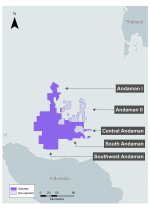
Dubai: Mubadala Energy has secured a new exploration block in Indonesia’s Andaman Sea, tightening its hold on one of Southeast Asia’s most closely watched deepwater gas regions.

The Southwest Andaman Production Sharing Contract was awarded under Indonesia’s Gross Split scheme, giving the Abu Dhabi-based company full ownership and operatorship of the block. The acreage sits next to its existing portfolio in the basin, extending a position that has grown steadily over the past few years.

Expansion follows a clear exploration strategy​

The award reflects a multi-year push into the Andaman basin, with work on the opportunity beginning in 2022 and progressing through technical studies and bid submissions before the final award.

1774666152724.png
Mansoor Mohamed Al Hamed, Managing Director and CEO of Mubadala Energy, said the latest addition builds on earlier discoveries in the area.
“The award of the Southwest Andaman block is a testament to our team's technical conviction, expertise in deep water exploration, and growth mindset. We have an unrivalled understanding of the Andaman basin and this award builds on our existing multi-TCF strategic discoveries at Layaran and Tangkulo and Timpan.”

He added that the company remains focused on unlocking gas resources that can support long-term demand.
“We are fully committed to unlocking the region's vast gas potential in line with our growth strategy and to support Indonesia's energy security priorities.”

Why the Andaman basin matters​

The basin has emerged as a key frontier for gas exploration, with recent drilling pointing to significant reserves that could feed both domestic demand in Indonesia and wider regional markets.

Southwest Andaman sits along the same geological trend that supported earlier discoveries, strengthening expectations that further drilling could deliver similar results. The company is working towards first gas from its South Andaman developments before the end of 2028, placing the new block within a broader development timeline.

Next phase of exploration​

Initial drilling at the new block is expected in the second exploration phase, following detailed analysis of newly acquired seismic data. The timeline allows the company to refine targets and align the programme with ongoing work across its wider Andaman portfolio.

Abdulla Bu Ali, President Director of Mubadala Energy Indonesia, said the award signals continued confidence from Indonesian authorities.
“This award marks another important chapter in our Andaman story and reflects the trust that the Indonesian government continues to place in Mubadala Energy as a long-term, committed partner.”

He added that the focus now shifts to execution and collaboration.
“Southwest Andaman is a strategically significant addition to our core Andaman area, and we are excited about the prospectivity it brings. As we advance our work program, we look forward to collaborating with DG MIGAS, SKK Migas, and all our stakeholders to realize the full potential of this block for Indonesia's energy future and the communities we serve.”


Indonesia’s Biodiesel Mandate Could Emerge As Catalyst For Palm Oil Sector​


By Business Today Editorial
March 24, 2026

1774673717264.png

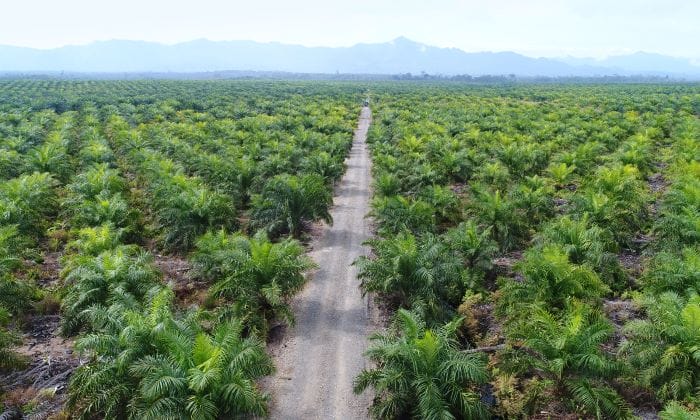
Indonesia’s proposed B45/B50 biodiesel mandate is emerging as a key growth catalyst for plantation stocks, according to RHB Investment Bank Bhd (RHB Research).

After consultations with the Indonesia Biodiesel Producer Association, RHB Research highlighted key factors influencing the mandate: Successful automotive and rail engine trials, funding availability, production capacity, Pertamina’s new Balikpapan refinery and potential revisions to biodiesel pricing formulas.


Funding and Capacity Adequate

RHB Research noted that at the current POGO spread of US$11/bbl, sufficient funding exists for B50 implementation even without 2025 carryover funds. Indonesia’s current biodiesel capacity of 22.05 million kL/year is adequate, with utilisation projected to rise to 82% under B45 and 91% under B50.

Pertamina Refinery and Diesel Supply

The US$7.4 billion Balikpapan Refinery, with 43% diesel output, will support local supply as Indonesia phases out diesel imports in 2H26. A higher mandate may reduce refinery utilisation, requiring the government to balance cost savings with refinery profitability.

Pricing and Input Costs Under Scrutiny

Rising methanol prices, up nearly 30% amid Middle East tensions, could pressure biodiesel margins. APROBI flagged potential adjustments to the fixed CPO-based pricing formula and export levies, with market-linked pricing a possible future consideration.

On that note, RHB Research retains a ‘Neutral’ sector call, with crude palm oil prices projected at RM4,250/tonne for 2026, while noting that the timing and structure of the B45/B50 mandate will remain a key driver for Indonesian-exposed plantation companies.

The analysis underscores that while short-term costs and refinery dynamics may constrain margins, the mandate provides a long-term structural boost to demand for palm oil in biodiesel production.

The research house has highlighted Johor Plantations Group Bhd, Sarawak Oil Palms Bhd, IOI Corp Bhd, PP London Sumatra Indonesia, SD Guthrie and First Resources as top sector picks.


Indonesia Tenders Eight New Oil and Gas Blocks to Boost Reserves​

By Tsvetana Paraskova - Dec 22, 2025, 6:00 AM CST

1774855652370.png

Oil and gas producer Indonesia has put up for tender eight new blocks to award to companies as Southeast Asia’s biggest economy looks to boost domestic hydrocarbon reserves and production.

Interested parties can submit bids by February 5, 2026, for the onshore and offshore blocks Tapah, Nawasena, Mabelo, Arwana III, Tuah Tanah, Rangkas, Akimeugah I, and Akimeugah II, according to a document of the Indonesian Energy and Mineral Resources Ministry published on Monday and seen by Reuters.

These blocks are estimated to hold billions of barrels of crude oil and billions of cubic feet of gas as Indonesia looks to reduce its import dependence and reverse a years-long decline in its oil production.

Indonesia looks to unlock its upstream potential by offering more than 100 previously untapped oil and gas basins to global investors for exploration.

The country targets to nearly double its oil production to 1 million barrels per day (bpd) of crude oil. Currently, Indonesia pumps about 600,000 bpd of crude.

Indonesia has developed only 20 out of 128 identified oil and gas basins across its archipelago, Deputy Minister of Energy and Mineral Resource, Yuliot Tanjung, said in November at the launch event to attract investments in Indonesia’s energy future.

The government is allocating resources to its Geological Agency to conduct advanced 2D and 3D surveys, paving the way for exploration to unlock the potential of these resources, the official said.

“Our shared vision is clear: by 2029, Indonesia will achieve its production target of 1 million barrels of oil per day, boost energy security, and advance sustainable development,” Yuliot said at the event.

Indonesia has also prepared 75 oil and gas blocks across Sumatra, Kalimantan, Sulawesi, Papua, and offshore areas for auctions and concessions. Nine of these oil and gas blocks have been awarded to business entities, with several more blocks to follow, the deputy energy minister said at the end of November.

By Tsvetana Paraskova for Oilprice.com

 
To view this content we will need your consent to set third party cookies.
For more detailed information, see our cookies page.
 

Amran: Indonesia Has Enough Raw Materials to Support E20 Plan​


Erfan Maruf
March 31, 2026 | 10:36 am

1774940237224.png
I Wayan Tana grows cassava for daily consumtion in Malini Agro Park, Uluwatu, Bali on Monday (19/10). (JG Photo/Yudha Baskoro)


Jakarta. Indonesia has sufficient plant-based materials to support its planned rollout of E20 gasoline, as it seeks to reduce reliance on imported fuel through bioethanol blending, Agriculture Minister Andi Amran Sulaiman said on Tuesday.


The government is preparing to introduce E20 — a fuel blend containing 20% ethanol — as a substitute for gasoline, which remains heavily import-dependent. The ethanol will be derived from crops such as cassava, sugarcane, corn, and palm oil, according to the minister.


“Supply is sufficient. We will expand planting — sugarcane, cassava and palm oil,” Amran said at a press conference at the Agriculture Ministry in Jakarta.


Indonesia will need to ramp up cultivation to sustain the program, but Amran said existing production capacity provides a strong foundation. The country currently exports up to 3 million tons of molasses annually — a sugar byproduct that can be processed into ethanol — offering a potential domestic supply source.

“That can be converted into ethanol, potentially producing around 300,000 kiloliters,” he said.


The E20 mandate is part of President Prabowo Subianto's strategy to strengthen energy security and reduce fuel imports. The government is targeting full implementation of E20 by 2028.


Amran pointed to Brazil as a benchmark, saying the South American country has successfully implemented E27 fuel — a 27% ethanol blend — demonstrating the viability of higher bioethanol mixes.

He added that advancements in automotive technology would support the transition. Flexible Fuel Vehicle (FFV) engines, which can run on gasoline, ethanol, or a mix of both, are already being developed by global manufacturers.


“If we stay consistent over the next decade, we can achieve energy independence. Ethanol is compatible with flexible engines,” Amran said, referring to the president’s directive to sustain the policy.


Beyond ethanol, Indonesia is also scaling up biodiesel production using crude palm oil (CPO) as feedstock. A B40 mandate — indicating a 40% palm oil mixture — has been in place over the past year, and even helped Southeast Asia’s biggest economy to save Rp 130.2 trillion (approximately $7.7 billion) in foreign exchange throughout 2025.


CPO exports reached 32 million tons in 2025, up by 6 million tons from the previous year, driven in part by stronger global prices and government policy support, Amran said.

“Higher global prices have encouraged farmers to boost production, resulting in a 6 million ton surplus. This reflects the strength of current policies,” he added.


To ensure adequate raw materials supply for both ethanol and biodiesel programs, the Agriculture Ministry is strengthening coordination with state-owned enterprises. Officials have held meetings with state-owned companies to align production and supply chains, as part of a broader push toward energy self-sufficiency.


Amran said the initiative reflects Prabowo’s willingness to pursue bold strategic policies, linking food and energy security agendas.


“Once food security is secured, we move toward energy. State-owned enterprises have been assigned roles, and we will collaborate closely,” he said.


Indonesia approves 580 million tonne coal production plan, signals output boost​

Previously, the government revealed plans to cut national production targets from 790 million tonnes last year to around 600 million tonnes this year in an effort to address an oversupply that had weakened coal prices.

1774940519339.png
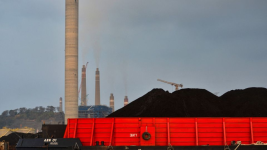
This picture taken on October 31, 2023 shows a barge carrying coal at the dock next to the Suralaya coal-fired power plant in Cilegon, Indonesia's Banten province. PHOTO: AFP

March 31, 2026

JAKARTA – The Energy and Mineral Resources Ministry has approved annual production plans (RKAB) for 580 million tonnes of coal, the ministry’s coal and mineral director general, Tri Winarno, said on Friday.
He added that the remaining approvals were expected to be finalized shortly, signaling that this year’s total production quota would exceed that figure.

The accelerated approvals come as the government signals a strategic shift to increase coal output this year, potentially allowing the country to capitalize on rising coal prices amid the Iran war.

Previously, the government revealed plans to cut national production targets from 790 million tonnes last year to around 600 million tonnes this year in an effort to address an oversupply that had weakened coal prices.

On Dec. 31 last year, the ministry issued a circular allowing mining companies to conduct extraction activities of up to 25 percent of the production outlined in their three-year RKAB. This means coal miners can continue extraction under the rule until March 31, even if formal approval for this year’s RKAB has yet to be finalized.

However, Indonesia’s stance appears to have shifted as coal prices rose after United States-Israeli attacks on Iran prompted Tehran to threaten to block the Strait of Hormuz, a key passageway for global oil shipments.

With oil prices remaining elevated at around US$100 per barrel due to supply concerns amid the Iran war, many countries have turned to alternative energy sources, including coal. The increased demand has driven up prices, with Newcastle coal futures rising to $135 per tonne, about 16 percent higher than before the war.

Coordinating Economy Minister Airlangga Hartarto said President Prabowo Subianto had ordered the administration to increase coal production volumes as part of the government’s effort to boost state revenue amid rising coal prices.

“The President instructed the government to raise coal output, meaning there will be improvements related to the RKAB,” Airlangga said on March 19.

He added that the government is also considering implementing a coal export tax to safeguard the state budget from energy price volatility.

“We expect government revenue will also increase from windfall profits,” he said.


On March 20, Coordinating Economy Minister spokesperson Haryo Limanseto said the final decision on production quota increases and RKAB revisions would be made after the Idul Fitri holidays.

At the time, he added, discussions were ongoing at the technical level between ministries.

Regarding the nickel production quota, Energy Ministry’s Tri on March 3 acknowledged that mining companies are permitted to revise their production quota proposals this year, though adjustments may vary on a case-by-case basis.

Tri emphasized that such revisions, which could potentially boost nickel output by up to 30 percent this year according to the Indonesian Nickel Miners Association (APNI), are a standard regulatory provision and not a specific response to the government’s earlier decision to cap nickel ore production at 260 to 270 million tonnes this year.

He noted that any quota revisions are currently slated for the second half of 2026.

 
  • Like
Reactions: Haz
Indonesia asks LNG, crude oil producers to prioritise domestic market, regulator says


By Bernadette Christina Munthe / Reuters

To view this content we will need your consent to set third party cookies.
For more detailed information, see our cookies page.

Pertamina LNG Refinery facility


JAKARTA (April 6): Indonesia is securing its oil and gas supply by asking energy companies to give priority to selling their output to the domestic market, said Djoko Siswanto, chairman of the country's upstream oil and gas regulator SKK Migas, on Monday.

The government will not issue export recommendations for liquefied natural gas (LNG) this year except for cargoes that have already been contracted.

The government has also asked some companies to renegotiate their LNG cargo deliveries to later dates.

Djoko said nine LNG cargoes from BP's Tangguh plant will be diverted to domestic buyers this year and sales to foreign buyers have been delayed to next year.

The government also expects additional LNG cargoes later this year from the Bontang LNG plant, supported by gas output from fields operated by Italy's Eni.

Around 98% of Indonesia's crude oil output is processed by domestic refineries, Djoko added, saying that the proportion has increased from last year.

Uploaded by Liza Shireen Koshy


Indonesia Prepares Additional 3.5 Million Tons of CPO for B50 Biodiesel Implementation​


1775802570627.png


MAKASSAR, investor.id — The government is preparing around 3.5 million tons of crude palm oil (CPO) to support the implementation of the B50 biodiesel mandate, which will take effect on July 1, 2026.

This policy is a strategic move by President Prabowo Subianto to:

  • Strengthen national energy security
  • Reduce dependence on diesel imports
  • Save subsidies of up to Rp48 trillion (≈ $3.0 billion USD)

CPO Allocation and Production Growth​

Minister of Agriculture Andi Amran Sulaiman explained that the CPO allocation for biofuel comes from an increase in national production of 6 million tons.

With exports rising from:

  • 26 million tons → 32 million tons
the diversion of 3.5 million tons for B50 is expected not to disrupt export performance.

“We are converting 5.3 million tons of our CPO into biofuel; this is a directive from the President. B50 will be achieved this year. We are working together with the Minister of Energy, Bahlil, and collaborating with all stakeholders,” said Amran in Makassar.

Strong Global Position​

Indonesia controls approximately 60% of the global CPO market, giving it strong capacity to balance:

  • Domestic green energy needs
  • International demand
The increase in production is driven by:

  • Favorable global CPO prices
  • Higher productivity among farmers

Economic and Social Impact​

The B50 policy is expected to deliver dual benefits:

  • Strengthening energy security
  • Improving farmer welfare
In addition, economic activity in palm-producing regions is expected to increase due to:

  • Production
  • Distribution
  • Processing of CPO into biofuel

Reduction in Fossil Fuel Use​

Coordinating Minister for Economic Affairs Airlangga Hartarto stated that B50 implementation could reduce fossil fuel consumption by:

  • 4 million kiloliters per year
He also reaffirmed:

“Within six months, there will be savings from reduced fossil fuel use and biodiesel subsidies, estimated at Rp48 trillion (≈ $3.0 billion USD).”

Toward Diesel Self-Sufficiency​

Minister of Energy and Mineral Resources Bahlil Lahadalia added that with full implementation starting July 1:

  • Indonesia is projected to experience a diesel (solar) surplus in 2026
“With B50 implementation, God willing, this year we will experience a diesel surplus. This is good news,” said Bahlil.
👉 This indicates that Indonesia is moving toward diesel self-sufficiency, although 2026 should still be seen as a transition year, since B50 will only be implemented starting mid-year.

The transition to B50 is estimated to require an additional 5.3 million tons of CPO every year, bringing total annual consumption for the biodiesel program to approximately 18–19 million tons.


Users who are viewing this thread

Pakistan Defence Latest

Country Watch Latest

Latest Posts

Back
Top