Indonesia’s Aluminum Project Boom Could Increase Coal Consumption by 40 Million Tons
Azura Yumna Ramadani Purnama
September 12, 2026 | 08:00
Inalum, SOE aluminium producer, new office in Sumatra
Bloomberg Technoz, Jakarta – Several mineral and coal industry experts predict that new coal-fired power plants (PLTUs), with a combined capacity of
8 gigawatts (GW) to support the
aluminum industry additional expansion, could consume around
35–40 million tons of coal annually.
Indonesian Mining and Energy Forum (IMEF) Chairman Singgih Widagdo predicted that the coal-fired power plants supplying aluminum smelter projects would consume
medium- to low-grade coal with a calorific value of 4,200 kcal/kg.
Assuming the development of
8 GW of new captive coal-fired power capacity, the plants would require approximately
3.5 million tons of coal per month, equivalent to around
40 million tons annually.
“Assuming coal with a calorific value of 4,200 kcal/kg is used, 8 GW would require around 40 million tons per year, or approximately 3.5 million tons per month once fully operational,” Singgih said when contacted on Saturday (September 12, 2026).
Separately contacted,
Rizal Kasli, Chairman of the Advisory Board of the Indonesian Mining Experts Association (Perhapi), said the aluminum industry is a sector that requires a
large and stable supply of energy.
Low-Cost Option
Rizal views coal as a relatively stable and affordable energy option, although other energy sources such as
solar power plants (PLTS) and
hydroelectric power plants (PLTA) could serve as alternatives for aluminum smelters.
Nevertheless, Rizal predicted that the aluminum industry could increase domestic coal demand by around
30–35 million tons annually if the planned new captive coal-fired power plants with a combined capacity of 8 GW become fully operational.
“If 8 GW of coal-fired power plants are developed, they are estimated to increase coal requirements under the Domestic Market Obligation (DMO) by around
30–35 million tons per year, using coal with varying calorific values of between
4,000 and 4,500 kcal/kg,” Rizal said when contacted on Wednesday (September 9, 2026).
He emphasized that this volume could still be supplied by domestic coal producers, meaning imports would not be necessary.
“It is highly feasible for this demand to be met by domestic coal production, with no need for imports,” Rizal said.
Indonesia is projected to need to develop
8 GW of captive coal-fired power capacity to supply electricity to alumina and aluminum smelters, including facilities owned by Chinese investors that are aggressively expanding their operations in the country.
The
Centre for Research on Energy and Clean Air (CREA) noted that the expansion of aluminum smelters in Indonesia is dominated by Chinese investors, with around
75% of all domestic alumina and aluminum projects backed by Chinese investment.
According to CREA, nearly
1.8 GW of captive coal-fired power capacity is currently operating to support the aluminum industry.
Captive coal-fired power capacity is projected to increase by another
8 GW to supply electricity to
32 aluminum industry projects located in bauxite-rich provinces and industrial centers outside Java.
“Indonesia’s aluminum expansion is following the dangerous precedent set by nickel, demonstrating a lack of forward-looking planning to locate new industrial facilities near clean energy resources or design them for future grid connectivity,” CREA analyst Katherine Hasan said in a study titled
Indonesia Aluminium Downstream: Following Nickel Into a Captive Coal Boom.
She said that if all the planned smelters are developed as intended, Indonesia’s aluminum industry could trigger a
boom in captive industrial coal consumption.
She said this could
undermine Indonesia’s national decarbonization targets, lock industrial growth into a carbon-intensive pathway, and impose environmental and health costs on local communities.
“The government should require comprehensive energy-demand projections at the early stages of project development and prioritize integration with the power grid and captive renewable energy sources, such as hydropower and solar, rather than coal,” Katherine emphasized.
For context, the
Ministry of Energy and Mineral Resources (ESDM) recorded coal production of
367.06 million tons from January to June 2026, equivalent to around
61.18% of the approximately 600-million-ton production quota stipulated under the 2026 Work Plan and Budget (RKAB).
Asep Kurnia Permana, Director of Coal Business Development at the Ministry of Energy and Mineral Resources, said coal supplied to the domestic market under the
Domestic Market Obligation (DMO) scheme reached
81.58 million tons during the same period.
Meanwhile, the ministry’s Directorate General of Minerals and Coal recorded Indonesia’s total coal production in 2025 at
817.48 million tons.
Of the total 817.48 million tons produced, around
63.89%, or 523.35 million tons, was allocated for exports.
Meanwhile,
264.88 million tons, or 30.2%, was absorbed by the domestic market through the DMO scheme, while the remaining
5.9%, or approximately 48.25 million tons, was recorded as inventory.
The
electricity sector accounted for the largest share of domestic coal consumption, reaching
141.4 million tons.
This was followed by the
smelting industry, which consumed around
76.3 million tons of coal, the cement industry with 8.78 million tons, the paper industry with 5.42 million tons, the fertilizer industry with 1.02 million tons, the textile industry with 0.86 million tons, and other sectors with approximately 13.1 million tons.
Meanwhile, investment in Indonesia’s
bauxite downstream industry has, for the first time, become the largest source of realized downstream investment in the country, overtaking nickel downstream investment, which had previously dominated investment in the mineral-processing sector.
According to data from the
Ministry of Investment and Downstream Industry/Investment Coordinating Board (BKPM), investment in the bauxite sector became the main driver of national investment growth in the second quarter of 2026, with realized investment reaching
Rp40.1 trillion.
The figure surged
193% from
Rp13.7 trillion in the first quarter of 2026.
Bauxite was followed by nickel, with realized investment of
Rp29.4 trillion; copper, Rp16.7 trillion; iron and steel, Rp13.2 trillion; silica sand, Rp4 trillion; and other commodities—including tin, gold, silver, cobalt, manganese, coal, Buton asphalt, and rare earth metals—with a combined Rp4.7 trillion.
Minister of Investment and Downstream Industry/Head of BKPM
Rosan Perkasa Roeslani said total downstream investment in the second quarter of 2026 reached
Rp152.7 trillion, an increase of 5.7%. This represented nearly 30%, or
29.8%, of Indonesia’s total realized investment in the second quarter of 2026.
Unlike previous periods, when nickel dominated,
bauxite has now taken the lead in realized downstream investment.
Rosan also said the shift was driven by the accelerated development of bauxite-processing projects financed by both domestic and foreign investors.
“Bauxite is now number one. As we know, it was usually always nickel. Now there has been a
shift toward bauxite because several bauxite projects are being developed, both by domestic and foreign investors,” Rosan explained while presenting an investment performance report to President Prabowo Subianto at the Presidential Palace Complex in mid-July.
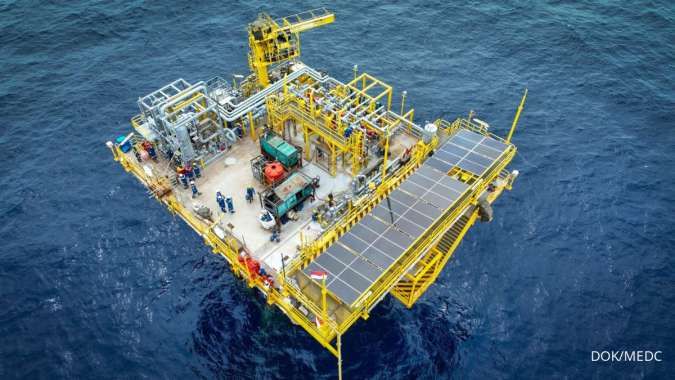
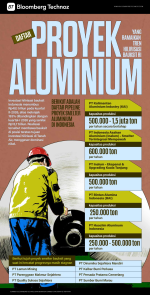
Perkiraan kebutuhan PLTU sebesar 8 GW untuk industri aluminium diproyeksikan menyerap sekitar 35–40 juta ton batu bara setiap tahunnya.

www.bloombergtechnoz.com


 www.cnbcindonesia.com