Indonesian Energy sector

Java–Sumatra Gas Pipeline Network Moves Forward as Indonesia Accelerates National Energy Connectivity​


Firda Dwi Muliawati, CNBC Indonesia
29 June 2026 16:45


To view this content we will need your consent to set third party cookies.
For more detailed information, see our cookies page.


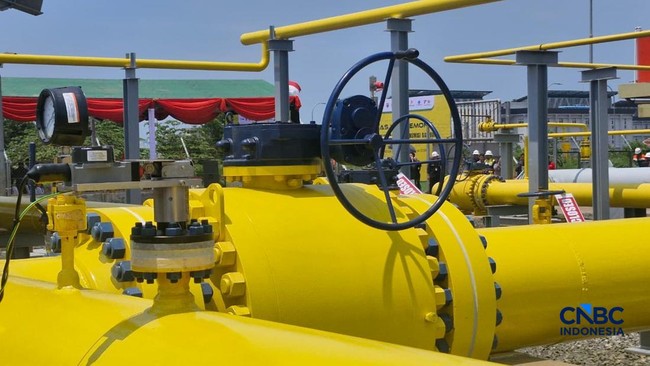
JAKARTA — Indonesia's Ministry of Energy and Mineral Resources is accelerating the development of its national natural gas transmission network to connect Java and Sumatra, extending the country's integrated gas infrastructure from Java to **Banda Aceh>. The initiative aims to strengthen domestic gas distribution and improve energy security for industrial consumers.

Minister of Energy and Mineral Resources Bahlil Lahadalia said the government is currently prioritizing construction of the Dumai–Sei Mangkei (Dusem) gas transmission pipeline, which will serve as a key link in Indonesia's expanding national gas network.

"The project is currently under construction. Parts of it have already been completed, while the remaining sections are scheduled for completion in 2027. We are building the Dumai–Sei Mangkei pipeline to connect Sumatra with Java," Bahlil said following a press conference at the Indonesian House of Representatives on Monday.

To view this content we will need your consent to set third party cookies.
For more detailed information, see our cookies page.


Expanding Pipeline Capacity​

In addition to constructing new pipeline segments, the government is also expanding the capacity of existing transmission lines to enable more efficient interregional gas distribution.

According to Bahlil, the upgraded network will allow surplus natural gas from one region to be redirected to areas with higher demand.

"We are increasing the pipeline capacity. If there is surplus gas in Sumatra, it can be delivered to Java. Likewise, if East Java has excess supply, it can be transmitted to West Java," he explained.

Nationwide Gas Connectivity by 2027​

The integrated transmission network is expected to be fully completed in 2027, creating a continuous gas pipeline system connecting Sumatra and Java.

Bahlil also confirmed that construction is underway on the East Java–West Java transmission pipeline to further strengthen domestic gas distribution.

Supporting Future Gas Supply from the Andaman Block​

The project builds upon the completion of several strategic pipeline developments.

The Cirebon–Semarang Phase 1 (Cisem-1) gas transmission pipeline was completed in 2023 and is currently supplying natural gas to the Batang Integrated Industrial Estate in Central Java.

Meanwhile, Cisem-2 has recently entered operation, enabling gas transportation from East Java to West Java.

Once the Dusem pipeline is completed, the integrated network will also be capable of transporting future gas production from the Andaman Block, one of Indonesia's largest recent offshore natural gas discoveries.

According to CNBC Indonesia, the Dumai–Sei Mangkei pipeline carries an estimated investment value of Rp6.6 trillion and is designed to transport natural gas from the Agung and Andaman working areas in Aceh to industrial consumers across Sumatra and Java, significantly enhancing Indonesia's long-term energy security and industrial competitiveness.


Indonesia Expands Biofuel Strategy Beyond Palm Oil to Strengthen Energy Security​


Verda Nano Setiawan, CNBC Indonesia
30 June 2026 10:35

1782885385685.png

JAKARTA — Indonesia is preparing to significantly diversify its bioenergy feedstocks beyond palm oil as the government seeks to strengthen national energy security and reduce dependence on fossil fuel imports.

The Ministry of Energy and Mineral Resources plans to expand the use of various agricultural crops for biofuel production, ranging from bioethanol for gasoline blending to sustainable aviation fuel (SAF).

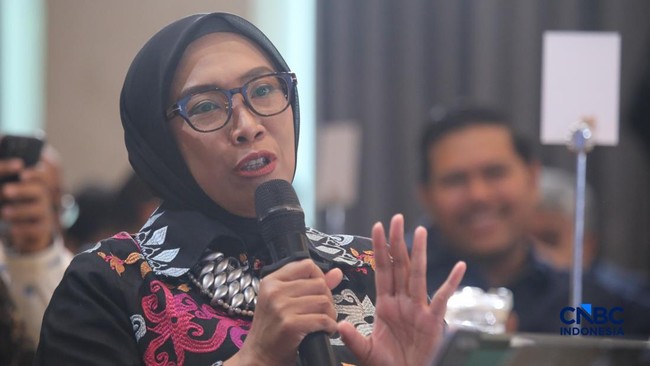
Director General of New, Renewable Energy and Energy Conservation (EBTKE), Eniya Listiani Dewi, said Indonesia has already established the implementation roadmap for mandatory biodiesel blending under Ministerial Regulation No. 4 of 2025.

"The biodiesel mandate is already in place. Through Ministerial Regulation No. 4 of 2025, we have established the implementation stages," Eniya said during the CNBC Indonesia Energy Forum in Jakarta.

Expanding Beyond Palm Oil​

While Indonesia's biodiesel program has been built primarily on crude palm oil (CPO), the government is now developing alternative feedstocks for other types of biofuels.

According to Eniya, crops such as corn, cassava, and sugarcane are being explored as feedstocks for bioethanol, which can partially replace gasoline consumption through ethanol blending programs.

Meanwhile, coconut is also being studied as a potential feedstock for producing bio-based aviation fuel (bio-avtur).

"In the future, we will also utilize other crops such as coconut for sustainable aviation fuel. Indonesia has tremendous potential to increase its 'oil production' from plants," she said.

To view this content we will need your consent to set third party cookies.
For more detailed information, see our cookies page.


Pertamina Pursues Multi-Feedstock Bioethanol Strategy​

At the same forum, Pertamina New & Renewable Energy (Pertamina NRE) announced a comprehensive strategy to accelerate Indonesia's bioethanol industry through a multi-feedstock, multi-generation, and multi-region approach.

President Director John Anis said Indonesia cannot rely on a single feedstock if it aims to implement higher ethanol blending mandates such as E10 or E20 gasoline.

"We want to replicate the success of the B50 biodiesel program for ethanol. The journey will be longer, but we remain committed. Our strategy consists of three pillars: multi-feedstock, multi-generation, and multi-region," John said.

Molasses Supply Remains Limited​

Currently, molasses, a by-product of sugar production, is considered the most mature feedstock for bioethanol because it does not directly compete with food consumption.

However, its production capacity remains insufficient to meet Indonesia's future bioethanol demand.

According to Pertamina NRE, implementing an E10 gasoline blend could require between 10 million and 20 million kiloliters of bioethanol annually, far exceeding the country's current molasses supply.

To view this content we will need your consent to set third party cookies.
For more detailed information, see our cookies page.


New Bioethanol Facility Under Development​

To expand domestic production capacity, Pertamina NRE is partnering with PT Sinergi Gula Nusantara (SGN) to build a new bioethanol facility at the Glenmore Sugar Mill in Banyuwangi.

The facility will utilize molasses as its primary feedstock and is expected to have an annual production capacity of approximately 33,000 kiloliters.

The broader initiative reflects Indonesia's long-term strategy to diversify renewable fuel sources, strengthen domestic energy resilience, and gradually reduce dependence on imported petroleum products while creating greater value from the country's agricultural resources.


To Save Land, 10,000 Hectares of Reservoir Surface to Be Converted into Floating Solar Power Plants​


To view this content we will need your consent to set third party cookies.
For more detailed information, see our cookies page.

Newly Karian Dam, next to Jakarta, prepared as one of dams to supply water for Greater Jakarta region


JAKARTA
PT PLN (Persero) plans to utilize 10,000 hectares of reservoir surface for the development of floating solar power plants (Floating PLTS) as part of Indonesia's strategy to achieve 100 gigawatts (GW) of solar power capacity, in line with the directive of President Prabowo Subianto.

President Director of PLN, Darmawan Prasodjo, said that deploying floating solar power plants on reservoirs offers a practical solution to the limited availability of land for large-scale renewable energy projects.

The company is coordinating closely with relevant ministries to accelerate the utilization of state-owned reservoir assets for renewable energy development.


1783130561970.png
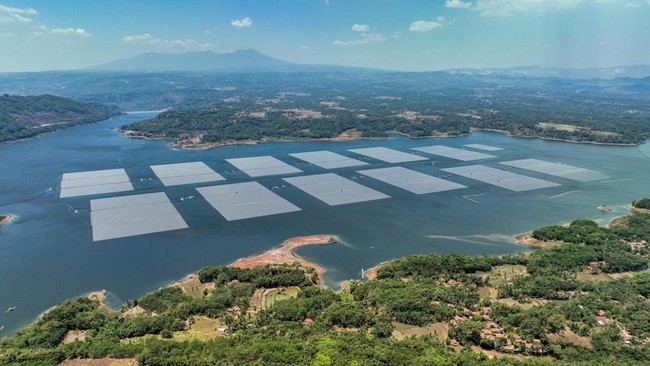
Photo: Illustration of the 192 MWp Cirata Floating Solar Power Plant (PLTS) in Purwakarta Regency, West Java. As the largest floating solar power plant in Southeast Asia, the project demonstrates PLN’s ability to turn the energy transition into a strategic force for strengthening Indonesia’s national energy security. (Photo: PT PLN Persero)

"In addition, we plan to develop floating solar power plants equipped with Battery Energy Storage Systems (BESS) across reservoirs covering approximately 10,000 hectares. In Java alone, this would add around 10 gigawatt-peak (GWp) of solar capacity," Darmawan said during a hearing with Commission XII of the House of Representatives.

10 GW of Floating Solar Capacity​

PLN estimates that utilizing 10,000 hectares of reservoir surface could generate approximately 10.3 gigawatt-peak (GWp) of solar power capacity.

To ensure reliable electricity supply, the floating solar facilities will be integrated with Battery Energy Storage Systems (BESS) totaling 30 gigawatt-hours (GWh) of storage capacity.

"Since the reservoirs already exist, the land is readily available. Of course, we will work closely with the Ministry of Public Works and the Ministry of Energy and Mineral Resources."

Lower Costs Through State-Owned Reservoirs​

According to Darmawan, solar power projects combined with battery storage are highly sensitive to land acquisition costs.

He explained that every increase in land prices directly affects the cost of electricity generation.

"PLTS combined with BESS is extremely sensitive to land prices. If land costs Rp200,000 per square meter, electricity costs increase by about one US cent per kilowatt-hour. If land prices reach Rp600,000 per square meter, electricity costs rise by approximately three US cents per kilowatt-hour."
By utilizing state-owned reservoirs, PLN expects to significantly reduce project costs while improving the economic competitiveness of renewable electricity.

"With land already provided by the government and by utilizing reservoirs, solar power combined with battery energy storage becomes a highly competitive solution from an economic standpoint."

Additional 28,000 Hectares of Land Prepared​

Beyond floating solar installations, the government is also preparing approximately 28,000 hectares of land across Java to support the national 100 GW solar power program.

PLN is working closely with the Ministry of Agrarian Affairs and Spatial Planning/National Land Agency (ATR/BPN) and the Ministry of Energy and Mineral Resources (ESDM) to identify suitable project sites.

According to Darmawan, around 8,500 hectares of the proposed land have already been identified and could immediately support approximately 8.5 GWp of solar generation capacity.

These land-based solar projects will also be integrated with Battery Energy Storage Systems (BESS) to improve grid stability and support Indonesia's long-term transition toward clean and domestically sourced energy.

 
Last edited:

Indonesia Receives First Russian Crude Shipment Under April Supply Deal​


By Charles Kennedy - Jul 09, 2026, 10:30 AM CDT


To view this content we will need your consent to set third party cookies.
For more detailed information, see our cookies page.


Indonesia has recently welcomed the first cargo of Russian crude oil under a deal Southeast Asia's biggest economy struck with Moscow in April.

About 770,000 barrels of Russian crude oil was delivered to Indonesia's port of Balikpapan at the end of June, per customs data by Big Trade Data cited by Bloomberg.

This was the first shipment of crude oil from Russia to Indonesia since the two countries agreed in April, at peak Hormuz crisis, on a regular supply deal.

Indonesia produces some 600,000 barrels of crude oil per day (bpd), but its consumption is far above that, at around 1.6 million barrels daily.

A lot of Indonesia's imports of crude oil have typically come from the Middle East. But the Iran war and the Strait of Hormuz disruption forced the biggest economy in Southeast Asia to look for alternative supply, including such from Russia.

"Indonesia's strategy to diversify its crude import basket with imports from Russia is backed by supply economics, refinery compatibility and medium-term energy security logic, not just opportunism around the Middle East crisis," Rystad Energy analyst Prateek Panday told the Business Times in April.

Around the same time, Indonesia's Deputy Minister of Energy, Yuliot Tanjung, said that the country would import 150 million barrels of crude from Russia this year.

The Indonesian Government has secured a strategic cooperation agreement with Russia to strengthen national energy resilience, particularly through crude oil supplies and the development of energy infrastructure, Bahlil Lahadalia, the Minister of Energy and Mineral Resources, said in April.


The follow-up cooperation covers long-term partnerships in the energy sector, including fulfilling national oil needs, the minister added.

"For crude oil, supplies are secure for one year from this month until December, so there's no need to worry. What we need to do now is boost our refinery production," he said.

By Charles Kennedy for Oilprice.com


Indonesia says B50 biodiesel plan to boost palm oil use, cut fuel imports​


By Reuters
July 9, 2026
6:50 PM GMT+7

1783659133237.png
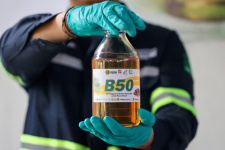
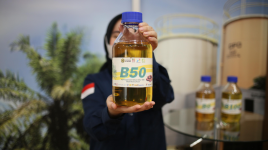
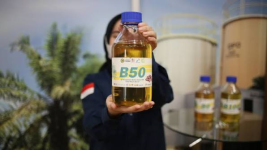
A laboratory technician poses for a picture as he holds a bottle of 50% palm biodiesel fuel during a B50 testing event in Lembang, West Java province, Indonesia, April 21, 2026. REUTERS/Ajeng Dinar Ulfiana/File Photo


KARAWANG, Indonesia, July 9 (Reuters) - Indonesia's mandate to raise the biodiesel blend to 50% palm oil-based fuel from 40% will increase crude ‌palm oil use to between 16.3 million and 17 million metric tons from 15.2 million tons, Energy Minister Bahlil Lahadalia said on Thursday.

The world's largest palm oil producer last week launched its B50 biodiesel programme, although industry participants are still awaiting revised biodiesel allocations from the government.

  • Bahlil ⁠made the remarks at a ceremony in Karawang in West Java province, attended by President Prabowo Subianto.
  • The programme, among the largest mandatory biodiesel blending schemes, is designed to reduce Indonesia's reliance on imported diesel fuel.
  • Prabowo said Indonesia was leading global efforts to reduce carbon emissions.
  • He said he had pushed for a B100 mandate, but ministers had advised him that a 50% palm oil blend was sufficient to eliminate imports. He added that authorities should continue ‌pursuing ⁠a 60% blend.
  • Bahlil said the government would begin research into a 60% mix.
  • Raising the blend to 50% is expected to reduce this year's import bill by 170 trillion rupiah ($9.41 billion), compared with savings of about 133 trillion rupiah in 2025, energy ⁠ministry data show.
  • Indonesia allocated 15.64 million kilolitres of biodiesel under its B40 programme this year, 4.68% above last year's consumption of 14.94 million kilolitres.
  • Indonesia will require 16.7 million to ⁠18 million kilolitres of fatty acid methyl ester (FAME) under the new mandate, an energy ministry official said on Thursday.
  • The ministry has yet to issue ⁠additional quotas for the B50 programme.
  • Businesses will have until the end of September to use up remaining B40 stocks.($1 = 18,070. rupiah)
Reporting by Fransiska Nangoy. Writing by Stanley Widianto. Editing by Martin Petty and Mark Potter


The Coming Power War That Will Define the AI Era​

By Josh Owens - Jul 09, 2026, 7:00 PM CDT

1783666599152.png

Every great economic era has been defined by a fight over a single resource.

In the 19th century, it was coal, and the British Empire was built on top of it.

In the 20th century, it was oil, and the modern Middle East and American postwar dominance were both shaped by who controlled the flow.

In the early 21st century, semiconductors became the world’s most critical asset, sparking the rise of Taiwan, growing trade tensions with China, and the creation of several multi-trillion-dollar tech giants.

The next fight is already underway, and almost nobody is talking about it in those terms yet.

The resource in contention this time is electricity. Specifically, the kind of clean, secure, large-scale electricity that AI workloads consume by the gigawatt.

The companies that control electricity may likely be able to dictate terms to the rest of the AI economy for the next two decades. The countries that hold it are about to find themselves with strategic leverage they have not enjoyed in a century. And the small handful of players who locked in AI-grade power capacity before the surge may soon look very different from what they do today.

 
Indonesia to Build Two Methanol Plants to Support B50 Biodiesel Program
Jumat, 10 Jul 2026

1783676642156.png

KARAWANG — The Indonesian government plans to build two large-scale methanol plants to meet rising domestic demand for methanol following the implementation of the mandatory B50 biodiesel program.

Bahlil Lahadalia said the nationwide rollout of B50, which began in July 2026, has increased Indonesia's annual methanol requirement to approximately 2.5 million metric tons. Methanol is a key feedstock used in the production of Fatty Acid Methyl Ester (FAME), the renewable biodiesel component blended with conventional diesel fuel.

"With the implementation of B50, methanol demand has increased. We need around 2.5 million tons of methanol annually for B50 alone. Therefore, our next step is to accelerate the development of the domestic methanol industry," Bahlil said.
The government plans to develop two methanol production facilities:

  • Bojonegoro, East Java — A natural gas-based methanol plant, with groundbreaking scheduled for July 2026.
  • East Kalimantan — A coal-based methanol plant, although the government has yet to announce the exact location or construction timeline.
B50 biodiesel consists of a 50% blend of conventional diesel fuel and 50% FAME, which is produced from palm oil and methanol through a chemical conversion process. Indonesia previously implemented the B40 mandate, under which biodiesel contained 40% FAME. The increase to B50 has significantly raised the country's demand for methanol.


Users who are viewing this thread

Back
Top