Indonesian Energy sector

Indonesia Explores Installing Solar Panels Along Railway Tracks, Hashim Invites Saudi Investors​


Firda Dwi Muliawati
17 November 2026


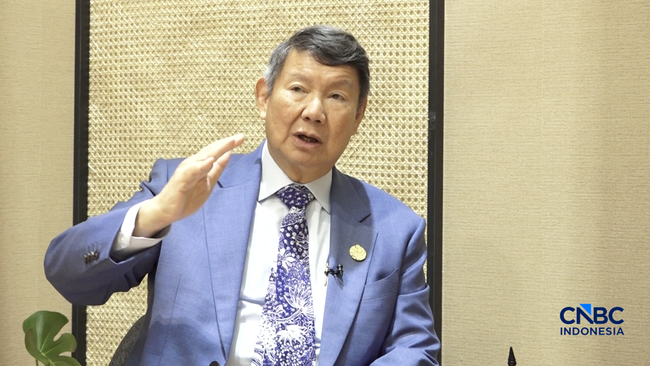
Hashim, Arsari Group Founder, and also brother of Prabowo Subianto


Jakarta, CNBC Indonesia
– Presidential Special Envoy for Climate and Energy Hashim Djojohadikusumo revealed that investors from Saudi Arabia have expressed interest in a proposed project to install solar panels along Indonesia's railway network, with a potential electricity generation capacity of 5.4 gigawatts (GW).

The initiative aligns with the government's target of developing 100 gigawatts-peak (GWp) of solar power capacity.

Hashim said he had personally introduced the project to a Saudi Arabian investor and met with the investor directly. The government is currently studying the feasibility of utilizing railway infrastructure operated by PT Kereta Api Indonesia (KAI) as locations for solar panel installations.

"This is something I am personally investigating and studying. I have introduced the idea to an investor from Saudi Arabia, and we have already met. Perhaps we can utilize railway tracks, installing solar panels between the rails and alongside the tracks. According to Kereta Api Indonesia, this alone could generate 5.4 GW," Hashim explained in an interview with CNBC Indonesia on the sidelines of COP31 in Antalya, Türkiye, as quoted on Monday, November 16, 2026.

The proposal to install solar panels along railway tracks, potentially involving Saudi Arabian investors, emerged because developing 100 GWp of solar power capacity would require tens of thousands of hectares of land.

Hashim noted that securing hundreds or thousands of hectares of land on Java Island would be particularly challenging, given limited land availability and high prices.

"However, we need to consider how many tens of thousands of hectares of land would be required for 100 GWp. On Java Island, finding hundreds or thousands of hectares of land is extremely difficult," he explained.

Despite the challenges of acquiring land in Java, the government has prepared the necessary regulations, while state electricity company PLN is ready to sign power purchase agreements (PPAs) to support the target of achieving a 76% share of new and renewable energy in the 2025–2034 Electricity Supply Business Plan (RUPTL).

The government emphasized the importance of identifying alternative sites that are both practical and economically affordable.

"So, we really have to be realistic. We need to find suitable land, and it must be affordable. Much of the land on Java Island has already become expensive," Hashim said.

In addition to studying solar panel installations along railway tracks, the government is exploring the use of several reservoirs, including Cirata, Saguling, and Kedung Ombo, for solar power development.

The government continues to explore innovative approaches to overcome land constraints while maintaining progress toward its solar power development target.

"So, we have to be innovative. There are also several other locations and opportunities that we could potentially utilize. We must continue finding innovative solutions," Hashim concluded.


This is the chance to produce nukes in silence.

There are a lot of muslim nations with civil nuclear tech and knowhow supported by other countries but they dont take the opportunity to misuse this to produce nukes in silence.

Pakistan did this well.

Imagine Indonesia with nukes. No one in Asia would dare to come near their coast and claim parts of their EEZ.

You could blow those Chinese fishermen up with a torpedo and they would go back home watching Shaolin movies crying about the great Mete Han (Modu Chanyu) who fucked them up centuries ago.

Indonesia already have two or three nuclear research reactors for several decades.

What we wants now is nuclear reactor for power plant.
 

Eni–Petronas Venture Searah to Invest Over $14 Billion in Indonesia's Oil and Gas Sector​


Nurbaiti
19 November 2026

1795240663081.png

Executive Brief​

  • Searah Ltd., a joint venture between Eni and Petronas, plans to allocate more than 70% of its total US$20 billion capital expenditure to oil and gas projects in Indonesia over the next five years.
  • Searah's oil and gas production in Indonesia currently stands at approximately 100,000 barrels of oil equivalent per day (boepd), with a target to quadruple output to 400,000 boepd.
  • Searah is accelerating oil and gas developments in East Kalimantan and East Java, including the North Hub and South Hub projects, while strengthening natural gas supplies in East Java through Searah Ketapang.


JAKARTA, Bisnis.com — Searah Ltd., a joint venture between Italian energy company Eni and Malaysia's Petronas, plans to invest more than US$14 billion in Indonesia's upstream oil and gas sector over the next five years, accounting for more than 70% of its total planned capital expenditure of US$20 billion.

Searah Group Chief Executive Officer Azahari Mohd. Shuid said Indonesia is a strategic market for the company, which manages 19 oil and gas assets across Indonesia and Malaysia. Fourteen of those assets are located in Indonesia and are operated through two entities, Searah Muara Bakau and Searah Ketapang.

"Our long-term commitment to Indonesia is reflected in our five-year investment plan, with more than 70% of our capital expenditure allocated to oil and gas projects in the country," Azahari said recently.

He explained that Searah was established to combine the strengths of Eni and Petronas in the upstream oil and gas business.

Eni contributes expertise in deepwater exploration, field development, and accelerated project delivery, while Petronas brings extensive experience in regional oil and gas production.

The partnership is expected to create an upstream energy company with international-standard technical capabilities and greater flexibility in decision-making and project execution.

Searah currently produces approximately 350,000 barrels of oil equivalent per day (boepd) on a net equity basis, including around 100,000 boepd from its Indonesian assets.

Of the Indonesian total, Searah Muara Bakau contributes approximately 80,000 boepd, while Searah Ketapang accounts for the remaining 20,000 boepd.

The company aims to quadruple production from its Indonesian assets to 400,000 boepd.

At the group level, Searah is targeting production of more than 500,000 boepd by 2028 through the optimization of existing assets, development of new fields, and expanded exploration activities.

Azahari said Searah aspires to become a leading independent energy company in the Asia-Pacific region. To achieve this, it will prioritize faster project execution, asset optimization, and disciplined capital management.

Accelerating Gas Projects in East Kalimantan​

East Kalimantan is a major focus of Searah's Indonesian expansion, with Searah Muara Bakau preparing several gas field developments to increase supply and sustain production over the long term.

Searah Muara Bakau CEO Mirko Araldi said October 2026 marked an important milestone for the company, with several projects and operational activities making significant progress.

Production from the Jangkrik North East-6ST well began on October 9, 2026, with an initial output of 60 million standard cubic feet per day (MMscfd).

The Maha project subsequently began production on October 30, contributing approximately 230 MMscfd of natural gas.

Alongside the optimization of producing fields, Searah Muara Bakau is accelerating development of the North Hub project, which includes the Geng North and Gehem fields.

"The project is planned to involve the drilling of 16 wells, with production targeted to begin in 2028," Araldi said.

North Hub will also feature a floating production, storage, and offloading (FPSO) facility described as one of the largest of its kind in the world.

The facility is designed to process up to 1,000 MMscfd of natural gas and 80,000 barrels of condensate per day, with storage capacity of 1.4 million barrels.

Elsewhere, Searah Muara Bakau is developing the South Hub project, comprising the Gendalo and Gandang fields in the Kutai Basin.

The project involves drilling seven wells, with production scheduled to begin in 2028.

By utilizing existing infrastructure at the Jangkrik field, the company expects to improve development efficiency while maintaining gas production at approximately 750 MMscfd.

Exploration also remains a key component of Searah's strategy to sustain Indonesia's long-term oil and gas production.

Searah Muara Bakau is currently drilling the Jangkrik NE Upside-1 exploration well in the West Ganal area.

The company has also completed the acquisition of 12,000 square kilometers of 3D and 4D seismic data.

The seismic surveys are expected to help identify undeveloped hydrocarbon resources in the Kutai Basin, considered one of Southeast Asia's most promising oil and gas regions.

Strengthening Natural Gas Supply in East Java​

Beyond East Kalimantan, Searah is expanding its upstream operations in East Java through Searah Ketapang to support growing regional demand for natural gas.

Searah Ketapang CEO Yuzaini M. Yusof said gas demand in East Java is projected to reach approximately 800 MMscfd in 2026.

One of the company's principal assets is the Bukit Tua field, which has been producing since 2015.

As of June 2026, the field's net equity production reached approximately 3,000 barrels of liquids per day and more than 30 MMscfd of natural gas.

"We have operated the Ketapang production-sharing contract since 2015, with production continuing for more than 11 years. We have also secured a 20-year extension of the contract, covering the period from 2028 to 2048," Yuzaini said.

Meanwhile, the Bukit Panjang project has reached a final investment decision (FID), making it one of Searah Ketapang's priority developments.

First gas production is targeted for 2028, with peak output expected to reach 50 MMscfd.

Yuzaini added that a proposed liquefied petroleum gas (LPG) processing facility featuring two production units could increase LPG output to more than 250 tonnes per day.

In addition to developing existing assets, Searah Ketapang is evaluating further exploration opportunities in North Ketapang and Bobara, Papua.

The company is also conducting further assessments of the Barokah exploration discovery in North Ketapang.

Exploration in eastern Indonesia and relatively underdeveloped oil and gas basins forms part of the company's strategy to expand the country's hydrocarbon resource base.

Participation in the Masela LNG Project​

Searah Ketapang is also a partner in the development of the Masela project, one of Indonesia's strategic natural gas developments.

The project targets annual liquefied natural gas (LNG) production of 9.5 million tonnes, alongside a domestic pipeline gas supply of 150 MMscfd.

Masela is also expected to produce approximately 35,000 barrels of condensate per day.

The project forms part of Searah's broader involvement in Indonesia's upstream oil and gas industry, spanning established production assets, new field developments, and exploration opportunities.


Bakrie's ENRG Expands Into US Oil Market With $200 Million HighPeak Investment​


Erta Darwati
November 23, 2026 | 12:36 pm


1795421708151.png
(Photo Courtesy of Energi Mega Persada).

Jakarta. Energi Mega Persada (ENRG), an oil and gas company controlled by the Bakrie Group, has completed a $200 million investment in US-based HighPeak Energy, marking its expansion into the American oil and gas market.

The investment was made through ENRG subsidiary Tunas Harapan Perkasa. HighPeak Energy (NASDAQ: HPK), headquartered in Fort Worth, Texas, focuses on hydrocarbon exploration and development in the Midland Basin in West Texas.

According to an independent assessment by GaffneyCline & Associates as of April 1, 2026, HighPeak holds 288 million barrels of oil equivalent (MMboe) in proven and probable (2P) reserves and 102 MMboe in contingent resources (2C), bringing its combined reserves and resources to 390 MMboe.

ENRG President Director and Chief Executive Officer Syailendra S. Bakrie said the completion of the investment reflected the company's commitment to pursuing growth through both organic expansion and acquisitions or strategic investments.

"We will continue to expand our business consistently to create additional value for shareholders," Syailendra said in an official statement on Monday.

ENRG Vice President Director and Chief Financial Officer Edoardus Ardianto said the company expected to generate synergies between its existing asset portfolio and HighPeak's operations, particularly through operational practices, technology transfer and knowledge sharing.

Founded in 2001 and listed on the Indonesia Stock Exchange (IDX) since 2004, ENRG operates in the upstream oil and gas sector.

Following the completion of the HighPeak investment, ENRG now has 14 oil and gas assets across Indonesia, Mozambique and the United States. These comprise nine operated assets, four partnership assets and one strategic investment.

As of June 30, 2026, ENRG's portfolio comprised approximately 427 MMboe in combined 2P reserves and 2C resources. Separately, its investment in HighPeak is expected to provide additional economic exposure equivalent to around 47 MMboe in 2P reserves and 2C resources after conversion.


Searah's Seismic Survey Reveals 34.52 TCF of Potential Gas Resources in Kutai Basin​


By Rio Indrawan
Selasa, 24/11/2026

1795498137277.png


JAKARTA — Oil and gas exploration in the Kutai Basin, East Kalimantan, is showing significant prospects. Preliminary results from a large-scale seismic survey conducted by Searah have identified potential natural gas resources of 34.52 trillion cubic feet (TCF) across open areas and exploration blocks.

Djoko Siswanto, head of the Special Task Force for Upstream Oil and Gas Business Activities (SKK Migas), said the seismic survey results indicated the presence of significant hydrocarbon resources.

"Thank God, the results of the seismic survey conducted by Searah, which was directly reviewed by the Minister of Energy and Mineral Resources and the Director General of Oil and Gas aboard the seismic survey vessel, indicate substantial potential oil and gas resources," Djoko said in a statement on November 24.

The TGS Ramform Sovereign seismic survey vessel conducted 3D and 4D seismic surveys in the waters off East Kalimantan.

The large-scale seismic survey is part of efforts to strengthen exploration activities, discover new oil and gas resources, and ensure the sustainability of future production.

Djoko explained that the seismic survey covers approximately 12,000 square kilometers using TGS Multisensor Broadband technology. Approximately 72% of the survey area comprises open areas in the deep waters of the Kutai Basin, while the remaining 28% covers active oil and gas blocks, including West Ganal, Rapak, Muara Bakau, Peri Mahakam, and East Sepinggan.

"Total investment in the survey amounts to approximately US$100 million," Djoko said.

According to Djoko, the seismic survey in open areas was conducted with the approval of the Minister of Energy and Mineral Resources under Eni's firm commitments, combined with its firm commitment activities in other blocks, as well as ministerial approval for an extension of the exploration period.

Based on preliminary interpretations, potential Gas Initially in Place (GIIP) in the open areas is estimated at 4.76 TCF under a P50 estimate.

"Meanwhile, 29 prospects and one lead have been identified within the exploration blocks, with a combined preliminary GIIP estimate of 29.76 TCF," Djoko said.

The combined preliminary estimate of potential gas resources across the two areas therefore amounts to approximately 34.52 TCF. However, this figure represents estimated gas in place and cannot yet be classified as proven reserves.

The next stage involves more detailed seismic data processing and analysis to determine the most promising exploration drilling locations. This process will be carried out in the United Kingdom, with support from supercomputing facilities in Milan, Italy.

"We hope that the data processing and identification of exploration drilling locations can be completed in 2027. The locations considered most promising will subsequently become exploration drilling targets," Djoko said.

SKK Migas hopes that the seismic survey will be followed by successful exploration drilling that confirms substantial natural gas reserves.

"We ask for prayers and support so that the upcoming exploration drilling successfully establishes proven reserves of at least 2 TCF," Djoko said.


Amid Global Energy Turmoil, MedcoEnergi Records 19% Surge in Oil and Gas Production​


By Rio Indrawan
Sunday, 15/11/2026


Hilmy Panigoro, Medco Energy President Director


BANDUNG — SKK Migas and PT Medco Energi Internasional Tbk (MedcoEnergi) continue to increase production and accelerate strategic projects to support Indonesia's national energy security and independence.

In the first half of 2026, MedcoEnergi's oil and gas production reached 170,100 barrels of oil equivalent per day (boepd), an increase of 19% compared with the same period last year.
The growth was supported by existing production, additional output from the Forel and Terubuk fields in Natuna, and the commencement of operations at Senoro Phase 2A and Bualuang Renewal Plan Phase I.

Three major development projects are also progressing as planned. In South Sumatra, the Sambar Field in the Corridor Production Sharing Contract (PSC) commenced production in November 2026, while the Sakakemang Field is targeted to come onstream in the third quarter of 2027. In East Java, the Paus Biru Field in the Sampang PSC is targeted to come onstream in the fourth quarter of 2027.

As part of its organic growth strategy, the company has also commenced seismic activities in two new blocks: the Amanah Block in South Sumatra and the Nawasena Block in East Java.

In the power sector, PT Medco Power Indonesia's electricity sales reached 2,323 GWh, representing growth of 16.5%, with renewable energy accounting for 26% of its gross installed capacity of 1,012 MW.


These achievements were discussed during the 2026 National Media Engagement (NME), organized by SKK Migas and MedcoEnergi on November 14–15 at the GAIA Hotel Bandung under the theme "The Future of the Energy Industry: Growing Amid Global Challenges." The event brought together approximately 50 journalists covering the energy sector and capital markets, along with company executives, SKK Migas representatives, and industry stakeholders.

Amri Siahaan, Director and Chief Operating Officer of MedcoEnergi, said that achieving growth amid global uncertainty requires investment discipline, operational excellence, and efficient asset and cost management.

"Strong collaboration between SKK Migas and production sharing contractors is key to supporting the oil and gas production targets set by the government," he said.

Hadariat Kuncara Zakty, Head of the Communications Department at SKK Migas, outlined national upstream oil and gas priorities, including increasing production and meeting oil lifting targets, accelerating projects and exploration, and strengthening the investment climate.

The government is pursuing various strategies, including providing greater contractual flexibility to industry players.

"We provide flexibility to our industry partners. The question is not which contract is the best, but which is the most suitable," Hadariat said.

Komaidi Notonegoro, Executive Director of the ReforMiner Institute, provided an independent perspective on the significant challenges facing Indonesia's energy security.

"There are challenges, but the potential remains. The question is how we capitalize on the opportunities available," Komaidi said.

Medco is known for its operational stability, supported by a diversified business portfolio that includes electricity generation. This diversification is also part of the company's strategy to address the challenges of the global energy transition.

Eka Satria, CEO of Medco Power Indonesia, explained that after more than 20 years of operations, the company has a combined independent power producer (IPP) and operations and maintenance (O&M) capacity of approximately 3,400 MW. Medco Power continues to strengthen its portfolio of gas-fired, geothermal, and solar power plants.

"We operate as an independent power producer that converts energy resources into a reliable electricity supply while supporting the transition toward cleaner energy. Indonesia has significant potential to meet domestic energy demand and strengthen its energy independence, while also having the opportunity to contribute to regional energy needs over the long term," he said.


Eni receives go-ahead for giant gas hub offshore Indonesia​

Italian company wins approval for new FPSO-based hub six months after discovery

23 November 2026

1795505629292.png

Indonesian authorities have approved Italian energy giant Eni’s plan for the Geliga field in the Kutei basin, paving the way for the development of an estimated 8 trillion cubic feet of gas in place.


Mubadala Energy advances Andaman strategy in Indonesia in Q1 2026​


Monday, April 13 2026 - 09:22 AM WIB

1795506260577.png
By Raymond Hendriawan

Abu Dhabi-based Mubadala Energy used the first quarter of 2026 to consolidate its position as a key upstream player in Indonesia, focusing almost entirely on the Andaman Sea offshore Aceh. During the period, the company moved closer to a final investment decision (FID) for its flagship South Andaman block, awarded multiple drilling and services contracts for the Tangkulo field, and secured a fifth block in the basin through Indonesia’s Second Bid Round 2025.

Mubadala entered the Andaman Basin on the basis of its geological potential of multi-trillion-cubic-feet resources and proceeded to validate that thesis through the landmark Layaran-1 and Tangkulo-1 discoveries. By Q1 2026, it had advanced from exploration success to development engineering and was laying the operational groundwork for first gas by the end of 2028. Indonesia's upstream oil and gas authority SKK Migas publicly disclosed the estimated US$1.95 billion investment figure for South Andaman's first development phase during a February 2026 parliamentary briefing, signalling the regulator's active engagement with the project.

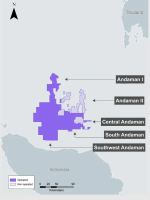
Mubadala Energy's block portfolio in Indonesia​

  • South Andaman Block: Mubadala Energy South Andaman RSC Ltd. (80% interest). Gross split PSC. Hosts Layaran-1 (6-8 TCF gas in place) and Tangkulo-1 (>2 TCF gas in place) discoveries. FID targeted June 2026, first gas by the end of 2028.
  • Central Andaman Block: Mubadala Energy (40%). Part of the contiguous Andaman Basin acreage position.
  • Andaman I Block: Mubadala Energy (80%). Contiguous Andaman Basin acreage.
  • Andaman II Block: Mubadala Energy (30%). Adjacent to the newly awarded Southwest Andaman block.
  • Southwest Andaman Block: Mubadala Energy (currently 100%). Gross split PSC. Newly awarded on March 26, 2026, under Indonesia's Second Bid Round 2025. Extends the Bampo DHI play westward. First exploration well planned in years 4-6 of the PSC, following 3D seismic acquisition and interpretation.

South Andaman: Advancing toward FID in June 2026​

The South Andaman block, operated by Mubadala Energy South Andaman RSC Ltd. with an 80% working interest, is the centrepiece of the company's Indonesia portfolio and the project that dominated its Q1 2026 operational agenda.


1795506928032.png
Mubadala Energy Indonesia’s portfolio (source: Offshore Engineer)

Tangkulo and Layaran potential​

The South Andaman block hosts two deepwater gas discoveries of materially different scales, both of which underpin the first development phase. The Tangkulo-1 discovery, which forms the production base for the initial development, holds more than 2 trillion cubic feet of gas in place. Mubadala Energy has described the Tangkulo structure as directly overlying the proven Bampo DHI play, the same geological system that guided the company's exploration strategy across the Andaman Basin.

The Layaran-1 discovery is substantially larger, with estimated gas in place of approximately 6 to 8 trillion cubic feet, positioning it among Indonesia's most significant recent deepwater finds. SKK Migas has noted that the Layaran structure's scale offers meaningful long-term expansion potential beyond the first development phase, including options for additional production trains or export-oriented development schemes. While the first Plan of Development (PoD I) is anchored on Tangkulo, the Layaran resource provides a development optionality that distinguishes the South Andaman block from many of its regional peers.

FEED progress and engineering design​

As of late Q1 2026, front-end engineering and design activities were progressing across all four major workstreams of the South Andaman development. SKK Migas Head Djoko Siswanto reported the following completion levels to Commission XII of the House of Representatives on February 11, 2026: the FPSO unit at 61.6%, the onshore receiving facility at 61.5%, subsea umbilicals, risers and flowlines at 46.3%, and the gas export pipeline at 32.3%.

The lower completion percentage for the gas export pipeline is consistent with its position later in the project's engineering sequence. Engineering, procurement, construction and installation activities for all major packages are scheduled to commence in the fourth quarter of 2026, subject to the June 2026 FID.

Investment estimate and regulatory engagement​

SKK Migas's public disclosure of the US$1.95 billion investment estimate for South Andaman PoD I was a significant signal of the regulator's active stewardship of the project. The figure (with 2.3% annual cost escalation), provides a reference point for what the development will require in committed capital ahead of the FID.

The South Andaman project has been proposed for designation as a National Strategic Project under Indonesia's PSN framework, a classification administered by the National Development Planning Agency (Bappenas) that provides enhanced coordination and regulatory facilitation for large-scale infrastructure investments. The PoD is concurrently under review by the Mineral and Energy Resources Ministry.

"The award of the Southwest Andaman block is a testament to our team's technical conviction, expertise in deep water exploration, and growth mindset. We have an unrivalled understanding of the Andaman basin,” said Mansoor Mohamed Al Hamed, Managing Director and CEO, Mubadala Energy

Southwest Andaman: A fifth block and a basin-wide strategy​

On March 26, 2026, the Indonesian government formally awarded Mubadala Energy the Southwest Andaman exploration block under a gross split production sharing contract. The award was made by the Directorate General of Oil and Gas as part of Indonesia's Second Bid Round 2025, with Mubadala Energy holding a 100% participating interest and operating the block.

Geological rationale​

The Southwest Andaman block is situated immediately adjacent to Mubadala Energy's existing South Andaman, Central Andaman, and Andaman II acreage, forming what the company described as a natural continuation of the proven Bampo DHI play, the geological system that underpinned the Layaran-1 and Tangkulo-1 discoveries in the South Andaman block.

The award of Southwest Andaman was the culmination of a process that began with the identification of the opportunity in 2022, a Joint Study Agreement completed in November 2024, and a formal bid submission in November 2025. The timeline illustrates the early-mover mindset by entering blocks before competitive tension develops, completing subsurface work during the study phase, and converting that preparatory investment into bid success.

"This award marks another important chapter in our Andaman story and reflects the trust that the Indonesian government continues to place in Mubadala Energy as a long-term, committed partner. Southwest Andaman is a strategically significant addition to our core Andaman area, and we are excited about the prospectivity it brings,” said Abdulla Bu Ali, President Director of Mubadala Energy Indonesia.

Investment commitment and first exploration well​

The firm commitment for the Southwest Andaman block is US$8.2 million, covering 3D seismic acquisition and subsurface studies. The first exploration well is planned for the second exploration phase, corresponding to years four to six of the PSC, and will be executed following completion and full interpretation of the new 3D seismic data. This sequencing mirrors the company's approach across its other Andaman blocks and reflects the deepwater frontier nature, where a well-calibrated subsurface evaluation is a prerequisite for efficient well placement.

Five blocks, one basin: Mubadala Energy's Andaman consolidation​

The addition of Southwest Andaman completed a five-block basin position that Mubadala Energy had assembled in the Andaman Sea over the course of several years. The company now holds South Andaman, Central Andaman, Andaman I, Andaman II, and Southwest Andaman. Together, they solidify Mubadala Energy as the largest and most active explorer in the basin, with a portfolio of multi-TCF discovered resources and a growing inventory of high-quality exploration prospects.

The strategic logic of a contiguous, basin-wide position in a deepwater setting allows the operator to capture geological learnings across the full play fairway, share seismic data and subsurface models across adjacent blocks, spread infrastructure costs across a larger resource base, and sequence exploration and development activities to optimize capital deployment. In the Andaman context, the Bampo DHI play has been derisked through the Layaran and Tangkulo discoveries in South Andaman, and the expectation is that analogous structures exist across the adjacent blocks, which will be tested with the Southwest Andaman 3D seismic program.

Outlook: Mubadala Energy's position in Indonesia's gas future​

Mubadala Energy is expected to enter the remainder of 2026 with one of the clearest near-term development timelines of international operators in Indonesia's upstream sector. The June 2026 FID for South Andaman, if achieved on schedule, would trigger EPCI works for the FPSO, SURF, and gas export pipeline in Q4 2026. That timeline, if met, would make the South Andaman project one of the fastest deepwater gas developments from discovery to first production in Indonesia's recent history.

The critical path item between now and the FID is the finalization of the South Andaman Plan of Development and its approval by the Ministry of Energy and Mineral Resources. The proposed National Strategic Project designation, if granted, would provide additional regulatory facilitation and inter-agency coordination that could support the timely progression of permitting and approvals ahead of EPCI mobilization.

The mid-Q2 2027 drilling campaign, for which MODU (Mobile Offshore Drilling Unit) prequalification has been launched, adds a parallel workstream that will build on the SLB integrated services contracts already in place. The combination of FPSO and subsea construction activity in late 2026 and a dedicated deepwater drilling campaign in mid-2027 points to an operational intensity over the next 18 months that is markedly higher than anything Mubadala Energy has previously executed in Indonesia.

Editing by Reiner Simanjuntak


Global Oil and Gas Giants Hunt for Oil Offshore Papua, Targeting a Potential One Billion Barrels​

CNBC Indonesia | November 20, 2026


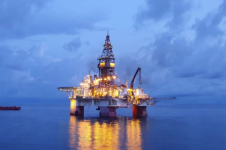
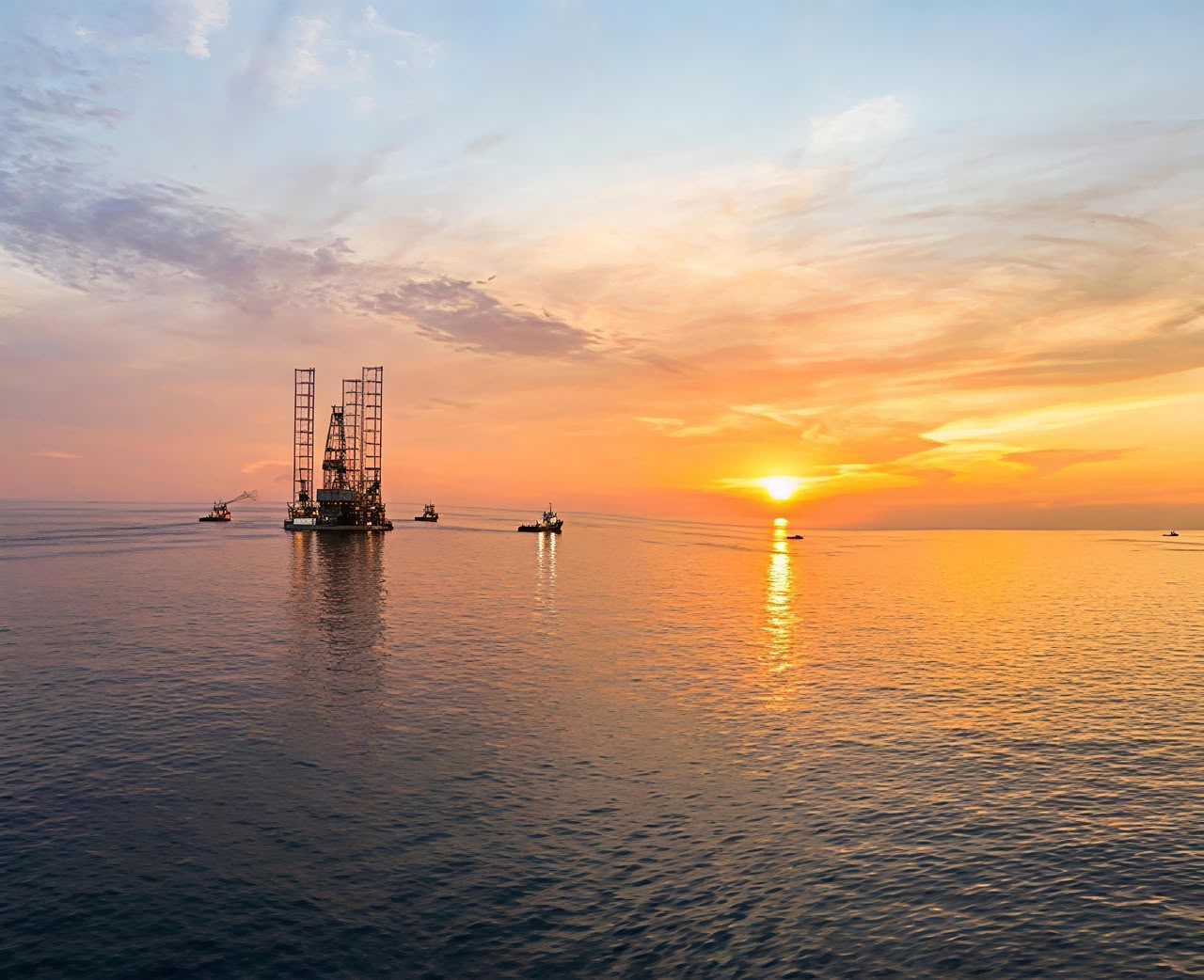
JAKARTA — Indonesia's Special Task Force for Upstream Oil and Gas Business Activities (SKK Migas) reported that French oil and gas giant TotalEnergies has returned to Indonesia's upstream oil and gas sector. TotalEnergies is undertaking deepwater drilling offshore West Papua alongside Petronas and PT Pertamina (Persero).

This marks TotalEnergies' return to Indonesia's oil and gas industry after its departure from the Mahakam Block in 2018.

The latest investment is being realized through the deepwater drilling project at the Redha-1 exploration well in the Bobara Block. The West Papua project is operated by PT Searah E&P Bobara Sdn. Bhd., which holds a 51% participating interest, while Pertamina and TotalEnergies each hold 24.5%.

SKK Migas Head Djoko Siswanto said the deepwater oil and gas potential offshore Papua could reach one billion barrels. The drilling operation targets the NGL Carbonate formation at a water depth of 1,679 meters.

"The target is the NGL Carbonate formation, with the objective of achieving a giant oil and gas discovery of up to one billion barrels," Djoko said in a written statement received by CNBC Indonesia on Friday (November 20, 2026).

The exploration well will be drilled at a water depth of 1,679 meters, with a True Vertical Depth (TVD) of 4,956 meters from the rig floor. The deepwater drilling operation is led by PT Searah E&P Bobara Sdn. Bhd. (Petronas), which holds a 51% participating interest.

"TotalEnergies is one of the world's seven major upstream oil and gas companies, originating from France, which previously operated in the Mahakam Delta in East Kalimantan for approximately 75 years. It has now returned to Indonesia to hunt for oil offshore Papua alongside Petronas and Pertamina," he said.

Under the project's ownership structure in the West Papua working area, TotalEnergies and PT Pertamina each hold a 24.5% participating interest. The consortium has mobilized the Deep Value Driller (DVD) deepwater drillship, owned by PT Venture Brazil, which arrived at the Lamongan Shorebase in East Java on November 17, 2026.

"Thank God, the Deep Value Driller deepwater drillship owned by PT Venture Brazil has arrived at the Lamongan Shorebase in East Java to load equipment and complete final preparations before heading to Papua's waters to drill the Redha-1 exploration well in the West Papua working area," Djoko said.

The drillship is scheduled to load logistical supplies until November 21, 2026, before relocating to the drilling site on November 22–28.

Drilling operations at the Redha-1 exploration well are scheduled to commence on November 29 or 30, 2026, with an estimated operational duration of approximately 100 days.

"The planned drilling operation will take approximately 100 days. The approved Authorization for Expenditure (AFE) amounts to US$114,869,659, which is 21% lower than the proposal submitted by the production sharing contractor," Djoko explained.

The decision to commence drilling ahead of the original schedule was made after geological data evaluations indicated that drilling could proceed without additional seismic surveys.

Equipment readiness inspections and joint prayers have been conducted both on the rig floor and onshore in Papua to ensure smooth and safe drilling operations. SKK Migas hopes the deepwater exploration will proceed safely and result in the largest possible oil reserve discovery.

"We ask for the support and prayers of everyone and the entire community. God willing, this deepwater oil and gas exploration offshore Papua can be conducted safely and successfully, resulting in a giant discovery," he concluded.

Bobara Block Profile​

The Bobara working area covers 8,444.49 square kilometers and has estimated potential oil and gas resources of 6.8 billion barrels of oil equivalent (BBOE).

The Bobara Block Production Sharing Contract (PSC) is a 30-year exploration contract signed in May 2024, with a firm commitment valued at US$16.92 million.

The commitment comprises three geological and geophysical (G&G) studies, a seismic resolution survey covering 2,000 square kilometers, and a signature bonus of US$50,000.

Tri Winarno, who was serving as Acting Director General of Oil and Gas at the time, said that many other areas in Indonesia still hold significant oil potential beyond the Bobara Block.

These include the Gaea I and II working areas in West Papua and the Akimeugah I and II working areas in South Papua and Highland Papua, which could potentially be developed by TotalEnergies in Indonesia.


Users who are viewing this thread

Back
Top