Indonesian International Commercial Trade Thread

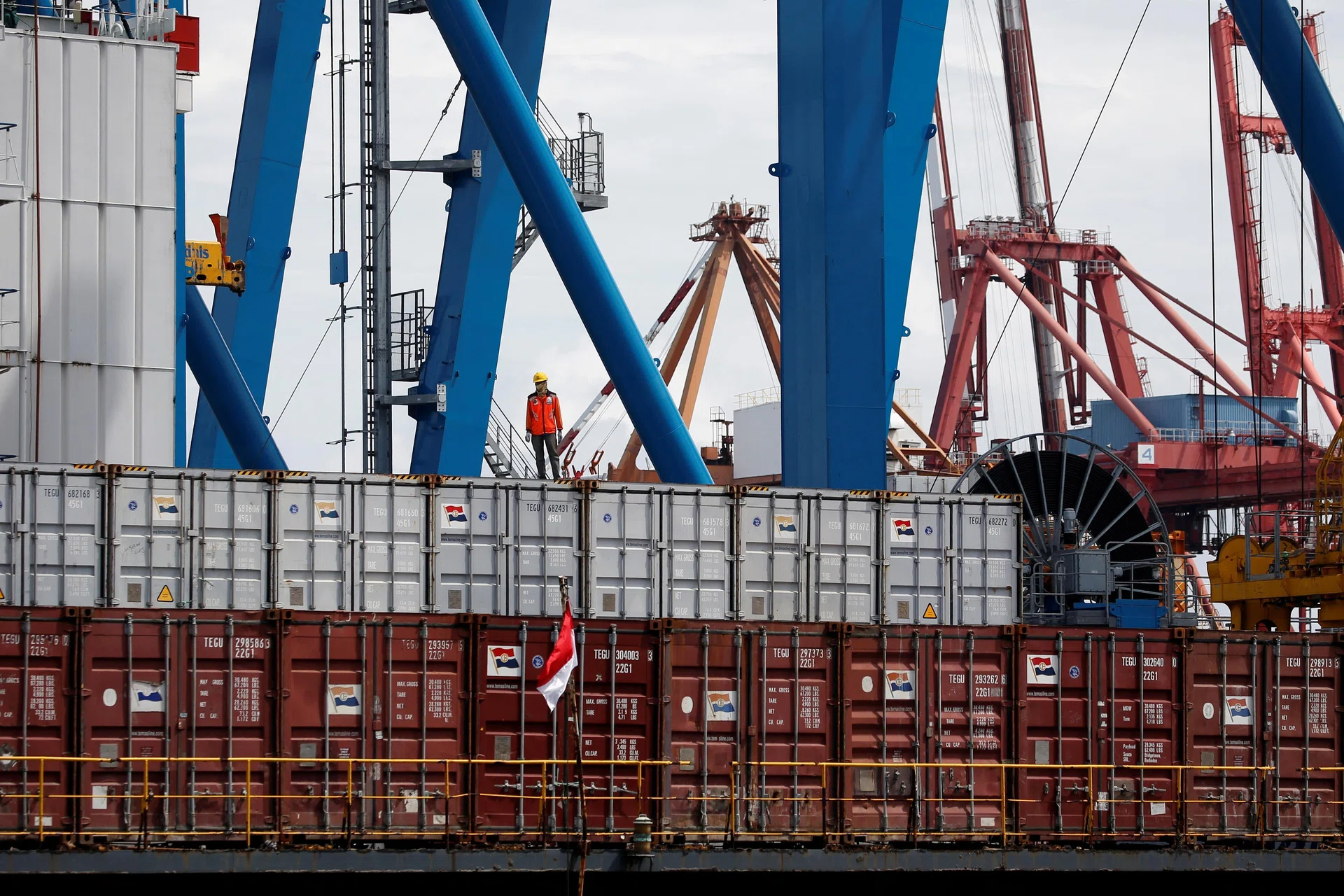
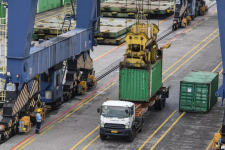
Record-Breaking! Indonesia’s Trade Balance Posts Surplus for 67 Consecutive Months, Reaches US$2.66 Billion​

By Anisa Indraini
2–3 minutes


To view this content we will need your consent to set third party cookies.
For more detailed information, see our cookies page.


🇮🇩 Indonesia Trade Balance — Key Points​

  • November 2025 surplus: US$2.66 billion
  • 67 consecutive months of trade surplus (since May 2020)
  • Total trade surplus (Jan–Nov 2025): 👉 US$38.54 billion
  • Exports (Jan–Nov 2025): US$256.56 billion (+5.61% YoY)
  • Imports (Jan–Nov 2025): US$218.02 billion (+2.03% YoY)
  • Non-oil & gas: surplus driver
  • Oil & gas: persistent deficit


Jakarta — Indonesia’s Central Statistics Agency (BPS) reported that the country’s trade balance in goods recorded a surplus of US$2.66 billion in November 2025. This marks 67 consecutive months of trade surplus, stretching back to May 2020.

The November 2025 surplus was primarily supported by a non-oil and gas (non-migas) surplus of US$4.64 billion, with the main contributing commodities being animal and vegetable fats and oils, iron and steel, as well as nickel and related products.

“At the same time, the trade balance for oil and gas commodities recorded a deficit of US$1.98 billion, mainly driven by deficits in crude oil and refined petroleum products,” said Pudji Ismartini, Deputy for Distribution and Services Statistics at BPS, during a press conference in Jakarta on Monday (January 5, 2026).

Meanwhile, from January to November 2025, Indonesia’s total export value reached US$256.56 billion, an increase of 5.61% compared with the same period last year. Oil and gas exports totaled US$11.81 billion, down 17.64%, while non-oil and gas exports rose 7.07% to US$244.75 billion.

Over the same January–November 2025 period, total imports amounted to US$218.02 billion, up 2.03% year-on-year. Oil and gas imports were recorded at US$29.42 billion, a decline of 10.81%, while non-oil and gas imports increased 4.37% to US$188.61 billion.

As a result, Indonesia’s trade balance in goods posted a cumulative surplus of US$38.54 billion from January to November 2025. This surplus was driven by a non-oil and gas surplus of US$56.15 billion, while the oil and gas sector continued to record a deficit of US$17.61 billion.


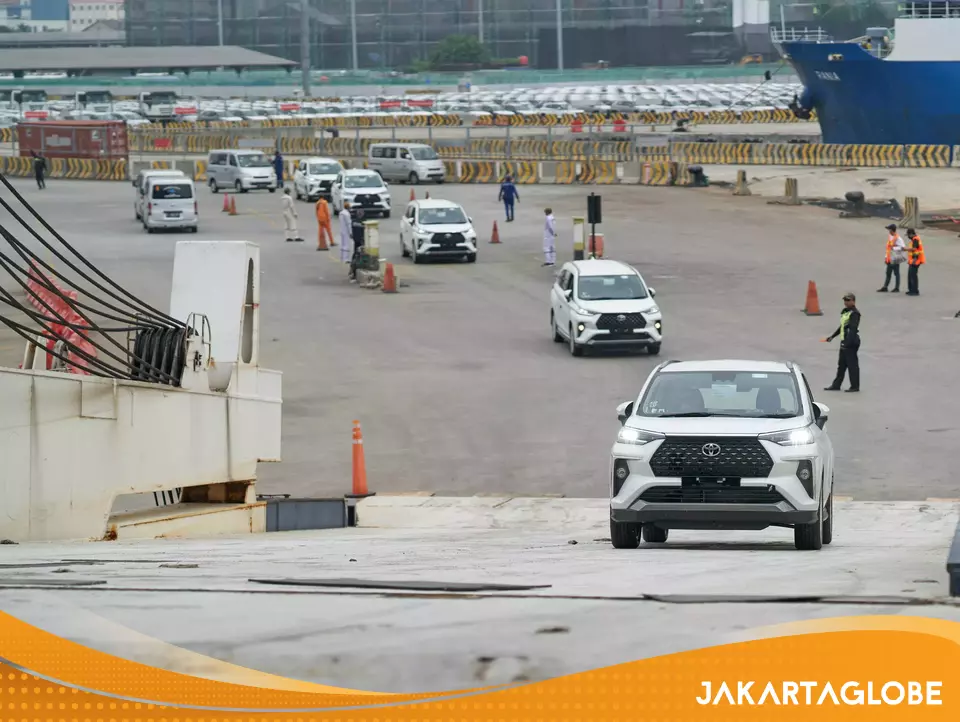
Toyota Indonesia Navigates Trade Barriers to Protect Latin American Export Markets​


Indah Ayu Pujiastuti

January 12, 2026 | 10:51 am


To view this content we will need your consent to set third party cookies.
For more detailed information, see our cookies page.

Transformation Journey 4.0: PT. Toyota Motor Manufacturing Indonesia (TMMIN) (National Lighthouse)​


Bandung. Toyota Motor Manufacturing Indonesia (TMMIN) is seeking to secure export market certainty in Latin America as geopolitical turbulence and potential tariff risks under US President Donald Trump continue to unsettle global trade.


TMMIN President Director Nandi Julyanto said Toyota has, in recent years, actively encouraged the expansion of trade agreements with multiple countries and regions to preserve the competitiveness of Indonesian-made vehicles and automotive components in export markets.


One agreement already in place is with Peru, although implementation challenges remain.


“Indonesia already has a trade agreement with Peru, but some technical issues have to be settled first. Coordination among the ministries of trade, foreign affairs, and industry is quite complex,” Nandi said in Bandung on Sunday.

Beyond Peru, Mexico has emerged as another potential export destination. However, discussions on a bilateral trade agreement have yet to make significant progress, he said.


These challenges are partly driven by Indonesia’s trade surplus with several Latin American countries, which often complicates negotiations.


“When Indonesia comes asking for a trade agreement, they say, ‘You already have a surplus, what more do you want?’ That’s why we need creative proposals, one of which could be linked to bioethanol,” Nandi said.


Read More:​

Toyota Mulls Building Ethanol Plant in Indonesia, Says Deputy Minister


He added that geopolitical volatility is not new for global businesses. Since the Trump era, companies have grown accustomed to uncertainty, although the current intensity of disruption is higher than before.


“Geopolitical tensions have been around since Mr. Trump’s time, but now the turbulence is even greater, especially with developments in Venezuela,” he said.


Export-Led Production
TMMIN recorded relatively stable production performance throughout 2025, producing a total of 263,000 vehicles. Of that figure, 67% was allocated for export markets, while 33% was absorbed domestically.


The company operates five plants in Indonesia, although vehicle production is concentrated in two main facilities, Plant 1 and Plant 2. Production growth remained modest, rising by around 3,000 units, or 1.1%, compared with the previous year.


“Even though growth is limited, our production utilization remains high at 93%,” said TMMIN Vice President Director Bob Azam.

Toyota continues to play a dominant role in Indonesia’s automotive exports. Last year, Toyota accounted for 57.7% of the country’s total vehicle exports. Electrified vehicles contributed 8% of Toyota’s export volume, reflecting gradual growth in line with rising global demand for lower-emission vehicles.


“This is part of our commitment to promote electrification, not only for the domestic market but also for exports,” Bob said.


Logistics and Supply Chain Risks
Bob said the most immediate geopolitical risk for manufacturers is disruption to supply chains and rising global logistics costs.


“When geopolitical tensions flare up, the first impact we usually feel is higher logistics costs,” he said.


He cited instability in the Middle East, which has disrupted shipping routes through the Suez Canal, forcing many shipments to reroute via the Cape of Good Hope in South Africa. As a result, logistics costs have doubled in some cases.


Read More:​

Indonesia’s EV Adoption Surpasses the US for First Time, New Research Finds

He added that the global automotive industry was originally designed to operate under a multilateral trading system. Increasing geopolitical fragmentation now threatens to erode that efficiency.


“The world feels increasingly fragmented. This will inevitably affect logistics and supply chains. We hope there is no further escalation, because the impact will be higher logistics costs and higher prices for goods,” Bob said.


Industry Data
According to data from the Indonesia Automotive Industry Association (Gaikindo), Indonesia’s completely built-up (CBU) vehicle exports reached 427,033 units between January and October 2025, up 9.1% year on year from 391,483 units in the same period last year.


Toyota remained Indonesia’s largest vehicle exporter, shipping 145,395 units during the period, a 5.6% annual increase. Daihatsu followed with 102,188 units, up 9.9%, while Mitsubishi Motors exported 83,276 units, surging 15.5%.


Read More:​

Indonesia Expands Domestic EV Capacity, Attracts Over $346 Million Investment

Hyundai Motor Manufacturing Indonesia ranked fourth with 48,213 units, followed by Suzuki with 25,161 units, Honda with 13,798 units, and Isuzu with 6,600 units. Smaller contributions came from Wuling, Chery, Hino, and DFSK.


Indonesia Turns to Anti-Graft Agency Before Buying US Oil and Planes​


Yustinus Paat

January 14, 2026 | 11:04 pm

1768427997704.png
Chief Economic Affairs Minister Airlangga Hartarto meets US Trade Representative Jamieson Greer in Washington DC on April 17, 2025. (Photo Courtesy of Coordinating Ministry for Economic Affairs)


Jakarta. The Indonesian government has sought guidance from the country’s anti-corruption agency as it prepares regulations governing planned purchases of oil and aircraft from the United States, Coordinating Minister for Economic Affairs Airlangga Hartarto said on Wednesday.


Airlangga visited the headquarters of the Corruption Eradication Commission (KPK) in Jakarta to consult on the proposed transactions, which are linked to ongoing trade tariff negotiations with Washington.


The government is drafting regulations related to the purchases and wants to ensure that the legal framework includes safeguards against corruption and future legal disputes, Airlangga told reporters.


“We are preparing presidential regulations, and the drafts have already undergone a risk assessment by the KPK,” Airlangga said after meeting KPK leaders.


He said two presidential regulations are being prepared: one governing energy purchases from the United States by state energy firm Pertamina, and another covering aircraft purchases by national carrier Garuda Indonesia.


“We have received input from the KPK through its risk assessment so that potential corruption risks can be mitigated from the outset,” Airlangga said.


Speaking at the same venue, Deputy Energy Minister Yuliot Tanjung said the meeting specifically addressed US reciprocal tariff policies and Pertamina’s planned energy imports.


According to Yuliot, consulting the KPK was essential to ensure clean governance and prevent potential leakages or missteps in policy implementation, particularly in the energy sector.


“That is why we consulted the KPK — to ensure there is mitigation against potential leakages and improper implementation,” he said.


Read More:​

Indonesia to Slash Middle East Oil Imports in Favor of $15B US Energy Deal

The administration of US President Donald Trump has imposed a 19% tariff on imports from Indonesia, down from an earlier announced rate of 32%. In return, Indonesia has agreed to import oil and gas from the United States and purchase US-made civilian aircraft.


Indonesia has also committed to opening greater market access for US agricultural products, addressing non-tariff barriers, and strengthening cooperation in digital trade, technology, national security, and other commercial areas.


In exchange, the United States has pledged to grant tariff exemptions for key Indonesian exports not produced domestically in the US, including palm oil, cocoa, coffee, tea, and other strategic commodities.


Read More:​

Pertamina Increases Oil Reserves and Output as US–Venezuela Tensions Rise


Pakistan, Indonesia to set up JTC to boost trade

The Newspaper's Staff Reporter Published January 11, 2026

1768428363382.png
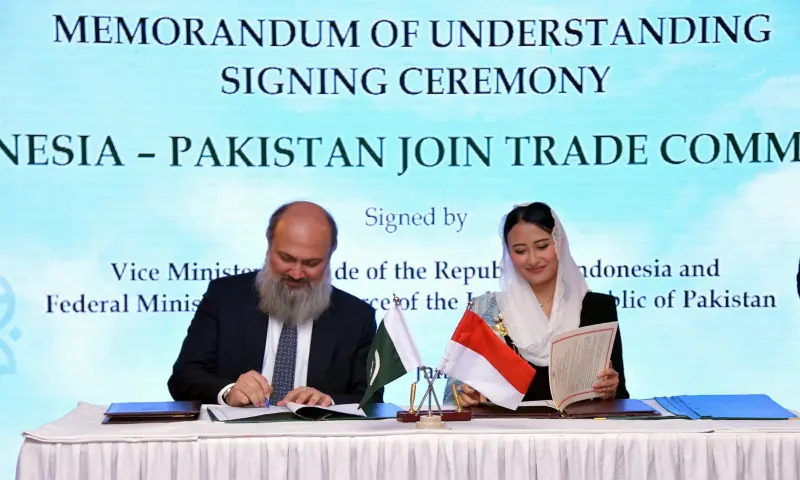
Commerce Minister Jam Kamal Khan and Indonesian Vice Minister of Trade Dyah Roro Esty Widya Putri sign the MoU for the establishment of the Joint Trade Committee on Saturday.—APP


KARACHI: Pakistan and Indonesia have signed a memorandum of understanding to establish an Indonesia-Pakistan Joint Trade Committee (JTC) to strengthen trade dialogue, facilitate cooperation and address opportunities and challenges in bilateral trade.


The MoU was signed after high-level talks in Islamabad on Friday, led by Commerce Minister Jam Kamal Khan and visiting Indonesian Vice Minister of Trade Dyah Roro Esty Widya Putri, said a press release.


The development coincided with a reception hosted by the Indonesian Consulate General in Karachi in honour of the visiting vice minister, attended by government officials and representatives of the business community from both countries.


During the talks, Mr Kamal described Indonesia as strategically important within the Association of Southeast Asian Nations (Asean) and said it could serve as a regional hub for fostering trilateral and regional economic cooperation.


The federal minister emphasised that Pakistan could serve as a reliable source for minerals, cosmetics, pharmaceuticals and agri-food commodities for the Indonesian market.


He also conveyed Pakistan’s intention to organise a single-country exhibition and business forum in Jakarta, with invitations to be extended to Asean member states, aimed at showcasing Pakistani products and strengthening regional business linkages.


Trade Development Authority of Pakistan (TDAP) Chief Executive sought Indonesian facilitation for the early announcement of fruit import quotas, rationalisation of certification requirements for Pakistani exports, notification of rice import quotas and improved market access for industrial-grade potatoes.


Both sides agreed to work jointly towards expanding the existing preferential trade agreement (PTA), with the shared objective of progressing towards a Comprehensive Economic Partnership Agreement to unlock greater trade and investment opportunities.


Mr Kamal noted that imported edible oil, primarily from Indonesia, forms an essential part of Pakistan’s food chain and daily life and appreciated the continued contribution of Indonesian and Pakistani stakeholders to sustaining bilateral trade.


The Indonesian vice minister reaffirmed Indonesia’s commitment to deeper economic ties and welcomed closer cooperation through the newly established JTC.


With bilateral trade exceeding $4 billion, both sides reiterated their commitment to further strengthening relations through political trust, growing economic cooperation and people-to-people links, the press release said.


Growth in auto sales


Separately, the minister on Wednesday expressed optimism that sales of locally manufactured vehicles would improve in the coming years, citing policies aimed at discouraging imports of used cars.


Mr Kamal said Pakistan’s annual production of vehicles, currently below 200,000 units, could rise to between 500,000 and one million units, creating new investment opportunities. He also stressed the need to strengthen auto-financing to support higher sales of locally made vehicles.


During a visit to the Bin Qasim automotive cluster of the Pakistan Association of Automotive Parts and Accessories Manufacturers, he reaffirmed the government’s commitment to supporting domestic automobile manufacturing and exports.


Published in Dawn, January 11th, 2026


Indonesia reports US$2.52 billion trade surplus in December, above forecast​


Published Mon, Feb 2, 2026 · 01:21 PM

[JAKARTA] Indonesia reported a US$2.52 billion trade surplus in December, beating a forecast of US$2.45 billion in a Reuters poll, official data showed on Monday, with exports outpacing imports over the month.

Exports rose 11.64 per cent annually in December to reach US$26.35 billion, compared with a forecast 2.40 per cent drop in a Reuters poll, propped up by higher shipments of palm oil and nickel products.

Imports rose 10.81 per cent year-on-year to US$23.83 billion, compared to the 0.7 per cent drop expected by analysts.

Overall, Indonesia posted a trade surplus of US$41.05 billion rupiah for the full year of 2025, up from US$31.33 billion in 2024.

Statistics Indonesia is due to provide January inflation and other economic data later on Monday. REUTERS


Indonesia Ends 2025 With $41 Billion Trade Surplus: BPS​


Ria Fortuna Wijaya
February 2, 2026 | 2:12 pm

1770040128859.png

Jakarta. Indonesia closed 2025 with a hefty trade surplus, as strong non-oil and gas exports more than offset a persistent energy deficit, data from the Central Statistics Agency (BPS) showed on Monday.


BPS reported that Indonesia’s trade balance booked a surplus of $41.05 billion, or about Rp 688.8 trillion, over January–December 2025.


“The 2025 surplus was mainly supported by a non-oil and gas surplus of $60.72 billion, while oil and gas commodities still recorded a deficit of $19.70 billion,” BPS Deputy for Distribution and Services Ateng Hartono said at a press conference in Jakarta.


The surplus was driven by non-oil and gas trade, which posted a surplus of $60.75 billion, equivalent to Rp 1.01 quadrillion, even as the oil and gas balance remained in the red with a $19.70 billion deficit, or around Rp 330.3 trillion.

In December 2025 alone, Indonesia again recorded a trade surplus of $2.51 billion, or about Rp 42.1 trillion. The figure stemmed from a non-oil and gas surplus of $4.60 billion (Rp 77.1 trillion), which outweighed an oil and gas deficit of $2.09 billion (Rp 35.0 trillion).


On the export side, Indonesia’s total exports reached $282.91 billion, or roughly Rp 4.74 quadrillion, throughout 2025, up 6.15% from a year earlier.


“Non-oil and gas exports contributed $269.84 billion, equivalent to Rp 4.52 quadrillion, growing 7.66% year-on-year,” BPS said on its official website.

Exports in December 2025 stood at $26.35 billion, or about Rp 441.7 trillion, marking an 11.64% increase from December 2024. Non-oil and gas exports in the same month reached $25.09 billion, or Rp 420.7 trillion, up 13.72%.


Of the 10 main non-oil and gas export commodities in 2025, almost all posted gains. The exception was mineral fuels, which fell by $7.61 billion, or around Rp 127.5 trillion, representing a 19.18% decline. The strongest increase was recorded in animal and vegetable fats and oils, which surged by $7.50 billion, or about Rp 125.8 trillion, up 27.94%.


By destination, China remained Indonesia’s largest non-oil and gas export market in 2025, absorbing $64.82 billion, or roughly Rp 1.08 quadrillion. The United States followed with $30.96 billion (Rp 518.9 trillion), while India ranked third at $18.32 billion (Rp 307.2 trillion).


Combined, the three markets accounted for 42.28% of Indonesia’s total non-oil and gas exports. Shipments to ASEAN reached $51.58 billion (Rp 865.0 trillion), while exports to the European Union’s 27 member states totaled $19.28 billion (Rp 323.3 trillion).


On the import side, Indonesia’s imports over January–December 2025 amounted to $241.86 billion (Rp 4.05 quadrillion), up 2.83% from the same period in 2024. Non-oil and gas imports rose 5.11% to $209.09 billion, equivalent to Rp 3.50 quadrillion.


Imports in December 2025 reached $23.83 billion, or about Rp 399.3 trillion, increasing 10.81% year-on-year. Non-oil and gas imports in the month climbed to $20.48 billion, or Rp 343.5 trillion, up 12.46%.


By commodity group, the largest increase among the top 10 non-oil and gas import categories in 2025 was recorded in electrical machinery and equipment, which rose by $4.68 billion, or around Rp 78.5 trillion, equivalent to a 17.22% increase. In contrast, iron and steel imports posted the steepest decline, falling by $1.20 billion, or about Rp 20.1 trillion, down 11.17%.


Indonesia - US trade deal is reached

To view this content we will need your consent to set third party cookies.
For more detailed information, see our cookies page.


To view this content we will need your consent to set third party cookies.
For more detailed information, see our cookies page.
 

US Tariffs on Indonesia Stay at 19%, But Textile Gets 0%​


Jayanty Nada Shofa
February 20, 2026 | 9:51 am

1771568433392.png
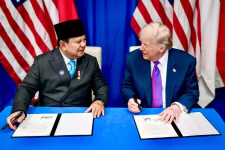
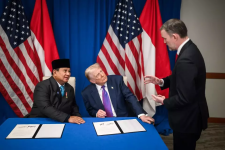
President Prabowo Subianto and his American counterpart Donald Trump sign the document on the implementation of the agreement toward new golden age for US-Indonesia alliance in Washington on Feb. 19, 2026. (Photo Courtesy of Presidential Press Bureau)

Jakarta. The US has agreed to keep its tariff on Indonesian goods at 19%, but will drop the rate to 0% on Jakarta’s textiles via a quota system in the freshly signed deal.


After almost a year of negotiations, Indonesia finally sealed a reciprocal trade agreement during President Prabowo Subianto’s visit to Washington. The Donald Trump 2.0 administration has previously agreed to cut down its reciprocal tariffs on Indonesia from 32% to 19%. Prior to the signing, Jakarta had announced certain commodities, such as palm oil and coffee, could enter the American market tariff-free. Senior economic minister Airlangga Hartarto later revealed that the list of products that would get 0% tariff had expanded with textiles and apparel, although a tariff rate quota scheme would apply. In other words, Washington will only allow a pre-determined quantity of textiles to be imported at 0%.


“The 0% tariff rate quota on textiles and apparel will benefit 4 million workers in this sector,” Airlangga said at a virtual press briefing from Washington on Thursday night local time.


“If we count their family members, this will certainly affect 20 million Indonesians.”

The signed document wrote that the quota would hinge on how much of the exports were made from American cotton and man-made fiber textile inputs. The agreement also binds Indonesia to facilitate commercial arrangements to import at least 163,000 metric tons of American cotton annually for five years. Southeast Asia’s biggest economy has to keep the annual US cotton imports still exceeding 150,000 tons afterwards.


Under the deal, Indonesia will eliminate tariff barriers on over 99% of US products.

1771569200253.png
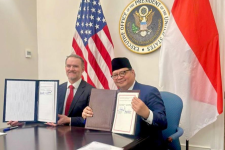
Chief negotiator Airlangga Hartarto and US Trade Representative Jamieson Greer sign the reciprocal trade agreement in Washington on Feb. 19, 2026. (Photo Courtesy of Coordinating Ministry for Economic Affairs)


Commenting on these changes, the Indonesian Garment and Textile Industry Association (AGTI) said that the government had already “given its best effort” in the negotiations.


“The reciprocal tariff all started because of Washington’s deficit with us. If we can source American raw materials and export high-value-added goods at zero tariffs, this benefits both countries,” AGTI chairwoman Anne Patricia Sutanto told the Jakarta Globe.


“This supply chain alignment can strengthen the global supply chain [with] made-in-Indonesia manufacturing.”


Just a day earlier, an Indonesian-US business forum resulted in US cotton purchase commitments worth up to $244 million, according to a separate press release. The US National Cotton Council had struck memoranda of understanding with the Indonesia-based Busana Apparel Group and Daehan Global that day. AGTI, Indonesian garment exporter Pan Brothers, and textile recycling startup Ravel also signed an MoU.


Trade Ministry data showed Indonesian exports of US-bound knitted apparel totaled $2.8 billion in 2025, while the non-knitted shipments reached $2.1 billion

 
What US get from the deal

About agricultural it is mostly wheat that is not produced in Indonesia and previously imported from various country with Ukraine is likely the biggest exporters. Not only for domestic consumption, Indonesia import wheat is also due to Indonesia huge food industries that become one of Indonesian main products for exports.

For energy it is a switch from importing oil/LNG from Middle East to US sources

To view this content we will need your consent to set third party cookies.
For more detailed information, see our cookies page.


----------

The United States and Indonesia commend the massive commercial deals reached of approximately $33 billion worth of investment in agriculture, aerospace, and energy in the United States – further increasing U.S. exports to Indonesia. This includes:

  • Purchases of approximately $15 billion of U.S. energy commodities.
  • Procurement of commercial aircraft and aviation-related goods and services of approximately $13.5 billion, including from Boeing.
  • Purchases of over $4.5 billion of U.S. agricultural products.
 

US Scraps Non-Trade Clauses From Tariff Deal, Indonesia Says​


Jayanty Nada Shofa
February 20, 2026 | 12:55 pm

1771586449358.png

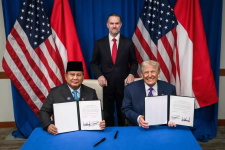
President Prabowo Subianto and his American counterpart Donald Trump sign the document on the implementation of the agreement toward new golden age for US-Indonesia alliance in Washington on Feb. 19, 2026. Behind them is US Trade Representative Jamieson Greer. (Photo Courtesy of US Trade Representative)


Jakarta. The US government was willing to keep the newly signed reciprocal trade deal strictly limited to trade issues only by scrapping clauses related to defense and security, Chief Economic Minister Airlangga Hartarto said on Thursday.


His remarks came only hours after he signed the reciprocal trade deal with US Trade Representative Jamieson Greer in Washington. President Prabowo Subianto and his American counterpart Donald Trump had struck a separate implementation agreement meant to usher in what they called a “new golden age” for the bilateral alliance.


Speaking to the press later that day, Airlangga said that the Trump government had agreed to accept 90% of Indonesian demands, without disclosing which of the requests got turned down.


“Unlike other reciprocal trade agreements, the US has agreed to remove clauses unrelated to economic cooperation, including on nuclear reactor development, South China Sea policies, defense, and border security,” Airlangga told a virtual press briefing. “Our agreement with the US is strictly trade-related.”


Over the past few months, the Indonesia-US trade talks have been subject to a plethora of rumors. The Singapore-based Straits Times reported that Jakarta had resisted the Trump government’s demands to buy US drones for surveillance in the waters near the South China Sea. Airlangga had previously denied that such provisions ever existed.


In Malaysia’s trade deal, Kuala Lumpur had agreed to “not purchase any nuclear reactors, fuel rods or enriched uranium from certain countries, except where there are no alternative suppliers on comparable terms and conditions”. There was no mention of nuclear reactors in Jakarta’s document. On defense, the reciprocal tariff agreement with Indonesia only briefly touched on arms trade amid Prabowo’s plans to upgrade his country’s military equipment.


“The US shall work with Indonesia to streamline and enhance defense trade,” the document reads.


Under the deal, the US keeps its promise of maintaining 19% tariffs on most Indonesian goods, down from the originally threatened 32%. Washington also agreed to give tariff exemptions on 1,819 Indonesian tariff posts, including palm oil, electronic components, and spices. Textile faces a tariff rate quota system, in which a predetermined quantity of eligible exports can enter the US market at 0% tariff. Indonesia has eliminated tariffs on 99% US products, ranging from agricultural goods to automotives.


To view this content we will need your consent to set third party cookies.
For more detailed information, see our cookies page.


The U.S.-Indonesia trade deal locks in approximately $33 billion worth of investment in the United States:

1. $15 billion of U.S. energy commodities

2. $13.5 billion of commercial aircraft & aviation-related goods & services

3. $4.5 billion of U.S. agricultural products
 

Is Indonesia’s 19% Tariff Deal Still Valid After the US Supreme Court Ruling?​


Andrew Tito
February 25, 2026 | 4:36 pm

1772164756463.png

Jakarta. The US Supreme Court’s decision to invalidate the original legal basis of President Donald Trump’s tariff policy against several countries, including Indonesia, has injected fresh uncertainty into bilateral trade relations.


Amid the uncertain legal landscape, Indonesia is seen as relatively better positioned, having entered negotiations earlier, according to Fitra Faisal Hastiadi of the Government Communications Agency (Bakom RI).


Fitra said that after the Supreme Court struck down the tariff policy based on the International Emergency Economic Powers Act (IEEPA), Trump swiftly turned to another legal instrument: Section 122 of the Trade Act of 1974.


“When the Supreme Court ruled it out, President Trump immediately exercised the 1974 Trade Act. Why can Section 122 be implemented immediately? Because it does not require a federal investigation,” Fitra said.

In response to the Supreme Court ruling, Trump imposed a temporary 10% tariff on all global imports. He had threatened to bring in a 15% rate, but the lower rate took effect on Tuesday. It will remain in place for 150 days, at which point Trump is expected to consult Congress on any extension.


What will happen to the 19% tariff under the Agreement on Reciprocal Tariff (ART) scheme, which was signed on Friday just hours before the Supreme Court ruling?


According to Fitra, the status of the 19% tariff is now in a legal gray area, as its original basis—IEEPA, has been annulled. However, another legal view suggests that once an international agreement has been signed, it may still proceed.


The complication lies in Article 7 of the Agreement on Reciprocal Tariff, which requires domestic ratification by both parties. In Indonesia, this would involve deliberation with the House of Representatives (DPR), while in the US, it must pass through Congress.


“So the probability of it not taking effect is quite significant,” he said.

For now, the tariff under Section 122 remains the most certain framework, while the 19% rate hinges on political dynamics and ratification processes in both countries.


Beyond Section 122, Trump also retains access to more aggressive legal tools under the Trade Act of 1974, namely Sections 232 and 301.


Section 232 allows the US government to impose tariffs without limits if deemed necessary for national security, including in the context of trade deficits. However, it requires a federal investigation by the Department of Commerce. “The tariff is limitless. That means if this is enforced, there may be no cap,” Fitra said.


Meanwhile, Section 301 may be invoked if the US believes its businesses are being discriminated against by another country. Investigations are conducted by the US Trade Representative, and tariffs imposed can last up to four years and be extended without a nominal limit.


Both instruments, he said, could effectively restore a reciprocal tariff scheme without clear caps or duration.


In that context, Fitra argued that Indonesia’s early move to negotiate has worked to its advantage. “It is more beneficial that we negotiate early. If we had not negotiated, we would be subject to the potential imposition of tariffs that could be even much higher,” he said.


Separate from the general tariff framework, certain products have been granted a 0% tariff exemption. Fitra clarified that this policy stems from a different executive order, distinct from the Agreement on Reciprocal Tariff. “This 0% tariff exemption, although its schedule still refers to the Agreement on Reciprocal Tariff, may indeed be excluded,” he said.


In other words, the opportunity to maintain a 0% tariff remains open, depending on how the executive order is implemented and on subsequent policy dynamics in Washington.


Another emerging issue is concern from China over Article 5.1 of the agreement. The clause allows Indonesia to adopt measures imposed by the US against specific countries—including tariffs, quotas, or sanctions, following notification from Washington.


According to Fitra, the main objective of the clause is to prevent transshipment practices, where goods from sanctioned countries are rerouted through third countries to avoid higher tariffs.


Read More:​

Tariff Uncertainty Clouds Indonesia-US Trade Pact, ASEAN Seen as Anchor

However, he stressed that Indonesia retains a strong escape clause. “In Articles 5.2 or 5.3, it is subject to national interest. We have an escape clause, as long as it does not disrupt our national interest,” he said.


Indonesia’s national interest, Fitra added, includes maintaining good relations with China and other trading partners. As such, implementation of the clause does not automatically follow US policy and may be renegotiated.


Additionally, a Council on Trade and Investment will be established as a consultation forum in the event of trade imbalances or policies deemed detrimental to Indonesia’s national interest. “Matters considered disruptive to our national interest can be discussed in that forum and renegotiated,” he said.


Read More:​

Was 19% Ever the Real Issue? Economists Reframe Reciprocal Tariff Talk


Indonesia Says US Export Tariff Cut to 15% After Court Ruling​


Antara
February 28, 2026 | 5:58 am

1772436992063.png
President Prabowo Subianto and his American counterpart Donald Trump listen to US Trade Representative Jamieson Greer in Washington on Feb. 19, 2026. The conversation takes place during the signing of the document on the implementation of the agreement toward new golden age for US-Indonesia alliance. (Photo Courtesy of US Trade Representative)


Jakarta. Indonesia said on Friday that tariffs imposed by the United States on its exports will stand at 15%, not 19% as previously agreed in bilateral trade talks in Washington.

Coordinating Economic Affairs Minister Airlangga Hartarto said the adjustment follows a decision by the US Supreme Court that invalidated the reciprocal tariff policy introduced by President Donald Trump.


“As a result, the applicable rate is the global tariff of 15%,” Airlangga told reporters in Jakarta.


During President Prabowo Subianto’s visit to Washington last week, Indonesia and the US had agreed on a 19% tariff — down from an earlier proposed 32% — before the Supreme Court ruling altered the legal basis of the policy.

Airlangga stressed that the broader trade agreement remains valid, subject to parliamentary ratification, despite the revised tariff level.


Under the agreement, Indonesia secured 0% tariff access for 1,819 product categories entering the US market. These include palm oil, coffee, cocoa, spices, rubber, electronic components — including semiconductors — and aircraft parts.


Indonesia’s textile and apparel sector will also benefit from 0% tariffs, although the measure will be implemented under a Tariff Rate Quota (TRQ) mechanism, meaning duty-free access applies up to a specified volume.


The clarification provides some certainty for exporters after days of confusion following the US court ruling, which reshaped the tariff framework underpinning the bilateral deal.


Manufacturing Industry Becomes Indonesia’s Main Driver of Export Growth​


Anisa Indraini

1777869352581.png


JAKARTA — Indonesia’s manufacturing industry has become a key pillar supporting national export performance. During January–February 2026, the sector recorded export value of $37.06 billion, marking a 6.69% increase year-on-year.

Executive Director of the Center of Reform on Economics (CORE) Indonesia, Mohammad Faisal, stated that the government’s downstreaming policies over the past five years have contributed to the growth of manufacturing exports.

He explained that processed products are categorized as manufacturing exports, unlike raw materials such as nickel ore, which are classified under the mining sector. As a result, the share of manufacturing exports has increased following the implementation of downstreaming policies.

According to data from Statistics Indonesia (BPS), the manufacturing sector was the main contributor to the growth of non-oil and gas exports during the same period, accounting for 5.36% of the increase.

Export performance was supported by several key commodities, including nickel, which grew 56.30% year-on-year, tin and related products at 89.01%, other basic inorganic chemicals at 89.58%, and semiconductors and electronic components at 41.93%.

The manufacturing sector has consistently been the largest contributor to Indonesia’s economic growth compared to other sectors. In 2023, it contributed 0.95% to national economic growth, followed by 0.90% in 2024, and rising again to 1.07% in 2025.

In terms of export growth, the sector recorded 1.73% growth in 2023, which increased to 6.85% in 2024, and further to 7.03% in 2025.

Despite its strong performance, the manufacturing sector remains vulnerable to global challenges, particularly supply chain disruptions. Limited raw materials, rising production input costs, and logistical constraints continue to pose risks to both production and distribution.

To address these challenges, the government has taken anticipatory measures to maintain industrial activity. President Prabowo Subianto issued Presidential Decree No. 4 of 2026, establishing a task force to accelerate government programs aimed at supporting economic growth.

According to Coordinating Ministry for Economic Affairs Secretary Susiwijono, the policy is expected to accelerate the implementation of priority programs while addressing obstacles faced by businesses and investors.

The government has also introduced mitigation measures, including improving access to raw materials and adjusting import policies to ensure production continuity. In addition, authorities continue to monitor the most affected industrial sectors to ensure timely and targeted policy responses.

Maintaining macroeconomic stability remains a priority, particularly in controlling inflation, stabilizing the exchange rate, and preserving purchasing power. Fiscal and monetary policies are being coordinated to support economic activity while maintaining prudence.

These efforts are expected to sustain a conducive business environment and encourage investment in the manufacturing sector.

Susiwijono added that global dynamics continue to have a broad impact on the manufacturing industry, affecting both raw material supply and production processes, and must be anticipated carefully due to their wider implications for inflation, exchange rates, and public purchasing power.


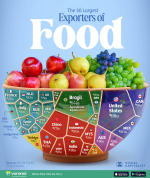
Ranked: The Countries That Feed the World​


1779779421641.png


Users who are viewing this thread

Back
Top