Indonesia's Manufacturing Sector

Indonesia Transitioning to EV Era: Official​


Thresa Sandra Desfika, Monique Handa Shafira

September 19, 2024 | 12:27 pm


1726730991240.webp
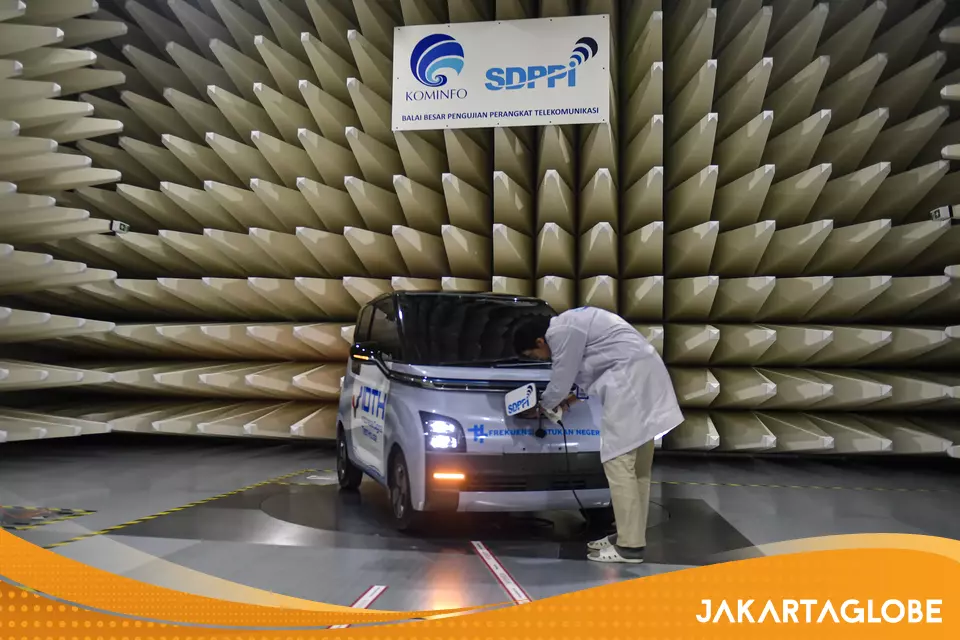
Researchers test an electric car at the Indonesia Digital Test House (IDTH) facility in Tapos, Depok, West Java, on Tuesday, May 7, 2024. IDTH is the largest and most comprehensive digital and telecommunication device testing center in Southeast Asia. (ANTARA FOTO/Muhammad Adimaja)


Jakarta. Indonesia is moving towards the electric vehicle (EV) era, with a mid-term goal of adopting 15 million EVs by 2030, primarily consisting of two-wheelers, an official said on Wednesday.


Rachmat Kaimuddin, Deputy for Infrastructure and Investment under the Coordinating Minister for Maritime Affairs and Investment, said the target is part of the government’s broader efforts to achieve net-zero carbon emissions and ensure energy security.


The country aims to have 13 million electric motorcycles and 2 million electric cars by 2030, he said.


"Indonesia is transitioning to electric vehicles, which presents unique opportunities to drive economic growth and enhance our energy security. This transition will also play a key role in advancing our sustainable development goals," Rachmat said in Jakarta.

"EVs will not only help reduce carbon emissions but also create new economic opportunities for the population at large."


Chief Economic Minister Airlangga Hartarto previously mentioned that the government has implemented several initiatives to accelerate the EV transition, including tax incentives for EV purchases and imports.


Between January and July, electric car sales more than doubled, reaching nearly 18,000 units compared to the same period last year.


"EV technology is rapidly advancing, particularly in terms of battery efficiency and charging infrastructure," Airlangga said.


He added that the government aims to support consumers by ensuring affordable EV options and providing reliable information on their long-term benefits.


Despite these efforts, Indonesia's EV journey has only just begun, with around 150,000 electric motorcycles, cars, buses, and trucks currently in use across the country.


Empowering Local Industries, BUMI Spend Products Worth US $ 2.215 Billion (in 2023)​


Author: Emanuel Kure 20 Sep 2024 | 21:30 WIB

1726973001419.webp
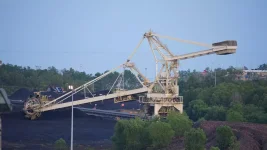
Location of PT Arutmin Indonesia site Asamasam, subsidiary of PT Bumi Resources Tbk ( Photo: BUMI)

JAKARTA, Investor.id - PT Bumi Resources Tbk (BUMI) is committed to encouraging the growth and sustainability of domestic industries. The commitment is realized through one of its business unit entities, namely PT Kaltim Prima Coal (KPC), which is recorded to buy domestic goods and services in the value of US $ 2.215 billion during 2023.


This amount is equivalent to 97% of the total purchases of goods and services (domestic and foreign) KPC in that year which reached approximately US $ 2.27 billion.


"The empowerment of local suppliers is one of the important points in the principle of Good Mining Practice that is applied by the company in all lines of activities," said VP Investor Relations - Chief Economist Achmad Reza Widjaja in his press statement on Friday (20/09/2024).

Furthermore, Reza asserted, the commitment of BUMI to always provide added value for the environment and help the community.

"The Eso has always sought for other economic movements that can support welfare, in accordance with the potential of the community around the operational land," he said.

In 2023, from the overall shopping of domestic goods and services carried out by KPC, amounting to US $ 4.96 million of them came from 35 built suppliers. Community empowerment through industrial development around mining operations is expected to encourage local supplier partners to be able to grow and be competitive.


Also Read: Stocks of Bumi Resources (EARTs) Are Surprised

On the other hand, in each partnership, sustainability criteria are highly preferred in the selection and evaluation process. Every supplier in collaboration with BUMI is certain to comply with the principles of Human Rights (HAM) and environmental preservation. Procurement procedures and services are also carried out fairly and transparently to obtain suppliers in accordance with the desired qualifications.


Reza also emphasized that the empowerment of local suppliers is a synergy that is expected to contribute to real socio-economic, both for the community and local and national industries, the Company itself, stakeholders, and for the state.


Also Read:​

QUEST PGN Improves Productivity Processing of Natural Gas Infrastructure Engineering Data

In fact, through various forms of strategic partnerships, companies can not only meet operational needs, but also contribute to encouraging regional and national economic growth.


"This policy continues to improve every year, so it is expected to support the improvement of the local and national economy, while implementing aspects of Good Mining Practice, especially in terms of partnerships," Reza explained.


PLN spent Rp200 trillion (12.7 Billion USD) on local components in 2022​

November 23, 2022 20:11 GMT+700

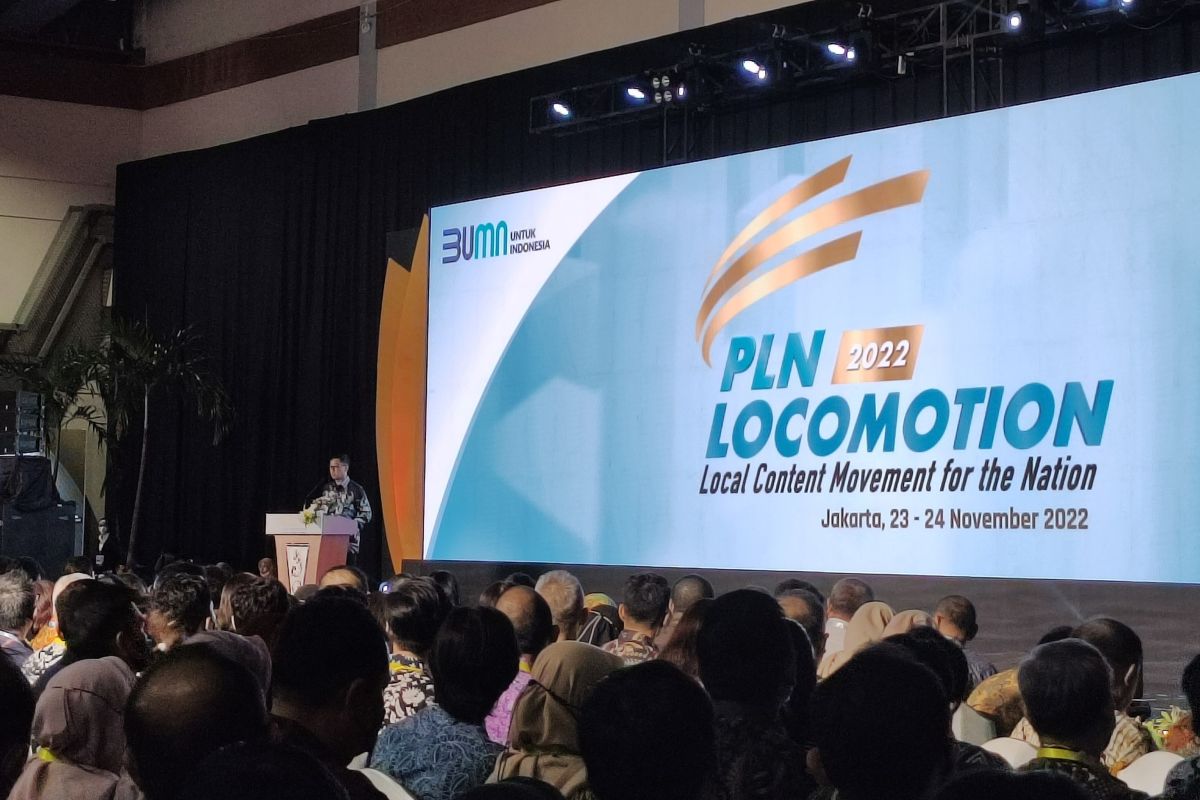
Jakarta (ANTARA) - State-owned electricity firm (PLN) spent nearly Rp200 trillion out of the total budget of Rp300 trillion on local products so far this year, PLN President Director Darmawan Prasodjo stated.

"Our spending reaches Rp300 trillion per year out of which Rp200 trillion is spent on the domestic industry," he noted while opening PLN Locomation 2022 at the Jakarta Convention Center (JCC) on Wednesday.

 
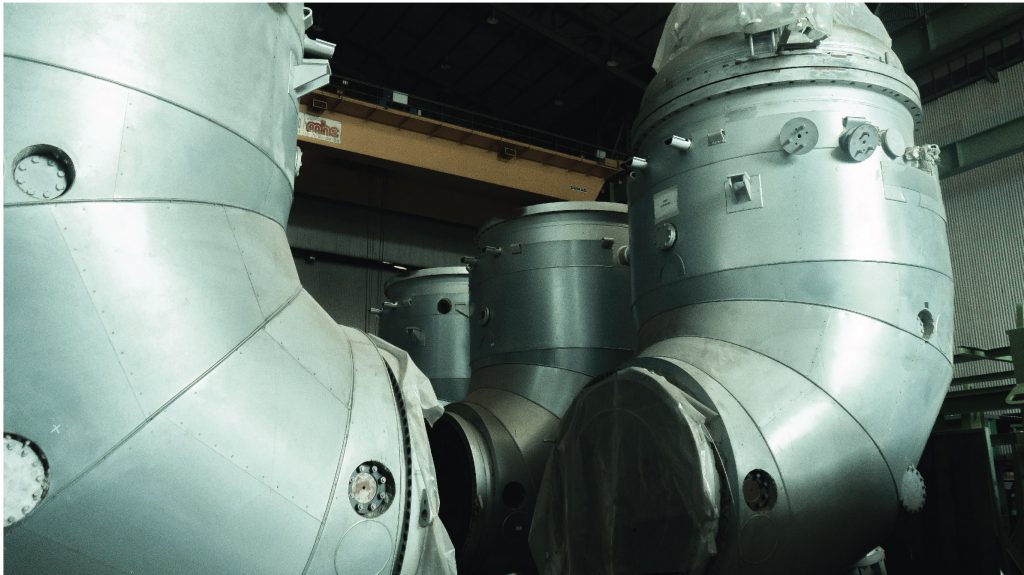
Talking about Turbine manufacturing, it is PT Barata Indonesia that should be considered. It has exported Turbine components to China, South Korea, and Australia, beside Pakistan and Bangladesh. There is plan to include Barata before to be part of Indonesia submarine local production by producing some local parts.

---------------------------


Barata Indonesia exports turbine components to Australia​


  • Tuesday, July 30, 2019 12:48 WIB
1726973578486.webp
PT Barata Indonesia exports the components of power plant turbines to Australia. (Barata Indonesia)

Jakarta (ANTARA) - PT Barata Indonesia (Persero) exports the components of the Power Plant Turbin which is produced by the Turbin Component Plant, the Division of Plants - PT Barata Indonesia, Cilegon to Australia.

The product exported this time is the Low Pressure Inner Casing (LPIC) 1x1.105 MW to Australia, on Tuesday, based on written information received by Antara in Jakarta on Tuesday.

Later the components of this country's artificial power plant will be used for upgrading the capacity of the AggL Energy power plant capacity of 2,210 MW (2x1,105 MW). The power plant accounts for about 30 percent of the supply of electricity needs in Victoria, Australia.

Barata Indonesia performs fabrication work, machining to assembling Turbin.

Western President Director of Indonesia Oksarlidady Arifin said that the export of power generation components by Barata Indonesia will continue to be increased as an effort to strengthen the position of the company in the field of exports in addition to other export products such as Railway components (Bogie) which are currently routinely exported to Mexico and Canada.

"I hope that this Turbine Component Factory can do the same thing and become one of the backbone of the export of products carried out by Barata Indonesia," said Dady, Oksalidady Arifin's close call.

In addition to exporting LPIC, Barata Indonesia also exports other power plant components, namely Condenser to Russia. Barata Indonesia worked on a Condenser owned by Nizhnekamskneftekhim (member of TAIF Group).

This project has also been carried done by Barata Indonesia since September last year.

Before exporting to Australia and Russia, Barata Indonesia has also exported power plants, to various countries, such as Condenser and LP Outer Casing (Brazil, Argentina and Pakistan), Blade Ring Components ( Panama, Argentina, Brazil and Pakistan), Inner Casting (Bangladesh) and Combustion Chamber (Taiwan).

Read also: Barata Indonesia exports cement industry components to Morocco

 
1726973759538.jpeg

The Division of Plants, through the Turbin Components Plant in Cilegon, again exported power generation components.

This time, PT Barata Indonesia (Persero) exported the components of the Silo Combustion Chamber to Zhoushan, China.

The silo Combustion Chamber is for Zhejiang Petrochemical Co. Ltd to be used in the Zhoushan GT 20 project.

For 2021, Barata Indonesia has bagged several power generation component projects. Previously, Barata Indonesia also participated in the “Smart Energy Center” power plant project owned by the South Korean company, SK Hynix located in Cheongju.

Some of the projects that are being and will be worked on by the Turbin Component Plant in Cilegon are:

BQPS III Unit 20 Condenser (Banglades)

Unique Condenser (Banglades)

Hynix Icheon Condenser & LPOC (South Korea)

– RDMP Balikpapan Condenser Unit 1-5 (Indonesia)


Pindad made Escavators (various variants)

To view this content we will need your consent to set third party cookies.
For more detailed information, see our cookies page.


Pindad Excava 200: A Product of Dual-Purpose Technology​


To view this content we will need your consent to set third party cookies.
For more detailed information, see our cookies page.


Pindad Amphibious Excavator Excava200 - Excavator Amfibi Pindad​


Real use

To view this content we will need your consent to set third party cookies.
For more detailed information, see our cookies page.


To view this content we will need your consent to set third party cookies.
For more detailed information, see our cookies page.


To view this content we will need your consent to set third party cookies.
For more detailed information, see our cookies page.
 
In 2023, Pertamina Uses Domestic Component Levels of Up to IDR 374 Trillion (25 Billion USD)

2024-06-12
Press Release2723


Jakarta, June 12, 2024 - Throughout 2023, Pertamina Group has succeeded in absorbing the realization of the Domestic Component Level (TKDN) of up to 47% of the total TKDN of BUMN (state owned companies) nationally, or IDR 374 trillion. Pertamina carries out the mandate to use TKDN to the maximum, with the largest realization coming from the procurement of hydro (oil and gas and others). In addition, infrastructure development and procurement of goods and services, which in total reach 73.2% of Pertamina Group contracts.

With this TKDN achievement, in March 2024, Pertamina received an appreciation for the Use of Domestic Products in 2024 for the State-Owned Enterprises Category from the Ministry of Industry (Kemenperin) of the Republic of Indonesia. Pertamina Group's TKDN is worth IDR 374 trillion, or 47% of the total BUMN (State Owned Company) TKDN (Local Content) achievement in 2023 of around IDR 800 trillion (53 billion USD)

"We are grateful for the appreciation from the Indonesian Government. This is a motivation for Pertamina to continue to increase its TKDN, so that it can better support the domestic industry and have a positive impact on the national economy," added Fadjar.

Based on a study by the Pertamina Energy Institute and the University of Indonesia, Pertamina's TKDN achievement also creates a multiplier effect, namely employment for 4.1 million people, as well as an increase in gross domestic product (GDP) of up to IDR 702 trillion, or equivalent to 3.4% of gross added value from all economic sectors in a region (ADHB GDP). In terms of the national economy, this has the potential to generate state revenues of up to IDR 1,251 trillion.

As a national energy company, Pertamina's products also contribute to the domestic energy supply. Pertamina's national oil production reaches 69% (from total Indonesia production generated by local and foreign companies), and natural gas as much as 34%, all of which are allocated to support Indonesia's energy security. In 2023, Pertamina will also be 100% independent in producing diesel and aviation fuel products.

"Efforts to increase oil and gas production are always carried out by increasing production from existing blocks, as well as Pertamina's acquisition and expansion into foreign blocks.

Pertamina is also trying to improve refinery and petrochemical products by conducting a refinery development masterplan program (RDMP) to improve the quality and types of refinery products," added Fadjar.

Pertamina also appealed to the public to use Pertamina products, as domestic products. In retail products, Pertamina's energy distribution access to the public has reached 98% of Indonesia's territory, especially with the BBM 1 Price, One Village One Outlet (OVOO) and Pertashop programs.
 

Virgin Australia Becomes the First International Airline Using Pertamina Bioavtur​

by Indonesia Expat
September 19, 2024

1726983714739.jpeg

The latest partnership with the Australian international airline marks the commitment made by Indonesia-based PT Pertamina Patra Niaga to expand the distribution of Sustainable Aviation Fuel (SAF), also known as Bioavtur, to the global market.​


The Director of Central Marketing and Commerce at PT Pertamina Patra Niaga, Maya Kusmaya, explained that Virgin Australia Airlines is the first international airline to use SAF, or Bioavtur, supplied by the Ngurah Rai Aviation Fuel Terminal (AFT). This milestone was celebrated during the ‘First International Uplift’ ceremony.

“The distribution of SAF at Ngurah Rai Airport marks Indonesia’s ability to adapt to the demands of the energy mix in the international aviation industry. SAF is currently a medium-term solution for reducing aviation’s carbon footprint, without requiring changes to aircraft, airport infrastructure, or the jet fuel supply chain,” Kusmaya said in her press statement on Wednesday, 18th of September.

According to Kusmaya, the SAF distributed adheres to the International Sustainability and Carbon Certification (ISCC) framework for the Carbon Offsetting and Reduction Scheme for International Aviation (CORSIA) and complies with the Renewable Energy Directive-European Union (RED-EU). Additionally, it meets international standards set by the American Society for Testing and Materials (ASTM) and is classified as Corsia Eligible Fuel (CEF), making it eligible for claims with the International Civil Aviation Organization (ICAO).

“This new step towards sustainable aviation helps reduce carbon emissions from fossil fuels, as Pertamina’s SAF is a blend of 38.43% synthetic kerosene, produced from used cooking oil (UCO), and 61.57% conventional jet fuel,” Kusmaya added.

Meanwhile, Virgin Australia’s Sustainability General Manager, Fiona Walmsley, remarked that this collaboration is the first step between Indonesia and Australia in their joint effort to achieve Net Zero Emissions targets. Virgin Australia Airlines currently operates flights from Denpasar to Brisbane, Melbourne, Sydney, and the Gold Coast. The collaboration also symbolises the airline’s commitment to reducing carbon emissions intensity by 22% by 2030 and achieving net zero emissions by 2050.

“For Australia, one of the most significant challenges is the availability of affordable SAF in our country. Through this collaboration, Pertamina has helped bridge that gap, but ultimately, we need support from across the Australian and international aviation industries to ensure a sustainable, reliable, and affordable SAF supply for Virgin Australia,” Walmsley asserted.


Future Development, MIND ID Speed Up Strategic Project Realization​


Elga Nurmutia, CNBC Indonesia

20 September 2024 08:59
Dok MIND ID

Photo: Dok MIND ID


Jakarta, CNBC Indonesia - SOEs Holding Indonesia Mining Industry, MIND ID, consistently realize Indonesian mineral downstream and industrialization projects to support future development.

Corporate Secretary of MIND ID, Heri Yusuf explained that downstreaming and mineral industrialization is a long-term strategic step that will greatly have a positive impact on the future of the Indonesian economy. The impact includes increased added value from mineral commodities, absorption and improving the quality of labor, while increasing the competitiveness of the country on the global scene.

"MIND ID as a state-owned company that has a mandate to succeed the downstream program is committed to overseeing the implementation of mineral strategic projects to provide maximum added value for Indonesia's future," Heri said in his official statement, written Friday (20/9/2024).

This increase in added value results from processing basic minerals with low values into a high-tech end user product such as electric vehicles.

The massive downstream project carried out by MIND ID also enlarges the absorption as well as the quality of the workforce ranging from casual supply such as mining, refinement, to downstream such as smelter development and infrastructure and industrial operations. Downstreaming at the same time will make Indonesia’s competitiveness higher and even have better bargaining power in every global economic policy.

"Of course, downstreaming is a long-term program with high investment. We are committed to consistently completing and running operations of each downstream project so that it can provide the greatest impact and benefits for the prosperity of all Indonesian people, "he explained.

In mid-2024, the government has started the operation of a new smelter owned by MIND ID Holding Member, PT Freeport Indonesia (PTFI) in the Special Economic Area (KEK) Java Integrated Industrial and Port Estate (JIIPE), Gresik, East Java.

The world’s largest single line copper concentrate purification plant also enlarges the smelter capacity from 1 million tons to 3 million tons per year.

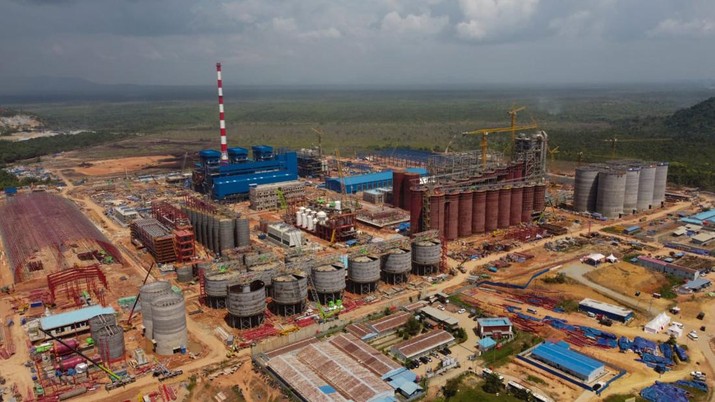
In addition, the MIND ID Group through PT Borneo Alumina Indonesia (BAI) is also expanding the scope of the national mineral downstream project.

This joint venture (JV) between PT Indonesia Asahan Aluminium3 (INALUM) and PT Aneka Tambang Tbk (ANTM) will increase the added value of bauxite through Smelter Grade Alumina Refinry (SGAR) in Mempawah, West Kalimantan. The project is believed to further complement the supply chain of Indonesian aluminum production.

The MIND ID group has also established a strategic partnership to develop an integrated electric vehicle battery ecosystem. This project will be run from the formation of the material industry of battery components, cell batteries, to the recycling industry ecosystem of electric vehicle products.


Jokowi: Indonesia Still Negotiating for Additional 10 Pct Stake in Freeport Indonesia​


Fito Akhmad Erlangga

September 23, 2024 | 10:17 pm

1727106622309.webp
This aerial photo shows the copper smelting plant belonging to Freeport Indonesia at the Java Integrated Industrial and Ports Estate (JIIPE) in Gresik, East Java. (B-Universe Photo/Rifqi Danwanus)


Gresik. President Joko "Jokowi" Widodo confirmed that Indonesia has not yet left the negotiation table regarding an increase in its stake in gold miner Freeport Indonesia (PTFI), a subsidiary of Freeport McMoRan, by an additional 10 percent, aiming to raise its ownership to 61 percent.

Jokowi stated that Indonesia currently holds 51 percent of PTFI shares and noted that previous negotiations to gain control of this majority stake were lengthy and complex.

“(The additional 10 percent stake) is still under negotiation. When we took the 51 percent, it wasn’t a matter of one month, two months, or three months; it took years and was quite arduous,” Jokowi said after inaugurating Freeport Indonesia's Smelter Manyar in Gresik, East Java, on Monday.

President Jokowi Launches Freeport and Amman $5 Billion Copper Smelters as Tenure Nears End

During the inauguration, Jokowi unveiled the smelter, valued at Rp 56 trillion ($3.68 billion). The facility has an input capacity of 1.7 million tons of copper concentrate and is expected to produce approximately 650,000 tons of copper cathodes annually, along with 50 tons of gold and 210 tons of silver. It began operations on June 27 and is projected to reach full capacity by December 2024.


Freeport first obtained the rights to explore and mine in Grasberg, Papua, through a contract signed with the Indonesian government in 1967, granting the company exclusive rights to mine copper and gold. In 1991, the initial contract was extended, allowing Freeport to continue operations until 2021. However, this extension also led to tensions regarding the profits received by Indonesia.

In 2009, the Indonesian government proposed a contract revision to secure a larger share of revenues from Freeport. This proposal resulted in years of negotiations, with the government demanding increased royalties and share divestment.

Finally, in 2018, after lengthy negotiations, Freeport agreed to divest 51 percent of its shares in Freeport Indonesia to the Indonesian government. Additionally, Freeport committed to building mineral processing facilities in the country as part of Jokowi's downstream policy.

Indonesia officially became the majority shareholder of PTFI in 2018, acquiring a 51.23 percent stake through MIND ID, previously known as Inalum. The acquisition, valued at $3.85 billion (Rp 55.8 trillion at the time), raised Indonesia's ownership in PTFI from 9.36 percent to 51.23 percent. MIND ID is set to go public on the Indonesia Stock Exchange (IDX) within the next two years.


State-Owned Mining Giant MIND ID Plans IPO in 2026


Next Month The Giant Factory Started Gold Production, It Could Be Up To 60 Tons!​


Firda Dwi Muliawati, CNBC Indonesia

14 October 2024 09:40

1728888983860.jpeg
Photo: Copper Smelter PT Freeport Indonesia in KEK JIIPE, Gresik, East Java. (Doc PT Freeport Indonesia)

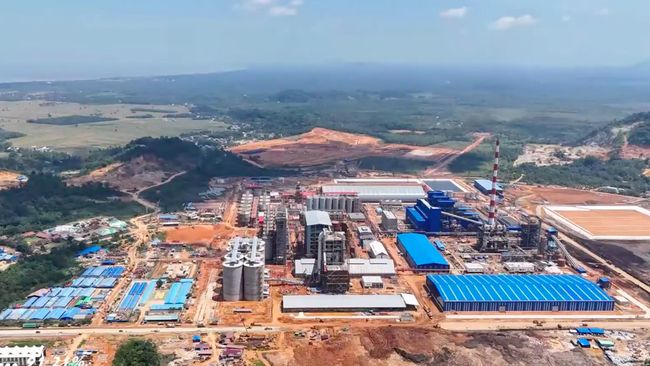
Jakarta, CNBC Indonesia - In November 2024 giant processing and refining (smelter) facilities in Gresik, East Java, began producing gold. Unmitigated, the gold production capacity of this plant can reach 50-60 tons per year.

The gold is produced from the Precious Metal Refinery (PMR) which is part of the copper smelter owned by PT Freeport Indonesia in Java Integrated Industrial and Ports Estate (JIIPE), Gresik, East Java.

The production of the inaugurated copper cathodes from the largest single line smelter in the world was officially running at the end of September 2024, precisely Monday (09/23/2024). However, for the inauguration of gold production is expected to run in the new month ahead.

"In addition to the copper, we will produce gold. Gold that is approximately 50-60 tons we will start production next month, later this month or next month," said President Director of PT Freeport Indonesia Tony Wenas told CNBC Indonesia in the Mining Zone program, quoted Monday (14/10/2024).


Tony said, some of the gold produced by PTFI will be purchased by PT Aneka Tambang Tbk (ANTM). He said, Antam is expected to absorb as large as 20 tons of gold.


“The mass has been in talks with Antam. Antam will buy, but not all of them, some of them. It may be about 20 tons, but maybe this information is still deep, already MoU (Note of Understanding). So Antam will off take approximately 20 tons. The rest of us spread to some other places," Tony said.


In addition, Tony said that the truth is that the second copper smelter owned by PTFI has begun to produce and will slowly increase its capacity. But for the full production of copper cathodes, it can be carried out at least in January 2025.


"We have started production and then gradually we increase until December 2024. So that from January in early 2025 it is already in full capacity for production," Tony explained.


As is known, on Monday (23/09/2024) the inaugural copper cathoda production was carried out from the second smelter of PTFI in the JIPE area, Gresik, East Java, which was also witnessed by President Joko Widodo (Jokowi). The Smelter in JIIPE Gresik is predicted as the largest single line copper smelter in the world, with a copper concentrate processing capacity of 1.7 million tons per year and produces a copper cathoda of 600,000-700,000 tons per year.

Together with the first smelter managed by PT Smelting, these two facilities will purify a total of 3 million tons of copper concentrate per year, and produce 1 million tons of copper cathodes, 50 tons of gold, and 200 tons of silver per year.

The cumulative investment value for projects that occupy 104 hectares of land reached US $ 3.7 billion or equivalent to Rp 58 trillion.

About 100 thousand copper cathodes from the PTFI smelter are targeted to be absorbed by PT Hailiang Group, a copper foil company that will build its factory also in the JIIPE area, Gresik.

 
Talking about Turbine manufacturing, it is PT Barata Indonesia that should be considered. It has exported Turbine components to China, South Korea, and Australia, beside Pakistan and Bangladesh. There is plan to include Barata before to be part of Indonesia submarine local production by producing some local parts.

---------------------------


Barata Indonesia exports turbine components to Australia​


  • Tuesday, July 30, 2019 12:48 WIB
View attachment 66355
PT Barata Indonesia exports the components of power plant turbines to Australia. (Barata Indonesia)

Jakarta (ANTARA) - PT Barata Indonesia (Persero) exports the components of the Power Plant Turbin which is produced by the Turbin Component Plant, the Division of Plants - PT Barata Indonesia, Cilegon to Australia.

The product exported this time is the Low Pressure Inner Casing (LPIC) 1x1.105 MW to Australia, on Tuesday, based on written information received by Antara in Jakarta on Tuesday.

Later the components of this country's artificial power plant will be used for upgrading the capacity of the AggL Energy power plant capacity of 2,210 MW (2x1,105 MW). The power plant accounts for about 30 percent of the supply of electricity needs in Victoria, Australia.

Barata Indonesia performs fabrication work, machining to assembling Turbin.

Western President Director of Indonesia Oksarlidady Arifin said that the export of power generation components by Barata Indonesia will continue to be increased as an effort to strengthen the position of the company in the field of exports in addition to other export products such as Railway components (Bogie) which are currently routinely exported to Mexico and Canada.

"I hope that this Turbine Component Factory can do the same thing and become one of the backbone of the export of products carried out by Barata Indonesia," said Dady, Oksalidady Arifin's close call.

In addition to exporting LPIC, Barata Indonesia also exports other power plant components, namely Condenser to Russia. Barata Indonesia worked on a Condenser owned by Nizhnekamskneftekhim (member of TAIF Group).

This project has also been carried done by Barata Indonesia since September last year.

Before exporting to Australia and Russia, Barata Indonesia has also exported power plants, to various countries, such as Condenser and LP Outer Casing (Brazil, Argentina and Pakistan), Blade Ring Components ( Panama, Argentina, Brazil and Pakistan), Inner Casting (Bangladesh) and Combustion Chamber (Taiwan).

Read also: Barata Indonesia exports cement industry components to Morocco


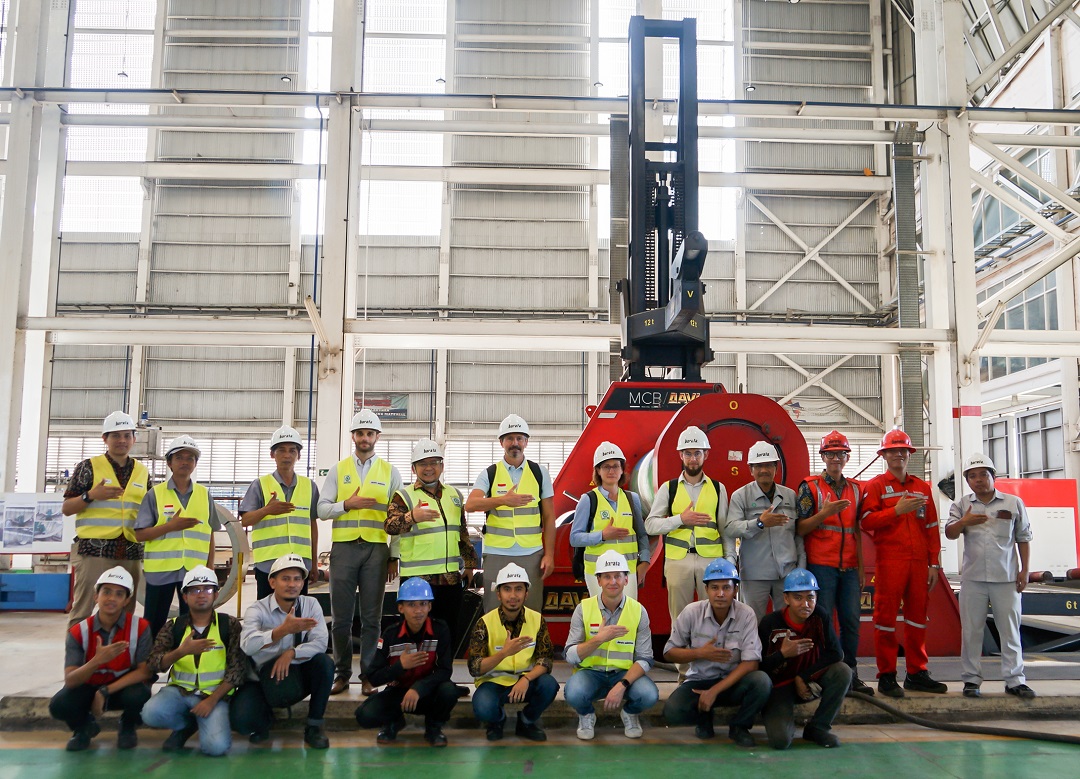
Barata Indonesia Receives Naval Group Visits and PT PAL​


17 October 2024

1729176117583.jpeg

PT Barata Indonesia (Persero) received a visit to the technical team of PT PAL Indonesia with Naval Group, a French defense industry company on Thursday (10/10) at the Gresik Headquarters. The visit is intended to take a readiness of production facilities in welcoming the activation of the Scorpene Evolved Full Lithium Ion Battery submarine construction.

As a SOE Manufacturing, Barata Indonesia believes that the machining facilities owned can support the realization of national strategic projects, one of which is in the form of support for the provision of submarine components.

In his speech, Director of PT Barata Indonesia (Persero) Hertyoso Nursasongko welcomed this collaboration plan as a commitment and high confidence in the ability of the national manufacturing industry in strengthening Indonesia's maritime defense.

“The involvement of Barata Indonesia in the national submarine development project proves that the capacity of domestic industry is reliable and competitive. We hope that assessment results will be able to meet the standards so that this collaboration can increase the utility of the sustainable Heavy Machining Plant," said Hertyoso.

After conducting discussions, the exposure of procedures and quality control by Naval Group, the Indonesian Barata Technical Team invited the group to conduct assessments of the machinery facilities and production capacity for the work of Roll Plate Submarine Project. The results of the assessment also run smoothly, Naval Group and PT PAL Indonesia stated that the facilities and machines owned by Barata Indonesia have met the necessary standards.

“This visit not only marks a step forward in the Scorpene program implementation plan, but also strengthens a common commitment to continue to improve capabilities and mature preparations. So that it will be easier to implement the development later, "closed Rudi Wahyudiyanto as the head of the Department of Material Support Division of the submarine of PT PAL Indonesia.


Wow! Investment Project MIND ID Can Be Up To Rp465.7 T (30 billion USD) To 2029​


Verda Nano Setiawan, CNBC Indonesia

16 October 2024 12:35

Jakarta, CNBC Indonesia - Holding SOEs Mining MIND ID prepares a massive investment for the next five years. The company expects the investment to be disbursed for the next five years can reach US $ 30 billion or around Rp 465.7 trillion (assuming an exchange rate of Rp 15,525 per US).

Director of Portfolio and Business Development MIND ID Dilo Seno Widagdo explained that of the total investment, about US $ 20 billion is planned to come from the company's equity. That way, it is expected to attract foreign investors to invest in Indonesia.

"Investment we are up to the next 5 years which of the equity of MIND ID itself is almost about US $ 20 billion. So we also have to provide our equity so that investors also bring their money into Indonesia. So maybe if the total investment is certainly greater. So it might be up to US $ 30 billion," Dilo said in the event of the Mining Industry as a Downstream Drive Towards Indonesia Gold, quoted Wednesday (16/10/2024).


According to Dilo, the total investment value of US $ 30 billion is expected to be a driver of Indonesia’s economic growth. Moreover, to achieve the economic growth target of 8%, investment must be the driving force.

"Well this is the real one that will later encourage from the investment side of Indonesia to support economic growth. So that the growth that was conveyed the target is 8% inevitably yes must be from the investment side, "he said.

In addition, Dilo also revealed the added value obtained from the downstream program of the mining sector intensated by the government so far. One of them is the added value of the downstream of bauxite mineral downstream.

It revealed that there is added value when bauxite is sold in the form of alumina until it becomes aluminum.

Based on the company's calculation, 1 ton of bauxite is currently priced at around US$40. Meanwhile, when used as an alumina, the value of the he added rose 15 times to US $ 575.

"So like for example from bauxite if the bauxite is only US $ 40 if it becomes Alumina costs US $ 575, almost 15 times," Dilo said.

Then, an increase in added value is again obtained when the alumina is reprocessed into aluminum to US $ 2,700. That number has increased by five times.

"Later so aluminum costs $2,600-2,700 today. There was another increase from the Alumina was 5-fold, so it was about 60 times that of the ore alone," Dilo said.

In addition to increasing economic value, downstream also has a major impact on labor absorption. The processing industry ranks third as the sector with the highest labor uptake in Indonesia, after the agricultural and trade sectors.


Manufacturing sector in Indonesia - statistics & facts​


Over the last decades, the Indonesian government has prioritized the manufacturing sector to maximize its potential contribution to accelerated industrialization.

Today, this sector stands tall as Indonesia's largest GDP contributor and dominates the country's export landscape. Major industries such as food and beverages (F&B), coal and refined petroleum, chemicals, transportation, as well as metals and electronics, are the leading GDP contributors from manufacturing in Indonesia.

This sector also has created an extensive number of employment opportunities. With an ambition to become one of the largest economies globally by 2030, Indonesia's manufacturing sector promises boundless prospects and potential for its country and international partners.

Published by Mona Siahaan, Sep 10, 2024


Indonesia is said to be having very high standard of "Iron Industries", as compared to other NICs like Brazil and S Africa.
the level/standard of Iron Industries is a matter of pride in world, and Indonesia is having this pride (y)
 

Explainer: Indonesia’s Return to Industrialization​


1729492899561.png
Production Line in Manufacturing Sector. Credit: Unsplash/Ant Rozetsky

Introduction

To developing countries, there will always be some constraints to development, such as limited natural resources, lack of skills as well as underdeveloped human capital.

Theorists have proposed the term “catch up development”, or convergence development theory, as a roadmap for these countries to move up the scale. This idea of “catching up” requires developing countries to copy the developmental policies of their more developed counterparts.

For example, previous decades saw countries such as Japan and South Korea adopting Western countries’ policies such as investing in export-oriented industries. These two governments have actively intervened in their economy, especially through nurturing and guiding the market to support its industrialization. As a result, various industries netted positive benefits, including agriculture, textile, automobile and electronics.

Latin American countries such as Mexico and Argentina have adopted this strategy too, especially in the early phase of national development through their import substitution industrialization. In their context, these governments intervened heavily by stimulating domestic production as a substitute to imported goods, in order to protect domestic industries.

Recently, Indonesia has also come up with its version of catch up strategy by pivoting towards industrial policy. The strategy of which aimed at boosting its downstream industries and shift away from a resources-based economy. This strategy is reflected by the enactment of raw material export ban and local content requirement. It is hoped the country could industrialize and build up the capabilities for high value manufacturing goods such as electronics in the future. :)

The idea of catch up development is a “grand-narrative” that is used to justify the industrial strategy to further economic development. However, we contend that such a narrative is insufficient to comprehend Indonesia’s move towards industrialization, but rather useful to interpret the country’s evolution of developmental policy.

Development as a Discourse in Indonesia

Discourse on development can be defined as how ideas shape the economic policy of development. It is not firmly fixed, but rather shaped by the contestation of competing ideas.

In the New Order era (1967-1998), the popular discourse on development was characterized as a developmentalist style of economic stability aimed at promoting growth and protecting domestic industries.

To achieve that, the Indonesian government restricted domestic competition, though in practice the move was susceptible to rent-seeking activities by state apparatus, military officers and businessmen within the circle of President Soeharto. These activities ranged from granting protection from imported products, awarding contracts without due process and providing access to cheap loans.

Those policies were heavily influenced by thinkers and technocrats such as Nitisastro and Habibie. However, disagreement and disunity among the technocrats and state bureaucrats at the time resulted in the absence of a clear industrial strategy and low industrial competitiveness.

The 1998 financial crisis forced the Indonesian government to implement reforms in order to secure assistance from the International Monetary Fund (IMF). These reforms led to the opening up of the Indonesian economy and minimized the role of the state in the economy.

This soon would change during the second Yudhoyono administration, which was characterized by the re-emergence of a developmentalist agenda called “new developmentalism”. This new paradigm was characterized by government intervention in the domestic market, state support for local companies and state-owned enterprises (SOEs) supplied by more orthodox neoliberal policies aimed at promoting foreign investments in manufacturing activities.

This paradigm persists during the Jokowi administration, where it gains popular support. The idea of development in this era is shaped by nationalist and populist discourses and supported by interest of oligarchs.

For example, the discourse of economic nationalism has been amplified especially during the Indonesian government’s success in acquiring 51% of ownership from the largest foreign mining companies, PT. Freeport Indonesia. The timing seems on point, as it was done shortly before the 2019 elections where the usage of economic nationalist discourse helped to bring Jokowi to power for the second time. Such discourses then translated to the country’s developmental strategy in building downstream resource industries.

The Political Economy behind Indonesia’s Industrial Strategy

What is the context behind the nationalist discourse and the return of industrial policy in Indonesia?

From the colonial era, the Indonesian economy has long been characterized by the resource extraction and the dominance of the political and business elites. In the post-New Order era, this pattern of elite dominance persists, whereby oligarchs forge alliance with state apparatus at local and national level, leaders of mass organizations, and sometimes military or police commanders. Such an alliance serves a function to mobilize the masses, becoming some sort of power consolidation that helps power holders such as Jokowi to easily advance and implement his developmentalist policies and agenda.

Another factor is what scholars and economists call a “premature deindustrialization”, a state of the economy when the economic activity moves away from manufacturing production before an economy reaches maturity point.

This particular notion of deindustrialization is not a rare case in developing countries. Following the 1998 financial crisis, manufacturing value added to the Indonesian GDP dwindled and has never recovered since then. As a result, Indonesia has suffered from “jobless growth” and declining real wages.

There are many explanations for this, ranging from incomplete reforms to financial liberalization policies and to commodity boom.

In the early 2000s, Indonesia experienced a commodity boom, marked by significant increase in commodity prices from early 2000s until early 2010s. The boom was a response to the growing demand in the emerging markets – such as China – to sustain its rapid industrialization.

The rise of China has also squeezed Indonesia’s labor-intensive, low-skilled manufacturing activities. Thus, the Indonesian government responded by shifting away from manufacturing to extractive sectors. The newly attained extractive regime of the 2000s gave way to the rise of oligarchs in certain commodity sectors, such as coal and palm oil.

In the international context, globalization gives rise to the establishment of an international or regional network of production. Nevertheless, comprehensive analyses of the global commodity chains determine that raw material exporter states in a marginalized position. Meanwhile, deindustrialization, alongside the increasing activities of resource extraction, means that Indonesia is becoming increasingly at a peripheral position on the global/regional supply chain.

Indonesia’s open-door policy towards foreign investment during the commodity boom does not help either. Indonesia actively appeals to foreign investors to park their money in natural resource extraction sectors, which require low-skilled workers and large sum of capital but add low value to the Indonesian economy. This has placed Indonesia as a resource exporter country, but one which economy struggles to evolve.

This condition seems to be picked up by the government. From as early as 2009, the Indonesian government through its Law on Mineral and Coal Mining has built a regulation that require the domestic and foreign companies to build domestic processing facilities. This strategy is called resource-based industrialization. The idea is to stimulate manufacturing activities in downstream sectors.

There are many strategies at play to achieve the policy goals of building downstream industries. One of which is mobilizing its state-owned enterprises. For example, PT. Aneka Tambang (Antam), Tbk has been directing its capital to build smelters for processing critical minerals such as nickel and bauxite.

Other than that, through bargaining and political settlements with foreign entities and domestic business elites, the Indonesian government has been successful in pressuring multinational companies such as PT. Freeport Indonesia to agree giving up 51,23% of its ownership to the state-owned PT. Indonesia Asahan Aluminium (Inalum).

The condition above shows that the pattern of alliance between state apparatus-business elite persists and is used alongside the nationalist discourse by the Indonesian government to spur economic transformation to move away from raw mineral extraction towards the domestic mineral processing activities.

Conclusion

The article argues that the return of industrial policy in Indonesia is not simply a matter of economic strategy, but is also driven by various factors. Premature deindustrialization, as a result of the global commodity boom, has caused Indonesia’s economy to lack added value, which thus puts an imperative for bringing back industrial policies.


Meanwhile, ideas on development are internally contested, yet successive administrations have succeeded in defining the discourse of industrialization as the driver of economic development. This discourse has supported the Indonesian government’s legitimacy to enact industrial strategies to catch-up with its developed counterparts. The Indonesian resource-based industrialization strategy is aimed at creating added value to the previously resource extractive regime. However, shifting strategies so far does not translate to the reform of power structure. Using the discourse of nationalist economic development as stated above, the Indonesian government’s strategy has been effective in legitimizing its policy of resource downstreaming.


Users who are viewing this thread

Latest Posts

Back
Top