Indonesia's Manufacturing Sector

Lotte Chemical’s $3.9 Billion Cilegon Plant to Begin Operations in Q4​


Jayanty Nada Shofa

October 31, 2025 | 1:02 pm

1761893927258.webp
Senior minister Airlangga Hartarto meets Lotte Chemical's boss Lee Young Jun in South Korea on Oct. 30, 2025. (Photo Courtesy of @airlanggahartarto_official/Coordinating Ministry of Economic Affairs)


Jakarta. The $3.9 billion Cilegon plant belonging to South Korean chemical giant Lotte Chemical’s local arm is set to begin commercial operations later this year.


Senior minister Airlangga Hartarto is currently in Gyeongju as part of President Prabowo Subianto’s entourage to the Asia-Pacific Economic Cooperation (APEC) talks.


A day prior to the APEC Economic Leaders’ Meeting, Airlangga met with some South Korean investors, including Lotte Chemical’s boss Lee Young-jun. The company is currently working on the so-called Lotte Chemical Indonesia New Ethylene (LINE) project in the Banten industrial city of Cilegon.

According to Airlangga, the budget-heavy production facility will enter commercial operations in mid-Q4 2025. Its opening ceremony is slated for Nov. 6, although Airlangga did not say whether Prabowo would be the one to kick off the launch.

“We appreciate Lotte Chemical’s commitment to the timely execution of this project, while also complying with high safety standards. This plant will show how strong our economic partnership with South Korea is,” Airlangga told Lee, as reported by a ministerial press statement.


Indonesia is banking on this plant to cut down on its petrochemical imports. The Indonesian government had previously announced that 70 percent of the plant’s output would go into meeting the national demand, while the remaining 30 percent would be dedicated to export markets.


Airlangga has high hopes that the plant will not only boost the national positive trade balance but will also position Indonesia as part of the Asia-Pacific supply chain.


The chief economic minister made a business pitch about Indonesia’s sovereign fund, Danantara, when meeting the Lotte Chemical top brass. He said that Danantara had been playing a “crucial role in facilitating the government’s strategic investments” to make sure the projects generate significant economic boons.

The Danantara offer did not come as a surprise. Danantara Chief Executive Officer Rosan Roeslani revealed to reporters earlier this year that Prabowo had offered Lotte that Danantara was “open” to taking part in the Cilegon megaproject.


“We [Danantara] actually have been talking with Lotte on this matter. We are studying the possibility,” Rosan said at a press briefing back in April.


The sort of petrochemicals that the plant will produce includes ethylene, a mainstay ingredient in plastic production. Also on the list is polypropylene, which has a wide range of uses, ranging from plastic packaging to textiles, as well as benzene.


The facility, which broke ground in 2018, had faced some overlapping land problems with the state-run steelmaker Krakatau Steel. In 2019, both companies inked a memorandum of understanding to settle the issue.


Prabowo is currently joining his South Korean counterpart Lee Jae Myung and other APEC leaders for a series of trade-related talks. Indonesia named South Korea as its seventh-largest foreign investor in 2024. The country attracted nearly $3 billion worth of foreign direct investment inflows from South Korea that year, government data showed.

 
Pupuk Kaltim Officially Begins Construction of Indonesia’s First Soda Ash Plant!


By Shafira Cendra Arini | ~4 minutes
Jumat, 31 Okt 2025, 10:39 WIB

To view this content we will need your consent to set third party cookies.
For more detailed information, see our cookies page.


Bontang, East Kalimantan —
Pupuk Indonesia Group
, through its subsidiary PT Pupuk Kaltim, has officially begun construction of Indonesia’s first-ever soda ash (sodium carbonate/Na₂CO₃) plant at the Bontang Industrial Estate (KIE) in East Kalimantan.


Soda ash, a white powder chemical compound, is widely used in industries such as glass manufacturing, detergents, water treatment, and paper production. The key raw materials for producing soda ash include CO₂ and ammonia.


A Historic Milestone After 30 Years


Rahmad Pribadi, President Director of Pupuk Indonesia, described the groundbreaking as a historic milestone for the nation, marking the culmination of a three-decade effort to establish a domestic soda ash industry.


“I took a deep breath of relief and pride today. It’s been over 30 years that Indonesia has tried and failed to build its own soda ash plant — and now, finally, we are starting the first one,”
said Rahmad during the groundbreaking ceremony on Friday (October 31, 2025) at KIE Bontang.

The project is part of President Prabowo Subianto’s Asta Cita agenda, which emphasizes industrial downstreaming and national industrial resilience.


Reducing Imports and Strengthening National Industry


Rahmad explained that Indonesia has relied 100% on soda ash imports despite high domestic demand. With the new facility, up to 30% of the national demand can be met locally.


“Indonesia currently imports 1 million tons of soda ash annually, and demand is growing by around 5–6% per year. If we don’t start producing it ourselves, our foreign exchange outflow will continue to increase — even though we have all the resources needed to produce soda ash here,”
Rahmad said.

The soda ash plant will utilize approximately 174,000 tons of CO₂ per year, producing 300,000 tons of soda ash and 300,000 tons of ammonium chloride (NH₄Cl) annually.


The latter, a key fertilizer raw material, is expected to reduce ammonium chloride imports by around IDR 250 billion (~USD 15.6 million) per year.


Strategic Leap Toward Industrial Independence


Rachland Nashidik, Independent Commissioner of Pupuk Indonesia, called the project a strategic leap toward national industrial self-sufficiency, not merely an economic efficiency effort.


“This is not just economic efficiency — it’s a strategic leap toward industrial independence. Indonesia is no longer just a consumer of global raw materials but a producer standing on its own capabilities,”
he stated.

Rachland also highlighted that the groundbreaking fulfills a 30-year-old dream, first envisioned in 1995, when Indonesia began aspiring to establish its own basic chemical industry.


“Three decades have passed — the world has changed, technology has evolved, and challenges have come and gone. Yet the dream has never faded. It has been waiting — for the right time, the right courage, and the right generation to make it real,”
he said.


Batang Industrial Complex, Central Java

To view this content we will need your consent to set third party cookies.
For more detailed information, see our cookies page.
 
Ending the Era of Imported Plasma Medicines: Danantara and SK to Build Pharmaceutical Plant in Karawang


By Anggara Pernando | 3–4 minutes
1 November 2025


To view this content we will need your consent to set third party cookies.
For more detailed information, see our cookies page.

Biofarma, under Danantara Superholding


JAKARTA, Bisnis.com — Danantara Indonesia has signed a memorandum of understanding (MoU) with South Korean biotechnology company SK Plasma Co. Ltd. and its subsidiary PT SKPlasma Core Indonesia to strengthen Indonesia’s national healthcare resilience. The strategic partnership aims to reduce the country’s dependence on imported plasma-derived medicinal products (PDMPs) and promote domestic production self-sufficiency.


The signing ceremony took place in Jakarta on Thursday (Oct 31, 2025). Danantara, Indonesia’s state investment management agency, had previously designated healthcare as one of its eight key investment focus areas for the year.


Under this collaboration, the two parties will develop a plasma-derived medicinal products (PDMP) manufacturing facility in Karawang, West Java, targeted for completion in 2026. Currently, Indonesia relies entirely on imports to meet its demand for PDMPs — essential for patients with rare diseases and critical conditions.


Strengthening National Healthcare Resilience


Pandu Sjahrir, Chief Investment Officer of Danantara Indonesia, said the partnership represents a major step forward in reinforcing Indonesia’s healthcare self-sufficiency.


“One of our core investment strategies focuses on strengthening national resilience by reducing dependency on imports, especially in key sectors such as healthcare,” Pandu stated.
“Through the collaboration between SK Plasma’s technical expertise and Danantara Indonesia’s investment capacity, we aim to improve the quality of patient care and contribute to saving lives through innovative and globally standardized therapies.”


Technology Transfer and Job Creation


Beyond the manufacturing plant, SK Plasma will conduct knowledge transfer programs through specialized training for Indonesian professionals in South Korea. This initiative is expected to create high-skilled jobs and advance the nation’s biopharmaceutical industry.


SK Plasma CEO Kim Seung-joo emphasized the company’s commitment to Indonesia’s healthcare growth:


“It is an honor to collaborate with Danantara Indonesia in strengthening Indonesia’s healthcare sector,” he said.


Danantara’s Broader Strategic Vision


Looking ahead, Danantara plans to focus on developing healthcare services, manufacturing, and innovation. Beyond healthcare, the state investment agency — through its various entities — is also building global partnerships to support Indonesia’s agenda in industrialization, energy transition, food security, and infrastructure development.


Following the MoU signing, both parties will proceed with further feasibility studies and regulatory due diligence before executing the full investment agreement.

 
Good News to Start November: Indonesia’s Manufacturing PMI Soars, Employment on the Rise

By CNBC Indonesia Research | 5–7 minutes
03 November 2025 08:10


1762175626631.jpeg
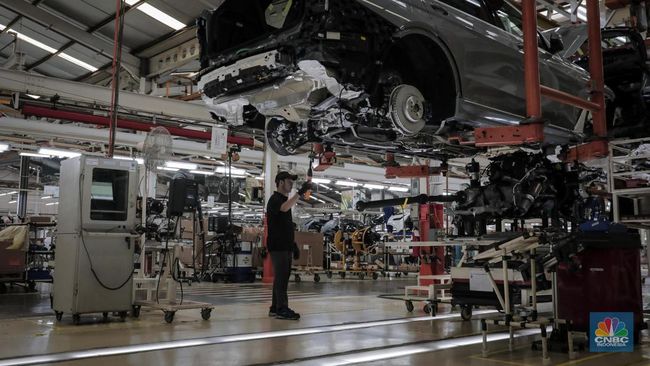
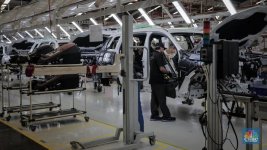
Photo: Several workers assemble BMW cars at PT Gaya Motor’s automobile manufacturing plant in Sunter, North Jakarta, Tuesday (June 6, 2023). The factory assembles BMW car components in an incompletely knocked down (IKD) form. (CNBC Indonesia/Faisal Rahman)


JAKARTA, CNBC Indonesia — Indonesia’s manufacturing activity surged in October 2025, continuing its strong expansionary phase.


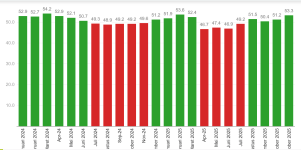
According to S&P Global’s Purchasing Managers’ Index (PMI) released on Monday (Nov 3, 2025), Indonesia’s manufacturing PMI stood at 51.2, up from 50.4 in September, signaling stronger growth momentum.


This rebound brings a wave of optimism, following a contraction earlier this year — with PMI readings of 46.7 in April, 47.4 in May, 46.9 in June, and 49.2 in July.


In PMI measurements, a score above 50 indicates expansion, while a score below 50 signals contraction.


Manufacturing Expansion Strengthens


The S&P Global report noted that Indonesia’s manufacturing sector showed a modest improvement in operating conditions at the start of the fourth quarter of 2025.


The survey revealed a third consecutive month of expansion, driven by new orders, stable output, and increased purchasing and hiring activity.


Notably, employment growth in October reached its highest level since May.


On the pricing side, manufacturers reported a faster increase in input costs, with overall cost inflation accelerating to its highest rate in eight months, mainly due to rising raw material prices.


“The improvement in Indonesia’s manufacturing sector strengthened at the start of Q4 2025, signaling positive momentum for the coming months,” said Usamah Bhatti, Economist at S&P Global Market Intelligence.
“Solid demand conditions, reflected in higher sales, supported growth in both employment and purchasing activity.”

However, output levels remained broadly unchanged, as several manufacturers chose to utilize existing inventories to meet demand.


Despite cost pressures, many firms refrained from fully passing on price increases to customers, resulting in only a slight rise in factory gate prices to maintain competitiveness.


Domestic Orders Drive Job Growth

The main driver behind October’s expansion was the acceleration in domestic demand for Indonesian manufactured goods.


New orders rose for the third straight month, with the fastest growth since March, matching August’s pace. Respondents cited improved domestic market activity, prompting local clients to increase their orders.


Typically, domestic production rises in the final quarter as firms prepare for year-end consumption surges.


While domestic demand strengthened, export orders declined for the second consecutive month, reflecting weak global demand.


Higher sales encouraged companies to expand capacity, with employment increasing for the third month in a row — the fastest pace in five months.


Factory output remained stable compared with September, after a slight decline in the previous survey.


Firms also reported using up existing inventories to fulfill incoming orders, leading to a marginal monthly decline in post-production stock.


Mild Supply Pressure, Rising Costs


Production capacity pressure stayed low, as shown by a seventh consecutive monthly decline in backlogs of work, though the rate of decline was the slowest since June.


Purchasing activity increased for the third consecutive month, albeit moderately, while raw material inventories grew as firms built up stock to prepare for rising demand.


However, supplier delivery times lengthened again for the first time in three months, partly due to logistical bottlenecks and road repairs.


Cost pressures rose sharply, with respondents widely attributing the increase to higher raw material prices. The input cost inflation rate was the highest since February.


Still, most firms chose to raise selling prices only modestly to preserve price competitiveness.


Outlook: Optimism Amid Caution


Looking ahead, business confidence over the next 12 months declined slightly from September and remained below the historical average.


Nonetheless, the Future Output Index continued to indicate strong optimism, supported by expectations of stronger demand and new product launches in 2026.


The report concludes that Indonesia’s manufacturing momentum is improving, driven by domestic resilience despite global uncertainty — with employment, purchasing, and investment trends all pointing toward sustained expansion.


Prabowo Greenlights 30 Trainsets to Ease Passenger Congestion in Greater Jakarta​


November 4, 2025 | 1:24 pm

1762251571321.webp
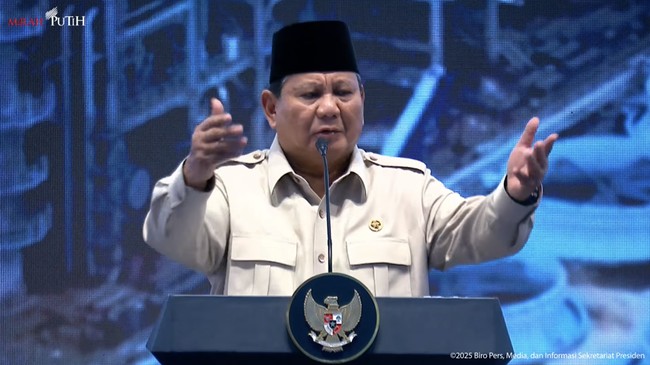
President Prabowo Subianto speaks during the inauguration of the revitalized Tanah Abang Station in Central Jakarta on Tuesday, Nov. 4, 2025. (Photo Courtesy of the Presidential Secretariat's Press, Media, and Information Bureau)


Jakarta. President Prabowo Subianto has approved a plan to procure 30 new commuter trainsets for the Greater Jakarta area, a Rp 5 trillion ($299 million) project by state-owned railway operator Kereta Api Indonesia (KAI).


To view this content we will need your consent to set third party cookies.
For more detailed information, see our cookies page.

Greater Jakarta Commuter Line Train (KRL)


The president announced his approval during the inauguration of the newly revitalized Tanah Abang Station in Central Jakarta on Tuesday, stating that efficient transport infrastructure is key to improving productivity and public welfare.


“If it’s for the people’s benefit, I won’t hesitate,” Prabowo said to applause. “We’ll manage the money prudently, but the people’s interest must come first.”

To view this content we will need your consent to set third party cookies.
For more detailed information, see our cookies page.

New Tanah Abang KRL station


The government targets the completion of all 30 new trainsets within a year. Prabowo ordered that the project be carried out swiftly, transparently, and under strict supervision so commuters can quickly benefit from better service.


To view this content we will need your consent to set third party cookies.
For more detailed information, see our cookies page.

INKA made train seen in Greater Jakarta train station


The expansion aims to ease congestion on major lines, including Rangkas Bitung–Tanah Abang, Bogor–Jakarta Kota, and Cikarang–Bekasi–Jakarta Kota, while enhancing passenger comfort and service quality.

Prabowo also praised KAI’s ongoing modernization efforts, saying Indonesia’s commuter trains are now “clean, comfortable, and comparable to those in developed countries.”


“If our nation builds with discipline and determination, the world will respect Indonesia,” he said.

To view this content we will need your consent to set third party cookies.
For more detailed information, see our cookies page.

INKA New Generation Train for long journey


In a broader vision, the president reaffirmed his commitment to extending railway development beyond Java, announcing plans for the Sumatera Railway, Trans Kalimantan Railway, and Trans Sulawesi Railway as part of his agenda to boost inter-island connectivity and economic equity.


“Railways are our national pride,” Prabowo said. “Please keep the tracks and crossings safe, no more accidents.”


He added that the expansion of rail networks across Indonesia would help drive down logistics and economic costs, strengthening the country’s competitiveness.


“So, we will expand our railways in Sumatra, Kalimantan, Java, and Sulawesi. With railways, logistics costs will fall, economic costs will fall, and our competitiveness will rise. People’s welfare will improve,” Prabowo said.


INKA Banyuwangi Recruits Hundreds of Workers, Targets 250 Train Cars per Year


By Moh Reynaldi Risahondua
Kamis, 03 Jul 2025 09:51 WIB

To view this content we will need your consent to set third party cookies.
For more detailed information, see our cookies page.

INKA second factory in Banyuwangi, East Java (design)


Jakarta


Since officially starting operations at the end of 2024, PT Industri Kereta Api (INKA) Banyuwangi has recruited hundreds of local workers, primarily vocational school (SMK) graduates from Banyuwangi. Many of them have even been sent to China and Japan for training. Now, the largest railway factory in Southeast Asia is targeting production of 250 train cars per year.


Bambang Jatmika, Director of Quality Management at PT INKA Banyuwangi, stated that the Banyuwangi rail factory began production in December 2024. This year, INKA Banyuwangi will produce 100 train cars, as the factory is still completing investments in new machinery to achieve full production capacity.


“All production machinery will arrive in the third quarter or by the end of this year. Only then can we reach full production capacity. The target, starting in 2026, is to produce 250 cars per year, valued at around Rp 4 trillion (USD 250 million),” said Bambang in a written statement on Thursday (July 3, 2025).

He made the remarks while accompanying Banyuwangi Regent Ipuk Fiestiandani during an inspection of train production at the PT INKA Banyuwangi facility in Kalipuro District on Wednesday (July 2).


To view this content we will need your consent to set third party cookies.
For more detailed information, see our cookies page.

City of Banyuwangi, East Java


To meet the production target, INKA Banyuwangi will need around 1,000 workers. Currently, about 600 workers have been employed — mostly graduates from SMK and D3 programs in Banyuwangi.


“We’ve recruited many workers, and all 2025 SMK graduates in Banyuwangi have already been absorbed. These new graduates have joined training programs in Madiun, and some have been sent to China and Japan,” Bambang added.

At present, INKA Banyuwangi continues to open job opportunities for both vocational and university graduates to fill workforce needs. The company is also collaborating with the Banyuwangi Job Training Center (BLK) to ensure that workers receive the necessary training.


Bambang explained that the Banyuwangi factory focuses on producing trains with modern technology, including robotics and Artificial Intelligence (AI)-based systems.


“We’re preparing all machines based on robotic and AI technology. These trains will operate automatically, without the need for locomotives. One of the current projects is to fulfill an order from PT Kereta Commuter Indonesia (KCI),” he said.

Meanwhile, Banyuwangi Regent Ipuk Fiestiandani emphasized that the presence of PT INKA Banyuwangi has brought positive impacts to the region — from creating jobs to boosting the local economy.


“We’re grateful that Banyuwangi’s youth are getting opportunities to work and improve their skills through INKA’s facilitation, including training abroad. The economy around the factory area has also become more active,” said Ipuk.

She reaffirmed the regional government’s commitment to supporting investors.


“The local government will continue to provide ease of investment for projects that have a positive impact on the people of Banyuwangi,” she concluded.

 
To view this content we will need your consent to set third party cookies.
For more detailed information, see our cookies page.


KAI to Add 30 New KRL Trainsets, Minister of Industry Says This is a Positive Boost for PT INKA

PT Kereta Api Indonesia (KAI) will procure 30 new series of Electric Multiple Unit (EMU) commuter trains (KRL) to strengthen passenger transportation services. The Minister of Industry stated that this plan will be a breath of fresh air for the domestic train manufacturing industry, especially PT Industri Kereta Api (INKA).

The Minister of Industry emphasized that the procurement of these new trainsets is expected to increase production activity at PT INKA, create jobs, and further encourage the growth of the national railway industry supply chain. He also noted that the government continues to support efforts to increase the use of domestic-made products (TKDN) in the transportation sector.

KAI's addition of 30 new trainsets is part of the company’s strategy to enhance operational reliability and meet the rising demand for commuter transportation. Increasing the number of trainsets is also expected to improve service frequency and reduce congestion during peak travel hours.

The Ministry of Industry hopes that the collaboration between KAI and PT INKA will not only fulfill national needs but also expand the export potential of Indonesian-made trains to international markets.


Indonesia sees big potential as factory use stays at 59 percent​

November 6, 2025 19:30 GMT+700

To view this content we will need your consent to set third party cookies.
For more detailed information, see our cookies page.

New Industrial Zone in Subang, West Java


Jakarta (ANTARA) - Indonesia’s manufacturing sector still has broad room for expansion, with factory utilization averaging 59.28 percent, Industry Minister Agus Gumiwang Kartasasmita said on Thursday.

“The current utilization level of non-oil and gas manufacturing shows major opportunities to expand production capacity and further boost GDP,” Kartasasmita said in a statement.

Despite global economic headwinds, Indonesia’s manufacturing performance remains robust.

Data from Statistics Indonesia (BPS) showed that the non-oil and gas processing sector grew 5.58 percent year-on-year in the third quarter of 2025, outpacing overall economic growth of 5.04 percent.

Non-oil and gas exports rose 12.56 percent in the same period, accounting for 85.21 percent of total exports. Leading export products included animal and vegetable fats and oils (up 50.34%), iron and steel (15.88%), machinery and electrical equipment (17.55%), jewelry and gemstones (82.43%), and vehicles and components (8.12%).

Related news: Agriculture, trade, and manufacturing drive job growth in Indonesia

To view this content we will need your consent to set third party cookies.
For more detailed information, see our cookies page.

Newly Patimban port in Subang, West Java


“Manufactured goods remain the backbone of Indonesia’s exports. They reflect our industrial competitiveness while driving the national economy and sustaining our trade surplus,” Kartasasmita said.

From January to September 2025, investment in manufacturing reached 562.7 trillion rupiah (US$33.6 billion), comprising 178.9 trillion rupiah in domestic investment and 383.8 trillion rupiah in foreign investment.

The manufacturing sector contributed 37.73% of total national investment and 81 percent of exports, underscoring investor confidence in the industry.

It also employed 20.31 million workers, or 13.86 percent of Indonesia’s total labor force. Between February and August 2025, the sector added about 210,000 new jobs, making it the country’s second-largest employer after construction.

“This proves that manufacturing not only drives growth but also creates formal employment, supporting families and national development,” Kartasasmita said.

Related news: West Java's Kuningan to host $77–116 mln investment in shoe factory
 
Prabowo Orders Acceleration of 18 Downstream Projects Worth Rp 600 Trillion (≈ USD 38.7 Billion)


Firda Dwi Muliawati, CNBC Indonesia
07 November 2025 09:55


Jakarta, CNBC Indonesia — President Prabowo Subianto has instructed the government to accelerate the completion of 18 major downstreaming projects across multiple strategic sectors, including energy and mineral resources.

The combined value of these projects exceeds Rp 600 trillion, equivalent to approximately USD 38.7 billion, and they are targeted for completion within this year (planning, feasibility studies).


Minister of Energy and Mineral Resources (ESDM) Bahlil Lahadalia stated that the directive was delivered during a limited cabinet meeting at the Presidential Palace on Thursday (6/11/2025), which focused on downstreaming in the fisheries, agriculture, and energy-mineral sectors.


“Of the 18 projects that have completed pre-feasibility studies and have been coordinated with Danantara, the President has instructed that all of them must be completed this year,”
said Bahlil, Friday (7/11/2025).

These strategic downstreaming facilities are expected to begin construction in 2026, delivering a significant boost to national economic growth, job creation, and import substitution.


“Accelerating these projects—worth more than Rp 600 trillion (≈ USD 38.7 billion)—will drive economic expansion, provide employment, and reduce our dependency on imported products,”
Bahlil added.


Majority of Projects Outside Java


Around 67% of the 18 downstream projects are located outside Java, supporting more balanced national development.


Specifically, 12 of the 18 projects fall under the energy and mineral (ESDM) sector:


  • 8 mineral and coal downstreaming projects
  • 2 energy transition projects
  • 2 national energy resilience projects

Collectively, these initiatives are estimated to create more than 270,000 new jobs.


DME Project Highlighted to Reduce LPG Imports


The government also underscored the importance of the Dimethyl Ether (DME) project as a substitute for imported liquefied petroleum gas (LPG). Indonesia’s LPG consumption is projected to approach 10 million tons in 2026, while current domestic capacity remains insufficient.


“We cannot continue relying on imports. Developing domestic DME-based energy systems is critical moving forward,”
Bahlil stressed.


To view this content we will need your consent to set third party cookies.
For more detailed information, see our cookies page.


Lotte Chemical Project Marks Key Progress in Petrochemical Downstreaming


Earlier this week, President Prabowo inaugurated the New Ethylene Project of PT Lotte Chemical Indonesia in Cilegon, Banten.
The project carries a total investment of Rp 62.4 trillion, equivalent to around USD 4.0 billion.


This complex includes the largest naphtha cracker facility in Southeast Asia, and the first to be constructed in Indonesia in nearly three decades. The plant will produce:


  • Ethylene
  • Propylene
  • Various petrochemical derivatives

These materials form the base inputs for key domestic industries such as plastics, textiles, and pharmaceuticals.

 
Many New Orders, Indonesia’s Factories Keep Running Strong


Elvan Widyatama
01 December 2025 08:33


1764607471328.jpeg
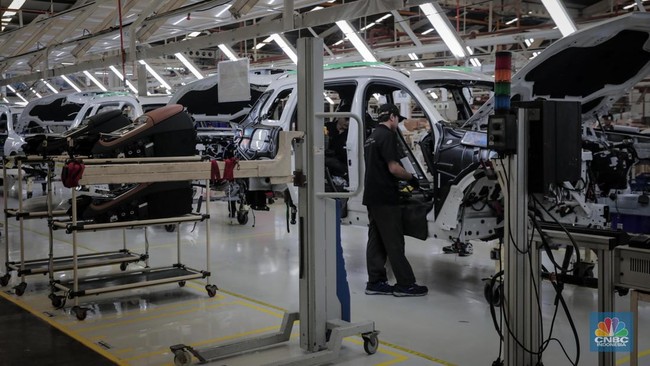
Photo: Workers assemble BMW cars at the PT Gaya Motor automotive manufacturing plant in Sunter, North Jakarta, Tuesday (6/6/2023). The factory assembles BMW vehicle components that arrive in an incompletely knocked down (IKD) form. (CNBC Indonesia/Faisal Rahman)


Jakarta, CNBC Indonesia – Indonesia’s manufacturing activity surged again in November 2025, recording a stronger and more solid expansion phase toward the end of the year.


Purchasing Managers’ Index (PMI) data released by S&P Global on Monday (1/12/2025) showed that Indonesia’s PMI stood at 53.3 in November, rising significantly from 51.2 in October.


This marks the highest level since February 2025 and reflects four consecutive months of expansion in Indonesia’s manufacturing activity.


The rise in PMI provides fresh momentum after the industrial sector experienced pressure between April and July 2025, when PMI remained below 50 for four straight months—indicating contraction.


The PMI’s return to the expansion zone in August and its continued strengthening through November confirms that the manufacturing sector’s recovery is now progressing consistently.


Like other global indicators, the PMI uses 50 as the dividing line between expansion and contraction. A reading above 50 signals strengthening business activity, while a reading below 50 indicates a slowdown or contraction.

1764607667258.png


Strong New Orders Drive Acceleration


According to S&P Global, the acceleration of Indonesia’s PMI in November was supported by a surge in new orders, which increased at the fastest pace in 27 months.


This increase in demand came mostly from the domestic market, where customer numbers and ordering activity continued to rise. In contrast, foreign demand remained under pressure, with export orders recording their sharpest decline in the last 14 months.


A renewed expansion was also seen in production. Indonesia’s manufacturing output returned to growth after weakening for the previous three months.


The pace of expansion in November was the fastest since February, indicating that companies are beginning to increase production capacity to meet rising domestic demand.

Domestic Demand Strengthens, Production and Employment Rise

The surge in domestic demand was the main driver of the jump in new orders during November. Respondents reported an increase in customer numbers and more local clients placing higher order volumes.


This aligns with seasonal trends ahead of year-end, when household consumption typically rises, prompting industries to ramp up production.


The increased demand encouraged firms to raise operational capacity. Employment increased for the fourth consecutive month, although the hiring rate slowed slightly compared to October.


However, mounting workloads caused backlogs of work to rise for the first time in eight months, reaching their highest accumulation in more than four years.


To keep up with the higher workload and strong demand expectations, producers boosted raw material purchases. Purchasing activity rose significantly, and inventory levels grew at their fastest rate in eight months.


Several companies also sought to maintain adequate input stocks, reflecting preparations to meet production needs in the coming months.

Supply Chain Pressure Returns, Input Costs Spike

Despite positive demand trends, capacity and supply chain pressures persisted. Supplier delivery times were delayed for the second consecutive month, the worst since October 2021. Factors contributing to delays included traffic congestion and severe weather conditions that disrupted distribution.


From a price perspective, cost pressures intensified. Input costs surged to their highest level in nine months, driven by rising raw material prices and currency fluctuations affecting imported goods. This compelled companies to raise factory selling prices (output charges) at the fastest pace since April 2024, although some producers tried to maintain competitiveness amid tight market conditions.

Economist: November Was Very Positive for Indonesia’s Manufacturing Sector

In the official report, S&P Global Market Intelligence economist Usamah Bhatti stated that November was an exceptionally positive month for Indonesia’s manufacturing sector. He explained that the rapid increase in new orders— the fastest since August 2023—has become the key catalyst for industrial recovery across multiple segments.


According to Usamah, the surge in new orders demonstrates how domestic demand is once again becoming the engine of the industry heading into year-end.


“This momentum encouraged companies to increase production, expand raw material purchases, and add more workers to meet demand,” he said.


Usamah also noted that capacity pressures are becoming more evident, reflected in the rise in backlogs, the most significant since 2021.


Meanwhile, on the cost side, Usamah added that manufacturers faced sharp increases in production costs due to rising raw material prices and the weakening exchange rate’s impact on imported goods. “This situation has forced companies to adjust selling prices, which are now rising at the fastest pace in 19 months,” he explained.

Industry Outlook: Optimism Remains, Despite Slight Dip in Confidence

Looking ahead, manufacturers remain optimistic about prospects over the next 12 months. However, confidence levels dipped slightly compared to October and are now at their lowest in four months.


Even so, strong demand expectations and improving consumer purchasing power are expected to support production expansion in the first quarter of next year.


With solid domestic demand, rising production, and improving operational activity, Indonesia’s Manufacturing PMI in November confirms that the industrial sector is entering a more stable expansion phase. Although cost pressures and weak export demand remain challenges, the manufacturing sector continues to show strong resilience heading into year-end.


CNBC INDONESIA RESEARCH


US–Germany–Indonesia Consortium Pledges $26.7 Billion for Semiconductor Hub in Batam​


Harso Kurniawan

December 2, 2025 | 7:42 pm

To view this content we will need your consent to set third party cookies.
For more detailed information, see our cookies page.


Jakarta. A consortium of Indonesian, German and US companies on Tuesday announced a $26.7 billion investment commitment to develop semiconductor, silica sand and advanced glass manufacturing industries on Galang Island in Batam, Riau Islands.


The foreign investors have set up PT Quantum Luminous Indonesia and PT Terra Mineral Nusantara to collaborate with the Indonesian Tynergy Group, which consists of PT Energy Tech Indonesia and PT Essence Global Indonesia.


Construction of the industrial facilities will soon begin in the Wiraraja Green Renewable Energy and Smart-Eco Industrial Park, one of Indonesia’s designated National Strategic Projects.

“This marks a strong commitment to accelerate large-scale investment in semiconductor-based industries and high-tech glass manufacturing in Indonesia,” said Quantum Luminous President Director Walter William Grieves in Jakarta.

Tynergy Group’s investment journey began during the 2022 G20 Summit in Bali, following discussions with then-Industry Minister Agus Gumiwang Kartasasmita and engagements facilitated by the Indonesian Embassy in Washington, DC, under Ambassador Rosan Roeslani Perkasa, now Indonesia’s Investment Minister.


To view this content we will need your consent to set third party cookies.
For more detailed information, see our cookies page.

Infineon, German based semi conductor in Batam Island


Stakeholders at the time expressed a shared interest in supporting the strengthening of the global semiconductor supply chain.

The consortium later deepened its commitment during the 2023 Hannover Messe in Germany, where Indonesia served as an official partner country. This was followed by the signing of an investment commitment on 12 November 2023, and a subsequent cooperation agreement between Tynergy Group and PT Galang Bumi Industri, operator of the industrial park.


Tynergy Group and Quantum Luminous have since held a series of meetings with the Batam Authority, focusing on land availability, utilities and infrastructure readiness for semiconductor, solar-cell and wafer manufacturing as well as silica-sand downstream processing. The investment package is valued at $26.7 billion.


To accelerate project realization, the consortium has urged the government to expedite the completion of all required permits so that the first phase of construction can begin immediately.


Read More:​

Indonesia Says Apple Vendor Will Still Invest in Batam Factory After Tariff Deal

Expedited licensing is essential to secure the investment, prepare industrial supply-chain logistics, create local employment opportunities and support knowledge and technology transfer through vocational programs linked to the consortium’s German parent company — ultimately boosting Indonesia’s competitiveness in the global high-tech manufacturing supply chain.


“We have submitted letters requesting investment acceleration to the Minister of Investment twice,” Walter said.


Indonesia’s major telco Indosat Ooredoo Hutchison enters JV to build fibre infrastructure​

Venture with Arsari Group and Northstar Group will allow Indosat to monetise its fibre assets

Published Tue, Dec 23, 2025 · 06:26 PM

To view this content we will need your consent to set third party cookies.
For more detailed information, see our cookies page.


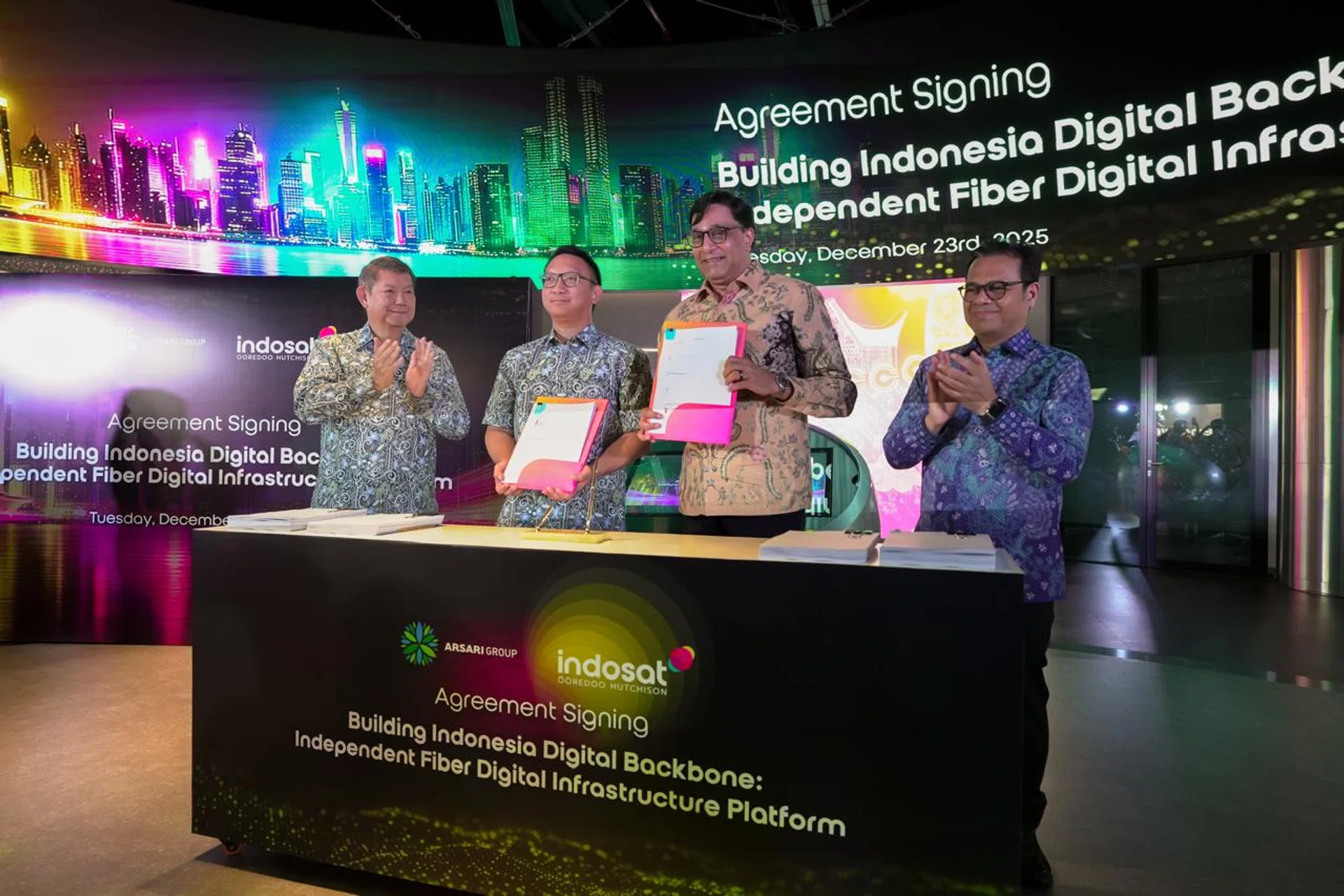
[SINGAPORE] Indosat Ooredoo Hutchison (IOH), one of Indonesia’s largest telcom operators, is partnering Indonesian conglomerate Arsari Group and Singapore-based private equity firm Northstar Group to spin off its fibre infrastructure into a new standalone company.

Tuesday’s (Dec 23) announcement marks one the largest digital infrastructure transactions in Indonesia.

The new entity, known as FiberCo, will operate a comprehensive and integrated network spanning over 86,000 kilometres across Indonesia.

Around 45 per cent of the network is located in Java, the country’s most populous island and where the current capital Jakarta is located, with the remaining 55 per cent spread across non-Java regions, positioning FiberCo as a key player in expanding connectivity beyond Indonesia’s main economic hubs.

Under the deal, Indosat will carve out its fibre assets into a new entity, FiberCo, valued at an enterprise value of about 14.6 trillion rupiah (S$1.12 billion).

The telco will retain a 45 per cent stake while Arsari Group and Northstar Group will own a collective 45 per cent stake in FiberCo with the rest being a minority free float.


The deal underscores a broader trend of Indonesian telcos unlocking value from passive infrastructure assets through partnerships with conglomerates and private investors as demand for data, cloud services, and AI applications surge.

The consortium said in a statement on Tuesday that the partnership marks a significant milestone in the collective effort to reinforce Indonesia’s digital backbone.

Indonesia has a Digital Vision 2045 initiative that aims to build out infrastructure to bolster the country’s development into a digital-technology based economy, and to also support digital inclusiveness for citizens.

The move allows Indosat to monetise its fibre network and free up capital to accelerate its 5G rollout and support its ambition to become an AI-driven telco company.

Vikram Sinha, Indosat’s CEO, said: “This strategic transaction is instrumental in advancing Indosat’s growth objectives and effectively future-proof its business with the the proceeds fuelling crucial investments in 5G rollout and acting as a foundation for Indosat’s AI north star.”

Under the CEO, Indosat has been expanding its network by constructing more cell towers to try and reach rural Indonesians.

Sinha has also spoken publicly on several occasions on wanting to leverage AI to fuel the company’s growth.

For the Arsari Group, the deal marks a strategic expansion into digital infrastructure, adding to a portfolio traditionally anchored in commodities and logistics.

The group is controlled by businessman Hashim Djojohadikusumo, the brother of Indonesia’s President Prabowo Subianto.

“Under this partnership, Arsari group intends to serve as part of the physical backbone of Indonesia’s next growth phase–supporting enterprise productivity, digital inclusion, public service delivery, and the emergence of AI-driven economic activity,” said Aryo Djojohadikusumo, Arsari Group’s COO and deputy CEO.

Northstar Group, the third party in this venture, is a major Singapore-based private equity firm. The company is invested in several sectors of the Indonesian economy and has a stake in Indosat through PT Tiga Telekomunikasi Indonesia.

Additional reporting by Elisa Valenta
 

Over 1,200 New Industrial Firms Set to Begin Production in Indonesia.​


Prisma Ardianto
January 18, 2026 | 11:31 pm

1768793973204.png
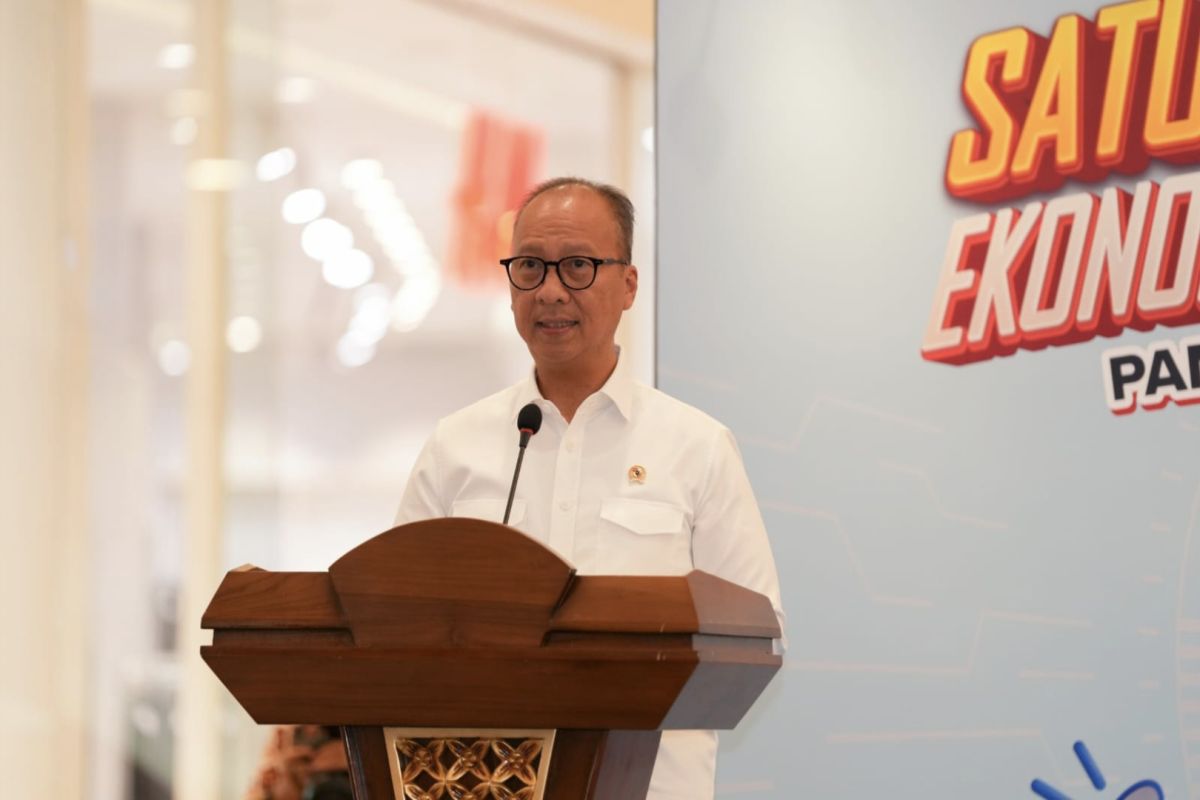
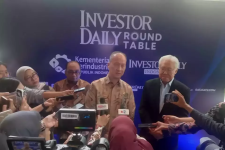
Industry Minister Agus Gumiwang Kartasasmita, second right, speaks to reporters as B-Universe Media Holdings Executive Chairman Enggartiasto Lukita, right, looks on during the Investor Daily Roundtable in Jakarta, Tuesday, Oct. 14, 2025. (JG Photo/Heru Andriyanto)


Jakarta. Indonesia is set to see 1,236 new industrial companies begin production for the first time this year, a move expected to strengthen the country’s manufacturing base and create more than 218,000 jobs, the government said on Sunday.


Industry Minister Agus Gumiwang Kartasasmita said the companies, which started construction in 2025, are scheduled to commence operations in 2026 across a range of industrial sectors.


The new facilities are projected to absorb 218,892 workers nationwide.


“New production capacity coming onstream in 2026 is a crucial factor in sustaining industrial activity, strengthening the manufacturing structure, and creating new jobs,” Agus said in a statement.

He added that Indonesia’s manufacturing sector expanded by more than 5% last year and continues to serve as a key driver of national economic growth.


According to the Industry Ministry, total manufacturing investment excluding oil and gas reached Rp 551.88 trillion ($32.7 billion) last year, including Rp 444.25 trillion in investment outside land and building assets.


For 2026, the government is targeting growth of 5.51% in non-oil-and-gas manufacturing gross domestic product, with the base metals, food and beverage, and pharmaceutical industries expected to be the main contributors.


Agus also stressed the importance of strengthening domestic demand to support industrial growth.


“We are ensuring that domestically produced industrial goods become the mainstay of the domestic market. Strengthening the domestic market is the primary anchor for manufacturing growth,” he said.


Read More:​

World’s Largest Nickel Holder Indonesia Still Importing from the Philippines, Industry Group Warns

At the same time, the Ministry of Industry is pursuing global markets, targeting manufacturing exports to account for nearly 75% of Indonesia’s total exports in 2026. To support this ambition, investment in the manufacturing sector this year is being targeted at Rp 852.90 trillion, the ministry said.


Users who are viewing this thread

Latest Posts

Back
Top