Indonesia's Manufacturing Sector

Beurer Indonesia Technology Launches New Medical Device Factory in Central Java​


To view this content we will need your consent to set third party cookies.
For more detailed information, see our cookies page.

Kendal Industrial Park

Antara

October 22, 2024 | 9:59 pm

Jakarta. German medical device manufacturer Beurer Indonesia Technology has officially commenced operations at its new facility, spanning 8,000 square meters, in the Kendal Industrial Park (KIK) in Central Java.


The inauguration of the Beurer factory took place on Tuesday and was attended by Central Java Secretary Sumarno, Dr. Lucia Rizka Andalucia, Director General of Pharmacy and Medical Devices at the Health Ministry, and Beurer CEO Marco Bühler.


Bühler said that the Indonesian factory is the latest addition to Beurer's global network, following facilities in Hungary, China, and Moldova. The factory is expected to employ between 50 and 100 workers out of a total capacity of 200.


Bühler highlighted Indonesia as an attractive investment destination, citing its status as one of the largest and rapidly growing economies in Southeast Asia. With a population of around 270 million, Indonesia is the fourth most populous country in the world and is enhancing its healthcare and wellness market, which is projected to continue expanding.

Central Java Secretary Sumarno expressed gratitude for Beurer's decision to invest in the region and emphasized the need for health initiatives. "Health remains a priority for the Central Java Provincial Government. We must focus more on promotional efforts," he said, adding that funds allocated for BPJS Kesehatan (the national health insurance program) should be maximized for preventive and promotional health measures.


Beurer offers four product categories: "Health Care" includes thermometers, blood pressure monitors, and oximeters; "Well-Being" features therapy lamps and humidifiers; "Fitness" offers scales, massage devices, and fitness trackers; and "Personal Care" includes shavers, electric toothbrushes, and facial care tools.


Indonesia has attracted Rp 1,261.4 trillion (nearly $81 billion) in combined foreign and domestic investments as of September this year, according to data from the Investment Ministry. This amount represents 76.5 percent of the target set by former President Joko "Jokowi" Widodo.


Singapore retained its status as Indonesia’s largest foreign investor. The close neighbor invested approximately $14.4 billion in January-September. Followed by Hong Kong ($6.1 billion), China ($5.8) billion), and the US ($2.8 billion). Malaysia put around $2.7 billion into Indonesia, making Kuala Lumpur its fifth-largest source of FDI.


RI Has a Semiconductor Industry Covering an Area of 11 Football Fields, This is the Location​


To view this content we will need your consent to set third party cookies.
For more detailed information, see our cookies page.


Aug. 30, 2022, 11:30 a.m.

Liputan6.com, Jakarta In an effort to accelerate digital transformation, the semiconductor industry plays an essential role and has become the lifeblood.

Along with the development of the industrial era 4.0, the world's need for semiconductor chips also continues to grow with global demand increasing by about three times the needs before the pandemic.

With the rapid development of telecommunications and automotive devices including electric vehicles (electrical vehicles), as well as digitalization in many sectors, it is also increasingly opening up opportunities for the growth of the semiconductor industry.

In the continuation of a working visit in Batam city, Secretary of the Coordinating Ministry for Economic Affairs Susiwijono Moegiarso together with a group of the Coordinating Ministry for Economic Affairs and a number of Editors-in-Chief of the national mass media visited the first semiconductor company in Indonesia, namely PT Infineon Technologies Batam, last Sunday (28/8/2022).

PT Infineon Technologies Batam is an industrial company from Germany engaged in semiconductors. The company, which has absorbed approximately 2,000 workers, has been operating since March 6, 1996 and is a world leader in semiconductor solutions that make life easier, safer, and greener.

Through the vision of We make life easier, safer, and greener, PT Infineon Technologies Batam puts forward solutions for efficient energy management, smart mobility, and safe and smooth communication, as well as connecting the real world and the digital world.

Standing on an area of 83,000 m2 which is equivalent to 11 football fields, PT Infineon Technologies Batam is located in the Batamindo Industrial Park area, Batam, and is part of the Indonesia-Singapore-Malaysia economic growth triangle


Southeast Asia’s Cement Industrial Complex​


The economics of cement production, particularly in emerging markets, are closely entwined with both politics and climate policy.

To view this content we will need your consent to set third party cookies.
For more detailed information, see our cookies page.


By James Guild
January 17, 2023

GUEST AUTHOR​

James Guild​

James Guild is an expert in trade, finance, and economic development in Southeast Asia.


Dr. Alvin Camba, assistant professor at the Josef Korbel School of International Studies, recently published a journal article highlighting a complex nexus between infrastructure-led development, climate policy, and building materials like cement. When countries like Indonesia and the Philippines build physical infrastructure such as roads, dams, and airports, they use large amounts of cement. And the process of making cement requires kiln temperatures of up to 2,700 degrees Fahrenheit, meaning enormous amounts of energy are involved. The economics of cement production, particularly in emerging markets, are thus highly intertwined with both politics and climate policy.

For Indonesia, cement has long been linked with the country’s economic development. Semen Indonesia (semen is the Indonesian word for cement) was the first state-owned company to go public on the Jakarta Stock Exchange in 1991, part of government efforts to deepen domestic capital markets and attract more investment during the market-reform era of the 1990s. Its modern iteration, Semen Indonesia Group (SIG), is still publicly listed but the state retains a 51 percent majority ownership stake. It is also one of the more profitable Indonesian SOEs, with about a 50 percent share of the domestic market and billions of dollars in annual revenue.

As infrastructure-led development under President Joko “Jokowi” Widodo accelerated from 2015 onward, so did SIG’s role in Indonesia’s political economy. The group paid $1.75 billion to acquire LafargeHolcim’s Indonesian cement assets in 2018, which increased its annual production capacity from 37.8 million tons to 52.6 million. This move was probably made in anticipation of ballooning demand for cement as major infrastructure projects, like the Trans-Java Toll Road, gathered steam. Although the group has investments in Vietnam, the majority of SIG’s production is consumed by the Indonesian market.

Cement looks quite different in Thailand, where the industry giant is the Siam Cement Group. It is one of the largest companies in Thailand, and the King is the largest shareholder with a 33.6 percent stake. Siam Cement is not even primarily a cement company – it has diversified into chemicals and other products, and has a much bigger regional footprint than Indonesia’s SIG. According to the company’s 2021 Annual Report, 45 percent of Siam Cement’s total assets, valued at billions of dollars, are in Vietnam, Indonesia, the Philippines, Laos, Cambodia, and Singapore.

Moreover, only 54 percent of Siam Cement’s revenue was generated by the domestic market. The rest came from exports and regional sales. The group’s chemical subsidiary is planning to raise billions in a major IPO this year which further shows that while Siam Cement started life as a cement company, it has become a diversified regional conglomerate and a critical cog in the Thai economy.

Enjoying this article? Click here to subscribe for full access. Just $5 a month.

In the Philippines, reflecting the country’s more pro-market institutional architecture in general, major cement players are often owned by big conglomerates or private investors, such as Ramon Ang and San Miguel Corp, which controls nearly all of the shares in Eagle Cement, one of the biggest cement companies in the country. According to Professor Camba’s research, President Rodrigo Duterte’s push for capital-intensive infrastructure development caused the demand for cement to balloon and required stepped-up foreign investment and imports to cover the gap. This has all sorts of complex implications for climate policy, economic development, domestic political coalitions, and the role of foreign capital in infrastructure projects.

Just like steel, cement is not merely a neutral building material the use and price of which are determined by supply and demand in a competitive market. Its production and use are intensely political and reflects different constellations of political and economic power in individual countries. We see this in the way big infrastructure drives in emerging markets can also serve to stimulate demand and boost profits for politically powerful companies.

There are likewise important ramifications when it comes to carbon emissions, since producing cement requires so much energy. A market-based policy tool designed to have widespread impact (such as carbon pricing) is likely going to struggle to achieve its goals when you’re dealing with such a diverse set of stakeholders. Looking at the ownership structure across just three countries in Southeast Asia, major stakeholders in the cement industry include the King of Thailand, the government of Indonesia, and one of the largest conglomerates in the Philippines. Who is going to tax the King of Thailand’s cement profits in order to reduce carbon emissions?

We think of cement, if we think of it at all, as a simple building material. But pull back the curtain a little bit, and it turns out the policy challenges related to its production and distribution are actually quite complex. When you drill down a little bit you also realize that addressing these challenges will likely require difficult political solutions, rather than purely market-based approaches.


Indonesia's Bio Farma Opens Vaccine Technology Transfer with Ghana​


21 May 2023 16:12 WIB

To view this content we will need your consent to set third party cookies.
For more detailed information, see our cookies page.


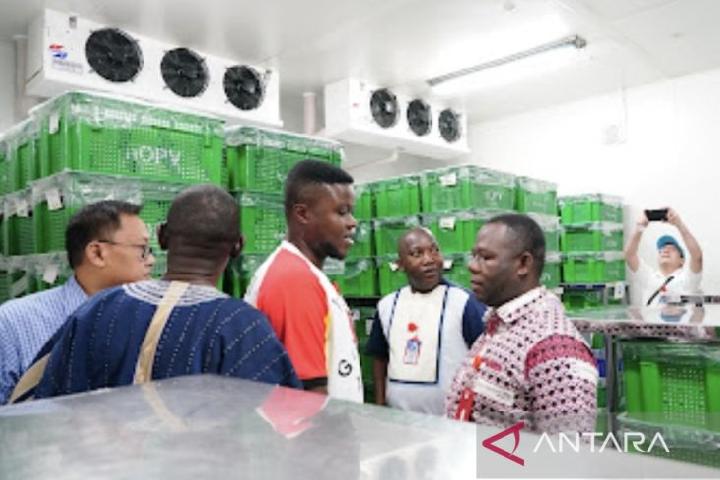
TEMPO.CO, Jakarta - State-owned pharmaceutical company PT Bio Farma has opened the opportunity for vaccine technology transfer with the Republic of Ghana, West Africa, as part of Indonesia's commitment to strengthening the global health system for facing future pandemics.

Ghana is planning to use Bio Farma as a benchmark on how to store, produce, and distribute vaccines, the head of Bio Farma's corporate communications department, Iwan Setiawan, said here on Friday.

Seven health sector delegates from Ghana were in Bandung, West Java, on Thursday to inspect and learn about Bio Farma's work mechanism.

Bio Farma has the capacity to produce up to 3.2 billion doses of vaccines per year. At least 70 percent of them are intended for export to 135 countries.

"Bio Farma also has products that have already been used in Ghana through UNICEF, such as oral type 1 & 3 polio vaccines (bOPV). There are also vaccines sent to other countries through the bilateral mechanism, UNICEF, and businesses," he added.

Bio Farma also managed to produce more than 5 million doses of the IndoVac COVID-19 vaccine in 2022 to meet the demand of the Health Ministry and to fulfill export opportunities.
"Moreover, Bio Farma is also conducting technology transfer for the development of the first mRNA-based vaccine in Indonesia," Setiawan said.

He also highlighted that Ghana is interested in carrying out technology transfer with Bio Farma.

"We are open with anyone. If there are those that fit us and they have the facility, we are ready to collaborate," he said.

“The pharmaceutical industry has high requirements. There are several in Ghana that are ready. We are ready to conduct technology transfer if their facilities are ready," he said.

The Republic of Ghana enacted the National Vaccine Institute Bill in 2023 and founded the National Vaccine Institution on May 10, 2023, to develop policy direction as well as vaccine production independently.

One of the delegates from Ghana, William Opare, said that his party is facing a challenge in vaccinating around 33 million Ghanaian citizens.

There are also several parents who are not willing to bring their children for immunization due to hesitancy. There is a negative rumor spreading around immunization, he highlighted.
He also lauded the immunization program mechanism in Indonesia, which is targeting a population of around 234 million in several vast islands.

ANTARA
 

Indonesia's Adaro plans $728 mln aluminium smelter in Borneo​

Reuters
JAKARTA, Dec 23 (Reuters) - A unit of Indonesian coal company PT Adaro Energy (ADRO.JK) plans to build a $728 million aluminium smelter in a new industrial estate on Borneo island, the company said in a statement on Thursday.

PT Adaro Aluminium Indonesia this week signed a letter of intent to invest in the smelter project to be built in the Green Industrial Park Indonesia in North Kalimantan province, it said in a statement.

PT Kalimantan Industrial Park Indonesia, a consortium led by Adaro's President Director Garibaldi Thohir, is developing the new estate.

The government has branded the park "green" due to a plan to power industrial activities there with electricity from an 11,000-megawatt hydropower plant in the Kayan river.

Adaro said it would team up with domestic and international partners for the smelter, without naming any. It said the project is part of the firm's green transformation initiative.

"We are optimistic that global demand for aluminium products will keep rising, particularly for cable, battery, and chassis," Adaro's Vice President Director, Ario Rachmat, said in the statement.

"We also expect that, going forward, other industries, which require aluminium, such as solar panels and electric vehicles, can be produced in this facility."

Reporting by Gayatri Suroyo and Fransiska Nangoy Editing by Ed Davies


Shandong Nanshan may expand Indonesia site into $6 billion aluminium complex​


1729741714947.jpeg

15 May 2023


SINGAPORE/JAKARTA : China's Shandong Nanshan plans to expand its new Indonesian alumina plant to a $6 billion aluminium smelting complex by 2028, a company executive said, which would be among the largest foreign investments in the resource-rich nation.

Shandong Nanshan is among a growing group of private Chinese companies making multi-billion-dollar investments in Southeast Asia in sectors such as metal processing and oil refining amid a cooling Chinese economy and tighter regulatory scrutiny at home.

The company started up its 2 million tonnes per year (tpy) alumina facility last November at the Galang Batang special economic zone (SEZ) on the island of Bintan,located about one hour by ferry from Singapore.

Now running at full capacity, Nanshan processes bauxite mined from Indonesia's Kalimantan region and exports alumina to neighbouring Malaysia and also sells to international traders.

Nanshan, with plans to bring more Chinese firms to the site, intends to start building a 250,000-tpy aluminium smelting unit later this year, part of a plan to construct a 1 million-tpy aluminium plant by 2028, a company executive said last week, asking to remain unidentified, eventually producing high-end aluminium ingots for the aircraft and electric vehicle industries.

Based in China's Shandong province, Nanshan Group says its existing aluminium customers include Airbus, Boeing and Tesla.


To fuel the alumina facility, Nanshan operates a 160-megawatt (MW) coal-based power plant within the SEZ. The site's general manager, Hao Weisong, said on Tuesday that the company plans a 100-MW solar power facility and has also agreed to buy renewable power from state utility Perusahaan Listrik Negara.

The SEZ's operating company, PT Bintan Alumina Indonesia, was last year granted a full waiver of income tax for 20 years, Susiwijono Moegiarso, secretary general of the National Council of Special Economic Zones, said on Friday.

He said investment at the site has thus far totalled 17 trillion rupiah ($1.16 billion).

Indonesian President Joko Widodo, who visited the site last year, is focusing on minerals processing to extract more value from its vast mining sector, and the government may impose an export ban in June on unprocessed minerals, including bauxite.

Moegiarso said that the SEZ has committed to supplying 33.8 per cent of its power from renewable sources by 2032.

($1 = 14,695 Rupiah)


Pertamina Lubricants Owns the Largest Lubricant Research and Innovation Center in Indonesia​

To view this content we will need your consent to set third party cookies.
For more detailed information, see our cookies page.


News from Ichsan Emrald Alamsyah • 11 hours


PT Pertamina Lubricants, a subsidiary of Pertamina Commercial and Trading Subholding, inaugurated the largest lubricant research and innovation center in Indonesia, the Lubricants Technology Center in Plumpang, North Jakarta.© Pertamina dock

REPUBLIKA.CO.ID, JAKARTA – PT Pertamina Lubricants, a subsidiary of Pertamina Commercial and Trading Subholding, inaugurated the largest lubricant research and innovation center in Indonesia, the Lubricants Technology Center in Plumpang, North Jakarta.

With an area of 12,500 square meters, the Lubricants Technology Center is equipped with modern facilities and professional human resources to meet the needs of lubricants in the Indonesian market and 14 countries in the world, including Australia, Thailand, and South Africa.

PTPL President Director Werry Prayogi said the Lubricants Technology Center will encourage the achievement of the aspiration to become a leading lubricant company, The Leading Asian Champion, with products and services that are more adaptive, responsive, and flexible in various automotive and industrial applications.

Lubricants Technology Center is an integrated technology center in combining product development research activities and after-sales services, namely product research and development laboratories to support applied research, selection of additive technology and formulation of lubricant products and special chemicals.

Then, combining an oil clinic laboratory to conduct comprehensive oil analysis and supervision supported by experienced technical support, as well as an integrated lubrication management academy with customer education and training facilities.

He explained that laboratory activities at the Lubricants Technology Center follow the international standards of the American Society for Testing and Materials. In addition, both laboratories at the Lubricants Technology Center are ISO 17025:2017 certified by the National Accreditation Committee (KAN).

Therefore, Lubricants Technology Center is a strategic investment to accelerate Pertamina Lubricants' business growth in the face of increasingly dynamic market changes. Lubricants Technology Center also answers the challenges of the rapid growth of various sectors in Indonesia which has an impact on increasing the need for quality lubricants.

"As a market leader, LTC strengthens our commitment and capability in product and service innovation," he said in a statement received by Republika.co.id, Tuesday (30/5/2023).

Werry continued, currently lubricant consumers have adequate knowledge so that Pertamina Lubricants is required to provide additional benefits such as fuel economy and the ability to protect engines. In the use of business operation lubricants, Pertamina lubricants are also able to increase the efficiency and productivity of customer operations.

In the future, the Lubricants Technology Center is expected to become a mecca for the development of lubricants and specialty chemicals, including answering the need for lubricants that are more environmentally friendly and able to contribute to reducing carbon footprint. This is in line with the government's efforts to achieve net zero emissions by 2060.
 
The TMMIN plant produces two gasoline and ethanol fuel engines, namely TR (Sunter Plant #1 & #2)
and R-NR (Karawang Plant #3). This iron-based TR machine has 2 types, namely 1TR and 2TR.


This engine is used for IMV (Innovative Multipurpose Vehicle) type cars such as the Fortuner and Innova.

In addition, the aluminum-based R-NR engine also has 2 types, namely 1NR and 2NR. This engine is used for sedans such as the Yaris, Vios & MAV (Multi Activity Vehicle) such as the Sienta. Both of these machines are produced not only for the domestic market but also exported to countries around the world.

 
Not a surprise if Pindad said Maung V3 has 70 % local content, they can use component made by local companies like Astra Autopart and also engines are produced locally in Indonesia as example as Toyota Manufacturing Indonesia

To view this content we will need your consent to set third party cookies.
For more detailed information, see our cookies page.


Astra Otopart is not the only one automotive component maker in Indonesia

To view this content we will need your consent to set third party cookies.
For more detailed information, see our cookies page.
 
Not a surprise if Pindad said Maung V3 has 70 % local content, they can use component made by local companies like Astra Autopart and also engines are produced locally in Indonesia as example as Toyota Manufacturing Indonesia

To view this content we will need your consent to set third party cookies.
For more detailed information, see our cookies page.


Astra Otopart is not the only one automotive component maker in Indonesia

To view this content we will need your consent to set third party cookies.
For more detailed information, see our cookies page.

👍
 
This is the largest solar panel factory in RI, can produce 1 GWp


Ignacio Geordi Oswaldo - detikFinance
Thursday, October 31, 2024 15:07 WIB

To view this content we will need your consent to set third party cookies.
For more detailed information, see our cookies page.

Company Profile PT PLN Indonesia Power Renewables​


Jakarta - PT PLN Indonesia Power (PLN IP) launched the first and largest integrated solar panel factory in Indonesia. The plant located in Kendal, Central Java is estimated to have a solar panel production capacity of 1 Gigawatt Peak (GWp).

The President Director of PLN IP, Edwin Nugraha Putra, said the factory was built through the establishment of a joint venture between PLN Indonesia Power Renewables and Trina Solar Co. Ltd and PT Dian Privates Sentosa, namely PT Trina Mas Agra Indonesia (TMAI).

According to him, this factory can produce integrated solar panel modules with Tunnel Oxide Passivated Contact (TOPCon) which has a solar panel efficiency of 23.2%, from the average solar panel efficiency in Indonesia is currently still around 20%.

"This factory was developed in conjunction with the world's tier-1 industrial industry and is expected to be able to meet the demand for renewable energy development in Indonesia," Edwin said in his official statement on Thursday (10/31/2024).

“With Topcon’s N-type technology that has met the AAA bankability standards from Bloomberg New Energy Finance (BNEF), the resulting products have high efficiency and reliability. This proves our seriousness in building the EBT industry," he added.

Beyond that, Edwin said the existence of this factory also reduces the government's dependence in terms of imports of the energy industry components of the country, and directly raises the Domestic Content Level (TKDN) which is stipulated through the Regulation of the Ministry of Industry Number 34 of 2024.

"With high TKDN, it can increase the independence of the industrial sector, especially in the field of renewable energy in the country," explained Edwin.
Also read:
RI Electricity Export to Singapore Can Bring Investment Rp 780 T

Then the presence of a solar panel factory located in the Kendal Industrial Area can create new jobs. So that the existence of this factory not only has a positive impact on the clean energy climate of the Republic of Indonesia but also on the economy of the surrounding community.

“This facility can contribute in supporting inclusive and sustainable economic growth for Indonesia. Because, it can open new jobs and support the development of local industries, "he said.

Furthermore, Edwin said it plans to increase the production capacity of the plant under the auspicus of PT TMAI is up to three times to 3 GWp. This will be done considering the potential of solar energy in Indonesia which is still very large, reaching 207 Gigawatts (GW).

"The current factory production capacity is 1 GWp and will be developed up to 3 GWp. Thus the components of PLTS will be easier to get, "he concluded.

Meanwhile, Deputy President Director of PT Trina Mas Agra Indonesia (TMAI) Lokita Prasetya said the launch of the largest solar panel plant in Indonesia is in accordance with the targets and is ready to meet domestic energy needs.

"We have worked hard to build this solar panel plant on 7 hectares of land according to the target set. This plant is ready to operate and is able to produce the largest solar panel module in Indonesia up to 720 Watt Peak per module and efficiency of up to 23.2%," said Lokita. (fdl/fdl)


Biofarma Secures Rp 1.4 Trillion Vaccine Export Order​


Sella Rizky Deviani

November 2, 2024 | 8:37 am

Jakarta. State-owned pharmaceutical company Biofarma has secured a contract valued at Rp 1.4 trillion ($88 million) to supply vaccines to international organizations and foreign countries for next year.


Biofarma’s Vice President Director, Soleh Ayubi, announced on Friday that this contract represents nearly half of the company's 2025 export target of Rp 3 trillion.


"We have once again been entrusted to supply a variety of vaccines for polio, diphtheria, tetanus, and pertussis, amounting to Rp 1.4 trillion for 2025 alone," Soleh said in Jakarta.


The contract was finalized after a major meeting involving 43 global pharmaceutical companies, the World Health Organization (WHO), UNICEF, and buyers from various countries.

According to Soleh, the vaccines are intended for 700 million children worldwide.


State-Owned Enterprises Minister Erick Thohir expressed pride in Indonesia's significant role in the global vaccine supply chain, noting that Biofarma's distribution network spans approximately 150 countries.


“We represent a great nation that consistently plays a vital role in the global health system supply chain,” Erick said.


Indonesia to Construct World’s Largest Green Industrial Park​


December 24, 2021 Posted by ASEAN Briefing Written by Ayman Falak Medina Reading Time: 2 minutes

Indonesia will construct the world’s largest green industrial park, located in Bulungan Regency in North Kalimantan province. The project is a collaboration between investors Indonesia, China, and the UAE, and currently spans 16,000 hectares with expansion plans of 30,000 hectares.


The park aims to attract producers of high-tech and precision products such as lithium-ion batteries, semiconductors, solar panels, green aluminum, and industrial silicon, among many others. The government estimates that construction will absorb 100,000 workers and between 50,000 and 60,000 for its operation, but this could rise to 200,000 workers if tenants bring their subsidiaries.


Hydropower plants and solar power plants will power the park, setting the model for the development of future green industrial parks in the country. An estimated US$12 billion is required to construct the plants and US$1 billion to develop ports near the park. Indonesia’s technical hydropower potential is estimated at around 75,000 MW and its usage will be driven by the government’s target to increase the share of renewable energy in the country’s total energy usage of 23 percent by 2025. In terms of solar energy, Indonesia has the technical potential of up to 207GW, although solar generation is less than one percent.


Opportunities for green aluminum production​


Metal producers face several challenges as countries try to meet the requirements of the Paris Agreement. Aluminum produces the second-highest emissions (around one percent of greenhouse gas emissions come from aluminum production) and stands as the metal most affected by carbon pricing policies.


As such, reducing the industry’s reliance on fossil fuels and adopting new environmentally-friendly production processes will be challenging. However, the shift to hydro and solar power and investments in green smelting technologies to produce ‘low-carbon’, ‘green aluminum’ products are seeing greater demand.


This is in keeping with president Joko Widodo’s goal of shifting the country from an exporter of raw materials into a major producer of processed metals. Indonesia has the world’s sixth-largest bauxite reserves, the primary source of aluminum metal. Yet, the country exports the ore and, in an effort, to develop the downstream bauxite industry, the government banned exports of its raw ore in 2014 with companies required to refine the ore to export.


The government faced a huge budget deficit in 2016 and missed its revenue target by US$17.6 billion, resulting in the resumption of shipments of bauxite and other minerals under certain conditions. The government expects to ban the export of bauxite ore from January 2022.


Indonesia’s second-largest coal miner, PT Adaro Energy Tbk, plans to build an aluminum smelter in the green industrial park with an investment value of over US$730 million. The government hopes this will aid in the reduction of aluminum imports and take advantage of the huge bauxite deposits located in the five provinces that divide Kalimantan.


Indonesia Mandates Downstream Development for Coal Mining Contract Extensions​


1732579740573.webp
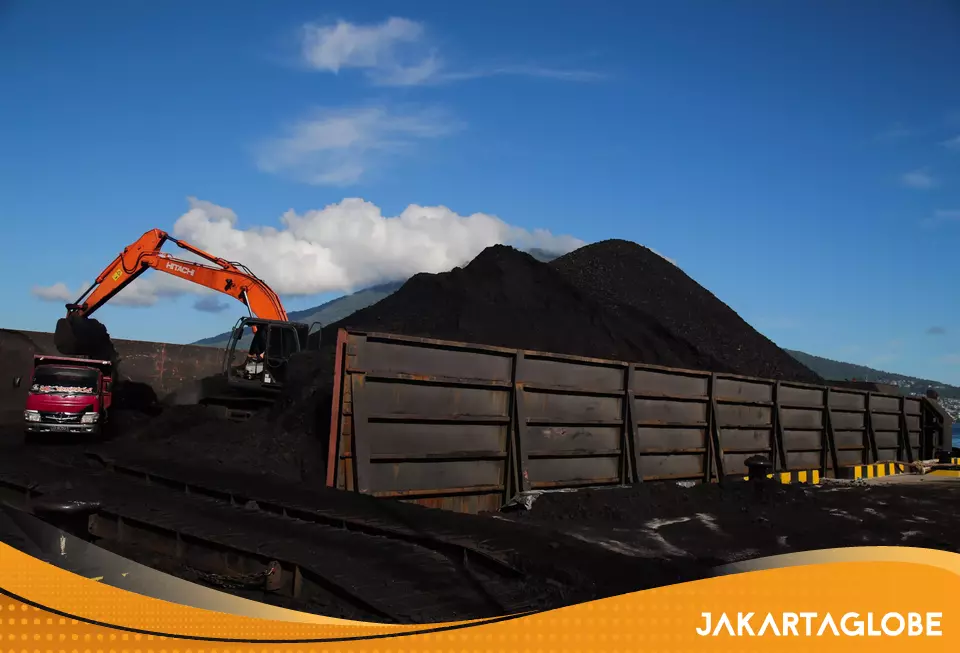
A backhoe unloads coal from a barge at Tidore Islands Port in North Maluku, Thursday, Jan. 4, 2024. (Antara Photo/Andri Saputra)


Antara

November 25, 2024 | 4:17 pm


Jakarta. Coal mining companies seeking to extend their contracts must establish a downstream industry ecosystem, Energy and Mineral Resources (ESDM) Minister Bahlil Lahadalia said on Monday.


"One of the main requirements for extending Coal Mining Work Agreements (PKP2B) is developing downstream industries," Bahlil told Antara news agency.


Downstream industrialization efforts include coal gasification, a process that converts coal into gas for use as fuel or raw material in the chemical industry. This initiative aims to reduce Indonesia’s reliance on liquefied petroleum gas (LPG) imports.


Bahlil said that the policy aligns with President Prabowo Subianto’s vision to promote the industrialization of natural resources, enhancing domestic value while driving economic growth beyond 8 percent.

"This initiative diversifies national income sources, reduces dependence on raw material exports, and lowers reliance on LPG imports, which remains significant," he explained.


Indonesia consumes 8 million tons of LPG annually, with 6 million tons sourced through imports. Domestic production is limited to just 1.6–1.8 million tons. "We need to boost the production of gases like C3 and C4, which are vital for LPG but are currently scarce in Indonesia," Bahlil added.


To support President Prabowo’s economic agenda, the government has outlined a downstream roadmap for 28 key commodities.


According to Bahlil, 90 percent of these commodities fall under the ESDM Ministry’s domain, requiring an estimated $618 billion in investments by 2040.


Additionally, the government will regulate mineral production allocation to ensure equity across the industry. This will involve adjustments in annual work and budget plans (RKAB) for mining companies.


The policy follows instances where domestic mining firms sought disproportionate production allocations. "For example, Indonesia produces 150 million tons of nickel, but one company requested 50–60 million tons, accounting for 30–40% of national production," Bahlil revealed.


During the APEC CEO Summit in Lima, Peru, on Nov. 14, President Prabowo invited global investors to participate in Indonesia’s $600 billion downstream development plan, aimed at moving up the production value chain for multiple commodities.


"Indonesia is open for business. I am committed to protecting all investments and creating favorable economic conditions," Prabowo said.


This extensive downstream initiative reflects Indonesia’s push for resource nationalism, which began under former President Joko Widodo’s administration. The nickel industry serves as a model, with unprocessed exports halted in favor of domestic processing. Similar policies are being considered for other commodities, including seaweed.


Diversifying Investment in Indonesia’s Mining Sector​

1732581551014.jpeg


Commentary by Gracelin Baskaran

Published July 11, 2024


Indonesia is the world’s largest nickel producer and produces significant quantities of copper, cobalt, tin, and gold. In 2023, mining contributed to 11.9 percent of Indonesia’s gross domestic product. Over the last 15 years, Indonesia has imposed—and at times loosened—bans on raw resource exports and local ownership requirements. While the raw nickel export ban has proved effective in stimulating Chinese investment to build a robust downstream industry, history shows that a one-size-fits-all form of resource nationalism has not always been beneficial to Indonesia’s mining sector.

Lessons from the 2014 Export Ban

In 2009, the Indonesian government enacted legislation that required mining companies to establish local processing facilities or face a ban on mineral exports in five years. This policy aimed to jump-start a domestic minerals processing industry by mandating that companies process their ores within Indonesia. However, both domestic and foreign firms were hesitant to develop refining capabilities for minerals for a variety of reasons: the significant amounts of upfront capital required to build these facilities, weak commercial rationale for these investments, low ore grades that reduced profit margins, and expectations that the government might relent. The ban on raw mineral exports was enforced in January 2014.

In 2013, Indonesia produced 55.7 million tons of bauxite, surpassing China to become the world’s second-biggest producer. Bauxite is used to create aluminum and other industrial products. However, attracting foreign investment for bauxite refining facilities proved challenging due to doubts about whether Indonesia had sufficient high-quality bauxite reserves to remain a competitive supplier in the long run. This uncertainty made it difficult to justify the expensive construction of refineries. As the ban approached, Chinese operators stockpiled bauxite and began exploring alternative sources. In 2014, after the ban went into effect, bauxite production dropped by 95 percent to 2.6 million tons. Bauxite export revenue dropped from $1.3 billion in 2013 to $46 million in 2014.

During this time, Chinese operators began financing new suppliers with high-quality bauxite reserves in the Republic of Guinea, West Africa. Between 2012 and 2016, Guinea’s bauxite production increased from 17.8 million tons to 30.8 million tons—a 73 percent increase. Although the Indonesian government relaxed the bauxite export ban in January 2017 to ease pressure on local mining firms and workers and to allow more time for downstream processing facilities to be built, Indonesia’s global position in the bauxite market had permanently shifted. In 2023, Indonesia produced 21 million tons, while Guinea produced 97 million tons, the second highest in the world (behind only Australia, which produced 98 million tons).

The copper subsector had a bifurcated response to the restrictions. The two largest copper mines in Indonesia—PT Freeport Indonesia’s Grasberg mine and PT Amman’s Batu Hijau mine—were developed by two U.S. companies and subsequently became the focus of lengthy disputes with the government over post-2009 downstream processing and foreign divestment requirements. In 2014, Newmont brought copper production at its Batu Hijau operation to a halt because stockpiling facilities were full as a result of the export ban, and the government subsequently imposed additional escalating export duties on copper concentrate in order to incentivize compliance with the new domestic processing requirements. Despite attempts to negotiate with the government a middle path to keep its investments commercially viable, and facing increased pressure to comply with the new foreign divestment requirements, Newmont ultimately divested and exited Indonesia two years later. By contrast, Freeport-McMoran opted to comply with both the domestic ownership requirements and downstream development policy. In June 2024, Freeport commissioned a new $3.7 billion copper smelter in East Java; it’s expected that all of Freeport’s copper concentrate from the Grasberg mine, the second-biggest copper mine in the world, accounting for 3.3 percent of global output, will be processed in Indonesia. Today, Indonesia is the seventh-largest copper producer. In 2023, 32.9 percent of exploration investment in Indonesia’s mining sector went to copper—the second highest, behind only gold. Whether this exploration spending will result in the actual development of mines—along with requisite downstream processing facilities and power facilities to run them—remains to be seen.

Nickel: Why the 2020 Export Ban Largely Accomplished Government Objectives

In 2019, the Indonesian government announced that it would ban nickel ore exports effective January 2020. While Indonesia’s bauxite reserves weren’t enough to mobilize downstream investments, its nickel reserves had two advantages: first, Indonesia has the largest nickel reserves in the world—according to the U.S. Geological Survey, it’s home to 42.3 percent of the world’s supply. It is also home to two of the world’s five largest reserves—Sorowako and Weda Bay. Sorowako, which is owned by PT Vale Indonesia, is the fourth-largest producing nickel mine in the world.

Second, the geological fundamentals of nickel are strong. Two of the key determinants of a mine’s profitability are the recovery rate and mill-head grade. The recovery rate is the percentage of nickel extracted from raw ore. The mill-head grade is the average concentration of nickel in mined ore that is fed into a mill for processing. Of the five largest mines in the world—Kola Division in Russia, Jinchuan in China, Sudbury Operations in Canada, Sorowako in Indonesia, and Polar Division in Russia—Sorowako has the highest recovery rate (88 percent compared to 25.4 percent to 85 percent for the other four mines) and the second-highest mill-head grade (1.68 percent), surpassed only by Kola Division (2.3 percent).

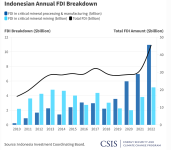
Given Indonesia’s large endowments of high-quality nickel, the move to ban raw nickel exports was not met by divestment like it was with bauxite nearly a decade earlier. In contrast, there was a sharp increase in foreign direct investment (FDI), which fueled a rapid expansion in its midstream smelting and refining capabilities for nickel. Between 2019, when the ban on raw nickel exports was announced, and 2022, investment in mineral processing and manufacturing increased from $3.56 billion to $10.96 billion—a 207.9 percent increase, driven overwhelmingly by Chinese financing. The FDI has been a driver in building Indonesia’s mid-to-downstream industry. Prior to 2014, Indonesia only had two nickel smelters operating; by 2020, there were 13 operational nickel smelters, and by July 2023, there were 43 nickel smelters operating, 28 under construction, and another 24 in the planning phase. The Ministry of Energy and Mineral Resources is considering limiting the construction of class II nickel smelters. This is a result of concerns about maintaining a balance between the supply and demand of nickel ore to ensure that existing smelters have an adequate supply for ongoing operations.

Remote Visualization
1732581711902.png

However, Chinese firms have dominated Indonesia’s nickel sector thanks to significant investments. In 2023, Indonesia was the single biggest recipient of China’s Belt and Road Initiative, receiving $7.3 billion in investment. Chinese companies have also constructed over 90 percent of Indonesia’s nickel smelters. Chinese firms operating in Indonesia include Tsingshan Holding Group, Zhejiang Huayou Cobalt, Ningbo Lygend (part of CATL Group), Wuling Motors, and China Molybdenum Company. Lower environmental standards and labor costs from some Chinese firms have contributed to lower production costs, undermining the competitiveness of other foreign firms. Cash costs for high-pressure acid leach operations, most of which are Chinese owned, are $3.17 per pound, compared to $6.56 per pound at Sorowako and $8.24 per pound at Weda Bay, both owned by PT Vale Indonesia Tbk, the subsidiary of Brazilian company Vale Base Metals. Nickel produced in Indonesia is also cheaper than what’s produced in Canada, Australia.

It's important to note that data on Chinese operations are difficult to obtain given their opaqueness. According to S&P Commodity Insights, which collects project- and company-level data in the mining sector, data are only available for 38 percent of the world’s nickel production, compared to 90 percent of global copper and lithium production.

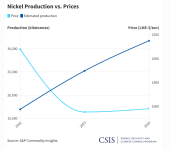
The rapid increase in Indonesian nickel production—from nearly 1,600 tons in 2022 to an expected 2,150 tons in 2024—has driven a global surplus that’s expected to last until 2028 and has contributed to a collapse in prices. Forecasting suggests that there will be an annual global surplus of 170,000 tons in 2024. This has driven nickel prices down—there was a 26.1 percent decline in three-month nickel prices in 2024 after a 44.7 percent decline in 2023. In 2023, it was the worst performer of any base metal on the London Stock Exchange. The price collapse has been cited as the primary reason for the closure or divestment of mines in Australia and New Caledonia on grounds of unprofitability, giving Indonesia a larger global share of production. As the figure below shows, Indonesia is rapidly ramping up production at a time when prices have been collapsing, suggesting they are running loss-making operations as they seek to dominate global production.

Remote Visualization
1732581751903.png


In some ways, the Indonesian government has worked to create a more favorable investment climate. The 2020 Indonesia Mining Law, officially known as Law No. 3 of 2020, amended the previous Mineral and Coal Mining Law No. 4 of 2009. The new law introduced significant changes aimed at improving the management and regulation of Indonesia's mining sector, while also capturing a larger share of benefits from the sector. Some key changes included giving the central government exclusive control over the issuance and management of mining permits, which aims to streamline permitting, minimize bureaucratic delays, and address investor concerns around corrupt practices at the subnational level, as well as allow for the transfer and merger of mining business permits with approval from the Ministry of Energy and Mineral Resources, which enables corporate restructuring and investment transactions.

A lingering downside of the legal framework for investors is the requirement that foreign-owned mining companies gradually divest 51 percent of their ownership to Indonesian entities, with priority offer given to the central government, regional governments, state-owned enterprises, and lastly to private Indonesian entities and/or via local listing on the Indonesian Stock Exchange. For foreign firms operating in Indonesia prior to 2009, this novel requirement presented them with two alternatives: (a) take the government to arbitration and forfeit access to these deposits in the future or (b) accept the ownership limitations under the condition that they retain full operational control. In light of local companies’ limited technical and professional capability to operate them effectively, this accommodation has become common for foreign miners still operating in Indonesia. For prospective foreign entrants, this divestment requirement presents a higher hurdle as they have far less bargaining power.

U.S.-Indonesia Commitment to Building Bilateral Minerals Diplomacy

Following a rollout of Chinese export restrictions on various commodities in 2023, the United States and its allies have accelerated efforts to reduce dependence on Chinese minerals and metals. Given that the United States has less than 1 percent of the world’s nickel, it’s imperative that it has a strong bilateral relationship with the world’s largest nickel producer. For Indonesia, diversifying away from China can help reduce vulnerability and create new market access.

In November 2023, President Joe Biden and Indonesian president Joko Widodo advanced bilateral ties to a Comprehensive Strategic Partnership. As a joint statement from both heads of state released by the White House noted,

President Biden and President Joko Widodo recognize Indonesia’s global leadership in the nickel, cobalt, and other critical minerals value chains, the United States’ significant critical mineral resources, and the Biden Administration’s commitment to developing the full U.S. critical mineral supply chain. They emphasize the opportunity to create high-standard clean energy supply chain jobs in both countries through a robust partnership between the United States and Indonesia that leads to mutually beneficial development of domestic resources in accordance with fair market-based rules.

President Elect Prabowo Subianto has committed to maintaining predecessor Widodo’s downstreaming policy. However, he has also noted that oversupply must be curbed to preserve prices and supply chain stability.

Recommendations for the Indonesian Government

  1. Require compliance with internationally recognized environmental, social, and governance (ESG) certification frameworks: Currently, ESG standards are largely voluntary. Many Chinese firms do not have shareholder pressure or requirements to maintain high ESG standards. In December 2023, a furnace explosion at a Chinese-owned nickel factory at the Morowali Industrial Park on Sulawesi Island killed 20 people, and there were not clear consequences for the firm. Western companies are held to high standards by shareholders. This undermines the competitiveness of their mining operations. Requiring compliance with standards provides grounds for external audits to measure company performance in areas affecting employees, communities, and the environment. Enforcing standards can level the playing field. A cross-pollination of knowledge between countries such as Australia and Canada and Indonesia can help them develop a regulatory framework.
  2. Strengthen environmental protection: Nickel mining concessions on Halmahera have driven at least 3,331 hectares of deforestation, leading to a loss of 2.04 metric tons of greenhouse gases stored in the forest. Additionally, the dumping of mine waste and oil in freshwater is creating significant consequences for fishing and drinking water, undermining food security and creating health problems. This should be a joint effort between the Ministry of Energy and Mineral Resources, Ministry of Environment and Forestry, and Ministry of Agrarian Affairs and Spatial Planning.
  3. Diversify investment partners: As Indonesia aims to further integrate into the international market, diversifying sources of investment is key. Indonesia has expressed interest in a critical minerals agreement (CMA) so it can access tax incentives from the Inflation Reduction Act. However, in the instance that a CMA is signed, any mines with over 25 percent Chinese ownership would be ineligible. As some Western countries seek to further limit Chinese firms from accessing any sort of incentives or benefits, Indonesia risks being excluded from future initiatives, undermining global integration.
  4. Pursue policy stability: While Indonesia has made progress with reducing barriers to investment, waves of resource nationalism undermine investor confidence. The 2014 ban on bauxite was loosened a few years later; in 2020, the ban on raw nickel exports went into effect; and in 2023, a bauxite ore export ban was implemented. When combined with domestic ownership requirements against a backdrop of limited domestic technical expertise, the policy instability can deter investment, particularly greenfield investment.

Recommendations for the U.S. Government

  1. Integrate internationally recognized ESG certification frameworks into trade agreements: As the United States and Indonesia pursue a potential trade agreement to incentivize investments, the United States should ensure that all commodities benefiting from taxpayer subsidies are responsibly sourced.
  2. Invest in clean energy: Indonesia’s nickel industry is particularly carbon intensive because it runs on coal-fired power. While the United States is a major contributor to Indonesia’s Just Energy Partnership (JET-P), which provides financial support to meet clean energy transition goals, the $20 billion package only covers the power sector. It excludes coal-fired power plants used in nickel smelting, which is a significant source of emissions. Additional investments in renewable energy can strengthen its soft power while supporting emissions reductions and a cleaner nickel industry.
  3. Leverage technical expertise: Through engagement with stakeholders, it has become clear that Western firms have better technical capabilities to explore deeper deposits compared to Chinese firms. The United States and its allies can develop a cooperation agreement with Indonesia to tap into deeper deposits in exchange for incentives, given the higher cost associated with deeper drilling.
Gracelin Baskaran is the director of the Project on Critical Minerals Security at the Center for Strategic and International Studies in Washington, D.C.


Commentary is produced by the Center for Strategic and International Studies (CSIS), a private, tax-exempt institution focusing on international public policy issues. Its research is nonpartisan and nonproprietary. CSIS does not take specific policy positions. Accordingly, all views, positions, and conclusions expressed in this publication should be understood to be solely those of the author(s).

© 2024 by the Center for Strategic and International Studies. All rights reserved.


Users who are viewing this thread

Back
Top