Indonesia's Manufacturing Sector

To view this content we will need your consent to set third party cookies.
For more detailed information, see our cookies page.


Daihatsu Strengthens Position in Indonesia’s Automotive Industry


Production Contribution


Indonesia’s car production remains robust at 1.2 million units annually despite a slight decline. Daihatsu contributes about 40% of this output, making it one of the main drivers of the national automotive sector. According to Industry Minister Agus Gumiwang Kartasasmita, Astra Daihatsu’s facilities alone account for nearly half of the country’s production.


Export Role


Daihatsu plays a critical role in Indonesia’s vehicle export performance. Around 22% of total national vehicle exports come from its factories, covering 60 international markets. This contribution aligns with government efforts to strengthen export-oriented industrial policy.


Milestone Achievement


Since its entry into Indonesia in 1978, Daihatsu has produced a cumulative 9 million vehicles. The latest milestone from 8 million to 9 million units was achieved in just two years, reflecting accelerated production capacity and market demand. President Director of PT Astra Daihatsu Motor (ADM), Yasushi Kyoda, expressed appreciation to customers, suppliers, and partners during the celebration of this achievement.


Factory Scale & Local Integration


Daihatsu has grown into one of Indonesia’s largest car manufacturers, with:


  • 10,000 employees
  • Annual capacity of 530,000 units
  • Production facilities in Sunter, Cibitung, and Karawang
  • Supply chain network of 1,700 suppliers and 700 local SMEs
  • 80% local content in its production

Conclusion


Daihatsu has not only established itself as a top contributor to national car production but also as a pillar of Indonesia’s automotive exports and industrial ecosystem. Its strong R&D presence, high local content, and wide supplier involvement highlight its strategic role in supporting Indonesia’s manufacturing and trade growth.

 
Inalum Targets FID for Mempawah Alumina Smelter Phase II in November 2025


Firda Dwi Muliawati, CNBC Indonesia
30 September 2025 17:33


1759234411270.jpeg
Photo: Inalum’s President Director, Melati Sarnita (CNBC Indonesia/Faisal Rahman)


📌 Key Points from Inalum’s Alumina & Smelter Expansion​


  1. Final Investment Decision (FID) Targets – Nov 2025
    • SGAR Phase II (Mempawah): +1 million tons alumina/year capacity.
    • New Aluminum Smelter (Mempawah): 600,000 tons/year capacity.
  2. Strategic Impact
    • By 2029, Inalum’s production capacity expected to quadruple compared to current levels.
    • Projects mark a potential turning point for the company’s business outlook.
  3. Cost Optimization Measures
    • Partnership with coal tar pitch producers to build facilities near smelters.
    • Goal: reduce logistics costs and secure raw material supply.
  4. Policy & Oversight
    • Updates delivered by President Director Melati Sarnita during DPR Commission VI hearing (Sept 30, 2025).
    • Aligned with government’s downstreaming and industrial expansion agenda.


Jakarta, CNBC Indonesia – PT Indonesia Asahan Aluminium (Inalum) is targeting the final investment decision (FID) for Phase II of the Smelter Grade Alumina Refinery (SGAR) project to be reached by November 2025.


Inalum President Director Melati Sarnita said the company is currently preparing the SGAR II project, which will increase capacity by 1 million tons of alumina per year. The FID for this project is expected to be finalized soon.


“From the SGAR I model, our own target is to continue by adding another 1 million tons in Phase II at Mempawah. The target is to reach the final investment decision by the end of this year, specifically November 2025,” Melati said during a hearing with Commission VI of the Indonesian House of Representatives (DPR RI), Tuesday (Sept 30, 2025).


In addition, Inalum is also preparing to begin construction of a new aluminum smelter in Mempawah with a capacity of 600,000 tons per year, with the FID targeted for the same month.


“The third project is the addition of a new aluminum smelter in Mempawah with a capacity of 600 KTPA. We have already conducted the technology selection process and also reviewed the competitiveness of the smelter itself,” she said.


According to Melati, with these two projects, by 2029 Inalum is expected to reach a turning point in its business, as production capacity could increase up to four times compared to current levels.


To support efficiency, Inalum is also pursuing cost optimization projects, including cooperation with coal tar pitch producers to build production facilities near the smelter area. This initiative is expected to reduce logistics costs and secure raw material supply.


These projects align with the government’s downstreaming agenda and are positioned to strengthen Indonesia’s industrial base in the aluminum sector.


Paper-Thin Expansion: Domestic Market Saves Indonesian Manufacturing, Exports Decline


mae, CNBC Indonesia
01 October 2025 08:15


1759290609898.png

Jakarta, CNBC Indonesia
– Indonesia’s manufacturing activity remained in expansion territory in September, though only by a very slim margin.


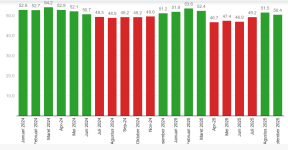
Purchasing Managers’ Index (PMI) data released by S&P Global today, Wednesday (1/10/2025), showed that Indonesia’s manufacturing PMI stood at 50.4 in September, down from 51.5 in August 2025. Despite the decline, PMI has stayed in expansion zone for two consecutive months.


Previously, PMI had contracted sharply at 46.7 in April, then 47.4 in May, continuing in June (46.9), and July (49.2).


PMI uses 50 as the threshold. A score above 50 indicates the business sector is in an expansion phase, while below 50 means contraction.


Indonesia’s Manufacturing PMI stayed in expansion territory, supported by an increase in new orders.


New orders rose for the second month in a row in September, although production volumes fell again following a solid expansion in August.


New orders continued to grow at the end of the third quarter, albeit at a slower pace than the previous month. This increase was largely attributed to stronger domestic market demand.


However, export sales declined again, marking the second fall in the past three months due to weaker overseas demand.


As a result, output fell again in September—the fifth drop in the past six months—though only slightly. This decline was linked to weaker customer purchasing power.


Nevertheless, there was a positive outlook towards year-end. Input purchases increased for the second consecutive month as firms prepared for a potential rise in demand in the final months of the year.


Companies also built up inventories of raw materials and finished goods to anticipate increased production and to guard against possible raw material price hikes.


Meanwhile, cost burdens rose to their highest level in seven months.


Despite the rise in domestic orders, average input lead times (delivery times) improved, recorded as the shortest in nearly two years thanks to direct shipments to manufacturers.


Companies Add Workers
Another positive development worth noting was an increase in workforce recruitment in September. This means firms have continued adding staff for the past two months. S&P even reported that the additional workforce was the highest since May 2025.


This hiring helped reduce outstanding workloads, although the pace of backlog reduction remained unchanged from the previous period.


Companies added staff in line with confidence that growth would continue in the coming months. In fact, optimism for the 12-month outlook strengthened compared with the previous survey period, reaching the highest level in four months.


Optimism regarding output over the next 12 months rose to the highest level in four months.


However, business costs swelled. Input cost inflation rose significantly, the highest since February, driven by broad-based increases in raw material prices.


Firms attempted to pass on part of these cost burdens to consumers, leading to a moderate rise in output prices.


"Indonesia’s manufacturing economy improved marginally in September, supported by continued gains in new order inflows. However, there was a renewed fall in production volumes as firms reported weaker client purchasing power," wrote Usamah Bhatti, Economist at S&P Global Market Intelligence, as cited on S&P’s website.

 
Toyota to Establish R&D Center in Indonesia


By Agung Kurniawan

10/10/2025, 07:22 WIB


1760078785840.jpeg
Engine production in third engine production plan in Karawang, West Java


JAKARTA, KOMPAS.com — Indonesia’s role in the global automotive industry continues to grow stronger. This was emphasized by Bob Azam, Vice President Director of PT Toyota Motor Manufacturing Indonesia (TMMIN), who stated that Indonesia is now transforming into one of Toyota’s main production bases.


Speaking at the event “3 Million Exports for Indonesia” held at Toyota’s Karawang plant in West Java on Thursday (October 9, 2025), Bob explained that this moment marks an important milestone in Indonesia’s shift within the global automotive landscape.


“We must turn Indonesia into a production base. We can serve markets abroad,” he said.

1760078885741.jpeg

Three Million Export Milestone


The achievement of three million exported vehicles serves as concrete proof of Indonesia’s significant role in Toyota’s global supply chain.


The exported models are not only destined for Southeast Asian markets but also reach the Middle East, Africa, and Latin America.


Bob highlighted that recognition of Indonesia’s performance comes directly from Toyota’s headquarters, as evidenced by the presence of Toyota Motor Corporation (TMC) President Koji Sato and Daihatsu President Masahiro Inoue at the event.


“That’s what makes us feel we’re receiving special attention from Toyota and Daihatsu principals. We’re sharing our development plans and also want to further develop Indonesia,” Bob said.

To view this content we will need your consent to set third party cookies.
For more detailed information, see our cookies page.


Newly built Proving ground Bekasi, West Java

From Assembly to Production Hub


Bob emphasized that Indonesia’s role is no longer limited to vehicle assembly, but has evolved into a major production center with a high level of local content.


“We’re not only assembling anymore — we’ve built local production, developed local components, started exporting, entered electrification, and next we’ll advance into R&D,” he explained.

The Potential for R&D in Indonesia


The move to strengthen research and development (R&D) in Indonesia is not without reason.


Bob believes Indonesia has enormous potential due to its youth-dominated demographics and strong government support for higher education.


“There’s a large number of university graduates, and the government’s focus through programs like LPDP is strong. So why not develop R&D here? Because that vision will grow in developing countries like Indonesia,” Bob said.

To view this content we will need your consent to set third party cookies.
For more detailed information, see our cookies page.


TMMIN Company Profile​


Furthermore, Indonesia is now gaining global attention in future automotive technology development.


Bob revealed that TMMIN has partnered with the Bandung Institute of Technology (ITB) to conduct research on future fuels, including bioethanol, hydrogen, electric fuel, and synthetic fuel.


“The global trend will look toward Indonesia. So why not build R&D here? One of our initiatives is collaborating with ITB to research future fuels,” Bob concluded.

With this vision, Indonesia is expected to become not only Toyota’s production hub, but also an integral part of global automotive technology development.


Collaboration between industry, government, and academia will be key to preparing Indonesia for the era of electrification and clean energy transition.

 
Last edited:
LiuGong’s Strategic Investment in Indonesia: Building a Manufacturing Hub


CNN Indonesia
Rabu, 08 Okt 2025 19:27 WIB


1760085061732.jpeg


Jakarta, CNN Indonesia
Chinese heavy equipment manufacturer LiuGong Machinery has reaffirmed its long-term commitment to strengthening its investment in Indonesia.


This initiative is supported by LiuGong’s three local entities: PT LiuGong Machinery Indonesia (LMI), PT LiuGong Machinery Manufacturing Indonesia (LMMI), and PT LiuGong Finance Indonesia.


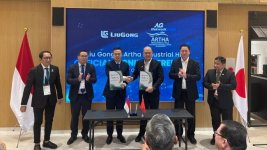
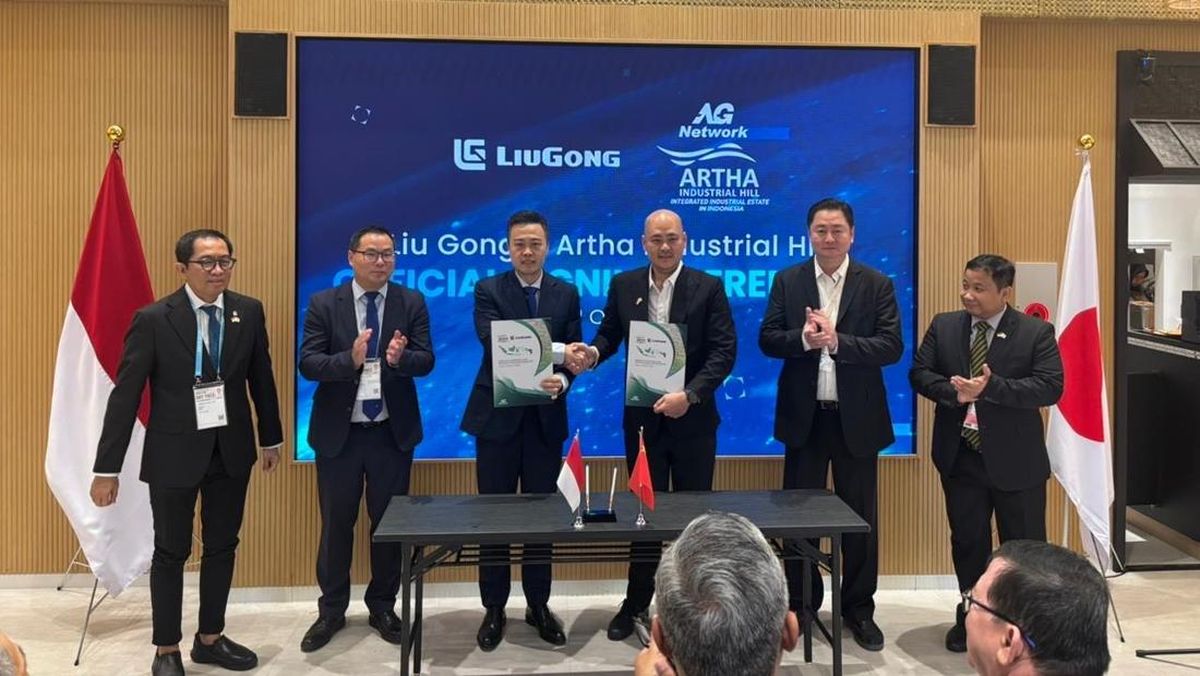
As part of this commitment, PT LiuGong Machinery Manufacturing Indonesia signed a memorandum of understanding (MoU) for the planned investment to build a heavy equipment manufacturing facility at the Artha Industrial Hill Industrial Estate in West Karawang.


The new plant is projected to become one of Indonesia’s largest and most advanced heavy equipment manufacturing facilities.


The MoU signing took place during the Rolling Exhibition and Business Forum at the Indonesia Pavilion during the World Expo Osaka 2025, held on October 6–7.


The event was witnessed by Vice Minister of Industry Faisol Riza and Director of the Indonesia Pavilion Mada Dahana. The Rolling Exhibition itself was organized by the Ministry of Industry with support from PT Sarinah and the Artha Graha Peduli Foundation.


To view this content we will need your consent to set third party cookies.
For more detailed information, see our cookies page.


Strategic Investment and Vision for Sustainable Industry


Indonesia’s participation in the World Expo—held once every five years—serves as a strategic platform to strengthen the nation’s image globally while expanding cooperation in investment, trade, tourism, and cultural relations.


LiuGong’s investment marks a new chapter in developing Indonesia’s heavy equipment manufacturing ecosystem, supporting the government’s vision for technological self-reliance, domestic competitiveness, and increased local content (TKDN), while advancing the transition toward sustainable industry in line with the “Indonesia Emas 2045” vision.


With a total investment of US$317 million, LiuGong will build a modern manufacturing facility in the Artha Industrial Hill area of Karawang.


The industrial park is designed as an integrated, pioneering industrial zone that applies the “Downstreaming+” (Hilirisasi+) concept, as highlighted in a panel discussion titled “Indonesia’s Role in the Global Sustainable Manufacturing Industry.”


Previously, the same area attracted major investments, including a CATL electric vehicle battery plant and other supporting component manufacturers.


The presence of LiuGong’s battery-powered heavy equipment production further reinforces the government’s downstreaming vision, showing that “Hilirisasi+” can deliver greater economic multiplier effects when implemented strategically.


Electric Heavy Equipment and Advanced Technologies


According to official sources, one of the key products planned for mass production at LiuGong’s Karawang facility will be Indonesia’s first electric-powered heavy equipment.


Artha Industrial Hill supports this investment through its 1ADAPT Program, which provides licensing facilitation, market research, and investment support services to accelerate the plant’s construction and operations, in collaboration with central and regional governments as well as local communities.


The facility is designed with a production capacity of up to 5,000 units per year by 2030, manufacturing excavators, electric wheel loaders, and other low-emission heavy machinery.


These products will not only serve the domestic market but also be exported to Southeast Asia, Australia, and North America, contributing an estimated US$40 million annually in foreign exchange.


This goal is supported by LiuGong’s strong commitment to establishing a high-tech production base in Indonesia, integrated with Industry 4.0 principles.


The plant will feature robotic systems, automated guided vehicles (AGVs), a digital manufacturing execution system (MES), and a dedicated research and development (R&D) center for electric construction vehicles.


Technology Transfer and Human Capital Development


In addition to developing production facilities, LiuGong is committed to increasing local content (TKDN) through strategic partnerships with local suppliers.


Within the first five years, the company targets to obtain formal TKDN certification and stimulate the growth of Indonesia’s heavy equipment supply chain.


As part of its technology transfer efforts, LiuGong will launch a training and empowerment program aimed at training up to 500 local technicians each year.


This program will be integrated with vocational education, scholarships, and joint research projects with Indonesian universities, including Gadjah Mada University (UGM), focusing on electric vehicle battery technology development.


Together with Artha Industrial Hill, this project is expected to transform Indonesia into a world-class hub for heavy equipment manufacturing and innovation.

 
Mazda to Inaugurate New Assembly Plant in West Java Next Year

By Nabil Zhafiri

Sunday, 12 Oct 2025, 06:05 WIB
1760236299507.png


MOTORESTO.ID, JAKARTA

Mazda is strengthening its presence in Indonesia’s automotive market. After years of relying on imported vehicles, the construction of Mazda’s new assembly plant in Indonesia is reportedly nearing completion.


The update was confirmed directly by Ricky Thio, Chief Operating Officer of PT Eurokars Motor Indonesia (EMI), during a media interview.


“I can say it’s in West Java. It will be inaugurated next year,” Ricky said briefly, confirming Mazda’s major plan to expand its local production capacity (October 6, 2025).

He also hinted that an official announcement would be made soon.


“We’ll make it official very soon — next year, just a little longer,” he added.

With the establishment of the assembly plant in West Java, Mazda will have the opportunity to reduce the selling prices of several models without compromising the quality or design that defines the Hiroshima-based brand.


Mazda has long been recognized as a premium Japanese automaker, known for its elegant design and driving comfort. However, local production could make Mazda more competitive in Indonesia’s increasingly crowded mid-to-upper SUV segment.


Ricky explained that local production is part of Mazda’s long-term strategy to adapt to market dynamics and the evolving needs of Indonesian consumers.


Heading Toward Electrification — Focus on PHEVs?


In addition to the new plant, Mazda is preparing to launch its electrified vehicle lineup starting next year. One of the most anticipated models is an SUV equipped with Plug-in Hybrid Electric Vehicle (PHEV) technology.


“Next year we’ll introduce a PHEV SUV. It suits Indonesians — you get both gasoline and EV options, but it does require investment for home charging,” Ricky explained.

He added that hybrid and plug-in hybrid technologies remain the most practical solutions for Indonesian consumers at this stage.


“Hybrid or plug-in hybrid models are probably the best choices for now. Full EVs are just one additional option — the key is that the cars must retain Mazda’s signature character,” he concluded.

 
PalmCo Partners with Agrinas to Strengthen Minyakita Cooking Oil Production


By Grahanusa Mediatama
6 Oktober 2025


KONTAN.CO.ID – JAKARTA


PT Perkebunan Nusantara IV (PTPN IV) PalmCo is set to boost the production of Minyakita, the government-branded affordable cooking oil, through a partnership with PT Agrinas Palma Nusantara (Persero). This collaboration aims to expand the production capacity of high-quality and affordable cooking oil for the public.


PalmCo President Director Jatmiko K. Santosa stated that the cooperation with Agrinas represents a strategic step to accelerate the realization of the Minyakita program while strengthening national food security, particularly in the cooking oil sector.


“PalmCo has the capacity and infrastructure to support Minyakita production. This collaboration will help the government achieve its target of ensuring sufficient supply of affordable cooking oil,” Jatmiko said in a statement on Sunday (October 5).

As Indonesia’s largest producer of crude palm oil (CPO), PalmCo is accelerating its transformation toward palm oil downstreaming. The company is no longer focusing solely on raw material production but is expanding into downstream sectors such as refining, cooking oil production, and biodiesel.


One of PalmCo’s main pillars supporting this initiative is the refinery facility operated by its subsidiary, PT Industri Nabati Lestari (INL), located within the Sei Mangkei Special Economic Zone (SEZ) in North Sumatra. The facility has a production capacity of up to 600,000 tons per year and is being further developed to produce a range of palm oil derivatives, including RBD Olein, Stearin, and PFAD.


“The availability of raw materials from PTPN and additional supply from Agrinas ensures the sustainability of Minyakita production. Our focus is not only on affordability but also on maintaining product quality in line with national standards,” Jatmiko explained.

PalmCo and Agrinas are currently assessing technical and business aspects to ensure the synergy operates effectively. Beyond increasing production capacity, PalmCo is also preparing reskilling and upskilling programs for employees to strengthen its human resources in downstream operations.


“This transformation will happen gradually. We want PalmCo to become a leading player in palm oil downstreaming, producing value-added products rather than just raw CPO,” Jatmiko added.

In addition to cooking oil, PalmCo is also exploring renewable energy opportunities, including support for the government’s B50 biodiesel mandate, as part of Indonesia’s efforts to reduce reliance on fossil fuels.


With a wide network of business units across the country, PalmCo has the potential to expand Minyakita distribution to remote regions. However, the distribution scheme is still being studied together with Agrinas.


Agrinas’ target to supply 30% of Indonesia’s total cooking oil demand poses a major challenge requiring strong synergy, but Jatmiko remains confident that PalmCo can play a key role in supporting the President’s downstreaming agenda.


“We want to ensure that PalmCo is not just part of the palm oil supply chain but also a driving force behind downstream development, advancing national food and energy independence,” he concluded.

 
PalmCo Partners with Agrinas to Strengthen Minyakita Cooking Oil Production


By Grahanusa Mediatama
6 Oktober 2025


KONTAN.CO.ID – JAKARTA


PT Perkebunan Nusantara IV (PTPN IV) PalmCo is set to boost the production of Minyakita, the government-branded affordable cooking oil, through a partnership with PT Agrinas Palma Nusantara (Persero). This collaboration aims to expand the production capacity of high-quality and affordable cooking oil for the public.


PalmCo President Director Jatmiko K. Santosa stated that the cooperation with Agrinas represents a strategic step to accelerate the realization of the Minyakita program while strengthening national food security, particularly in the cooking oil sector.


As Indonesia’s largest producer of crude palm oil (CPO), PalmCo is accelerating its transformation toward palm oil downstreaming. The company is no longer focusing solely on raw material production but is expanding into downstream sectors such as refining, cooking oil production, and biodiesel.


One of PalmCo’s main pillars supporting this initiative is the refinery facility operated by its subsidiary, PT Industri Nabati Lestari (INL), located within the Sei Mangkei Special Economic Zone (SEZ) in North Sumatra. The facility has a production capacity of up to 600,000 tons per year and is being further developed to produce a range of palm oil derivatives, including RBD Olein, Stearin, and PFAD.


PalmCo and Agrinas are currently assessing technical and business aspects to ensure the synergy operates effectively. Beyond increasing production capacity, PalmCo is also preparing reskilling and upskilling programs for employees to strengthen its human resources in downstream operations.


In addition to cooking oil, PalmCo is also exploring renewable energy opportunities, including support for the government’s B50 biodiesel mandate, as part of Indonesia’s efforts to reduce reliance on fossil fuels.


With a wide network of business units across the country, PalmCo has the potential to expand Minyakita distribution to remote regions. However, the distribution scheme is still being studied together with Agrinas.


Agrinas’ target to supply 30% of Indonesia’s total cooking oil demand poses a major challenge requiring strong synergy, but Jatmiko remains confident that PalmCo can play a key role in supporting the President’s downstreaming agenda.


Here are the current plantation sizes and future expansion targets for both companies:

Both owned by Danantara Superholding

CompanyCurrent plantation areaFuture expansion / target
Agrinas Palma Nusantara≈ 1,507,591.9 hectaresThe area is being revitalized, but I did not find a publicly stated higher target above 1.5M ha.
PalmCo / PTPN IV~ 586,000 hectares Target to expand to ~ 708,000 hectares in the next 10 years
 
Here are the current plantation sizes and future expansion targets for both companies:

Both owned by Danantara Superholding

CompanyCurrent plantation areaFuture expansion / target
Agrinas Palma Nusantara≈ 1,507,591.9 hectaresThe area is being revitalized, but I did not find a publicly stated higher target above 1.5M ha.
PalmCo / PTPN IV~ 586,000 hectaresTarget to expand to ~ 708,000 hectares in the next 10 years

Agrinas will likely become mammoth with 3 million hectares of palm oil. Even with half million palm oil plantation, PalmCo already become largest palm oil plantation in the world


-------------

Indonesia takes another step towards B50 biodiesel​


By Reuters
October 7, 2025
11:25 AM GMT+7
Updated October 7, 2025


JAKARTA, Oct 7 (Reuters) - Indonesia took another step towards launching biodiesel containing 50% palm-oil based biofuel (B50) by concluding laboratory tests, an energy ministry official said on Tuesday, as the country aims for implementation next year.

Palm-oil based biodiesel is currently mandated at 40% blend (B40) but Indonesia wants to increase the level to reduce its reliance on imports of fossil fuels.

The laboratory testing involved running an engine using the B50 fuel and was concluded in August. Officials will now carry out road tests, the energy ministry's bioenergy director, Edi Wibowo, told Reuters.

"Based on the test results we will move forward to launch road tests and testing on non-automotive machineries that run on diesel," he said.
The timing of the road test was still to be decided, he said.

Indonesia aims to make B50 mandatory in 2026, but it was unlikely to happen in January, a senior energy ministry official said in August.

Adopting B50 would require 20.1 million kilolitres of palm-oil based biofuel a year for mixing with regular petroleum diesel, compared to 15.6 million KL with B40, energy ministry data shows.


Reporting by Bernadette Christina Munthe; Writing by Fransiska Nangoy; Editing by Neil Fullick

 
Some of Pindad Excavator Variants

To view this content we will need your consent to set third party cookies.
For more detailed information, see our cookies page.


To view this content we will need your consent to set third party cookies.
For more detailed information, see our cookies page.
 
Is This the Future Indonesian National Car That President Prabowo Says Will Arrive in Three Years?


By Luthfi Anshori | 3–4 minutes


To view this content we will need your consent to set third party cookies.
For more detailed information, see our cookies page.


Jakarta —
President Prabowo Subianto affirmed that within the next three years, Indonesia will have its own domestically produced car. Could this be the national car project he was referring to?


Prabowo said that all preparations have been made to create a car fully designed and built by Indonesians — including funding and factory development. He delivered the statement during a Plenary Cabinet Meeting at the State Palace, Monday (October 20, 2025).


“This is not yet an achievement, but we have begun the groundwork. In three years, we will have a car made in Indonesia. I have already allocated the budget and prepared land for the factories. The work is already underway,”
said Prabowo, as quoted from the Presidential Secretariat’s YouTube Channel.


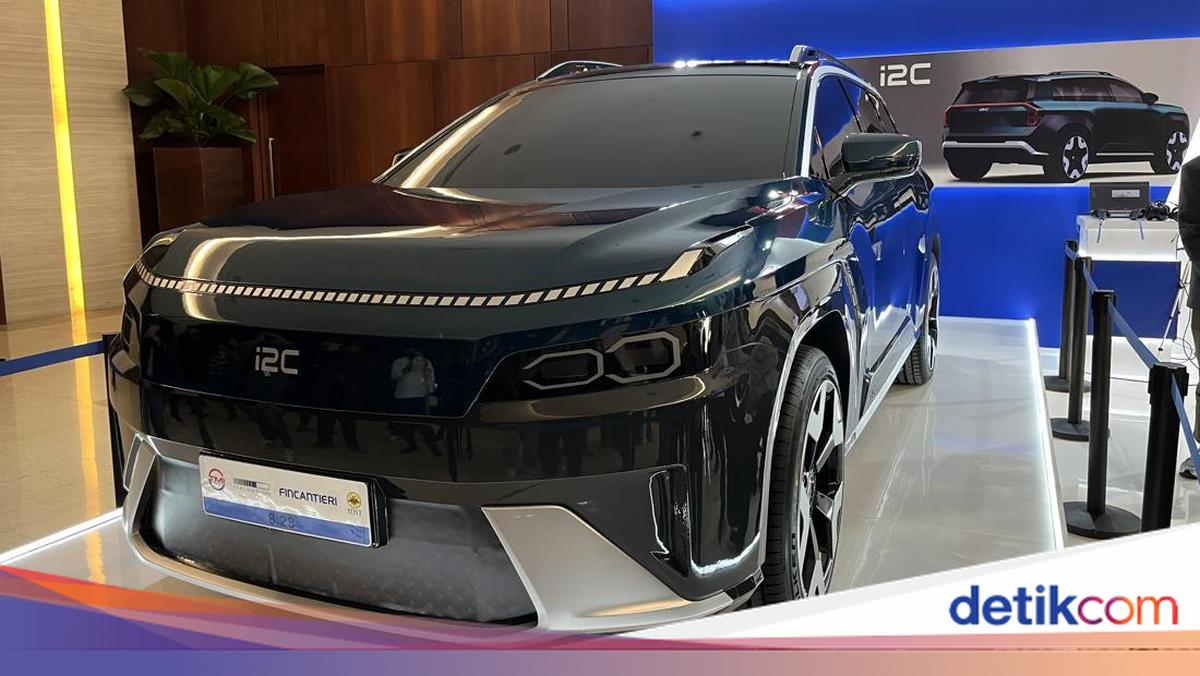
The Indigenous Indonesian Car (i2C)


Earlier, at the GIIAS 2025 automotive exhibition held on July 25, 2025, PT Teknologi Militer Indonesia (TMI) unveiled a concept electric car designed and initiated by Indonesia’s top engineering talents. The model reportedly has Prabowo’s approval and aligns with his vision for national industrial self-reliance.


The concept car, named i2C (Indigenous Indonesian Car), was developed by PT TMI with design guidance from Italdesign, a renowned Italian automotive design firm.


“This collaboration is an important step for us to demonstrate Indonesia’s potential in automotive engineering — and to translate President Prabowo’s vision of national independence into a tangible creation,”
PT TMI said in its official statement.

At GIIAS 2025, the i2C was presented as a 1:1 clay model. According to Budi Wuraskito, TMI’s Design Advisor, transforming a design sketch into a mass-produced vehicle requires building 20 to 30 prototypes for various tests.


“We’ll conduct side, front, and rear crash tests — multiple times — until we obtain our own genuine intellectual property rights (IP),”
Budi told reporters at GIIAS 2025, ICE-BSD City (July 23, 2025).

He added that the company aims to begin serial production within two and a half years, estimating late 2027 or early 2028 for mass production.


Next Steps


PT TMI plans to unveil a fully functional version of the i2C electric car at next year’s automotive event, after completing design refinements and further evaluations.


The vehicle’s presence at GIIAS 2025 served to gather public feedback and highlight TMI’s commitment to independence, innovation, and creativity in advancing Indonesia’s domestic automotive industry.


Indonesia to build 7 new fertiliser factories worth Rp50 trillion​

October 22, 2025 13:30 GMT+700

1761382139470.webp
Illustration -- A fertiliser factory in Karawang, West Java. /ANTARA/HO-Pupuk Kujang/nbl.


Jakarta (ANTARA) - The Indonesian government plans to establish seven new modern fertilizer plants over the next five years to strengthen national fertilizer self-sufficiency, with five of them targeted for completion by 2029.

“The development budget is around Rp50 trillion (US$3 billion),” Agriculture Minister Andi Amran Sulaiman said during a press conference at the Agriculture Ministry office here on Wednesday.

He noted that the new plants will be energy-efficient, helping reduce production costs. While older factories allocate up to 43 percent of their operational expenses for gas, the new facilities are expected to spend only around 22–23 percent.

According to Sulaiman, the construction budget will be sourced from efficiency programs implemented by the ministry. Adjustments to subsidized fertilizer management, which emphasize upstream aspects, have also contributed to funding the new plants.

The minister added that comprehensive reforms have enabled the government to save Rp10 trillion (US$601 million) and cut fertilizer production costs by 26 percent.

Fertilizer management programs by the ministry have also helped state-owned fertilizer producer PT Pupuk Indonesia increase its profit, which is projected to reach Rp2.5 trillion (US$150.3 million) in 2026, with total revenue estimated at Rp7.5 trillion (US$451 million), Sulaiman said.

He further stated that the establishment of new plants will create opportunities to gradually increase subsidized fertilizer production to 700,000 tons by 2029.

The minister emphasized that the policy reflects the government’s commitment to supporting farmers by ensuring adequate fertilizer supply and affordability to maintain national food security.

During a limited Cabinet meeting at his Jakarta residence on October 16, President Prabowo Subianto instructed Minister Sulaiman to maximize the potential of state-owned fertilizer plants, Minister of State Secretariat Prasetyo Hadi said.

“The President instructed Minister Sulaiman to explore various schemes and innovations to guarantee fertilizer availability and, if possible, revitalize existing fertilizer factories,” Hadi stated.

He underscored that President Prabowo views sufficient access to affordable and quality fertilizers as essential to strengthening national food resilience.


Textile Sector Defies ‘Sunset Industry’ Label, Grows 5.39% Under Prabowo Administration: Minister​


Herman

October 26, 2025 | 5:53 pm

1761543885998.webp
Workers sew clothes at a factory in Jakarta, Thursday, Oct. 23, 2025. (Antara Photo/Ika Maryani)


Jakarta. Indonesia’s textile and textile products (TPT) industry remains strong, efficient, and globally competitive -- far from being a “sunset industry,” Industry Minister Agus Gumiwang Kartasasmita said on Sunday.


Since President Prabowo Subianto took office in October last year, the sector has recorded 5.39 percent growth through the third quarter of 2025, contributing nearly 1 percent to the nation’s GDP, Agus said.


He noted that Indonesia now ranks among the world’s top five most efficient textile producers, outperforming several major manufacturing economies.


“In yarn spinning, Indonesia’s production cost is around $2.71 per kilogram -- more efficient than India, China, and Türkiye, and on par with Vietnam and Bangladesh,” he said.

“In weaving, the cost stands at $8.84 per meter, among the lowest globally, while fabric finishing costs just $1.16 per meter, lower than most regional competitors.”


Agus said these figures demonstrate Indonesia’s robust global competitiveness and form a solid foundation for future growth.


He claimed that in an era of climate challenges, geopolitical shifts, digital disruption, and supply chain restructuring, Indonesia’s textile industry still has vast room to expand.


Read More:​

US Tariff Cut Gives Indonesia Edge Over Vietnam, Bangladesh in Textile Exports


According to him, the combination of abundant resources, adaptive industrial policies, and skilled human capital positions Indonesia as a trusted global textile partner for sustainable and innovative growth.

According to him, the combination of abundant resources, adaptive industrial policies, and skilled human capital positions Indonesia as a trusted global textile partner for sustainable and innovative growth.


“Indonesia is ready to become a center of innovation, manufacturing, and sustainable growth for the global textile industry,” Agus emphasized.


The government, he added, continues to introduce reforms to simplify investment procedures and strengthen industrial confidence. These include streamlining the Online Single Submission (OSS) licensing system for faster, more transparent, and predictable approvals.


The Industry Ministry has also launched a machinery and equipment restructuring program to replace outdated production tools with energy-efficient, modern technology.


Other initiatives include easier access to credit for labor-intensive industries, priority access to capital goods imports, and fiscal incentives such as tax reductions for companies investing in research and development, Agus said.


Astra Group’s Dividend Wave Signals Confidence in Indonesia’s Recovery​


Muawwan Daelami

October 26, 2025 | 7:19 pm

1761544515861.jpeg

Jakarta. A wave of higher interim dividends across major subsidiaries of Indonesia’s Astra Group underscores growing corporate confidence in the country’s post-pandemic economic recovery. The payouts, led by Astra Agro Lestari, Astra Graphia, and Astra Otoparts, reflect robust first-half earnings and strong balance sheets across the diversified conglomerate’s portfolio.


The dividends were announced by United Tractors (UNTR), Astra Agro Lestari (AALI), Astra Graphia (ASGR), and Astra Otoparts (AUTO) -- all under Astra International (ASII), which itself will also distribute an interim dividend this month.


Except for mining arm United Tractors, most subsidiaries increased their interim dividends compared with last year’s distributions.


Palm oil producer Astra Agro Lestari raised its interim dividend to Rp 124 per share, up 47.6 percent from Rp 84 last year, payable on October 24. The company’s net profit surged 40 percent in the first half of 2025 to Rp 702 billion ($42 million) from Rp 501 billion a year earlier, lifting its earnings per share (EPS) from Rp 260 to Rp 364.

Astra Graphia, the document solutions and digital services company, also strengthened its dividend distribution, paying Rp 30 per share, up 57.8 percent year-on-year from Rp 19. The firm’s net revenue jumped 18.5 percent to Rp 1.5 trillion, while net profit attributable to shareholders rose from Rp 82.1 billion to Rp 106 billion, boosting EPS from Rp 60 to Rp 78.

To view this content we will need your consent to set third party cookies.
For more detailed information, see our cookies page.


Auto parts manufacturer Astra Otoparts declared a modest dividend increase to Rp 59 per share, up 3.5 percent from last year’s Rp 57.


By contrast, United Tractors reduced its interim payout by 14.9 percent to Rp 567 per share, down from Rp 667, following a 14.7 percent decline in first-half net profit and weaker coal sales. The miner’s EPS fell to Rp 2,239 from Rp 2,625 as coal revenue dropped 16.8 percent, from Rp 5.6 trillion to Rp 4.6 trillion.


Meanwhile, parent company Astra International will maintain its interim dividend at Rp 98 per share, or a total of Rp 3.96 trillion, payable on October 31. The decision, approved by the board on September 11, extends Astra’s consistency since 2023 in keeping interim payouts at that level.


In the first half of 2025, Astra International posted net revenue of Rp 162.8 trillion, up slightly from Rp 159.9 trillion a year earlier, while net profit edged down from Rp 15.8 trillion to Rp 15.5 trillion, trimming EPS to Rp 383 from Rp 392.


National Barometer
According to Kiswoyo Adi Joe, Head of Investment at Nawasena Abhipraya Investama, Astra’s dividend momentum underscores the group’s strategic strength and its role as a barometer of Indonesia’s broader economy.


“If Astra’s revenue and net profit are rising, it usually reflects stronger economic growth for Indonesia as a whole,” he told Investor Daily.

Astra’s automotive division contributes more than half of its consolidated revenue. The group’s car sales have climbed for three consecutive months, maintaining a market share between 50 percent and 53 percent. In September, Astra sold 33,535 units, its highest monthly volume since June 2025.


Kiswoyo added that Astra’s solid cash reserves and professional management provide ample capacity for business expansion while maintaining shareholder returns.


“With such strong fundamentals, dividend distribution will remain a management priority,” he said, projecting Astra’s share price could climb to Rp 7,500-8,000 from the current Rp 6,600.


LG Continues US$1.7 Billion Investment in Indonesia’s EV Battery Plant


By Zetta Hannany | 2–3 minutes
11 Juni 2025 pukul 14.47


To view this content we will need your consent to set third party cookies.
For more detailed information, see our cookies page.

LG EV Battery factory in Karawang, West Java


JAKARTA —
Despite withdrawing from Indonesia’s electric vehicle (EV) manufacturing project, LG Energy Solution (LGES) confirmed it will still inject US$1.7 billion into its EV battery plant in the country.


The announcement was made directly by Koo Kwang Mo, President of LG Group, during his visit to the HLI Green Power (HLI) EV battery production facility in Karawang, West Java, on Monday (June 9).


HLI Green Power is a joint venture between LGES and Hyundai Motor Group, established in 2021. The company began mass production of EV batteries in 2023 at its 320,000 m² manufacturing complex.


With this additional investment, HLI’s production capacity is expected to increase. According to The Korea Times, the plant currently has a production capacity of 10 gigawatts (GW) — enough to power about 150,000 electric vehicles.


This investment comes after the LGES-led consortium reportedly cancelled its planned US$8 billion EV project in Indonesia in April 2025, a project that has since been taken over by China’s Huayou Cobalt.


The withdrawal had fueled speculation that LG Group was losing confidence in the global and Indonesian EV battery industry due to sluggish demand.


However, an LG Corp official dismissed those claims:


“Despite the EV market downturn lasting longer than expected and intensifying competition from Chinese rivals, Mr. Koo expressed his intention to make solid preparations for the recovery of the EV industry,”
the official told The Korea Times.

Responding to the fierce competition with China for dominance in Southeast Asia’s EV market, Koo emphasized the need for long-term strategy and resilience.


“While it’s important to respond to tight competition, I also urge you to focus on crafting strategies that will help us endure and gain an advantage over the next five years,”
Koo said in LG’s official statement.


Users who are viewing this thread

Pakistan Defence Latest

Back
Top