‘The people stood up’: how war turned Iran towards ‘everyday nationalism’
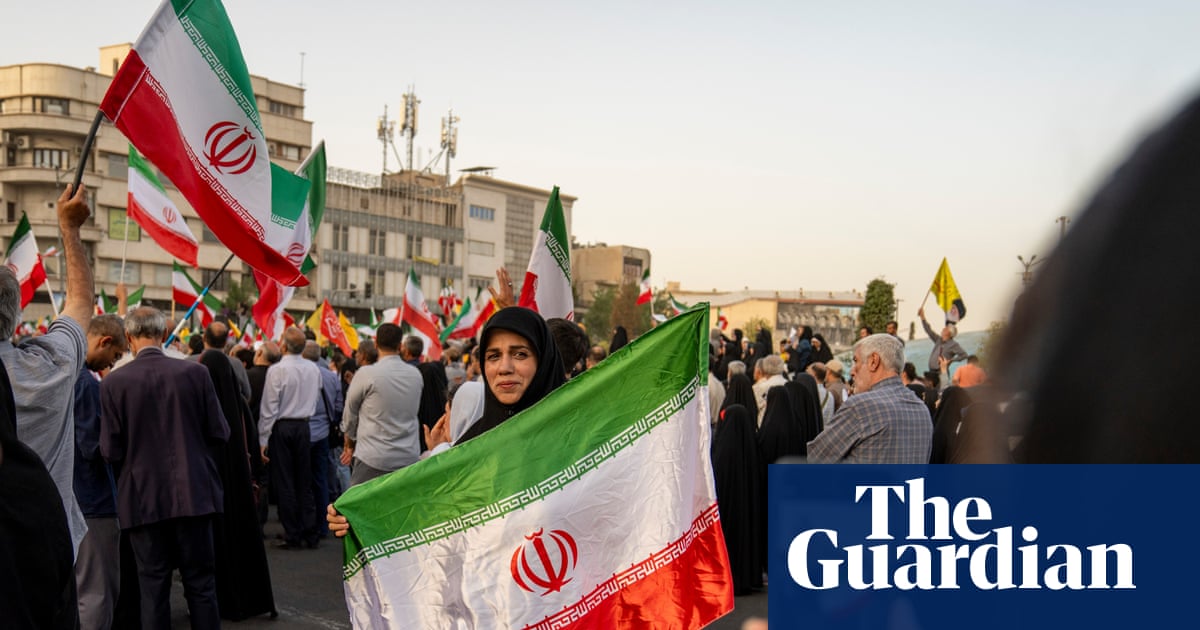
More than 1,000 Iranians died in the Israeli attack, and some professional sociologists – a broad term in Iran – argue a new nationalism has emerged into public view.
The cultural sociologist and Soas alumnus Nematollah Fazeli claims a deep change may be afoot. What he describes as the
emergence of an “everyday nationalism” is reflected in a return to
epic poetry, popular podcasts about Iranian history, and thousands of ordinary conversations across the country about Iranian identity.
Fazeli explained: “Before the war, we loved Iran, but it was not a very conscious feeling. After the war, it became a
central point of our discourse. Everywhere in cities and villages you observe that people are talking about their nation, their identity, their geography and their history. We just want to remind one another
we are Iranian. The sense of oppression of Iran, our nation, our land, our culture, our feelings, by a world system and by foreigners was very important. It led to a desire to be together and to express the commonality of being Iranian.”
But he adds: “The Islamic Republic ideology is not a nationalist ideology. The official ideology of the revolution is not keen or interested to represent ancient Iranian culture, and that culture cannot be seen in official education, TV or radio. The people’s reaction to the war was a shock and a kind of negative cohesion.
Despite their frustration with the government, the people stood up against foreign aggression; not to defend the Islamic Republic, but to defend Iran. We believe we have been an organic nation for more than 5,000 years.”
Mohammad Faze, a teacher, described how
his students had put the Iranian flag on their social media profiles. Others point to the flourishing of podcasts about Iranian history and the declarations of love for Iran by popular singers including previous regime critics such as Homayoun Shajarian.
The experience of war, even short wars, can change nations. Aliakbar Velayati, an adviser to Iran’s supreme leader, argued: “
the people have proven themselves, and now it is the turn of the officials. Outdated methods will no longer suffice for a society after the war.”
Speaking inside the courtyard of the Hemmat Tajrish mosque by the graves of some of those killed in the 12-day war, Mohammad Faze admits Iranian society has been living on the edge, but insists: “My nature is not to be 100% certain about anything, but
if this war comes again we will be ready.
We have learned from the 12-day war, and we are prepared. It is deep in the Iranian heart
we will not surrender, and we will not be humiliated.”
Israel’s attacks helped forge a new sense of patriotism and raised expectations for a future of reformist politics

www.theguardian.com




 Makkah Defence Alliance: Turkey, Saudi Arabia, and Pakistan, news & updates (43 Viewers)