Navigation
Install the app
How to install the app on iOS
Follow along with the video below to see how to install our site as a web app on your home screen.
Note: This feature may not be available in some browsers.
More options
Style variation
You are using an out of date browser. It may not display this or other websites correctly.
You should upgrade or use an alternative browser.
You should upgrade or use an alternative browser.
Iran - Israel/US War: Israel-US declare war on Iran, Iran responds
- Thread starter Khorasan Black Flags
- Start date
More options
Who Replied?


RocketLaw
Trusted Member

...(continue)... The ship went dark, loaded during the blockade, slipped past surveillance and was tracked near Sri Lanka before passing through Indonesia.
CENTCOM said nothing was getting through.
They were wrong.
Never stop connecting the dots.
RocketLaw
Trusted Member
...(continue)... as the final destination.
The tanker "HUGE" went AIS dark on March 20 en route to Iran, loaded Iranian crude during the US blockade, was sighted off Sri Lanka last week, and is now traversing Indonesia's Lombok Strait.
Last edited:

大汉奸柳传志
Registered Member


China to Allow Higher Fuel Exports in May | OilPrice.com
China is cautiously resuming fuel exports after a temporary suspension, but volumes remain sharply below historical levels amid ongoing global supply disruptions.
 oilprice.com
an indication that Iranian oil is still coming through

Tom_Cruise
Registered Member

Reza's wife enjoys the odd 'baguette' every now and then.Why is she "supposedly" the daughter of Reza Pahlavi. She either is or isn't.


PAKISTANFOREVER
Trusted Member
Reza's wife enjoys the odd 'baguette' every now and then.
These brown/olive-skinned liberal women who long to be white europeans all behave like this.
PAKISTANFOREVER
Trusted Member
Search on the internet to find out the reputation of Reza Pahlavi's wife.
These brown/olive-skinned liberal women who long to be white europeans all behave like this.


KAL-EL
VIP Member
I'm certainly glad as well. Truth be told, I thought there was a good chance the ceasefire wouldn't last 2 weeks.Well I am glad this prediction proved incorrect lol.
But of course, we're dealing with cheeseburger here who might get up on the wrong side of bed and decide to drop a couple of bombs.
KAL-EL
VIP Member
No evidence yes, but it should never be doubted that they may have helped one way or the other.That’s all nice for the CNN media suspecting help from Russia or China, but there is just no evidence of this covert help.
I doubt Iran received anything from either of them.

Ali_Baba
VIP Member
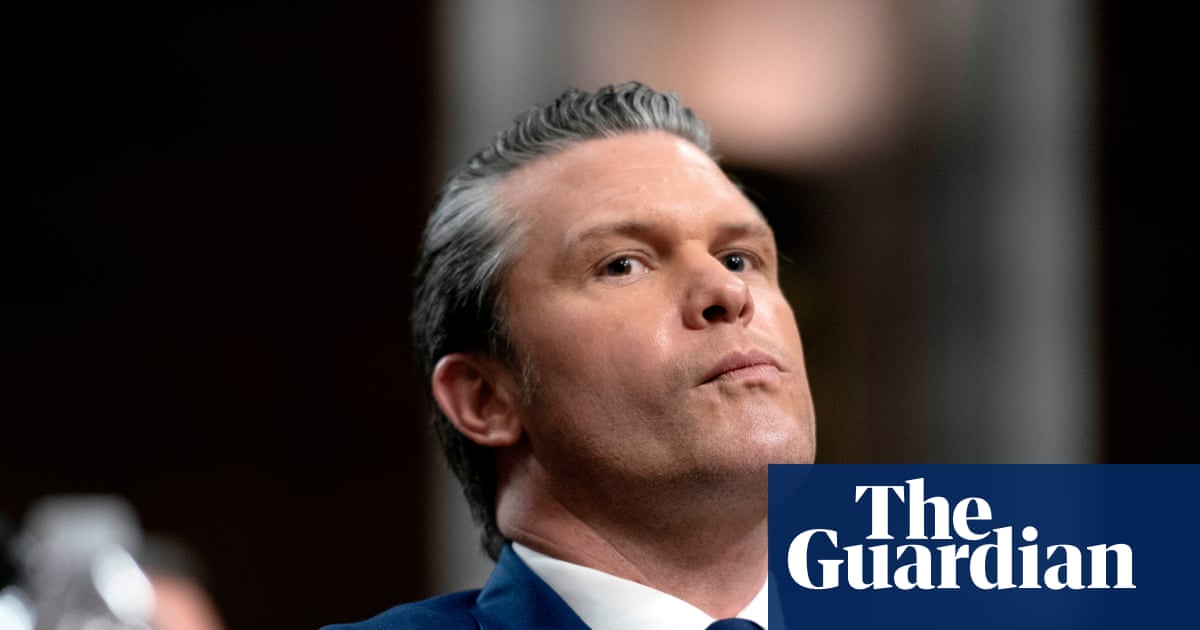
‘This is just disarray’: alarm inside Pentagon after Hegseth staff purges
 www.theguardian.com
When you leave an idiot in charge, don't be surprised if everything falls to that same level.
‘This is just disarray’: alarm inside Pentagon after Hegseth staff purges
Insiders portray defense secretary as increasingly isolated after officers with impeccable reputations forced out
www.theguardian.com
When you leave an idiot in charge, don't be surprised if everything falls to that same level.
Last edited:

Meengla
Elite Member
I'm certainly glad as well. Truth be told, I thought there was a good chance the ceasefire wouldn't last 2 weeks.
But of course, we're dealing with cheeseburger here who might get up on the wrong side of bed and decide to drop a couple of bombs.
I wasn't surprised by the ceasefire. The attackers didn't need the ceasefire to replenish. At most, the residents of Tel Aviv needed the break from their bunkers. The ceasefire was needed from both sides to try the negotiations route, which has not been exhausted as of now.
Ali_Baba
VIP Member
‘Double-dealing’ Pakistan plots windfall from Iran peacemaker role
Memphis Barker
13–16 minutes
Memphis Barker Senior Foreign Correspondent
Memphis Barker is a Senior Foreign Correspondent for The Telegraph and its former Foreign Editor. See more
Published 03 May 2026 6:00am BST
Last Saturday, Iran’s foreign minister flew out of Islamabad airport after the collapse of a proposed second round of peace talks with the United States.
Within 24 hours, he returned. But it was not the Pakistani prime minister whose company Abbas Araghchi sought.
Instead, he met for a second time with Field Marshal Asim Munir, the head of Pakistan’s armed forces, and – as it stands – the only man capable of ferrying messages between Tehran and Washington.
The negotiations have drawn back the curtain on Pakistan’s power structure. Ever since Pervez Musharraf, the country’s last military dictator, handed over to the civilians in 2008, “the establishment” – one of many code words for the army – has preferred to run the country from the shadows; rigging an election here (consider 2018, or 2024) or orchestrating the imprisonment of a prime minister (recall Nawaz Sharif, or the currently jailed cricket legend Imran Khan).
Field Marshal Munir, however, is now in the limelight. He may not speak in public like Shehbaz Sharif, Pakistan’s current prime minister. But he spends hours in one-on-one meetings with Donald Trump, Mr Araghchi and other world leaders.
Indeed, he has encouraged the inflation of his own profile, accepting first the title of “Field Marshal” – only given out once before to Ayoub Khan, the military dictator from 1958-1969 – and then creating (and filling) the new, long-term position of chief of defence staff.
Miftah Ismail, a former Pakistani finance minister in Mr Sharif’s Pakistan Muslim League, said: “Trump writes his name before he writes the name of the prime minister. That reflects, to many Pakistanis, the reality of Pakistan, which is that the field marshal is more powerful than the prime minister, and has always made the final call.”
Field Marshal Munir’s role in negotiating the Iran-US ceasefire is widely celebrated, with many hoping it will boost the country’s status and prospects on the world stage Credit: Hamed Malekpour/Getty Images
In public life, the requirement to skirt around discussing the military’s dominant role in politics is fading. The “fiction” of civilian control has ended, added Mr Ismail. “If somebody wanted to believe this now, or just pretend to, that pretension has become even more difficult.”
What does Field Marshal Munir want? Army chiefs do not issue manifestos. In the near term, Islamabad needs an end to the war more than most.
Its economy relies on imports of oil and gas through the Strait of Hormuz, which Mr Trump promised last week to keep closed until Tehran agrees to give up its nuclear ambitions. The government has already been forced to impose sweeping austerity measures. Public-sector employees now work a four-day work week. Some schools have been closed. IMF bailouts and Gulf loans propped up Pakistan’s long-stuttering economy before the war.
Prolonged conflict could lead to “collapse”, said Farzana Shaikh, an associate fellow at the London-based Chatham House think tank.
Donald Trump with Shebaz Sharif, Pakistan’s prime minister (left) and Field Marshal Munir (right) in the Oval Office in September 2025 Credit: AFP
High on the army chief’s wish list, it is said, is a new energy source.
US sanctions have prevented the full construction of an Iran-Pakistan gas pipeline, which would ease Islamabad’s reliance on seaborne supplies from the Gulf. Tehran built 684 miles of pipe on its side of the border but Pakistan has not started its connecting 435 miles. Iran is seeking damages of $18bn (£15bn), with a court ruling expected in the next two years.
Many hope that Field Marshal Munir will parlay his favoured status in the White House into a sanctions waiver on the project. Mr Ismail said: “I think the pipeline would be a good idea, provided we can renegotiate the price of the gas – the agreement says you have one more shot [at striking a price] before the gas actually flows.”
It would be, however, difficult to attract finance and insurance for the project, he cautioned, given the risk that the US would at some point reimpose sanctions on Iran.
In diplomatic terms, some gains for Pakistan are baked in, even without a resumption of the Islamabad-brokered peace process.
Pakistan’s role at the heart of international affairs “is important, from a psychological point of view”, said Mr Ismail. It changes narratives in the global media, which have historically covered Pakistan through the lens of terrorism. Not only that, Islamabad has foiled a key foreign policy goal of its arch-enemy, India, which is to “isolate Pakistan”.
In fact, the central role carries its own risks. Field Marshal Munir is driving efforts to deepen ties across the Middle East, picking his way through the complicated web of rivalries.
Last year, Field Marshal Munir signed a defence pact with Saudi Arabia, pitched as an “Islamic Nato” as it requires both countries to come to the other’s aid in the event of an attack.
The move bolstered Pakistan’s prestige – and reflected desires within the Gulf to gain access to the advanced Chinese weaponry possessed by Islamabad. (It was Chinese-made J-10C fighter jets that shot down India’s French Rafales in the brief war last year.)
The alliance, however, has drawn concern in the United Arab Emirates (UAE), another of the Gulf nations that have supplied large, economy-shielding loans to Pakistan.
Last month, Abu Dhabi suddenly requested repayment of a $3.5bn (£2.6bn) loan, in a move triggered partly by fears of Islamabad’s deepening bond with Riyadh, its chief regional rival. (Saudi Arabia stepped in to cover the loss.)
The spat also reflected UAE fears that Pakistan had grown too close to Iran through its role as mediator, the Financial Times reported. Mohammed bin Zayed, the UAE president, is said to abhor the prospect of a deal that could empower and enrich Tehran.
Pakistan’s foreign minister Mohammad Ishaq Dar and army chief Field Marshal Asim Munir welcome Abbas Araghchi upon his arrival in Islamabad Credit: Reuters
Into this dance folds Pakistan’s own relations with Iran. The neighbouring nations are both Islamic (the former largely Sunni, the latter Shia), and largely run by powerful armed forces. Relations tend to be wary rather than warm.
Pakistan’s Washington embassy hosts Iranian diplomats, providing a back-channel for talks since the US severed relations with Iran in 1980. The two share about 560 miles of border, riven by insurgencies on either side.
In January 2024, Iran fired missiles at Jaish Al-Adl, a Sunni militant group based in Pakistan’s border province of Balochistan. Islamabad hit back at targets across the Iranian frontier, but both sides de-escalated swiftly and, by the outbreak of the US war on Iran, the usual equilibrium was back in place.
The war changes everything, however. For Pakistan, “the biggest impact will be the emergence of Iran as a major power in the region, out from behind the wall of sanctions it has been bottled up in since the revolution”, said Khurram Husain, an economics-focused columnist with Dawn newspaper.
Last week, Islamabad announced the opening of six new trade routes for goods from third countries, such as China, to Iran. Islamabad is set to receive transit fees and Iranian goodwill.
Hawks in Washington (and India) have accused Field Marshal Munir of “double dealing”, casting the agreement as a route for Iran to circumvent the US blockade of the Strait of Hormuz.
Derek J Grossman, a senior fellow at the Washington-based Center for a New American Security, said: “Trump admin, you have a problem. Your good friend Pakistan… will help Iran to resist US pressure. Islamabad double deals America… AGAIN!” For now, the trade flows will be tiny, however.
Mr Husain said: “They aren’t in a position to make a meaningful dent in the blockade simply because the volume of cargo that can be handled by them is very small.”
In reality, the move is more likely to have been co-ordinated with Washington than not, added Mr Ismail, saying: “Pakistan doesn’t want to undermine its role as mediator.. [especially] when we are on the brink, hopefully, of getting some agreement.”
Moreover, Washington could help protect any Iran-Pakistan pipeline, if permission were granted. Any infrastructure of the sort risks demolition by Balochistan-based militants. In March, a gas pipeline was blown up. “Even if sanctions are lifted, Pakistan faces an immense security challenge in the region,” said Ms Shaikh. The military “has just one way of dealing with Balochistan”: through force.
Donald Trump has described Field Marshal Munir (third from left) as an ‘exceptional human being’ Credit: The White House
Field Marshal Munir, who embodies that hammer-like approach, will not pursue a diplomatic path aimed at alleviating the grievances of the local population, who feel exploited by the central government.
Already, the chief of defence staff has convinced the Trump administration to list the Balochistan Liberation Army (BLA) as a terrorist group. The army chief has built trust through putative deals on cryptocurrency and critical minerals.
In 2018, Mr Trump froze around $1.3bn (£956m) in US security assistance to Pakistan, intended to defray the cost of counter-terrorism operations.
Michael Kugelman, a senior fellow at the Atlantic Council, a Washington-based think tank, said: “I think the Pakistanis will want to leverage the trust they’ve earned with the administration to try and get it to be more flexible on the matter.”
US investment in Balochistan – Pakistan’s most mineral-rich province – could be coupled with support, potentially even quiet co-operation, on military operations in the region.
For now, the peace process has stalled. Nor is Mr Trump the most reliable ally.
In 2029, Pakistan’s army chief will have to manage a difficult election, given the strong support for his long-jailed adversary Imran Khan.
Pride in Pakistan’s role as global peacemaker will last only so long as prices continue to rise. Actors know the risks well: when you step out from behind the curtain, the crowd can go either way.

Kattarpajit
Registered Member
Yeah bec two superpowers who have all the reasons to be covert about this scenario need to announce it to the world to prove they are helping their strategic ally right?That’s all nice for the CNN media suspecting help from Russia or China, but there is just no evidence of this covert help.
I doubt Iran received anything from either of them.
Pakistan Defence Latest
-
 After uneasy questions, Bangladesh Army chief broke into Nazrul geeti during Oct 1 darbar (6 Viewers)
- Latest: MNZGamerX
-
-

-


Country Watch Latest
Latest Posts
-
-

-
 Young people in China are reviving old clothing Hanfu, and maybe nationalism too (6 Viewers)
- Latest: Panda_Hi
-
FlyDubai Incident: Pilot was stabbed on flight to Israel - diverted to Saudi Arabia (20 Viewers)
- Latest: ustaad
-
